How Much Is a Pint of Beer in Slovenia?
Slovenia prices beer in euros and the venue sets the price more than the beer does. Pour sizes, venue tiers, verified tour prices and where locals drink in Ljubljana.
How Much Is a Pint of Beer in Slovenia?
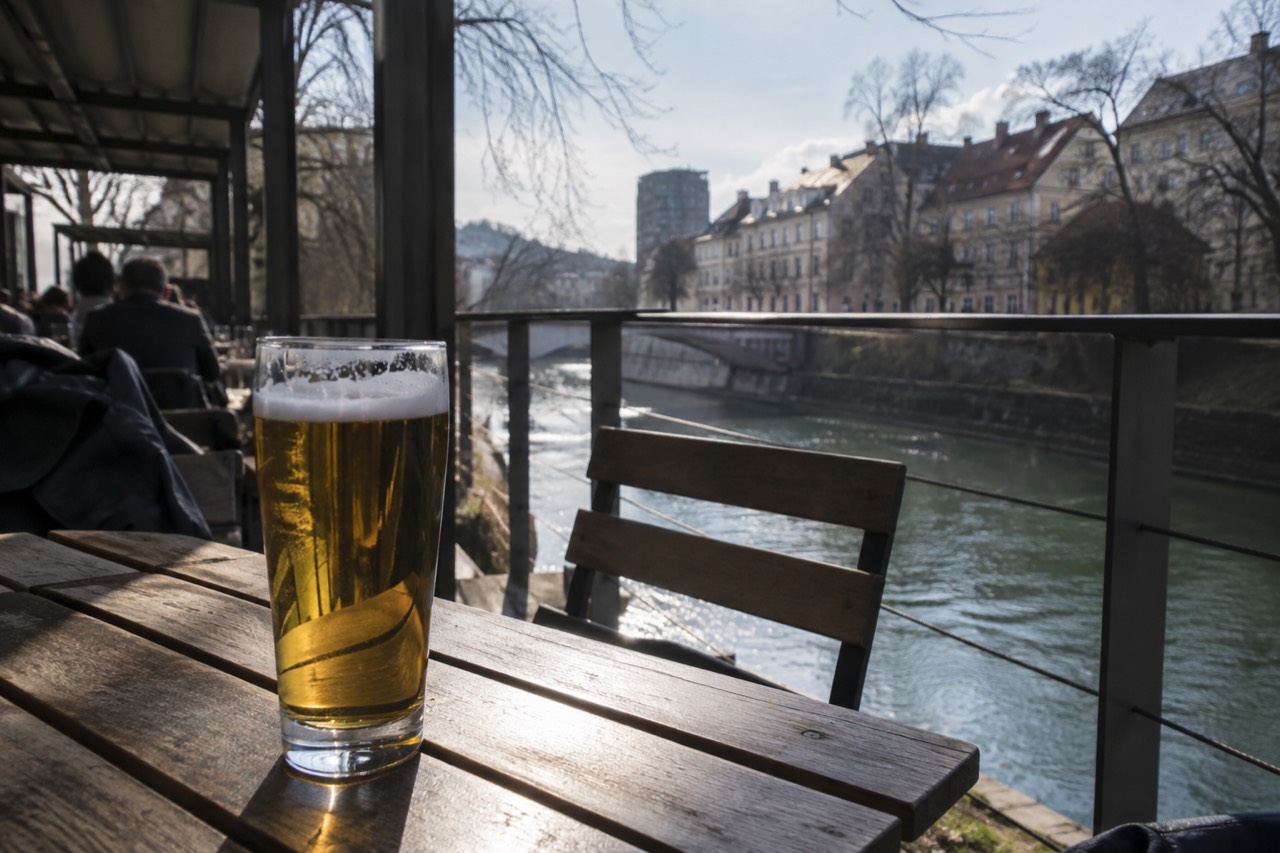
Slovenia prices its beer in euros, and the price depends far more on the venue than on the liquid: a half-litre bottle from a supermarket shelf is the cheap end, a neighbourhood pub sits in the middle, and a terrace on the Ljubljanica in Ljubljana's pedestrianised centre sits at the top. This site's verified facts pack records no officially published per-pint price, so rather than guess a figure, this page breaks the cost down by where and how you drink.
Slovenia has priced its beer in euros since the country adopted the single currency on 1 January 2007. A visitor arriving from Italy, Austria, Hungary or Croatia clears no routine border check on the way in and changes no money at the other end, because Slovenia sits inside both the Schengen area and the eurozone, and Croatia joined both on 1 January 2023. Whatever a beer costs, the number on the board is the number you pay.
What that number is, this page will not pretend to know. No official body and no operator publishes a per-pint price list for Slovenian pubs, and this site prints figures only where a primary source has been read and verified. Pub prices move with the venue, the season and the street, so the honest source is the menu or the chalkboard at the door. What can be verified, and what follows, is the structure around the price: how the pours are sized, how the venues tier, and which drinking experiences carry a published figure.
The structure is simple once you see it. Most taps pour one of the two national lagers, Laško or Union, so the beer in the glass changes little from street to street. The price changes a great deal. The same lager costs least off a shop shelf, sits mid-range in a neighbourhood pub, and peaks on a riverside terrace in the old centre, where a good share of what you pay is for the view.
What Size Is a Pint in Slovenia?
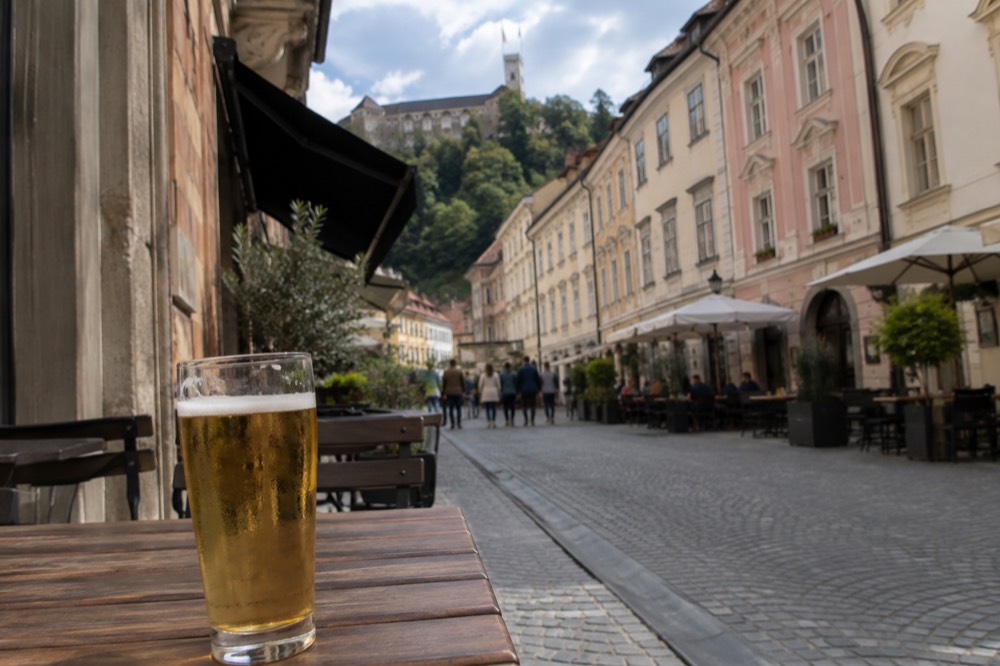
The standard large pour in Slovenia is the veliko, a half-litre glass that lands just under a British pint, and the small pour is the malo, a third of a litre. Order a pint by name and most bars will translate it to the veliko without a fuss. Craft taprooms pour smaller measures by style, so a flight of small glasses often costs more than one industrial lager would.
Ordering is straightforward. A large beer is a veliko pivo and a small one is a malo pivo, and veliko pivo, prosim gets you the half-litre glass in almost any bar in the country. Nobody measures anything against an imperial pint. The half-litre veliko sits a little under a British pint, close enough that the two feel like the same drink by the second round.
| Pour | Size | What it is |
|---|---|---|
| Veliko | Half a litre | The large pour, the closest thing to a pint |
| Malo | A third of a litre | The small pour, right for a short stop or a stronger beer |
| Craft measures | Usually a third of a litre | Smaller pours by style at taprooms and brew bars |
The malo has a real purpose and it is not just thrift. It is the right size for a stronger beer, for a lunchtime stop, or for the last drink before walking home through a centre where the streets belong to pedestrians. The craft scene works on a different logic again: smaller glasses, more of them, priced per pour, and usually above the standard lager once the tab is added up.
What Does a Drink-focused Tour Cost in Ljubljana?
Bookable drinking experiences in Ljubljana run from $29 for the five-hour pub crawl to $112.32 for a three-hour guided food and wine walk, with a one-hour boat cruise with craft beer tastings at $56 in between. Those are the only drink-adjacent prices this site has verified to the cent, because operators publish them on their live listings. Pub prices by the glass, by contrast, appear on no official price list anywhere.
Where a figure exists, it exists because an operator put it on a listing. The table below is every drink-led or drink-adjacent experience in the site's verified roster, with the duration, the rating and the from-price exactly as recorded. Anything not on this table has no verified number, and this page will not invent one for it.
| Experience | Duration | Rating | From |
|---|---|---|---|
| Ljubljana Pub Crawl | 5 hours | 4.5 from 198 reviews | $29 |
| Boat cruise with craft beer tastings | 1 hour | 4.5 from 37 reviews | $56 |
| Wine tasting with appetizers | 2 hours | 4.8 from 226 reviews | $64 |
| Slovenian cuisine walking tour with tastings | 4 hours | 4.8 from 552 reviews | $104 |
| Food and wine tour | 3 hours | 4.9 from 282 reviews | $112.32 |
The pub crawl is the drinking night condensed into one product: five guided hours of bar-hopping across the centre, rated 4.5 across 198 reviews, from $29. The boat cruise with craft beer tastings is the other side of the coin, a single hour on the Ljubljanica with Slovenian craft beers poured as the old town slides past, from $56. One is a marathon, the other a sprint, and the price gap between them is smaller than the experience gap.
Food-led walks cost more and last longer, because the tastings are the point rather than a side order. A three-hour food and wine walk runs from $112.32 and rates 4.9 across 282 reviews, while a two-hour wine tasting with appetizers starts at $64. If the plan for the evening is eating as much as drinking, the guided walks below cover that ground between them.
Where Do Locals Drink Beer in Ljubljana?
Ljubljana drinkers split between the riverside terraces of the pedestrianised centre, the pubs of the surrounding neighbourhoods, and Metelkova Mesto, the autonomous cultural centre in former army barracks where clubs set their own covers and Friday and Saturday are the busy nights. The open-air Odprta Kuhna food market runs on Pogačarjev trg from March to November, and it is cancelled outright in bad weather, so check the forecast before planning a Friday around it.
The riverside terraces along the Ljubljanica are the postcard option, and the reason they cluster so densely is structural. The historic centre has been progressively pedestrianised since 2007 and now covers roughly 20 hectares closed to general traffic, so nobody drives to the pub and every terrace spills onto a street that belongs to people on foot. What you pay on that stretch of river buys the address as much as the beer.
Metelkova Mesto, the autonomous cultural centre built into former army barracks, is the other pole. Entry to the area is free, individual clubs set their own covers, and the whole place is at its busiest on Friday and Saturday nights, thinning out hard on weekdays. Street art covers the walls, the bars are rough-edged by design, and the crowd skews local. The Metelkova guide covers what to expect before you go.
On Fridays from March to November, Pogačarjev trg hosts Odprta Kuhna, the open kitchen market where the city's cooks set up stalls from mid-morning until nine at night, and later when the evening is warm. The official wording is every sunny Friday, and that is literal: bad weather cancels the whole thing. A beer with your Friday lunch there is a Ljubljana ritual, but the Odprta Kuhna schedule bends to the sky, not to the calendar.
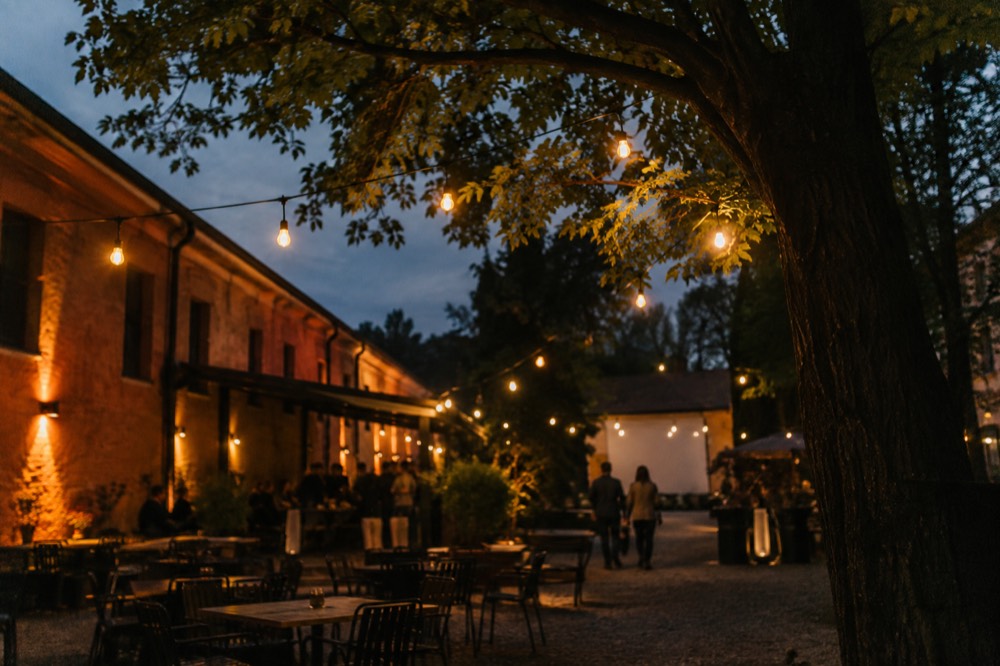
The full run of bars, from student pubs to late-night floors, is mapped in the Ljubljana nightlife guide. If the plan is tasting rather than bar-hopping, a guided walk does the choosing for you, and the food traditions it covers are the ones the drinking culture grew up around.
Can You Pair Beer with Slovenian Food?
Slovenian food and beer share a table easily: the cuisine walking tour with tastings runs four hours, rates 4.8 across 552 reviews and costs from $104, and it walks the old food traditions of the city with stops to taste as it goes. Beer itself rarely stars on a guided tour, but the pub crawl covers the drinking side of the evening while the cuisine walk covers the eating side of the day.
Beer arrives with food in Slovenia more often than visitors expect. A lager alongside cured meats, a beer where other countries would pour wine, and the same half-litre glass whether the plate in front of you is a farmhouse lunch or a market snack. The pairing instinct here is not ceremonial, it is just what the table has always looked like.
The Slovenian cuisine walking tour with tastings is the eat-side counterpart to the pub crawl: four hours, rated 4.8 across 552 reviews, from $104, walking the city's old food traditions with tastings at the stops along the route. Weekend dates fill first, because small-group food walks run on fixed numbers.
Between them, the crawl and the cuisine walk split a two-night stay neatly. One evening drinking through the centre with a guide who knows the shortcuts, one afternoon eating through it with a guide who knows the kitchens. Add the one-hour beer boat on the Ljubljanica and the weekend has a shape.
When Is Terrace Beer Season in Ljubljana?
Terrace beer season in Ljubljana runs from late spring through summer: July averages 293 sunshine hours against December's 56, and the city manages just 37 clear days a year against 130 overcast. September and October are the trap months for terrace plans, because they tie as the wettest months of the year at 147 mm each and average 12.4 fog days apiece, so an autumn terrace sitting is a gamble rather than a given.
The numbers come from ARSO, Slovenia's environment agency, and they are not gentle on terrace plans. The 1981-2010 normals give Ljubljana 293 sunshine hours in July against 56 in December, and just 37 clear days across an average year against 130 overcast ones. The city sits in a basin, and in the colder half of the year cold air traps fog and low cloud over the streets while the hills a few hundred metres up sit in sunshine, which is why a winter beer here is an indoor drink by default.
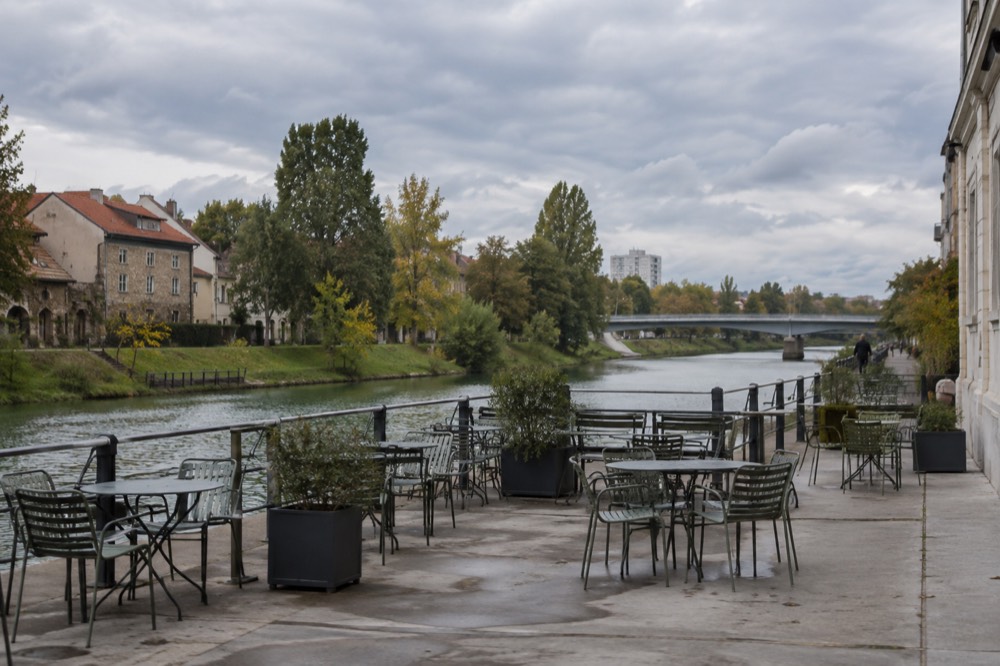
The autumn trap deserves its own warning, because it catches visitors who assume the shoulder season is the dry season. It is not. September and October tie as the joint wettest months in Ljubljana at 147 mm of rain each, wetter than July, and they match the depths of winter for fog. A September terrace plan should always carry a roofed fallback within walking distance, and in the pedestrianised centre it usually has one within a hundred metres.
The practical read is simple. Book the terrace for May through August, treat the riverside seats as a fair-weather bet from April, and move the evening indoors from October to March. The pubs do a good trade in exactly that migration, and the fog outside makes the inside feel earned.
Is Ljubljana a Good City for a Beer Weekend?
Ljubljana is a two-night city: 2,844,129 overnight stays across 1,392,728 arrivals in 2025 works out to about 2.04 nights per visitor, which is exactly long enough for one evening in the centre's pubs and one day of eating through it. The historic centre is pedestrianised, roughly 20 hectares of it, so a beer-focused weekend is walked rather than driven, and the pub crawl's five hours cover the ground efficiently.
The two-night pattern is not a guess, it is arithmetic from the official statistics. Across 2025 the municipality recorded 2,844,129 overnight stays on 1,392,728 arrivals, an average of about 2.04 nights per visitor, and that shape fits a drinking weekend perfectly. One night for the pub crawl, one day for the cuisine walk, and a spare hour for the beer boat on the river between them.
Everything worth drinking in the centre sits inside walking distance of everything else, which keeps the taxi budget at zero and the pace civilised. The Ljubljana prices guide covers the rest of the budget, from the 3.13 EUR per person per night tourist tax on accommodation to what museum entry costs, and the craft beer in Ljubljana guide maps the taprooms where the smaller pours live.
Two nights, one crawl, one cuisine walk and a boat beer is a full weekend by any honest measure. The rest of this Ljubljana Travel Guide site covers the day trips that fill the daylight hours between them, from Lake Bled to the caves that hold the same ten degrees whether the city above them is in fog or in sunshine.
Common Questions About Beer Prices in Slovenia
How Much Is A Pint Of Beer In Slovenia?
In euros, and it depends on the venue far more than the beer. A half-litre bottle from a shop shelf is the cheap end, a neighbourhood pub sits mid-range, and a terrace on the Ljubljanica in the pedestrianised centre is the top end. No official source publishes a per-pint pub price, so the menu at the door is the only honest answer for the number itself.
What size is a large beer in Slovenia?
The large pour is the veliko, a half-litre glass that lands just under a British pint. The small pour is the malo, a third of a litre. Order a pint by name and most bars will bring the veliko without comment. Craft taprooms pour smaller measures by style, usually a third of a litre.
Is beer cheaper in shops or in pubs in Slovenia?
Shops, by a wide margin, as anywhere. The same national lager costs least off a supermarket or corner-shop shelf, sits mid-range on draft in a neighbourhood pub, and peaks on a riverside terrace in the old centre where the view carries a premium. The beer in the glass is often identical across all three.
What beer do Slovenians drink?
The two national lagers, Laško and Union, own most of the taps, and one of the two is the default order almost everywhere. Ljubljana also has a lively craft scene, concentrated in taprooms pouring smaller glasses by style, and the craft beer guide on this site maps where those bars sit.
Can you do a beer tour in Ljubljana?
Yes, two ways with verified prices. The pub crawl runs five guided hours of bar-hopping across the centre, rated 4.5 across 198 reviews, from $29. The boat cruise with craft beer tastings runs one hour on the Ljubljanica with Slovenian craft beers on board, from $56.
When can you drink outdoors in Ljubljana?
May through August is the safe answer. July averages 293 sunshine hours against December's 56, and the city manages just 37 clear days a year. September and October tie as the wettest months at 147 mm each and average 12.4 fog days apiece on ARSO's 1971-2000 fog series, so autumn terraces are a gamble.