What to Avoid in Slovenia?
The mistakes visitors make in Slovenia: cash-only assumptions, summer clothes in 10 C caves, winter closures, and the foggy autumn nobody warns you about.
What to Avoid in Slovenia?
The mistakes worth avoiding in Slovenia are practical ones: assuming you can pay cash on Ljubljana's buses, arriving at the karst caves in summer clothes when the cave temperature is 10 C, planning Vintgar Gorge or alpine passes in winter without checking seasonal closures, and expecting September and October to be a dry shoulder season when they are actually the joint wettest and foggiest months of the year.
Slovenia is, on the whole, an easy country to get wrong only in small ways. It is a member of the European Union, it adopted the euro on 1 January 2007, and it has been inside the Schengen area since land and sea border checks were abolished on 21 December 2007, with air checks following on 30 March 2008. That means no currency to change and no border to clear if you are arriving from Italy, Austria, Hungary or Croatia. The traps that remain are seasonal, practical and mostly about expectations, and each one is avoidable with a bit of planning.
This article walks through the errors that recur most often: transport assumptions, cave clothing, winter closures, the autumn climate, and the confusion between what is free and what is paid at Ljubljana Castle. None of these will ruin a trip, but every one of them costs time, comfort or money that a visitor would rather spend elsewhere.
Don't Assume You Can Pay Cash on Ljubljana's Buses
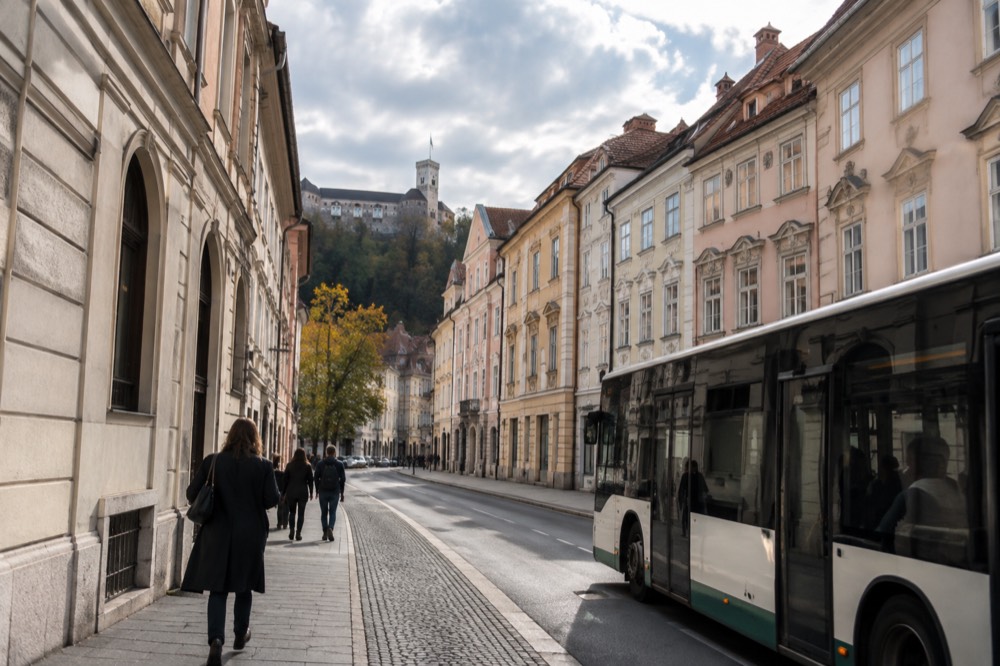
Ljubljana's city buses do not accept cash at all, so a visitor with only banknotes in their pocket cannot board. The fix is simple: a single zone 1 ride costs 1.50 EUR and covers 90 minutes including transfers, an Urbana card costs 2.00 EUR to buy, and contactless bank cards and phone wallets are now accepted directly on board.
This is the transport fact that guidebooks are most often out of date on. For years the trap was that you needed an Urbana card before you could board anything, because there was no other way to pay. Contactless payment has softened that, but cash still does not work, and drivers cannot make exceptions. Urbana cards are sold and topped up at the LPP Passenger Centre on Slovenska 56, at Urbanomat machines, at kiosks, at tourist information centres and at post offices.
Two related assumptions are worth retiring at the same time. The first is that the historic centre is drivable: it is not. The centre is pedestrianised, a car-free zone of roughly 20 hectares that has been progressively expanded since 2007, which is excellent news on foot and a genuine problem if you have booked [accommodation](https://booking.tpk.ro/siijcqre) inside it and are arriving by hire car. Check where you can actually park before you drive in. The second is that taxis are the only fallback, which brings us to the wider question of getting around.
| Mistake | What actually happens | The fix |
|---|---|---|
| Boarding a bus with cash only | Drivers cannot take cash, no exceptions | Tap a contactless card or phone, or buy an Urbana for 2.00 EUR |
| Assuming one ticket is one ride | A zone 1 ticket covers 90 minutes with transfers | Keep the ticket and transfer freely within the window |
| Driving into the old centre | The centre is a pedestrianised zone of about 20 hectares | Park outside and walk, or check hotel parking before arriving |
| Assuming the Ljubljana Card is automatic value | It only pays off if you use its included sights | Compare it against what you actually plan to visit, see the Ljubljana Card guide |
If you are staying two or more days and plan to use the funicular, the river cruise and a few museums, the card math can work in your favour, but it has to be done with your own itinerary, not on faith. The city's own published figures make that a short calculation.
Don't Arrive at the Caves in Summer Clothes
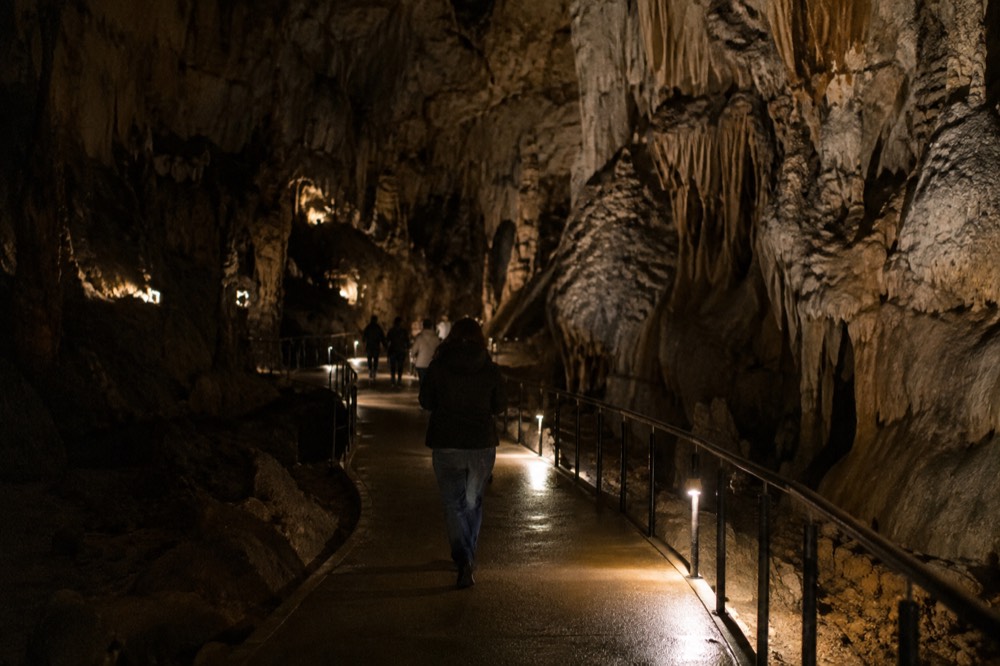
Postojna Cave holds 10 C year round, and Škocjan holds about 12 C, regardless of the weather outside, so visitors in shorts and T-shirts in August spend ninety minutes to three hours cold. A warm layer is not optional equipment for the karst caves, it is the single most useful thing you can carry, and the same fact makes the caves the reliable answer to a heatwave or a rainstorm.
Postojna's visitor route covers 3.7 km, partly by the cave train, and the tour lasts about an hour and a half. Škocjan is a different experience entirely: roughly 2 km of walking, about 400 stairs, and a tour of two and a half to three hours, which is the honest differentiator between the two. Postojna is a train ride with a walk attached, Škocjan is a walk, full stop. Neither is warm.
The other cave mistake is ticketing. The separate prices are published, 34.90 EUR for an adult at Postojna and 24.00 EUR at Predjama Castle next door, but a combined Postojna plus Predjama ticket price is genuinely not settled in the published sources, so do not budget for a combined figure you saw quoted somewhere. Budget the two separate prices, or book a day trip that includes both and removes the question. Postojna also asks visitors to arrive 30 minutes before the stated tour time, with train boarding 15 minutes before that, and the departure grid varies by month, so the official timetable is worth a look before you travel.
The six-hour Cave and Castle day trip from Ljubljana bundles the two karst headline sights with transport, which removes both the ticket queue and the drive. It is rated 4.8 across 2,802 reviews and runs from $132 per person, and you can Check availability alongside the full tour page.
Don't Plan Seasonal Sights Without Checking the Season
Vintgar Gorge is open to visitors between April and October and closes for winter, with the exact closing date depending on conditions and deliberately not published in advance, so a November itinerary built around it will fail. The same caution applies to alpine roads such as the Vršič pass and to higher hiking routes, where snow governs access rather than the calendar.
The gorge operator's own line is that the season runs April to October, with hours stepping up through summer to 08:00-18:00 in the peak weeks and back down to 09:00-15:00 at the end of the season. Adult entry is 15.00 EUR with timed-entry slots, and the operator also warns that the busiest window is 10:00 to 13:00, so an early arrival solves two problems at once: a parking space and a quieter boardwalk. Timed slots mean a spontaneous afternoon arrival in July may simply find the day sold out.
The wider version of this mistake is treating Slovenia's mountain areas as all-season scenery. They are not. Triglav National Park covers 840 square kilometres and entry is free, but the roads, trails and huts inside it operate on a mountain calendar. If your trip falls between November and March, build the itinerary around what is genuinely open: the caves, the coast at Piran, the cities, and the lowland museums.
| Seasonal sight | Season | What to check before you go |
|---|---|---|
| Vintgar Gorge | April to October, exact closing date depends on conditions | Timed-entry slots and the operator's hours page |
| Postojna Cave | Every day, including holidays and bad weather | Departure grid for your month, arrive 30 minutes early |
| Škocjan Caves | Year-round guided tours, prices tiered by month | Tour duration, about 400 stairs, warm layer |
| Ljubljana Castle | Open 365 days a year | Funicular hours, 09:00-19:00 or 09:00-22:00 depending on month |
Don't Expect Autumn to Be the Dry Shoulder Season
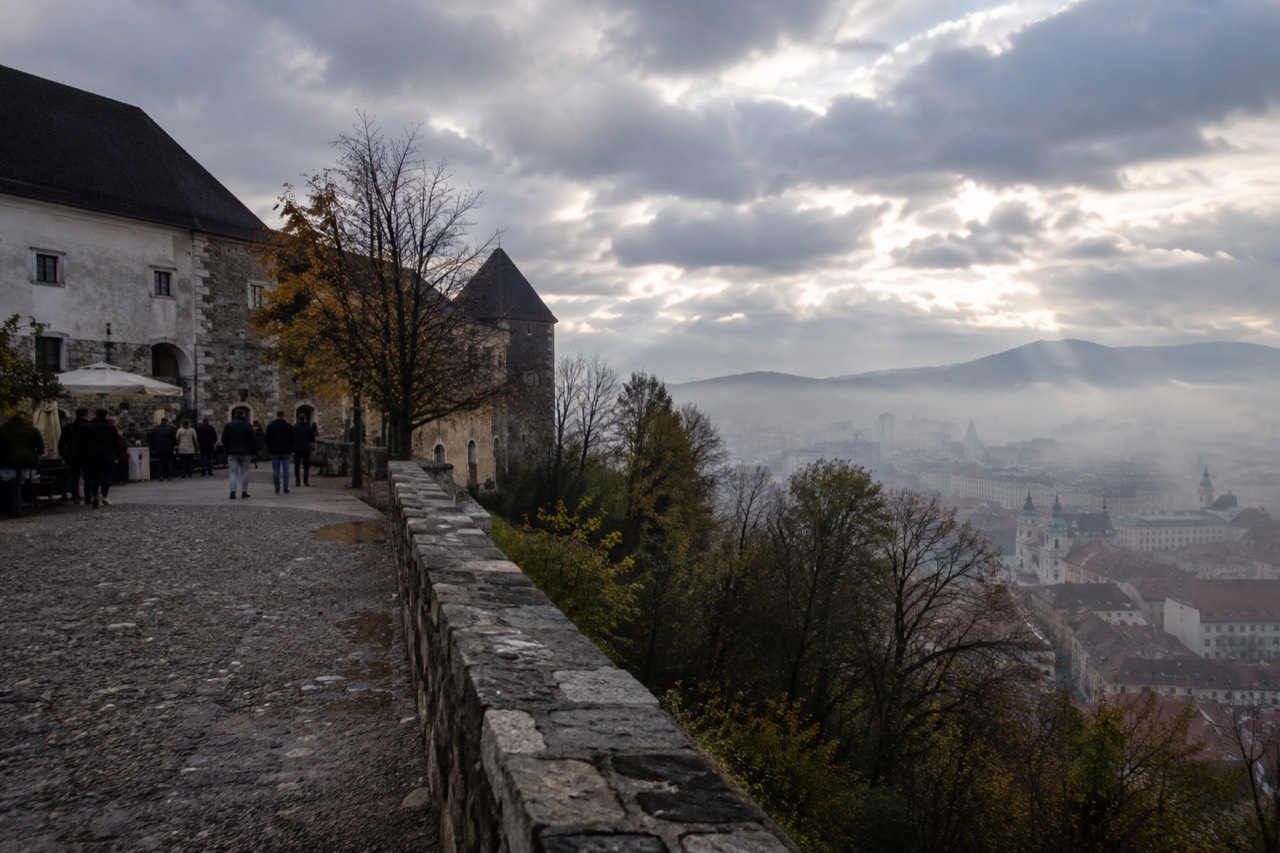
September and October are Ljubljana's joint wettest months at 147 mm of rain each, above July's 115 mm, and they are also its foggiest alongside December, at 12.4 fog days a month according to ARSO's 1971-2000 normals. The idea of a crisp, dry autumn shoulder season in the capital is a myth, and the fog figure is the one almost every guide gets wrong.
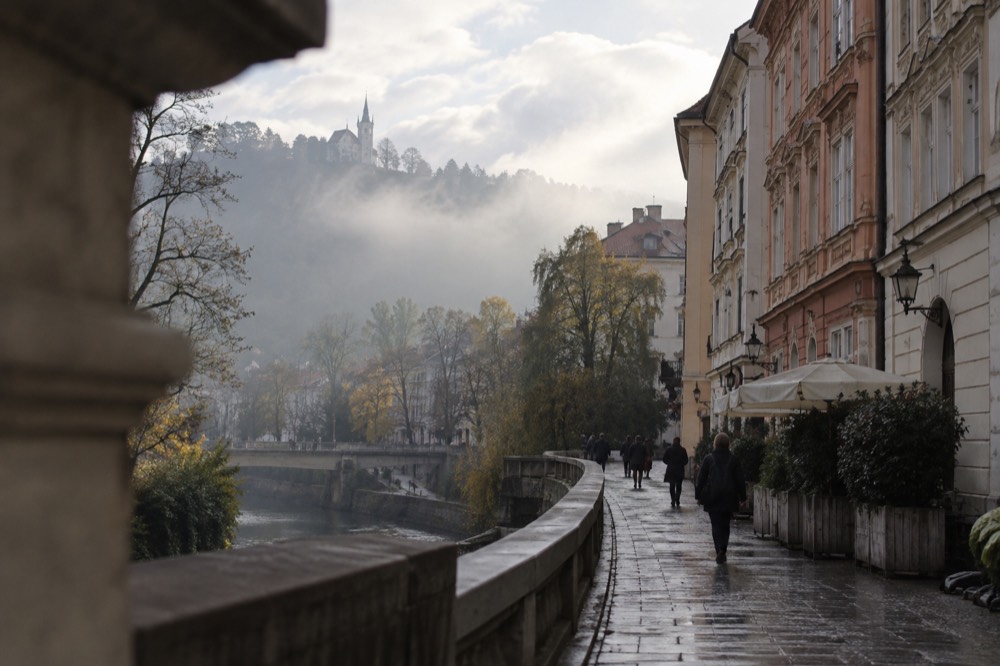
The mechanism is the basin. Ljubljana sits on the floor of a bowl at 299 m, and in the colder half of the year cold air is trapped under warmer air above, so the city fogs in while the hills a few hundred metres up sit in sunshine. The numbers are striking: ARSO's 1981-2010 normals give Ljubljana 56 hours of sunshine in the whole of December against 120 hours at Kredarica, at 2,514 m on Triglav, and the city averages just 37 clear days a year against 130 overcast. October and November each average a single clear day.
The practical takeaway is not to avoid Slovenia in the cold months, it is to go up. On a foggy December morning the castle hill, Šmarna gora or a day trip to the Alpine valleys are where the sun is, and the temperature at 660 m can exceed the temperature in the basin on those days. This is also why the caves are such a reliable answer: they hold the same temperature year round, so a grey, wet day costs you nothing. For the full monthly picture, the best time to visit Ljubljana breaks the year down month by month.
Don't Confuse Free Castle Grounds with Paid Attractions
The castle grounds on Ljubljana's hill are free to enter, but the funicular and the castle's indoor attractions are not, so the phrase "the castle is free" is only half true and "the castle is expensive" is the other half. A castle ticket including the funicular costs 19.00 EUR for an adult, a return funicular ride alone is 6.00 EUR, and the castle is open 365 days a year.
The distinction matters because the hill is one of the city's best free spaces, and visitors who assume everything behind the walls costs money miss it, while visitors who assume it is all free are stopped at the ticket line. The paid attractions inside include the Viewing Tower, the exhibitions and the funicular, and the last ticket is sold up to an hour before closing. Funicular hours run 09:00-19:00 in the cooler months and 09:00-22:00 from May to September.
The same free-versus-paid confusion recurs across the city. The national museums and galleries are free on the first Sunday of every month, which is one of the best-value facts in the country, but nearly all of them close on Mondays, so a Sunday-to-Monday city break can land on two closed days in a row if the planning is unlucky. And the Open Kitchen street-food market on Pogačarjev trg runs on Fridays roughly March to November, but the official wording is "every sunny Friday", which is literal: it is cancelled in bad weather. Do not build a whole evening around it without a forecast.
Common Questions About Avoiding Mistakes in Slovenia
What To Avoid In Slovenia?
Avoid assuming cash works on Ljubljana's buses, arriving at the 10 C karst caves in summer clothes, planning Vintgar Gorge or alpine passes outside their April-to-October seasons, expecting a dry autumn shoulder season in the capital, and confusing the free castle grounds with the paid attractions inside.
Is Slovenia safe for tourists?
Slovenia is widely regarded as a very safe country, with low violent crime rates and a well-organised tourism infrastructure. The mistakes visitors make are practical rather than safety-related: transport payment, clothing for caves, and seasonal closures.
Do I need cash in Slovenia?
Slovenia uses the euro, and card acceptance is broad, but Ljubljana's city buses accept no cash at all. Contactless bank cards and phone wallets work on board, and Urbana cards are sold for 2.00 EUR at kiosks, post offices and the LPP Passenger Centre.
What should I wear to Postojna Cave?
A warm layer. The cave holds 10 C year round regardless of the weather outside, and the tour lasts about an hour and a half over a 3.7 km route. Footwear with decent grip is sensible for the walked sections.
When is Vintgar Gorge closed?
Vintgar Gorge is open to visitors between April and October and closes for winter. The exact closing date depends on conditions and is deliberately not published in advance, so check the operator's page before travelling in late season.
Is October a good month to visit Ljubljana?
It is atmospheric rather than sunny. ARSO's records make October one of the joint wettest months at 147 mm and among the foggiest at 12.4 fog days, with an average of a single clear day. The upside is that the hills above the basin are often in sunshine while the city fogs in.
The pattern behind almost every mistake on this list is assumption: that payment works as it does at home, that seasons follow the calendar, that a capital city sits in clear air. Slovenia rewards the opposite habit, a quick check of the official page before you travel, and a warm layer in the bag even in August. For the flip side of all this, what not to miss in Ljubljana covers the sights worth building the trip around, and this Ljubljana Travel Guide is the place to start for anything else.