What Are Some Hidden Gems in Ljubljana?
Beyond the Triple Bridge and the castle queues: the quieter corners of Ljubljana worth seeking out, plus the Slovenia-wide hidden gems you can reach on a day trip.
What Are Some Hidden Gems in Ljubljana?
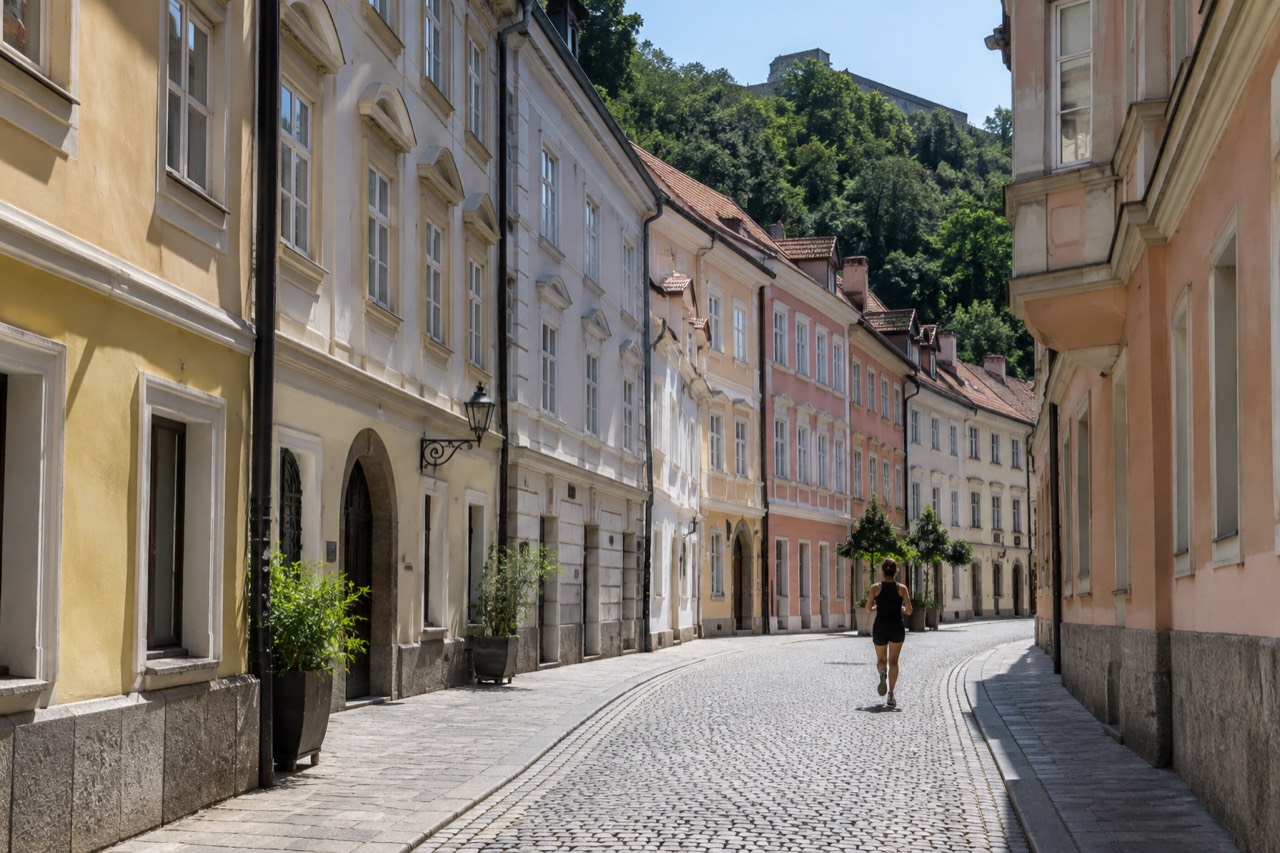
The city's real hidden gems are Metelkova's autonomous art quarter, the covered halls of the Central Market, Plečnik's own house in Trnovo, and the Open Kitchen food market on Pogačarjev trg. Most visitors never reach any of them, because the Old Town's main sights sit within a five-minute walk of each other and absorb the whole day. Each of these four sits ten to twenty minutes on foot from Prešeren Square, and two of them cost nothing at all.
Ljubljana is small, and that is the whole problem. The Old Town loop from Prešeren Square across the Triple Bridge to the cathedral takes under an hour, so a visitor with a single day can see the postcard and still miss the city entirely. The gems below are not obscure because they are hard to find. They are obscure because the postcard is so compact that nobody walks past it.
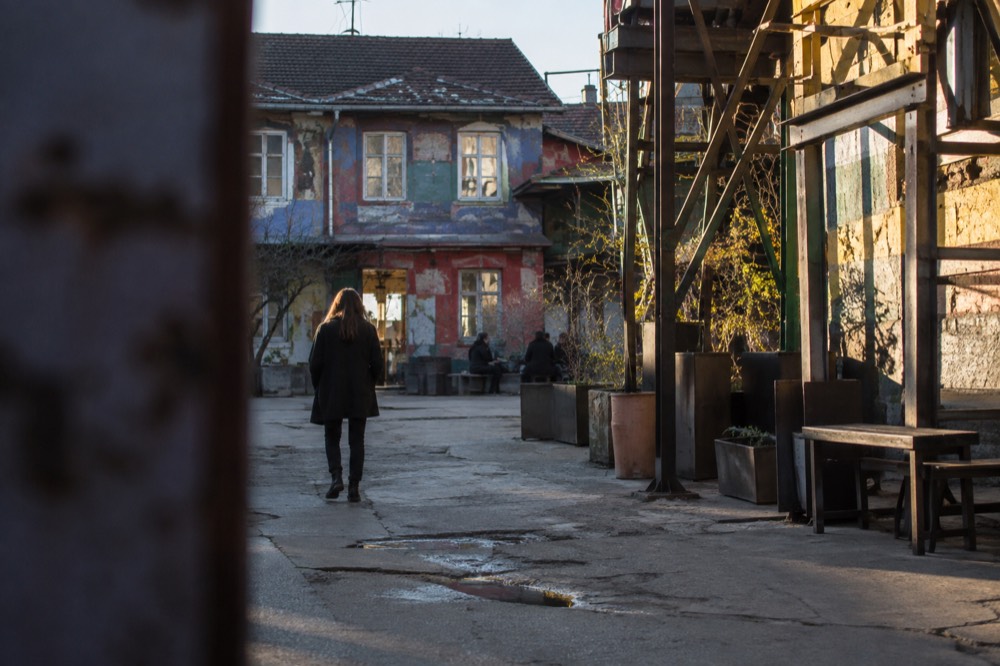
Start with Metelkova Mesto, the former army barracks that became an autonomous cultural centre in the 1990s. Entry to the area is free, individual clubs set their own covers, and the whole quarter is an open-air gallery of murals, sculptures and painted facades. It is most active in the evenings and busiest on Friday and Saturday nights, which makes it the one item on this list best saved for after dark rather than squeezed between museums. The Metelkova guide covers what to expect and when.
The Central Market is the second, and it is hiding in plain sight. Most visitors cross Pogačarjev trg on their way to the Triple Bridge without noticing that the colonnade beside them is a Plečnik-designed market hall. The covered halls run Monday to Friday 07:00–16:00 and Saturday 07:00–14:00, while the outdoor stalls on Vodnikov and Pogačarjev trg trade roughly 06:00–18:00 in summer and 06:00–16:00 in winter. A Saturday morning here, before the day-trippers arrive, is a completely different experience from a Tuesday afternoon.
The third is the Plečnik House in Trnovo, where the architect who shaped most of the city's riverfront actually lived and worked. It is guided-entry only, with tours on the hour, and admission is 12 EUR including the guide. That constraint is a feature: groups are small, and the guide's commentary fills in a century of the city's design history. The full Plečnik House guide explains how to time a visit.
The fourth is seasonal, and it is the one locals defend hardest. Odprta Kuhna, the Open Kitchen street-food market, runs on Fridays on Pogačarjev trg, roughly March to November, from 10:00 to 21:00 and later on warm evenings. The official wording is "every sunny Friday", which is literal: the market is cancelled in bad weather. Check the forecast, not just the calendar, before planning a Friday around it.
| Hidden gem | Where | Cost | Best time |
|---|---|---|---|
| Metelkova Mesto | North-east of the centre, past the bus station | Area free, clubs set covers | Friday and Saturday evenings |
| Central Market halls | Pogačarjev trg, beside the Triple Bridge | Free to browse | Saturday morning, 07:00–14:00 |
| Plečnik House | Trnovo, south of the centre | 12 EUR, guided tours on the hour | Any hour slot, book ahead |
| Open Kitchen | Pogačarjev trg | Pay per dish | Fridays, March to November, weather permitting |
| Museum of Illusions | City centre | 16 EUR | Daily 09:00–21:00, a rainy-day option |
One more that barely registers in guidebooks: the city's national museums and galleries are free on the first Sunday of every month. The National Gallery, MSUM, the Slovenian Ethnographic Museum and the National Museum of Slovenia all publish it. Time a first-Sunday visit and the whole museum half of the city opens up at no cost, which pairs neatly with the free things to do in Ljubljana.
What Are Some Hidden Gems to Visit in Slovenia?
Slovenia's hidden gems beyond the capital are the Škocjan Caves, Idrija's mercury heritage, Škofja Loka's intact medieval core, the Velika Planina herdsmen's village and the Vipava Valley wine region. All of them sit within a two-hour drive of Ljubljana, and several run as organised day trips from the city. The Škocjan Caves are the standout: a UNESCO World Heritage site since 1986 that most visitors skip in favour of the better-known Postojna.
Škocjan is the honest answer to the question everyone gets wrong. Postojna Cave is famous, and its 3.7 km visitor route with the underground train deserves that fame, but its 90-minute tour moves thousands of people a day in summer. The Škocjan Caves are the opposite: a roughly 2 km walking route, about 400 stairs, a tour of two and a half to three hours, and a canyon so large it holds its own microclimate at 12 C. UNESCO inscribed it on 28 November 1986, and it still receives a fraction of Postojna's footfall. Adult admission runs 16.00 EUR in the quiet months up to 24.00 EUR in July and August.
For a first-time visitor weighing the two caves against each other, the guided day trip that combines Postojna Cave with cliff-built Predjama Castle is the easiest single decision: six hours from Ljubljana, rated 4.8 across 2,802 reviews, from $132 per person.
Predjama Castle itself is a hidden gem by most standards, a fortress built into the mouth of a cave mouth 123 metres up a cliff, and it is open year-round. If the combined Postojna and Predjama day trip appeals, check availability early: the cave's departure slots fill in July and August, and the operator's listing shows the current times.
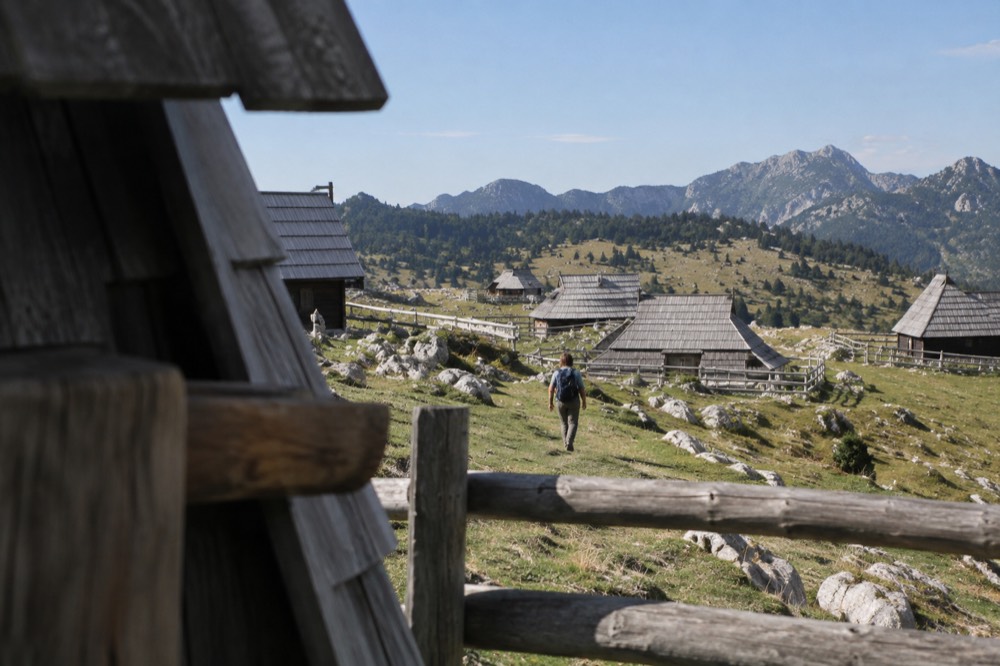
Beyond the karst, three places reward the detour. Idrija, a former mercury mining town with UNESCO industrial heritage, sits an hour west and sees almost no tour buses. Škofja Loka is the best-preserved medieval small town within an hour of the capital, and the Škofja Loka guide makes the case that it beats several better-known stops. Velika Planina, an alpine herdsmen's village of timber huts above the Kamnik Alps, is reachable on a six-hour guided hike from Ljubljana rated 4.8 from 74 reviews, from $86.
| Slovenia gem | Getting there from Ljubljana | What makes it hidden |
|---|---|---|
| Škocjan Caves | Guided half-day trip, 4h 30m, from $110 | UNESCO since 1986, a walk rather than a train ride |
| Velika Planina | Guided hike, 6 hours, from $86 | Herdsmen's village, no road to the top |
| Vipava Valley | Wine express tour, 5 hours, from $126 | Wine region most visitors have never heard of |
| Idrija | About an hour by road | Industrial UNESCO heritage, minimal tourism |
| Škofja Loka | Under an hour by road | Best-preserved medieval core near the capital |
The Vipava Valley deserves its own line. An hour's drive west, it is a wine region of steep hills and small producers that Slovenian wine writers treat seriously and foreign visitors almost never reach. A five-hour winery-hopping tour runs direct from Ljubljana, rated 4.9 from 140 reviews, from $126. For anyone whose image of Slovenia is Bled and nothing else, an afternoon in the Vipava is the fastest correction available.
When Is the Best Time to Seek Out the Quieter Spots?
The best time is late spring or early autumn, and the reason is meteorological rather than a matter of taste. Ljubljana sits in a basin, and ARSO's climate normals record just 37 clear days a year against 130 overcast, with only 56 hours of sunshine in the whole of December. September and October are also the joint wettest months at 147 mm each, above July's 115 mm, which surprises almost everyone planning an autumn city break.
That last figure is the one worth repeating, because the autumn shoulder season is sold as Ljubljana's secret best time, and the rainfall data does not fully agree. ARSO's 1981–2010 normals put September and October joint-wettest at 147 mm each. The same records show the foggiest months are September and October too, at 12.4 fog days each in the 1971–2000 series, level with December and above January's 11.3. A misty morning over the Ljubljanica is photogenic. Three consecutive misty mornings are a different holiday. Other pages covering the same trip are gathered on Ljubljana Travel Guide.
The practical reading of all this: the city's outdoor gems, Metelkova and the market squares above all, want May, June or September. The indoor gems, the museums and the Museum of Illusions, want November to February, and that is also when the first-Sunday free admission rule saves the most money. And when the fog does settle in, the correct move is to go up rather than stay down, because the inversion means the hills a few hundred metres above the city are often sitting in sunshine while the basin is grey. The castle funicular, Šmarna Gora and a Bled day trip all fit that logic; the best time to visit Ljubljana guide works through the months in detail.
Caves, for the record, are the one category immune to all of this. Postojna holds 10 C year-round and Škocjan 12 C, which is why the cave day trips are the reliable answer to a wet forecast, in any season, at any hour.
How Do You Reach These Places Without a Car?
You reach them by guided day trip, by train, or by city bus, and the car-free centre makes walking the default inside the city itself. Ljubljana's historic core is a pedestrian zone of roughly 20 hectares, expanded progressively since 2007, so no gem inside the centre involves driving at all. For the day trips, the tour operators collect from central Ljubljana, and the caves and the coast both run as organised excursions.
Inside the city, the practical facts are few and firm. City buses take the Urbana card, which costs 2.00 EUR to buy, with a single 90-minute zone 1 ride at 1.50 EUR including transfers. Cash is not accepted on board, but contactless bank cards and phone wallets are, which has removed the old trap of needing a card before you could board at all. The getting around Ljubljana guide covers the full mechanics.
For the Slovenia-wide gems, the choice is between the train network and the day tours. The trains reach Lake Bled, though the useful detail most advice gets wrong is which station: Bled Jezero is 1.5 km from the lake, while the better-known Lesce-Bled station is 4 km out on a different line. The trains from Ljubljana guide lists the destinations worth riding to.
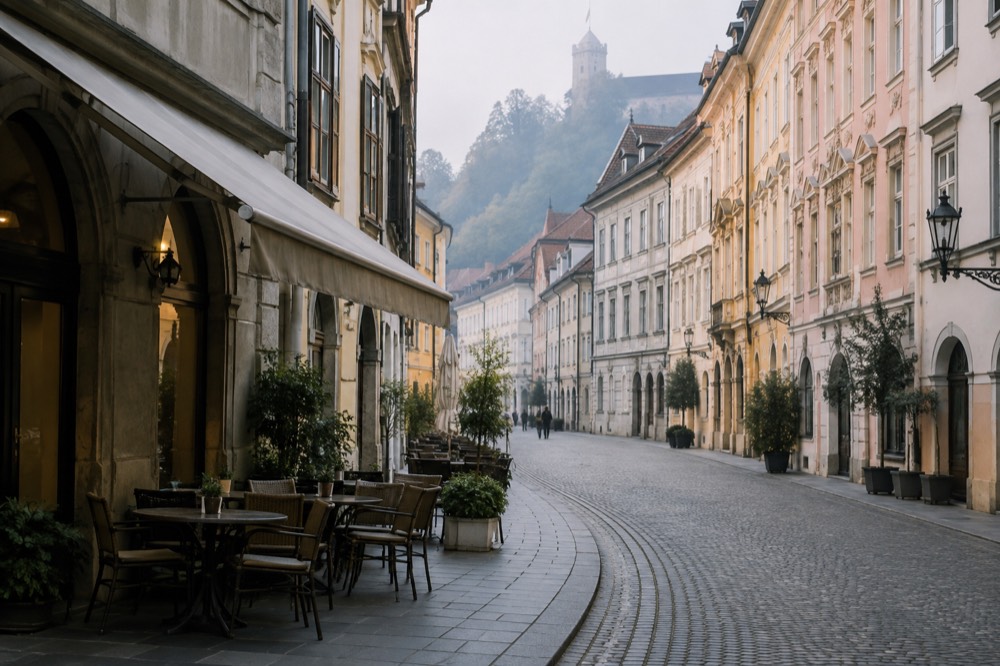
The guided option suits the karst and the Alps best, because the caves' timed entries and the alpine trailheads are where a car is genuinely more trouble than it is worth. A free walk is also worth naming here: the GuruWalk "Ljubljana Unveiled" tour, tips-based, rated 4.91 from 1,496 reviews, covers the Old Town from Roman roots to the Dragon Bridge and makes a good orientation hour on day one, before striking out for the gems above.
Slovenia being in the European Union, the eurozone and the Schengen area removes the usual border friction from any of this. There are no routine border checks arriving from Italy, Austria, Hungary or Croatia, and no currency to change if you are coming from the eurozone, so a day trip that crosses the old Croatian border, to Zagreb for instance, is now an internal journey.
For planning purposes, Ljubljana is a two-night city: 1,392,728 tourist arrivals produced 2,844,129 overnight stays in the municipality in 2025, an average stay of about 2.04 nights. That is enough for the postcard sights plus one or two genuine gems, and it is exactly why choosing the gems matters more here than in a capital you would give a week.
Common Questions About Hidden Gems in Ljubljana
What Are Some Hidden Gems In Ljubljana?
Metelkova Mesto's autonomous art quarter, the covered halls of the Central Market, the Plečnik House in Trnovo with its hourly guided tours, and the Open Kitchen food market on sunny Fridays from March to November. The Museum of Illusions, open daily 09:00–21:00 at 16 EUR, is a strong rainy-day addition.
What Are Some Hidden Gems To Visit In Slovenia?
The Škocjan Caves, a UNESCO site since 1986 with a walking route of about 400 stairs; the Velika Planina herdsmen's village; the Vipava Valley wine region; Idrija's mercury-mining heritage; and Škofja Loka's medieval core. All sit within about two hours of Ljubljana and several run as guided day trips from the city.
Is Metelkova free to visit?
Entry to the Metelkova area is free and the street art is visible at any hour. Individual clubs inside set their own covers, and the quarter is most active in the evenings, busiest on Friday and Saturday.
Are Ljubljana's museums free on certain days?
Yes. The national institutions, including the National Gallery, MSUM and the Slovenian Ethnographic Museum, admit visitors free on the first Sunday of every month. Note that most of them close on Mondays, so the first Sunday is also a way around the week's dead day.
What is the rainiest time to plan around?
September and October are the joint wettest months at 147 mm each, above July's 115 mm, and they tie with December as the foggiest at 12.4 fog days each. Late spring and early summer are the drier, brighter windows for the outdoor gems.
Can you reach the Slovenia-wide gems without a car?
Yes. The Škocjan Caves, Velika Planina and the Vipava Valley all run as guided day trips from central Ljubljana, and the train network reaches Lake Bled and other towns. Inside Ljubljana itself the centre is pedestrianised, so no gem in the core requires a vehicle.