Ljubljana for Free: A No Cost Day
Ljubljana is one of the few European capitals where a visitor can spend a whole day and pay for nothing but coffee, if even that. The centre is pedestrianised, the riverbanks are open, the castle grounds cost nothing and the national museums throw open their doors on the first Sunday of every month.
Short answer
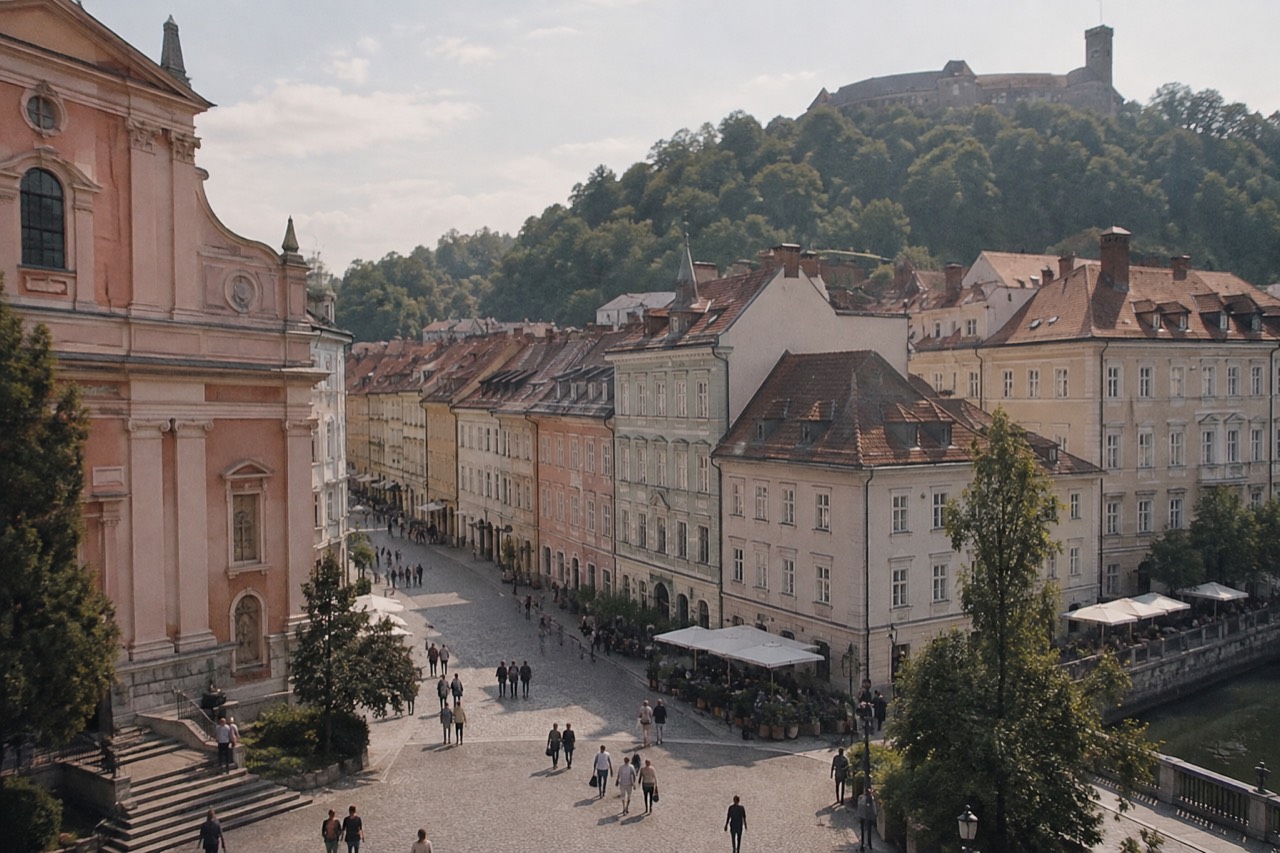
A no-cost day in Ljubljana is entirely realistic. The Old Town, Triple Bridge, Prešeren Square, the Ljubljanica banks, Metelkova and Tivoli Park are all free to wander, the castle grounds cost nothing, national museums are free on the first Sunday of each month, and GuruWalk runs tips-based walking tours that carry no fixed price at all.
Ljubljana records 1,392,728 tourist arrivals a year, and the average visitor stays about 2.04 nights, which makes it a short-break city where every euro and every hour counts. The good news is that the city's best material is free. The historic centre is a pedestrian zone of roughly 20 hectares, closed to general motor traffic, so the single most expensive thing about most capitals, getting around, costs nothing here on foot. This itinerary walks through one full day that spends nothing on sights, and it explains where the free stuff genuinely ends, because a few famous items, the funicular and the castle tower among them, are paid and always will be.
Slovenia is in the European Union, the eurozone and the Schengen area, which quietly helps a free day too: a visitor arriving from Italy, Austria, Hungary or Croatia crosses no border check and changes no money, so there are no hidden arrival costs eating into the budget before the first sight is even seen. The euro has been the currency since 1 January 2007, and every price in this article is in it.
What Can You Actually Do in Ljubljana for Free?
Yes, a great deal: the Old Town and its bridges, Prešeren Square, the Ljubljanica riverbanks, Tivoli Park, Metelkova's street art, the Central Market's outdoor stalls and the castle grounds all cost nothing to enter or wander. What is not free is anything that moves you uphill or underground: the funicular, the castle tower, the caves and the paid museum exhibitions. Plan around that line and a no-cost day works.
The distinction that matters is between a place and a machine. Prešeren Square, Tromostovje and the Čevljarski most shoemakers' bridge are places; standing in them, photographing them and crossing them has never cost anyone anything. The funicular is a machine, and machines charge. The same logic applies indoors. The permanent collections of the National Gallery normally cost 10 EUR, but on the first Sunday of every month the national institutions, the National Museum of Slovenia, the National Gallery, MSUM and the Slovenian Ethnographic Museum among them, admit visitors free of charge, a rule each institution publishes on its own site.
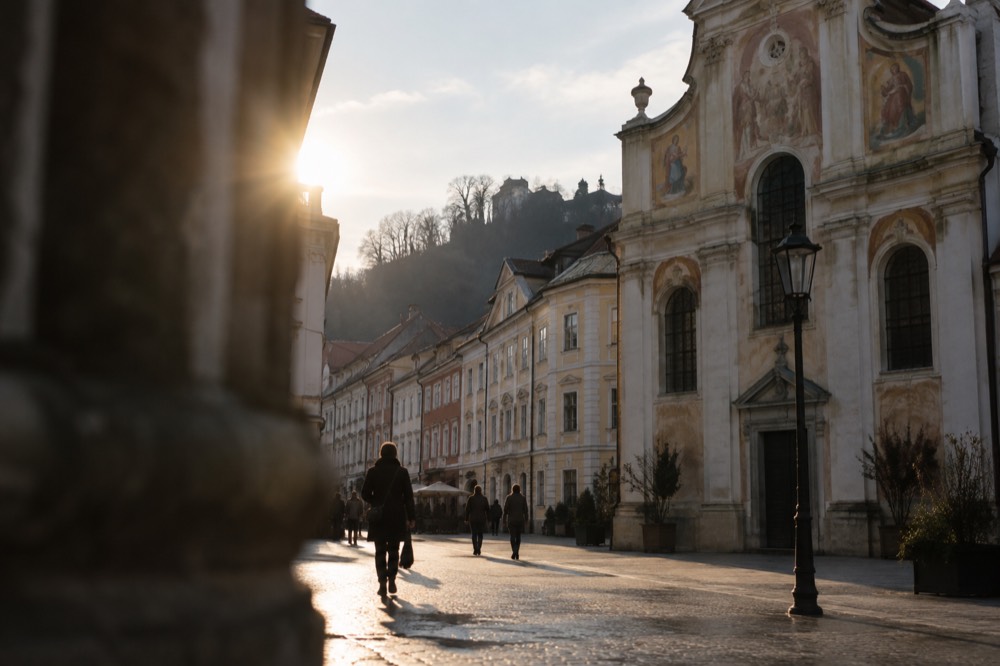
For anyone building a day around free sights, the Old Town walking guide is the natural companion: it maps the lanes between the river and the castle hill that this itinerary moves through. The honest summary is that Ljubljana's free layer is not a consolation prize. It is the layer most residents actually live in.
| Free sight | What you get | Any catch |
|---|---|---|
| Prešeren Square and Tromostovje | The city's two signature landmarks, open around the clock | Crowds at midday |
| Ljubljanica riverbanks | Waterside promenades on both banks through the centre | None |
| Castle grounds | The hill, the paths and the views over the city | Tower and exhibitions are paid |
| Tivoli Park | Laid-out parkland, walking trails and outdoor art | None |
| Metelkova | Street art, sculptures and an autonomous cultural quarter | Clubs set their own evening covers |
| Central Market, outdoor stalls | Market atmosphere on Vodnikov and Pogačarjev trg | Produce is for sale, browsing is free |
Is the Old Town Really Free to Walk?
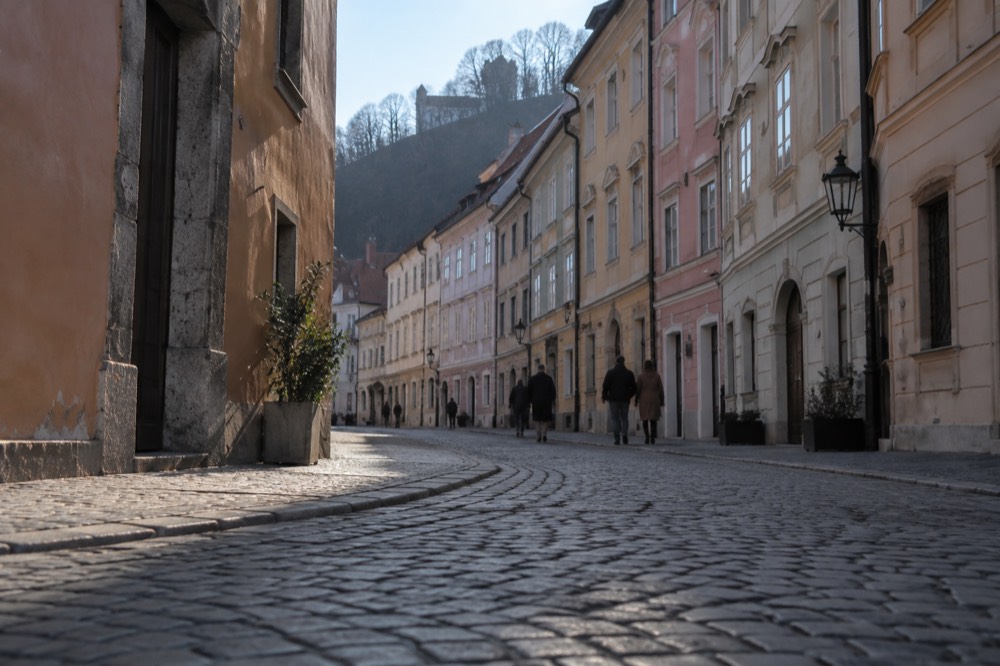
Completely. The historic centre has been closed to general motor traffic and progressively pedestrianised since 2007, so every street between the Ljubljanica and the castle hill is free, open and walkable at any hour. There is no ticket, no gate and no guided-route requirement anywhere in it. The only paid items inside the Old Town's footprint are the castle attractions uphill and the boat trips on the river.
That pedestrianisation is the quiet hero of a budget day. The city's own mobility pages describe a car-free zone of roughly 20 hectares, which means the whole sightseeing core is a walking space by design rather than by accident. A visitor arriving by car parks once at the edge and then spends nothing on transport for the rest of the day, because everything in the centre is a short walk from everything else.
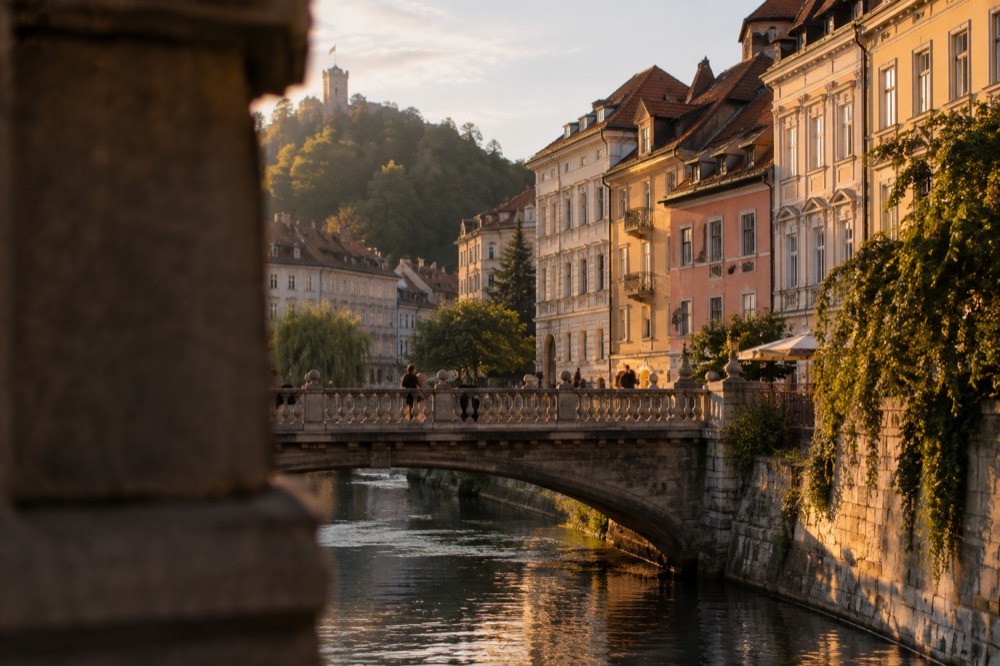
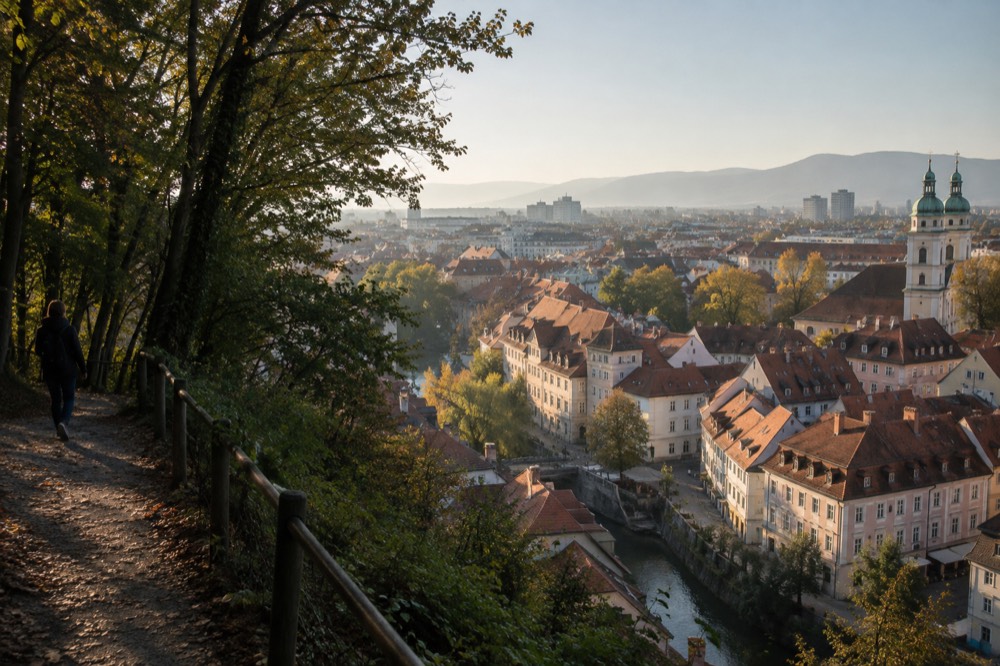
The route that costs nothing runs from Prešeren Square across the Triple Bridge, along the left bank past the Franciscan Church of the Annunciation, over Čevljarski most and up the lanes toward the cathedral. From there the castle hill paths climb through trees to the castle grounds, and the view back over the red rooftops is the best free panorama in the city. The castle guide covers what is paid at the top, so nothing on the hill comes as a surprise.
If walking the whole loop alone feels like hard work, a guided option exists at the opposite end of the price spectrum, and the paid day trips are there for a different day of the trip. The trio above spans both: a tips-based orientation walk, a cave-and-castle day trip, and a Lake Bled excursion.
Which Museums and Galleries Cost Nothing?
On the first Sunday of every month, the national institutions open free of charge: the National Museum of Slovenia, the National Gallery, MSUM Metelkova and the Slovenian Ethnographic Museum all publish free first-Sunday admission on their own sites. On every other day, only the permanent free layer applies, which means Metelkova's outdoor art and the city's churches rather than the collections.
Time a visit to the first Sunday and the museum problem disappears. The National Gallery normally charges 10 EUR for its permanent collection, the Museum of Modern Art 7 EUR, MSUM 7 EUR, the City Museum 10 EUR and the Ethnographic Museum 8 EUR, so a family hitting three institutions on a free Sunday saves a meaningful sum. The catch is the day of the week: nearly every institution here closes on Monday, so a Sunday-to-Monday visit loses the second day entirely.
| Institution | Normal adult price | Closed | Free first Sunday |
|---|---|---|---|
| National Gallery | 10 EUR permanent | Monday | Yes |
| Slovenian Ethnographic Museum | 8 EUR | Monday | Yes |
| MSUM Metelkova | 7 EUR | Monday | Yes |
| National Museum of Slovenia | not published here | open daily | Yes |
| Museum of Modern Art | 7 EUR | Monday | Check the listing |
| City Museum of Ljubljana | 10 EUR | Monday | Check the listing |
The free-first-Sunday rule was confirmed independently on four separate official sites, which is worth knowing because a similar rule elsewhere in the region has been misreported as a first-Friday rule. The other genuinely free indoor-ish option is Metelkova, the autonomous cultural centre in former army barracks: entry to the area is free, the street art is the exhibit, and only the individual clubs set their own evening covers.
What Does a Free Day in Ljubljana Look Like, Hour by Hour?
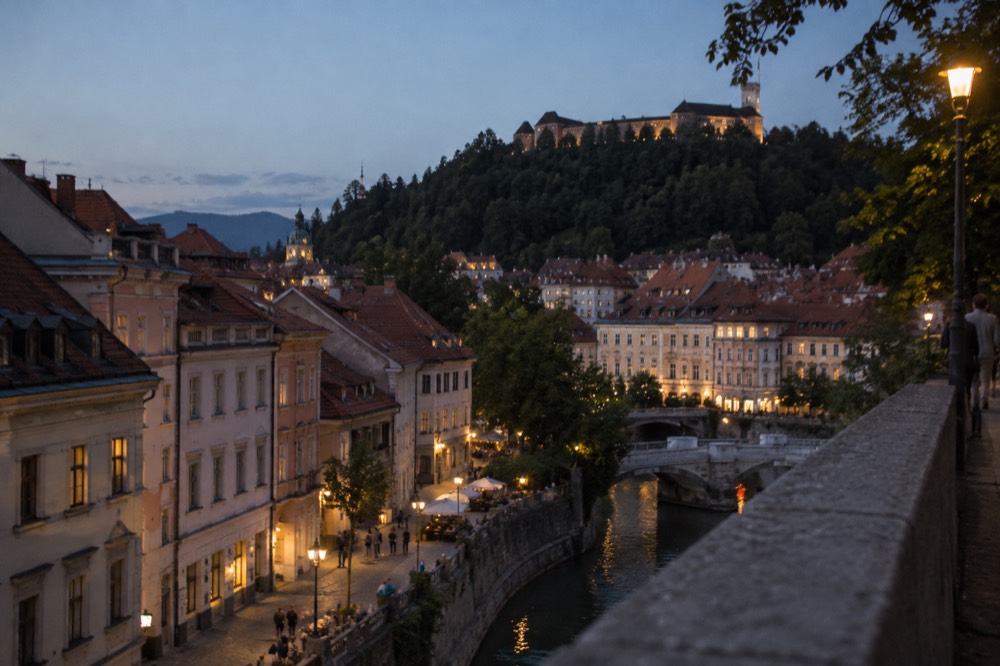
Start at Prešeren Square around 09:00, cross the Triple Bridge, walk the riverbanks, climb the castle hill paths late morning when the light is best, come down through the Central Market around noon, spend the afternoon between Tivoli Park and Metelkova, and finish on the riverbank at dusk. Every step of that shape is free; the only spending decisions are coffee, lunch and an evening drink.
The order matters more than the items. Morning light on the square and the bridges is the city at its best before the day-trippers arrive, and the castle hill is best climbed before the afternoon heat in summer or before the fog thickens in the colder half of the year. The market hits its stride by mid-morning, and Metelkova's outdoor art is a daytime activity, while its clubs, which do charge, belong to the evening.
| Time | Where | What it costs |
|---|---|---|
| 09:00 | Prešeren Square and Tromostovje | Nothing |
| 10:00 | Riverbanks and Čevljarski most | Nothing |
| 11:00 | Castle hill paths and grounds | Nothing uphill on foot |
| 12:30 | Central Market, outdoor stalls | Free to browse |
| 14:00 | Tivoli Park | Nothing |
| 16:00 | Metelkova outdoor art | Nothing |
| 18:00 | Riverbank at dusk | Nothing |
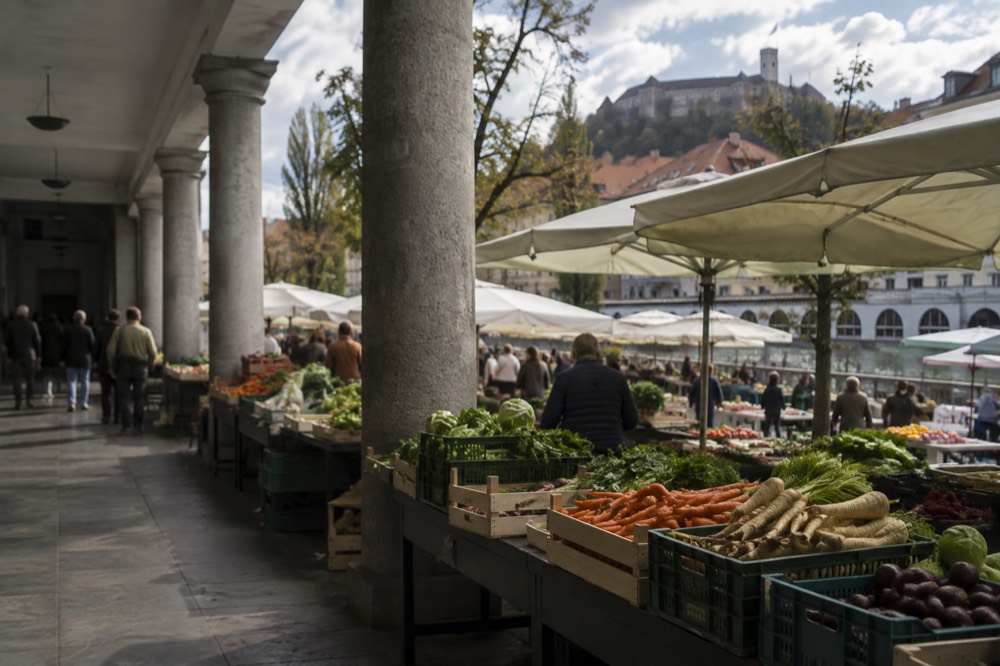
Two practical notes shape the day. The outdoor market on Vodnikov and Pogačarjev trg runs roughly 06:00 to 18:00 in summer and 06:00 to 16:00 in winter, Monday to Saturday, so the lunch-hour visit lands comfortably inside the opening hours. And on Fridays from roughly March to November, Pogačarjev trg hosts the Odprta Kuhna open kitchen food market, which is not free but is the cheapest way to eat restaurant food in the centre, with one literal caveat: the official wording is "every sunny Friday", and the market is cancelled in bad weather.
Where Can You Eat on a No-spend Day?
Honestly, nowhere serves a full meal for nothing, but the free-adjacent layer is thick: the Central Market's outdoor stalls are free to browse, drinking water is not a cost concern the way it is in some capitals, and the cheapest hot food clusters around the market and the student district. The realistic budget for food on this itinerary is a few euros, not zero, and the market is where to spend them.
A no-cost day should be honest about its one soft spot, and food is it. The covered market halls open Monday to Friday 07:00 to 16:00 and Saturday 07:00 to 14:00, and the outdoor stalls run longer, so fruit, bread and cheese from the market is the classic low-spend lunch, eaten on the riverbank five minutes away. The where to eat guide and the budget guide cover the cheap kitchens properly for anyone loosening the purse strings.
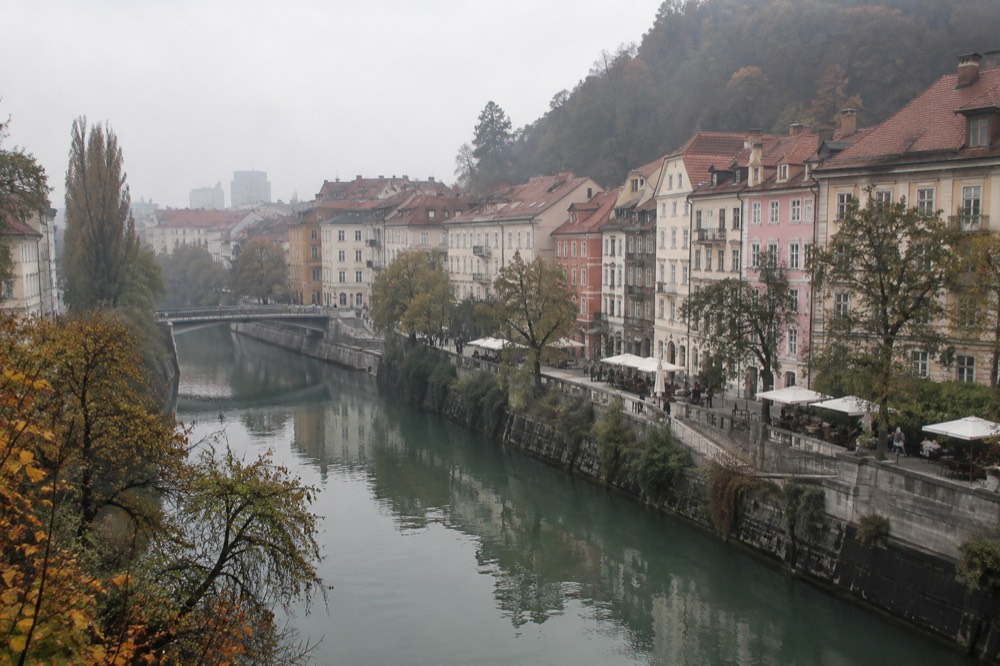
The Friday-only Odprta Kuhna deserves its mention again as a single clause, not a second explanation: it is the market square's street-food event, weather permitting. Outside Friday, the practical move is to buy at the market before the lunch rush and take it to the Ljubljanica banks, which are the city's free dining room. The rest of the planning pages sit on Ljubljana Travel Guide.
Is the Free Walking Tour Really Free?
Yes, in the specific sense that matters: Ljubljana's free walks run on the GuruWalk platform, they carry no fixed price, and you pay the guide what you think the walk was worth at the end. The first-visit orientation walk lasts two hours and is built exactly for day one in the city, which makes it the natural opener for this itinerary rather than an add-on.
GuruWalk must be named here because these are genuinely tips-based walks, not a marketing word. The orientation walk, Ljubljana: The First Tour You Have To Take, is designed to ground a new arrival: where the centre sits, how the bridges connect, what deserves a return visit. Several other GuruWalk walks cover the same ground with different angles, from a Roman-roots-and-dragons walk to a communist-era history walk, all on the same pay-what-you-wish basis.
The reason to front-load a free walk on a free day is sequencing. A two-hour orientation in the morning tells a visitor which of the afternoon's free options, Tivoli, Metelkova, the castle hill, actually suits them, instead of walking all three on spec. The free walking tour guide compares the individual walks in detail.
Where Are the Best Free Views?
The castle hill paths, without question: climbing on foot rather than taking the funicular puts the whole panorama over the city in front of you for nothing. Beyond the centre, Rožnik and Šmarna gora are free hill walks with wider views, and Tivoli Park's Jakopič Promenade is the free green axis leading out of the city. The paid views, the castle Viewing Tower and the funicular, buy convenience, not a different city.
The funicular costs 3.30 EUR single or 6.00 EUR return for an adult, and a castle ticket including the funicular is 19.00 EUR, so the walk-up path is the single biggest saving available on this itinerary. The paths are genuine woodland walks, not stairs, and they deposit walkers in the castle grounds, which cost nothing to reach on foot. The funicular guide has the full price table for anyone weighing the climb.
That basin inversion is the site's most useful piece of climate knowledge for a free day. On a grey morning when the riverbank is under murk, the castle hill or Šmarna gora is frequently in sun a few hundred metres up, and the walk costs nothing either way. In October and November, which each average a single clear day at street level, going uphill is not a fallback, it is the plan.
Can a Free Day Stretch Into a Free Day Trip?
Not entirely: the famous day trips from Ljubljana, Lake Bled, Postojna Cave, the Soča Valley, all involve transport and paid attractions, so none of them is free. What a no-cost day does is bank the savings that fund one paid excursion, and the two most popular ones, Bled and Postojna, are both bookable as organised trips that bundle the transport and the tickets into a single price.
This is the honest boundary of the free itinerary, and it is worth stating plainly rather than pretending otherwise. Lake Bled carries more search demand than the entire city, and day trips are the second money surface of a Ljubljana visit, so most visitors will take at least one. A day spent paying for nothing in the capital is what makes that excursion affordable without stretching the overall budget.
The Bled trip is the classic first excursion: a six-hour round trip from the city to the lake, the island and the clifftop castle. The Lake Bled guide and the Ljubljana to Lake Bled guide cover the independent route for anyone who would rather spend time than money, though the coach and train fares for that route are not published in any source this site could verify, so the organised comparison has to be made on the day.
The cave trip is the other pillar, and it is the one the weather cannot spoil: caves hold roughly the same temperature year round, about 10 C at Postojna, which makes them the reliable answer for the wet months that the ARSO series says are wetter than visitors expect, September and October both recording 147 mm. The Postojna Cave guide has the full practical detail, and the rainy day guide ranks the wet-weather options.
For anyone with more days than money, the three days in Ljubljana guide shows how to slot one paid excursion into a longer stay, and the best time to visit guide explains why the sunniest months for the free walking layer are April through September, the stretch when the city out-shines the mountains. There is a seasonal wrinkle worth knowing before committing to dates: the free walking layer of this itinerary works in any month, but the city's own numbers say the experience differs sharply. Summer brings long, bright evenings on the riverbank, with July averaging 293 hours of sunshine, while November delivers 66 hours across the whole month and the highest overcast-day count of the year. Neither month changes a single price in this article, which is rather the point: the free itinerary is the same itinerary in fog or in sun, and only the clothing changes.
Common Questions About Free Things to Do in Ljubljana
Is Ljubljana Old Town free to enter?
Yes, completely. The historic centre has been pedestrianised and closed to general traffic since 2007, and there is no ticket or gate anywhere in it. Only the castle attractions uphill and the river boat trips charge.
Is Ljubljana Castle free?
The castle grounds are free to enter, but the funicular, the Viewing Tower and the exhibitions are paid, with a combined castle-and-funicular ticket at 19.00 EUR for an adult. Walking up the hill paths costs nothing.
Are museums in Ljubljana free on certain days?
Yes. The national institutions, including the National Gallery, the National Museum of Slovenia, MSUM and the Slovenian Ethnographic Museum, admit visitors free of charge on the first Sunday of every month. Most close on Monday.
Is the free walking tour in Ljubljana actually free?
The free walks run on the GuruWalk platform with no fixed price; you tip the guide what you think the walk was worth at the end. The first-visit orientation walk lasts two hours.
What is the best free view over Ljubljana?
The castle hill paths, climbed on foot. Because the city sits in a basin and fogs in during the colder half of the year, the hills above the centre are often in sunshine while the riverbank is under cloud, so the free climb frequently buys the better view too.
Can you do Ljubljana on zero euros a day?
Almost. Every sight in this itinerary is free, so the only unavoidable costs are food and drink. A few euros at the Central Market covers lunch, and the rest of the day can genuinely cost nothing.