Can You Take a Train from Slovenia to Croatia?
Yes, a direct train links Ljubljana and Zagreb, and Croatia has been in the Schengen area since 2023, so there is no border check. Here is what to know before you book.
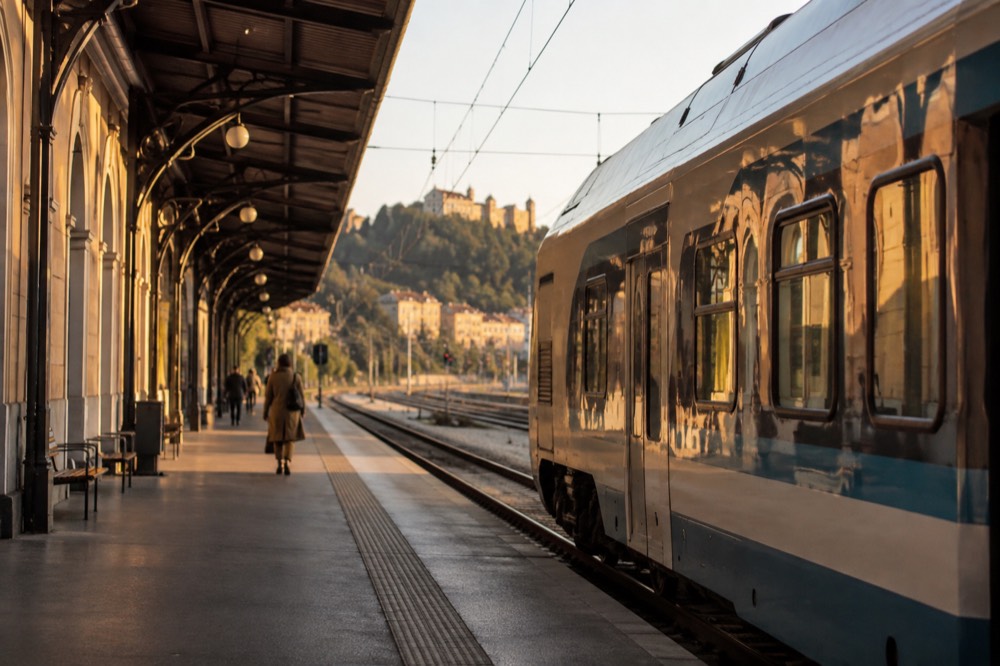
Can You Take a Train from Slovenia to Croatia?
Yes. A direct daytime train runs between Ljubljana and Zagreb, usually once or twice a day depending on the timetable period, and the journey crosses an internal Schengen border with no routine passport control since Croatia joined the Schengen area on 1 January 2023. Both countries use the euro, so there is no currency to change either. The service is operated by Slovenia's national rail operator together with its Croatian counterpart, and tickets go on sale through each operator's own channels.
That is the short version, and it is a newer state of affairs than most guidebooks reflect. For years the Ljubljana to Zagreb route was a slow, occasionally suspended cross-border service, and the border itself meant a passport check at Dobova in the middle of the ride. Two things changed. Croatia adopted the euro on 1 January 2023, and it joined the Schengen area on the same date, which abolished routine checks at internal land borders. The train now rolls through the frontier the way a Vienna to Prague train does.
The route itself is short by international rail standards. Ljubljana and Zagreb are close capitals, and the line runs south through the Slovenian countryside to the Sava river crossing at Dobova before continuing into Croatia. Because the two capitals sit so near each other, the train competes directly with the coach on price and with driving on convenience, and the comparison section below breaks down when each wins.
One planning note before anything else: this site does not publish the fare. Slovenian and Croatian rail fares for the route are not available as a static, verifiable table, so check the operator's own booking site for the current price and the day's departure times. Everything in this article that is stated as fact is sourced; everything that moves with the timetable is flagged for you to check live.
Which Train Runs Between Ljubljana and Zagreb?
The core service is a direct international train linking the two capitals in a single seat, departing from Ljubljana's main station and arriving at Zagreb Glavni kolodvor, the city's central station. Departure slots sit in the morning and, on many timetable dates, again in the afternoon or evening, but the exact pattern shifts between the summer and winter timetables. There is no overnight train on this route, and no high-speed service: this is conventional rail on a conventional line.
Ljubljana's station is compact and central, a short walk from the bus station and roughly ten minutes on foot from Prešeren Square, so getting to your departure is rarely the hard part of the journey. Zagreb Glavni kolodvor is equally central, sitting at the top of the city's main square chain, which means you step off the train and straight into a walkable city. If you are planning the Zagreb side in detail, the Ljubljana to Zagreb route guide covers the crossing and the arrival, and the Zagreb day trip guide covers what to do once you are there.
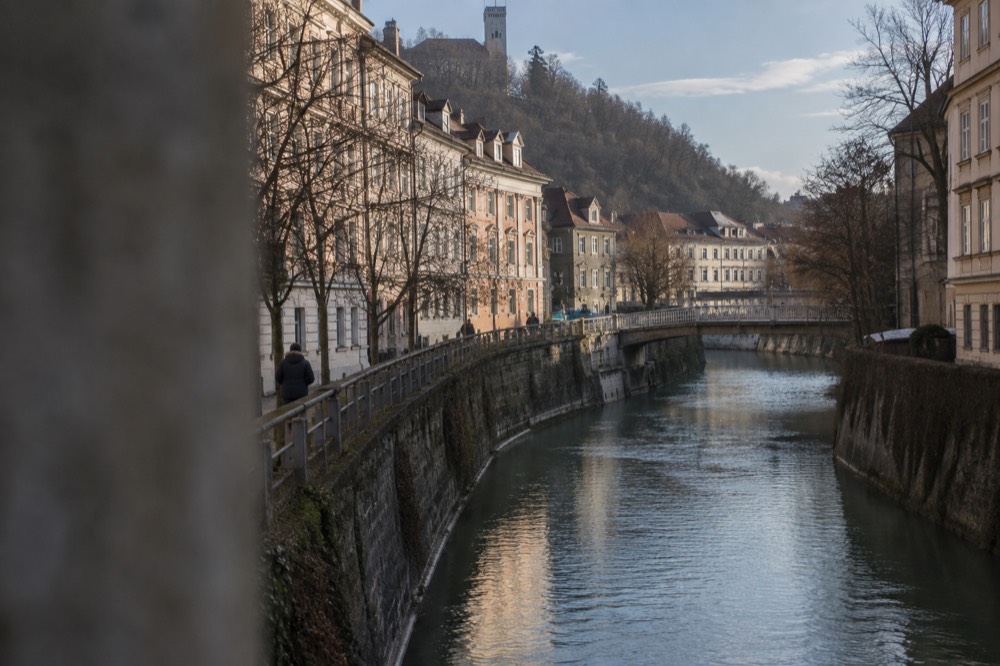
Booking is straightforward. Tickets are sold by the Slovenian operator and by the Croatian operator, and either can issue the international ticket. Prices are dynamic in the sense that operators sometimes offer advance-purchase fares, so buying ahead online rather than at the counter on the day can be cheaper, though the saving on a route this short is modest. Seat reservation requirements also vary by timetable period, so confirm when you buy.
Here is what is fixed and what is not, at a glance:
| Question | What is settled | What to check live |
|---|---|---|
| Is there a direct train? | Yes, Ljubljana to Zagreb without a change | Number of departures per day |
| Border control | None routinely, Schengen internal since 1 January 2023 | Occasional temporary checks |
| Currency | Euro in both countries | Nothing to change |
| Ticket price | Not published as a static verifiable fare | Operator's booking site |
| Journey time | Not published as a static verifiable figure | Operator's timetable |
| Overnight option | None on this route | Not applicable |
The temporary-checks line deserves a plain explanation. Schengen membership abolished routine border checks, but member states can reintroduce short-term checks at internal borders for specific events or security reasons, and both Slovenia and Croatia have done so on occasion since 2023. Carry your passport anyway. A spot check is unlikely on this train, but it is not impossible, and being without documents on an international service is a needless risk.
If you are weighing the train against other ways of spending a day out of the city, the day trips from Ljubljana guide lays out the full menu, and the selection below covers three of the most booked options, including one that heads in the opposite direction from Croatia entirely.
Can You Reach the Croatian Coast by Train from Slovenia?
Not usefully. There is no practical rail route from Ljubljana to the Croatian coastal cities most visitors want: the direct coastal connections that once existed have been cut back over the decades, and reaching Split, Zadar or Dubrovnik by rail from Ljubljana means long routings through Zagreb with changes, taking most of a day or more. For the Adriatic, the coach, a private transfer or a tour is the realistic answer, not the train.
This is the single biggest mismatch between what people imagine and what the network delivers. Visitors picture a scenic alpine-to-Adriatic railway, and Slovenia does have genuinely beautiful rail, but the cross-border coastal links are the weak point. Rijeka, the nearest Croatian port city, has a rail connection that involves routing and timings too unreliable to plan a day around, and the Dalmatian coast south of it is essentially off the rail map for through travel from Slovenia.
The practical alternatives are well covered elsewhere on this site. Piran and the Slovenian coast sit close to the Croatian border at Istria, and the Piran guide explains the coastal option on the Slovenian side, which is reachable as an organised trip from Ljubljana without any rail involvement at all. If your heart is set on Croatian Istria or Dalmatia, a coach from Ljubljana, a rental car, or a tour that crosses the border by road will beat any rail routing comfortably.
For context on how the border itself works by road, the situation is the same as by rail. Croatia joined Schengen on 1 January 2023, so driving from Slovenia into Croatia is an internal crossing with no routine stop, the same as the train. The old images of queues at the frontier are simply out of date for this particular pair of countries.
Is the Train or the Coach Better for Ljubljana to Zagreb?
For most travellers the train is the better choice: it departs and arrives at central stations in both cities, the border is invisible, and the ride is comfortable by regional standards. The coach competes on frequency, often running several times a day where the train runs once or twice, and sometimes on price. If your timing is rigid and the train's single departure does not fit, the coach wins by default; otherwise, take the train.
The frequency point is the real deciding factor. A direct international train that runs once or twice daily gives you a narrow window: miss it, or arrive in Ljubljana after its departure, and the coach is your only same-day option. Coaches between the two capitals run to a denser timetable and can be booked on the day without much anxiety. The trade is that the coach terminal experience, boarding and border-side services, is generally less pleasant than a railway station, though with no border stop at all that last difference has shrunk.
Neither option is expensive by Western European standards, but as with the train fare, this site does not publish coach prices for the route, because no static, verifiable fare table exists for it. Check the operator's own site when you know your travel date.
If you would rather not organise the crossing yourself at all, a guided full-day trip to Zagreb from Ljubljana exists as a bookable product, one of the roster's newer listings, which handles the transport and gives you a structured day in the city. It runs eight to nine hours and suits travellers who want the Croatian capital without the logistics.
What If You Want to See Slovenia Before Crossing?
The smart pattern is to base yourself in Ljubljana for a few days, use the city as a hub for the headline Slovenian sights, and then take the train to Zagreb at the end of the stay rather than day-hopping across the border. Ljubljana's own statistics support this: the city averages about 2.04 nights per visitor arrival, and the organised tours that leave from the city centre cover the caves, Lake Bled and the coast without needing a car.
The strongest pre-Croatia excursion from Ljubljana is the karst. Postojna Cave and Predjama Castle sit conveniently on the corridor heading south and west, and the six-hour combined tour from Ljubljana is the single most booked cave product on this site, rated 4.8 across 2,802 reviews and priced from $132. The cave itself holds about 10 degrees Celsius year round, which makes it as reliable in an August heatwave as in November drizzle, and the visit includes the underground train ride along part of the 3.7 km visitor route. The castle perched in the cliff face above it, Predjama, is a separate sight on the same ticket option.
If caves are not your thing, the other natural pairing is Lake Bled, which carries more search demand than the city itself. The standard six-hour trip from Ljubljana, including Bled Castle, runs from $86 and is rated 4.7 across 1,641 reviews, and the train from Ljubljana to Lake Bled is covered separately for anyone determined to do it by rail. For orientation on day one, the free GuruWalk walk Ljubljana Unveiled, tips-based, rated 4.91 from 1,496 reviews, covers the Old Town from Roman roots to the dragon bridge in about two hours and costs nothing upfront.
What Should You Check Before You Travel?
Three things: the day's departure times, your passport, and your onward connection in Zagreb. The timetable shifts between summer and winter periods, so a departure that existed in July may not exist in February; Schengen means no routine border check but does not mean you can travel without a passport; and Zagreb's central station connects onward to the rest of Croatia, so a missed connection there can reshape your whole itinerary. Confirm all three on the operator's site the day before.
The passport point trips people up because the experience of the border, no stop, no check, no announcement, feels domestic. It is not. You are crossing between two sovereign states, and either country's authorities can ask for documents. Non-EU visitors in particular should note that the 90-days-in-180 Schengen clock covers both Slovenia and Croatia as one zone, so time in one counts against time in the other, and there is no fresh allowance on crossing.
Onward from Zagreb, the Croatian domestic network opens up: the capital has useful rail links towards the interior, though the coast again is better served by road. If Croatia is the main event of your trip and Slovenia the appetiser, [the train](https://omio.tpk.ro/exV6rGgH) from Ljubljana is a low-stress way to make the handover, and if it is the reverse, the same applies in the other direction with direct services arriving back into Ljubljana.
A final practical note on luggage: Ljubljana's station has left-luggage facilities, and Zagreb Glavni kolodvor likewise, so a late departure does not have to mean dragging bags through your last morning. The Ljubljana Travel Guide covers the city-side logistics, including where to store bags if your train leaves long after your check-out.
Before the closing questions, here again are the three most booked options for the days around your crossing:
Common Questions About Trains from Slovenia to Croatia
Can You Take A Train From Slovenia To Croatia?
Yes. A direct train runs between Ljubljana and Zagreb, typically once or twice daily depending on the timetable period. The border is an internal Schengen crossing since 1 January 2023, both countries use the euro, and tickets are sold by either national operator.
Is there a passport check on the Ljubljana to Zagreb train?
No routine check. Croatia joined the Schengen area on 1 January 2023, so the crossing is internal. Carry your passport anyway, because either state can run temporary checks, and non-EU visitors' Schengen time is counted across both countries as one zone.
Can you take a train from Ljubljana to Split or the Croatian coast?
Not practically. Reaching the Dalmatian coast by rail from Ljubljana means routing through Zagreb with changes and most of a day or more of travel. Coaches, [private transfers](https://gettransfer.tpk.ro/Ab8maxge) or tours are the realistic way to reach the Croatian coast from Slovenia.
Do Slovenia and Croatia use the same currency?
Yes, both use the euro. Slovenia adopted it on 1 January 2007 and Croatia on 1 January 2023, so no money changes hands at the border and no exchange is needed on the train.
Is the train or the coach better from Ljubljana to Zagreb?
The train is generally better: central stations at both ends, no border stop and a comfortable ride. The coach wins on frequency, often running several times a day against the train's one or two, so if the train's timing does not fit your plans, the coach is the fallback.
Can you book the Ljubljana to Zagreb train in advance?
Yes. Both operators sell tickets online, and advance purchase can be cheaper than buying at the counter on the day. Confirm the current fare and departure times on the operator's booking site, because this site does not publish a static fare for the route.