Piran and the Slovenian Coast from Ljubljana: The Complete Day Trip Guide
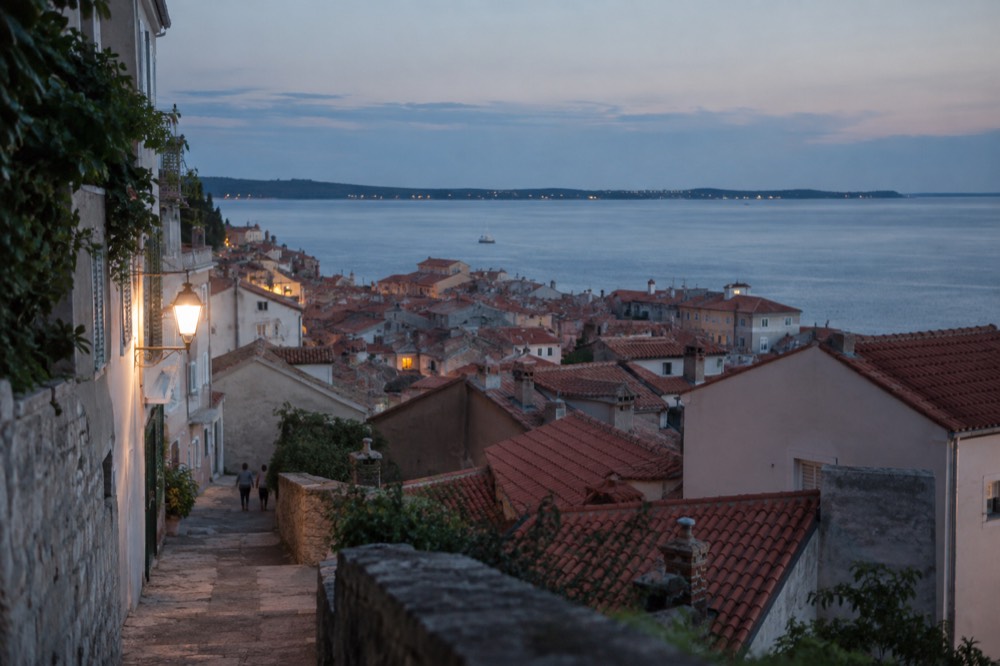
Piran is the jewel of Slovenia's 47-kilometre slice of coast, a compact old town of narrow streets and sea walls that sits just over an hour's drive southwest of Ljubljana.
Short answer
Piran is the Slovenian coast's essential day trip from Ljubljana, reachable in roughly 1 hour 15 minutes by car or about 1 hour 30 minutes by coach. The old town is small enough to explore on foot in a few hours. The strongest booked option combines the UNESCO Škocjan Caves with Piran in one 9h 30m day trip, from $126 per person.
Slovenia's coast is short, and Piran is the reason most people make the trip to it. The town presses itself onto a peninsula that juts into the Adriatic, with a church-crowned hill at its tip, a sea wall promenade along its flank and a tangle of streets that were laid out long before the car. Coming from Ljubljana, you trade the basin and its weather for salt air and a different palette entirely: pale stone, terracotta and open water.
This guide covers the full journey, Ljubljana to Piran and the coast, from how to get there and what it costs to the booked day trips that make the logistics someone else's problem. The coast pairs naturally with the karst country you drive through on the way, which is why the best-reviewed tours bolt a cave visit onto the seaside. It also answers the practical questions that decide the shape of the day: whether to drive, whether the caves are worth the detour, and which month rewards the drive most.
How Do You Get from Ljubljana to Piran and the Coast?
Piran sits on Slovenia's Adriatic coast, roughly 1 hour 15 minutes from Ljubljana by car via the A1 motorway, or around 1 hour 30 minutes by direct coach from the Ljubljana bus station. There is no railway to Piran itself; rail travellers change at Koper for a local bus or taxi for the final stretch. Most visitors either drive, take the coach, or let a booked day trip handle the road entirely.
The drive is straightforward. You follow the A1 southwest through the karst region, past Postojna and the limestone plateau, descending to the sea near Koper. Koper is the coast's working port town and the first stop for most routes; Piran is a further 20 minutes or so along the coastal road, passing Izola on the way. Parking in Piran itself is limited and the old town core is pedestrianised, so drivers typically leave the car at one of the car parks on the edge of town and walk in, which takes ten minutes or so. Arrive before mid-morning in summer if you want a space without circling.
Coaches run from the Ljubljana bus station to Koper and on to Piran through the day. Buy the ticket at the station or from the driver where the operator allows it, and check the return timetable before you commit to a late evening on the seafront, because the frequency thins out after early evening. Journey time and fare should be confirmed on the operator's own listing rather than guessed here. The station itself is central and easy to reach on foot from most of the old town hotels, which removes one transfer from the day.
If you are relying on public transport for the whole coast, Koper is the hub: it has the rail connection, the bigger bus interchange and the cruise-ship traffic covered in the Koper cruise day guide. Piran is the prettier destination, Koper the better-connected one. A common independent pattern is to ride the train as far as it goes, spend an hour in Koper's old core, then continue to Piran for the afternoon, though that stacks two connections onto a day that a single booked seat would simplify.
| Option | Rough journey time | Notes |
|---|---|---|
| Car via A1 motorway | 1h 15m | Park at the edge of town; old town core is car-free |
| Direct coach from Ljubljana | 1h 30m | Check the return timetable; evening frequency is thin |
| Train | Not direct | Rail ends at Koper; continue by local bus or taxi |
| Booked day trip | Door-to-door | Coach or minibus, guide included, no parking or timetables to manage |
What Makes Piran Worth the Journey?
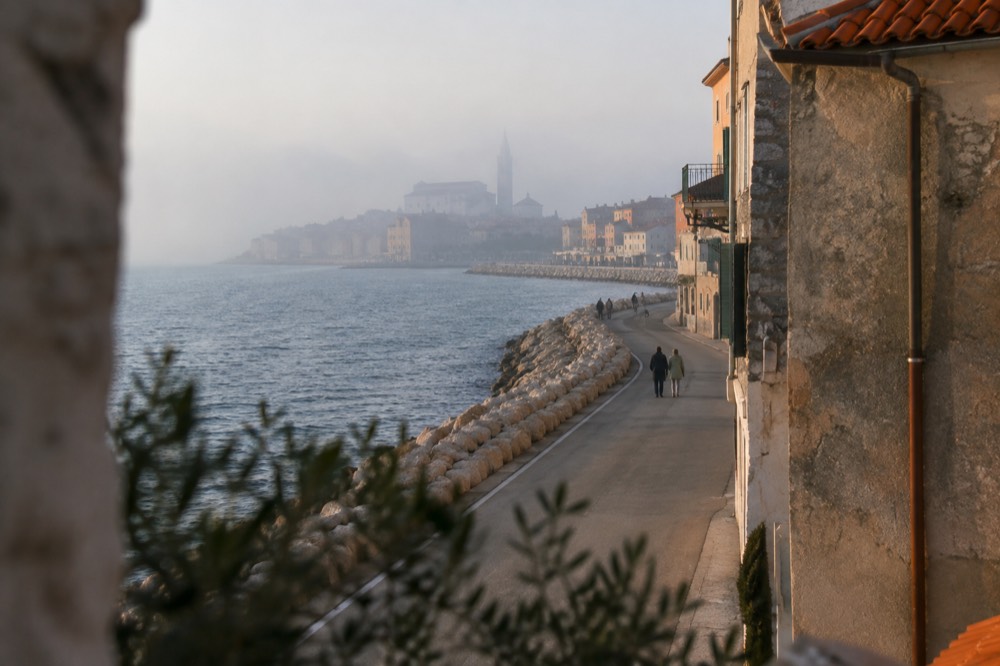
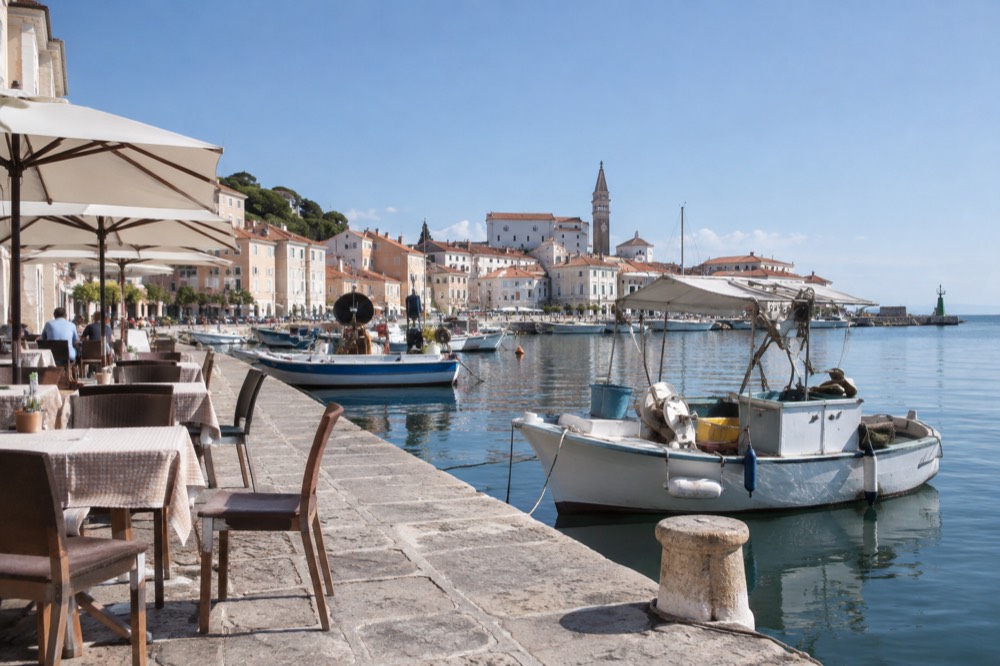
Piran packs a full old town, a hilltop church with the coast's best viewpoint, a working saltpan heritage and a sea wall promenade into a peninsula you can walk end to end in under half an hour. It is the most photogenic town on the Slovenian coast by a distance, and unlike larger coastal resorts it has retained its scale. For a day tripper, that compactness is the entire point: nothing needs a bus, and everything rewards wandering.
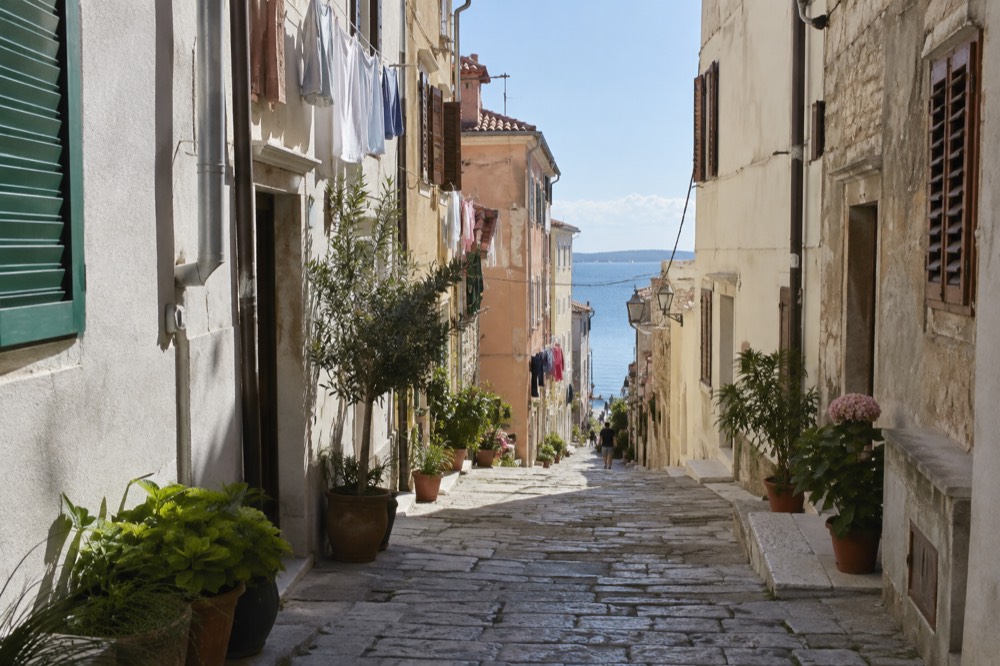
The town's character is Venetian, a legacy of the centuries when this shore was governed from across the Adriatic. You see it in the architecture of the main square, Tartini Square, named after the violinist Giuseppe Tartini, and in the tight streets climbing away from the water. The square sits on the site of a former harbour basin that was filled in, which is why it feels like a stage set: broad, enclosed and framed by facades. Cafes line its edges, and the town's rhythm gathers there in the late afternoon as the day visitors start to drift back to their buses.
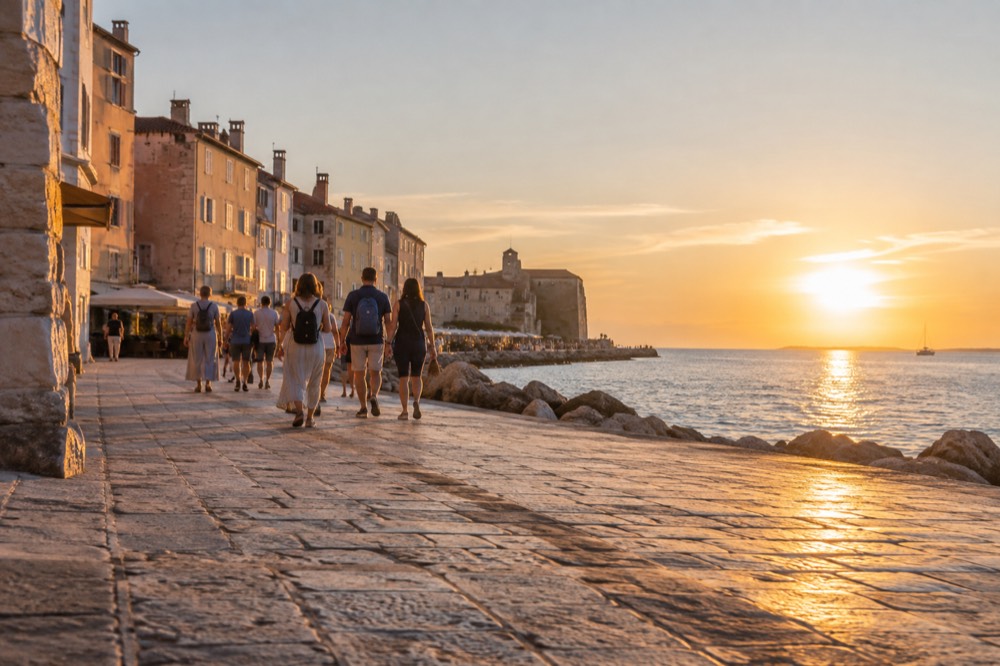
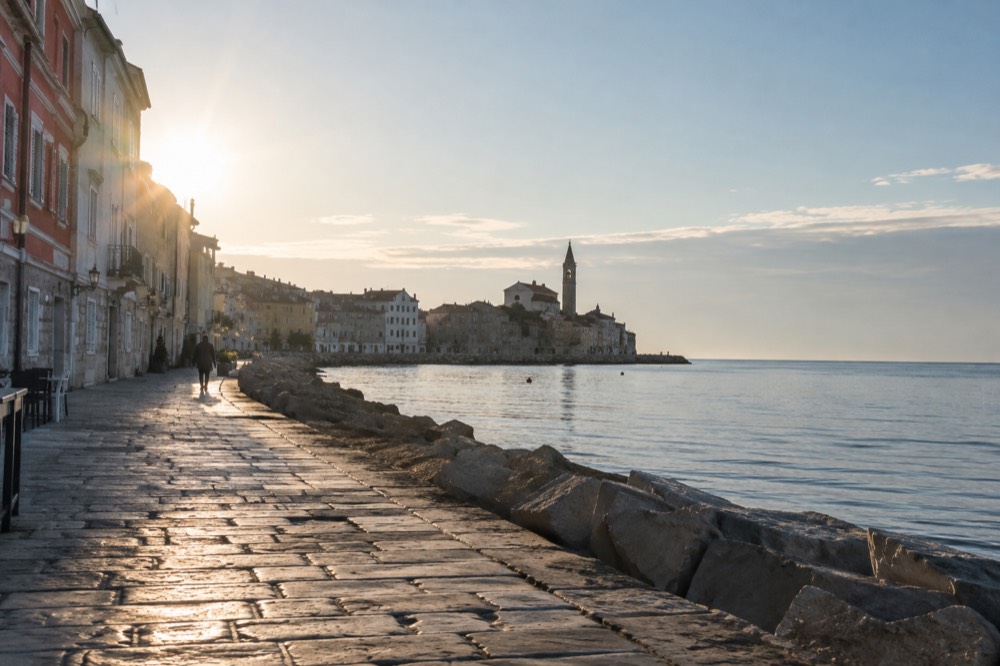
Climb to the Church of St George above the town and the payoff is a panorama over the terracotta roofs to the sea, with the Julian Alps visible inland on a clear day. The ascent is short but steep, a few hundred metres of cobbled lane, and the terrace at the top is the single best photo stop on the entire Slovenian coast. Back at sea level, the walk along the sea wall is the town's evening ritual, locals and visitors together, and it costs nothing. Sunsets here face west over open water, which is why so many tours time their Piran arrival for late afternoon.
Piran also sits beside the Sečovlje Salina Landscape Park, where salt has been harvested from evaporation pans for centuries. The saltpans are a short drive or bus ride away and are covered in the Lipica and Piran guide as a pairing. Within the town itself, a few hours cover the square, the church, the waterfront and a long lunch, and that unhurried pace is exactly what the day trip is for.
One honest caveat: Piran is small, and in July and August it is also busy. Cruise-ship passengers from Koper and the beach traffic of the coast converge on the same few streets. A morning arrival or a shoulder-season day changes the experience completely, and the town that feels crowded at noon can feel like your own by six in the evening.
Which Piran Day Trips from Ljubljana Are Worth Booking?
The best-reviewed Piran day trips from Ljubljana are the UNESCO Škocjan Caves and Piran combination (9h 30m, rated 4.7 from 382 reviews, from $126), the Piran historic walking tour (6 hours, rated 4.6 from 169 reviews, from $86) and the Lipica stud farm and Piran full-day tour (9h 30m, rated 4.6 from 89 reviews, from $126). All three include transport from Ljubljana, which matters because the coastal public transport timetable constrains independent travellers.
Booking a tour converts the day from a logistics puzzle into a single decision. The drive crosses the karst, so the strongest combinations use the caves as the morning stop and the coast as the afternoon reward, arriving in Piran as the day-tripper crowds thin and the light turns golden. Guides also carry the history: the Venetian centuries, the salt trade and the town's musical son are stories a self-guided visitor walks straight past.
The pure coastal option is the Piran trip with historic walking tour, six hours door to door, rated 4.6 from 169 reviews and priced from $86. It pairs the drive with a guided walk through the old town's history, which is the version to pick if caves hold no appeal and you want the town itself explained rather than just delivered. The shorter duration also makes it the gentlest day trip in this family, a consideration for anyone travelling with small children or anyone whose legs would rather not climb to St George twice in one afternoon.
The Lipica stud farm and Piran tour splits the day differently: the morning with the Lipizzaner horses at Lipica, the afternoon on the coast, 9h 30m in total, rated 4.6 from 89 reviews and from $126. Families with children often prefer this shape of day, and it is covered in more depth in the Lipica guide. Check availability on the live listing for your dates, since the small-group format means seats are limited.
| Tour | Duration | Rating | From |
|---|---|---|---|
| UNESCO Škocjan Caves and Piran day trip | 9h 30m | 4.7, 382 reviews | $126 |
| Piran trip with historic walking tour | 6 hours | 4.6, 169 reviews | $86 |
| Lipica stud farm and Piran full-day tour | 9h 30m | 4.6, 89 reviews | $126 |
| Postojna Cave and Predjama Castle tickets and tour | 6 hours | 4.8, 2802 reviews | $132 |
Can You Combine the Škocjan Caves with Piran in One Day?
Yes, and it is the strongest single day trip from Ljubljana to the southwest of the country. The UNESCO-listed Škocjan Caves and Piran day trip runs 9h 30m, is rated 4.7 from 382 reviews and costs from $126, pairing a 2h30 to 3h guided cave walk with an afternoon on the coast. The geography works because both stops sit on the same A1 corridor out of Ljubljana.
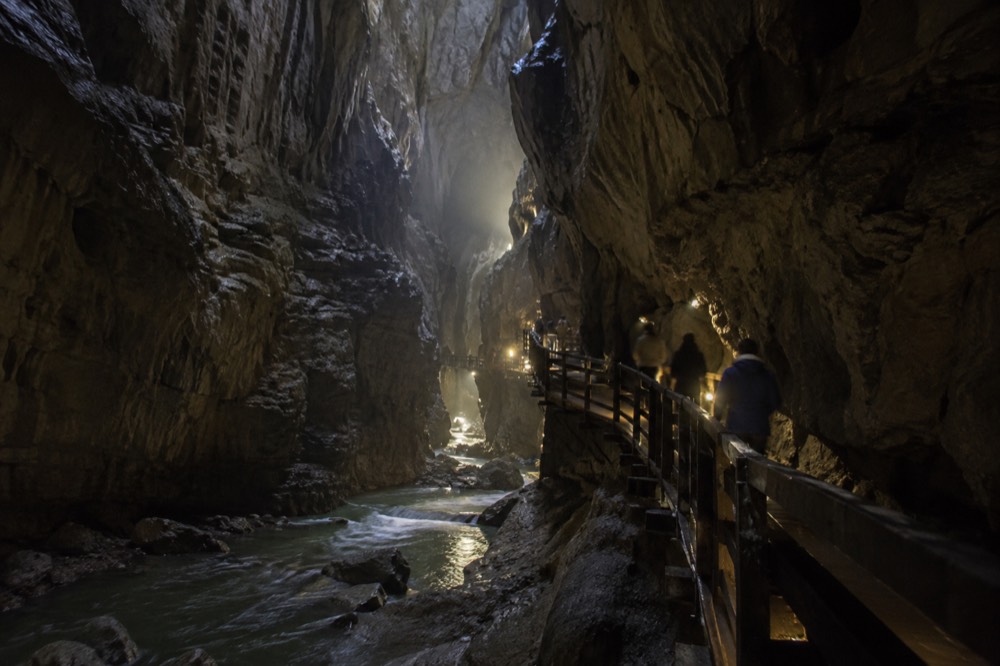
Škocjan is the cave system with the dramatic difference. Where Postojna runs a train through its show route, Škocjan is a walk: roughly 2 km of route, about 400 stairs, and the enormous underground canyon of the Reka River that earned the caves their UNESCO inscription in 1986. The cave holds about 12 C year round, so bring a layer even in August. The operator's own page sets the tour duration at 2h30 to 3 hours, and the seasonal adult ticket prices range from 16.00 EUR in the quiet months to 24.00 EUR in July and August, per the official Škocjan Caves visitor information.
| Season | Škocjan adult | Škocjan child |
|---|---|---|
| Jan, Feb, Mar, Nov, Dec | 16.00 EUR | 7.50 EUR |
| Apr, Oct | 18.00 EUR | 9.00 EUR |
| May, Jun, Sep | 22.00 EUR | 10.00 EUR |
| Jul, Aug | 24.00 EUR | 12.50 EUR |
The booked combination handles the one real constraint of doing this independently: the caves run guided departures at set times, and the drive from Škocjan down to the coast is close to an hour. A tour that has already sequenced the cave departure, the drive and the Piran arrival removes the risk of missing the last guided slot of the day. The full index of guides sits on Ljubljana Travel Guide.
That sequencing is also why the combination earns its price over a DIY attempt. An independent traveller must hit a cave departure, then re-plan the coastal leg around a bus connection, then worry about the last coach back to Ljubljana, all in one afternoon. The booked version spends the same hours on the walkway and the sea wall instead of on a kerb.
For a fuller treatment of the caves on their own, see the Škocjan Caves guide, and for the other karst pairing see Postojna Cave.
What Does a Piran Day Trip Actually Cost?
A booked Piran day trip from Ljubljana costs from $86 per person for the six-hour historic walking tour, rising to from $126 for the cave-and-coast combinations. Doing it independently, budget for the coach fare, a modest lunch and any entry fees; Piran's core experiences, the old town, the sea wall and the viewpoints, cost nothing. Tourist tax applies only to overnight stays, so day trippers avoid it entirely.
Food is where the coast earns its keep. Piran's restaurants run to fresh Adriatic fish and the Istrian flavours of the hinterland, and a waterfront lunch costs more than an equivalent meal in Ljubljana. The honest planning range for a main course around the harbour is roughly 15 to 25 EUR, with fish priced by weight at the upper end; treat that as a planning range and check the menu board rather than a promise. For the Ljubljana baseline, see the guide to where to eat in Ljubljana.
The town's headline sights are free to wander. The climb to the church viewpoint, the sea wall, Tartini Square and the whole street plan cost nothing, which is why Piran works as a low-spend day once you have arrived. Paid additions, such as the aquarium-scale attractions and the saltpan park across the bay, are optional extras rather than essentials. A family of four can therefore run the whole coastal day on transport and one shared lunch, which is a harder trick to pull off at most seaside resorts in the wider region.
Slovenia uses the euro, so there is no currency exchange to plan for coming from the eurozone, and card payment is near-universal in the town's cafes and restaurants. Cash matters mainly for the small snack stands and the occasional market stall, so a modest amount in coins covers the exceptions.
When Is the Best Time of Year for the Coast?
The Slovenian coast is at its best from May to June and from September to early October, when the sea is warm enough for swimming, the crowds are thinner than in July and August, and the old town is still fully open. July and August bring the highest temperatures and the busiest streets; from November to March many coastal businesses run reduced hours, though the old town itself never closes.
The coast also behaves differently from Ljubljana's weather, and that difference is worth planning around. Ljubljana sits in a basin under a temperature inversion for much of the colder half of the year: ARSO's 1981-2010 normals give the city just 56 hours of sunshine in the whole of December and 37 clear days across an entire year, while Kredarica, high on Triglav, records 120 December sunshine hours over the same period. On a grey, foggy winter morning in the city, the coast is frequently the escape, and the drive southwest is the direction to make.
The shoulder months therefore do double duty: the coast is at its calmest and Ljubljana is at its dampest and foggiest. A September Piran day trip is arguably the single best-timed excursion in the whole country. Summer has its own logic, of course: July's mean daily maximum in the city is 27.3 C with August close behind at 26.7 C, and the coast runs a touch warmer still, but that is also when the peninsula's lanes are at their most crowded.
| Month | Coast conditions | Ljubljana conditions |
|---|---|---|
| May-Jun | Warm, pre-peak, sea warming up | Pleasant, 178-235 sunshine hours |
| Jul-Aug | Hottest, busiest, cruise traffic peaks | Warmest, 27.3 and 26.7 C average daily highs |
| Sep-early Oct | Warm sea, thinning crowds | Wettest and foggiest shoulder, 147 mm |
| Nov-Mar | Quiet, reduced hours, brisk sea air | Basin fog, 56-71 monthly sunshine hours |
What Should You Know Before You Go?
Arrive early or late to beat the crowds, wear shoes that handle cobbled slopes, bring a layer for the cave if your day includes one, and remember that Piran's old town is compact enough that a map is optional. If you are driving, plan to park at the town edge and walk in. Book coastal tours ahead for summer weekends, when seats on the best-reviewed trips go first.
A few specifics make the day smoother. The old town's lanes are steep on the climb to the church, so the viewpoint walk is a short exertion rather than a stroll. Shade is scarce in the middle of the day in summer, and the sea wall offers little protection, so sunscreen matters more than it does in Ljubljana's tree-lined centre. Water shoes earn their place too: the bathing here is off rocks and stone platforms, not sand.
If your day includes the karst, the cave temperature is the detail people forget: Škocjan holds about 12 C and Postojna 10 C year round, per the operators' own pages, including the official Postojna Cave ticket information. Shorts and a summer top are the wrong uniform for 90 minutes underground. The same physics is why the caves are the reliable answer on a wet or scorching day, a point made in full in the rainy day in Ljubljana guide.
For travellers extending the coastal idea, Trieste sits just across the border, and the Ljubljana to Trieste guide covers that run. Croatia joined Schengen and the euro on 1 January 2023, so the whole northern Adriatic circuit is now border-check free, as is Slovenia itself, a member of the Schengen area since 21 December 2007 with air checks following on 30 March 2008.
The Postojna and Predjama pairing, rated 4.8 from 2802 reviews and from $132, is the alternative if the cave side of the day matters more than the seaside, and it is covered in depth in the Predjama Castle guide. Its six-hour duration leaves room for an evening back in the capital, which suits travellers who want a cave day without surrendering the whole of it.
Whichever shape of day you choose, the decision that matters most is the season: a shoulder-month coast day with thin crowds and warm stone beats a packed August afternoon almost every time. The tours below cover the three strongest ways to spend it.
Common Questions About Piran and the Slovenian Coast from Ljubljana
Ljubljana to Piran and the coast: how long does it take?
Roughly 1 hour 15 minutes by car via the A1 motorway and about 1 hour 30 minutes by direct coach. There is no direct train; rail ends at Koper, from where a local bus or taxi covers the final stretch to Piran.
Is Piran worth a day trip from Ljubljana?
Yes. It is the most photogenic town on the Slovenian coast, compact enough to explore on foot in a few hours, and its core experiences, the old town, the sea wall and the hilltop viewpoint, cost nothing. The best-reviewed booked option pairs it with the Škocjan Caves in a 9h 30m day.
Do I need to book a Piran tour in advance?
For summer weekends, yes. The best-reviewed coastal tours run small groups and seats are limited, so checking availability on the live listing before you travel secures your place and keeps cancellation flexible.
Can you swim in Piran?
Yes, swimming is possible from the town's rocky platforms and the sea wall area, and the sea is warmest from July to early September. The town is not a sandy-beach resort; the bathing is off rocks and platforms rather than sand.
What is the best time of year to visit the Slovenian coast?
May, June and September to early October. The sea is warm, the streets are calmer than in peak summer, and in September and October the coast doubles as an escape from Ljubljana's foggiest and wettest months.
How much does a Piran day trip cost?
Booked tours run from $86 for the six-hour historic walking tour to from $126 for the cave-and-coast combinations. Independently, the old town itself is free to explore; budget for the coach fare, lunch and any optional entries.