What Is Ljubljana Castle Known For?
Ljubljana Castle is known for its hilltop position above the pedestrianised Old Town, the funicular that climbs to it, and the viewing tower that is the city's best panorama. Here is what it holds, what it costs and how long to spend.
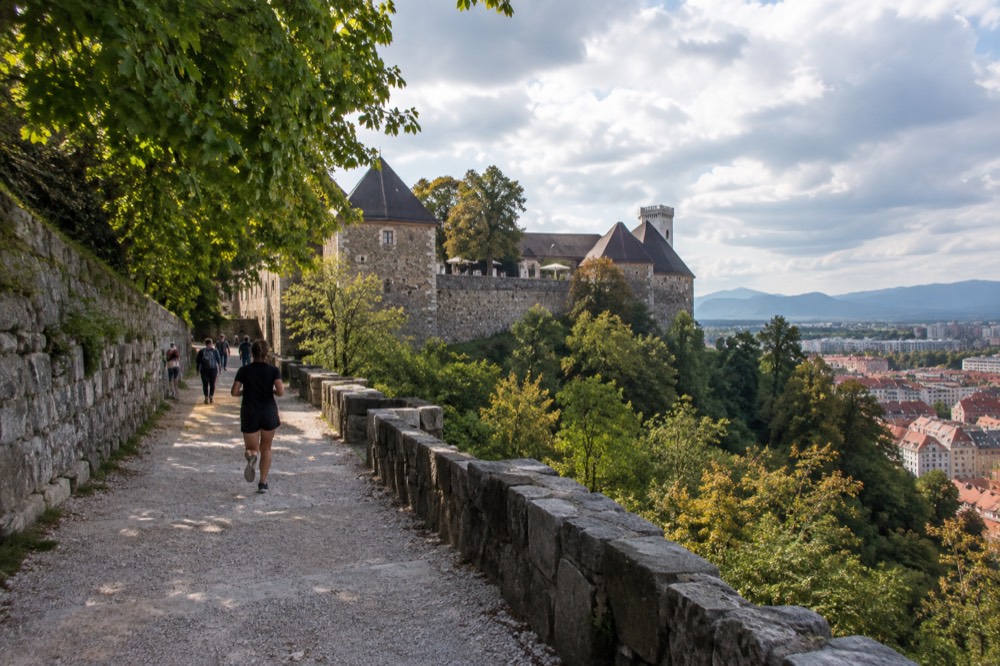
Ljubljana Castle stands on Castle Hill at the edge of a city centre that is closed to general traffic, and it is open 365 days a year. The castle publishes its own price list and opening hours, which is where every figure in this article comes from, and the headline facts are simple: a combined castle ticket with the funicular costs 19.00 EUR for an adult, the grounds and the ride up are separate things, and the tower view is the single most requested panorama in the city. For the wider picture of the building itself, start with the site's full guide to Ljubljana Castle, which covers the exhibitions and the hill in depth.
What Is Ljubljana Castle Known For?
Ljubljana Castle is known for three things together: its position on a wooded hill directly above the pedestrianised Old Town, the glass-sided funicular that climbs the cliff face to reach it, and the Viewing Tower whose panorama takes in the Ljubljanica river, the red rooftops of the centre and the Kamnik Alps beyond. It is also the city's symbolic centre, the dragon-guarded fortress that appears on the postcards, the municipal flag imagery and nearly every first-time visitor's camera roll.
That combination of symbols is worth unpacking, because the castle is not a single building in the way a palace is. It is a walled complex, with a courtyard, several towers, a chapel, a café and a row of exhibition spaces, spread across the top of a hill that rises straight out of the city grid. The Ljubljana Travel Guide desk treats it as the anchor of the whole centre: almost every walking route in the Old Town bends toward it, and from Prešeren Square the hill is visible above the rooftops, a constant reminder of how compact this capital is.
The other reason the castle is famous is practical rather than picturesque. Because the city sits in a basin, and the centre is flat, the Viewing Tower is one of the few places in Ljubljana where the whole layout of the city can be read at once: the river loops through the middle, Tivoli Park opens to the west, and the mountains frame the horizon on clear days. The castle's own published visitor information notes that the tower is part of the paid attractions, not the freely open hill, which is a distinction that catches out a lot of arriving visitors and is worth settling before you climb.
What Can You See Inside Ljubljana Castle?
Inside the walls, the paid attractions are the Viewing Tower, the Slovenian History exhibition, the Virtual Museum with its Time Machine experience, the Puppet Museum, the video mapping installation and the temporary exhibitions, all covered by one combined ticket. The courtyard itself, the café terraces and the walk around the ramparts are the freely accessible parts of the hill, and most visitors spend an hour or two across the paid attractions.
The castle's official price list spells out exactly what the 19.00 EUR adult combined ticket includes, and it is a longer list than most people expect. The Virtual Museum and the Time Machine experience sit inside the castle, telling the story of the site through projection rather than display cases. The Puppet Museum is a small, much-loved collection tied to Ljubljana's long puppetry tradition, a craft the city takes more seriously than almost anywhere else in this part of Europe. The Slovenian History exhibition does what its title promises and gives context to the hill itself, which is otherwise easy to read as nothing but a viewpoint.
| Attraction | Covered by the 19.00 EUR combined ticket? | Notes |
|---|---|---|
| Viewing Tower | Yes | The panorama over the centre, river and mountains |
| Virtual Museum / Time Machine | Yes | Projection-based story of the castle |
| Slovenian History exhibition | Yes | Permanent exhibition on the site and the nation |
| Puppet Museum | Yes | Ljubljana's puppetry tradition |
| Video mapping and temporary exhibitions | Yes | Rotating programme through the year |
| Funicular, both directions | Yes, with the combined ticket | Single ride alone is 3.30 EUR |
A few practical notes make the visit smoother. The castle sells its last ticket up to an hour before closing, so late arrival means a shortened visit rather than a refused one. The café on the ramparts is a destination in its own right among locals, particularly at sunset in summer when the funicular runs late. And if you would rather not organise tickets at the gate on a busy July afternoon, all three of the most popular castle products can be compared side by side:
The choice between those three is really a choice about how much structure you want. A simple entry ticket is for people who plan to wander the exhibitions alone, a guided walk adds the stories behind the walls, and the costumed Time Machine tour turns the history into theatre. Families with children lean toward the last of those; photographers with one eye on the light usually just take the ticket and head straight for the tower.
How Much Does Ljubljana Castle Cost and When Is It Open?
An adult combined ticket covering the attractions and the funicular costs 19.00 EUR, with children aged 7 to 18 at 13.50 EUR; a funicular-only return ride is 6.00 EUR and a single is 3.30 EUR. The castle opens 365 days a year, attractions run 09:00-18:00 from October to April and 09:00-20:00 from May to September, and the funicular runs an hour later in each period.
Those hours matter more than they first appear, because the evening slot is the best-kept secret of a summer visit. Between May and September the funicular keeps running until 22:00, long after the exhibitions have shut, which means the ramparts and the café are usable as a sunset terrace rather than a morning stop. The official price list and the official opening-hours page are the two sources behind every number in this section, and both are worth a glance before a winter trip, since the October-to-April schedule is an hour shorter at each end.
| Item | Adult | Child 7-18 |
|---|---|---|
| Castle ticket including funicular | 19.00 EUR | 13.50 EUR |
| Funicular, single | 3.30 EUR | 2.30 EUR |
| Funicular, return | 6.00 EUR | 4.50 EUR |
The one figure that is genuinely contested in visitor forums is what the castle costs "really", because people conflate the free hill with the paid attractions. The city card changes that arithmetic: the Ljubljana Card includes the castle funicular along with the river cruise and city buses, and the full comparison sits in the site's guide to the Ljubljana Card. If the castle is one of three or four paid sights on your list, the card usually wins; if the castle is your only paid stop, buy the ticket directly.
For anyone weighing the free-versus-paid question properly, the site's dedicated answer on whether you can visit Ljubljana Castle for free breaks the hill into its open and ticketed zones. The short version: the slopes, the walk up and the courtyard atmosphere cost nothing, and everything inside the walls is covered by the combined ticket.
Is the Ljubljana Castle Funicular Worth Riding?
The funicular is worth riding for the view of the cliff face and the ease of the climb, and it is the part of the castle visit most people remember as an attraction in itself: a glass-sided car that rises about 70 metres from the river level to the castle walls in under a minute. Going up by funicular and down on foot is the classic move, since the walk down drops you straight into the middle of the Old Town.
The funicular's lower station sits by the river near the edge of the pedestrian zone, a short walk from the Central Market and the Triple Bridge, so it slots naturally into an Old Town loop. In the other direction, the footpath up the hill is a steady but manageable slope through trees, and it is the free option that many locals use daily for exercise. The division of labour is simple: ride up if you are short of time or energy, walk down either way, because the descent delivers you into the Old Town rather than back to a station.
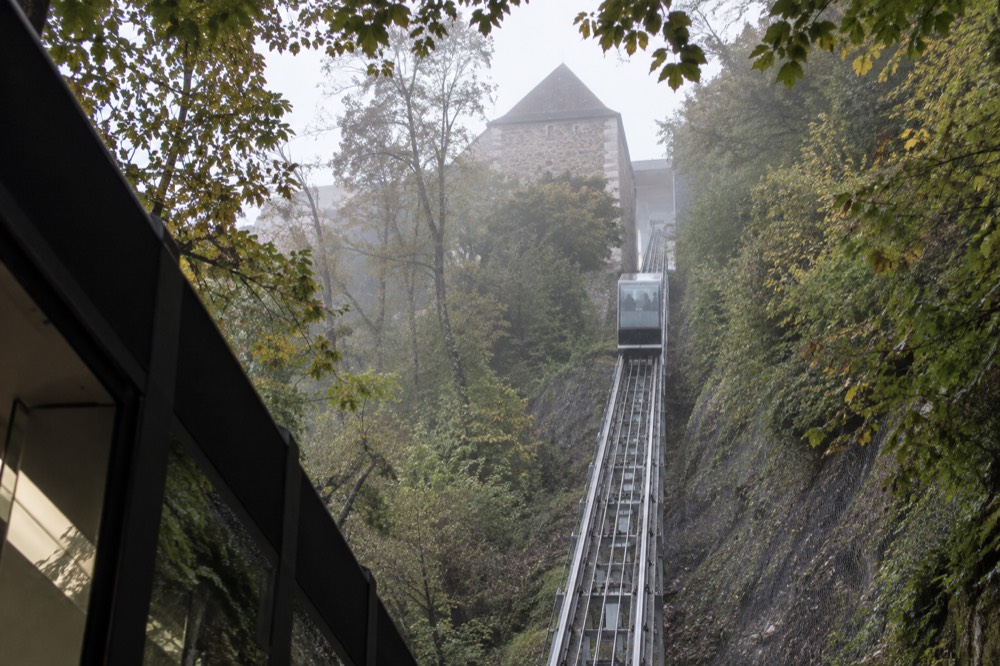
One date-specific wrinkle is worth flagging because it traps New Year visitors. On 31 December the castle and the funicular both close early, at 17:00, and on 1 January they open late, from 10:00. Anyone planning a midnight-style New Year visit, or arriving on the first day of the year expecting a normal schedule, should build those two hours of difference into the plan. The rest of the year runs to the standard calendar above.
Why Does Ljubljana Castle Sit on a Hill Above the City?
The castle occupies Castle Hill because it was built as a defensive fortress overlooking the river crossing below, the point where the Ljubljanica bends around the Old Town, and every later function of the site, watchtower, prison, barracks, residence, has kept that commanding position. The modern castle is a layered complex, rebuilt and repurposed across the centuries, which is why the walls read as a patchwork rather than a single style.
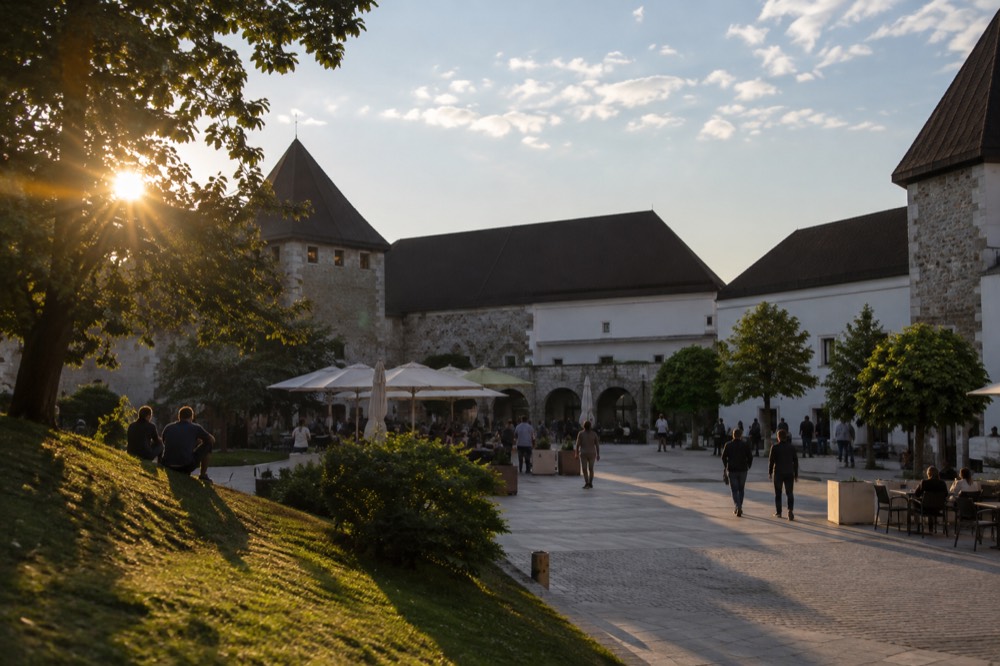
What surprises most visitors is how much of the castle's interior is modern. The exhibitions, the video mapping, the Virtual Museum and the event spaces that fill the courtyard in summer are all late additions to a shell whose defensive life ended long ago, and the castle's current role is civic: a stage, a viewpoint and the venue for the open-air cinema and concerts that run in the courtyard each summer. The fortress-without-an-army feeling is part of why the place works so well for families, since the walls are explorable without a route to follow.
The hill itself is a destination independent of the walls. It is wooded, criss-crossed with paths, and it behaves like the city's balcony: from the slopes you look down across the whole car-free centre, which covers roughly 20 hectares of pedestrianised streets. On a winter morning that view can be the sunniest spot in the city, and the reason is Ljubljana's basin climate, which is the site's recurring information-gain theme.
The guided tours make better use of that layered history than most visitors manage alone. The costumed Time Machine tour walks the story through the castle with the funicular included, and it is the version families tend to remember:
For architecture-minded visitors, the castle is only one stop on a wider circuit. Ljubljana's centre is largely the work of Jože Plečnik, and the site's guide to Plečnik's Ljubljana traces his riverbanks, bridges and library, all visible from the castle tower you have just climbed down from.
How Long Should You Spend at Ljubljana Castle?
Most visitors need between 90 minutes and three hours at Ljubljana Castle: about an hour for the Viewing Tower and the headline exhibitions, another half hour for the courtyard and ramparts, and extra time for the café in summer. A quick tower-only stop can be done in under an hour, but the combined ticket is wasted at that pace, since most of what it covers sits inside the walls.
The pacing depends almost entirely on what you came for. Photographers should work the tower twice, once on arrival and once an hour later, because the light over the basin changes fast and the mountains to the north appear and disappear with the haze. Families with children usually stretch the visit across the Puppet Museum, the courtyard and a snack. Anyone pairing the castle with a river cruise or a food walk should budget the full three hours, since the funicular queues build in late morning and the walk down eats half an hour on its own.
The most common mistake is treating the castle as a drive-by between Old Town sights. It is the single best half-day anchor the centre has, and it rewards the slow version: a morning arrival before the tour groups, the tower before the haze lifts off the basin, the courtyard café after the crowds descend for lunch. Whether that half-day is worth the ticket price is its own question, and the site's dedicated answer on whether Ljubljana Castle is worth it takes it on directly, ticket line by ticket line.
If the castle has sold you on hilltops, the same instinct points outward from the city: Šmarna Gora on the northern edge gives a similar basin-over-basin view with no ticket at all, and the site's guide to Šmarna Gora covers the trail. But for a first visit to Ljubljana, the castle is the one hill that is already in the middle of everything, and the three products below cover the three most common ways to take it:
Common Questions About Ljubljana Castle
What Is Ljubljana Castle Known For?
It is known for its hilltop position above the pedestrianised Old Town, the funicular that climbs the cliff face to its walls, and the Viewing Tower that gives the definitive panorama over the Ljubljanica, the rooftops and the mountains. It is the city's symbolic heart and its most visited paid attraction, open 365 days a year.
How much does Ljubljana Castle cost?
An adult combined ticket covering the attractions and the funicular is 19.00 EUR, children 7 to 18 pay 13.50 EUR, and a funicular-only return ride is 6.00 EUR. The hill, the paths and the courtyard atmosphere are the free parts; the exhibitions and the tower are ticketed.
When is Ljubljana Castle open?
Every day of the year. Attractions run 09:00-18:00 from October to April and 09:00-20:00 from May to September, with the funicular running until 19:00 and 22:00 in the same periods. On 31 December it closes at 17:00, and on 1 January it opens at 10:00. The last ticket is sold an hour before closing.
Can you visit Ljubljana Castle for free?
Yes, in part. The walk up Castle Hill, the paths, the slopes and the courtyard atmosphere cost nothing. The Viewing Tower, the exhibitions and the funicular are the paid attractions, covered by the combined ticket.
How long do you need at Ljubljana Castle?
Plan on 90 minutes to three hours. An hour covers the tower and the main exhibitions, and summer visits stretch longer because the café and ramparts are worth lingering over after the exhibitions close but the funicular keeps running.