Why Is It So Expensive to Fly to Ljubljana?
Ljubljana's airport is small, competition is thin and summer demand spikes, which keeps fares high. Here is why, and how to pay less getting there.
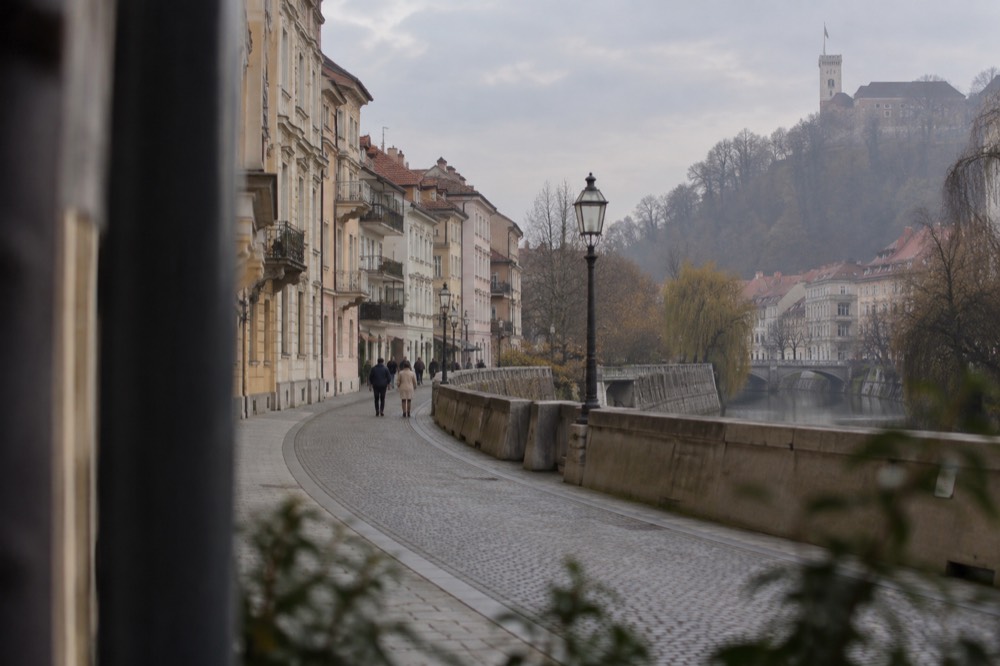
Why Is It So Expensive to Fly to Ljubljana?
Flying to Ljubljana is expensive because Jože Pučnik Airport is a small operation with limited competition, a thin route network and a short, sharply peaked summer season, so carriers can price seats high without a rival undercutting them. Fares also reflect a simple market fact: Slovenia is a small country, and its capital does not generate the passenger volume that forces prices down. None of this means the trip itself is costly, because the city and its day trips remain inexpensive by Western European standards.
It is a fair question, and one that catches out a lot of travellers planning a Slovenia trip. You search for flights, see a fare to Ljubljana sitting well above the price of flying to Zagreb, Vienna or Venice, and wonder whether the search is broken. It is not. The fare gap is real, and it has identifiable causes.
Ljubljana Airport, known by its code LJU and named after Jože Pučnik, sits at Brnik about 26 km from the city. It is the country's only commercial airport of any size. That matters for pricing in ways this article unpacks: a single-airport market, a modest catchment population, and a seasonal leisure market that airlines can read as easily as you can.
One framing helps before the detail. The expensive part of a Slovenia trip is usually the flight, not the visit. Once you are on the ground, the costs bend sharply downward: castles, caves, food and local transport are cheaper than in most of Western Europe, which is why the fare sting is worth absorbing. Our Ljubljana prices guide breaks down what things actually cost once you arrive.
Is Ljubljana Airport Small, and Does That Matter for Fares?
Yes, LJU is a genuinely small airport, and size is the single biggest reason fares stay high. Small airports mean fewer flights, fewer seats and higher fixed costs per passenger, and airlines recover those costs through ticket prices. A small airport also cannot support the intense carrier-versus-carrier price wars that keep fares low at big hubs, so there is little downward pressure on the fare you are quoted.
Think of it as a shopkeeping problem. An airport with a handful of stands, a short terminal and a limited number of daily rotations has to spread its running costs over far fewer passengers than a mega-hub. Carriers face the same arithmetic: a route into a small market carries more commercial risk, so the seats that do operate are priced to protect the margin. Where a big airport might have several airlines fighting over the same city pair, LJU often has one or two, and monopoly or near-monopoly routes are where high fares live.
The seasonal shape of demand makes it worse. Slovenia's travel year is a summer spike with quiet shoulders, and the city's own visitor numbers show a leisure market, not a year-round business one: Slovenia's statistics office recorded 1,392,728 tourist arrivals in the Municipality of Ljubljana in 2025, and 2,844,129 overnight stays, an average stay of about two nights. Airlines pricing into that kind of market charge for the peak and fly less in the trough.
There is a compounding effect worth naming. Because the airport is small, some travellers route elsewhere, which keeps passenger volumes at LJU lower still, which in turn keeps fares high. It is a loop, and the only way an individual traveller beats it is to look at the alternatives rather than pay the first quoted fare.
The money you save by playing this well is real money. A fare gap of a hundred euros or more per person, multiplied by a family, is the difference between a budget week and a comfortable one, and it converts directly into day trips. That is the practical case for reading the rest of this page before booking anything.
What Does the Lack of Competition Do to Prices?
Thin competition is the mechanism that turns a small airport into expensive tickets. When one or two carriers dominate a route, there is no price war, no fare-matching and no reason to discount, so the quoted price sits close to what the market will bear rather than what a competitive route would charge. This is standard airline economics, and Ljubljana's market structure fits it almost perfectly.
The route map tells the story. Ljubljana has a limited spread of direct destinations compared with the capitals around it, and on many city pairs there is effectively one operator. A traveller flying from a city without a direct LJU service has to connect, and connections through a hub add both cost and time. Our direct flights to Ljubljana piece covers which routes exist and which UK and European airports serve the city, because knowing the nonstop options is the first step to avoiding the connection premium.
It is worth being precise about what competition does. On a route with three or four carriers, each one prices defensively: fill the aircraft, undercut the rival, discount the shoulder days. On a route with one carrier, the pricing question becomes how much the market will pay, and leisure travellers heading to a bucket-list destination will pay a lot. Lake Bled, the Soča Valley and the caves are exactly that kind of draw, and the airlines know it.
| Factor | Effect on LJU fares | Why it happens |
|---|---|---|
| Single national airport | No domestic alternative | All air traffic funnels through one small facility |
| Few carriers per route | Little price pressure | Monopoly or near-monopoly city pairs price high |
| Summer demand peak | Peak-season fares climb | Carriers charge for the short high season |
| Low year-round volume | Fewer discounted seats | Trough months lose service rather than cheap fares |
| Limited low-cost presence | Higher fare floor | Fewer budget options to undercut flag carriers |
None of this is a complaint about Slovenia, and it is not a reason to skip the country. It is a pricing structure, and structures can be worked around. The travellers who pay the least to reach Ljubljana are the ones who treat the flight search as its own small project rather than a one-click purchase.
When Is the Most Expensive Time to Fly to Ljubljana?
Summer is the expensive window, roughly June through August, when peak leisure demand meets the year's best weather and the highest fares. The cheapest months to fly are the winter trough, especially January and February, when the city sits under its famous basin fog and carriers discount heavily to fill seats. Shoulder months sit between the two, and they are often the best value overall.
The seasonal logic is simple, but Ljubljana's version has a twist most guides miss. Everyone knows summer is peak. What fewer people know is how pronounced the city's cold-season gloom is, because it sits in a basin where cold air is trapped under warmer air above. The national weather service's 1981-2010 normals give Ljubljana just 56 hours of sunshine in December and 71 in January, against 120 and 139 at Kredarica, high on Triglav at 2,514 m. The city averages only 37 clear days a year against 130 overcast ones. That is why winter fares drop: the airlines know what the weather is like.
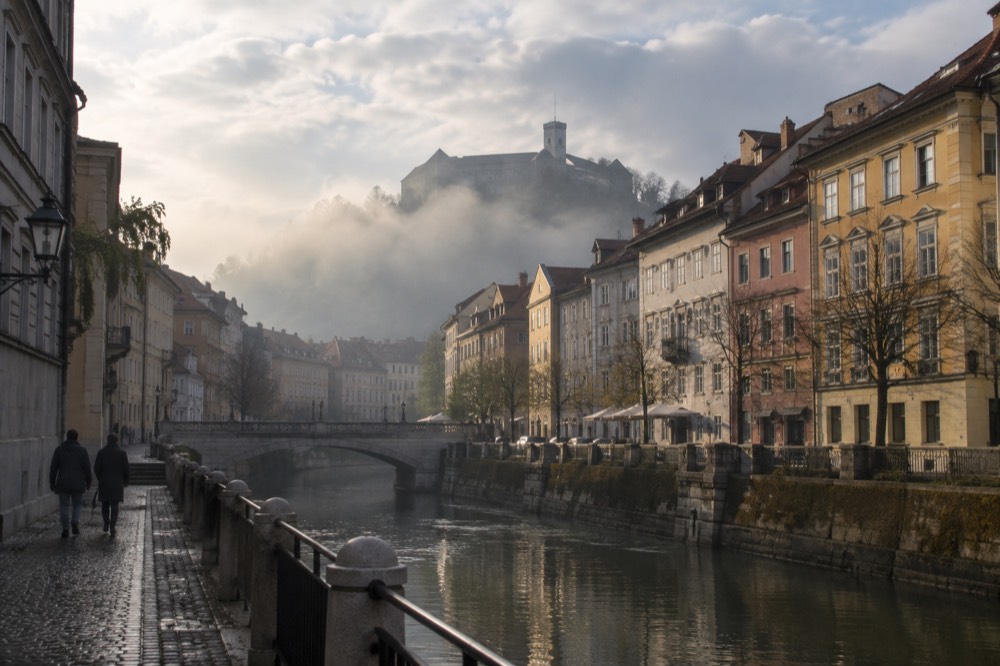
Autumn is the sneaky one. September and October are the joint wettest months at 147 mm each, above July's 115 mm, and the 1971-2000 normals record 12.4 fog days in each, level with the December peak. Travellers assume autumn is a dry, cheap shoulder; the climate data says it is the foggiest, wettest stretch of the year. Fares may be lower than July, but the weather you are buying is not the one the brochures imply.
| Period | Fare level | Weather reality (ARSO normals) | Verdict |
|---|---|---|---|
| June to August | Highest | Sunniest stretch, 246 to 293 sunshine hours monthly | Pay peak fare for peak weather |
| September and October | Mid | Joint wettest at 147 mm each, 12.4 fog days each | Cheap-ish, but bring rain gear |
| November to February | Lowest | 56 to 71 sunshine hours monthly, basin fog | Cheapest fares, grey days |
| March to May | Mid, rising | Sunshine climbing from 149 to 235 hours monthly | Often the best overall value |
If your dates are flexible, the arithmetic favours spring. The sunshine series climbs steeply from March, the fog has largely lifted, and fares have not yet reached their summer plateau. Our best month to visit Ljubljana guide works through the full twelve months with the same climate data.
Are There Cheaper Ways to Reach Ljubljana Than Flying Direct?
Yes, three work well: flying into a nearby airport and travelling overland, taking the train, or flying in the shoulder season when fares soften. Zagreb, Trieste and Venice all sit within reach of Ljubljana overland, and because Slovenia is inside the Schengen area and the eurozone there are no border formalities or currency changes on the transfer from another Schengen country.
The geography is generous. Slovenia is small and sits against Italy, Austria, Hungary and Croatia, so an airport outside the country is not necessarily a detour. Travellers landing in Zagreb, Venice or Trieste can reach Ljubljana the same day, and the cross-border legs are internal Schengen journeys with no routine border checks, a status Slovenia has held since land and sea checks were lifted in December 2007 and air checks in March 2008. Croatia joined Schengen and the euro in January 2023, so even the Zagreb route is now seamless.
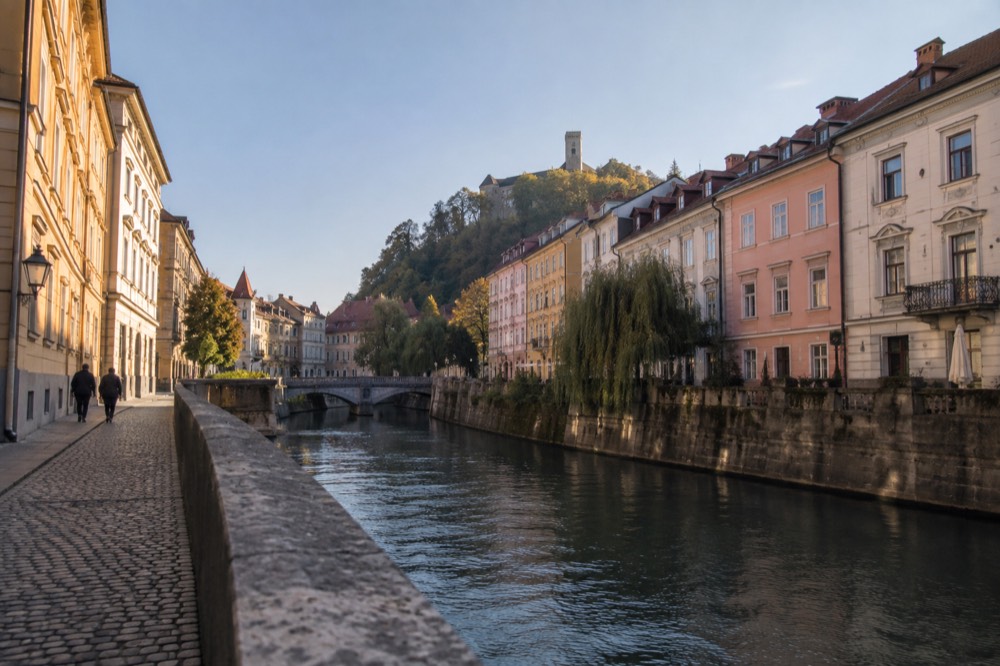
Which gateway is best depends on where you start, and each has its own page on this site: our Ljubljana to Zagreb guide, the Ljubljana to Trieste route and the Ljubljana to Venice connection cover the practical details. The general rule is that the overland leg costs a fraction of the fare gap, so a cheap flight to a neighbouring hub plus a bus or train can undercut the direct fare substantially, at the price of a few hours' travel.
| Approach | How it works | Trade-off |
|---|---|---|
| Fly to a neighbouring hub, transfer overland | Cheap fare to Zagreb, Venice or Trieste, then bus or train to Ljubljana | Adds travel time and a booking to manage |
| Take the train | Direct rail services reach Ljubljana from several nearby cities | Slower than flying, no fare figure is published for the Ljubljana routes |
| Shift your dates | Fly in the shoulder or winter months | Weather is greyer, days shorter |
| Book early on a direct route | Lock in the cheaper seats before peak demand | Less flexibility if plans change |
A note on honesty: we do not publish a fare for any of these routes, because no verified primary source for the Ljubljana bus or train fares could be obtained. Check the operator's live listing or booking site for the current price, and treat any number you see in a forum as unverified.
Whichever way you arrive, the point stands: the flight is the expensive component, and everything after it is modestly priced. Once the fare is solved, the trip itself is excellent value, which is exactly why so many people make the effort.
How Do You Make the Expensive Flight Worth It Once You Land?
You make the fare worthwhile by converting the money you save on the ground into experiences, and Ljubljana makes that easy. The city is a two-night base by the numbers, with an average stay of about two nights, which is enough for one full day trip into the caves, the Alps or Lake Bled alongside a day in the Old Town. Budget for the flight, then spend generously on the day trips, because those are the memories.
The classic first day trip is the karst. Postojna Cave, the vast show cave with its underground train, pairs naturally with Predjama Castle, the fortress built into a cliff face, and the most popular booked way to do both from the city is the Cave and Castle Tickets and Tour, a six-hour trip rated 4.8 from 2,802 reviews. The cave itself holds about 10 C year round, which makes it as reliable in an August heatwave as in October rain.
Beyond the caves, the second money surface is Lake Bled, which carries more search demand than the entire city, a fact that surprises people until they see it. The six-hour Lake Bled and Bled Castle trip, rated 4.7 from 1,641 reviews, is the straightforward way to do it without hiring a car. And for the first evening in town, the free Old Town walk on GuruWalk, from Roman roots to the dragon bridge, tips-based at 4.91 from 1,496 reviews, is the cheapest possible orientation, with the Ljubljana Travel Guide site's own walking tour pages as a fuller alternative.
The final word on the fare: it is a toll, not a verdict. Ljubljana's flights cost more because the market is small and the competition thin, and no traveller can change that. What you can change is how you route, when you go and what you do with the money left over, and on all three counts the city rewards the effort.
Common Questions About Flying to Ljubljana
Why Is It So Expensive To Fly To Ljubljana?
Because Ljubljana Airport is small, serves a small country, has limited carrier competition on most routes and a short, sharply peaked summer season. With few airlines fighting for the route, there is no price war to pull fares down, so seats are priced at what the leisure market will bear.
Is it cheaper to fly to Zagreb or Venice and travel to Ljubljana?
Often, yes. Cheap fares to Zagreb, Venice or Trieste plus a bus or train to Ljubljana can undercut the direct flight, and all three transfers are internal Schengen journeys with no border checks. The trade-off is travel time and one extra booking to manage.
What is the cheapest month to fly to Ljubljana?
January and February are typically the cheapest, when demand troughs and the city sits under its famous basin fog. Spring, March to May, is often the best overall value: fares have not yet reached their summer plateau and the sunshine hours climb steeply from March.
Does Ljubljana have more than one airport?
No. Jože Pučnik Airport at Brnik, about 26 km from the city, is the country's only commercial airport of any size. Our piece on whether Ljubljana has two airports covers the details, including the small airfields sometimes confused with it.
Is Ljubljana expensive once you arrive?
No, and this is the balance to the fare. Museums, food, local transport and day trips are cheaper than in most Western European capitals, and the city's tourist infrastructure is priced for value. The flight is the expensive component of a Slovenia trip, not the visit itself.
Do I need to change money or clear a border coming from a neighbouring country?
No. Slovenia is in the European Union, adopted the euro in January 2007, and is inside the Schengen area, with internal border checks lifted in December 2007 for land and sea and March 2008 for air. Arriving from Italy, Austria, Hungary or Croatia involves no routine border checks and no currency exchange.