Ljubljana to Venice by Bus or Train: Every Option Compared
Venice is close enough to Ljubljana to be tempting and far enough to need planning. There is no simple answer between the train and the bus, because neither runs the way most visitors expect, so this guide lays out every option, the border reality, the seasonal timing and the honest case for and against doing it in a single day.
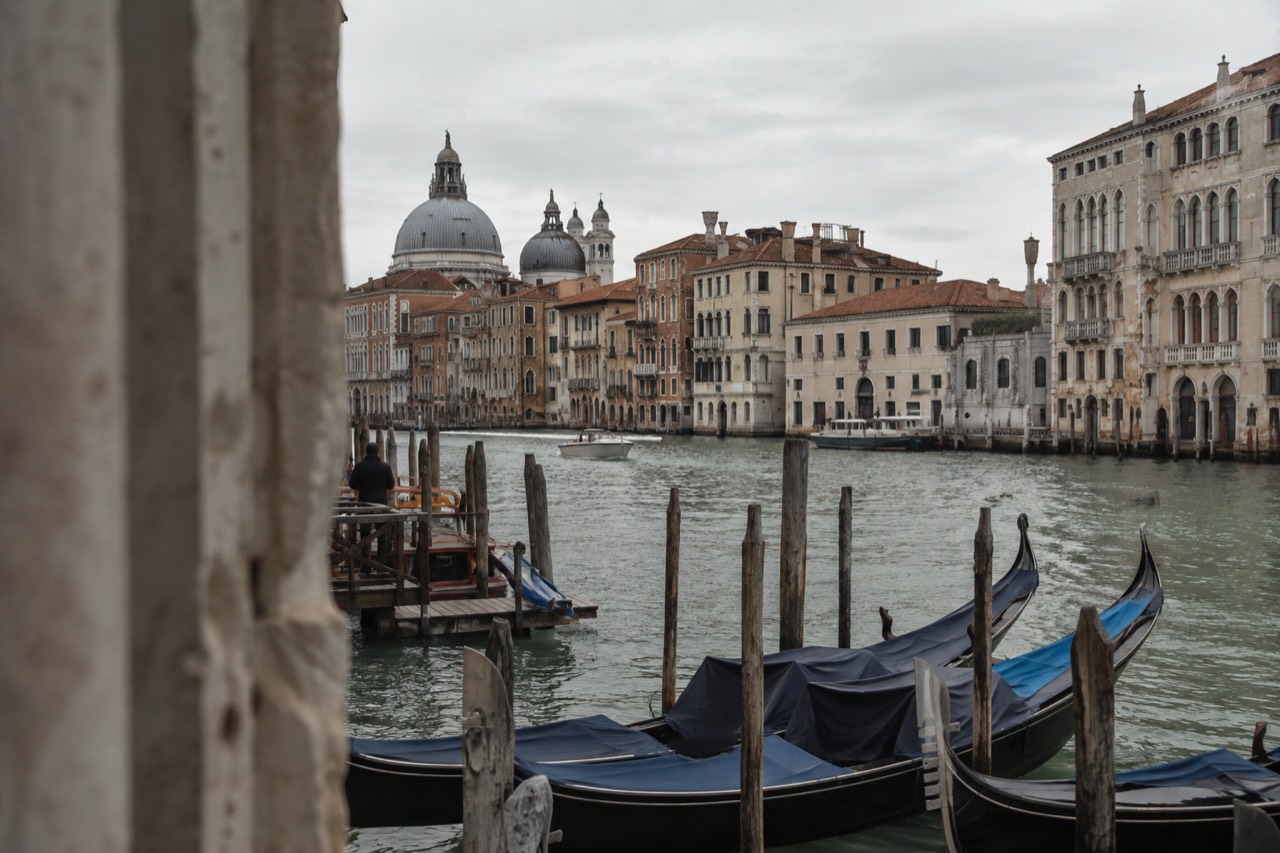
Short answer
There is no straightforward direct train from Ljubljana to Venice; rail travel normally involves changing, often at Villach or via Trieste, and the bus is usually the simpler single-ticket choice. Both cities are in the Schengen area and the eurozone, so there are no routine border checks and no currency to change. Check live timetables before booking, because cross-border rail options in this corridor change often.
Ljubljana to Venice is one of those routes that looks trivial on a map and turns out to be a genuine planning decision. The two cities sit in the same corner of Europe, both inside the Schengen area and both using the euro, yet the transport between them has never been as simple as the distance suggests. Rail connections across the Slovenia-Italy border have been thin for years, coaches fill the gap, and a lot of visitors end up on an organised day trip simply because it removes the guesswork.
This guide compares every realistic option: the train and its changes, the bus, [driving yourself](https://discovercars.tpk.ro/laYIo9hK), and the organised tours that run from Ljubljana. It also covers the documents you actually need, the seasonal timing that matters more here than most people expect, and the honest maths of whether Venice works as a day trip from the Slovenian capital. Where a fare or a timetable is not published in a form that can be verified, this guide says so rather than guessing, because on this corridor a wrong number costs you a morning.
Is There a Direct Train from Ljubljana to Venice?
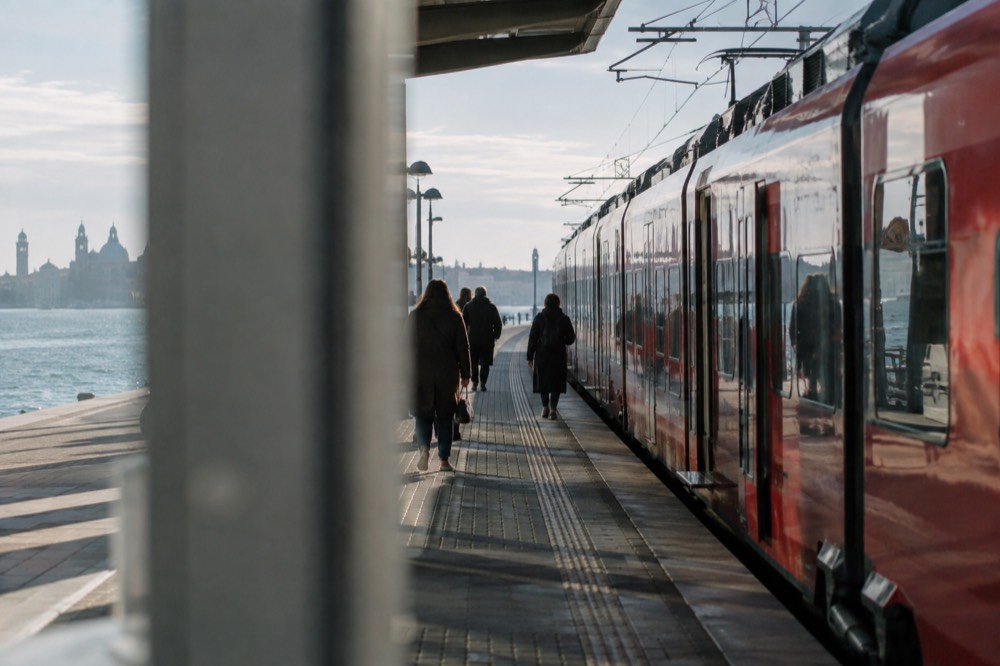
No, there is no direct train between Ljubljana and Venice, and there has not been a reliable one on this corridor for years. Rail travel between the two cities always involves at least one change, most often at Villach in Austria or by routing down through Trieste in Italy, and the total journey eats a large part of a day in each direction. The practical consequence is that the train suits travellers who enjoy the ride itself, not anyone trying to maximise hours in Venice.
Cross-border rail in this part of Europe changes often, so always confirm the live timetable before committing to a plan.
The rail geography is the reason. Ljubljana's western lines run towards Austria and the Karst rather than straight into the Veneto, and the historic direct link into Italy has never been restored to anything like a convenient frequency. The usual pattern sends you north first, changing at Villach and then running south through the Alps to Venice, which is scenic and slow. The alternative sends you south-west first towards Trieste, from where Italian regional and high-speed services continue along the coast towards the lagoon. Both work. Neither is quick.
If you enjoy rail travel for its own sake, the Villach routing is genuinely beautiful, with the train climbing through the Julian Alps before descending into the Austrian lake district and then dropping south again into Italy. It is the kind of journey where the destination is almost an excuse. For more on what Ljubljana's station does offer, including where its trains actually run, see the Ljubljana train station guide and the rundown of where Ljubljana's trains go. For a fuller sense of the city you are starting from, Ljubljana Travel Guide covers the centre, the castle and the day-trip options in depth.
What you cannot do is turn up at Ljubljana's station expecting a morning departure that lands you in Venice by lunch. Buy tickets in advance, confirm the changes, and build buffer time into any connection, because a missed change at Villach can cost hours. Fares on this routing are dynamic and no reliably published figure can be quoted here, so check the operators' own booking pages for the day you travel rather than trusting a number from an article.
Is the Bus a Better Option from Ljubljana to Venice?
For most travellers, yes: the coach is the simplest single-ticket way to travel from Ljubljana to Venice, with a direct seasonal service that avoids the train's changes entirely. The journey runs west across Slovenia and into Italy without a single transfer, which removes the biggest risk the rail routing carries. Departures are limited and the service does not run at full frequency all year, so the bus rewards early booking and punishes improvisation.
Treat it as the default and the train as the fallback, and plan the return leg before you plan the afternoon.
The coach departs from Ljubljana's main bus station, which sits directly beside the railway station, so getting to it is trivial from anywhere in the centre. The centre itself is pedestrianised, which matters if you are staying in the Old Town: walk or take a short urban hop to the station cluster and you are done. The ride west is uncomplicated, crossing the border into Italy where, because both countries are in the Schengen area, there are no routine border checks. Occasionally a passport check happens on cross-border coaches, so carry your document even though you will almost certainly never show it.
Booking matters more than most people expect. Seats on international coaches in this corridor are sold by the operator's own systems and by the usual aggregators, and the cheap fares go early, especially in July and August when both cities are at their busiest. No verified fare table for this route can be quoted here, so check the operator's live listing for your date. What can be said with confidence is the arrival side: Venice's coach terminal at Piazzale Roma is the edge of the pedestrian city, and from there you walk or take a vaporetto, which makes the bus one of the few options that deposits you within the city itself rather than at an airport an hour away.
The Ljubljana bus station guide covers the terminal itself, ticketing and how the domestic and international bays are organised. One honest warning: the return leg is where day-trippers come unstuck. The last coach back is earlier than you think, and Venice is a city that punishes a sprint to Piazzale Roma. If you are not staying overnight, plan your return before you plan your afternoon.
 parked at a modern bus terminal with passengers boarding](/images/uploaded/guides/ljubljana-to-venice/body-2.jpg)
What About Driving from Ljubljana to Venice?
Driving is the most flexible option and, with two or more people sharing costs, often the most sensible: you cross the border without stopping, park at the edge of Venice, and set your own schedule for the whole day. The route runs west through Slovenia and into the Veneto on motorway almost the entire way, and the border is an internal Schengen crossing with no routine checks.
The catch is Venice itself: the historic city is completely car-free, so the trip ends at a car park rather than at a piazza, and parking near the lagoon is priced accordingly.
The drive itself is straightforward. Slovenian motorways require a vignette, buyable at petrol stations near the border and at the airports, and Italian autostrade charge tolls collected at gates along the way, so keep a card or cash accessible. The route passes within reach of several places worth stopping if you would rather break the journey than race it. Trieste makes an elegant halfway stop, a Habsburg port city with a seafront and coffee culture that is a world away from the lagoon, and the Ljubljana to Trieste guide covers that corridor in detail.
Parking is the part to plan. Venice's cars stop at Piazzale Roma or on the mainland at Mestre and Tronchetto, and from any of them you walk or take a boat. Prices at the multi-storey car parks near the lagoon are among the steepest in Italy, and no reliably quotable figure is published in a form this site can verify, so check the car park operator's own page for your dates. In high summer and during events, the big garages fill, and the mainland park-and-ride becomes the realistic option.
The honest verdict on driving is that it shines for an overnight stay and is mediocre for a day trip. You gain total control of the outbound leg and lose it entirely at the parking end, and the driver cannot look at anything except the road. For one long day, the coach or an organised tour usually beats it. For two days with luggage and the freedom to stop at Piran or Trieste on the way back, nothing else comes close.
Can You Visit Venice as a Day Trip from Ljubljana?
Yes, but it is a long day and it only works with an early start, a booked return and low expectations about how much of Venice you will actually see. The travel in each direction consumes roughly half a day, so a day trip buys you a handful of hours in the city itself, most of them spent in the company of everyone else who had the same idea. It is worth doing if Venice is a box you need to tick on this trip.
It is the wrong choice if you want to understand the place, and an overnight stay changes the arithmetic completely.
The arithmetic is unforgiving. Leave Ljubljana early, arrive late morning, and the middle of the day, exactly when Venice is at its most crowded, is all you have. St Mark's Square and the Rialto are a short walk from Piazzale Roma, so the highlights are achievable, but queues for the basilica and the Doge's Palace eat time you do not have. A smarter day skips the interiors: walk the back lanes of Dorsoduro or Cannaregio, eat away from the square, and let the city's ordinary corners do the work. They are the parts day-trippers never reach and the parts Venetians actually live in.
Timing within the week matters too. Venice on a summer weekend is a different city from Venice on a Tuesday in October, and the Venice guide covers the seasonal rhythms in detail. If your dates are fixed by a Ljubljana stay, choose the weekday with the most margin, and check the Italian holiday calendar, because a national holiday in Italy turns the crowds from heavy into impassable. The vaporetto system is the only fast way to move once you are inside the city, so buy a pass on arrival rather than single tickets.
The alternative that many visitors land on is the organised day trip, which handles the transport and the timing for you. This site's roster does not carry a Venice day tour from Ljubljana, so if that is what you want, book through the operator's live listing and read the itinerary carefully, especially the return time. What the roster does carry is a strong set of closer day trips, and if your real goal is one memorable day out of the city rather than Venice specifically, the karst and the lakes are better uses of the hours.
Do You Need a Passport to Travel from Ljubljana to Venice?
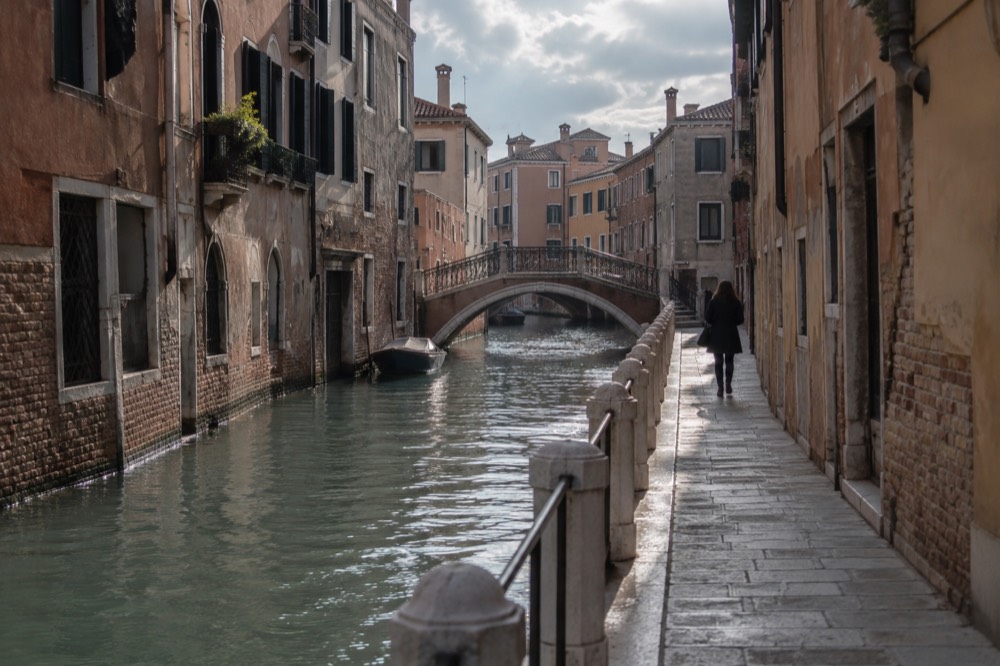
You need a valid travel document, but you will not normally be asked to show it: Slovenia and Italy are both in the Schengen area, so there are no routine border checks on this route, whether you travel by coach, car or train. Slovenia abolished internal land and sea border checks on 21 December 2007 and air checks on 30 March 2008, per the Slovenian government's own published record, and Italy has been a Schengen member for decades.
Both countries also use the euro, so there is no currency to change in either direction.
The distinction that matters is between "no checks" and "no document". Schengen rules allow checks to be temporarily reintroduced on specific routes, and cross-border coaches are occasionally boarded for spot checks, so carry your passport or ID card every time. Non-EU visitors should carry the passport they entered Schengen on, because a spot check with no document on you turns a minor delay into a real problem. For EU citizens an ID card suffices. Children need their own documents; a parent's passport does not cover them.
The currency point is worth a sentence of its own because it removes a whole category of trip friction. Everything from the coach fare to the Venetian espresso is in euros, cards are accepted almost everywhere in both cities, and the only reason to visit a bureau de change on this route is if you are continuing onwards to a non-euro country afterwards. For the return, nothing changes: no declarations, no currency conversion, no departure formalities.
When Is the Best Time of Year to Make the Trip?
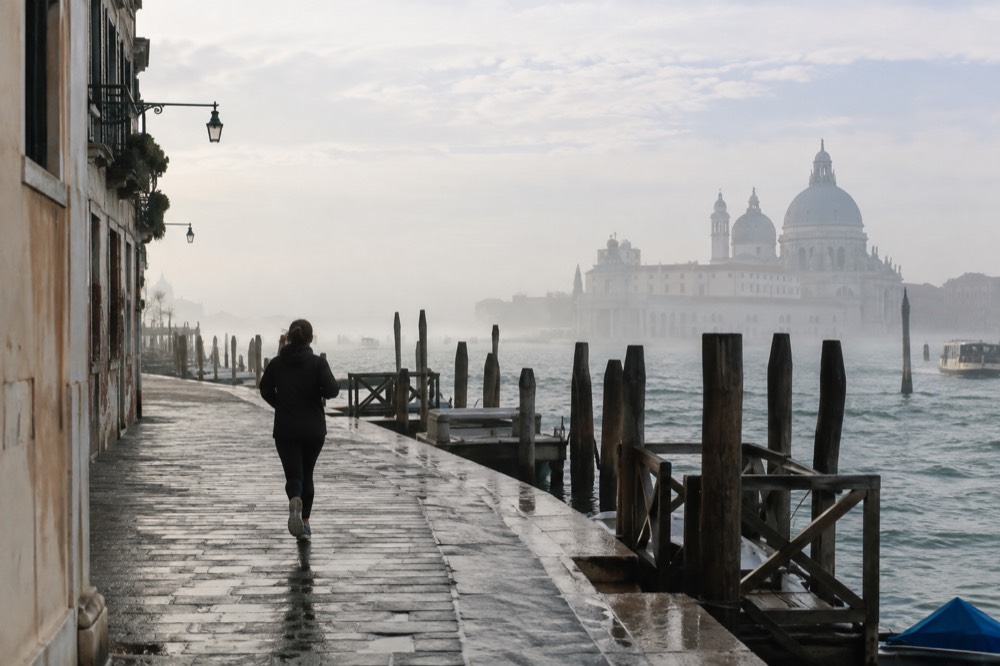
Late spring and early autumn are the best compromise: long daylight, workable crowds and a decent chance of good weather on both ends, while July and August bring the heaviest crowds in Venice and the statistically wettest months in Ljubljana arrive in September and October. The two cities have different problems at different times, and the trick is to dodge both. Winter trips are perfectly possible and often beautiful, but they are short-day trips, with fog a real factor on the Slovenian end of the journey.
The climate record for Ljubljana is more surprising than most guides admit. ARSO's 1981-2010 normals put September and October as the joint wettest months at 147 mm each, above July's 115 mm, and the 1971-2000 series records 12.4 fog days in each of those same months, level with December and above January. The basin inversion is the reason: Ljubljana sits in a bowl where cold air traps fog under warmer air above, and ARSO's numbers show the city getting just 56 hours of sunshine in the whole of December against 120 at Kredarica, high on Triglav at 2514 m. The mountains above the city are sunnier than the city all winter.
What that means for this route is practical. An early coach or train departure in autumn can leave Ljubljana in fog and arrive in Venice in bright sun, and the return leg can reverse the trick after dark. Build slack into any departure that involves driving your own car out of the basin in the colder half of the year, because fog on the Slovenian motorway network is a routine morning event, not an anomaly. The best time to visit Ljubljana guide unpacks the full seasonal picture.
Venice adds its own calendar on top. The lagoon is at its most crowded from June to August and during Carnival, and acqua alta, the seasonal high water that floods the low lanes, is a late-autumn and winter phenomenon. A wet-weather plan matters on both ends of this trip: if the day turns against you, the caves hold roughly the same temperature year round, which is why the karst day trips are this site's standard bad-weather answer, and the rainy day in Ljubljana guide covers the city end.
| Month block | Ljubljana conditions | Venice conditions | Verdict for the trip |
|---|---|---|---|
| March to May | Warming, fog fading, 178-235 sunshine hours monthly | Shoulder season, rising crowds | Good: long days, thin crowds |
| June to August | Warmest and sunniest, 246-293 sunshine hours | Peak crowds, peak heat | Fine in Ljubljana, heavy in Venice |
| September to October | Joint wettest months, 147 mm each, 12.4 fog days each | Quieter, acqua alta risk rising | Beautiful when it works, plan for rain |
| November to February | 56-71 sunshine hours monthly, fog and inversion | Thin crowds, cold, high water risk | Best value, shortest days |
How Do the Transport Options Actually Compare?
The coach wins on simplicity, the train wins on the experience of the journey, driving wins on flexibility for a group, and an organised tour wins on zero-effort, with the decision usually coming down to how many you are and whether you are staying overnight. No single option dominates the others on this route. The table below summarises the honest trade-offs, with the caveat that fares on this corridor are dynamic and must be checked live for your date rather than taken from any article, including this one.
| Option | Changes | Best for | Main risk | Book how far ahead |
|---|---|---|---|---|
| Coach | None (direct service) | Solo travellers, day trips | Limited departures, early last return | Weeks ahead in summer |
| Train via Villach or Trieste | At least one | Rail enthusiasts, slow travel | Missed connection costs hours | As soon as dates are fixed |
| Own car | None | Groups, overnight stays, en-route stops | Venice parking cost and scarcity | Book the car park ahead |
| Organised day trip | None, door to door | First-time visitors, zero planning | Fixed itinerary, fixed return | Early, popular dates sell out |
A few notes on reading that table honestly. The coach's "none" for changes is its whole value: a single ticket, a single vehicle, a border you sleep through. The train's changes are not a detail but the defining feature, and anyone who has sprinted through Villach with minutes to spare will confirm that a scenic routing is only scenic when you are not running. Driving looks cheapest per person for a car of four and stops being cheap the moment you price a day of parking beside the lagoon.
The organised-tour row deserves one honest caveat: this route's tours are sold through the operators' live listings and itineraries vary, especially the free time offered in Venice. Read the return time before you book, not after. And if the answer to "how many are you" is one, and the answer to "overnight" is no, the coach is almost certainly your option, because it removes every failure mode except oversleeping.
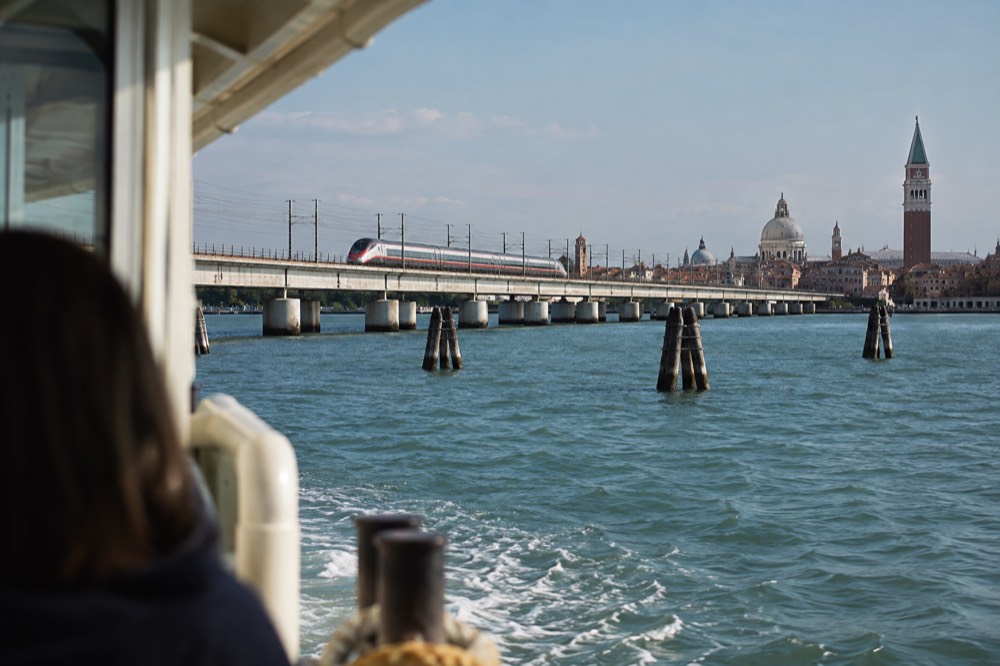
What Should You Do Instead If the Trip Feels Like Too Much?
If the Venice day trip looks like more travel than it is worth, the strongest alternatives from Ljubljana are the karst caves and castles, Lake Bled, and the free walking tours of the Old Town, all of which return you to the city with hours to spare. The caves hold roughly the same temperature year round, which makes them the reliable option in every season and every weather, and the lake and the Old Town walks cover the other two moods a visitor can be in.
Venice will still be there on your next trip, and these days are easier to book and easier to enjoy.
The karst is the standout. Postojna Cave and Predjama Castle are the classic pairing, and the Postojna Cave guide and Predjama Castle guide cover both in depth, with the Škocjan Caves guide as the quieter UNESCO alternative. A day trip that bundles cave and castle in six hours is the single most reliable booking in this site's roster, and it runs in any weather, which after a Ljubljana autumn you will come to appreciate more than you expect.
Lake Bled is the second answer, and the search demand for it exceeds the demand for the whole city, which tells you how visitors actually vote with their days. The Lake Bled guide and the Ljubljana to Lake Bled guide cover the planning; note that Vintgar Gorge is seasonal, open April to October with the exact closing date dependent on conditions, so check before you build a gorge walk into a shoulder-season day.
And if the realisation is simply that you would rather spend the day understanding where you already are, the free GuruWalk walks are the cheapest good hours in the city. The Old Town walk from Roman roots to the Dragon Bridge runs on a pay-what-you-think-it-was-worth basis, needs no booking commitment beyond a spot on the list, and covers more ground than most paid tours. The Ljubljana free walking tour guide explains how the tips-based model works and what to expect.
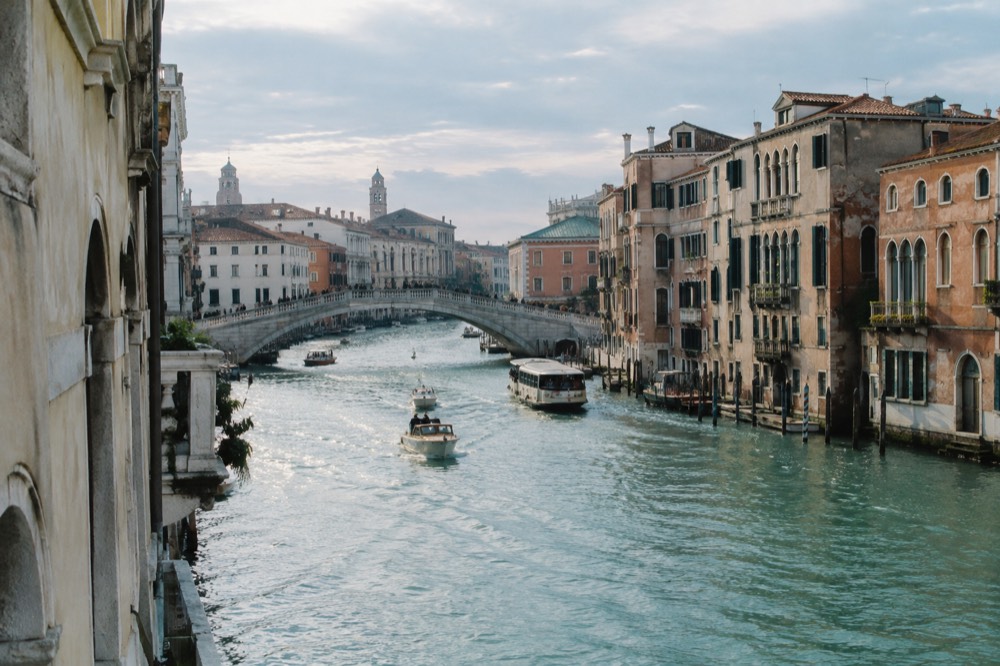
What Does a Realistic Venice Itinerary from Ljubljana Look Like?
A realistic day gives Venice five to six hours at most: arrive late morning, walk one or two quarters rather than ticking the square, eat early and away from St Mark's, and leave with more margin than feels necessary. The itinerary that fails is the one that tries to see everything; the itinerary that works treats Venice as a city to be walked, not a checklist to be cleared.
Overnight stays change everything, because the evening and early morning belong almost entirely to the people who stayed, and they are worth the extra cost if the budget allows.
For a day trip, structure matters more than sights. From Piazzale Roma, walk the full length of the Grand Canal side towards the Rialto first, while your legs are fresh and the lanes are still navigable. Cross at the Rialto, then work towards St Mark's by the back routes rather than the main drag, arriving at the square in the early afternoon when you can decide whether the basilica queue is worth it or whether a coffee in a side lane is the better use of the hour. Head back through Dorsoduro, which holds its calm better than any other quarter within walking distance of the terminal.
If you stay overnight, the city transforms after the last coaches and trains leave. The evening lagoon is the reason to stay: the day crowds thin, the side canals go quiet, and the morning before the first arrivals belongs almost entirely to overnight visitors. Two days in Venice with an evening and an early morning is worth more than four day trips, and the Venice guide covers where to base yourself and how to sequence the quarters.
| Time of day | Where to be | Why |
|---|---|---|
| Early morning | Still in transit, or the western quarters if overnight | Day-trippers cannot reach this window |
| Late morning | Grand Canal walk to the Rialto | Main lanes still passable before peak |
| Early afternoon | St Mark's area, queue decision | See the square, judge the queues honestly |
| Mid-afternoon | Dorsoduro or Cannaregio lanes | The calm quarters, food away from the square |
| Late afternoon | Head for Piazzale Roma with margin | The last coach does not wait |
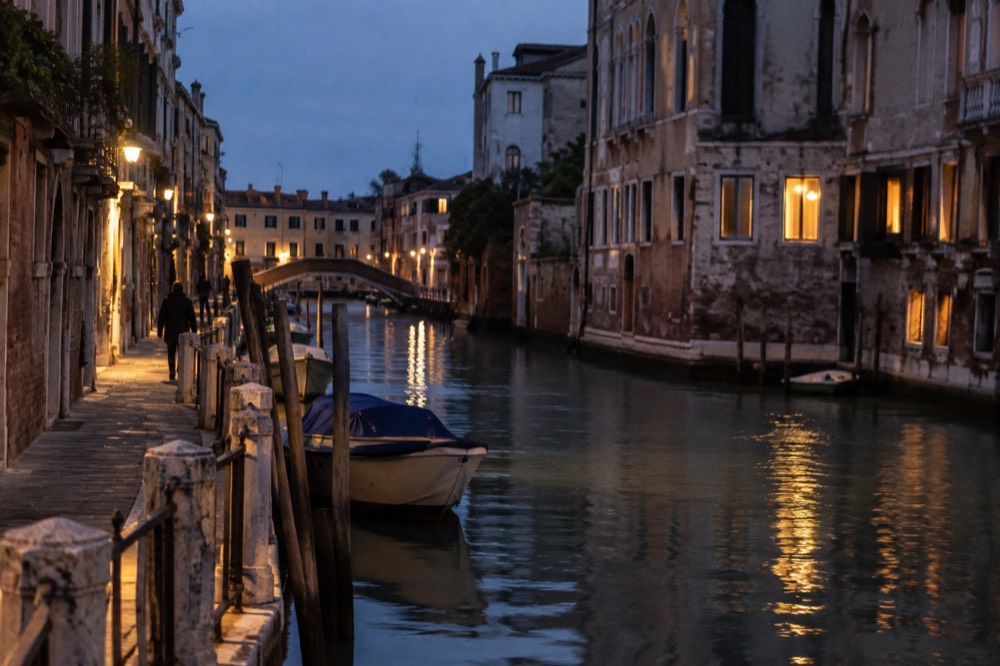
Common Questions About Travelling from Ljubljana to Venice
Is there a direct train from Ljubljana to Venice?
No. Rail travel always involves at least one change, most often at Villach in Austria or via Trieste in Italy, and the journey takes a large part of a day each way. Check the live timetable before planning around it, because cross-border options on this corridor change often.
Is the bus from Ljubljana to Venice the best option?
For most travellers, yes. The direct coach avoids the train's changes entirely and drops you at Piazzale Roma, on the edge of the pedestrian city. Departures are limited and the last return is earlier than you expect, so book ahead and plan the return before the afternoon.
Do you need a passport to go from Ljubljana to Venice?
You need a valid travel document but will not normally show it. Slovenia and Italy are both in the Schengen area, so there are no routine border checks, though spot checks happen on cross-border coaches. Slovenia abolished internal land and sea checks on 21 December 2007 and air checks on 30 March 2008.
Can you do Venice as a day trip from Ljubljana?
Yes, but it is a long day that buys roughly five to six hours in the city. It works with an early start, a booked return and modest expectations. An overnight stay, with the quiet evening and early morning, is worth far more than two day trips.
Do you need to change money between Slovenia and Italy?
No. Both countries use the euro; Slovenia adopted it on 1 January 2007. Cards are accepted almost everywhere in both cities, so there is no currency to change in either direction.
What is the best time of year for the trip?
Late spring and early autumn are the best compromise between weather and crowds. July and August bring peak crowds in Venice, while September and October are statistically the joint wettest months in Ljubljana at 147 mm each, so plan for rain and check the fog risk on early departures.