Lake Bohinj from Ljubljana: The Quiet Alpine Day Trip
Lake Bohinj is the Julian Alps' quiet answer to Lake Bled: the same emerald water, far fewer crowds, and a tram ride or a waterfall still within reach of a single day from Ljubljana.
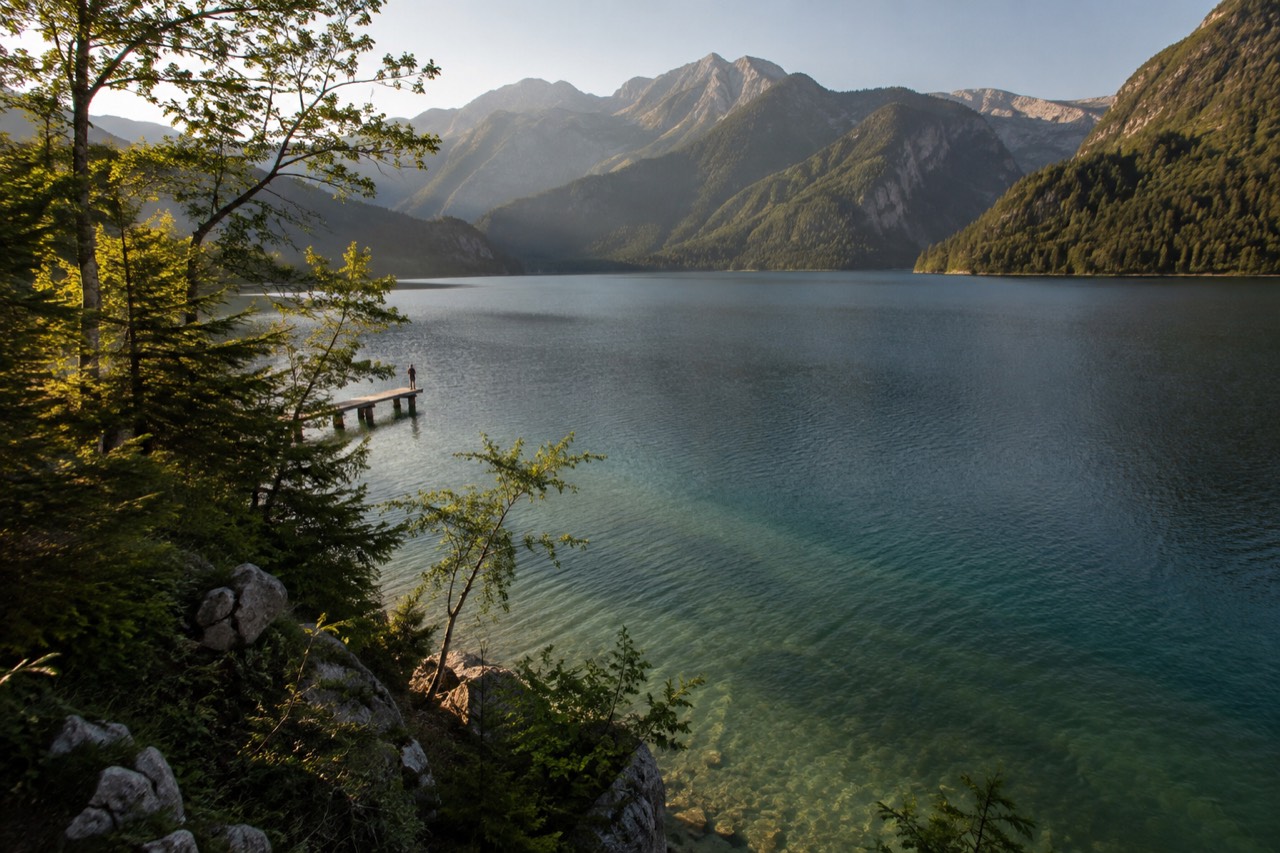
Short answer
Lake Bohinj sits inside Triglav National Park, roughly an hour's drive beyond Bled, and it is the calmer of Slovenia's two famous lakes. A day trip from Ljubljana works best with a car or a guided tour: the lake itself is free to enjoy, park entry costs nothing, and combining it with Bled or the Soča Valley fills a full day easily.
Lake Bohinj is what Lake Bled was before the postcards arrived. The water is the same impossible green, the cliffs are steeper, and the lake sits at the heart of Triglav National Park rather than beside a busy resort town. The park covers 840 km² of the Julian Alps, entry is free, and Mount Triglav itself, at 2864 m, presides over the whole basin. A day trip from Ljubljana is entirely realistic, and this guide lays out how to do it: the routes, the costs, the season, and how to fold Bled into the same day if you want both lakes in one go.
Why Go to Lake Bohinj Rather Than Lake Bled?
Bohinj is the larger, wilder and far less crowded of the two lakes, sitting inside a national park with no castle-island centrepiece, no pletna rowing boats and no cream-cake queue. It trades Bled's polish for stillness: a lake you can walk the edge of, swim in on a summer afternoon, or view from a cable car with the whole Julian Alps in the frame. If Bled is the postcard, Bohinj is the actual mountain experience.
Both lakes sit in the same corner of northwestern Slovenia, and most visitors to one never realise the other is twenty minutes further up the road. That is the whole argument for Bohinj in a single sentence. Bled draws the coaches, the wedding parties and the Instagram lines at the classic viewpoint; Bohinj draws swimmers, hikers and people who want to hear water rather than traffic.
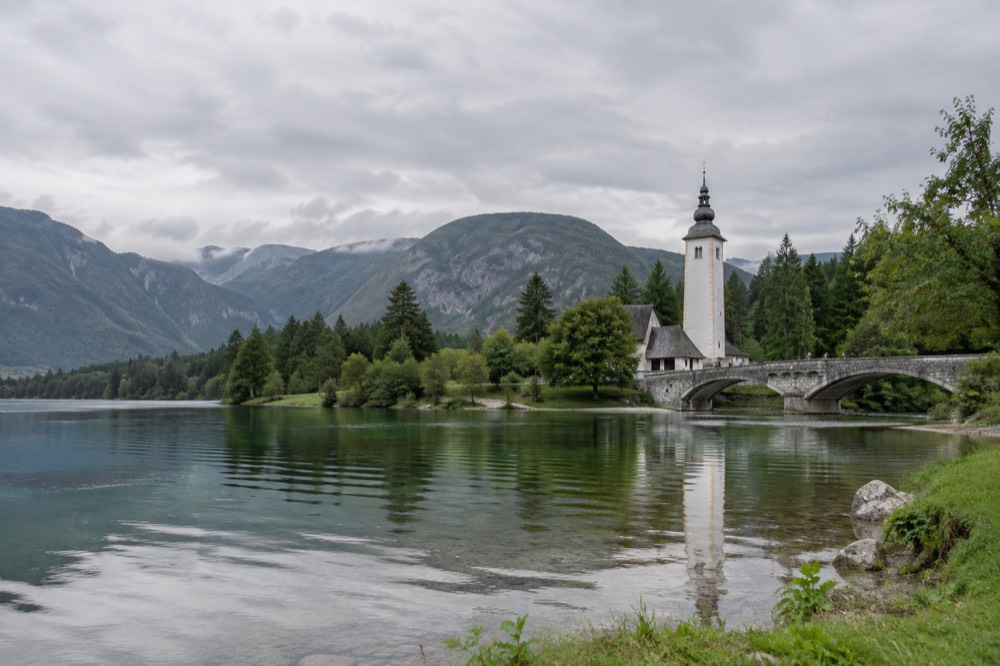
The difference is structural, not just atmospheric. Bled has a developed shoreline, a glitzy castle perched on a cliff and a church-topped island, all of which pull visitors to a handful of small, crowded spots. Bohinj's shoreline is mostly forest and meadow, and the lake is the destination rather than a backdrop. The village of Ribčev Laz at the eastern end, with its stone bridge and the Church of St John the Baptist above the water, is the only genuinely built-up corner.
There is also a practical reason the two pair well. Because Bohinj lies beyond Bled on the same route out of Ljubljana, a single day can carry both: Bled's viewpoint and castle in the morning when the light is on the island, then Bohinj's quiet water in the afternoon when the Bled crowds peak. The Lake Bled guide covers the first half of that plan in detail, and the comparison section below settles which lake deserves your limited hours if you can only manage one.
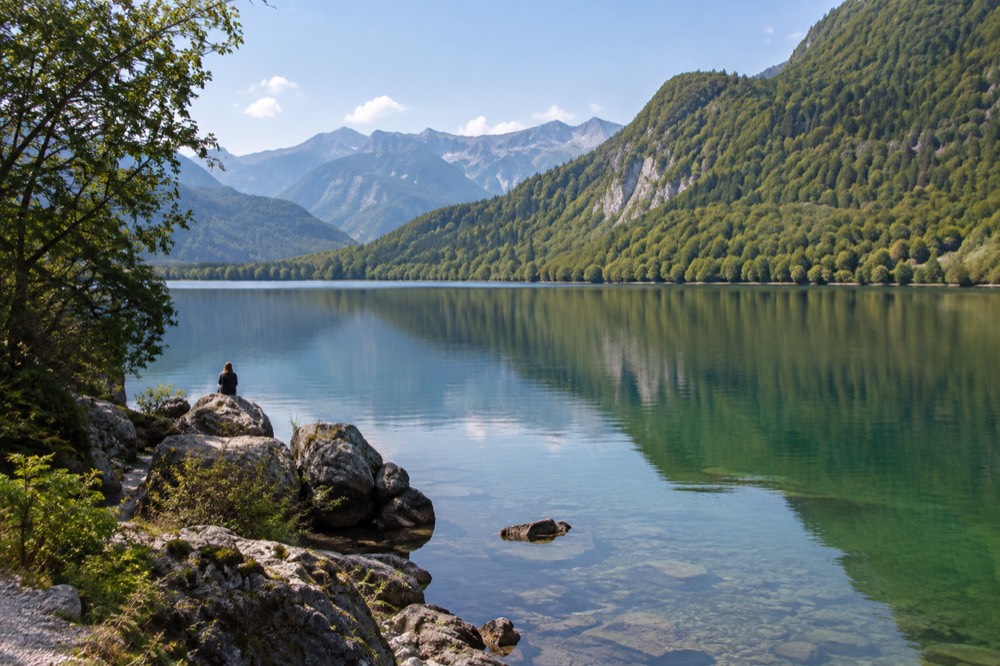
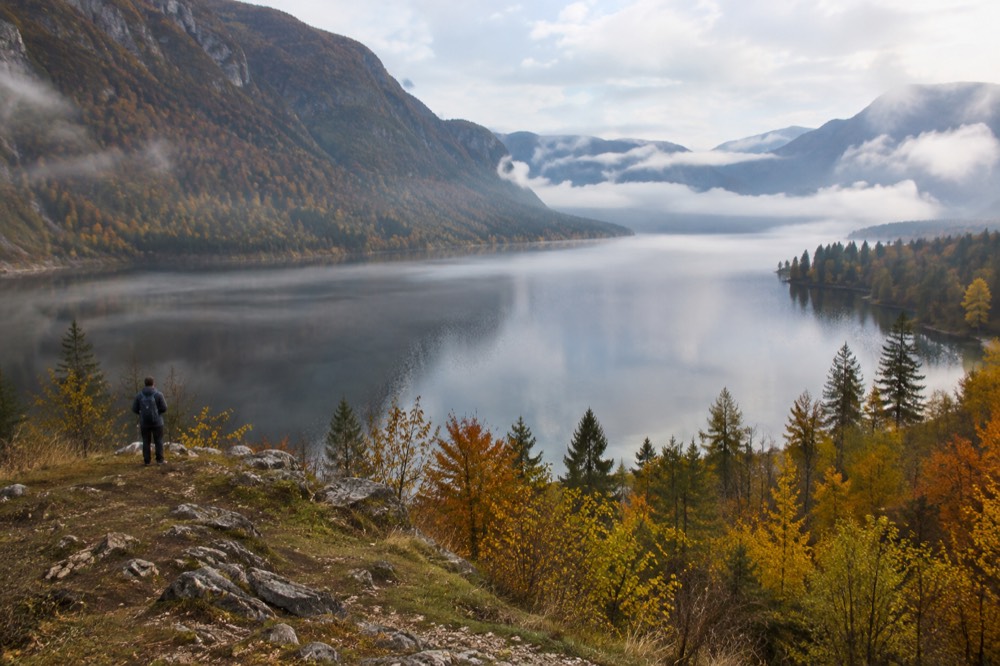
For photographers the choice is about mood. Bled gives you the composed shot everyone already knows; Bohinj gives you mist on water, weather rolling over ridgelines, and a shoreline that changes character every few hundred metres. On a clear morning the reflections at the eastern end are as good as anything in the Alps.
How Do You Get from Ljubljana to Lake Bohinj?
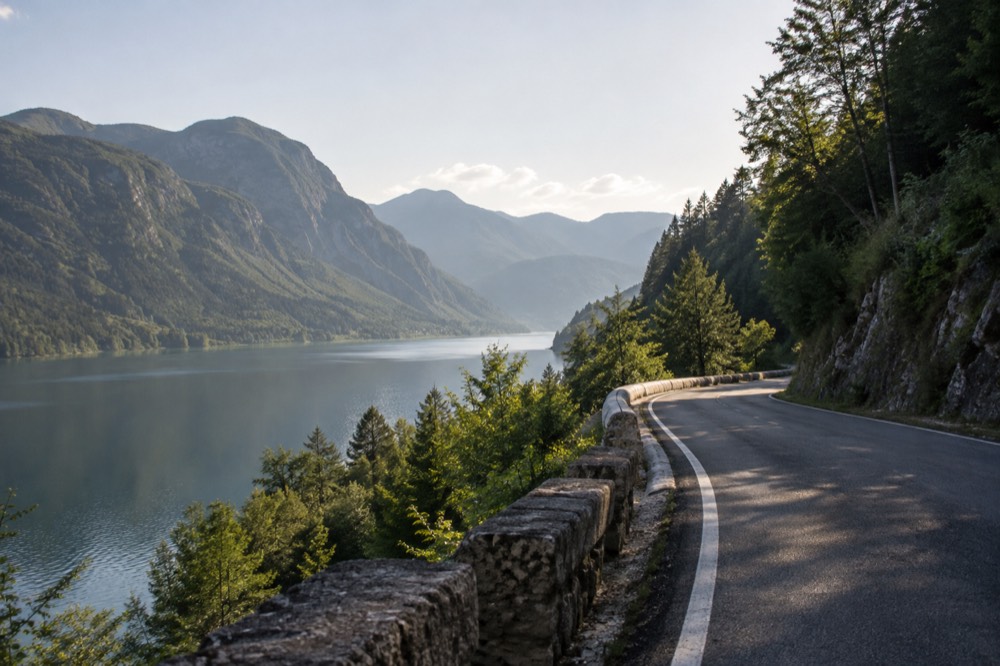
There is no single door-to-door public transport link, so most visitors drive, take a guided day tour, or combine a train towards Bled with a local bus for the final stretch. The route runs north through the Sava valley, past Bled, and into Triglav National Park; a car gives you the freedom to add viewpoints and the Vintgar Gorge en route, while a tour trades that freedom for zero navigation on mountain roads.
Driving is the straightforward option. The route follows the same corridor as the Bled trip, so every kilometre is a road that day-trip traffic uses daily in summer. Parking at Bohinj is distributed along the eastern end of the lake near Ribčev Laz and at points further along the shore; arrive before late morning in July and August, because the free-park popularity means the closest car parks fill first. One point worth repeating for anyone new to the country: Ljubljana's historic centre is pedestrianised, so collect the car from outside the car-free zone rather than planning to drive from your hotel door.
The rail option needs honest framing. The main line north serves the Bled area, and the practical detail most rail advice gets wrong is the station choice: Lesce-Bled station is 4 km from Bled centre, while Bled Jezero station, on a different branch line, is only 1.5 km away. From the Bled area, local buses run the remaining stretch up the Sava Bohinj valley to the lake. Neither the Ljubljana-to-Bled coach fare nor the train fare is published in a form this site could verify, so check the operators' own sites for current prices rather than trusting round numbers quoted elsewhere. The trains from Ljubljana guide covers the rail network in full.
Guided tours solve the last-mile problem entirely. The most popular format pairs the two lakes in one day: a morning at Bled with castle and island viewpoints, then the drive on to Bohinj for the afternoon. The roster's Bled-and-castle trip runs six hours, is rated 4.7 across 1641 reviews and starts from $86; the plainer Lake Bled day tour runs the same duration, rates 4.8 from 888 reviews and starts from $57; and the small-group castle-and-island version runs 5h 30m, rates 4.9 from 293 reviews and starts from $76. Whichever you pick, the operator's live listing carries the current departure points and times.
Cyclists should know the valley road is shared with buses in summer, and the shoulder is narrow in places, so the ride up from Bled is for confident road cyclists rather than a family outing. E-bikes change that equation considerably, and a guided e-bike day is one of the more interesting ways to arrive under your own power.
| Option | What it involves | Watch out for |
|---|---|---|
| Own car | The same corridor as the Bled route, then up the Sava Bohinj valley | Mountain roads; car parks near the lake fill early in summer |
| Train plus local bus | Rail towards the Bled area, then a local bus up the valley | Bled Jezero station is 1.5 km from Bled centre; Lesce-Bled is 4 km |
| Guided day tour | Door-to-door from Ljubljana, usually pairing Bled and Bohinj | Book ahead for July and August |
| Organised small-group tour | Fewer fellow travellers, more flexible pacing | Higher per-person price than the large-coach format |
What Is There to Do Around Lake Bohinj?
The lake itself is the main event: walking its shoreline, swimming off the grassy banks in summer, and photographing the stone bridge and church at Ribčev Laz. Around it sit a cable car to a high mountain viewpoint, one of Slovenia's best-known waterfalls, and trailheads for serious Alpine hikes, all inside a national park where entry costs nothing. A full day barely scratches it.
Start at the eastern end. Ribčev Laz is the lake's front door: the stone bridge over the Sava, the Church of St John the Baptist standing above the outflow, and a shoreline path in both directions. The walk around the entire lake is a genuine half-day commitment on foot, so most day-trippers walk one shore, the southern side being the quieter and shadier one, and turn back when the clock says so. The water is clean and, on a hot August afternoon, the swimming off the meadow banks is the thing locals drive up from Ljubljana for.
The Vogel cable car on the southern shore lifts you above the treeline for the single best panorama of the lake and the ridge behind it. The station sits a short drive or a stiff walk from Ribčev Laz, and the top puts the whole basin at your feet, with Mount Triglav's massif closing the western end. The Triglav National Park guide covers what the park offers beyond this corner of it, from the Soča Valley to the high passes.
The Savica waterfall, at the lake's western end, is Bohinj's classic short hike, an hour's walk from the far end of the lake or a quick drive, and the trail is steep enough that the cable car plus lakeshore combination suits families better. If you would rather stay on the water, rental boats operate from the eastern shore in the summer season.
If Bohinj is your main goal but you would like the logistics handled, the Bled-and-castle day trip still makes a strong base plan: it clears the driving, covers Bled's highlights with a guide, and the small-group version leaves enough breathing room that the afternoon pace is yours. Read more about the Bled and Bled Castle day trip and Check availability once your dates are fixed, because summer departures thin out quickly.
For a tour that leans harder into the mountains themselves, the small-group Bled and Triglav National Park trip runs ten hours, rates 4.8 from 140 reviews and starts from $115, trading the castle-and-island format for deeper park access. It suits travellers whose real interest is the Alpine scenery Bohinj sits inside, rather than Bled's manicured viewpoints. The Slovenian Alps by e-bike day is another way into the same landscape under your own power.
| Activity | Where | Character |
|---|---|---|
| Lakeshore walk | Southern or northern shore from Ribčev Laz | Flat, shaded, easy for any fitness level |
| Swimming | Grassy banks along the shore | Best July to early September |
| Cable car viewpoint | Vogel, southern shore | The panorama of the whole basin |
| Waterfall hike | Savica, western end | Steep, short, popular by mid-morning |
| Boat rental | Eastern shore | Seasonal, calm water in the morning |
Bohinj or Bled: Which One Fits Your Day Trip?
Choose Bled if you want the famous sights ticked in a compact, easy circuit: the castle viewpoint at 19 EUR, the island by pletna boat at 20 EUR per person, and a town built for visitors. Choose Bohinj if you have already seen the postcard, or if your day is about mountains, water and quiet rather than sights. With a full day and a car, do both, Bled first, because the crowds at Bled build through the morning while Bohinj absorbs them.
The honest comparison is about density. Bled packs a castle, an island church, a gorge and a viewpoint trail into a few square kilometres, and it delivers them efficiently; that efficiency is exactly why it feels like a production line by eleven in July. Bohinj spreads a fraction of the visitor numbers across a much larger lake with almost no built attractions, which is a virtue if your day is walking, swimming and looking, and a limitation if you want something to formally "see" every hour. The rest of the planning pages sit on Ljubljana Travel Guide.
Costs tilt towards Bohinj by default. Triglav National Park entry is free, the lakeshore is free, and the paid items are optional extras: the cable car and the waterfall trail. Bled's headline items each carry a ticket, and they add up quickly for a family. Bled Castle's adult entry is 19.00 EUR, the pletna boat to the island is 20 EUR per person, and the electric Bled Boat Line is 16 EUR per person. The is Bled Castle worth it article works through whether that ticket earns its price.
The pairing logic is why most guided tours sell the combined day. The standard six-hour Bled-and-castle trip from the roster, rated 4.7 across 1641 reviews from $86, covers Bled's essentials with a guide and transport; the small-group variant at 4.9 from 293 reviews from $76 adds flexibility; and the plain day tour at 4.8 from 888 reviews from $57 is the budget version of the same idea. None of them currently reaches Bohinj itself, so if the quiet lake is your priority, self-driving or the Triglav-focused tours are the better fit.
One more angle worth naming: Vintgar Gorge, 15.00 EUR for an adult with timed-entry slots, sits on the Bled side of the corridor and is open April to October, closing for winter, with the exact closing date depending on conditions each year. The Vintgar Gorge guide has the seasonal detail; if you add it to a two-lake day you are planning a full itinerary, not a day trip, so choose between the gorge and Bohinj rather than attempting both.
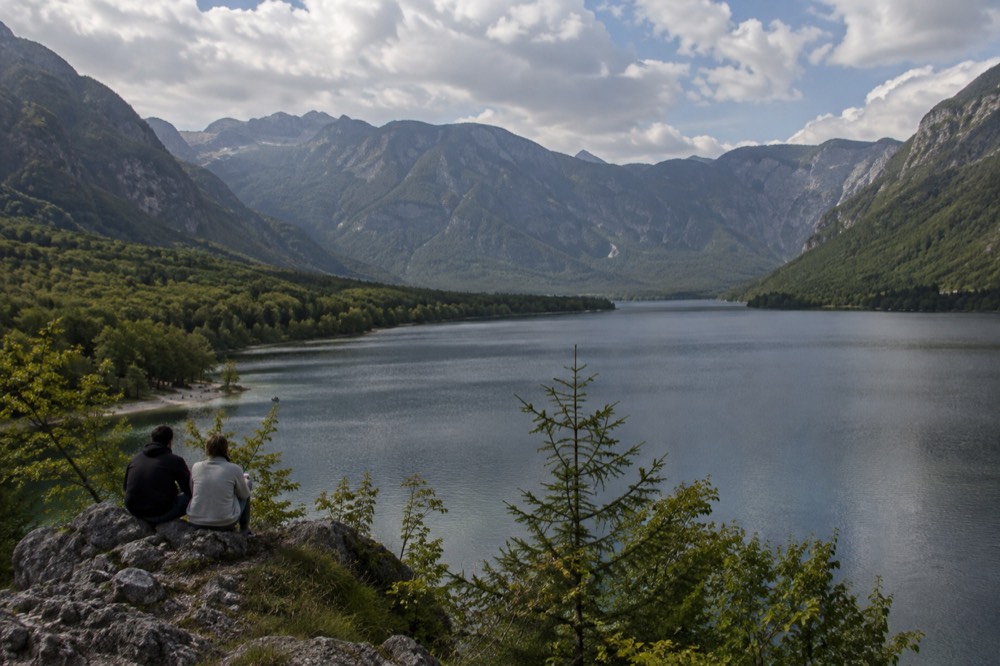
| Factor | Lake Bled | Lake Bohinj |
|---|---|---|
| Setting | Resort town, castle, island | National park, forest and meadow |
| Crowd level | High, peaking mid-morning to afternoon | Moderate, spread along a larger shore |
| Headline costs | Castle 19.00 EUR, pletna 20 EUR, boat line 16 EUR | Park entry free; cable car and waterfall extra |
| Best for | First visit, photography, classic sights | Swimming, walking, mountain atmosphere |
| Time needed | Half a day covers the highlights | Half a day minimum, a full day to relax |
When Is the Best Time of Year for Lake Bohinj?
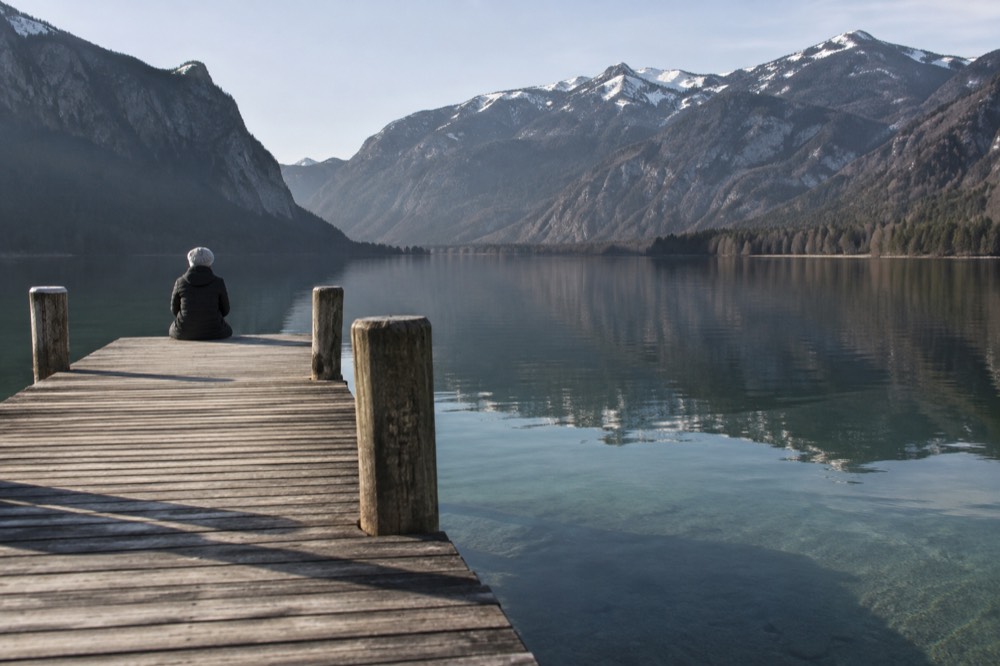
June to early September is the swimming-and-cable-car season, when the lake is warm enough for a proper swim and every facility is running; May and late September are quieter, cooler and in many ways better for walking and photography; and winter strips the lake back to mist, snow on the ridges and almost no visitors at all. The single weather fact that matters for planning is that the Ljubljana basin fogs in from September onwards, while the mountains above it stay in sunshine.
That last point deserves its own explanation, because it inverts the usual assumption that the city tells you the mountain weather. Ljubljana sits on the floor of a basin at 299 m, and in the colder half of the year cold air is trapped under warmer air above, so the city fogs in while the hills a few hundred metres up are in sun. ARSO's 1981-2010 climate normals put Ljubljana at just 56 hours of sunshine in December and 71 in January, against 120 and 139 hours at Kredarica, the station at 2514 m on Triglav itself. The city averages 37 clear days a year against 130 overcast. A grey morning in Ljubljana is very often a blue-sky morning at Bohinj, and that is the strongest argument for going up rather than staying low on a doubtful forecast.
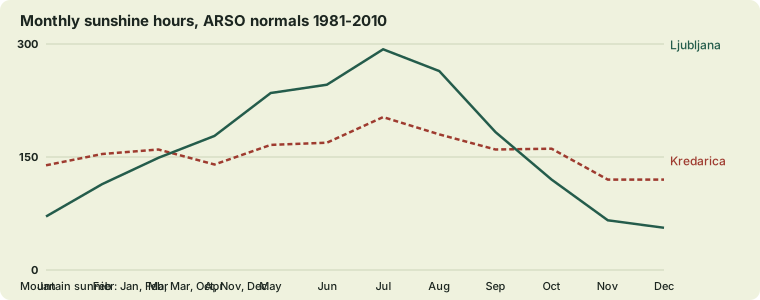
Season by season, the pattern is clear. July and August bring the fullest facilities, the warmest water and the most people; if you come then, start early and swim in the late afternoon when the day-trippers have turned back towards Bled. May and June give long daylight, green valleys and a lake that is warming up. Late September and October trade the swimming for gold on the larches and thin crowds, but pack a rain layer: the ARSO 1981-2010 normals put September and October at 147 mm of rain each, the wettest months of the Ljubljana year. Winter is for the hardy; the cable car operates for skiers and sightseers, and the lake under low cloud with snow on Vogel is one of the quietest scenes in the country. The best time to visit Ljubljana guide extends this to the city itself.
| Period | Conditions around Bohinj | Best use of the day |
|---|---|---|
| May to June | Long days, green valleys, lake warming | Walking, waterfall, cable car |
| July to August | Warmest water, fullest facilities, peak crowds | Swim early or late, sightsee midday |
| September to October | Gold larches, thin crowds, the wettest months | Photography, hiking, rain layers packed |
| November to April | Snow on the ridges, mist on the water, few visitors | Winter scenes, cable car, quiet walking |
What Will a Lake Bohinj Day Trip Cost?
The lake itself costs nothing: park entry is free, the shoreline is free and swimming is free, so a self-drive day can run on fuel, parking and food alone. The paid extras are the cable car and the Savica waterfall trail on the Bohinj side, and, if you fold Bled in, the castle at 19.00 EUR and the pletna boat at 20 EUR per person. A guided tour from Ljubljana starts from $57 for the Bled format and from $115 for the small-group Triglav park version.
Build the budget from the real numbers rather than guesses. On the Bled side of the corridor the adult castle ticket is 19.00 EUR, the pletna boat to the island is 20 EUR per person and the electric Bled Boat Line is 16 EUR, while Vintgar Gorge, if you add it, is 15.00 EUR for an adult. On the Bohinj side, the national park takes nothing at the gate, and the costs are the optional cable car and waterfall tickets plus whatever you spend on lunch, which is the main variable: the restaurants at Ribčev Laz are few and in demand in summer, so a picnic from the Ljubljana Central Market is both cheaper and more reliable.
| Item | Figure | Notes |
|---|---|---|
| Triglav National Park entry | Free | The park covers 840 km², founded 1981 with protection from 1924 |
| Bohinj lakeshore and swimming | Free | Best water July to early September |
| Bled Castle, adult | 19.00 EUR | The classic viewpoint over the island |
| Pletna boat to Bled Island | 20 EUR per person | The traditional gondola-style boat |
| Bled Boat Line, electric | 16 EUR per person | The alternative to the pletna |
| Vintgar Gorge, adult | 15.00 EUR | Open April to October, timed entry |
| Guided Bled day tour from Ljubljana | From $57 | Six hours, 4.8 from 888 reviews |
| Small-group Bled and Triglav park tour | From $115 | Ten hours, 4.8 from 140 reviews |
Two planning notes keep the budget honest. First, the figures above are the verified ticket prices; cable car and waterfall pricing at Bohinj was not verifiable from a primary source for this article, so check the operators' own pages before you promise the family a mountain view. Second, if you are weighing a tour against self-driving, the tour price buys the driving, the guide and the timing; for the mountain roads up the Sava Bohinj valley, plenty of visitors decide that is money well spent. The Ljubljana prices guide puts the city-side costs, from buses to meals, in the same frame.
A Realistic One-day Itinerary from Ljubljana
Leave Ljubljana by 08:00, reach Bled for a mid-morning viewpoint and castle hour, drive on to Bohinj for a late lunch at Ribčev Laz, then spend the afternoon on the water or the cable car before the drive back. That shape keeps you ahead of the crowds at Bled and puts you at Bohinj for the warmest, calmest part of the day, and it still has you back in the capital for a late dinner.
The timings below assume a car, but the same skeleton works for a guided day because most tours follow the identical logic: Bled's compact sights first, the valley road up to Bohinj after lunch. The one rule that matters is the early start. The Bled crowds build sharply from mid-morning, and the Bohinj car parks follow a couple of hours behind, so every hour before nine is worth two after eleven.
| Time | Where | What you are doing |
|---|---|---|
| 08:00 | Ljubljana | On the road north, past the fog line if the basin is grey |
| 09:00 | Bled | Viewpoint walk and castle hour before the peak |
| 11:00 | Bled lakefront | Optional pletna or boat line ride, coffee |
| 12:30 | Bohinj | Lunch at Ribčev Laz or a picnic on the shore |
| 14:00 | Bohinj | Cable car, lakeshore walk or swim, Savica if time allows |
| 17:00 | Return drive | Back down the valley, Bled bypassed |
| 18:30 | Ljubljana | Dinner in the centre, which is pedestrianised and pleasant on foot |
If the forecast is doubtful, invert the plan: the ARSO normals say a grey Ljubljana morning often sits under an inversion that the mountains rise above, so the cable car viewpoint is the thing to protect, not the Bled viewpoint. And if the day is a washout at every altitude, the caves hold roughly the same temperature year round, about 10 C at Postojna, which is why the Postojna Cave guide is the standard wet-weather alternative to any Alpine day trip. The rainy day in Ljubljana guide covers the city-side options in the same spirit.
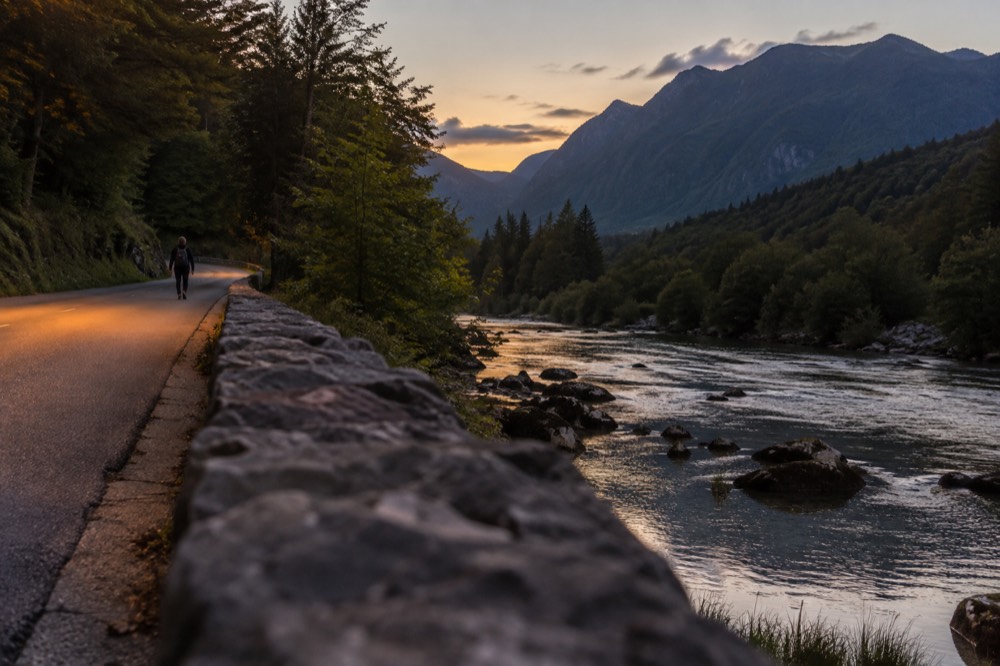
However you structure the day, book the movable parts before you leave: the tour seat if you are taking one, and a sense of the cable car's operating status if the season is shoulder or winter. Slovenia is in the European Union, the eurozone and the Schengen area, so there is no currency to change and no border to plan for on any route inside the country, and the euro covers everything from the parking machine to the pletna. For everything else on the mountain agenda, from the Soča Valley to the high passes, the day trips from Ljubljana overview is the wider map.
Common Questions About Lake Bohinj from Ljubljana
Is Lake Bohinj worth visiting if you have already seen Lake Bled?
Yes, and arguably more so. Bohinj is the wilder, quieter lake inside Triglav National Park, with free entry, free shoreline walking and a mountain setting that Bled cannot match. Visitors who found Bled crowded usually describe Bohinj as the lake they wished they had gone to first.
Can you swim in Lake Bohinj?
Yes, swimming is a normal summer activity off the grassy banks along the shore, and locals drive up from Ljubljana for exactly that. The water is at its most inviting from July to early September. No official water-temperature figure is published for the lake, so judge it on arrival rather than expecting a number in advance.
How far is Lake Bohinj from Lake Bled?
Bohinj lies beyond Bled on the same route out of Ljubljana, up the Sava Bohinj valley, roughly twenty minutes' further on by car. That proximity is why the two pair so well in one day: Bled's compact sights in the morning, Bohinj's quiet water in the afternoon.
Do you need a car for a Lake Bohinj day trip?
A car is the easiest way, but not the only one. A guided tour handles the driving entirely, and a train towards the Bled area combined with a local bus covers the last stretch. Note the station detail: Bled Jezero station is 1.5 km from Bled centre while Lesce-Bled is 4 km, and no verified fare is published for either the coach or the rail leg, so check the operators' own sites.
What does Lake Bohinj cost to visit?
The lake itself costs nothing: Triglav National Park entry is free and the shoreline is free. Paid extras are the cable car and the Savica waterfall trail, and if you pair the day with Bled, the castle is 19.00 EUR for an adult and the pletna boat to the island is 20 EUR per person.
Is Lake Bohinj good in winter?
It is quiet, atmospheric and often sunny when Ljubljana is foggy. The city sits in a basin that records just 56 hours of December sunshine against 120 at Kredarica high on Triglav, so a grey morning in the capital is regularly a bright one at the lake. Expect snow on the ridges, thin crowds and a cable car that runs for skiers and sightseers alike.