Vintgar Gorge from Ljubljana: Tickets, Transport and Timing
Vintgar Gorge is the most photogenic half-day trip out of Ljubljana, and it is also one of the most seasonal. Here is how the transport, tickets and timing actually work.
Short answer
Vintgar Gorge sits about 60 km northwest of Ljubljana, roughly an hour by road via Lake Bled. It opens April to October only, an adult All-in-One Pass costs 15.00 EUR, and the walk itself takes about 1 hour 30 minutes to 2 hours one way. Timed-entry slots apply, and the operator states the gorge is most crowded between 10:00 and 13:00.
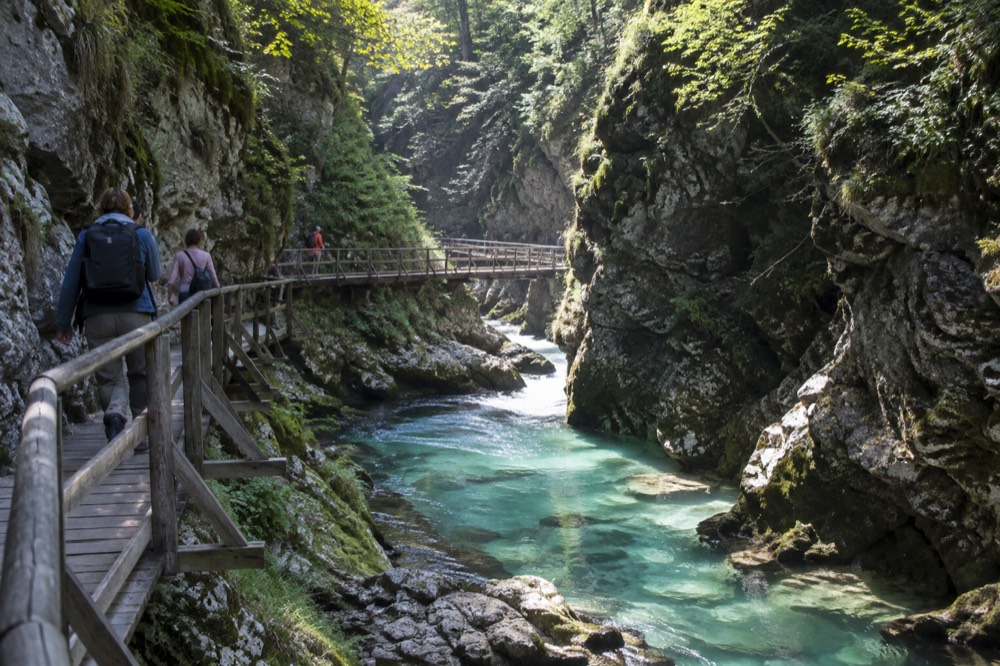
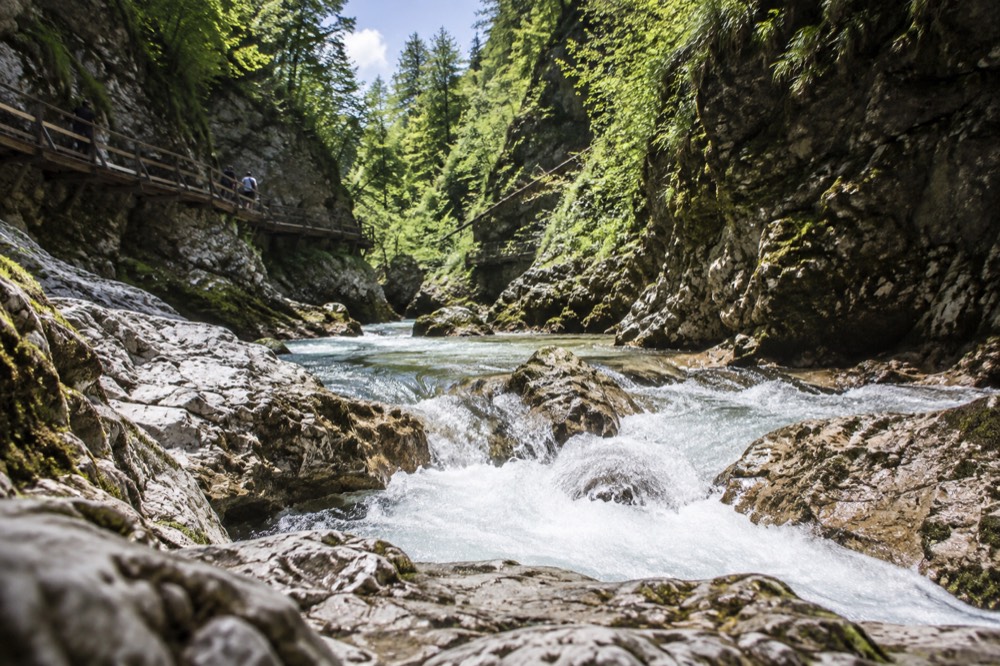
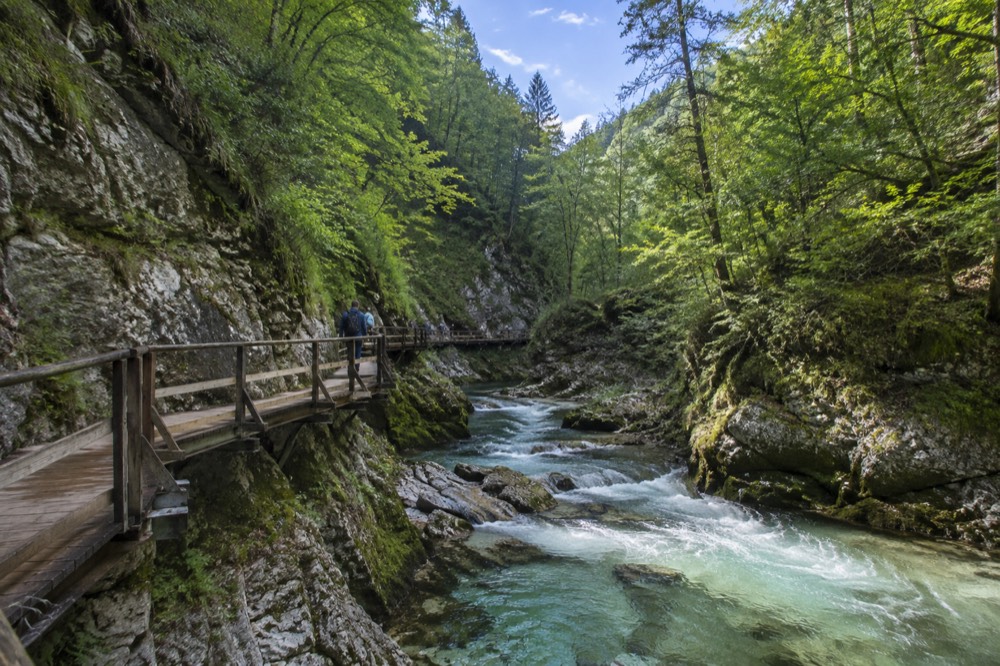
The Radovna river does something strange on its way down from the Julian Alps: it disappears into a crack in the earth and reappears a kilometre later, having spent the whole interval cutting a channel through limestone that it still runs through, turquoise and fast, four metres wide in places and walled in by cliffs up to 50 m high. Vintgar Gorge is the four-kilometre slice of that channel that people can walk, on wooden galleries bolted above the water, and it has been drawing visitors since wooden paths were first built through the gorge in the late nineteenth century. The gorge is not in Ljubljana, and it is not open all year, and those two facts shape every practical decision on this page.
This guide covers the whole route from the capital: how to get there, what the All-in-One Pass actually buys, when the walk is quiet, and how to fold the gorge into a day that also takes in Lake Bled, which sits 4 km to the south and is the natural companion on the same trip. The numbers here come from the gorge operator's own published price list and timetable pages, and from the official sources for the surrounding area.
How Do You Get from Ljubljana to Vintgar Gorge?
The gorge lies in Triglav National Park, about 60 km northwest of Ljubljana, and there is no train to it and no direct public bus to the entrance, so the realistic options are a rental car, a coach to Bled plus a local connection, or a guided day tour that includes the stop. Driving takes roughly an hour each way on good roads, most of it motorway to Bled and then a short hop through the village of Podhom. The last stretch is the part people underestimate: the access road is narrow, parking at the entrance is paid and finite, and on summer weekends it fills by mid-morning, after which cars queue back towards the village.
The rail option needs one clarification that most advice gets wrong. If you come [by train](https://omio.tpk.ro/exV6rGgH), the useful station is Bled Jezero, which is 1.5 km from the lake, not Lesce-Bled, which is 4 km away on a different line. Bled Jezero is on the local line towards Bohinj, and from the station you are already on the west side of the lake, closer to the gorge road. From Bled itself the remaining 4 km to the gorge entrance is a taxi ride, a summer tourist connection, or a bike hire away. No verified fare or timetable for the Ljubljana to Bled coach leg can be published here, because neither operator publishes a static table that survives checking; treat the journey time as roughly an hour and confirm times when you buy.
| Option | Rough time from Ljubljana | What to know |
|---|---|---|
| Rental car | About 1 hour | Motorway to Bled exit, then 4 km through Podhom; paid parking at the entrance, fills by mid-morning in high season |
| Coach to Bled + local taxi | About 1 hour plus connection | Frequent departures to Bled; the last 4 km needs a taxi or bike as the gorge has no direct coach stop |
| Train to Bled Jezero + taxi | About 1 hour 15 plus connection | Bled Jezero station is 1.5 km from the lake, the closer of Bled's two stations |
| Guided day tour | Door-to-door | Transport, parking and timing handled; several Bled and Triglav tours include a gorge stop or free time for it |
One Ljubljana fact that makes all of this easier: the city centre is pedestrianised, so wherever your hotel sits, you will walk out of the car-free zone before you drive anywhere. If you are collecting a rental car for the day, budget ten minutes of Old Town walking on each end. The full driving picture, including the airport run, is covered in Ljubljana airport to city centre, and the car-free centre itself is explained in getting around Ljubljana.
What Does Vintgar Gorge Cost and When Is It Open?
An adult All-in-One Pass costs 15.00 EUR, and the gorge is open to visitors between April and October only; it closes for the winter, and the exact closing date depends on conditions, so it must be checked before travelling. Hours shift through the season, from 09:00 to 16:00 in April and May to 08:00 to 18:00 at the height of summer, and entry runs on timed slots rather than a free-for-all.
The operator's published season looks like this:
| Period | Hours |
|---|---|
| 1 April - 31 May | 09:00-16:00 |
| 1 June - 5 July | 08:00-17:00 |
| 6 July - 30 August | 08:00-18:00 |
| 31 August - 20 September | 08:00-16:00 |
| 21 September - end of season | 09:00-15:00 |
Two things in that table deserve attention. The first is the word "end": the operator deliberately does not publish an exact closing date, because the wooden galleries are a fair-weather structure over a wild river and closure tracks conditions. Plan an October visit around the possibility, and check the operator's page before you drive out. The second is the timed-entry system: slots spread arrivals through the day, which is why booking ahead matters more in July than the raw crowd numbers suggest.
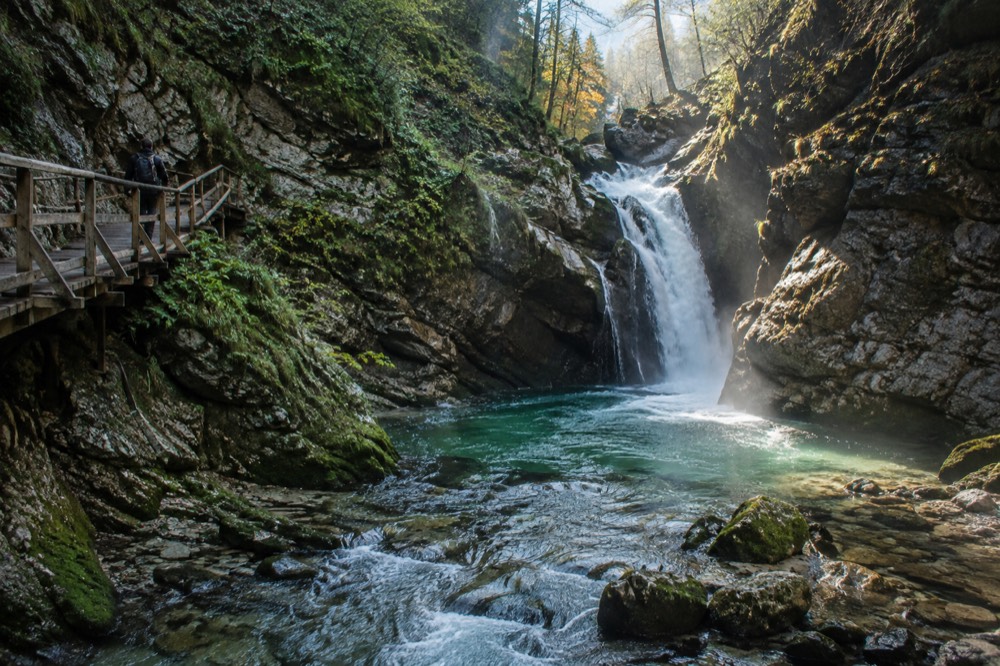
The walk itself runs about 4 km along the gorge, ending at the Šum waterfall, and most people walk up one side and back the other, or return by the ridge path above the gorge, for a total visit of about 2 to 3 hours. The All-in-One Pass is the standard adult ticket; the operator frames it as covering the full route. Wear shoes with grip: the galleries are timber, they get splashed in places, and the path is never far above the water.
If your instinct is that a gorge this popular is best reached before the crowds, you are right, and the next two sections cover exactly that: the tour-versus-drive decision, and the timing that decides whether your photos show water or the backs of other visitors' heads.
Should You Take a Tour or Drive Yourself?
Self-driving wins on flexibility and wins big if you want a dawn or late-afternoon slot, because you control the clock; a guided tour wins on everything else, since the parking, the timed ticket and the Bled connection are all handled, and the driver knows which entrance is less busy on the day. For a single-day visitor without a car, the tour is not a luxury, it is the only way the gorge fits into the day without spending half of it waiting for connections.
The honest arithmetic for the independent visitor: the drive is easy, but the gorge is a single-track experience with a finite car park, and in July and August the parking situation before 10:00 is calm and after 11:00 is not. A tour that includes the gorge, or Bled free time in which the gorge is an option, removes the two failure modes, no parking and a missed timed slot. If you do drive, pair the gorge with the Bled cream cake stop it deserves, because the classic cake is from the lake hotel a few minutes away.
For travellers whose real interest is the wider national park rather than just this one gorge, the picture changes. The gorge is the park's front door, but the park itself covers 840 km², and the high routes around Kranjska Gora and the Soča headwaters are where the scale is. Triglav itself stands at 2864 m, park entry is free, and the park was founded in 1981 with earlier protection from 1924, per the park's own published information. The guided tours below cover that bigger country, with the Soča and Kranjska Gora day tour the most direct route into it from the capital.
The tour pages carry the live prices, current ratings and exact itineraries, and every booking here comes with free cancellation, so a weather-dependent gorge day can be rebooked rather than lost. Check availability on the Soča and Kranjska Gora day tour or the full-day Triglav National Park tour if the mountains, not just the gorge, are the point of your trip.
How Long Does the Walk Take and How Hard Is It?
The gorge walk covers about 4 km each way on flat wooden galleries and gravel path, takes roughly 1 hour 30 minutes to 2 hours up to the Šum waterfall, and is easy rather than strenuous: there is no serious climbing inside the gorge, the surface is good, and the only real demands are steady footing and a head for being above fast water. Allow 2 to 3 hours for the round trip, longer with photos.
The route is genuinely accessible to anyone who can walk a few kilometres on the flat. There are no ladders and no exposed scrambling inside the gorge itself; the galleries are railed, wide enough for two-way traffic, and bolted to the rock a short distance above the water. The one caveat is footwear and weather: timber in spray, and gravel after rain, reward shoes with tread. The return is where you can add difficulty if you want it, because the ridge path back over the gorge adds height and views, while the in-and-out return along the galleries is the flat option.
The comparison worth making before you commit a day is with the caves, because both are the standard wet-weather answers in this part of Slovenia and they are completely different experiences. Postojna Cave, covered in full in Postojna Cave, is a 3.7 km route travelled partly by underground train, roughly 1 hour 30 minutes, at a constant 10 C. Škocjan, covered in Škocjan Caves, is a walk of about 2 km with roughly 400 stairs, 2 hours 30 minutes to 3 hours, at 12 C. Vintgar is neither: it is open air, it is about the light on the water, and it closes when the caves stay open, so the two only compete in the months when both are running.
| Walk | Distance | Time | Difficulty | Winter |
|---|---|---|---|---|
| Vintgar Gorge, entrance to Šum waterfall | About 4 km | 1 hour 30 to 2 hours | Easy, flat galleries | Closed, April to October only |
| Škocjan Caves guided route | About 2 km, roughly 400 stairs | 2 hours 30 to 3 hours | Moderate, underground | Open year-round, 12 C |
| Postojna Cave visitor route | 3.7 km, partly by cave train | About 1 hour 30 | Easy | Open every day, 10 C |
Can You Combine Vintgar Gorge with Lake Bled in One Day?
Yes, easily, and it is the standard combination: the gorge entrance is only about 4 km from Bled, so a morning in the gorge and an afternoon at the lake is the natural single-day shape, and even at a relaxed pace both fit between breakfast and dinner. The order matters, because the gorge crowds between 10:00 and 13:00 and the lake is at its best late, so gorge first, lake second is the pattern that serves both.
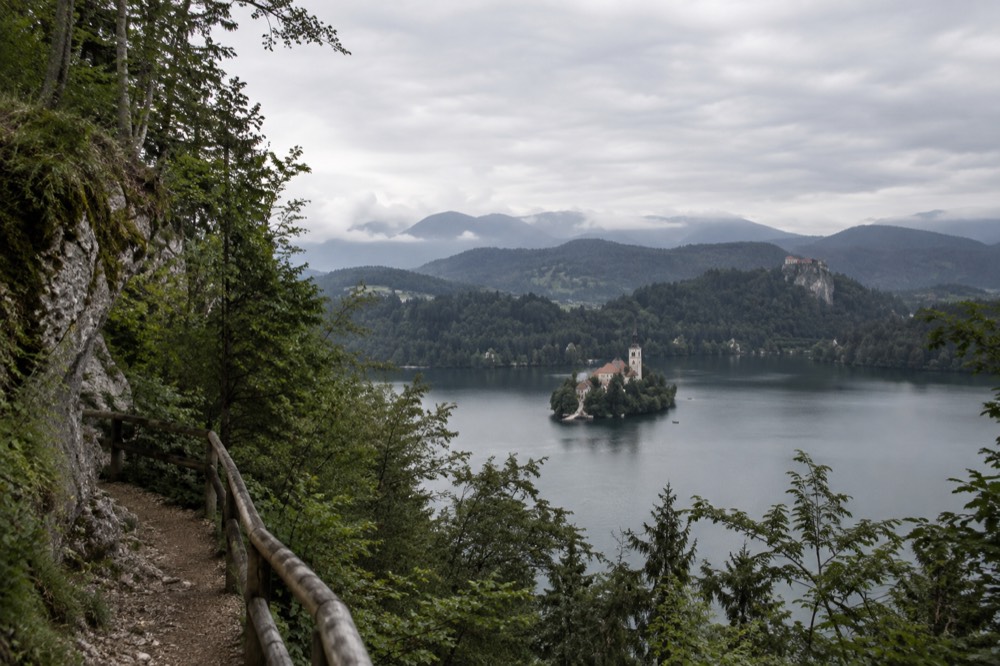
The practical spine of the combined day is simple. Leave Ljubljana early enough to be at the gorge entrance for opening or the first hour after it, walk up to the Šum waterfall and back, then drive or ride the 4 km to Bled. At the lake the afternoon splits into the classic pieces: the castle viewpoint, at 19.00 EUR for an adult ticket per the castle's own price list, and the water. A pletna boat to the island runs 20 EUR per person, and the electric Bled Boat Line runs 16 EUR per person, both per the official Bled sources. None of that is compulsory; the lake path itself is free to walk, and it takes about an hour to circuit the water at a stroll.
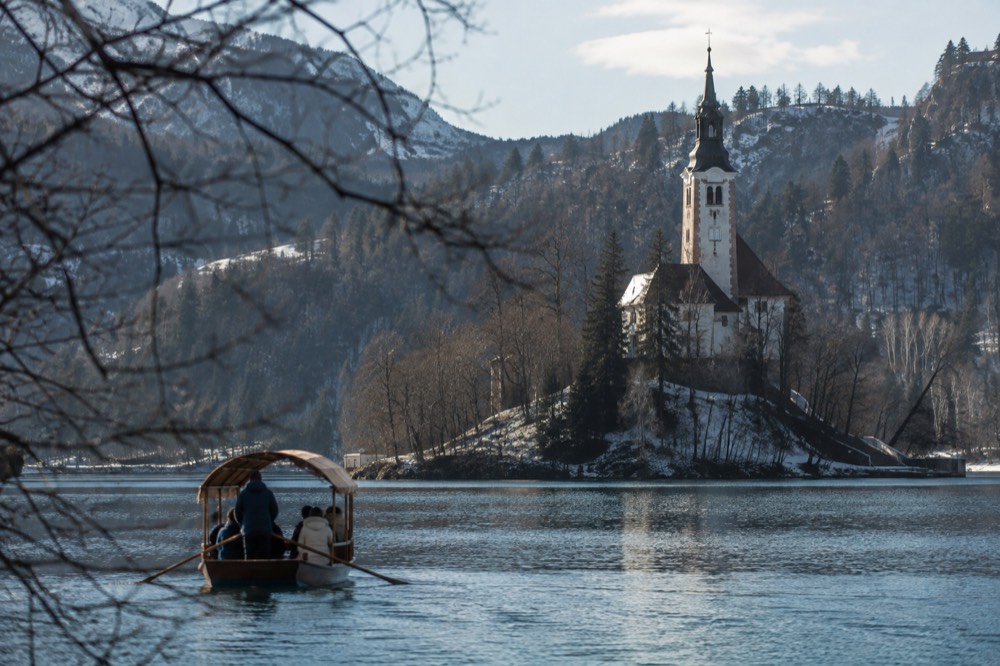
For the timing question, whether Bled deserves more than a day, the honest answer is that the gorge-plus-lake day is the compressed version and it works, but the lake rewards a second morning, and the Lake Bled and Lake Bohinj pages break down what a slower pace buys you. If you are deciding between the two lakes rather than linking them, the Lake Bled or Lake Bohinj comparison settles it by travel style. A small-group tour that bundles the lake, the castle and the island into one guided day exists for visitors who want the whole circuit without driving it, and it is worth checking against the self-drive plan before you commit.
When Is the Best Time of Day and Year to Visit?
The best time of day is the first hour after opening or the last two hours before closing, because the operator itself states the gorge is most crowded between 10:00 and 13:00; the best months are late May, June and September, when the water is full, the hours are long and the summer coach wave has not yet arrived or has just gone. July and August are the busiest and also the hottest hours for the exposed sections.
The crowd window is the operator's own published advice, not folklore, and it should be treated as a hard constraint in high summer: a 10:00 arrival in August puts you in the densest flow of the day on galleries built for two-way traffic. The early slot has a second advantage specific to this gorge, which is that the light in the early morning sits low and catches the water in a way the flat midday sun does not, and the photographers who produce the signature turquoise shots are almost all working before 09:00 or after 17:00 in the long-hours part of the season.
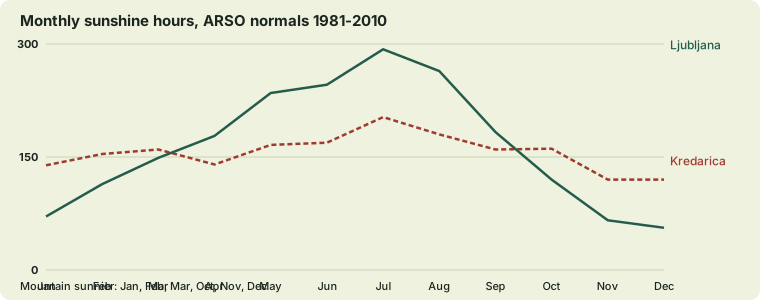
The month choice interacts with weather in a way that catches visitors out, and this is where Ljubljana's own climate record earns its place in the plan. September and October are the joint wettest months in the city at 147 mm each, above July's 115 mm, in the ARSO 1981-2010 normals, and September and October average 12.4 fog days each in the 1971-2000 series, the only period for which ARSO publishes fog. The gorge closes during October, and the shoulder-season gamble is real: a September visit can be glorious and quiet, but it carries the highest rain risk of the walking year, and the gorge's wooden path is at its least fun in steady rain.
What If the Gorge Is Closed or the Weather Turns?
If the gorge is closed, from November to March or after a storm, the reliable substitutes are the show caves, which hold roughly the same temperature year round, 10 C at Postojna and 12 C at Škocjan, and are open every day, and the museums and covered market halls of Ljubljana itself, which need no weather at all. A rained-off gorge day converts cleanly into a cave day trip or a city day.
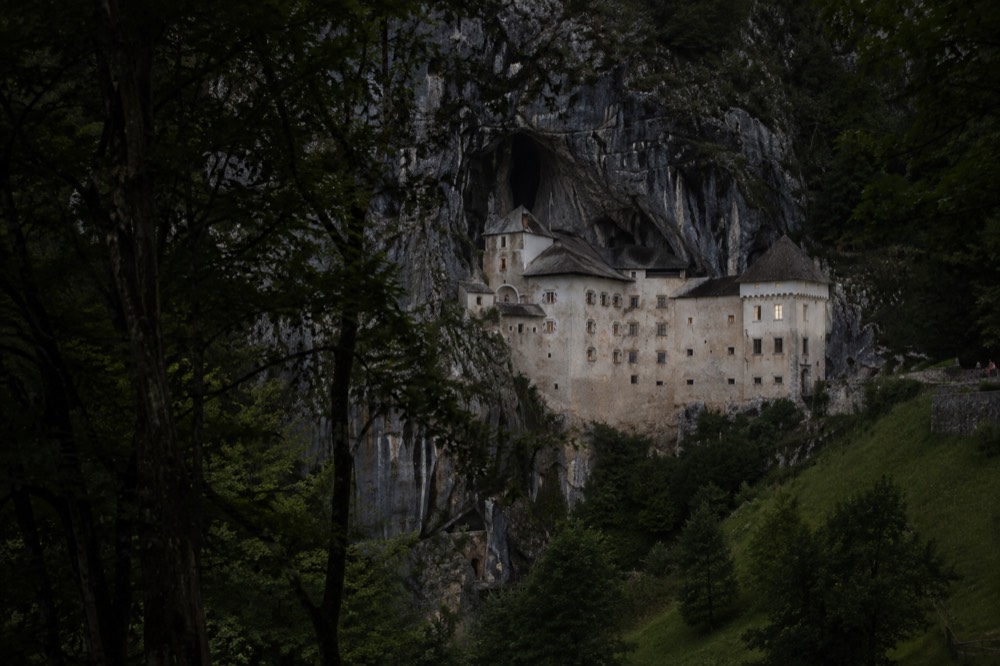
The caves are the standard answer and they are a good one, with the caveat that they are a different experience rather than a replacement, as the comparison table earlier in this guide sets out. Postojna runs every day including holidays and in bad weather, per the operator's own timetable page, with departures spread across slots from 09:00 to 18:00 through the year and the busiest grid in summer. Predjama Castle, the cliff castle 9 km from the cave, is open year round at 24.00 EUR for an adult, per its own ticket page, and the two share a site operator.
If the weather is bad but you are still set on the Bled direction, the lake in rain is a different, moodier place and the castle interior is all indoors, and the rainy day in Ljubljana page covers the city-side fallbacks, including the national institutions that open free on the first Sunday of every month. One structural fact saves a lot of soaked walking: most of the big museums close on Mondays, so a Monday washout has fewer doors to knock on than any other weekday.
For a mountain day that does not depend on the gorge's timber galleries at all, the western Triglav routes run in almost any conditions short of a storm warning, and a guided six-hour loop into that side of the park is the most weather-proof of the alpine day trips.
What Should You Bring and What Should You Skip?
Bring grippy shoes, a layer for the spray zones, a filled bottle and nothing fragile in your pockets, because the galleries put you close to moving water for two hours; skip the midday arrival, the single-hour itinerary and the assumption that the gorge fits into a spare afternoon from Ljubljana, because the transit alone eats two hours of any day.
The kit list is short because the walk is short. What people actually regret is timing, not equipment: arriving at 11:00 in August, or planning the gorge as a quick add-on to an afternoon flight, or turning up in late October without having checked whether the season has ended. The gorge rewards being treated as the morning's main event, with the lake as the afternoon's. Food is the one gap to plan for, since the entrance area has facilities but the walk itself has none, and four kilometres out and back is a long stretch on an empty stomach.
| Bring | Why |
|---|---|
| Shoes with tread | Timber galleries take spray and the gravel path holds rain |
| A light layer | The spray zones and the shaded sections run cooler than the car park |
| Water and a snack | Nothing is sold inside the gorge; the walk is 2 to 3 hours round trip |
| Booking confirmation | Timed-entry slots are checked at the entrance in peak season |
| Grip phone strap or zipped pocket | The railings lean out over fast water in the narrow sections |
The final planning question is the shape of the whole day, and the answer depends on transport. With a car, gorge at opening, lake through the afternoon, back to Ljubljana for dinner is a full but comfortable day. Without one, the guided option that bundles the lake, the gorge country and the park into a single booking is the difference between one good day and one spent watching connections, and the small-group Triglav and Bled format below is the version of that with the most park in it.
For everything the gorge is not, the wider day-trip menu from the capital is laid out in day trips from Ljubljana, and this Ljubljana Travel Guide carries the full set of lake, cave and alpine routes with the same verified numbers. Whichever way you build the day, the two decisions that matter most are the season check and the arrival time, and both are free.
Common Questions About Vintgar Gorge from Ljubljana
How do you get from Ljubljana to Vintgar Gorge?
The gorge is about 60 km northwest of the city, roughly an hour by road. There is no direct public transport to the entrance, so the options are a [rental car](https://discovercars.tpk.ro/laYIo9hK), a coach or train to Bled plus a taxi or bike for the last 4 km, or a guided day tour that includes the stop.
Is Vintgar Gorge open all year?
No. The operator states the gorge is open to visitors between April and October and closes for the winter, with the exact closing date depending on conditions. Check the operator's page before an October trip.
How much does Vintgar Gorge cost?
An adult All-in-One Pass is 15.00 EUR. Entry runs on timed slots, so booking ahead matters most in July and August.
How long does the Vintgar Gorge walk take?
About 1 hour 30 minutes to 2 hours up to the Šum waterfall and back along the galleries, or 2 to 3 hours for the full round trip at a photographic pace.
When is Vintgar Gorge most crowded?
The operator itself states the gorge is most crowded between 10:00 and 13:00. The first hour after opening and the last two before closing are the quiet windows.
Can you visit Vintgar Gorge and Lake Bled in one day?
Yes, and it is the standard combination. The gorge entrance is about 4 km from Bled, so a morning in the gorge and an afternoon at the lake fits comfortably in a single day.