How to Pronounce Ljubljana: A Simple Guide for Visitors
Ljubljana looks unpronounceable on paper and takes about ten seconds to learn out loud. Here is the breakdown, the meaning of the name, and the other Slovenian words worth practising before you arrive.
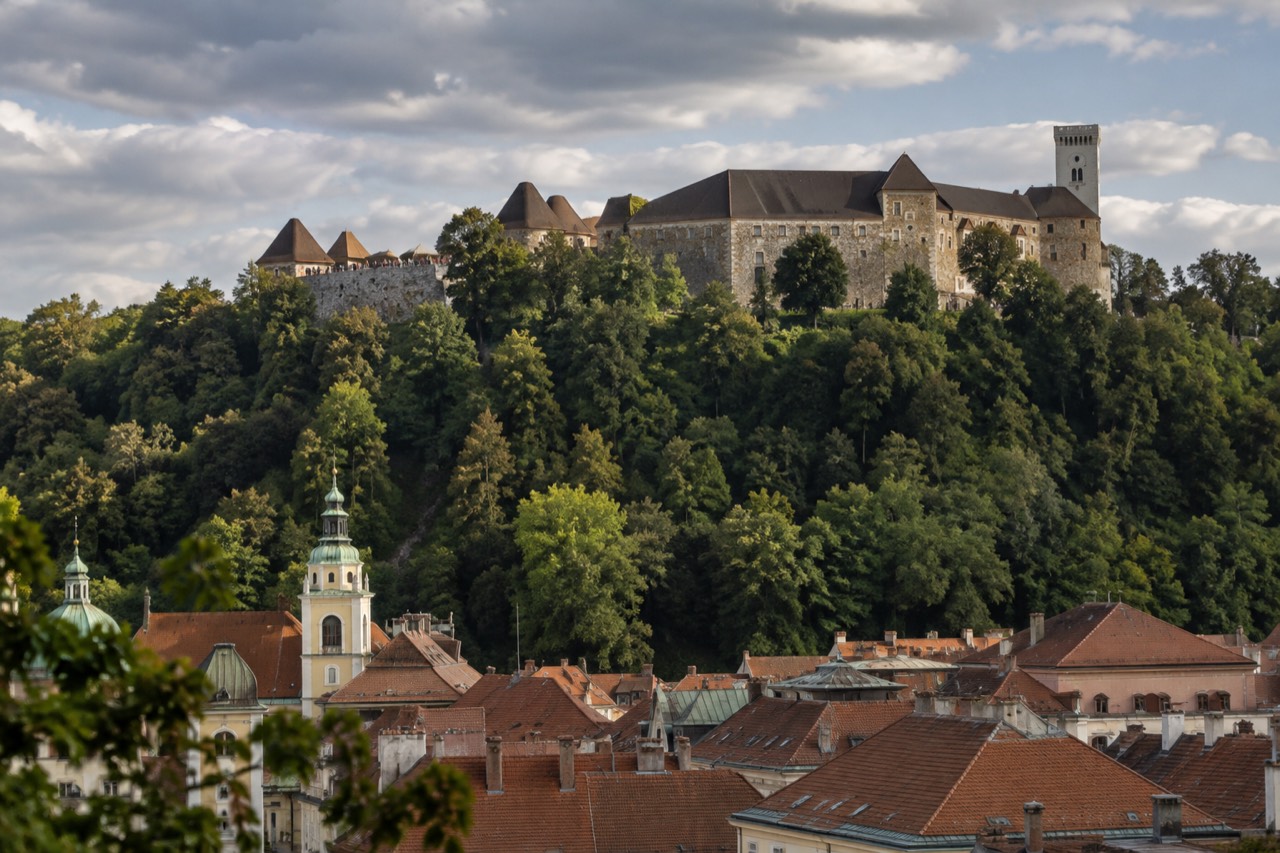
Short answer
Ljubljana is pronounced roughly "lyoob-LYAH-nah": three syllables, stress on the second. The "Lj" at the start is a single sound, like the "lli" in the middle of the English word "million". Slovenians will understand you even when you get it wrong.
How Do You Pronounce Ljubljana?
Ljubljana is pronounced roughly "lyoob-LYAH-nah", three syllables with the weight on the middle one. The "Lj" is not an L followed by a J: it is one fused sound, the same "ly" you make in the middle of "million". Say "lyoob", then "LYAH", then a soft "nah", and you have it. That is the whole trick, and it takes most English speakers three or four attempts. The word looks harder written down than it sounds spoken, because Slovenian packs the "ly" sound into two letters where English needs a whole word to contain it.
The common English mangles are worth naming so you can hear yourself avoiding them. "Loo-blee-ah-na" adds a syllable that is not there. "Lub-ljana" drops one. "Loo-bloo-yana" invents a vowel. None of these will cause a crisis, and bar staff, hotel receptionists and taxi drivers in the city have heard every version, but the correct form is closer to "lyoob-LYAH-nah" than any of them.
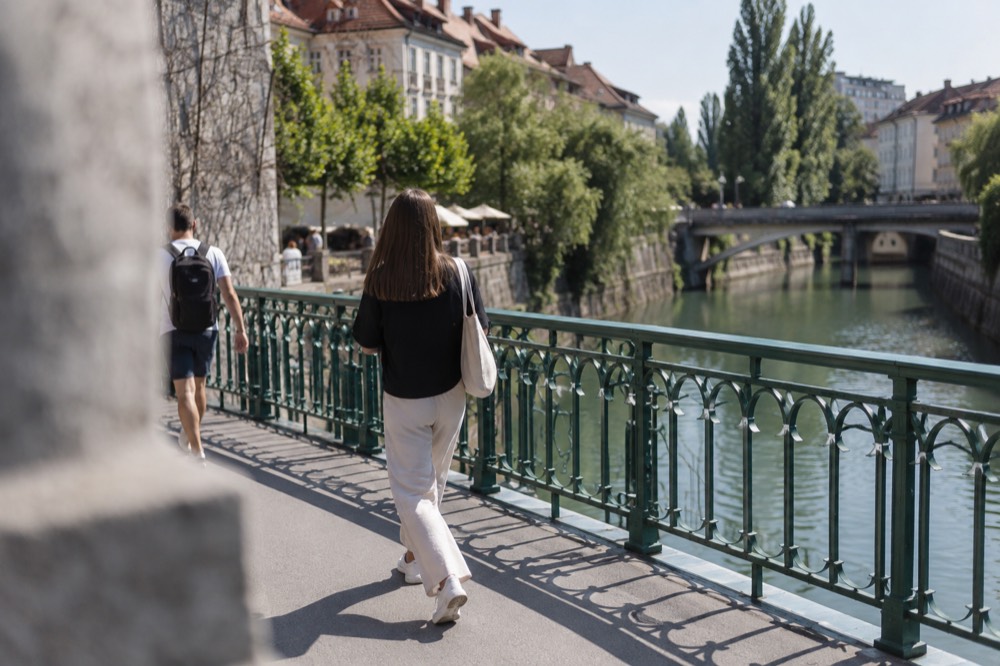
A good way to rehearse is to borrow the sound from a word you already own. The middle of "million", "brilliant" or "billion" is the same palatal L that Slovenian writes as "lj". Slow the word down, isolate that "lli", and put the Ljubljana "Lj" in its place. Practise the full word slowly, then at speed, and the muscle memory forms quickly. If you are travelling with someone, teach it to them too: hearing the word out loud from another person is the fastest way to fix it.
There is also a rhythm element that English speakers tend to miss. Slovenian words carry a clear stress, and in Ljubljana it falls on the second syllable, "LYAH". English habit pushes stress toward the front of unfamiliar words, which is how "lyoob-LYAH-nah" drifts into "LYOO-blah-na". Clap once on the middle syllable as you say it, exaggeratedly at first, and the correct stress pattern settles in within a few repetitions. Stress matters more to Slovenian ears than the palatal sound does: a word with the right stress and a slightly lazy "lj" reads as a good attempt, while a perfect "lj" with the stress in the wrong place reads as a stumble.
Why Does Ljubljana Look So Hard to Say?
The difficulty is the spelling, not the sound. Slovenian uses "lj" as a single letter-pair for one palatal sound, and it appears twice in the city's name, which makes the written word look like a tongue twister. English has no letter pair for that sound, so readers reach for an L and a J separately and get stuck. Once you know "lj" is one unit, the word collapses into three easy syllables. Slovenian spelling is otherwise unusually honest: unlike English, almost every letter in a Slovenian word is pronounced, and pronounced the same way wherever it appears.
The name breaks into three parts. The first syllable, "Lju", rhymes loosely with "you" with an "l" in front. The second, "blja", carries the stress and sounds like "blyah". The third, "na", is exactly as it looks. The only genuinely foreign element is that palatal "lj", and it appears in both the first and second syllables, which is what doubles the visual difficulty.
| Part of the word | How it sounds | English echo |
|---|---|---|
| Lju | "lyoo" | the "lli" in "million" |
| blja | "BLYAH", stressed | "yah" with a soft b in front |
| na | "nah" | as in "banana" |
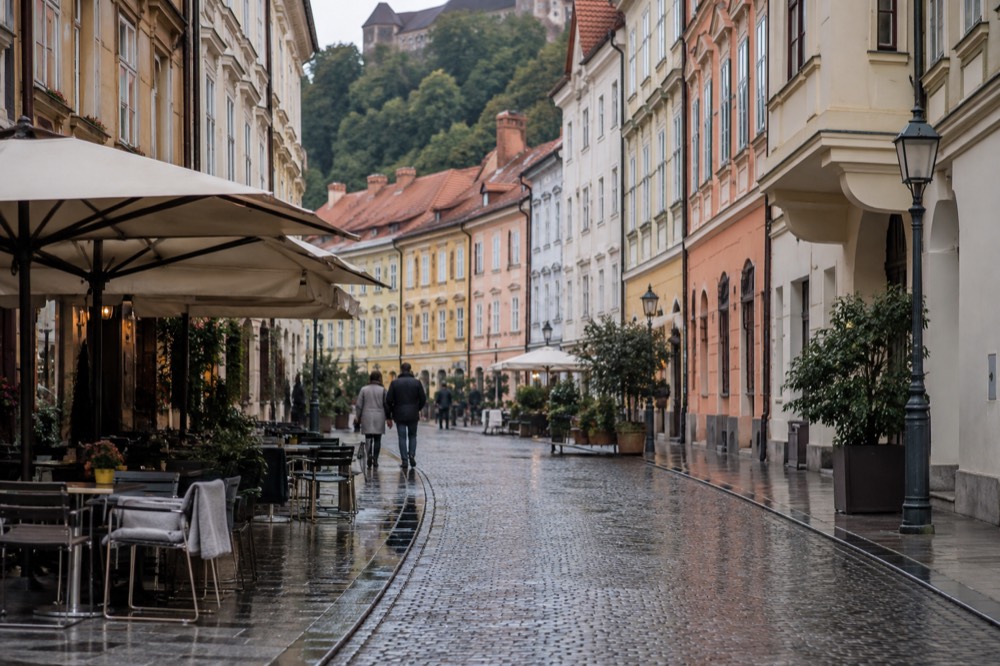
This honesty of Slovenian spelling is good news for the rest of your trip. Once you accept that each letter is sounded, place names across the country start reading themselves: Bled is exactly "Bled", Piran is "PEE-rahn", Kranjska Gora is "KRAHN-ska GO-rah". The only diacritics you will meet regularly are the caron over č, š and ž, which turn them into "ch", "sh" and "zh" sounds. There is more on those below, and the same logic unlocks every sign from the train station to the cave entrances.
The letter "j" deserves its own note, because it behaves differently from English. In Slovenian, "j" is always the "y" sound in "yes", never the "j" in "jam". This single rule explains half the country's place names at a stroke: "Jezero" is "yeh-ZEH-ro", "Jama" is "YAH-mah", and "Predjama" is "pred-YAH-mah". It also explains the city's own river, the Ljubljanica, where the "j" inside the "lj" pair is doing palatal duty rather than standing alone. English readers who misread the "j" as the English consonant are the ones who produce the strangest versions of the name, so fixing that one letter fixes a whole family of words.
The city's name is also useful practice because you will say it constantly: booking desks, taxi ranks, [bus tickets](https://busbud.tpk.ro/4kLAIElq), hotel addresses. And once you are saying it comfortably, the practical questions follow, like which day trip to book from a base here. The three below are the ones most visitors compare.
How Do Slovenians Actually Say It?
In everyday Slovene speech the name comes out faster and softer than the syllable-by-syllable guide suggests: roughly "loo-BLYAH-nah", with the first syllable shortened almost to "loob". Locals do not stress the "ly" heavily, and the whole word takes about a second to say. A visitor using the careful three-syllable version is perfectly understood, and a visitor using the fast local version sounds like they have been here before. The gap between the textbook pronunciation and the street version is small, but it is real.
Listen for it in a few common phrases. "V Ljubljani" means "in Ljubljana" and adds a locative ending, so you will hear the name flex: "v lyoo-BLYAH-nee". "Ljubljanačan" or "Ljubljančan" means a person from the city. Slovenian changes word endings by grammatical role, which is why the same name can sound slightly different depending on the sentence it sits in. You do not need any of this as a visitor, but hearing it explains why the name seems to wobble in local speech.
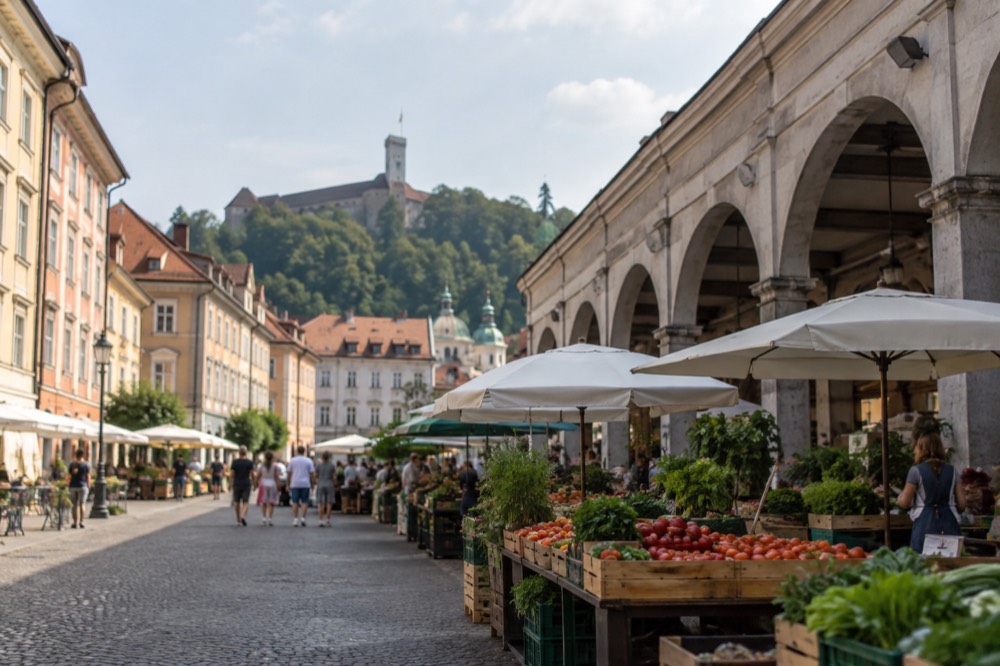
One honest reassurance: nobody in the tourist economy expects a perfect pronunciation. The city recorded 1,392,728 tourist arrivals in the municipality in 2025, per the national statistics office, and the overwhelming majority of those visitors did not say the name like a local. Staff in hotels, restaurants and tour offices are used to every accent in Europe and beyond. Slovene is the official language, but English is widely spoken in the centre, a point covered in more detail in is Ljubljana English friendly and what language is spoken in Ljubljana.
If you want to hear the name said properly before you travel, the free walking tours are the easiest listening room. The Old Town walk on GuruWalk, "Ljubljana Unveiled: A Journey Through Time and Tales", is a tips-based, two-hour walk rated 4.91 from 1496 reviews, and the guide will say the city's name dozens of times between the Roman ruins and the Dragon Bridge. It is free to join, pay what you think it was worth, and it doubles as an orientation session for the pedestrianised centre.
What Does Ljubljana Actually Mean?
The name is usually traced to "ljubljena", an old Slavic adjective meaning "beloved", so Ljubljana is commonly read as "the beloved place" or "the beloved one". The same root survives in the Slovenian verb "ljubiti", to love, and the everyday word "ljubiti" still carries that warmth. It is a fitting name for a capital that Slovenians speak about with obvious affection, and the connection between the city and the word for love is the detail locals most enjoy sharing. The etymology is a mainstream reading rather than a settled certainty, but it is the one the city itself leans into.
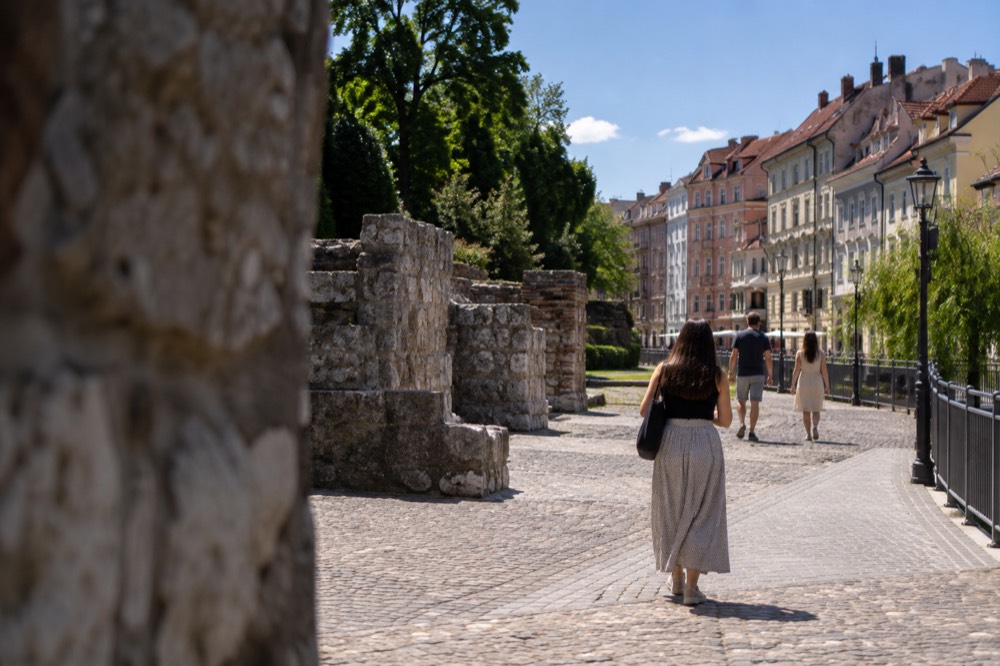
The name's history has a second layer. The Roman settlement that stood on this site was called Emona, and Emona's ruins are still visible in the city centre, which is one of the reasons a first walk around the Old Town doubles as a history lesson. The Slavic name that eventually replaced it belongs to the family of Slavic place names built on personal or descriptive roots, a pattern found across the region. You can walk the Emona remains and the medieval streets that grew over them on the Ljubljana Old Town circuit, where the layers sit a few hundred metres apart.
For many visitors the meaning matters less than the memory hook: love is baked into the name. If "lyoob-LYAH-nah" will not stick, try anchoring it to the meaning, "the beloved city", and let the sentiment carry the syllables. Mnemonics work better than repetition alone, and this one happens to be true to the word's likely root. The rest of the planning pages sit on Ljubljana Travel Guide.
The beloved reading also connects to how the city presents itself. The dragon on the Dragon Bridge, the love locks that appear on some of the riverside railings, and the way the tourist board markets the city all lean on the same romantic register. A visitor who knows the name means "beloved" starts noticing how much of Ljubljana's self-image is built on affection for place, from the care taken over the riverside promenades to the pride in the castle view. It is a small piece of knowledge that quietly upgrades every walk.
Which Other Slovenian Names Trip Visitors Up?
The words that cause the most trouble are the ones carrying the letters č, š, ž or the pair "lj": Čevljarski most, Prešeren, Prešernov trg, Škocjan, Vršič and Ljubljanica among them. Each diacritic is a simple instruction, č as "ch", š as "sh", ž as the "s" in "vision", and each unlocks a name you will see on street signs, bus timetables and tour listings. Learn three letters and most of the country's signage becomes readable. The table below covers the names a Ljubljana visitor is most likely to say out loud.
| Slovenian name | Sounds like | What it is |
|---|---|---|
| Ljubljanica | "lyoob-LYAH-nee-tsa" | The river through the city centre |
| Prešernov trg | "PREH-she-ren-ov terg" | The central square, named after France Prešeren |
| Čevljarski most | "chev-LYAR-skee most" | The Shoemakers' Bridge in the Old Town |
| Tromostovje | "tro-mos-TOV-yeh" | The Triple Bridge designed by Plečnik |
| Škocjan | "SHKO-chahn" | The UNESCO-listed caves east of the city |
| Vršič | "ver-SHEECH" | The high alpine pass above the Soča Valley |
| Plečnik | "PLECH-nik" | Ljubljana's most famous architect |
| Šmarna gora | "SHMAR-na GO-rah" | The hill north of the city, a local hike |
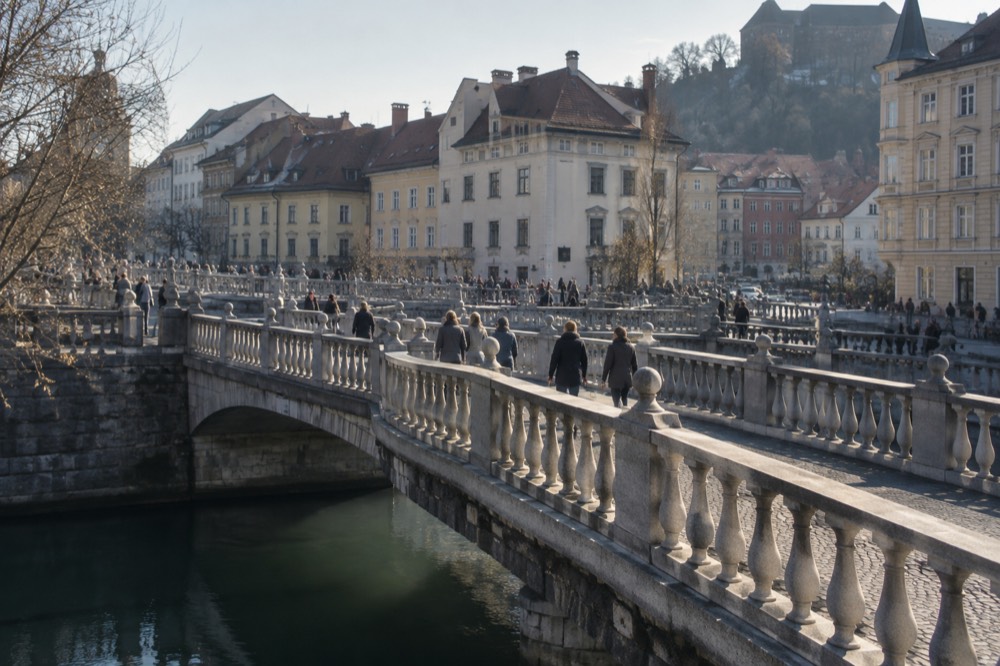
Two of these names are worth a second look because you will use them daily. The Ljubljanica is the river that defines the city, and saying it correctly marks you out on any boat trip; the [Ljubljanica river cruise](/attractions/ljubljanica-river-cruise/) guide covers the options. Tromostovje, the Triple Bridge, is the junction where most walks start, and Plečnik is the architect whose hand shaped it, along with much of the riverside; the Plečnik House is his former home and studio, visited by guided tour on the hour.
The diacritics also explain why English texts print Slovenian names inconsistently. When a listing writes "Skocjan" without the caron, the pronunciation is unchanged, only the spelling has been flattened for keyboards. The same happens with "Preseren" and "Vrsic". You can read either version as the same word, but the accented forms are the correct ones, and using them in a search or at a ticket desk will not confuse anyone.
Do You Need Slovene to Enjoy Ljubljana?
No. English is spoken widely in Ljubljana's hotels, restaurants, museums and tour offices, and a visitor with no Slovene at all can book, eat, travel and sightsee without friction. Slovene is the official language, but the tourism workforce is used to international guests, and menus, signage and ticketing in the centre are routinely bilingual. Learning the city's name, plus "hvala" for thank you and "prosim" for please, covers the courtesy moments; everything else is optional. Those two words earn more goodwill than a perfect accent.
That said, a handful of words change the tone of a trip. "Dober dan" is good day, "nasvidenje" is goodbye, and "račun, prosim" gets you the bill. None is linguistically demanding except the last, where the č is the "ch" sound from the table above. Attempting even a couple of phrases is noticed and appreciated, partly because Slovenian is a small language spoken by roughly two million people and visitors rarely try.
| Slovenian phrase | Sounds like | Meaning |
|---|---|---|
| Hvala | "HVAH-lah" | Thank you |
| Prosim | "PRO-sim" | Please, or you're welcome |
| Dober dan | "DO-ber dahn" | Good day |
| Nasvidenje | "nas-vee-DEN-yeh" | Goodbye |
| Račun, prosim | "RAH-choon PRO-sim" | The bill, please |
| Oprostite | "o-PROS-tee-teh" | Excuse me, sorry |
The language situation is also a practical travel fact. Slovenia is a member of the European Union, uses the euro, and sits inside the Schengen area, so there are no routine border checks arriving from Italy, Austria, Hungary or Croatia and no currency to change coming from the eurozone, as the government's own EU membership pages state. Croatia joined Schengen and the euro on 1 January 2023, so even the Zagreb and Istria routes are internal. Language, money and borders are all friction a first-time visitor might worry about that simply are not there.
For trips beyond the city, the pronunciation stakes rise slightly because destination names appear on booking confirmations and bus boards. The Lake Bled and Bled Castle day trip, six hours, rated 4.7 from 1641 reviews and from $86, is the most-booked excursion from the capital, and "Bled" is the easiest place name you will ever say: one syllable, exactly as written. The Ljubljana to Lake Bled guide covers the routes in detail.
What Happens If You Get It Wrong?
Almost nothing. Slovenians are used to hearing their capital's name mangled, no service in the city will pretend not to understand a close attempt, and the worst realistic outcome is a gentle correction offered kindly. The name is famous for being difficult, so a visitor who tries it at all is already ahead of the ones who avoid saying it. If you freeze, "the city" or a point at the map works too, but you will not need the escape hatch. Correction, when it comes, is friendly rather than mocking.
There is a small etiquette point worth knowing. Locals respond better to an honest attempt than to a confident mangling delivered as if correct, and they respond best of all to an attempt followed by a question. Asking "did I say that right?" invites exactly the kind of two-minute language exchange that turns into a recommendation for a restaurant or a viewpoint. The Ljubljana free walking tour scene is built on exactly these conversations, and guides on the tips-based walks are happy to repeat a word until it lands.
The same tolerance extends to every other name in the country. Say "Postojna" as "po-STOY-na" and you are close enough; the cave staff hear worse hourly. The cave day trip from Ljubljana, six hours, rated 4.8 from 2802 reviews and from $132, pairs Postojna Cave with Predjama Castle, and "Predjama" is easier than it looks once you give the "j" its consonantal "y" value: "pred-YAH-mah". The caves hold roughly 10 C year round, which makes them the reliable answer on a wet or sweltering day, weather the basin city supplies often enough.
A last practical note on saying the name where it matters most: transport. Announcements, departure boards and ticket machines all print it correctly, and the Ljubljana train station and bus station guides cover the platforms and ticketing in detail. You do not need to pronounce anything to buy a ticket, but being able to say the destination at a help desk speeds things up and removes the last small anxiety of travelling in a country whose language you do not speak.
For those who want a structured first day that includes hearing the name spoken properly, the guided options below cover the three directions most visitors head in from the capital.
Common Questions About Pronouncing Ljubljana
How do you pronounce Ljubljana?
Roughly \"lyoob-LYAH-nah\", three syllables with the stress on the middle one. The \"Lj\" is a single palatal sound, like the \"lli\" in \"million\", not an L followed by a J.
Is Ljubljana the hardest capital name to say?
It is among the trickiest for English speakers because of the double \"lj\", but once that sound is learned the word is only three syllables. Names like Vršič or Tromostovje arguably cause more trouble for visitors.
What does the name Ljubljana mean?
It is usually traced to an old Slavic root meaning \"beloved\", related to the Slovenian verb \"ljubiti\", to love. The reading is the mainstream one rather than an absolute certainty.
Will people understand me if I say it wrong?
Yes. The city recorded well over a million tourist arrivals in 2025 and staff in the tourism sector hear every version of the name daily. A close attempt always gets understood, and corrections are offered kindly.
How do you pronounce the Ljubljanica river?
\"Lyoob-LYAH-nee-tsa\", the city's name plus the river suffix \"-ica\". The final \"c\" in Slovenian is always \"ts\", as in \"cats\".
Do I need to speak Slovene to visit Ljubljana?
No. English is widely spoken in the centre's hotels, restaurants, museums and tour offices, and menus and signage are routinely bilingual. A few courtesy words, \"hvala\" for thank you and \"prosim\" for please, cover the polite moments.