Ljubljana to Lake Bled: Bus, Train, Car or Tour
Lake Bled carries more search demand than the entire city of Ljubljana, and most visitors reach it as a day trip from the capital. Here is how the four routes compare, with the costs and seasonal catches that decide which one is right for you.
Short answer
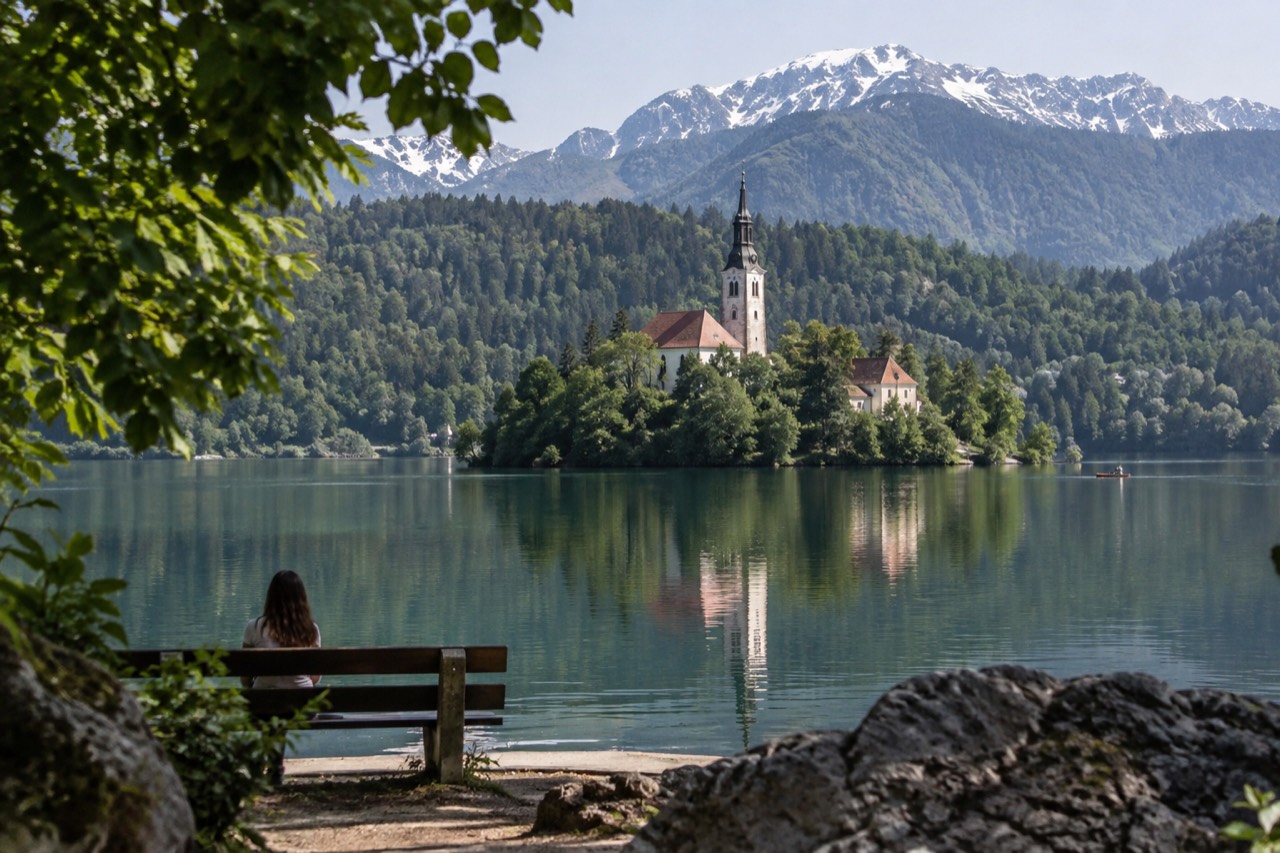
You can reach Lake Bled from Ljubljana by direct coach, by train to one of two stations, by hire car up the motorway, or on a guided day tour from around $57. The coach and tours need no planning beyond a ticket. The train drops you at Lesce-Bled, 4 km from the lake, unless you use the Bled Jezero station, which is 1.5 km away on a different line. Driving is the most flexible option if you want Vintgar Gorge or Triglav National Park on the same day.
Lake Bled is the single biggest day-trip draw in Slovenia, and it sits close enough to Ljubljana that almost every visitor to the capital ends up standing on its shore at some point. The question is never whether to go. The question is how. Four routes compete for the trip, and each one suits a different traveller: the coach for simplicity, the train for the two-station trap most people fall into, the car for freedom, and the guided tour for the version where nothing is left to arrange.
This guide compares all four honestly, using the real prices at the lake and the official operating facts. It also covers what a day at Bled actually costs once you arrive, what Vintgar Gorge's winter closure does to your plans, and the one weather fact about the Ljubljana basin that should shape which month you choose.
What Are the Ways to Get from Ljubljana to Lake Bled?
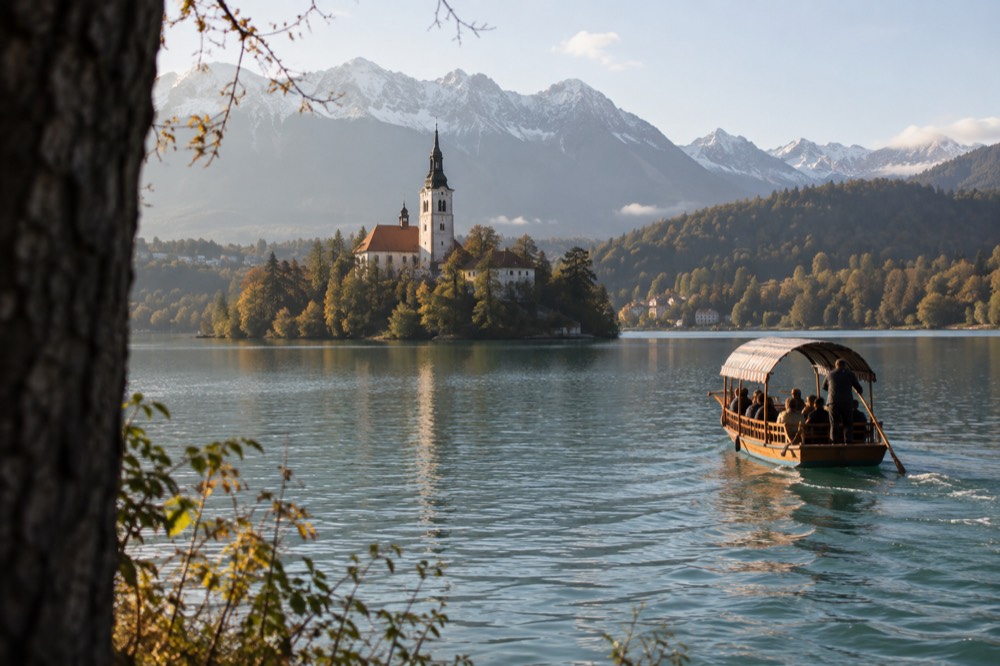
There are four realistic routes: the direct coach from Ljubljana's main bus station, the train to either Lesce-Bled or Bled Jezero station, a hire car up the motorway, or a guided day tour that collects you in the city. All four are in regular use by visitors, and the right choice depends on whether you value simplicity, cost, flexibility or included extras. None of the four requires an overnight stay, though plenty of travellers choose one anyway.
The coach is the default answer for most people. It leaves from Ljubljana's main bus station, which sits right next to the train station in the city centre, and drops you in Bled itself. You buy a ticket, board, and the lake is a short walk from the stop. The rail option is more interesting than it first appears, because there are two stations serving Bled and only one of them is genuinely convenient. Lesce-Bled is the one most rail advice sends you to, and it is 4 km from the lake centre. Bled Jezero station is 1.5 km from the centre, on a different line, and the difference between a 4 km walk-plus-bus and a 15 minute stroll is the difference between a good morning and a frustrating one. The Ljubljana Travel Guide team flags this because it is the single most commonly botched detail in travel forum advice about the trip.
Driving gives you the motorway run north and, more usefully, the ability to add Vintgar Gorge or the wider Triglav National Park to the same day. Bled is the gateway to the park, which covers 840 square kilometres and charges no entry fee, so a car turns a lake visit into a region visit. The trade-off is parking, which is paid and in short supply at peak times in July and August.
Guided tours, finally, compress all of this into a single booking. They collect you in Ljubljana, drive you north, walk you through the lake's story, and return you to the city. Several operators run the route, and the strongest-rated options carry hundreds of independent reviews between them.
| Route | Where it starts | Where it finishes | Best for | Main catch |
|---|---|---|---|---|
| Direct coach | Ljubljana main bus station | Bled town centre | Simplicity and low cost | Fixed return times, no stops en route |
| Train | Ljubljana train station | Lesce-Bled (4 km out) or Bled Jezero (1.5 km out) | Rail travellers, scenery | The wrong station adds an hour of messing about |
| Hire car | Anywhere in the city | Your chosen car park | Vintgar, Triglav, flexibility | Paid parking, summer congestion |
| Guided day tour | Hotel or central pickup | Back at your hotel | Zero logistics, a guide's stories | Group pace, set departure times |
Is the Bus or the Train Better for Getting to Lake Bled?
The coach is the better choice for most day-trippers, because it deposits you in the middle of Bled with no onward connection to arrange. The train only wins if you use Bled Jezero station, 1.5 km from the lake, rather than the better-known Lesce-Bled station 4 km out. Neither the coach fare nor the train fare is published in a form this site could verify, so check current prices at the point of booking rather than trusting a number quoted online.
Start with the coach because it is the simple answer. Buses run from Ljubljana's bus station throughout the day, the journey is a single leg with no changes, and the arrival point is central Bled. You will not find a published static fare table on this site because the operators do not maintain one that could be verified, and inventing a number here would be worse than leaving the sentence without one. Buy at the station or through the operator's own channels and treat the price as a planning unknown until you see it.
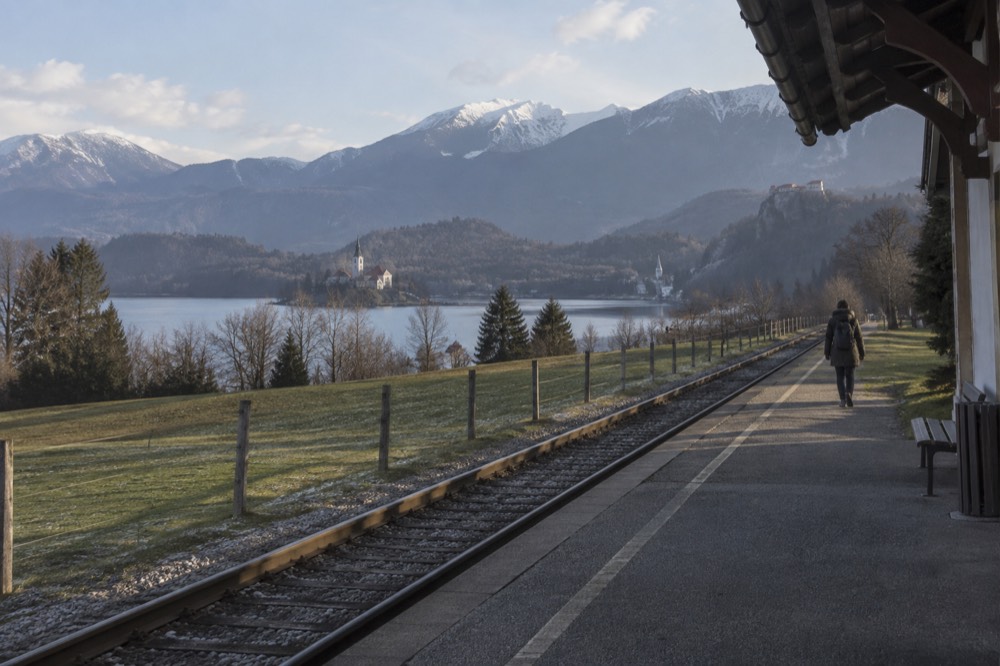
The train deserves a fairer hearing than it usually gets, with one condition attached. Slovenia's national rail network serves Bled through two stations, and the advice you most often read, take [the train](https://omio.tpk.ro/exV6rGgH) to Lesce-Bled, quietly omits that Lesce-Bled is 4 km from the lake. That means a local bus, a taxi or a long walk after you step off. Bled Jezero station sits 1.5 km from the centre on the line toward Bohinj, and the walk from there passes the lake's western shore. If the timetable works for your dates, it is the smarter rail arrival by a wide margin. The two-station detail is published by the local tourist body on its own getting-to-Bled pages, and it is worth reading them before you commit.
One more practical note cuts across both: the last return leg matters more than the outbound one. Day-trippers routinely plan the morning carefully and then discover their return options thin out in the early evening, especially outside the July and August peak. Check the last coach and the last train before you commit to either, not after you arrive.
If the public-transport version of the day sounds like more arranging than you want, the tour route removes it entirely, and the three options below are the ones this site rates for the journey.
The first of those is the classic guided day tour to the lake, rated 4.8 from 888 reviews and starting from $57. The second is a river alternative if you would rather stay in the city and float the Ljubljanica for an hour. The third bundles Bled's biggest inland rival, Postojna Cave and Predjama Castle, into a single long day for travellers who want maximum Slovenia per hour.
Is Driving from Ljubljana to Lake Bled a Good Idea?
Driving is the best option if you want to combine Bled with Vintgar Gorge, the Soča Valley or Triglav National Park, because no public transport link ties those together efficiently. The motorway run is straightforward and Bled is well served with paid car parks. The two things to plan around are summer congestion in July and August, and the fact that Ljubljana's historic centre is pedestrianised, so your car needs to start from outside the car-free zone.
The case for the car is simple: Bled is a base, not just a destination. The lake itself takes a few hours to see properly, but the region around it holds Vintgar Gorge to the north, the Pokljuka plateau, the Bohinj valley a short drive further on, and dozens of viewpoints across Triglav National Park. The park spans 840 square kilometres, was given its modern boundaries in 1981 with earlier protection dating to 1924, and charges nothing to enter, according to the park's own published information. A car is the only realistic way to see more than one of those in a day.
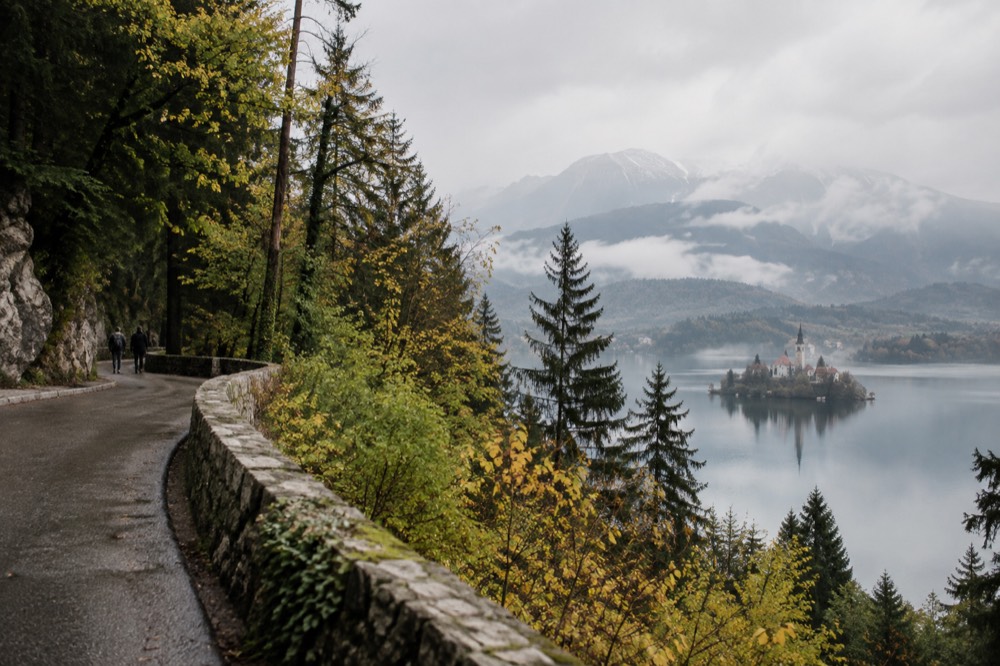
The case against is equally simple: parking and traffic. Bled's car parks fill early on summer weekends, and the roads around the lake choke when they do. If your dates are flexible, a weekday visit in June or September gives you the same scenery with a fraction of the friction. Winter driving is a different question entirely, and one worth taking seriously: the region is alpine, snow is routine from November onward, and winter tyres are expected of any driver in Slovenia in the colder months.
There is also a Ljubljana-specific catch that catches out arriving drivers. The historic centre of the capital is closed to general motor traffic, a pedestrian zone of roughly 20 hectares that has been progressively expanded since 2007, so a hire car collected in the city needs to be picked up and dropped off outside that zone, and your route out of town starts from the ring rather than from your hotel door if your hotel sits inside it. The practical answer is to book accommodation or a pickup point with parking, and to read up on car rental in Ljubljana before you commit.
If you would rather someone else handled the alpine roads, the guided options below cover the same ground without the parking anxiety.
Is a Guided Day Tour from Ljubljana to Lake Bled Worth It?
For most first-time visitors, yes, because the tour price buys the transport, a guide's commentary and a schedule that already accounts for the lake's rhythms, all for less than the cost of a car day once parking and fuel are added. The leading standard day tour is rated 4.8 from 888 reviews and starts from $57, which is competitive with any self-organised version of the same day. Small-group versions cost more and buy intimacy, from $76.
The arithmetic is not the whole argument, but it is a good start. A standard guided day tour from the city to the lake runs six hours, is rated 4.8 across 888 reviews, and starts from $57 per person. What you get for that is the drive, a guide, and a structure that gets you to the lake with the day already mapped. What you give up is the ability to linger. Tours run to a clock, and if your ideal Bled afternoon involves sitting at the water's edge until the crowds drain away, a shared schedule will chafe.
The upgrade path is the small-group format. A small-group tour covering the lake, the castle and the island runs five and a half hours, carries a 4.9 rating from 293 reviews, and starts from $76. Fewer people means a guide who can answer individual questions and a pace that flexes. For photographers and families this is usually the better product, and the price gap is modest.
There is a third tier worth knowing about: the [private transfer](https://gettransfer.tpk.ro/Ab8maxge). A private taxi day trip from Ljubljana to the lake, five hours with a driver at your disposal, starts from $354.67 and is rated 4.8 from 44 reviews. That is a different product for a different traveller, typically a family or a group that would rather split a driver than share a coach, and for four people the per-head cost lands in the same territory as the small-group tours with total freedom over the itinerary.
| Tour format | Duration | Rating | From (per person) | Who it suits |
|---|---|---|---|---|
| Standard Lake Bled day tour | 6 hours | 4.8 from 888 reviews | $57 | First-timers wanting the classic day |
| Small-group Bled, castle and island | 5h 30m | 4.9 from 293 reviews | $76 | Photographers, families, anyone crowd-averse |
| Private taxi day trip to Bled | 5 hours | 4.8 from 44 reviews | $354.67 | Groups splitting a driver, total flexibility |
| Bled and Postojna combo day | 10 hours | 4.9 from 286 reviews | $133 | Travellers packing two regions into one day |
The honest summary: if Bled is your one big excursion, take a tour. If Bled is the first stop of a three-day alpine road trip, drive. If you are travelling on a shoestring and have time to burn, the coach does the same job for less.
What Does a Day at Lake Bled Actually Cost?
Budget around 20 EUR for a walk-and-look day, or 39 EUR for the classic castle-and-island combination, before food. The three anchor prices are Bled Castle at 19.00 EUR, the pletna boat to the island at 20 EUR per person, and the electric Bled Boat Line at 16 EUR per person. Vintgar Gorge adds 15.00 EUR when it is open.
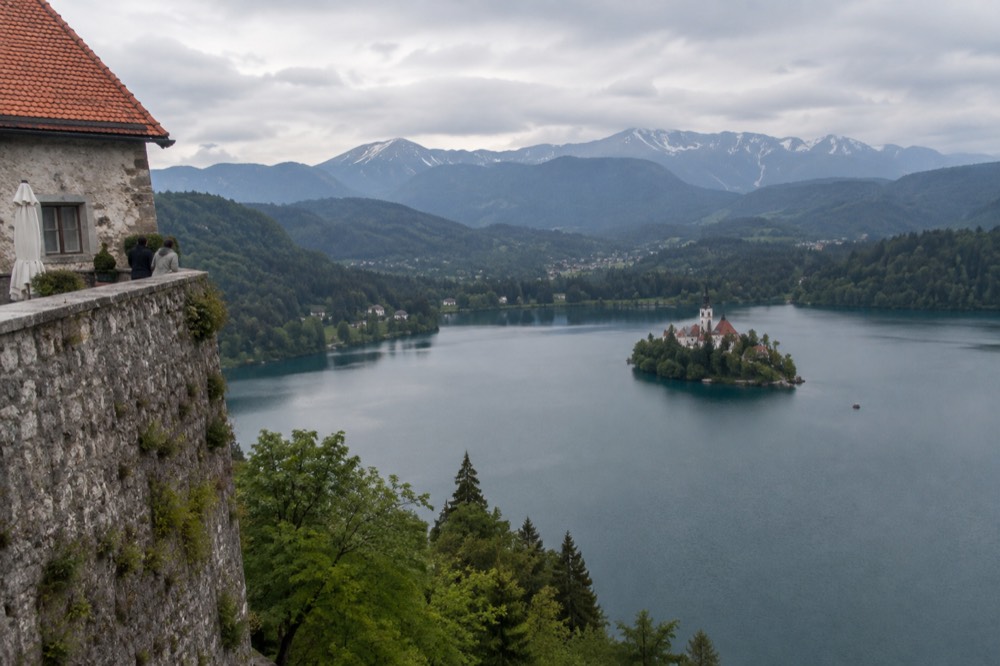
The lake itself is free to walk around, and that remains the best free activity in the region. Everything beyond the shoreline carries a price, and the official figures are refreshingly stable. Bled Castle, perched above the lake on its cliff, charges an adult 19.00 EUR, a price published on the castle's own price list. The pletna, the traditional flat-bottomed boat rowed to the island church, charges 20 EUR per person, a figure the local tourist board confirmed when it announced price updates for Bled's attractions. The electric Bled Boat Line, which runs a scheduled service across the water, charges 16 EUR per person.
| Item | Adult price | Notes |
|---|---|---|
| Walking the lake path | 0 EUR | The full loop is the classic free activity |
| Bled Castle entry | 19.00 EUR | Cliff castle above the lake, official price list |
| Pletna boat to the island | 20 EUR | Per person, traditional rowed boat |
| Bled Boat Line, electric boat | 16 EUR | Per person, scheduled crossings |
| Vintgar Gorge, All-in-One Pass | 15.00 EUR | April to October only, timed entry |
| Triglav National Park entry | 0 EUR | 840 square kilometres, no entry charge |
Two of those rows deserve a sentence of caution each. The pletna price covers the crossing, and the time you get on the island itself is not published in any form this site could verify, so do not plan the island stop around a fixed allowance. Vintgar Gorge is seasonal: the operator's own page states the gorge is open to visitors between April and October, with the exact closing date each year depending on conditions, and timed-entry slots apply through the season. If your trip falls between November and March, cross the gorge off the list and give its slot to something else. The gorge's own opening-hours page publishes the month-by-month times and is the place to check before you travel.
Food is the flexible line in any Bled budget. The town runs the full range from bakery snacks to lakeside hotel terraces, and the one item everyone tries is the cream cake, Bled's signature dessert, which has its own history and its own price band; the Bled cream cake guide covers where to eat it and what to expect. A slice with a coffee is a modest cost, a hotel terrace lunch is not, and the difference is entirely a matter of where you sit.
If you are building a wider Slovenia itinerary around the lake, the Ljubljana and Lake Bled combination guide walks through how to split days between the two, and the Lake Bled guide covers the lakeshore in depth.
What Should You Actually Do with One Day at Lake Bled?
Walk the lake path first, ideally early, then choose two paid extras rather than trying to do everything: the castle for the view, the pletna for the island, or Vintgar Gorge for the scenery. The classic combination is the castle plus the island boat, which together cost 39 EUR per adult and fill a comfortable day. Add the gorge only if you have a car or a tour that includes it.
The loop around the lake is the spine of every good Bled day. It takes in the western shore, the castle cliff from below, the rowing lanes that gave the lake its sporting fame, and dozens of angles on the island church that anchors every photograph. Doing it early matters, because the light is better and the shore path is thinner of people, and because Bled's midday crowds in July and August are the thing most one-day visitors underestimate most badly.
After the walk, pick your paid extras. The castle is the view: 19.00 EUR buys the cliff-top position over the lake and the museum spaces inside. The pletna is the story: 20 EUR buys the crossing to the island in a boat design unique to this lake, rowed standing up in a tradition passed through local families. Doing both is the classic day and needs no car, since the castle sits at the top of a walkable zigzag path from the lakeside.
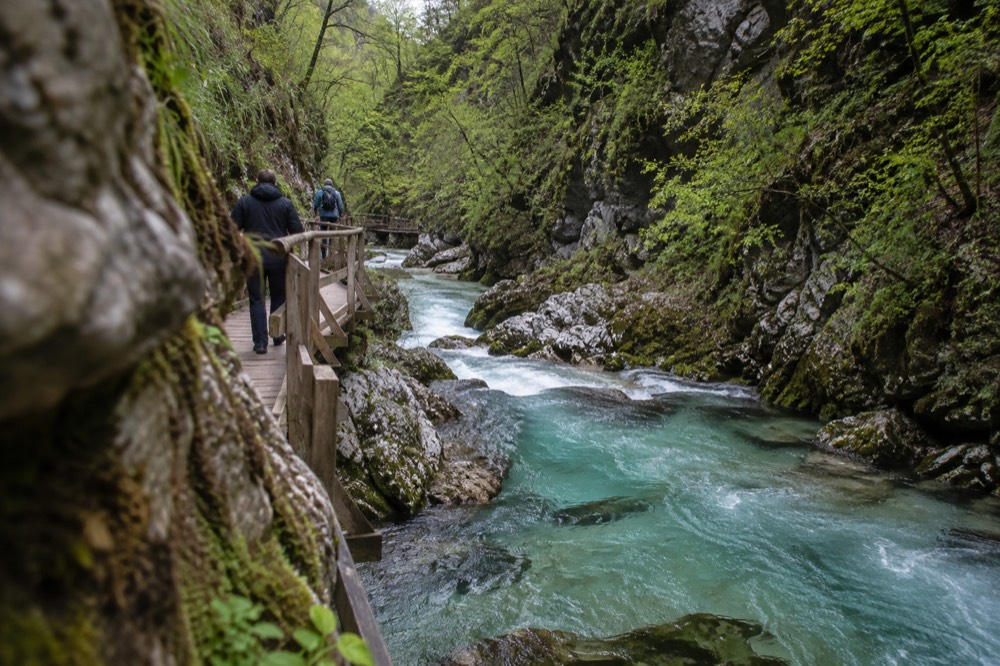
Vintgar Gorge, when it is open, is the wildcard. The boardwalk through the gorge is one of the most dramatic short walks in the country, and the operator's own guidance notes the busiest hours fall between 10:00 and 13:00, so an early or late slot buys you a quieter path. The gorge is 15.00 EUR with timed entry, open April to October, and it is genuinely awkward without a car, which is exactly why the small-group tours that bundle the lake with the region's other sights have found their market.
That small-group tour, five and a half hours, rated 4.9 from 293 reviews and from $76, covers the lake, the castle and the island with a group size that keeps the day feeling personal. It suits the traveller who wants the classic Bled experience without standing in a ticket queue or working out a bus timetable.
For the deeper planning questions, the where to stay near Lake Bled guide covers the lakeside-versus-town trade-off, and the Lake Bled weather guide covers what each month actually delivers.
When Is the Best Time of Year to Make the Trip?
June and September are the sweet spots: warm water, long daylight and thinner crowds than the July and August peak. Winter is quiet and photogenic but Vintgar Gorge is closed and the lake activities scale back. The fact most guides miss is that Ljubljana itself is at its greyest from October to March, when the basin inversion traps fog and low cloud over the city while the hills above, including the ground around Bled, sit in sunshine.
The climate detail is worth understanding properly, because it reframes the whole day-trip decision. Ljubljana sits on the floor of a basin at 299 metres. In the colder half of the year, cold air is trapped under warmer air above, and the city fogs in while the higher ground a few hundred metres up is in sun. The national meteorological service's published normals for 1981 to 2010 put hard numbers on this: Ljubljana receives 56 hours of sunshine in the whole of December and 71 in January, while Kredarica, the high station on Triglav at 2,514 metres, receives 120 and 139 hours over the same months. The lines cross in the data. The city wins on sunshine from April to September and loses every month from October to March. Annually Ljubljana averages 37 clear days against 130 overcast.
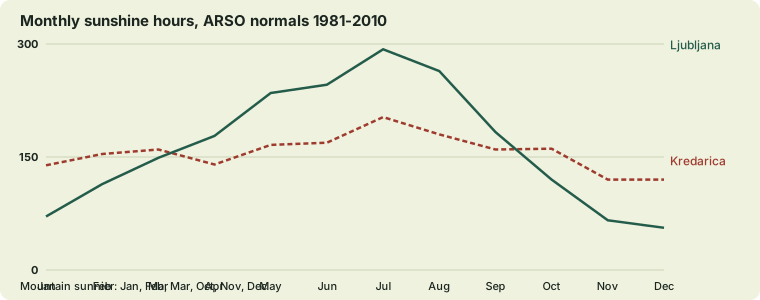
The practical translation for a Bled day trip: in winter, the odds are good that you leave a grey, foggy capital and arrive at a brighter lake, because you are climbing out of the basin. That is a genuine argument for making the trip in the off-season rather than treating winter as a write-off. The honest caveat is that this is a sunshine and cloud pattern, not a temperature one. The mountains are sunnier in winter, not warmer on average, and Kredarica's January mean is well below freezing. Dress for the season you are in, not the sun you can see.
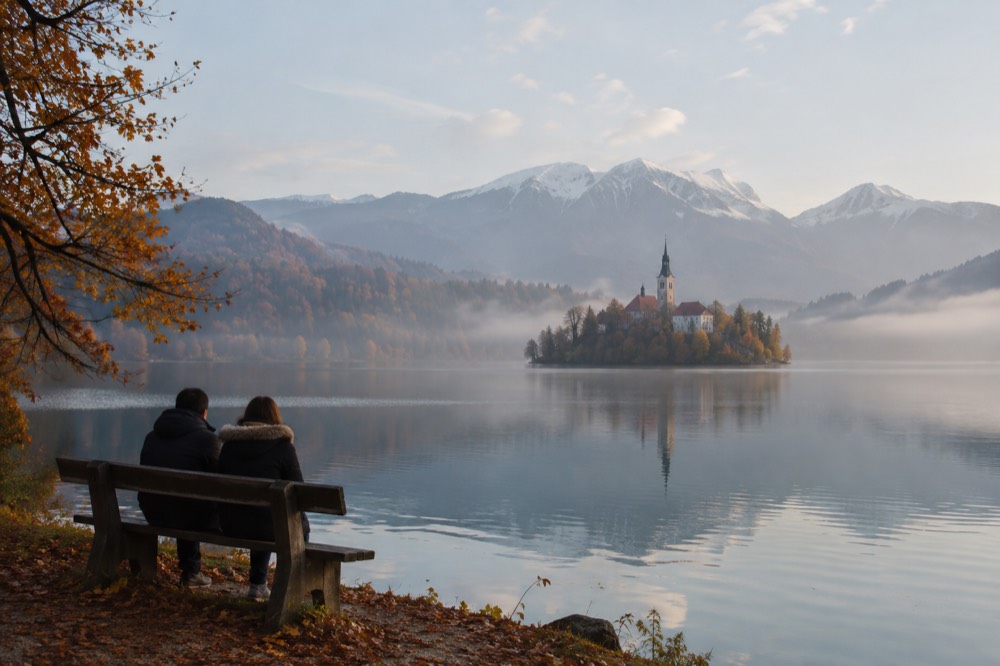
For the lake's own calendar, the best time to visit Ljubljana guide covers the city side of the year, and the same logic extends north: June and September deliver the best balance of warmth, water and crowd levels, July and August deliver the full atmosphere at the cost of full car parks, and winter delivers silence, frost photography and a closed gorge.
Should You Stay Overnight at Bled or Return to Ljubljana?
Return to Ljubljana if Bled is a one-off sightseeing day, and stay overnight at Bled if you want the lake at dawn and dusk, when the day-trippers are gone and the water is at its stillest. The average visitor to Ljubljana stays about two nights, which fits one Bled day trip comfortably, but a second night at the lake transforms the experience for photographers and slow travellers.
The statistics here are genuinely useful. Slovenia's statistical office recorded 1,392,728 tourist arrivals in the Municipality of Ljubljana in 2025 and 2,844,129 overnight stays, which works out to an average stay of about two nights. Ljubljana is a two-night city, and that shape leaves room for exactly one big excursion. If Bled is that excursion, a day trip is the natural fit: out in the morning, back by evening, and the capital's restaurants and riverbank take over the night.
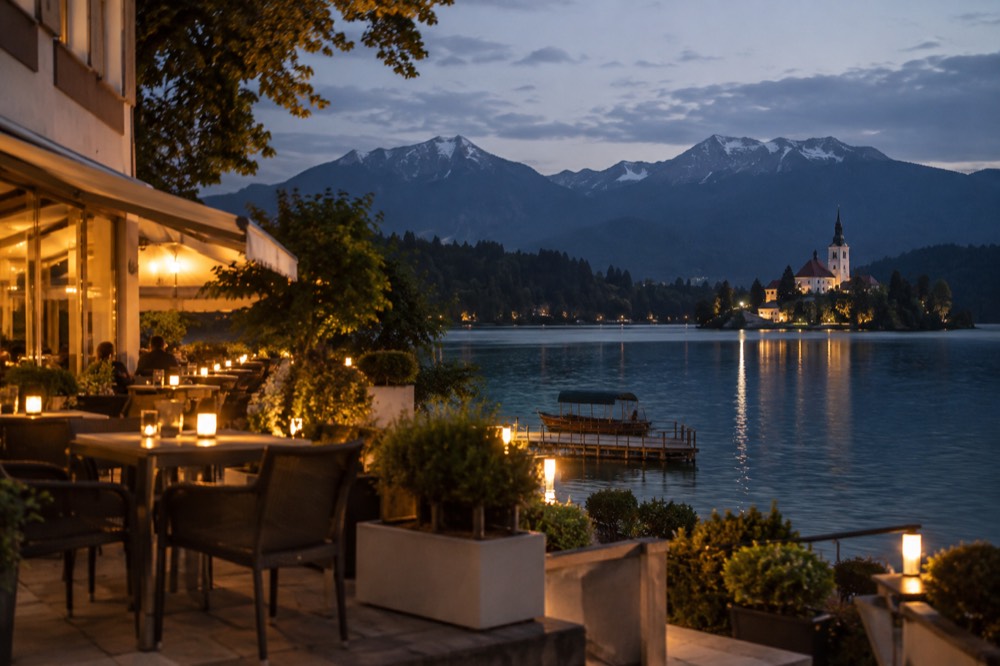
The argument for staying over is about the hours the day-trip version never sees. The lake at dawn, before the first coaches arrive, and at dusk, after the last ones leave, is a different body of water, quiet enough that the island church reflects cleanly. Photographers plan entire trips around those two windows. Families with small children often prefer the overnight version too, because it removes the return-leg clock pressure that a shared schedule imposes.
The compromise, and the option a growing number of travellers take, is to split the stay: nights in Ljubljana for the city, one night at Bled for the lake, and a morning drive into Triglav National Park before returning. That structure is covered in the Ljubljana or Bled comparison and the Lake Bled or Lake Bohinj piece for travellers weighing the second lake, which many consider the more beautiful of the two and which sits a short drive further into the same valley.
Whichever structure you choose, book the transport or the tour before the summer window tightens. The guided options below are the ones this site rates for the route.
The standard day tour from $57 covers the classic lake day. The electric boat tour on the Ljubljanica, from $17, is the city-side alternative for a day you would rather not travel at all. The Postojna Cave and Predjama Castle tour, from $132 and rated 4.8 from 2,802 reviews, is the inland rival: if the weather turns, the caves hold roughly the same temperature year round and are the reliable wet-weather answer in this part of Slovenia.
Common Questions About Getting from Ljubljana to Lake Bled
What is the cheapest way to get from Ljubljana to Lake Bled?
The coach is the cheapest realistic option, followed by the train if you use the right station. Neither fare is published in a verifiable static table, so treat the price as a planning unknown and check at booking. The free parts of the day are real: the lake path costs nothing and Triglav National Park charges no entry fee.
Which train station should I use for Lake Bled?
Bled Jezero station, 1.5 km from the lake centre, is the more convenient of the two. Lesce-Bled, the station most rail advice names, is 4 km from the centre and needs a bus, taxi or long walk after arrival. The two sit on different lines, so check which one your service actually serves.
Can you do Lake Bled as a day trip from Ljubljana?
Yes, and most visitors do. Guided day tours run around six hours door to door, the coach runs daily, and the average visitor to Ljubljana stays about two nights, which fits one Bled excursion comfortably. Aim to start early so the lake shore is quieter when you arrive.
Is it better to drive or take a tour to Lake Bled?
Drive if you want to add Vintgar Gorge, Bohinj or Triglav National Park to the same day, and accept paid parking and summer congestion. Take a tour if Bled is your one big excursion and you would rather not handle the roads or the schedule. The standard tour starts from $57, rated 4.8 from 888 reviews.
How much does a day at Lake Bled cost?
Walking the lake is free. Bled Castle is 19.00 EUR, the pletna boat to the island is 20 EUR per person, the electric Bled Boat Line is 16 EUR, and Vintgar Gorge is 15.00 EUR when it is open between April and October. A castle-plus-island day runs 39 EUR per adult before food.
Is Vintgar Gorge open all year?
No. The operator states the gorge is open to visitors between April and October, with the exact closing date depending on conditions each year, and timed-entry slots apply. Check the official opening-hours page before travelling, and avoid the 10:00 to 13:00 peak the operator itself flags as the busiest window.