Do They Speak English in Ljubljana?
Yes, English is widely spoken in Ljubljana. Here is where it holds up, where it thins out, and which Slovene words are worth learning anyway.
Do They Speak English in Ljubljana?
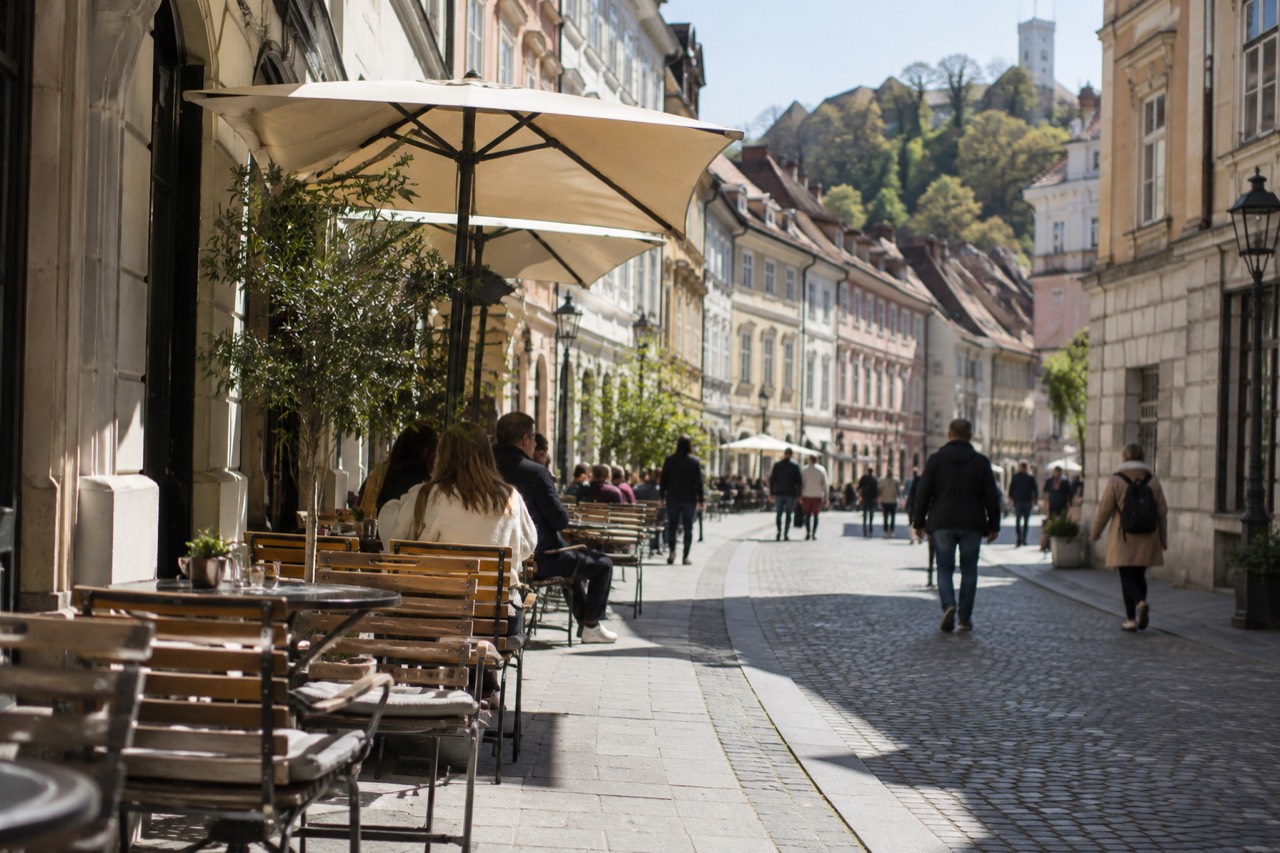
Yes, English is spoken widely and well in Ljubljana. Menus, museum labels, ticket machines, bus stops and most signage are bilingual or English-first, and staff in bars, hotels and shops switch to English without being asked. Slovene is the official language, but a visitor with no Slovene at all can eat, travel, book tours and get help entirely in English for the length of a normal stay.
The city's own scale explains part of this. Ljubljana is a small capital that logged 1,392,728 tourist arrivals in 2025, per the national statistics office, and tourism runs on visitors who arrive with no Slovene. The tourist board, the castle, the museums and the transport system are all built for that reality. English is the working second language of the service sector, and younger staff often speak a third language too, most often Italian, German or Croatian.
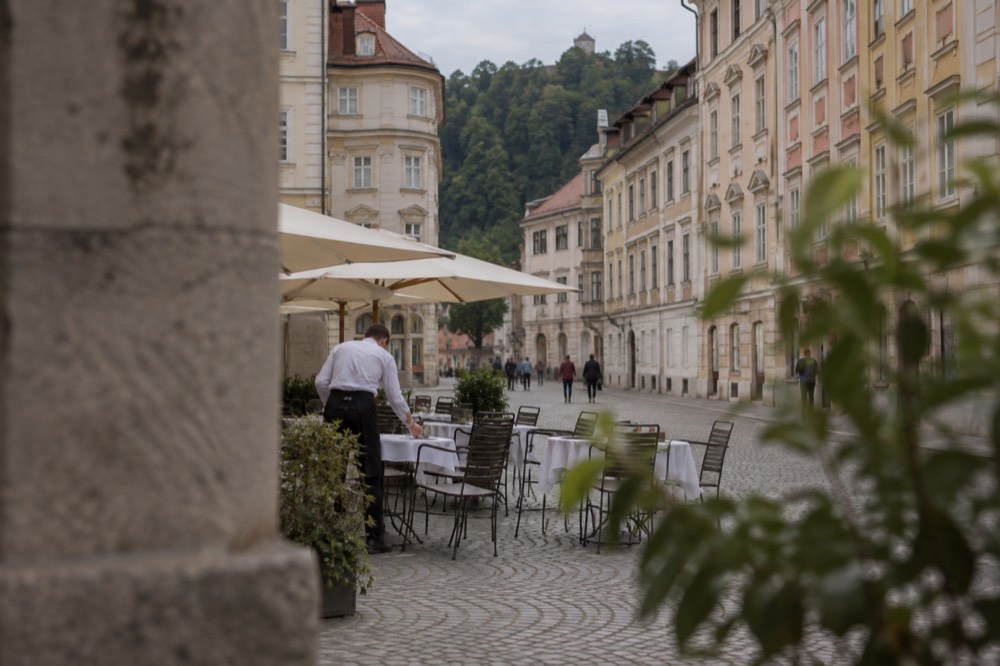
There is a cultural layer as well. Slovenes learn English from primary school onward, and television and film arrive subtitled rather than dubbed, so everyday exposure is constant. In practice this means the person behind the counter, the driver answering a question or the stranger you stop for directions will almost certainly manage in English, and many will apologise for their English while speaking it fluently. It is a familiar pattern across small European capitals, but Ljubljana does it unusually well, and visitors who have struggled through phrasebooks elsewhere tend to notice the difference within an hour of arriving.
Where English Holds Up, and Where It Thins Out
English is close to universal in the pedestrian centre, in hotels, restaurants, museums and on every bookable tour. It thins slightly at suburban bus stops, in some neighbourhood bakeries and among older residents, where a few Slovene words or simple phrasing help. Nothing a visitor routinely does in Ljubljana requires Slovene.
The historic centre is pedestrianised, roughly 20 hectares of it, and nearly every business inside that zone deals with visitors all day. Museum labels are in Slovene and English, and the major institutions, the National Gallery, the City Museum, the Slovenian Ethnographic Museum, publish their visiting information in English on their own sites. On the river, the tourist boat operators and the cruise commentary run in English through the season.
The places where English is less guaranteed are the ordinary, non-tourist ones. A neighbourhood bakery at 07:00 may have no English menu. A suburban bus stop may give you Slovene-only timetables. The city buses take no cash at all, but they do take contactless bank cards and phones, per the operator's own payment page, and the Urbana ticket machines offer English menus. If you plan to wander beyond the centre into Šiška or Bežigrad, the free orientation walk scene is a good first-day fix, and our page on the Ljubljana free walking tour covers the options, all of them guided in English.
Where English is dependable, roughly:
| Situation | English level | What helps |
|---|---|---|
| Hotels, hostels, restaurants in the centre | Fluent, unprompted | Nothing, just speak normally |
| Museums, castle, tours, boat cruises | Fluent, signage bilingual | Book ahead in high season |
| Taxis, ride apps, tourist information | Fluent | Ask for the meter or a quoted price |
| City buses, Urbana machines | Good, machine menus in English | Contactless card works on board |
| Neighbourhood bakeries, suburban shops | Patchy | Point, smile, learn "hvala" |
A practical note on money and borders, since it removes a whole category of language friction: Slovenia is in the European Union and the eurozone, having adopted the euro on 1 January 2007, and it is inside the Schengen area, with internal land and sea border checks abolished on 21 December 2007 and air checks following on 30 March 2008, as the government's own EU membership page states. Arriving from Italy, Austria, Hungary or Croatia there is no border conversation to have and no currency to discuss. That single fact quietly removes the two situations, border talk and money talk, where a language gap would otherwise bite hardest on a short trip.
Do Tours and Day Trips from Ljubljana Run in English?
Yes. Every bookable tour listed on this site runs with English-language guiding, and the international day trips, to the caves, Lake Bled, the coast and the Alps, are conducted in English as standard, sometimes alongside one other language. Guides are used to mixed groups and speak slowly and clearly.
The big day trips are where the English question matters most, because you are committing six to twelve hours to a guide. The Postojna Cave and Predjama Castle tour, a six-hour trip from Ljubljana rated 4.8 across 2,802 reviews from $132, is a good example: cave tours inside Postojna are delivered in Slovene and English, and the listing confirms English-language guiding for the day as a whole. The cave itself holds about 10 C year round, so bring a layer whatever the season. The full index of guides sits on Ljubljana Travel Guide.
If caves are not your plan, the Lake Bled and Bled Castle trip, six hours, rated 4.7 from 1,641 reviews from $86, covers the country's most searched destination with English commentary on the drive and at the lake. For something closer to home, the free GuruWalk "Ljubljana Unveiled" walk, rated 4.91 from 1,496 reviews, is a two-hour tips-based tour from Roman ruins to the Dragon Bridge, guided in English by locals who do it daily.
Should You Book a Cave Day Trip in English in Advance?
Postojna runs a month-by-month departure grid with more slots in summer and only a handful in midwinter, and the operator asks visitors to arrive 30 minutes before the stated tour time, so a booked day trip from Ljubljana removes both the timetable puzzle and the parking question in one move. It is a fair question to ask before you commit a full day, and the answer for most travellers is yes: the guided option handles tickets, timing and transport, and the guiding is in English from pickup to drop-off.
Do They Speak English Outside Ljubljana?
In the tourist zones around Lake Bled, Postojna, Piran and the Soča Valley, yes, English works in hotels, ticket offices and guided activities. In small villages, on farms and among older residents in the countryside, expect less of it. A handful of Slovene words matters more the further you drive from the capital.
The day-trip belt is well set up. Bled Castle publishes its price list in English, the Škocjan Caves run guided tours in English, and the coastal town of Piran lives on Italian and Slovene side by side, with English a close third in the season. If your trip extends to Croatia, note that Croatia joined Schengen and the euro on 1 January 2023, so the Ljubljana-to-Zagreb and Ljubljana-to-Istria routes are internal journeys with no border formalities either, as covered in our Ljubljana to Zagreb comparison.
Where it gets genuinely thin is rural Slovenia: mountain hamlets, roadside farms, village shops in the Karst. People are patient and helpful, but English cannot be assumed. That is a reason rather than an objection, and our day trips from Ljubljana guide marks which destinations are easiest without a car or a word of Slovene.
A Few Slovene Words That Earn Their Keep
You do not need Slovene, but five or six words change the tone of every interaction: "dober dan" (good day), "hvala" (thank you), "prosim" (please and you're welcome), "govorite angleško?" (do you speak English?), and "račun, prosim" (the bill, please). Slovenes appreciate the effort visibly, then answer in English.
Slovene is a South Slavic language with diacritics that carry meaning, so it is worth copying them exactly when you write anything down. The stress usually falls on the first syllable of a word in Slovene, which makes pronunciation easier than it looks on the page. Do not let the look of "Ljubljana" itself put you off: the opening "Lj" is simply a soft "lyoo" sound, and locals are charmed rather than offended by a brave attempt.
| Slovene | Roughly sounds like | Means |
|---|---|---|
| Dober dan | DOH-ber dahn | Good day |
| Hvala | fVAH-lah | Thank you |
| Prosim | PROH-seem | Please / you're welcome |
| Govorite angleško? | goh-voh-REE-teh an-GLESH-koh | Do you speak English? |
| Račun, prosim | RAH-choon PROH-seem | The bill, please |
| Nasvidenje | nahs-vee-DEN-yeh | Goodbye |
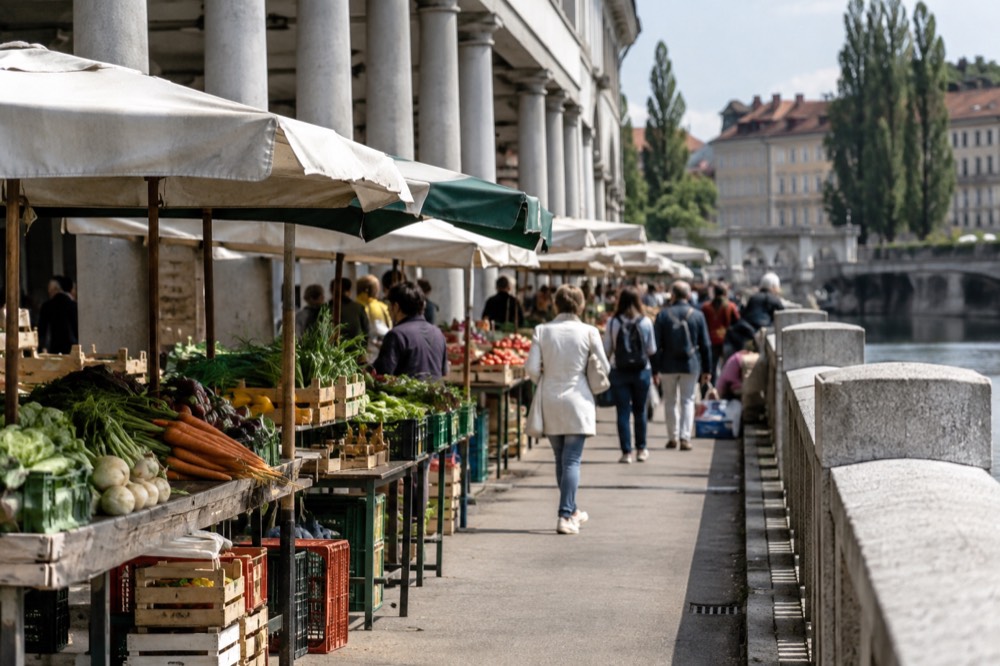
One number worth knowing at a market stall: the Central Market on Vodnikov and Pogačarjev trg runs roughly 06:00 to 18:00 in summer and 06:00 to 16:00 in winter, per the operator's own hours page, and vendors there handle English with a smile even when the produce signs are Slovene-only. Our Ljubljana markets guide has the full breakdown.
Does Anyone in Ljubljana Expect You to Speak Slovene?
No, and no visitor should feel obligated. Slovenes are used to hearing English, Italian, German and Croatian in their capital, and the only expectation is politeness. A greeting in Slovene opens doors; a full sentence is never required, and attempts are met with warmth rather than correction.
The one place language genuinely matters is officialdom: a police station, a pharmacy query, a medical appointment. Even there, English usually finds someone, and the tourist information centres on the edge of the old centre will phone ahead or translate on the spot. For a city of its size, Ljubljana ranks among the least language-stressed capitals in Europe, and first-time visitors consistently report that the language barrier they braced for simply never appeared.
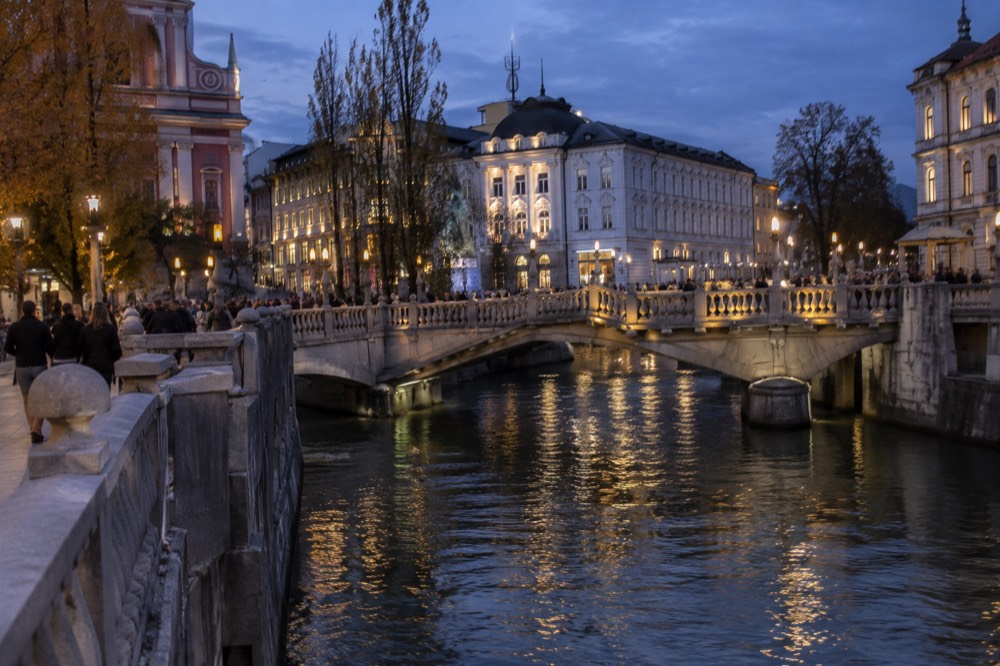
That ease is exactly why the city works as a base for English-speaking travellers who want to reach further: everything from a two-hour city walk to an eleven-hour combined cave and lake day trip can be booked, briefed and guided in English. The Ljubljana walking tour options and the food tours all operate the same way, and the Ljubljana food tour pages describe tastings where the guiding is as much storytelling as translation. Whatever your itinerary, the language question in Ljubljana answers itself within your first hour on the ground.
Common Questions About English in Ljubljana
Do They Speak English In Ljubljana?
Yes, widely and well. English is the working second language of the city's hotels, restaurants, museums, transport system and tour industry, and a visitor needs no Slovene for a normal stay.
Is English enough in restaurants and shops?
Yes. Central restaurants have English menus as standard, and staff switch to English without prompting. Neighbourhood bakeries are the main exception, where pointing works fine.
Do free walking tours run in English?
Yes. The GuruWalk free walks, including "Ljubljana Unveiled", are guided in English and run on a pay-what-you-think-it-was-worth basis.
Do I need any Slovene words at all?
No, but "dober dan", "hvala" and "prosim" are warmly received, and "račun, prosim" gets you the bill anywhere in the country.
Do they speak English outside Ljubljana?
In the main tourist zones, Lake Bled, Postojna, Piran and the Soča Valley, yes. In small rural villages expect less, and a few words matter more there.