Ljubljana Walking Tour: Every Way to See the City on Foot
Ljubljana's car-free centre was built for walking. This guide covers the guided walks worth booking, the free tours that cost only a tip, the food walks, and a self-guided route you can follow in an afternoon.
Short answer
The best walking tours in Ljubljana are the Slovenian Cuisine Walking Tour with Tastings (4 hours, from $104), the Classic Ljubljana Group Tour (rating 4.8 from 406 reviews) and the Boat Cruise and Walking Tour (2 hours 30 minutes, from $34.29). Free GuruWalk tips-based tours cover the same ground for whatever you choose to pay.
Why Is a Ljubljana Walking Tour the Best Way to See the City?
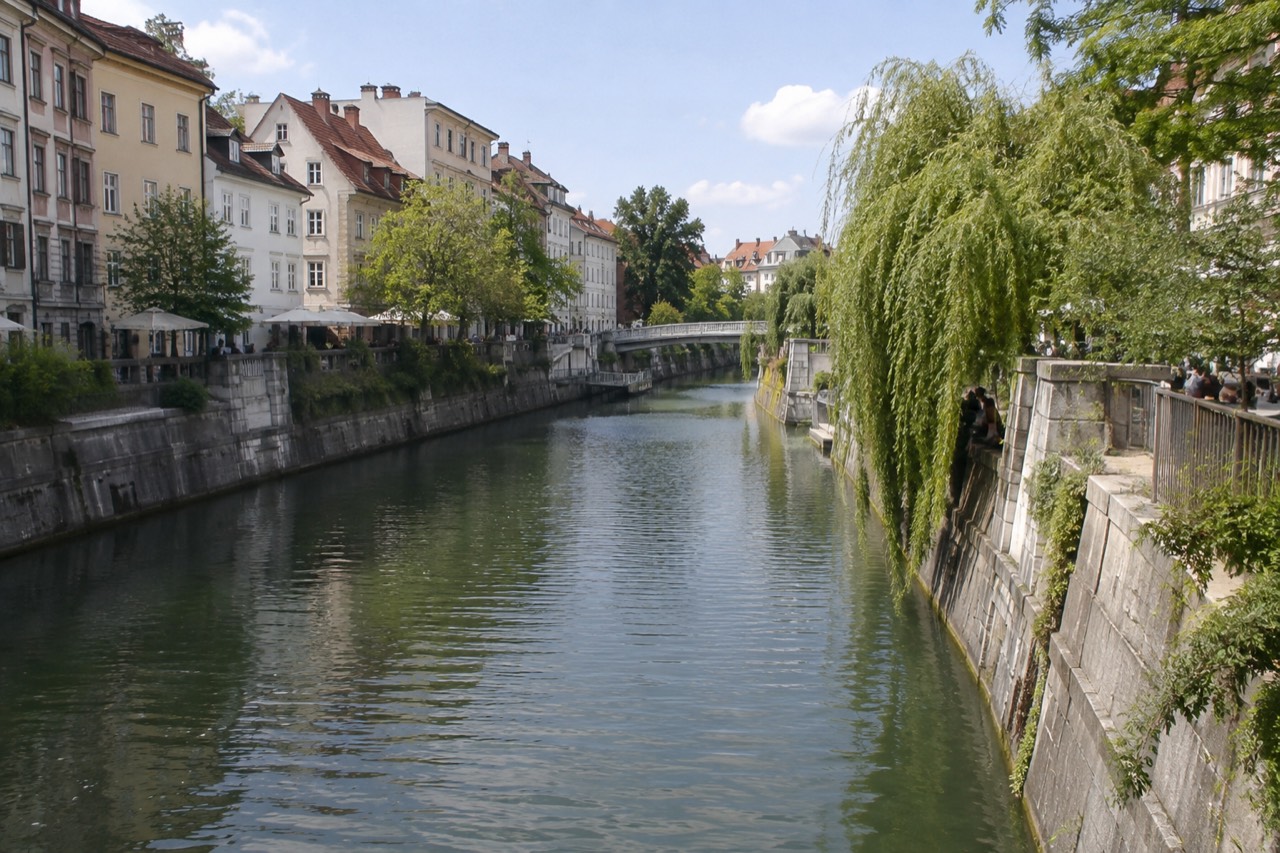
Ljubljana's historic centre is a pedestrian zone of roughly 20 hectares, progressively closed to general motor traffic since 2007, so walking is not just the nicest way to see it, it is close to the only way. A compact Old Town, riverside promenades and a castle hill at the edge mean a walker covers in an hour what a driver cannot reach at all.
The pedestrianisation is the fact that reshapes every visit. Slovenska cesta, Prešernov trg and the Triple Bridge area carry foot traffic almost exclusively, and the riverside along the Ljubljanica has been rebuilt as promenade after promenade. A visitor arriving by car parks at the edge and walks in; a visitor on a walking tour never thinks about traffic again.
The scale helps too. Prešeren Square, the Triple Bridge, the cathedral, the Central Market and the funicular base all sit within a few minutes of one another. The Old Town guide maps the full spread, but the honest summary is that the whole core fits inside an easy loop.
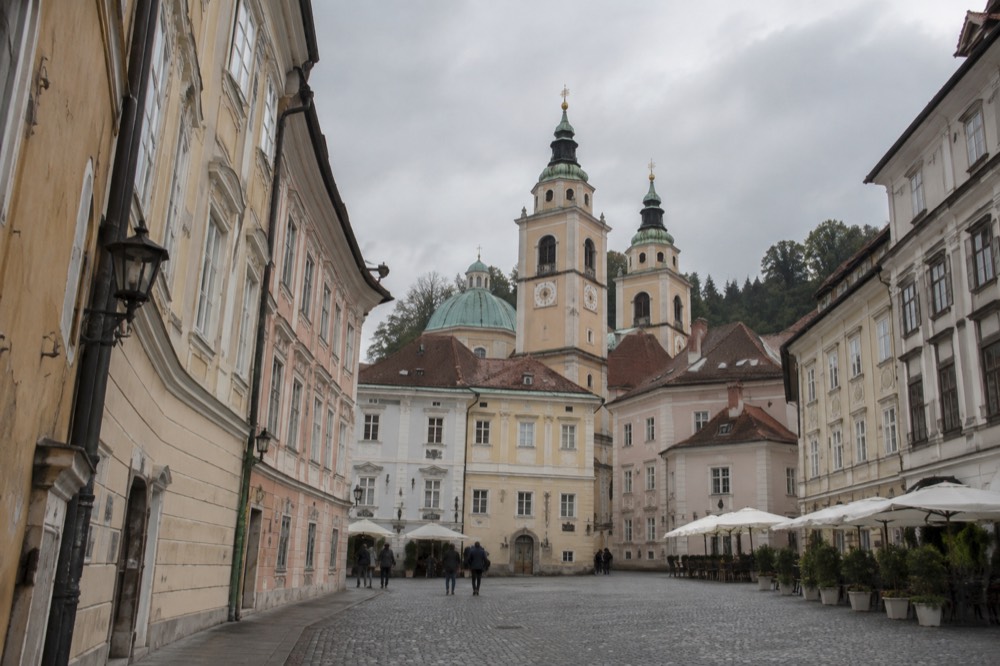
What a guided walk adds is context. Ljubljana's look is largely the work of Jože Plečnik, the architect who rebuilt the riverside, the market halls and the bridges in the interwar years, and the Plečnik walking tour exists because a visitor who walks the city with a guide suddenly sees the plan behind the prettiness. Without that layer, Ljubljana is pleasant. With it, the city reads like a single deliberate composition.
Which Guided Ljubljana Walking Tours Are Worth Booking?
The three walks worth booking first are the Slovenian Cuisine Walking Tour with Tastings (4 hours, 4.8 from 552 reviews, from $104), the Classic Ljubljana Group Tour (4.8 from 406 reviews) and the Boat Cruise and Walking Tour (2 hours 30 minutes, 4.7 from 366 reviews, from $34.29). Between them they cover food, landmarks and the river, at three different price points.
The classic group walk is the straightforward landmarks option: Old Town squares, the riverside, the dragon bridge and the stories behind them, in a group format that runs frequently. The boat-and-walk combination splits its two and a half hours between the water and the pavement, which suits anyone who wants the castle-view panorama from the Ljubljanica without committing a whole afternoon. The food walk is the deepest one: four hours, six or more tasting stops, and a running commentary on what Slovenians actually eat, covered in full further down this page.
The table below puts the main formats side by side so you can see the trade-offs before you choose.
| Walking tour format | What it covers | Who it suits |
|---|---|---|
| Classic group walk | Old Town landmarks, squares, riverside, dragon bridge | First-time visitors who want the headline sights fast |
| Food and cuisine walk | Tasting stops across the Old Town plus the sights between them | Visitors who want to eat lunch and see the city in one move |
| Boat and walk combination | Riverside walking segment plus a cruise with castle views | Anyone short on time who wants the river angle |
| Free tips-based GuruWalk | Old Town sights, themed routes, local guides | Budget travellers and the undecided |
Beyond those three, the roster fans out. The Art and Architecture walk runs 90 minutes and leans on the buildings rather than the legends. The Time Machine castle tour puts costumed guides on the hill and includes the funicular. The Deadly Walk cemetery tour goes to the graves, epitaphs and darker stories most visitors never hear, at 2 hours and 4.9 from a small pool of reviews. There is also a stand-up paddle "walking tour" of the river, which stretches the definition but fits the city's amphibious character.
One genuinely new listing deserves a mention by name: the Zagreb full-day trip, from $293.19, which is a walking-format day out in Croatia's capital rather than a Ljubljana walk, and carries no rating yet because it has only just launched. Since Croatia joined Schengen and the euro on 1 January 2023, the run down is borderless and needs no currency change. If your walking appetite outgrew Ljubljana by day three, that is the escalation route.
How Much Does a Walking Tour in Ljubljana Cost?
Paid walking tours in Ljubljana run from roughly $17 for a 90-minute art and architecture walk to around $104 for the four-hour cuisine tour, while the free GuruWalk tours cost nothing upfront and work on a pay-what-you-think-it-was-worth basis. The city's official sightseeing pass, the Ljubljana Card, starts at 41.00 EUR for 24 hours and includes a guided walking tour inside it.
That spread is the honest answer. Ljubljana is not a city where you must pay for a guide to enjoy the pavement, because the pavement itself is the attraction and the free things to do in Ljubljana include the whole car-free core. What you pay for is depth, access and someone else's pacing.
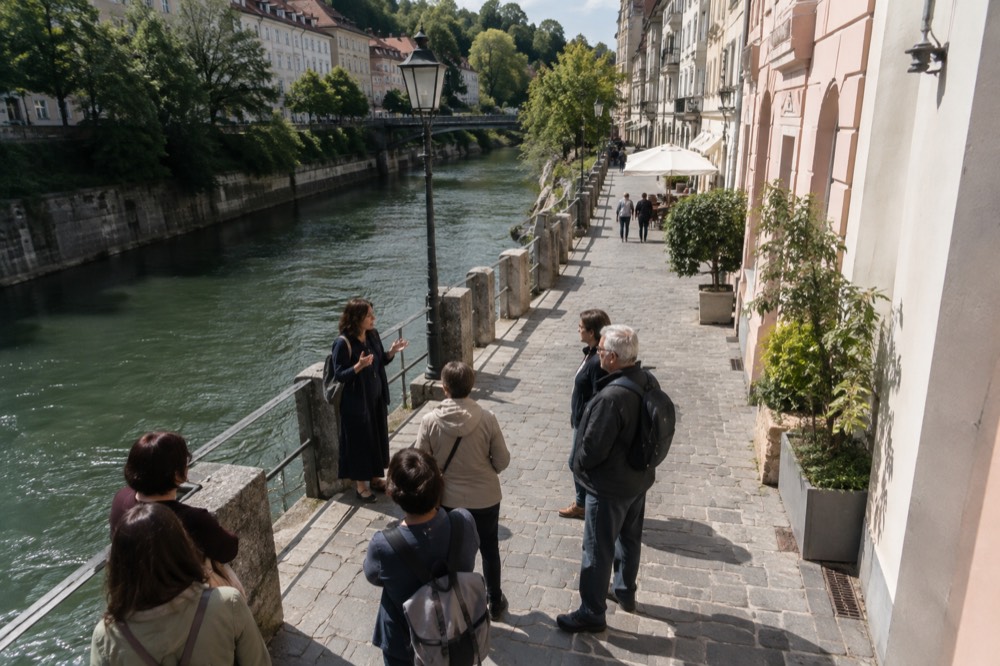
The free layer deserves its own explanation, because it is larger than most visitors expect. Eight free walks run on the GuruWalk platform, and GuruWalk's model is tips: you book a place, walk, and pay the guide what the walk was worth to you at the end. The flagship is Ljubljana Unveiled, 2 hours, 4.91 from 1,496 reviews, running from Roman roots to the dragon bridge. The Communist-era walk covers socialist Ljubljana with a local guide. The night walk goes off the beaten track after dark.
| Free GuruWalk tour | Duration | Rating | Focus |
|---|---|---|---|
| Ljubljana Unveiled | 2h | 4.91, 1,496 reviews | Roman roots to the dragon bridge |
| Snacking Love Walk | 1h 45m | 4.93, 1,324 reviews | Sights paired with snack stops, small group |
| Ljubljana by Night | 1h 30m | 4.91, 470 reviews | After-dark corners daytime tours skip |
| First tour you have to take | 2h | 4.59, 315 reviews | Day-one orientation |
| Communist-era Ljubljana | 2h | 4.97, 302 reviews | Socialist-era sites and stories |
Two honesty notes on the free list. The Snacking Love Walk is not purely pay-what-you-want: its listing states the tasting carries a fixed extra cost, so budget for the snacks separately. And the XXL Bike Tour, a two-hour ride on vintage Rog bikes, does not state whether bike hire is included, so confirm on the listing before you rely on it. Everything else on the free list is genuinely tips-only.
The card route is the third option. The Ljubljana Card at 41.00 EUR for 24 hours bundles a guided walking tour, the river cruise, the castle funicular, city buses, four hours of BicikeLJ bike share and single entries to more than thirty museums and galleries. The arithmetic only works if you will use several of those, and the Ljubljana Card guide runs the full comparison.
If your walk ends at the castle, the funicular is a paid extra: 3.30 EUR single or 6.00 EUR return for an adult, with a combined castle ticket and funicular at 19.00 EUR. The castle grounds themselves are free to enter, so a walking tour that ends on the hill costs nothing until you want the tower or the exhibitions. The castle entry guide has the full price list.
For a midpoint between the free walks and the paid tours, the Guided Walk and Funicular to Ljubljana Castle is worth a look: two hours, 4.6 from 650 reviews, from $24, pairing the Old Town walk with the ride up the hill.
What Is the Best Self-guided Ljubljana Walking Route?
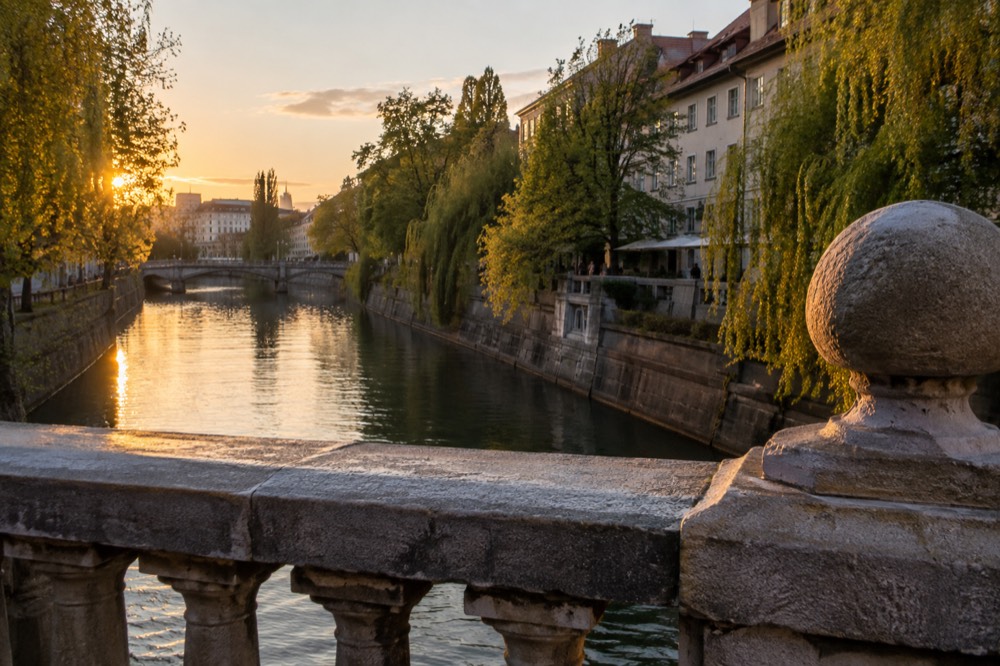
A self-guided loop of Ljubljana runs Prešeren Square, the Triple Bridge, the riverside market colonnade, the cathedral, the Town Hall and the castle hill, in roughly two to three hours at museum-free pace. Start at Prešeren Square, cross the Triple Bridge, follow the Ljubljanica east, then climb to the castle and descend into the Old Town lanes.
The route works clockwise or anticlockwise, but starting on the square gives you the city's postcard view first: the Franciscan Church facade, the Triple Bridge and the statue of Prešeren himself. From there the walk is a chain of short hops, each one visible from the last, which is why this city suits an improvised wander better than most.
| Stop | What you see | Notes for walkers |
|---|---|---|
| Prešeren Square | Franciscan Church, Prešeren statue, Uhrková clock | The natural meeting point; open plaza, no traffic |
| Triple Bridge | Plečnik's three-span crossing of the Ljubljanica | Best photographed from the riverside stairs |
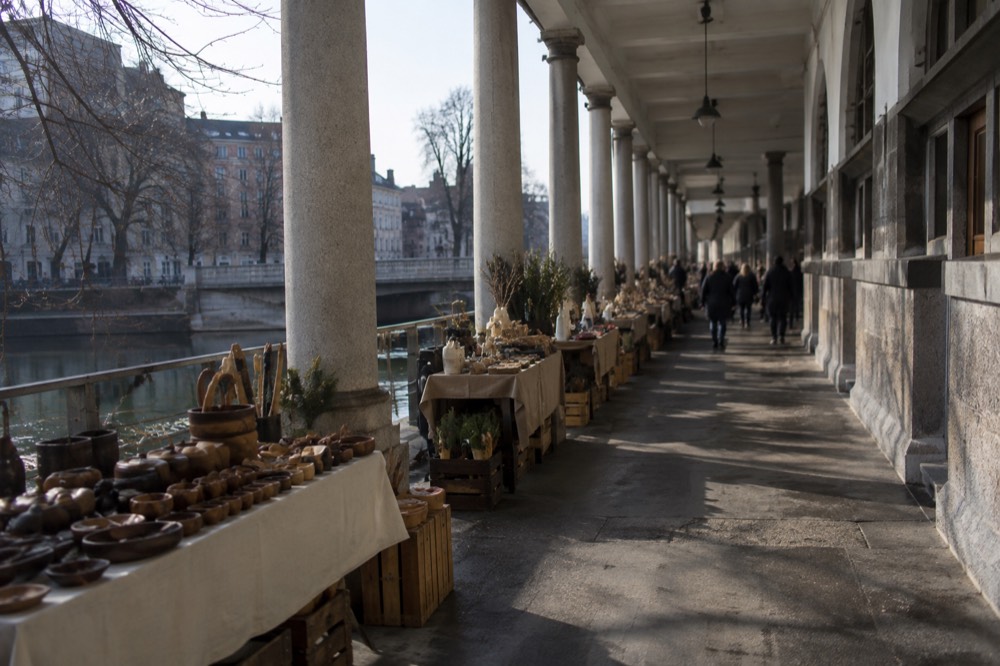
| Central Market colonnade | Plečnik's riverside market halls | Outdoor stalls Mon to Sat, mornings are fullest |
| Ljubljana Cathedral | Baroque twin-towered church | Doorway faces the market colonnade |
| Town Hall and the Robba Fountain | Civic square in the Old Town lane grid | Quiet early morning, busy by late morning |
| Castle hill and grounds | Panorama over the city basin | Grounds free; funicular and tower are paid |
Two variants change the character of the walk entirely. East of the centre, the Metelkova autonomous cultural zone adds street art, sculpture and a genuinely alternative atmosphere, and entry to the area is free, with individual clubs setting their own covers. South across the river, the Krakovo and Trnovo districts give you kitchen gardens and a village rhythm that most visitors never see; the Trnovo guide covers the quiet side of the embankment, including the Trnovo Church where Plečnik lived a short walk away at his house in Trnovo, now a museum visited by guided tour on the hour.
If you are fitting the walk into a single day, the one day in Ljubljana itinerary sequences this same loop around meal stops and the castle, and the two and three day versions extend it with Tivoli Park and the museum quarter. Walking the route independently costs nothing except the funicular if you take it, and the centre guide explains where the pedestrian zone actually ends, which matters if you are arriving by car and need to know where to leave it.
When Should You Walk, and What Is the Weather Doing?
The best walking months in Ljubljana are April through September, when the city records 178 to 293 sunshine hours a month against December's 56, but September and October tie as the foggiest and wettest months, at 12.4 fog days and 147 mm of rain each, so autumn walks need a backup plan. Winter walks are shortest on daylight, not on interest.
Ljubljana sits on the floor of a basin, and in the colder half of the year a temperature inversion traps cold, foggy air over the city while the hills above it sit in sunshine. ARSO's normals put numbers on it that surprise most visitors: in December the city gets 56 hours of sunshine in the whole month, under two hours a day, and just two clear days, while Kredarica up at 2,514 m on Triglav records 120 hours and six clear days over the same December. In January the mountain gets nearly double the city's sunshine, 139 hours against 71. Annually the city manages 37 clear days against 130 overcast. The rest of the planning pages sit on Ljubljana Travel Guide.
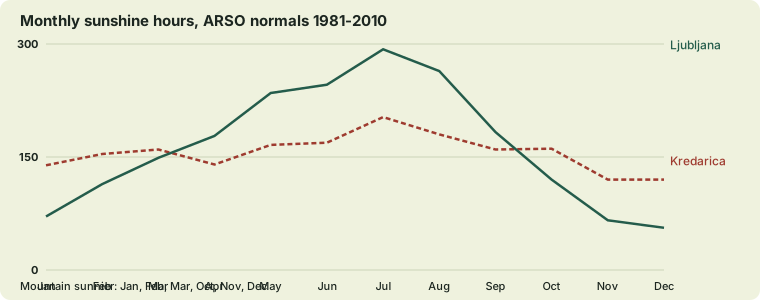
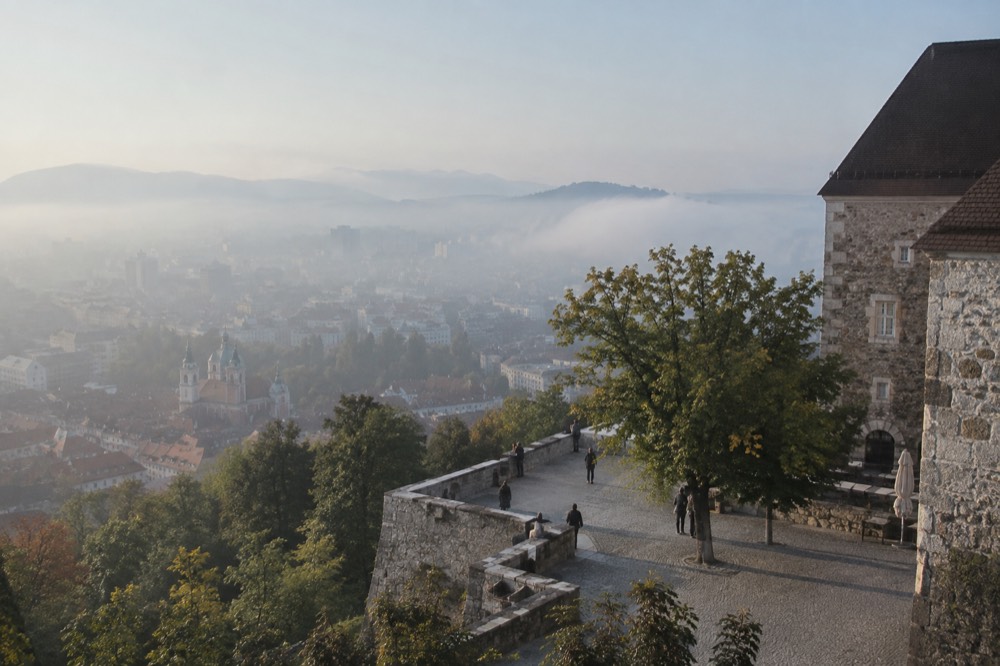
For a walking tour specifically, the practical reading is: morning fog in the basin in September, October and December is normal, and the fix is altitude. On a foggy day the walk up to the castle, or a trip to Šmarna Gora, or the funicular, or a Bled day trip all punch through the inversion into sunshine while the riverside stays grey. The best time to visit guide covers the seasonal logic in full, and the rainy day in Ljubljana guide covers the wet-afternoon alternatives, where the standing answer is a cave: Postojna holds about 10 C and Škocjan about 12 C year round, which is exactly why they are the reliable fallback in any weather.
For the afternoon shape of the day: the outdoor Central Market runs roughly Monday to Saturday, 06:00 to 18:00 in summer and 06:00 to 16:00 in winter, with covered halls Monday to Friday 07:00 to 16:00 and Saturdays 07:00 to 14:00, so a morning walk catches it at its fullest. And on Fridays from roughly March to November, the Odprta Kuhna open-air food market takes over Pogačarjev trg from 10:00 into the evening, with the official wording being "every sunny Friday", which is literal: bad weather cancels it. A Friday food walk through that square is the best-timed walk in the city, and the Open Kitchen guide covers it.
What Do You Get on a Ljubljana Food Walking Tour?
A food walking tour in Ljubljana pairs the Old Town sights with a sequence of tasting stops, and the flagship Slovenian Cuisine Walking Tour runs four hours, rates 4.8 from 552 reviews and starts from $104, with the tastings built in. Shorter options include a three-hour traditional flavours walk, rated 5.0 from 54 reviews, and a combined food and wine walk at three hours from $112.32.
The cuisine walk is the deepest version and the one this site recommends first. Four hours is long for a walking tour, but the pace is culinary rather than athletic: stops are longer, distances between them are short, and the commentary runs on what is on the plate as much as what is on the street. The tour doubles as an orientation tour, because the tasting stops are scattered across the same streets a landmarks walk would cover, so a visitor who takes it on day one has both the map and the lunch sorted.
The food-and-drink variants fan out from there. A wine tasting experience on a silent electric boat runs two hours along the Ljubljanica from $64, with appetizers, which is a sitting-down tour with a walking pace. A craft beer boat cruise with tastings runs one hour from $56. The štrukelj cooking class is the inverse: three hours, from $70, hands-on, making the rolled pastry that turns up on half the menus you will walk past. And the free Snacking Love Walk, covered above, is the tips-based entry point to the same idea, with the fixed tasting add-on to budget for.
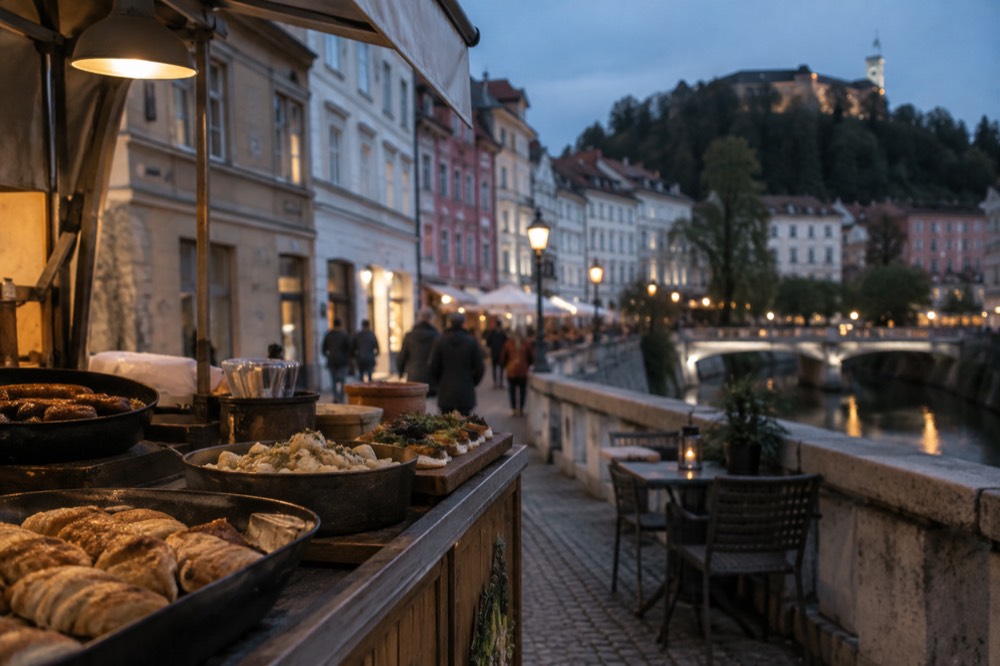
Why food walks work particularly well here: the Central Market sits directly on the walking route, the Open Kitchen fills a square with cooked food every sunny Friday in season, and the specialities are genuinely local rather than imported menu filler. What to eat, and where to find each of it, is its own subject; the Slovenian food in Ljubljana guide and the where locals eat guide handle that side, and a guided food walk is effectively a fast pass through both.
How Walkable Is Ljubljana for Slower Walkers and Families?
Ljubljana is one of Europe's more walkable capitals, with a flat, car-free centre, river crossings at frequent intervals and a funicular that removes the only real climb, but cobbles, steps down to the riverside and the castle hill itself still need planning for wheels, small children and anyone with limited mobility. The pedestrian core keeps traffic out of the equation almost entirely.
The flat part is genuinely flat. The loop from Prešeren Square through the market to the Town Hall never leaves the basin floor, and the riverside promenades are repaved and level. The two exceptions are the castle hill, solved by the funicular for 3.30 EUR single, and the riverside stairs by the bridges, which are decorative rather than necessary: every bridge crossing itself is ramped or level.
Families get a lot from the format. Children tolerate a walk far better when dragons are involved, and Ljubljana obliges: the dragon bridge is a scheduled stop on virtually every city walk, and the dragon is the city's own symbol. The Ljubljana with kids guide extends the walking day with Tivoli Park, the duck pond and the museum options, and Tivoli itself, covered in the Tivoli Park guide, is a car-free extension of the walking city, with walking paths reaching it directly from the centre in about twenty minutes at adult pace.
For visitors with specific access needs, the accessible Ljubljana guide goes into detail, but the headline is favourable: pedestrianisation means kerbs and crossings are mostly absent from the core, and the tourist infrastructure, from the funicular to the river boats, was designed with mixed mobility in mind. The one honest caveat is the Old Town lane grid on the east side of the river, where cobbles are original and surfaces are uneven, so a wheelchair route is better planned along the riverside than through the lanes.
What Should You Know Before You Set Off?
Before any walking tour in Ljubljana, know four things: the centre is pedestrianised so you will arrive on foot or by bus, the castle grounds are free while the funicular and tower are paid, museums close on Mondays while national institutions are free on the first Sunday of the month, and the city buses take no cash at all, only contactless or the Urbana card.
Those four facts cover most of the questions that catch visitors out. The bus detail is the one that causes the most trouble on the day: a single zone 1 ride is 1.50 EUR for 90 minutes including transfers, the Urbana card costs 2.00 EUR to buy, and cash is not accepted on board, though contactless bank cards and phones now work. The getting around guide and the public transport payment article cover the mechanics.
| Practical question | Answer for walkers |
|---|---|
| Do I need a tour to see the centre? | No, the core is walkable alone; tours add depth, food and pace |
| Can I walk to the castle? | Yes, uphill on foot or by funicular from 3.30 EUR single |
| Is the castle free? | The grounds are; the tower, exhibitions and funicular are paid |
| What if it rains? | The centre walks in any weather; caves hold about 10 C year round |
| Are the museums open? | Most close Monday; national ones are free the first Sunday monthly |
| Do I need cash for anything? | Buses take none; market stalls are the main cash-friendly spot |
Museums matter to walkers because the walking route passes so many of them. The National Gallery, the Museum of Modern Art, MSUM and the City Museum all close on Mondays, and the National Museum of Slovenia and Natural History Museum stay open daily. The first-Sunday-free rule at the national institutions is the single best museum fact in the city, and it can turn a Sunday walking tour into a museum crawl at no cost.
For a compact, cheap first walk, the Old Town and Castle group tour runs two hours at 4.9 from 20 reviews, from $16.55, and folds the castle visit into the walk. At the other end of the scale, a private historic walk with castle entry included runs three hours from $106.48, rated 5.0 from 13 reviews, for anyone who wants the guide to themselves.
One more practical layer worth naming: the Ljubljana photography spots guide is effectively a second self-guided walking route built around light, and it is the one to read before an evening walk along the river. Ljubljana Travel Guide covers the walking city from every angle, and the pattern across all of it is the same: this is a city that repays being crossed slowly, on foot, more than once.
Common Questions About Walking Tours in Ljubljana
Are there free walking tours in Ljubljana?
Yes, eight of them, all on the GuruWalk platform and all working on a pay-what-you-think-it-was-worth basis. The flagship, Ljubljana Unveiled, runs two hours and rates 4.91 from 1,496 reviews. The Snacking Love Walk carries a fixed extra cost for its tastings, so it is not fully free.
How long does a walking tour of Ljubljana take?
The paid walks run from 90 minutes for the art and architecture walk to four hours for the Slovenian cuisine tour. A self-guided loop of the Old Town, market, cathedral and castle hill takes two to three hours at a comfortable pace.
Do Ljubljana walking tours include the castle?
Some do. The Old Town and Castle group tour and the private historic walk include entry, the Guided Walk and Funicular tour includes the ride up, and several free walks end at the hill. The castle grounds are free to enter regardless; the tower, exhibitions and funicular are paid.
Is Ljubljana walkable without a tour?
Very. The historic centre is a pedestrian zone of roughly 20 hectares with no general motor traffic, and all the main sights sit within a short loop. A tour adds context, food stops and pacing rather than access.
What should I do if it rains on my walking tour day?
Walk anyway, the centre is compact and the arcades and market halls give cover, and keep the caves as the standing backup: Postojna holds about 10 C and Škocjan about 12 C all year, so they work in any weather. The rainy day guide lists the full set of indoor options.
Which walking tour is best for food?
The Slovenian Cuisine Walking Tour with Tastings, four hours, 4.8 from 552 reviews, from $104, is the deepest food walk. The three-hour traditional flavours walk, rated 5.0 from 54 reviews, and the combined food and wine walk at three hours are the shorter alternatives.