Is Ljubljana a Walkable City?
Yes, and more so than almost any other European capital: Ljubljana's historic centre is closed to cars, the sights sit close together, and the hills above the basin are built for walking.
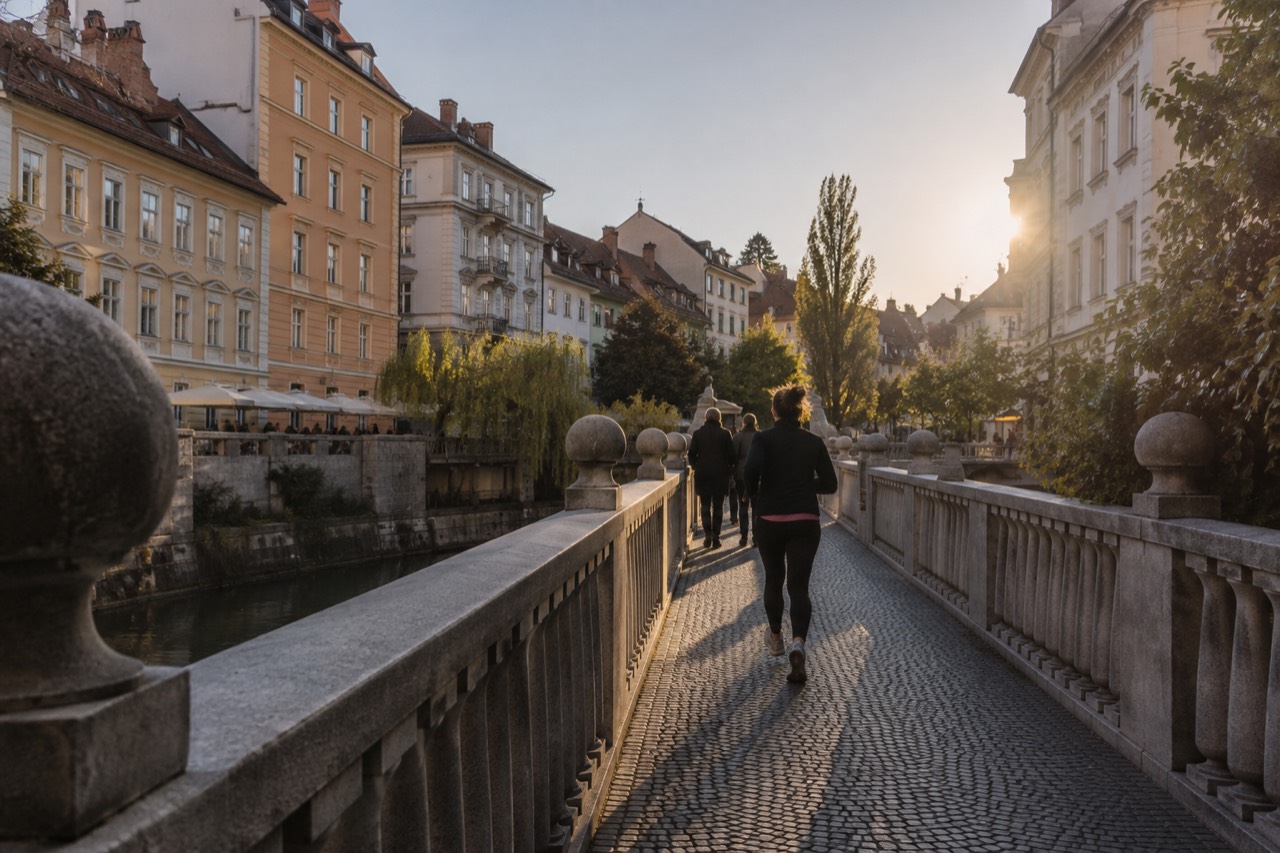
Is Ljubljana a Walkable City?
Yes, and by a wide margin. Ljubljana's historic centre is a pedestrian zone of roughly 20 hectares, progressively closed to general motor traffic since 2007, which means the core of the capital is genuinely car-free rather than merely pleasant. The official visitor statistics back this up: 2,844,129 overnight stays across 1,392,728 arrivals works out to an average stay of about 2.04 nights, exactly the profile of a city people explore on foot.
That pedestrian zone is the single most important fact for anyone planning a visit. It is not a street or two with bollards. The area around Prešeren Square, the Triple Bridge, the Ljubljanica banks and the Old Town is closed to general traffic as a matter of policy, and the city has kept expanding it. A visitor arriving by car discovers quickly that the centre is not something you drive into, park inside and walk around: you leave the car at the edge and the walking begins there.
The scale helps. This is a capital of about 293,244 people, but the sights a visitor comes for cluster in a basin barely a couple of kilometres across. The National Gallery, the City Museum, the cathedral, Plečnik's bridges, the Central Market and the funicular base for Ljubljana Castle all sit within easy reach of one another. Nothing requires a bus, and the Old Town walking guide covers most of it in a single loop.
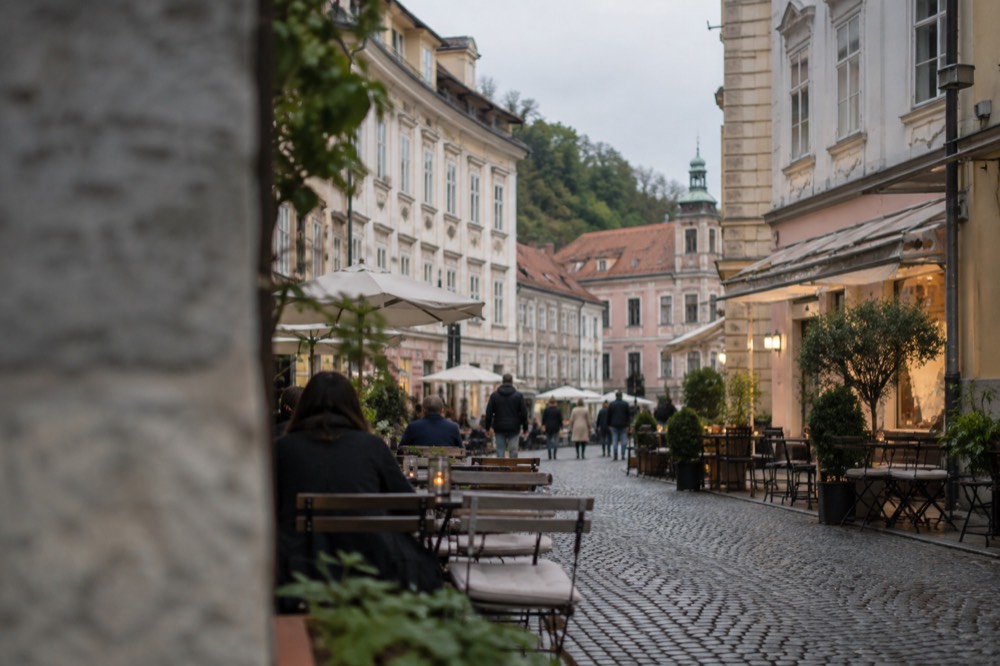
There is a second, less obvious reason the city walks so well. Slovenia's capital sits on the floor of a basin, and the hills that ring it, Šmarna gora, Rožnik, the castle ridge, are close enough to reach on foot from the centre. Walkability here is not flatness. It is the fact that the flat part is car-free and the hilly part starts where the pavement ends.
How Much of the City Can You Cover Without a Car?
Most visitors never need a vehicle inside the city at all. The pedestrian core of roughly 20 hectares covers Prešeren Square, the Triple Bridge, the Old Town, the Central Market and both banks of the Ljubljanica, and the museum quarter and Tivoli Park sit just beyond it on foot. A car only becomes useful for day trips, and even those run as guided tours straight from the centre.
The city's own mobility pages describe the centre as a pedestrian zone progressively expanded since 2007, and the effect on the ground is hard to overstate. Čevljarski most, the shoemakers' bridge, and Tromostovje, the Triple Bridge, carry foot traffic only. The riverside promenades either side of the Ljubljanica are walking streets with café tables spilling across them. You can walk from the National Gallery to the funicular without once sharing a lane with a car.
What sits outside the zone is still walkable, just with traffic. Metelkova, the autonomous cultural centre in the former army barracks, is a short walk north of the centre and free to enter, with individual clubs setting their own covers. Tivoli Park stretches west from the museum quarter. The railway and coach stations sit at the eastern edge, close enough that most arrivals can walk to a central hotel with luggage rather than take a taxi.
| Part of the city | Walking access | What to expect |
|---|---|---|
| Prešeren Square and the Triple Bridge | Inside the car-free zone | Pedestrian only, busiest section of the centre |
| Old Town and the Ljubljanica banks | Inside the car-free zone | Walking streets, café terraces, market halls |
| Central Market at Vodnikov and Pogačarjev trg | At the zone's edge, walkable | Outdoor market roughly 06:00 to 18:00 in summer, 06:00 to 16:00 in winter |
| Metelkova | Short walk north of the centre | Free to enter, busiest Friday and Saturday evenings |
| Ljubljana Castle | Steep 10 minute climb or funicular | Grounds free, funicular and tower ticketed |
The practical consequence for drivers is simple: book accommodation on the edge of the zone or use one of the peripheral car parks, then forget the car. The getting around Ljubljana guide covers the car-free rules and the parking options in detail. If your trip is Ljubljana plus day trips, the guided options leave from the centre, which removes the car question entirely.
Those three cover the shape of most trips: a karst day out, a Lake Bled day out, and a free city walk for the day you arrive. The free one is worth a note because it is not a paid tour dressed up as free. The Old Town Walk, Romans to Dragons runs on GuruWalk's pay-what-you-think-it-was-worth model, lasts about two hours, and carries a 4.91 rating from 1,496 reviews. It is a legitimate way to get oriented on day one before you set off on your own.
Do You Need Public Transport at All?
For the centre, no. For everything else, Ljubljana's buses are cheap and simple: a single zone 1 ride costs 1.50 EUR and covers 90 minutes including transfers, the Urbana card costs 2.00 EUR to buy, and cash is not accepted on board, though contactless bank cards and phones now are. If you stay central and walk, you may never board one.
The no-cash rule is the detail that catches visitors out, and it is the thing older guidebooks get wrong. Ljubljana's operator states plainly that cash does not work on board, but contactless Visa, Mastercard and mobile wallets do, which has removed the old trap of needing an Urbana card before you could board at all. You can still buy and top up the card at the LPP Passenger Centre on Slovenska 56, at Urbanomat machines, kiosks, tourist information centres and post offices.
| Item | Figure |
|---|---|
| Single ride, zone 1, 90 minutes including transfers | 1.50 EUR |
| Urbana card purchase | 2.00 EUR |
| Cash accepted on board | No |
| Contactless bank cards and phones on board | Yes |
| Where to buy and top up Urbana | LPP Passenger Centre, Urbanomat machines, kiosks, tourist information centres, post offices |
For most visitors the honest answer is that the buses exist as insurance. You will walk the centre, and if your hotel sits beyond it, or you are heading to a neighbourhood like Šiška or Bežigrad, the bus is there. The [Ljubljana Card guide](/guides/ljubljana-card/) is worth a look if you plan to combine buses with the river cruise and the castle funicular, since the card covers city buses, the funicular, the cruise and more than 30 museums.
Is the Castle Walkable, or Should You Take the Funicular?
The castle is walkable, and the climb is short but steep. The funicular is the alternative: 3.30 EUR single or 6.00 EUR return for an adult, running 09:00 to 22:00 between May and September and 09:00 to 19:00 the rest of the year. A combined castle ticket including the funicular costs 19.00 EUR, and the castle itself is open 365 days a year.
The walk up from the Old Town takes most people under fifteen minutes on the path behind the funicular, and it is the kind of climb that rewards you with the view rather than punishing you. The funicular, running from near the Ljubljanica to the castle ridge, is the option for hot days, tired legs and pushchairs. Its hours matter if you are planning an evening up top: the late 22:00 finish only applies May to September, and the castle attractions close an hour before the funicular in each season. The rest of the planning pages sit on Ljubljana Travel Guide.
One distinction that gets written wrong constantly: the castle grounds are free to enter, while the funicular and the castle tower are not. That means you can walk up, wander the ridge and enjoy the panorama without buying anything, then decide whether the exhibitions and the Viewing Tower justify the 19.00 EUR combined ticket. The Ljubljana Castle guide breaks down exactly what the ticket includes.
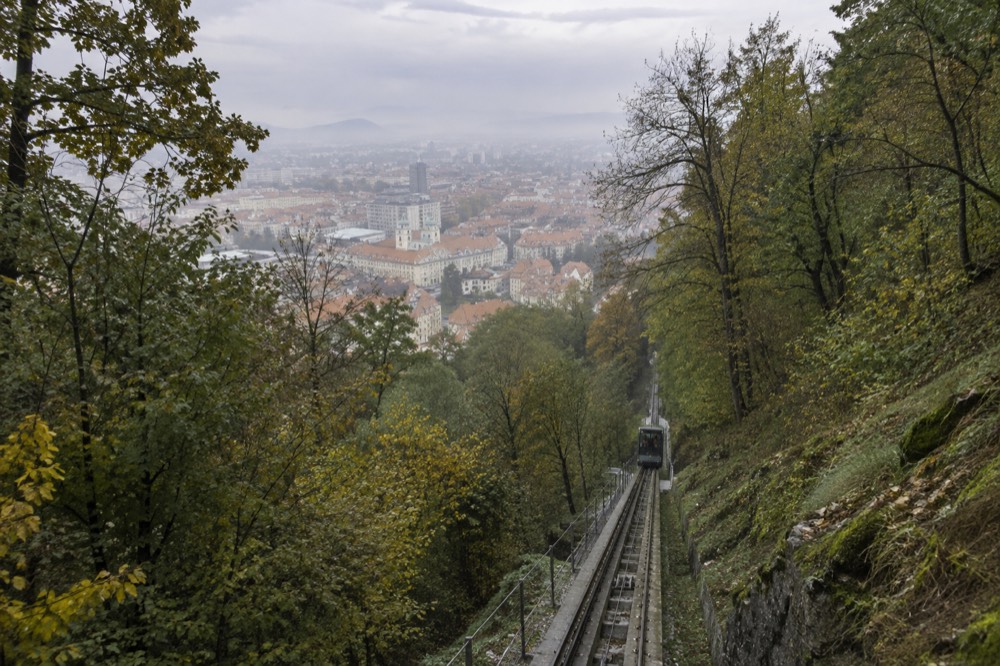
The castle is also where Ljubljana's walkability gets its counterweight. The city centre is flat and car-free, but the capital sits in a basin, and the terrain rises quickly on three sides. Walkable here includes hills, and that is a feature: on a clear day the climb to the castle or further up to Šmarna gora is the best walk the city offers.
Is Ljubljana Pleasant to Walk in Year Round?
Mostly, with one honest caveat: the basin fogs in. Ljubljana averages just 37 clear days a year against 130 overcast, and December brings only 56 hours of sunshine, under two hours a day. September and October, the months many visitors assume are the dry shoulder, are actually the joint wettest at 147 mm each and average 12.4 fog days apiece.
The fog story is the fact almost every other guide misses. Because the city sits in a basin, cold air gets trapped under warmer air above in the colder half of the year, and the city fogs in while the hills a few hundred metres up sit in sunshine. ARSO's climate normals put numbers on it: Kredarica, at 2,514 m on Triglav, records 120 hours of December sunshine against the city's 56, and 139 January hours against the city's 71. The mountain is sunnier than the capital all winter.
The practical advice that follows is unusual but sound: when Ljubljana is grey, go up. The castle ridge, Šmarna gora and the day-trip destinations into the Julian Alps sit above the inversion layer. The best time to visit Ljubljana guide works through the months in detail, and the Ljubljana in winter guide covers the same logic for the cold season.
Rain rarely stops the city being walkable, but it changes what you walk to. The covered halls of the Central Market run Monday to Friday 07:00 to 16:00 and Saturday 07:00 to 14:00. Most of the major museums close on Monday, which is the planning fact worth more than any weather forecast. And the caves, Postojna at 10 C and Škocjan at 12 C year round, hold the same temperature in every season, which is why they are the reliable answer to a grey or sweltering day.
Where Walking Ends: Day Trips from a Car-free Base
The walkable city has a hard edge, and it is the city itself. Lake Bled, Postojna Cave, the Soča Valley and the coast all sit beyond walking range, which is why the guided day tours from the centre are so heavily used. A visitor who walks everywhere in Ljubljana typically books one or two escorted day trips and never misses having a car.
The Postojna and Predjama combination is the classic example. The Cave and Castle Tickets tour runs six hours from Ljubljana, covers both the cave and the cliff castle, and carries a 4.8 rating across 2,802 reviews from $132. Postojna's own figures explain why a tour works: the visitor route is 3.7 km travelled partly by cave train, the tour inside lasts about an hour and a half, and the cave holds 10 C year round, so you arrive to a schedule rather than queueing blind.
Bled works the same way, and demand for it is enormous, more than for the city itself. The Lake Bled and Castle trip runs six hours from $86 with a 4.7 rating from 1,641 reviews. Both tours, along with the free GuruWalk city walk for your arrival day, are the pattern most visitors settle into: two days walking the basin, one day in the karst, one day at the lake.
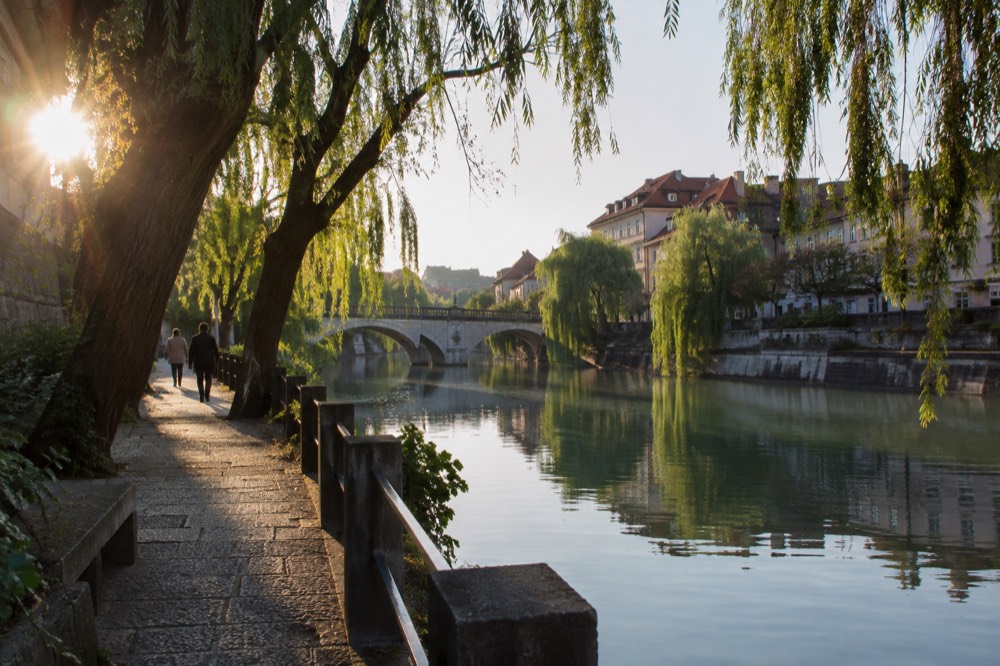
That division, walking inside the ring road and guided transport outside it, is the honest answer to the question this page asks. Ljubljana is a walkable city in the way few capitals are: the centre is closed to cars, the distances are short, the hills are an amenity rather than an obstacle, and the state of being car-free inside the zone is permanent policy rather than a weekend experiment. What it is not is a walkable region. The moment you leave the basin, you are on a bus, a train or a tour, and the tours are built precisely for people who never wanted to drive.
Common Questions About Walking in Ljubljana
Is Ljubljana A Walkable City?
Yes. The historic centre is a pedestrian zone of roughly 20 hectares, closed to general motor traffic and progressively expanded since 2007, and the main sights, museums and the castle funicular base all sit within a short walk of one another. Most visitors never use a vehicle inside the city.
Is the centre of Ljubljana really car-free?
Yes. The historic core is officially a pedestrian zone, covering Prešeren Square, the Triple Bridge, the Old Town and the Ljubljanica banks. Visitors arriving by car park at the edge of the zone and walk in.
Can you walk up to Ljubljana Castle?
Yes, the climb from the Old Town takes most people under fifteen minutes on a steep path. The funicular is the alternative at 3.30 EUR single or 6.00 EUR return for an adult, and the castle grounds themselves are free to enter.
Do you need the buses in Ljubljana?
Only if you stay outside the centre or head to districts like Šiška or Bežigrad. A zone 1 ride is 1.50 EUR for 90 minutes including transfers, cash is not accepted on board, and contactless bank cards and phones work directly.
Is Ljubljana walkable in winter?
Yes, but it is grey. The city averages just 56 hours of December sunshine and 37 clear days a year, because the basin traps fog. The hills above the inversion, including the castle ridge, are often in sun while the streets below are not.
Is Ljubljana flat enough for anyone to walk?
The centre is flat and pedestrianised, so the core loop is easy for almost anyone. The castle is the one steep section, and the funicular exists precisely so the climb is optional.