Getting Around Ljubljana: Buses, Urbana and Bikes
Ljubljana's centre is pedestrianised, the buses take a card you top up rather than cash, and the flat basin floor makes it one of Europe's easiest cities to walk or cycle. Here is how the system actually works, with the real fares.
Short answer
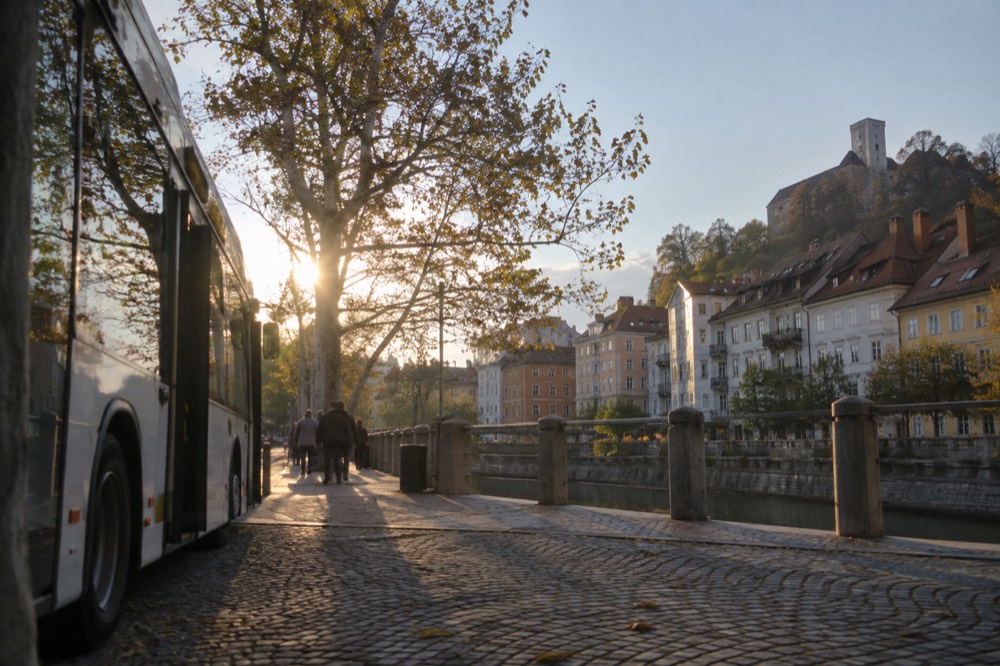
You do not need a car in Ljubljana. The historic centre is a pedestrian zone of roughly 20 hectares, buses cost 1.50 EUR a ride on an Urbana card or by contactless bank card, and the city is flat enough that most visitors walk or use the BicikeLJ bike share. The airport is about 26 km away and the funicular up to the castle costs 3.30 EUR single.
Ljubljana records about 2,844,129 overnight stays a year across 1,392,728 arrivals, which works out to an average stay of roughly two nights. That number shapes everything about how the city handles visitors: this is a compact, walkable capital where the transport system is designed for short stays, not commutes. The centre is closed to general motor traffic, the buses run on a simple flat fare, and the whole city sits on a flat basin floor between the Ljubljanica and the castle hill.
This guide covers the four things a visitor actually needs: how the pedestrian centre works, how the buses and the Urbana card function, what cycling and BicikeLJ involve, and how to reach the airport and the big day-trip destinations. Every fare below comes from the operator or the official tourist board, and where a figure is not published, this guide says so rather than guessing.
How Do You Get Around Ljubljana Without a Car?
You walk, and almost everything you came to see is within a 20-minute walk of Prešeren Square. The historic centre is a pedestrian zone of roughly 20 hectares, progressively closed to general motor traffic since 2007, so a car is not just unnecessary in the centre, it is largely impossible. Buses cover the outer districts, the funicular covers the castle hill, and bike share covers everything in between at low cost.
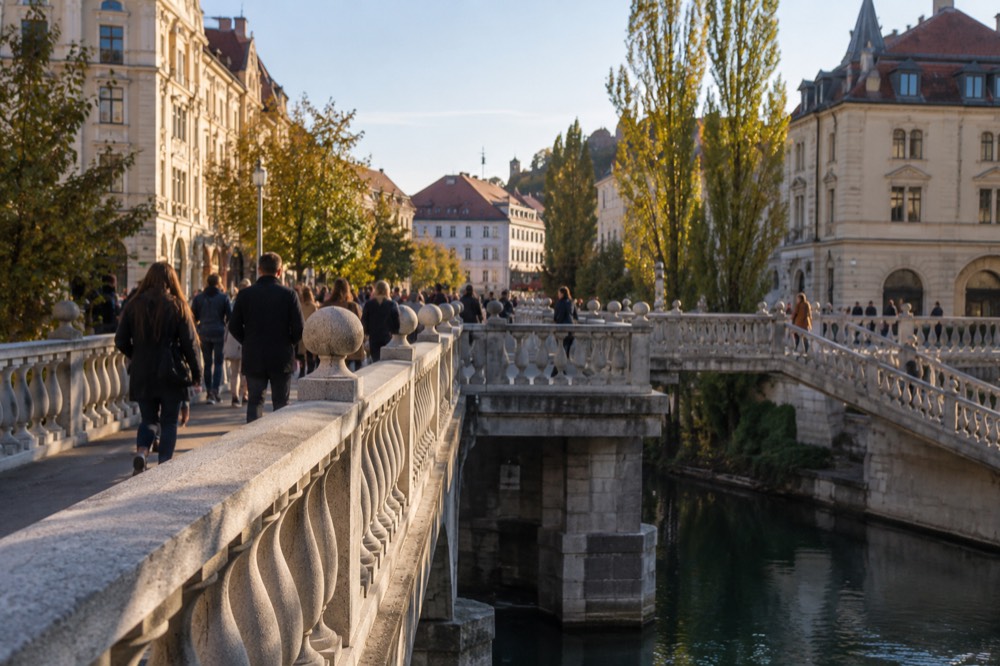
The pedestrian zone is the single most useful practical fact for anyone arriving by car. If you are driving in, plan to park at the edge of the centre and walk, because the streets around Prešeren Square, Čevljarski most and the Triple Bridge are closed to through traffic. The scale is genuinely small: the distance from the train station to the old town is a short level walk, and the whole historic core sits inside a loop of the Ljubljanica that you can cross on foot in minutes.
The city sits in a basin at 299 m, which is why walking and cycling feel so easy here. There is exactly one serious hill, the castle ridge, and the funicular deals with that. Everything else is flat floodplain. For orientation, the old town walking guide maps the pedestrian core street by street, and the one day in Ljubljana itinerary shows how little ground you actually need to cover in a day.
For a first visit, the honest summary is this: arrive, put the car keys away, and forget about transport inside the city until the day you leave. The questions below are for the edges of that rule, the buses out to Šiška or Bežigrad, the airport run, and the day trips.
How Does the Urbana Card Work on Ljubljana Buses?
A single bus ride in zone 1 costs 1.50 EUR and covers 90 minutes including transfers, paid either with an Urbana card or with a contactless bank card or phone tapped directly on board. The Urbana card itself costs 2.00 EUR to buy and you top it up at machines, kiosks, post offices or the LPP Passenger Centre on Slovenska 56. Cash is not accepted on board, which is the detail that catches visitors out.
The no-cash rule is the fact most guidebooks are out of date on. You cannot hand a driver a banknote, and you never could in the contactless era, but the old trap of needing to buy an Urbana card before you could board at all has gone: Visa, Mastercard and mobile wallets now work at the reader. If you ride more than once or twice, the card still makes sense because it is the same 1.50 EUR fare either way, and the card is reusable on any later visit.
Buy and top up at the LPP Passenger Centre (Slovenska 56), at Urbanomat machines, at kiosks, at tourist information centres and at post offices. The fare is flat within zone 1, which covers the whole city a visitor is likely to use, and the 90-minute window means a return journey within the same trip counts as one ride as long as you tap in within the window.
| Item | Figure | Where it applies |
|---|---|---|
| Urbana card purchase | 2.00 EUR | One-off cost, card is reusable |
| Single ride, zone 1 | 1.50 EUR | 90 minutes including transfers |
| Contactless bank card on board | Yes, same fare | Visa, Mastercard, mobile wallets |
| Cash on board | Not accepted | Any LPP city bus |
| Top-up points | Machines, kiosks, post offices | Urbanomat, Passenger Centre, TICs |
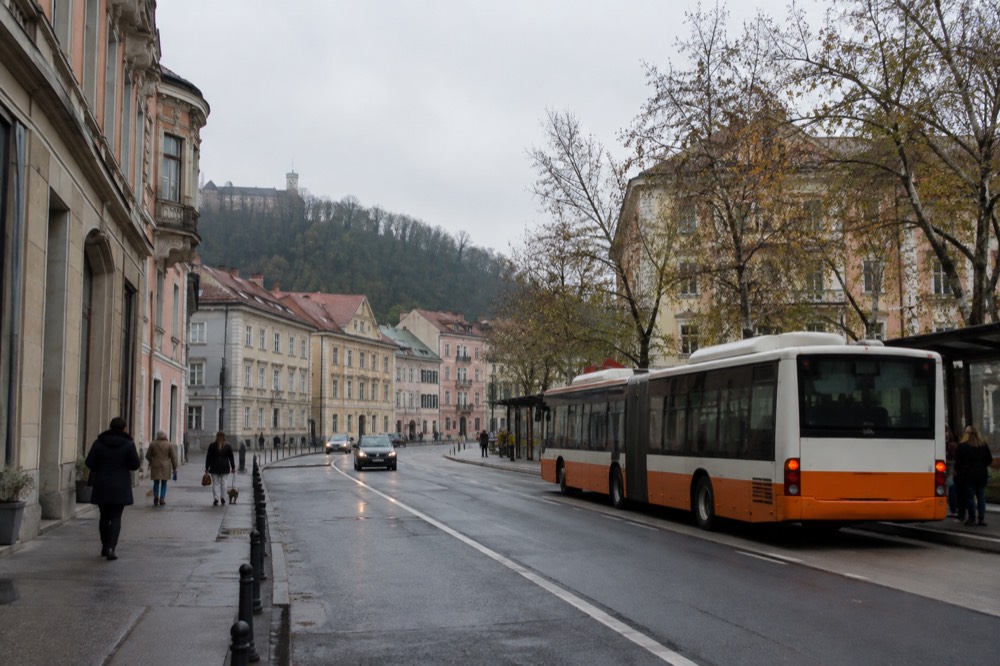
The bus station on the edge of the centre handles the intercity coaches, which is a different system with paper tickets and its own platforms. The Ljubljana bus station guide covers that side, including the platforms for Bled, the coast and Zagreb. City buses are LPP, orange and white, and you flag them at any stop.
The Ljubljana Card complicates the arithmetic in a good way. The card, sold by the tourist board in 24, 48 and 72 hour tiers, includes LPP city buses, the castle funicular, the river cruise, a guided walking tour and BicikeLJ bike share for four hours, plus one entry each to more than 30 museums and galleries. The 24 hour tier costs 41.00 EUR, 48 hours 49.00 EUR and 72 hours 54.00 EUR for adults. A castle ticket with funicular is 19.00 EUR and a river cruise about 15 EUR, so those two alone are roughly 34 EUR before a single museum, which is how the card pays for itself on a busy first day. The Ljubljana Card guide runs the full comparison.
Is Ljubljana a Walkable City?
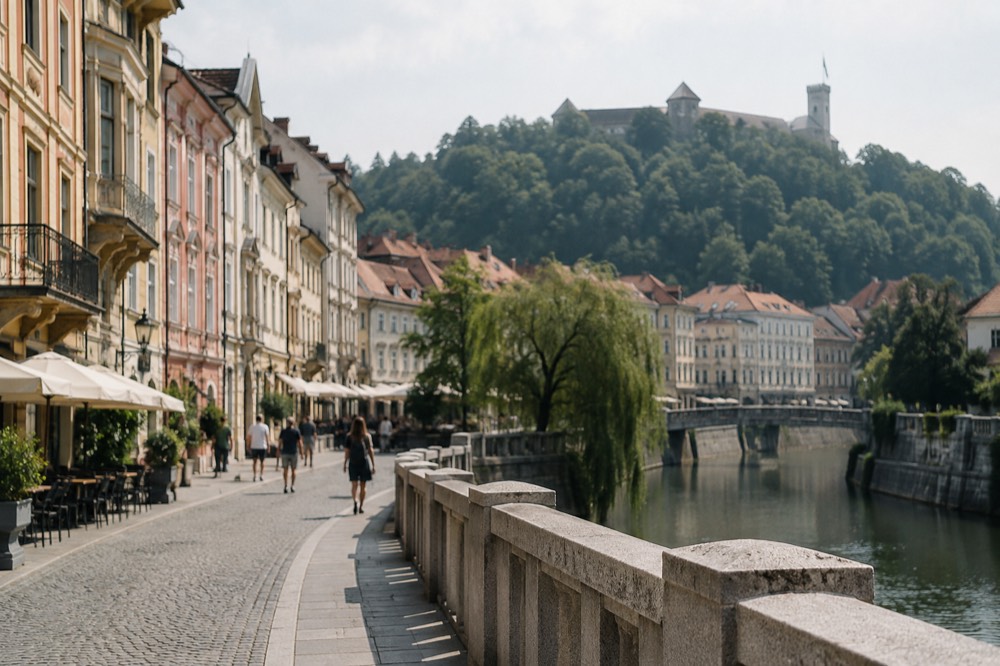
Yes, emphatically: Ljubljana is one of the most walkable capitals in Europe, with a car-free centre of roughly 20 hectares, flat terrain and every major sight within a 25-minute walk of Prešeren Square. The city's own figures show the pedestrian zone has been progressively expanded since 2007, and the tourist board's guided walking tour, included in the Ljubljana Card, covers the core in about two hours on foot.
Walking is not just possible here, it is the intended mode. The city deliberately converted its centre, and the result is a place where the distance from the National Gallery to the Central Market, from Metelkova to the Triple Bridge, is a stroll rather than a commute. The Central Market guide and the Prešeren Square guide between them cover the two anchors of the pedestrian core, and both are best experienced slowly, on foot, with no timetable.
The one hill is the castle ridge, and even that has two answers. You can walk up the signposted path from the old town in about ten to fifteen minutes of steady climbing, or you can take the funicular, which costs 3.30 EUR single or 6.00 EUR return for an adult, running 09:00 to 19:00 from January to April and October to December, and 09:00 to 22:00 from May to September. The castle is open 365 days a year. The castle funicular guide has the full price list, including the 19.00 EUR combined castle ticket with funicular both ways.
| Journey on foot | Approximate time | Terrain |
|---|---|---|
| Train station to Prešeren Square | 10-15 minutes | Flat |
| Prešeren Square to Central Market | 3 minutes | Flat, over the Triple Bridge |
| Old town to Ljubljana Castle on foot | 10-15 minutes | Uphill path |
| Prešeren Square to Metelkova | 20-25 minutes | Flat |
| Prešeren Square to Tivoli Park | 15-20 minutes | Flat, gentle rise |
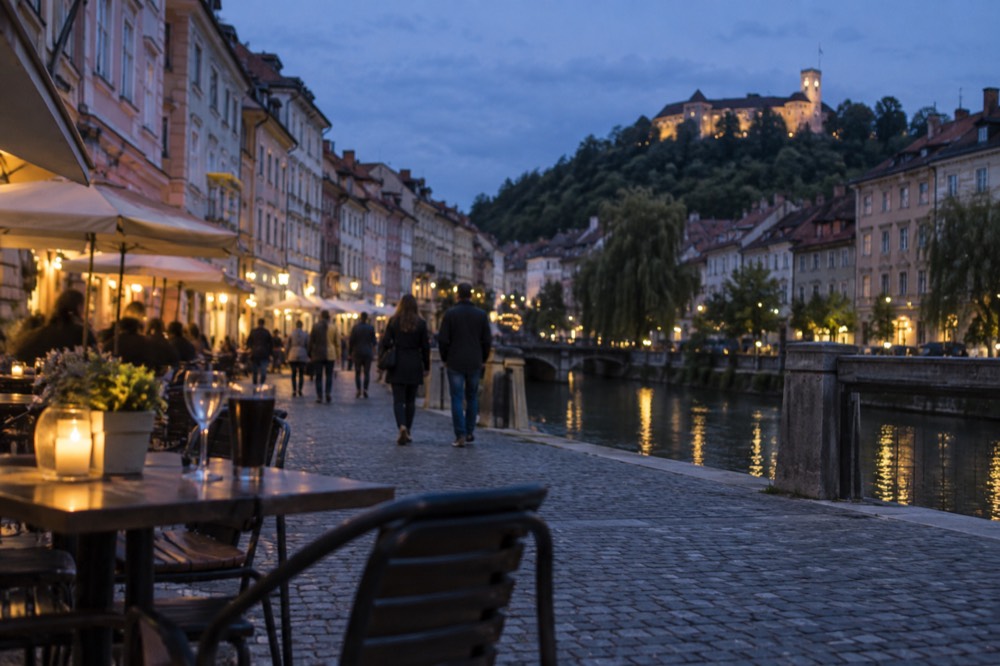
One planning note that belongs to walking rather than buses: the basin. Ljubljana sits in a bowl, and in the colder half of the year cold air is trapped under warmer air above, so the city fogs in while the hills a few hundred metres up sit in sunshine. ARSO's 1981-2010 normals give the city 56 hours of sunshine in the whole of December and just 2 clear days that month, against 120 hours and 6 clear days at Kredarica, 2514 m up on Triglav. A grey morning in the valley is often a bright morning at the castle or on Šmarna gora, so if the fog is down, walk uphill. The best time to visit guide unpacks the seasons.
Can You Cycle Around Ljubljana?
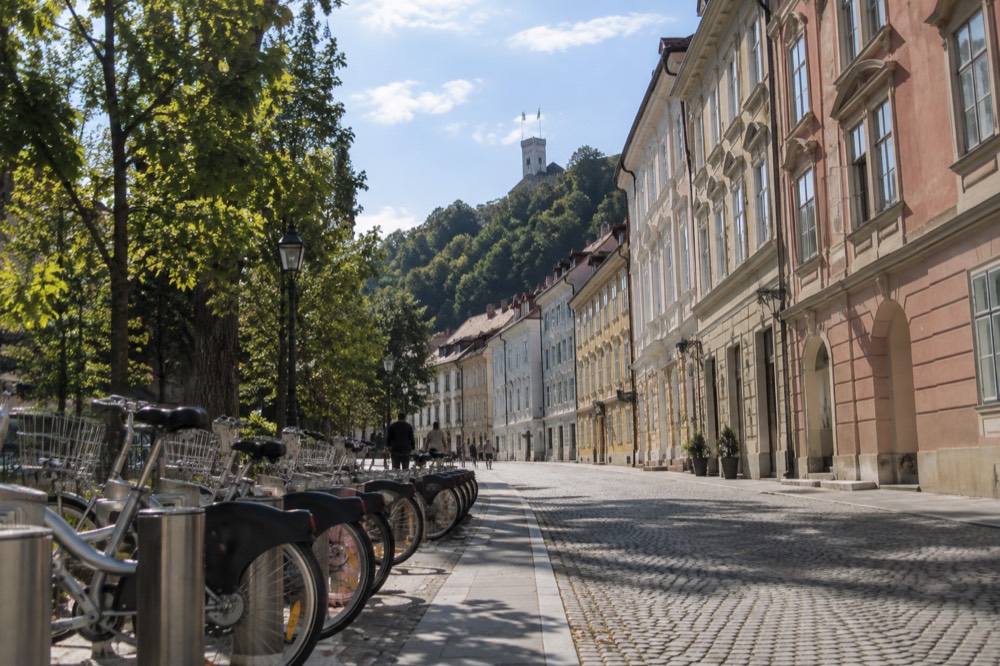
Yes, and cycling is arguably the fastest way to cover ground beyond the centre: Ljubljana is flat, the bike-lane network is extensive, and the BicikeLJ share system has stations across the city, with four hours of BicikeLJ use included in the Ljubljana Card. The current BicikeLJ price structure is not published in a form this site could verify, so check the operator's own page for the tariff before relying on it.
BicikeLJ stations sit at sensible intervals through the centre and out along the main axes, and the system is designed for short hops rather than day-long hire. The tourist board's card bundles four hours of it, which for most visitors means hopping between the old town, Tivoli Park and Trnovo without ever waiting for a bus. Register, take a bike, return it to any station. That is the whole system. The wider set of guides lives on Ljubljana Travel Guide.
If you would rather have a guide and a route, the city's bike tours are a genuine alternative to self-guided riding. The Street Art and Culture Bike Tour runs three hours from 39 USD and takes in the murals and culture of the districts a walker often misses, while the Experience Ljubljana Bike Tour covers the city over three to four hours from 34 USD. Both are listed on the operator's live listing with current ratings and free-cancellation terms, and the Ljubljana bike tour guide compares them in detail.
Practical notes for riding here: the centre is shared space, so pedestrians have priority and cycling is slow and courteous through the old streets. Outside the core, the lanes along the Ljubljanica towards Trnovo and out to Tivoli are the pleasant routes. Helmets are not universally worn by locals on city rides, but the traffic style is calm, and the flatness means you rarely build speed anyway.
How Do You Get from Ljubljana Airport to the City Centre?
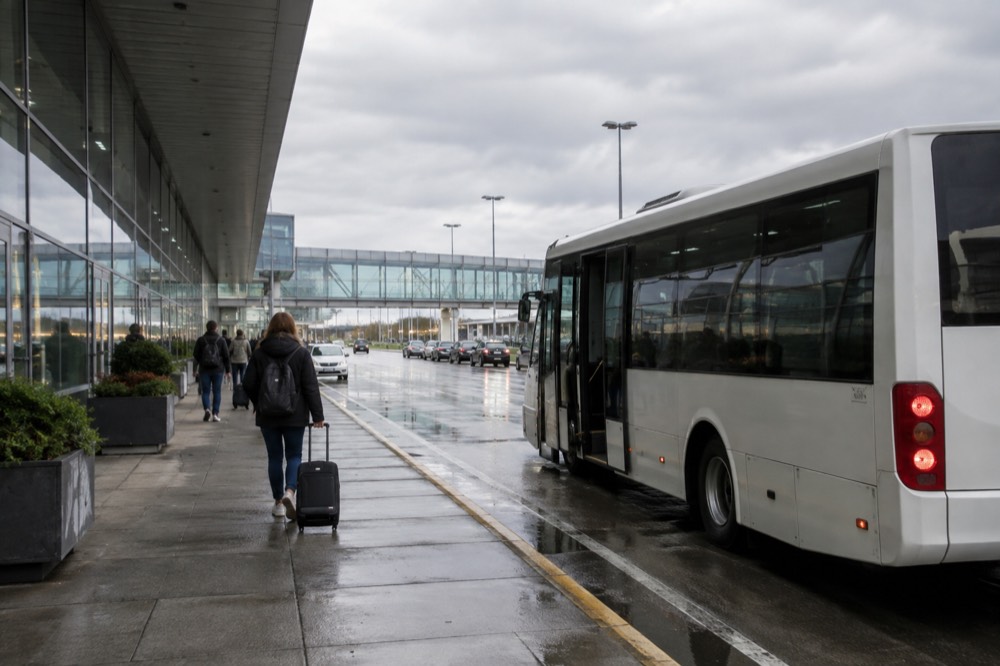
Ljubljana Airport, LJU, sits about 26 km north of the city, and the practical options are the airport bus, a pre-booked transfer or a taxi, because there is no rail link from the airport into town. The airport bus exists and runs between the airport and the central bus station, but the operator's site blocks automated reading, so this guide gives no timetable or fare figures: check the times on the airport's own site or at the bus station before you land.
That honesty gap is deliberate. The airport's website returns errors to automated access, and no primary source publishes a stable fare or frequency this site could verify, so rather than print a plausible number, this guide states the structure: bus exists, transfer companies exist, taxis exist, and the journey is roughly 26 km on fast road. The Ljubljana airport to city centre guide and the taxi and transfers guide cover the options, including how transfers compare for a 2 a.m. landing.
One structural point saves confusion at the bus station: intercity coaches and the airport shuttle use the same station complex at the edge of the centre, a flat ten-minute walk from Prešeren Square. If you are arriving by air and leaving by coach to Bled or the coast on the same day, you can store luggage at the station and walk into town unencumbered; the luggage storage guide lists the options.
Do You Need a Car in Ljubljana?
No, and for the city itself a car is a liability: the centre is pedestrianised, parking sits at the edges, and the tourist tax of 3.13 EUR per person per night applies to your stay regardless of how you arrive. A car only earns its keep if you are chaining several rural day trips together, and even then the coach and tour network covers Lake Bled, Postojna and the coast without one.
The tourist tax, 2.50 EUR plus a 0.63 EUR promotion surcharge per person per night, is charged through your accommodation, with a half rate of 1.57 EUR for ages 7 to 18 and exemption for children under 7. It has nothing to do with transport, but it appears on every hotel bill and confuses visitors who were not expecting it, so it belongs in any honest money discussion. The Ljubljana prices guide puts it in context alongside food and sightseeing costs.
For the car question, the arithmetic is about day trips. Lake Bled is close enough that coaches, tours and even a taxi transfer compete on convenience; the Ljubljana to Lake Bled guide compares the methods, including the two-station rail detail that most advice gets wrong: Lesce-Bled station is 4 km from the lake, while Bled Jezero station is 1.5 km from the centre on a different line. No verified fare for either the coach or the train could be sourced, so this guide gives the journey structure and not a price.
| Day trip | Distance from Ljubljana | Without a car |
|---|---|---|
| Lake Bled | Under an hour by road | Coach, train via Lesce-Bled or Bled Jezero, guided tour |
| Postojna Cave | About 1 hour by road | Coach or guided tour from the city |
| Piran and the coast | About 1.5 hours by road | Coach or coastal day tour |
| Zagreb | About 2.5 hours by road | Direct coach, or train via the hub |
| Škocjan Caves | About 1.5 hours by road | Guided tour, or coach with a connection |
Slovenia is in the European Union, the eurozone and the Schengen area, so if you do drive out to Italy, Austria, Hungary or Croatia, there are no routine border checks and no currency to change. Croatia joined Schengen and the euro on 1 January 2023, so even the Zagreb run is an internal journey. The car rental guide covers licences and the practicalities, and no nightly hotel rate or car-hire rate is quoted anywhere on this site because those figures are date-specific.
What Are the Best Day Trips from Ljubljana Without a Car?
Guided day tours are the strongest car-free option, because Ljubljana is a two-night city and the big sights, Postojna Cave, Lake Bled and the Soča Valley, sit 45 minutes to two hours away on roads where a coach beats a rental for a single visit.
The six-hour Postojna Cave and Predjama Castle tour from the city includes both entry tickets, rates 4.8 from 2,802 reviews and starts from 132 USD, and the caves hold about 10 C year round, which makes them the reliable answer in any weather.
That temperature point matters for planning. Postojna Cave holds roughly 10 C whatever the month, so the same tour works in a July heatwave and a November fog, and the visitor route of 3.7 km is travelled partly by the cave train, with tours of about an hour and 30 minutes. Predjama Castle, the cliff castle 9 km away, is open year-round and costs 24.00 EUR for an adult if you visit independently. The Postojna Cave guide and the Predjama Castle guide cover both in depth, including why the combined ticket price is deliberately not quoted here.
The Bled alternative runs six hours from 86 USD, rates 4.7 from 1,641 reviews, and pairs the lake with Bled Castle, whose adult entry is 19.00 EUR if you go independently. Bled carries more search demand than the entire city of Ljubljana, which tells you how the day-trip economy here is weighted. The Lake Bled guide covers the pletna boats, the island and the castle, and the Lake Bled weather guide helps you pick the day, because Vintgar Gorge closes for winter, open only April to October with the exact closing date depending on conditions.
If you would rather stay in the city on a thin budget, the free GuruWalk walks invert the usual pricing: they cost nothing up front and you pay what you think the walk was worth. The Ljubljana Unveiled walk, a two-hour small-group tour from Roman roots to the Dragon Bridge, rates 4.91 from 1,496 reviews on GuruWalk, and it is a genuinely good orientation on day one, before you have worked out which end of the centre is which. The free walking tour guide compares all eight.
Common Questions About Getting Around Ljubljana
Can you pay cash on Ljubljana buses?
No. LPP city buses do not accept cash. You pay 1.50 EUR for a zone 1 single, valid 90 minutes including transfers, either with an Urbana card, which costs 2.00 EUR to buy and is topped up at machines, kiosks, post offices or the Passenger Centre, or by tapping a contactless Visa, Mastercard or mobile wallet at the reader on board.
Do you need a car in Ljubljana?
No. The historic centre is a pedestrian zone of roughly 20 hectares, closed to general motor traffic, and everything within the core is walkable. A car only helps if you are chaining several rural day trips together, and even then coaches and guided tours cover Lake Bled, Postojna and the coast from the city.
How much is the funicular to Ljubljana Castle?
The funicular costs 3.30 EUR single or 6.00 EUR return for an adult, 2.30 EUR single for a child aged 7 to 18. A combined castle ticket including the funicular both ways is 19.00 EUR. It runs 09:00 to 19:00 from January to April and October to December, and 09:00 to 22:00 from May to September, and the castle is open 365 days a year.
Is Ljubljana easy to cycle around?
Yes. The city is flat, the bike-lane network is extensive, and the BicikeLJ share system has stations across the centre, with four hours of use included in the Ljubljana Card. The current BicikeLJ tariff is not published in a form this site could verify, so check the operator's page before relying on a price.
How far is Ljubljana Airport from the city centre?
About 26 km. There is no rail link from the airport, so the options are the airport bus to the central bus station, a pre-booked transfer or a taxi. The airport's own site blocks automated reading, so check timetables there or at the bus station rather than relying on a third-party figure.
Does the Ljubljana Card cover transport?
Yes. The card, 41.00 EUR for 24 hours, 49.00 EUR for 48 hours and 54.00 EUR for 72 hours for adults, includes LPP city buses, the castle funicular, the Ljubljanica river cruise, a guided walking tour and four hours of BicikeLJ bike share, plus one entry each to more than 30 museums and galleries.