Ljubljana in Winter: What to Expect, What to Do, and What to Book
Ljubljana in winter is a fog-prone, low-cost, crowd-free city with a specific quirk: the mountains above it get far more sunshine than the streets below. Here is how to plan around that.
Short answer
Ljubljana in winter is cold, often foggy and beautifully quiet, with December averaging just 56 hours of sunshine at street level while the peaks above sit in sun. Daytime highs run 3.4 C in January, the Christmas market fills December, and caves, castles and Alpine viewpoints are the tours that work best.
What Is Winter Actually Like in Ljubljana?
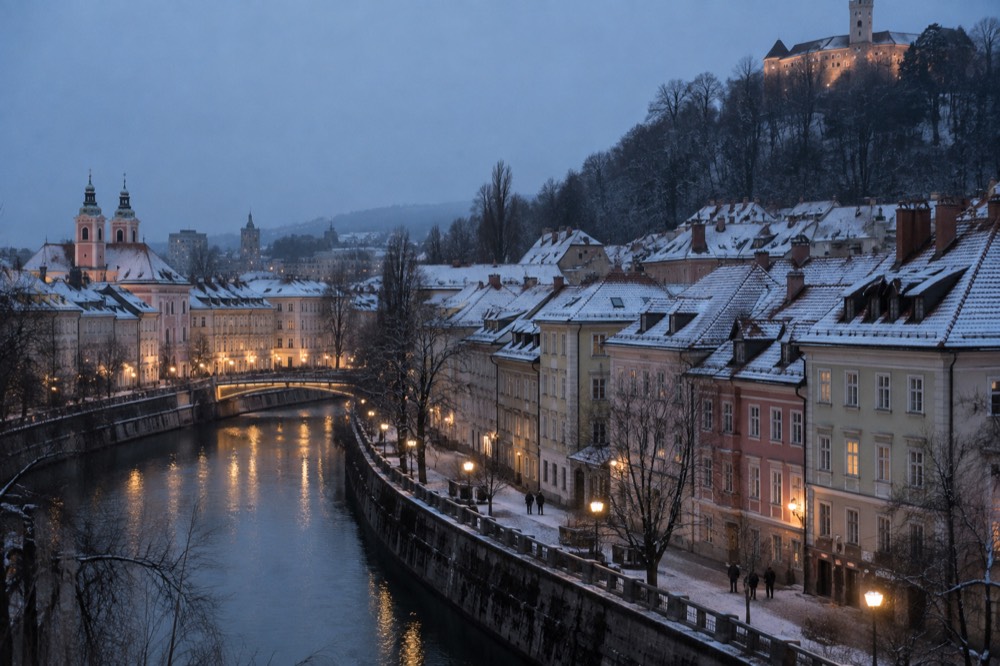
Ljubljana in winter is a basin city under a lid. Cold air pools on the floor of the basin, fog and low cloud form beneath it, and the result is a capital that averages just 56 hours of sunshine across the whole of December, under two hours a day, against 120 hours on Kredarica at 2514 m in the same month. Daytime highs sit around 3.4 C in January and 3.8 C in December, with nights below freezing, so the city is genuinely cold rather than merely chilly.
The numbers come from ARSO, Slovenia's environment agency, whose 1981-2010 climate normals for the Ljubljana Bežigrad station record the city's January mean at 0.3 C and December's at 1.2 C, with mean daily minima of -2.5 C and -1.1 C. Snow is part of the picture but not the dominant one: the station records about 50 days a year with snow cover at 07:00, and the deepest recorded cover is 89 cm in January. What dominates is cloud. Ljubljana averages 37 clear days a year against 130 overcast, and October and November each average a single clear day, so the run into winter is grey long before it is white.
The practical reading of all this is simple. Winter Ljubljana rewards two kinds of planning: indoor and underground, and going up. The rainy day guide to Ljubljana covers the first instinct in depth, but winter is not rain, it is inversion, and inversion has its own logic.
Why the Mountains Are Sunnier Than the City in Winter
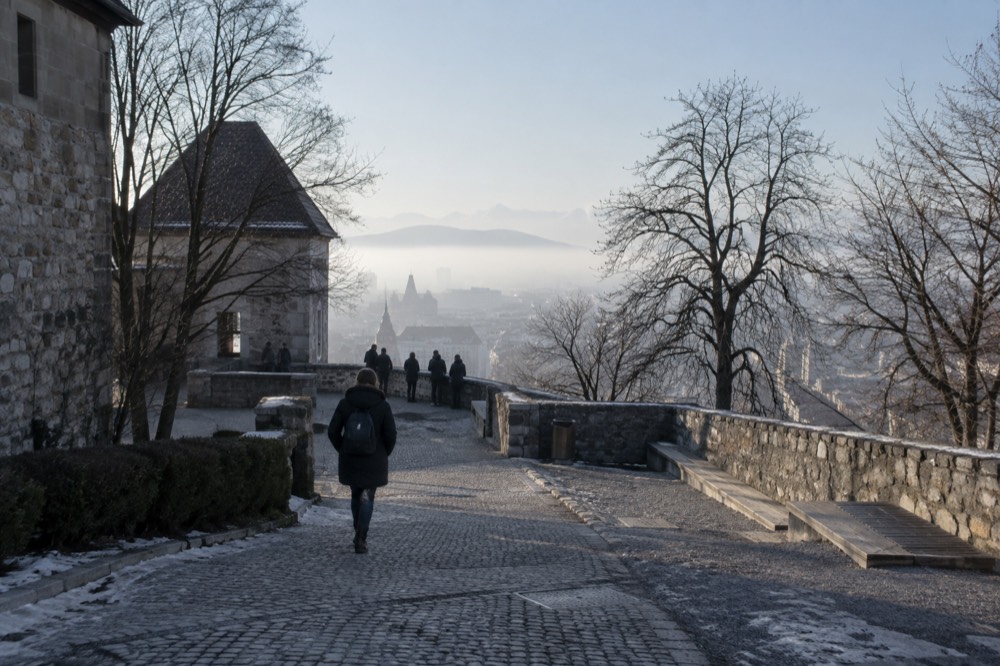
Ljubljana sits in a basin at 299 m, and in the colder half of the year a temperature inversion caps it: cold air is trapped under warmer air above, fog and low cloud form inside the trap, and the hills a few hundred metres up sit in clear sunshine. ARSO's own station data shows the consequence, with Kredarica recording 120 December sunshine hours against the city's 56, and the city losing every winter month on sunshine while winning April to September comfortably.
This is the single most useful thing to understand about a winter visit, and almost no guide mentions it. The published normals, from ARSO's Ljubljana climate table and the matching Kredarica table, show the two sunshine lines crossing: the city records 246 hours in June against the mountain's 169, then the order flips, and by December the mountain has more than double the city's sunshine. The honest caveat, which ARSO's own monthly means make clear, is that the mountains are not warmer on average. Kredarica's January mean is -7.1 C against Ljubljana's +0.3 C. The inversion reverses temperature on individual days, not in the monthly mean. What the mountains reliably win in winter is sun, cloud and visibility.
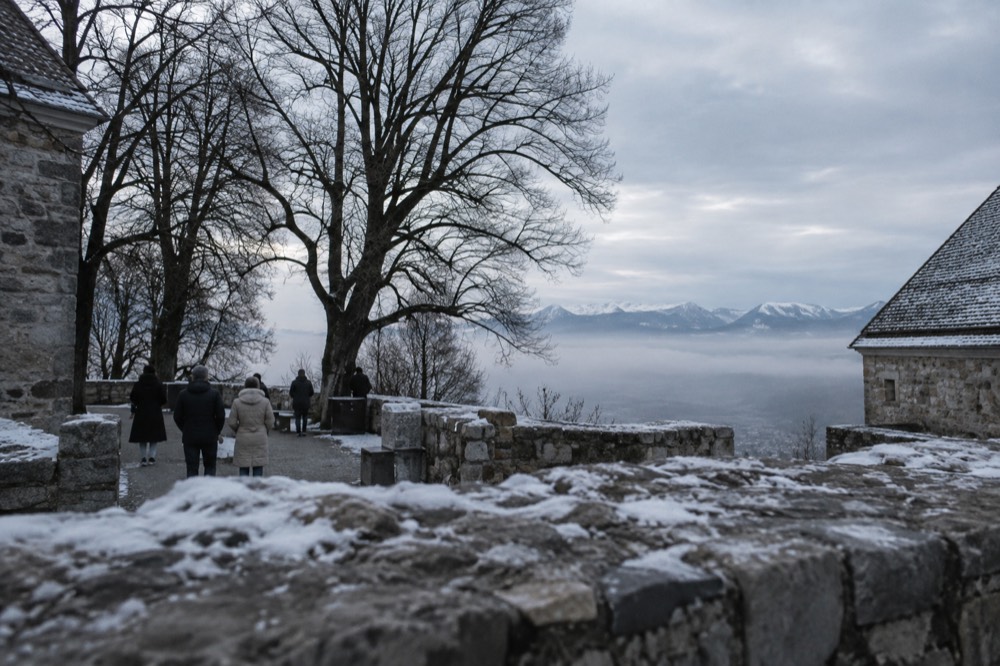
What that means for a visitor is a decision rule. If the city is grey and the forecast looks hopeless, the correct move is up: the castle funicular for a quick check, Šmarna gora for a half-day hike above the fog, or a full trip into the Julian Alps. The best time to visit Ljubljana page covers the whole year, but winter is the season where the up-versus-down choice matters most.
| Month | Ljubljana sunshine (h) | Kredarica sunshine (h) | Ljubljana mean temp (C) |
|---|---|---|---|
| October | 120 | 161 | 11.2 |
| November | 66 | 120 | 5.6 |
| December | 56 | 120 | 1.2 |
| January | 71 | 139 | 0.3 |
| February | 114 | 154 | 1.9 |
Figures are ARSO 1981-2010 climate normals for the Ljubljana Bežigrad and Kredarica stations. The pattern holds every winter month: the high station out-sunshines the city, sometimes by more than double. More of these guides are collected on Ljubljana Travel Guide.
What to Do in Ljubljana in Winter When the Fog Rolls In
The strongest winter answers are the ones the weather cannot touch: Postojna Cave holds about 10 C year round, Škocjan about 12 C, and both run tours every day including in bad weather, which is why cave trips are the reliable winter excursion. In the city itself, the museums, the castle's indoor exhibitions and the riverside cafés carry the grey days, and the free GuruWalk tours run all year, with the Old Town walk from Romans to dragons rated 4.91 across 1,496 reviews.
Caves are the headline. Postojna's official information states the cave holds 10 C whatever the month, and the visitor route runs 3.7 km, partly on the cave train, over about an hour and a half. That constant temperature is the reason this site's own Postojna Cave guide recommends it for both heatwaves and cold snaps without hedging. Škocjan, the UNESCO-listed alternative, runs about 2 km with roughly 400 stairs and tours of two and a half to three hours, a walk rather than a train ride, and its Predjama Castle neighbour is open year-round at 24.00 EUR for adults.
The combined cave-and-castle day trip from Ljubljana is the winter workhorse: six hours, rated 4.8 from 2,802 reviews, from $132, covering both sites with transport from the city. Check availability if that combination fits, and see the Cave and Castle day tour page for the full breakdown.
Back in the city, the indoor roster is deeper than most visitors expect. The National Gallery (10 EUR permanent collection) and the Museum of Modern Art (7 EUR) both close on Mondays, as do the City Museum, the Slovenian Ethnographic Museum and the Plečnik House, and the latter is guided-entry only with tours on the hour, a booking constraint worth knowing before a foggy Tuesday. The first Sunday of every month brings free admission at the national institutions, confirmed on four separate official museum sites, which lands neatly in a winter itinerary. The Plečnik's Ljubljana architecture trail also works in poor weather, since most of it is visible from the street.
Does It Snow in Ljubljana, and Does the City Cope?
Yes, it snows, and the city is built for it. ARSO's normals record about 50 days a year with morning snow cover at the Ljubljana Bežigrad station, concentrated in January (15 days) and February (14), with the deepest recorded cover at 89 cm in January, so snow is routine rather than disruptive. The pedestrianised centre, roughly 20 hectares closed to general traffic, is compact enough that snow rarely stops a walking day, and the castle and its funicular stay open 365 days a year.
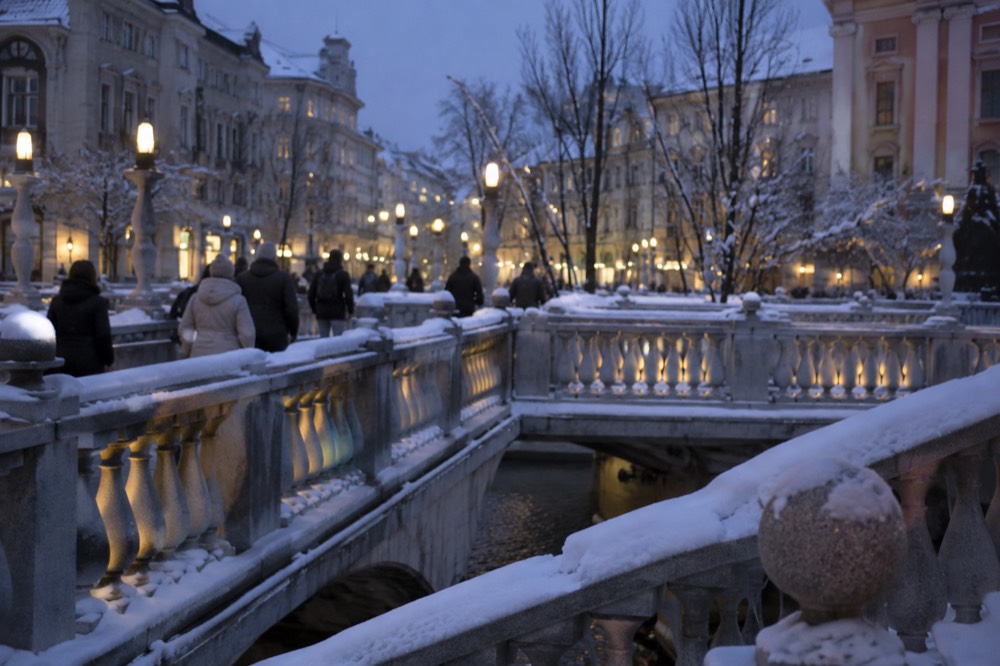
Snow changes the city's character more than its logistics. The car-free centre, expanded progressively since 2007 per the city's own mobility pages, means the Old Town remains walkable when the white stuff arrives, and Tromostovje and Prešeren Square photograph better under snow than in any other condition. The castle's official price list confirms it opens every day of the year, with a funicular running 09:00-19:00 in the January-April and October-December periods, and the combined castle ticket with funicular at 19.00 EUR for adults. Only on 31 December does everything close early, at 17:00, and on 1 January it opens late, from 10:00.
What snow does complicate is the day-trip layer. Vintgar Gorge closes for winter entirely; the operator's own page states it is open to visitors between April and October, with the exact closing date depending on conditions each year. Alpine roads stay maintained but passes like Vršič are seasonal, and the Ljubljana in December guide covers the month where snow, fog and the Christmas market all overlap.
| Winter question | The sourced answer |
|---|---|
| Days with morning snow cover, per year | About 50 (ARSO 1981-2010) |
| Snowiest months | January 15 days, February 14 days, December 11 days |
| Deepest recorded snow cover | 89 cm, in January |
| January mean temperature | 0.3 C, mean daily high 3.4 C |
| Record low | -20.3 C, in January |
| Castle opening | 365 days a year, funicular 09:00-19:00 in winter months |
The Christmas Market and the December Draw
Ljubljana's Christmas market turns the Old Town into a fenced, lit, food-and-mulled-wine walk from late November through the New Year, and it is the one period when winter Ljubljana is busy rather than quiet. The market sits in the pedestrianised centre among Tromostovje, Prešeren Square and the riverside stalls, and with December averaging just 2 clear days, the lights do the work the sun does elsewhere.
The market's draw is precisely the inversion problem turned into a product. A city that gets 56 sunshine hours in December leans hard into artificial light, and the result is one of central Europe's more atmospheric Christmas settings, with the Ljubljanica reflecting the stalls. The Ljubljana Christmas market guide covers stalls, food and timing in detail, so it is not repeated here, but two winter-specific points belong on this page.
First, the free walking tours keep running through December, and they are the cheapest way to give the grey daylight hours structure. The Ljubljana Unveiled walk on GuruWalk, a tips-based tour from Roman roots to the Dragon Bridge, runs about two hours and carries a 4.91 rating from 1,496 reviews. See this free tour on GuruWalk for times, and pair it with the free walking tour overview for the full list of eight free walks.
Second, December is the month to book ahead. The castle's combined ticket, the funicular and the market evenings all get busier, and the [Ljubljana Card](/guides/ljubljana-card/) at 41.00 EUR for 24 hours covers the funicular, the river cruise, city buses and 30-plus museums, which in December's short days is a dense itinerary in one pass.
Which Day Trips Work in Winter, and Which Do Not?
The winter-safe day trips are Postojna Cave and Predjama Castle, Škocjan Caves, Lake Bled and the lower Alpine valleys, all of which run year-round; Vintgar Gorge does not, closing from the end of the season in autumn until April, and high routes like Vršič pass are seasonal. Lake Bled is the second-strongest winter draw after the caves, with Bled Castle open at 19.00 EUR and the lake shore walkable in any weather, and guided Bled tours from Ljubljana run through winter.
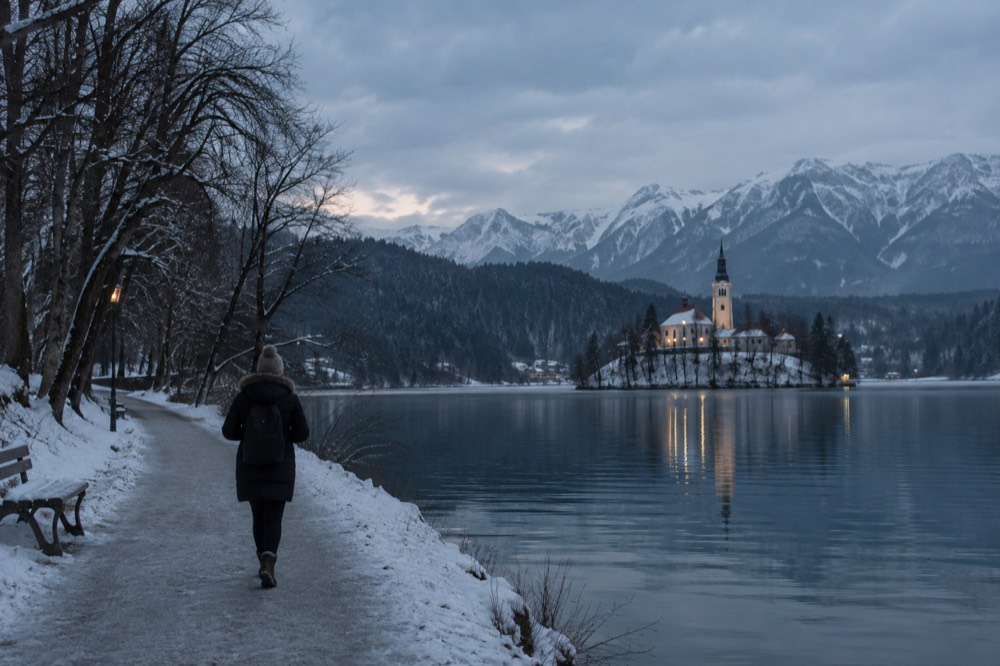
Bled in winter is a different product from Bled in July, and often a better one: mist on the water, snow on the castle rock, and none of the crowds. The six-hour Lake Bled and Bled Castle trip, rated 4.7 from 1,641 reviews and from $86, is the structured version, and the Ljubljana to Lake Bled page covers independent travel for the days you would rather go alone. One seasonal note: the pletna boats to the island and the Bled Boat Line scale back outside the main season, so check the operator's listing before promising the island landing on a January visit.
The caves are the other winter constant. Postojna runs every day, including holidays and in bad weather, per the operator's official ticket page, with adult entry at 34.90 EUR and Predjama at 24.00 EUR. The combined-ticket question is deliberately left open here: two candidate figures circulate and neither is confirmed on the official page, so the Postojna Cave guide gives the separate prices only.
| Day trip | Winter status | Why |
|---|---|---|
| Postojna Cave + Predjama | Runs all winter | Cave holds 10 C; open daily including holidays |
| Škocjan Caves | Runs all winter | 12 C inside; 2h30-3h guided walk, about 400 stairs |
| Lake Bled | Runs all winter | Castle open year-round; boat services reduced |
| Vintgar Gorge | Closed | Open April to October; closing date depends on conditions |
| Vršič pass | Closed seasonally | High Alpine road; see the Vršič pass guide |
| Piran and the coast | Runs all winter | About 1.5 hours' drive; quieter but open |
What to Pack and What It Costs in Winter
Pack for 0 C streets and 10 C caves: real winter layers, a hat and gloves for the inversion mornings, and a warm layer you can shed before descending into Postojna, because the cave holds about 10 C year round while the city above can be at -5 C. Costs run lower than summer almost everywhere, with the castle's combined ticket at 19.00 EUR and a single city bus ride at 1.50 EUR, contactless only.
The transport detail that matters most in winter, when you will use buses more: LPP city buses take contactless bank cards and phones on board, but not cash, and a single zone-1 ride with transfers inside 90 minutes is 1.50 EUR. The Urbana card itself costs 2.00 EUR to buy. The getting around Ljubljana guide has the full picture, including the airport connection, which is about 26 km from the city. Tourist tax adds 3.13 EUR per person per night, so a winter city break works out noticeably cheaper than the same trip in July.
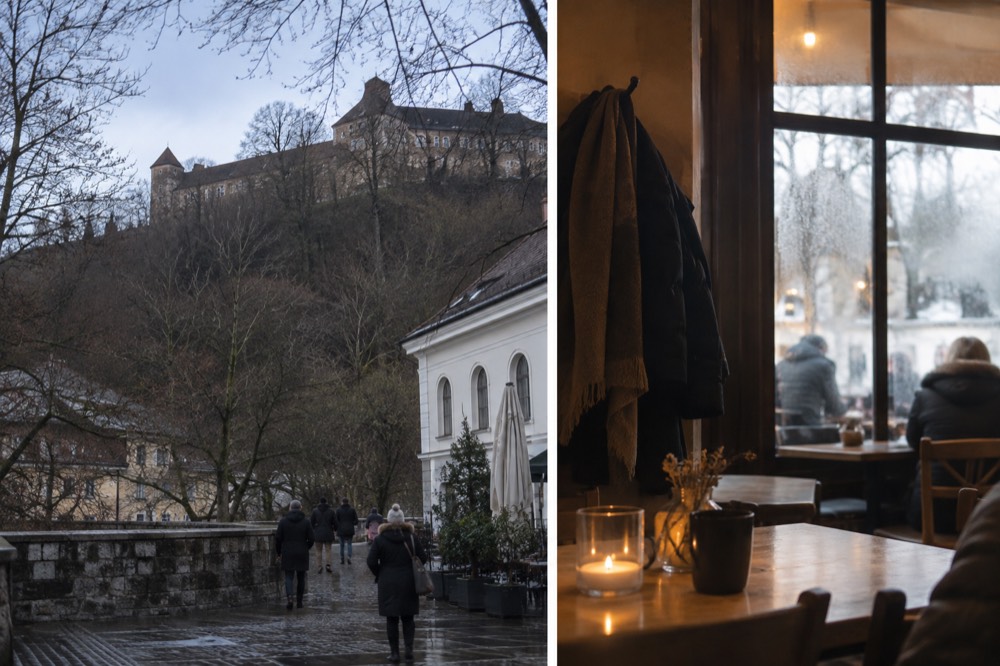
Eating is winter's quiet advantage. Hearty Slovenian staples, štrukelj above all, are cold-weather food by design, and the Slovenian food in Ljubljana guide maps where to eat them. The Central Market's outdoor stalls run roughly 06:00-16:00 in winter with the covered halls on weekday hours, and the Friday Open Kitchen street-food event runs roughly March to November, so it is absent from a deep-winter visit, a scheduling fact many visitors learn the wrong way.
| Winter cost item | Figure |
|---|---|
| Castle ticket incl. funicular, adult | 19.00 EUR |
| Funicular return only, adult | 6.00 EUR |
| City bus, single, 90 minutes | 1.50 EUR, contactless only, no cash |
| Tourist tax per night | 3.13 EUR |
| Postojna Cave, adult | 34.90 EUR |
| Predjama Castle, adult | 24.00 EUR |
| Ljubljana Card, 24 hours | 41.00 EUR |
Is Winter a Good Time to Visit Ljubljana at All?
For most travellers, yes, with one condition: accept the grey and plan around it. Winter Ljubljana is cheaper, far quieter and in December genuinely festive, but it delivers 56 sunshine hours in December and single-digit clear days a month, so the visitors who love it are the ones who book a cave day, a Bled day and a museum afternoon rather than hoping for a pavement café week.
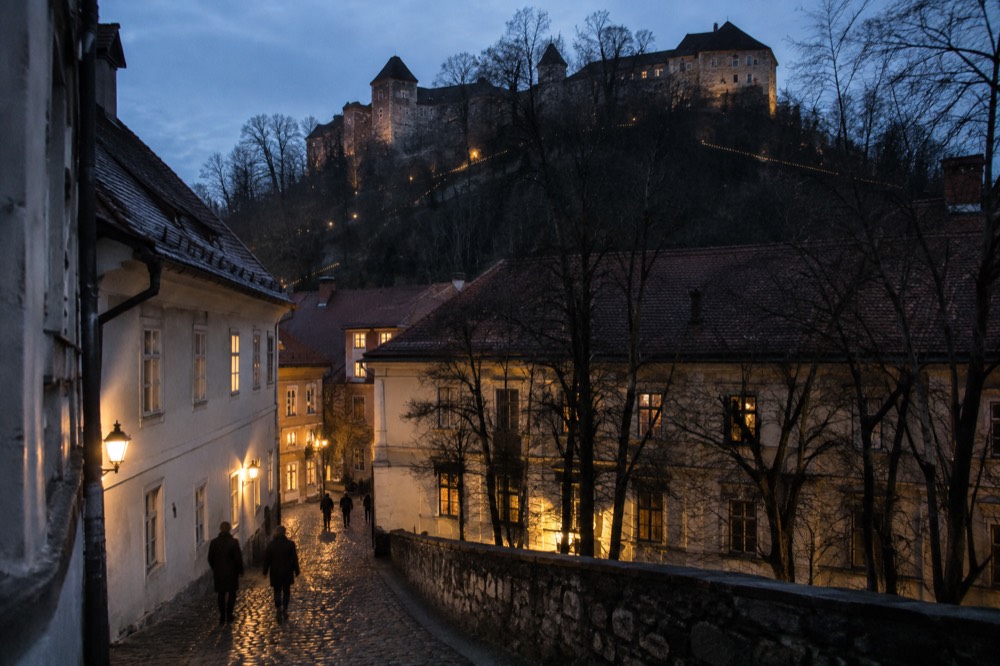
The honest framing is a trade. You give up reliable light and outdoor swimming weather, and you get the Christmas market if your dates align, empty museum rooms, low-season rates on the tours that matter, and the strange beauty of a fog lid with the castle hill floating above it. On the inversion days, which are frequent, Šmarna gora and the castle viewpoint give you the sun the streets are missing, and the Ljubljana city break structure slots the pieces together. The city's own visitor numbers show an average stay of about 2.04 nights, and in winter that short-break shape works in your favour, because the fog-tolerant indoor city is exactly a two-day city.
One last planning note that belongs to this site's own research rather than to any brochure: because Slovenia is in the European Union, the eurozone and the Schengen area, with internal land and sea border checks abolished on 21 December 2007 and air checks following on 30 March 2008, winter arrivals from Italy, Austria, Hungary or Croatia involve no border stop and no currency change, per the Slovenian government's own membership page. That makes a two-country winter itinerary, Ljubljana plus Trieste or Zagreb, logistically seamless, and the Ljubljana to Zagreb and Ljubljana to Trieste guides cover both rails.
Common Questions About Ljubljana in Winter
Is Ljubljana worth visiting in winter?
Yes, if you plan for the fog rather than against it. The city averages 56 sunshine hours in December, but the Christmas market, the year-round castle, the 10 C caves within an hour's drive and the free walking tours make a winter short break genuinely rewarding, and the crowds and prices of summer are gone.
How cold does Ljubljana get in winter?
January's mean temperature is 0.3 C, with an average daily high of 3.4 C and an average low of -2.5 C. The record low is -20.3 C, but that is exceptional; typical winter days sit a few degrees either side of freezing.
Does it snow in Ljubljana?
It does. ARSO's 1981-2010 normals record about 50 days a year with morning snow cover, concentrated in January and February, with the deepest recorded cover at 89 cm. Snow is routine and the pedestrianised centre stays walkable.
Why is Ljubljana so foggy in winter?
The city sits in a basin at 299 m. In the colder half of the year cold air is trapped under warmer air above, fog and low cloud form inside the lid, and the hills above sit in sunshine. In December the city records 56 sunshine hours against 120 at Kredarica, 2514 m up on Triglav.
Is the Ljubljana Christmas market worth it?
For a December visit, it is the city's main draw, turning the pedestrianised Old Town into a lit walk of food and mulled wine stalls. The castle and funicular open 365 days a year, though on 31 December they close at 17:00 and on 1 January they open from 10:00.
What day trips work from Ljubljana in winter?
Postojna Cave and Predjama Castle, Škocjan Caves, Lake Bled and Piran all run through winter. Vintgar Gorge does not: it is open April to October, with the closing date depending on conditions each year.