Is Slovenia Friendly to Tourists?
Is Slovenia friendly to tourists? An honest look at English, safety, costs, transport and the welcome visitors actually find in Slovenia and Ljubljana.
Is Slovenia Friendly to Tourists?
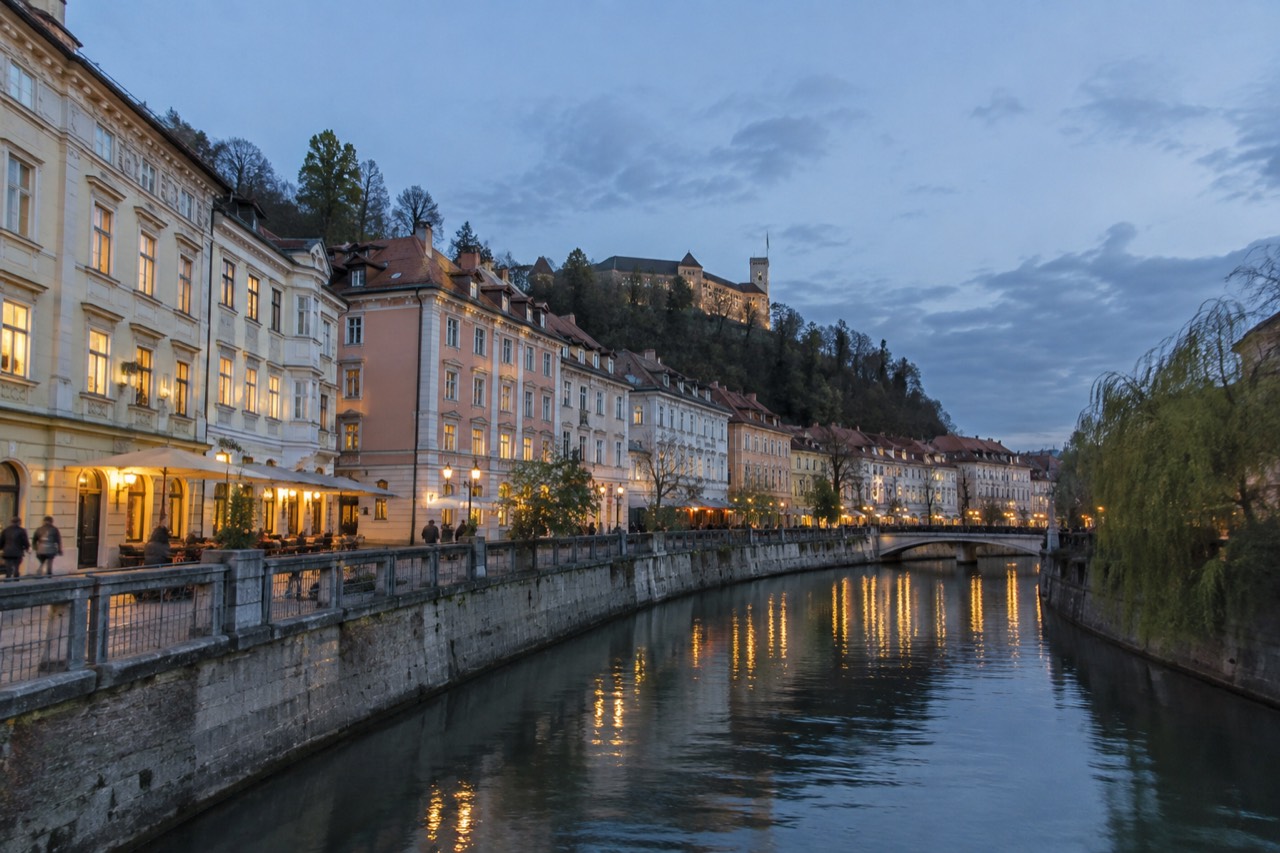
Yes. Slovenia is friendly to tourists by almost every practical measure: it is in the European Union, the eurozone and the Schengen area, English is widely spoken in cities and tourist areas, crime rates are low, and the country runs on the euro with contactless payment almost everywhere. Visitors arrive to a pedestrianised, walkable capital and leave describing locals as reserved but helpful, which is the honest version of the welcome.
Slovenia is a small country of about two million people that has spent two decades building a tourism industry aimed squarely at foreign visitors, and it shows in the details. The state is stable, the infrastructure is modern, and the tourism apparatus, from [airport transfers](https://tpk.ro/o5VLPVUy) to cave tours, is organised around people who do not speak Slovene. The Ljubljana Travel Guide desk covers the practical side of visiting constantly, and the same few reassurances come up again and again from first-time visitors.
That said, "friendly" means two different things: the institutional kind, which Slovenia has in abundance, and the effusive kind, which it mostly does not. Slovenes are not a nation of small talkers. A local will give you accurate directions, a genuine restaurant recommendation and a straight answer, but the warmth is delivered efficiently rather than effusively. Visitors from southern Europe sometimes read that reserve as coolness. Visitors from northern Europe read it as normal.
Do People in Slovenia Speak English?
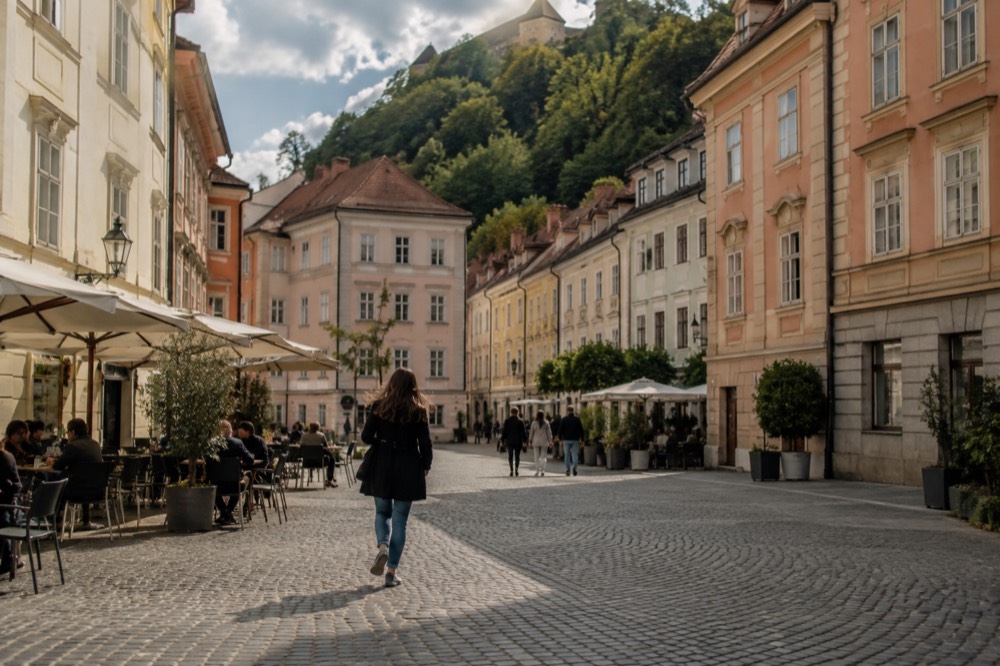
Yes, extensively. Slovenia consistently ranks among Europe's strongest countries for English proficiency, and in Ljubljana, Bled, the coast and anywhere tourism touches, you can expect restaurant staff, hotel receptionists, ticket sellers and guides to speak fluent or near-fluent English. Menus are usually bilingual, museum signage is usually translated, and the free walking tours in the capital are run in English by default.
The further you go from cities and sights, the more the picture thins out. In a village shop in the hills, or at a rural bus stop, English becomes less reliable and German sometimes fills the gap, especially among older Slovenes who grew up when Yugoslavia and Austria did the trading. Italian is common on the coast around Koper and Piran. But the practical answer for a tourist is that a Slovenia trip can be done entirely in English without a single moment of being stuck, and a handful of Slovene words, "hvala" for thank you, "prosim" for please, will get you a warmer version of the same service.
The language question is covered in more depth in our piece on whether Ljubljana is English friendly, and the short version there is the same as here: language is one of the least of Slovenia's barriers.
If you want the friendliness demonstrated rather than described, a guided day out is a good measure of it. The three options below are the ones visitors most often use to test the country's tourist infrastructure in a single day.
Is Slovenia Safe for Tourists?
Very. Slovenia records some of the lowest crime rates in the European Union, violent crime against visitors is rare, and the standard travel warnings issued for it are minimal. The realistic risks are petty: pickpocketing in crowded spots, bicycle theft, and road conditions in winter or in the mountains. Ljubljana's centre is pedestrianised, well lit and busy until late, which removes most of the situations where visitors feel unsafe in larger capitals.
The city centre being car-free matters more to the feeling of safety than any statistic. Roughly 20 hectares of the historic core are closed to general traffic, so the default experience of Ljubljana at night is walking, not crossing traffic. The fuller risk picture, including the handful of scams and annoyances that do exist, is in our guide to whether Ljubljana is safe, and for a broader rights and comfort question, our page on whether Slovenia is LGBT friendly covers the legal and social reality there.
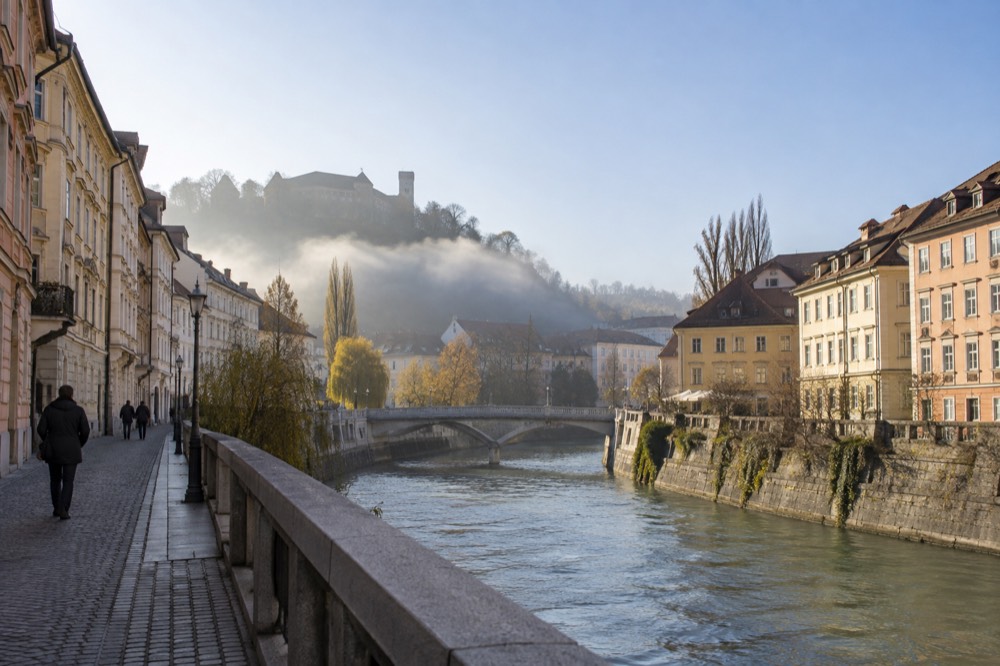
One safety-adjacent point that genuinely surprises visitors: Slovenia's nature is where the respect is needed, not its cities. The Soča is cold and fast even in high summer, the Julian Alps weather turns quickly, and fog settles thick over the Ljubljana basin. ARSO's records show the city averages 91.2 days with fog a year, and September and October tie at 12.4 fog days each, level with midwinter. A hiker who checks the forecast is fine; one who assumes a clear morning in the capital means a clear afternoon on Šmarna gora is the visitor the mountain rescue teams meet.
Is It Easy to Get Around and Pay for Things?
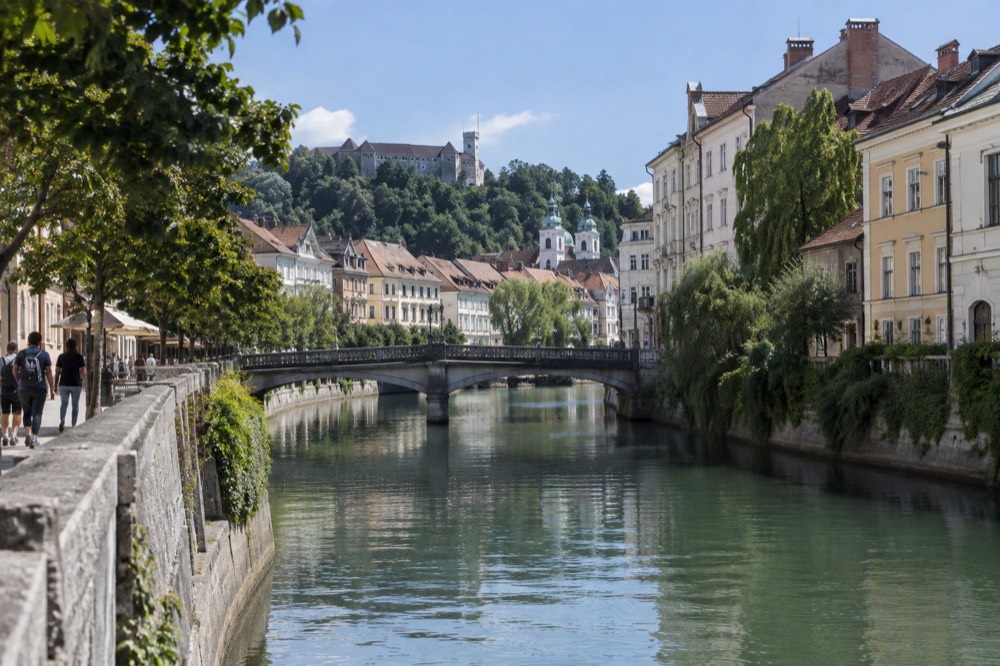
Yes, unusually so for a country this size. Slovenia is in the Schengen area and the eurozone, so there are no routine border checks arriving from Italy, Austria, Hungary or Croatia and no currency to change if you come from the eurozone. Public transport is cheap and reliable, contactless payment works nearly everywhere, and the whole country is small enough that the far corners are a few hours from the capital.
The border point is worth stating precisely because neighbouring countries are now inside the same system too: Croatia joined Schengen and the euro on 1 January 2023, so even the Ljubljana to Zagreb run is an internal trip. The Slovenian government's own EU membership page records that Slovenia abolished internal land and sea border checks on 21 December 2007, with air checks following on 30 March 2008, and that two-decade head start shows in how routine cross-border travel feels here.
| Practical item | What to expect |
|---|---|
| Currency | Euro, adopted 1 January 2007; contactless widely accepted |
| Border checks | None from Schengen neighbours, including Croatia since 2023 |
| City buses in Ljubljana | 1.50 EUR a ride, no cash on board, Urbana or contactless card |
| Tourist tax | 3.13 EUR per person per night in Ljubljana |
| Driving | Well-maintained motorways, a vignette is required, metric signage |
| Distances | Metric everywhere, kilometres and metres |
The no-cash bus rule is the single fact that most often catches visitors out, and it is the kind of unfriendliness that is purely informational: the system is easy once you know it, impenetrable if you do not. Our page on paying for public transport in Ljubljana covers the mechanics, and the broader getting around Ljubljana guide puts the buses, bikes and walking options side by side.
Thinking of testing the country's infrastructure with a day trip out of the basin?
How Do Tours and Guides Show the Welcome?
Through competence, mostly. Slovenia's guide industry is licensed, and the standard of guiding, in English, on history and nature, is high and consistent across both paid tours and free walks. The free walking tour scene in Ljubljana is unusually strong, with several GuruWalk options, and day trips to the caves, Lake Bled and the Alps run on time with small groups and informative commentary. This is a country where booking a tour is a low-risk decision.
The free walks deserve a specific mention because they are the purest test of tourist friendliness: a guide who only gets paid if the walk was good. Ljubljana Unveiled, a tips-based GuruWalk from Roman roots to the dragon bridge, runs about two hours and is rated 4.91 from 1,496 reviews, which is about as strong an endorsement as the format gets. The paid side holds the same standard: the Lake Bled day tour is rated 4.8 from 888 reviews, and the food and wine walks in the capital consistently score above 4.8.
The cave trips are the ones that best show how organised the country is for visitors it does not expect to speak Slovene. Postojna Cave holds about 10 degrees Celsius year round, which is why the operators tell you to bring a layer even in August, and the visit runs partly by the cave train along a 3.7 km route. The full-day version from Ljubljana pairs the cave with Predjama Castle, the cliff fortress built into the cave mouth, and takes the tickets, transport and timing off your plate entirely.
That tour, rated 4.8 from 2,802 reviews and running six hours from Ljubljana, is the one most first-time visitors use as their test of Slovenian tourism, and the reviews suggest the test is passed. Caves also happen to be the country's most reliable bad-weather answer, since they hold roughly the same temperature in any season.
What Are the Unfriendly Surprises?
Three, and none of them are about people. Ljubljana is grey for much of the winter: ARSO's 1981-2010 normals give the city just 56 hours of sunshine in December against 120 at Kredarica, high on Triglav, because the basin holds fog while the mountains sit in sun. Most state museums close on Mondays. And the shoulder season is wetter than visitors expect: September and October are the joint wettest months at 147 mm each, above July's 115 mm.
The weather is the one genuine mismatch between Slovenia's image and its reality. The country is marketed on Alpine lakes and long summers, and the summer half of the year delivers, with the city winning the sunshine contest from April to September. From October to March the lines cross and the basin collects cloud: 37 clear days a year against 130 overcast, with October and November averaging a single clear day each. The friendly version of this fact is that the mountains are sunnier than the capital in winter, so a visitor in a grey Ljubljana can ride up into sunshine on the same day. Our best time to visit Ljubljana guide works the whole year through.
The other surprises are small and cheap to learn. Museums closing on Monday is the classic one that reshapes a first itinerary, though the first-Sunday free entry softens it. Restaurant service can feel slow if you are used to fast turnarounds, because nobody is rushing you out. And the reserve of the locals means conversations start slower than a Mediterranean visitor expects, but a direct question almost always gets a direct, helpful answer.
Cost is the question visitors ask right after friendliness, and the honest answer is that Slovenia is mid-priced for Europe, cheaper than Italy and Austria next door, dearer than Croatia or Hungary. The detailed comparison, including what a beer and a restaurant meal actually cost, is in our page on whether Slovenia is very expensive, and the budget-side view of the capital is covered in our Ljubljana on a budget guide.
Whichever way you arrive, the three experiences below are the ones that consistently deliver the country's friendliest face: a cave day, a lake day and a free walk through the capital.
Common Questions About Visiting Slovenia
Is Slovenia Friendly To Tourists?
Yes. Slovenia is safe, English is widely spoken, it is in the EU, the eurozone and Schengen, and the tourism infrastructure is well organised. Locals are reserved rather than effusive, but helpful when asked.
Is Slovenia safe for solo travellers and families?
Yes. Crime rates are among the lowest in the EU, Ljubljana's centre is pedestrianised and busy, and the main risks are natural ones: cold rivers, mountain weather and winter driving.
Do I need to change money in Slovenia?
No, if you come from a eurozone country. Slovenia uses the euro and contactless payment works nearly everywhere. City buses in Ljubljana take no cash at all, only an Urbana card or a contactless bank card.
Are Slovenes welcoming to foreigners?
Welcoming but reserved. Slovenes are not a small-talk culture, but directions, recommendations and help are given readily and honestly. A few words of Slovene are appreciated.
Is Slovenia friendly in winter?
The people and the systems are the same year round, but the Ljubljana basin is grey: 56 hours of sunshine in December, and fog on 91.2 days a year. The mountains above the city are sunnier in winter, so going up is the standard local move.