Is Ljubljana Safe? What to Watch For
Ljubljana is one of the calmer capitals in Europe for visitors, but no city is risk-free. Here is what the record actually shows, and what to watch for.
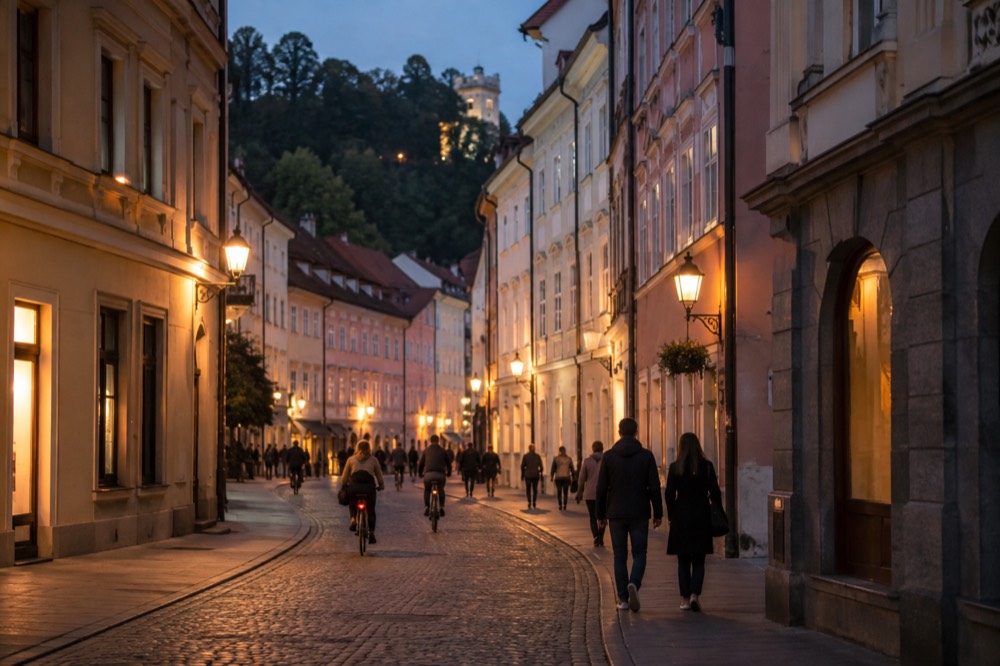
Short answer
Ljubljana is widely considered a safe capital by European standards: violent crime against visitors is rare, the centre is pedestrianised, and the main risks are petty theft in crowds, bicycle theft and the city's own weather. Slovenia sits inside the European Union, the eurozone and the Schengen area, so there are no border formalities arriving from Italy, Austria, Hungary or Croatia.
Ljubljana records 1,392,728 tourist arrivals a year against a resident population of 293,244, and the overwhelming majority of those visits end without incident. That is the honest starting point. The question a visitor actually needs answered is not whether the city is dangerous in some abstract sense, but which specific, small risks are worth two minutes of planning: where pickpockets work, how the transport system handles strangers, what the autumn fog does to a day trip, and what happens if something does go wrong.
This guide works through each of those in turn, using published figures and official sources rather than reassurance. The short version: Ljubljana is a low-crime, walkable, pedestrian-centred capital where the two things most likely to spoil a trip are a lifted wallet on a crowded bridge and a weather forecast nobody checked.
Is Ljubljana Safe for Tourists?
Yes, Ljubljana is safe for tourists by any reasonable European comparison. Violent crime against visitors is rare, the historic centre is a pedestrianised zone of roughly 20 hectares closed to general motor traffic, and the city's main sights sit within easy walking distance of one another. The risks that do exist are petty: opportunistic theft in crowds, unattended bags, and bicycle theft. Slovenia is a member of the European Union, uses the euro, and is inside the Schengen area, so a visitor arriving from Italy, Austria, Hungary or Croatia crosses no border checks and changes no money.
The pedestrianised centre does a lot of quiet safety work. With cars largely excluded from the core, the classic central-European hazard of trams, taxis and buses competing with pedestrians in a narrow street simply does not arise here. Cyclists are the ones to watch for: Ljubljana is a genuinely bike-friendly city and riders move quickly along the river embankments. Local habit is to stay aware near kerbs and cycle lanes, the same as in Amsterdam or Copenhagen.
Scales matter here. A capital of 293,244 residents, drawing just under 1.4 million arrivals a year, averages about 2.04 nights per visitor according to the national statistics office's own arrivals and overnight figures. This is a compact, two-night city break destination, not a sprawling metropolis. Visitors spend most of their time in a small, well-lit, heavily walked area between Prešeren Square and the castle hill, which is about the easiest safety geography a European capital can offer.
What Should You Actually Watch For?
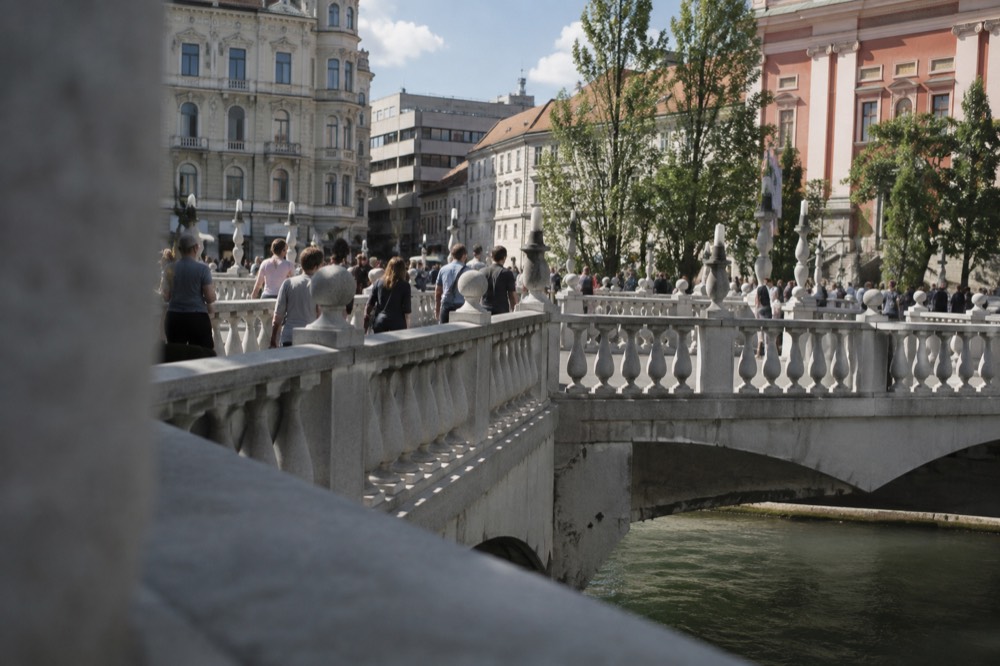
The realistic watch-list for Ljubljana is short: pickpocketing in dense crowds around the Triple Bridge and Prešeren Square, theft from unattended bags on the Ljubljanica banks and in busy cafés, bicycle theft, and taxi overcharging if you hail unofficially rather than booking. None of these are violent, and all of them are defeated by ordinary habits: zipped pockets, a bag across the body, and booked transport.
Crowds are the variable. On a quiet Tuesday in February the old town feels almost empty. On a Friday during the height of the season, when the Open Kitchen food market runs on Pogačarjev trg, the square and the bridges fill shoulder to shoulder, and that is precisely the environment where opportunistic theft happens anywhere in Europe. The market's own official description says it runs "every sunny Friday", roughly March to November, 10:00 to 21:00, and it is cancelled in bad weather, so the crowding is predictable and easy to plan around.
| Risk | Where it happens | Realistic level | The simple counter |
|---|---|---|---|
| Pickpocketing | Triple Bridge, Prešeren Square, crowded market days | Low, but the main one | Zipped pockets, bag in front on bridges |
| Bag theft | River banks, café terraces, bar areas | Low | Keep the bag in contact or in sight |
| Bicycle theft | Anywhere bikes are left loosely locked | Moderate for locals and renters | Use proper locks, ask the hire shop |
| Taxi overcharging | Unofficial hails at night | Low if you book by app or phone | Book, or agree the fare before setting off |
| Scams aimed at tourists | Very rare in Ljubljana | Minimal | No special precaution needed |
| Violent crime against visitors | Effectively not a feature | Minimal | Normal city awareness |
One point worth making plainly: the classic pickpocket hotspots in bigger capitals, crowded metro platforms and packed buses, barely exist here. The city buses are calm and short-hop, and the pedestrian centre removes the crush entirely outside peak event days. The risk concentrates into a handful of specific places at specific times, which is a much better problem to have.
If you are spending your first day getting oriented, a guided walk is the cheapest way to learn the geography before exploring alone. The free GuruWalk walk, Ljubljana Unveiled, covers the old town from Roman roots to the Dragon Bridge, runs about two hours, is rated 4.91 from 1,496 reviews, and works on a pay-what-you-think-it-was-worth basis. You can also compare it against the options in the Ljubljana free walking tour guide.
Is Ljubljana Safe at Night?
Yes, central Ljubljana is safe to walk at night. The core between Prešeren Square, the Ljubljanica banks and the Metelkova fringe stays busy and lit through the evening, and the pedestrianised streets that make the centre calm by day make it calm after dark too. The sensible habits are the same as in any European capital: stick to walked routes, book taxis by app rather than hailing, and keep your phone out of back pockets in bar areas.
The nightlife geography is compact. Most of it sits along the river, in the bars of the old town, and around Metelkova Mesto, the autonomous cultural centre in former army barracks, which the tourist board describes as most active in the evenings and busiest on Friday and Saturday. Entry to the Metelkova area is free and individual clubs set their own covers. It is a genuine night spot rather than a tourist trap, and the standard advice applies: go with the flow of people, and do not leave drinks unattended, which is a rule for everywhere, not a comment on Ljubljana.
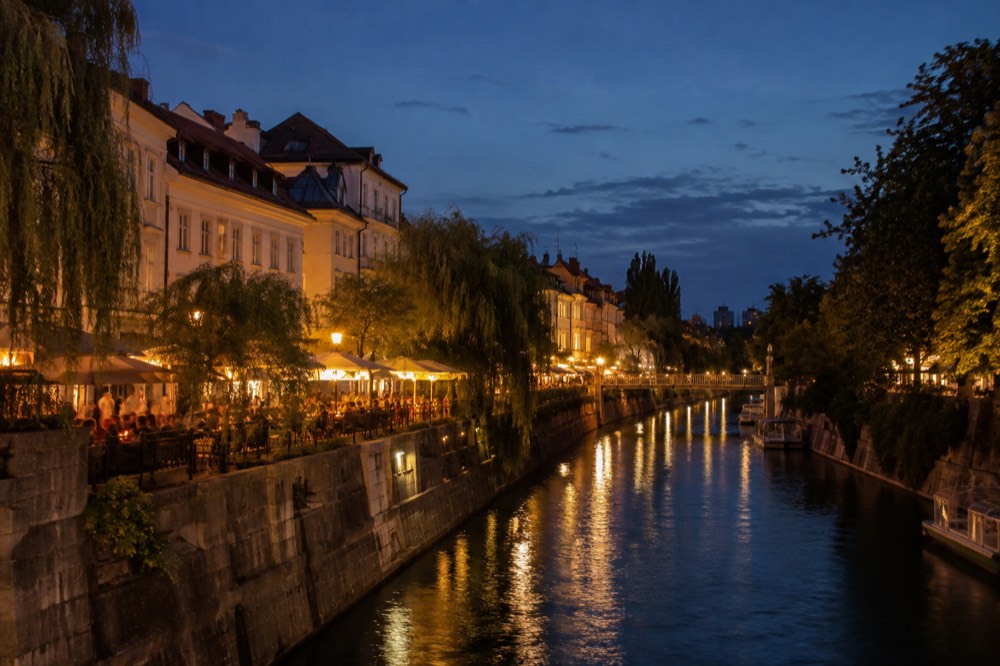
The pub crawl scene gives structure to the evening if you want it: the organised crawl runs five hours, is rated 4.5 from 198 reviews and moves between venues with a guide, which removes the "which street is this" problem entirely. For more on the city's after-dark character, see the Ljubljana nightlife guide.
For getting home, the practical note is that the city buses do not run all night, so late evenings end with a taxi or a walk. Booked taxis and ride apps are the norm; agreeing a fare before the journey starts is the single habit that eliminates the only realistic night-time complaint, an inflated fare. Details on drivers and airport transfers are in the Ljubljana taxi and transfers guide.
Is Public Transport in Ljubljana Safe?
Yes, public transport in Ljubljana is safe and unusually simple. The city buses run on a flat-zone system with a 1.50 EUR single fare covering 90 minutes including transfers, and the safety-relevant detail is payment, not crime: buses do not accept cash at all, so you need an Urbana card, a contactless bank card or a phone wallet before you board.
The payment rule is the one that catches visitors. LPP, the city operator, is explicit that cash is not accepted on board, while contactless Visa and Mastercard and mobile wallets are. An Urbana card costs 2.00 EUR to buy and can be topped up at the Passenger Centre on Slovenska 56, at Urbanomat machines, kiosks, tourist information centres and post offices. A visitor who boards with nothing but notes has a small, embarrassing problem, not a dangerous one, but it is entirely avoidable.
| Transport item | Figure | Safety relevance |
|---|---|---|
| Single bus ride, zone 1, 90 minutes with transfers | 1.50 EUR | Buy before boarding |
| Urbana card purchase | 2.00 EUR | Reusable across the stay |
| Cash accepted on buses | No | The one rule to know |
| Contactless bank card on board | Yes, Visa and Mastercard | Simplest option for visitors |
| Historic centre traffic | Pedestrianised, about 20 hectares | No traffic risk in the core |
The buses themselves are short-hop and rarely crowded outside rush hour, which keeps the pickpocket exposure minimal. For the full picture on cards, routes and the airport connection, see getting around Ljubljana and the Ljubljana airport to city centre guide. The airport sits about 26 km from the city, so the transfer is a standard half-hour-plus run rather than an inner-city negotiation.
Is Ljubljana Safe for Solo Travellers and Women?
Yes, and it has a reputation as one of the more comfortable central-European capitals for solo travel. The centre is compact, walkable and pedestrianised, streets stay populated in the evening, and the solo-specific risks reduce to the same petty-theft list as for everyone else. Solo visitors should simply apply ordinary habits: keep a phone charged, share a route home, and use booked taxis late at night.
Two structural things help. First, the city is small enough that getting genuinely lost is difficult: the castle hill is visible from most of the centre, and the river gives an unfailable north-south line. Second, English is widely used in the visitor economy, so asking for help is easy. The question of language comes up often enough that this site covers it separately in is Ljubljana English friendly.
For women travelling alone, the honest report is that Ljubljana's evening streets around the centre and the river feel and behave like a low-harassment environment by European standards, and the nightlife areas are policed like any capital's. The general question of visitor-friendliness, including attitudes toward LGBT travellers, is addressed in the site's is Slovenia friendly to tourists and is Slovenia LGBT friendly pieces, which carry the broader picture.
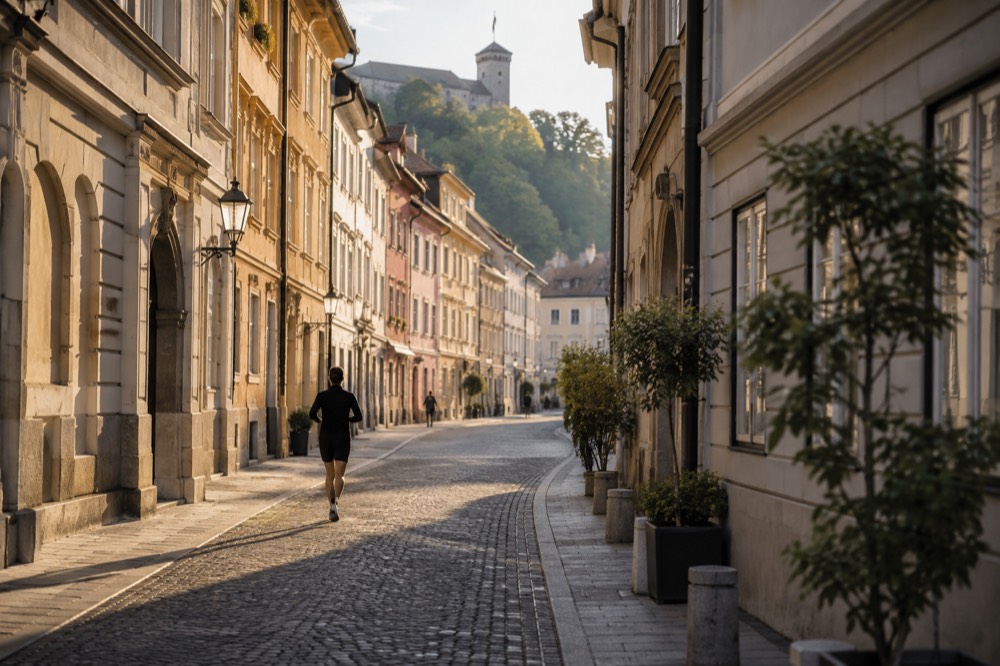
Are Day Trips from Ljubljana Safe?
Yes, day trips from Ljubljana are safe, and organised tours remove most of the residual risk by putting a professional driver on mountain and karst roads that reward local experience. The two things to watch are seasonal: Vintgar Gorge closes for winter between roughly the end of October and April, and alpine weather changes fast at any time of year. The caves, at a steady 10 C at Postojna and 12 C at Škocjan, are the reliable option in any weather.
The roads are the real consideration for independent drivers. The route into the Julian Alps, including the Vršič Pass, is a genuinely mountainous drive with hairpins and narrow sections, and the Soča Valley and Triglav National Park trips cover long distances, ten hours and more on the longest itineraries. A guided tour with a professional driver is not just a convenience here, it is a risk decision, and it is why this site's day-trip coverage leans toward organised options for the alpine routes. The Vršič Pass guide and the Soča Valley guide cover those drives in detail.
The Postojna Cave and Predjama Castle day trip is the classic first excursion: six hours door to door, rated 4.8 from 2,802 reviews, from $132, with tickets and transport handled. Postojna's cave holds a steady 10 C year round and the tour route runs 3.7 km partly by the cave train, so the only safety note is dressing warmly, because visitors arrive in summer clothes and are cold for ninety minutes. The operator's own pages confirm the cave is open every day, including holidays and in bad weather, which is exactly why it is the wet-day answer.
Lake Bled is the other big excursion, and it is a gentler one: the Lake Bled guide covers the lake itself, while the six-hour Bled and Castle tour, rated 4.7 from 1,641 reviews and from $86, is the standard organised option. The Ljubljana to Lake Bled guide covers the independent route, including the rail detail most sources get wrong: Bled Jezero station is 1.5 km from the lake, while the better-known Lesce-Bled station is 4 km away on a different line.
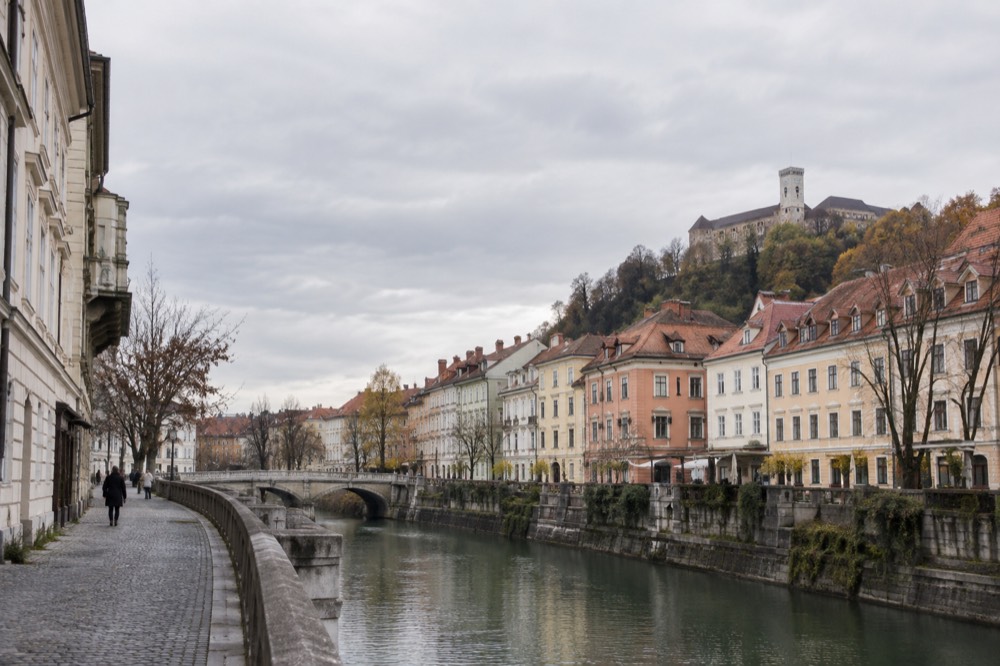
What Does the Weather Do to Your Plans?
The weather is the most underrated safety and planning factor in Ljubljana, and it is the one competitors underplay. ARSO's 1981-2010 normals give the city just 37 clear days a year against 130 overcast, and its foggiest months are September and October at 12.4 fog days each, level with December, not midwinter. September and October are also the joint wettest months at 147 mm each, above July's 115 mm.
The reason is the basin. Ljubljana sits on the floor of a basin at 299 m, and in the colder half of the year cold air is trapped under warmer air above, so the city fogs in while the hills a few hundred metres up sit in sunshine. The sunshine numbers make the point starkly: the city gets 56 hours of sunshine in the whole of December, under two hours a day, while Kredarica at 2,514 m on Triglav gets 120 hours over the same month. The lines cross through the year: the city wins April to September and loses October to March.
| Month | Sunshine, city (h) | Sunshine, Kredarica 2514 m (h) | Fog days | Rain (mm) |
|---|---|---|---|---|
| January | 71 | 139 | 11.3 | 69 |
| July | 293 | 203 | 3.7 | 115 |
| September | 183 | 160 | 12.4 | 147 |
| October | 120 | 161 | 12.4 | 147 |
| December | 56 | 120 | 12.6 | 107 |
All figures are ARSO normals; sunshine and rain from the 1981-2010 series, fog days from the 1971-2000 series, the only period for which ARSO publishes fog, and the two must not be mixed within a single figure.
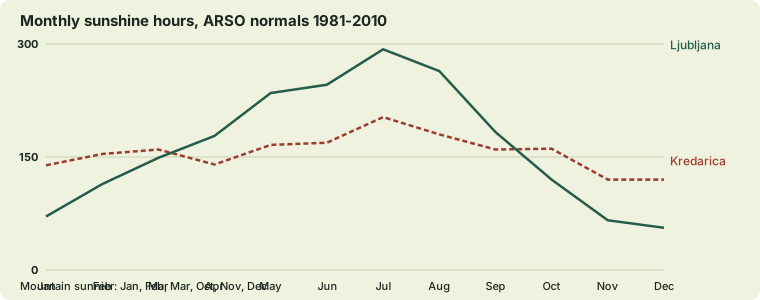
The practical translation for a safety-minded visitor: in the grey months, go up. The castle funicular, Šmarna gora, a Bled day trip or a Triglav tour all lift you out of the inversion, and the Ljubljana in winter guide and best time to visit Ljubljana build itineraries around exactly this. For rainy days inside the city, the rainy day in Ljubljana guide does what it says.
What Should You Know About Money, Tax and Scams?
Slovenia uses the euro, adopted on 1 January 2007, and there is no money-changing risk arriving from the eurozone. The tourist tax is 3.13 EUR per person per night, comprising 2.50 EUR of tax plus a 0.63 EUR promotion surcharge, with a half rate of 1.57 EUR for ages 7 to 18 and children under 7 exempt. Scam pressure in Ljubljana is minimal by European standards; the money risks are card skimming at unofficial machines and unbooked taxi fares, both avoided by ordinary caution.
The tax is worth knowing because it appears on your hotel bill rather than in the quoted rate, and it is charged per night per person. The official tourist board page on the tourist tax publishes the figures, and the Ljubljana prices guide and is Ljubljana expensive for tourists put it in the context of a full budget.
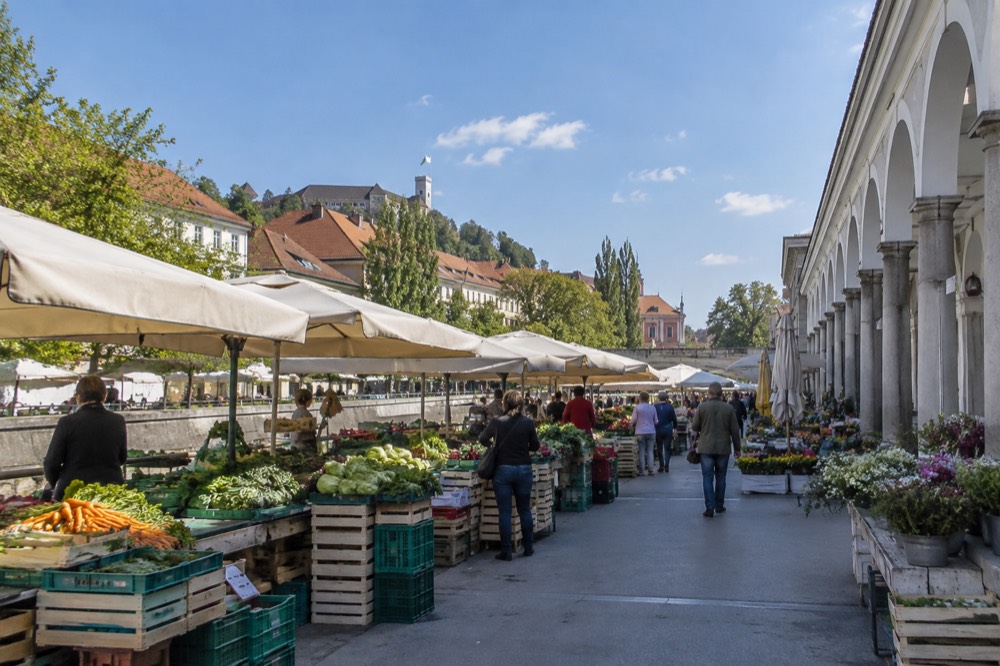
On the ground, the day-to-day money decisions are simple. The Central Market on Vodnikov and Pogačarjev trg runs roughly 06:00 to 18:00 in summer, 06:00 to 16:00 in winter, Monday to Saturday, and it is a normal working market rather than a tourist-price zone. Card payment is near-universal in the city. The one place to keep your wits is the same as everywhere: late-night taxis booked by app rather than hailed.
What If Something Goes Wrong?
If something goes wrong in Ljubljana, the systems are the standard European ones: Slovenia is an EU member state inside Schengen, so European Health Insurance Card arrangements apply to EU visitors, pharmacies are well distributed through the centre, and the tourist information centres on the edge of the old town are the first stop for language help. The realistic incident list is short: a lost wallet, a lost passport or a twisted ankle on the castle hill.
Prevention beats cure on the document question. A photocopy of the passport, stored separately from the original, turns a lost-passport day from a crisis into a consulate visit with evidence. The centre's tourist information points handle the local questions, from where a lost bag is likely to have been handed in to which pharmacy is open late. Keep a phone charged and a printed copy of your documents in the hotel safe, and almost any mishap becomes an errand rather than an emergency.
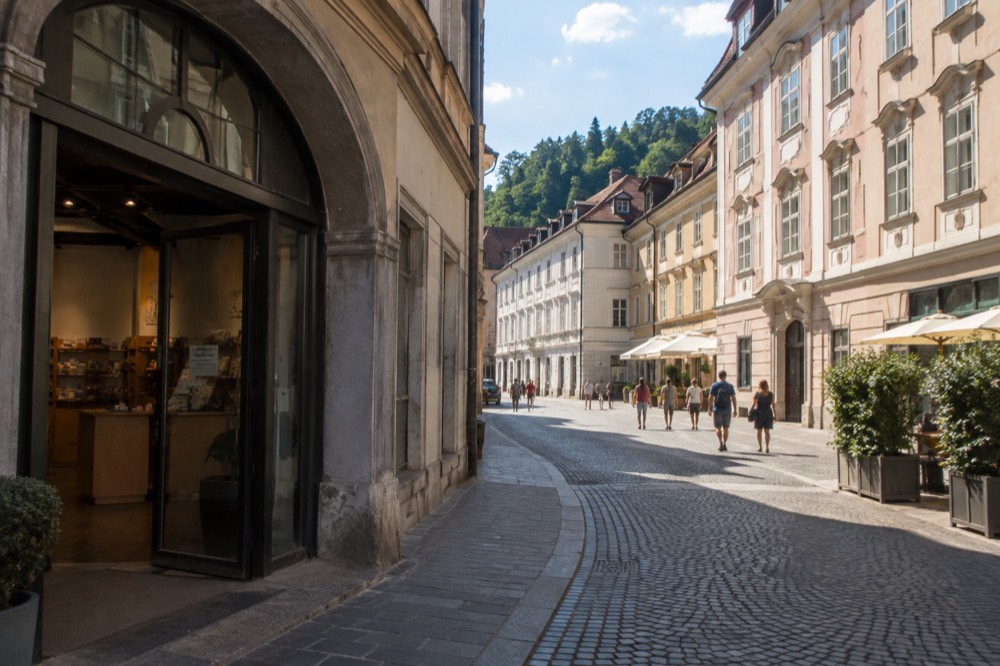
For the castle hill specifically: the funicular runs 09:00 to 19:00 in the January to April and October to December periods and 09:00 to 22:00 from May to September, with a single adult fare at 3.30 EUR and a return at 6.00 EUR, per the castle's own price list. The funicular removes the steep cobbled walk entirely, which matters more than visitors expect in winter ice or summer heat; the castle funicular guide covers it in full. If you would rather have the whole hill packaged, the guided walk with funicular ride, rated 4.6 from 650 reviews and from $24, includes the old town walk and the ride up.
Where Should a Cautious First-timer Start?
A cautious first-timer should start in the pedestrianised centre, on foot, in daylight, with a guided orientation walk and the castle funicular rather than the steep path. That single day covers the highest-value sights with the lowest exposure to the city's only realistic risks, and it leaves the evening free for the river bank, where the bars are busy and the streets are walked.
The castle entry ticket with optional funicular, rated 4.3 from 993 reviews and from $17, is the skip-the-line version of the same idea, and the Ljubljana Castle guide explains what the ticket covers, including the viewing tower and the exhibitions. The castle is open 365 days a year, so the plan does not depend on the season.
From there the natural second day is a booked day trip, cave or lake, with a professional driver on the roads. The Ljubljana day trips guide ranks the full set, and the Ljubljana city break guide packages the whole stay. This site, Ljubljana Travel Guide, exists because the city rewards exactly this kind of two-night structure: one day in the pedestrian core, one day out in the karst or the Alps.
Common Questions About Safety in Ljubljana
Is Ljubljana safe at night for tourists?
Yes. The pedestrianised centre and the Ljubljanica banks stay busy and lit through the evening, and violent crime against visitors is rare. The sensible habits are ordinary ones: keep to walked routes, book taxis by app rather than hailing, and guard your phone in bar areas.
Is Ljubljana safe for solo female travellers?
Yes, Ljubljana has a strong reputation as a comfortable solo destination. The centre is compact and walkable, streets stay populated in the evening, and the solo-specific risks reduce to the same petty-theft list that applies to everyone. Booked taxis late at night are the main precaution worth taking.
Are there pickpockets in Ljubljana?
Pickpocketing exists but is low-level and concentrated. The realistic spots are the Triple Bridge and Prešeren Square on crowded days, especially when the Open Kitchen food market runs on Fridays on Pogačarjev trg. Zipped pockets and a bag worn across the body remove almost all of the exposure.
Is public transport in Ljubljana safe?
Yes. The buses are calm, short-hop and rarely crowded. The one rule that catches visitors is payment, not safety: buses accept no cash at all, so you need an Urbana card or a contactless bank card before boarding. A single zone 1 ride is 1.50 EUR covering 90 minutes with transfers.
Is it safe to drive from Ljubljana to Lake Bled or the Alps?
The Bled route is an ordinary main-road drive. The alpine routes, including the Vršič Pass and the Soča Valley roads, are genuine mountain driving with hairpins and narrow sections, and weather changes fast. Many visitors take a guided tour with a professional driver for those roads, which is a reasonable risk decision rather than an extravagance.
What is the biggest safety risk in Ljubljana?
Honestly, the weather. ARSO's normals give the city 37 clear days a year, and its foggiest and joint-wettest months are September and October. A checked forecast, warm layers for the caves, and the castle funicular instead of the steep path in winter cover more real risk than any crime precaution does.