Which Is Nicer, Slovenia or Croatia?
A fair head-to-head between Slovenia and Croatia: coast, mountains, caves, crowds, prices and which one suits your trip better.
Which Is Nicer, Slovenia or Croatia?
Neither country wins on niceness, because they are not selling the same thing. Slovenia is a small, green, alpine-and-karst country of about two million people where the headline sights are a lake, a cave system and a walkable capital. Croatia is a mid-sized coastal country whose entire tourist economy is built on the Adriatic: islands, walled towns and long summers. If your trip is about mountains and caves, Slovenia is nicer. If it is about beaches and the sea, Croatia wins by a distance.
That is the honest answer, and it is the one most comparison pages dodge. The two countries get compared constantly because they sit next to each other, share a border, and both came out of the former Yugoslavia, but they barely compete for the same visitor. Croatia receives a far larger share of its tourism through sun-and-sea packages; Slovenia's demand clusters around Lake Bled, the karst caves, and a capital city that people consistently describe as the most underrated in central Europe.
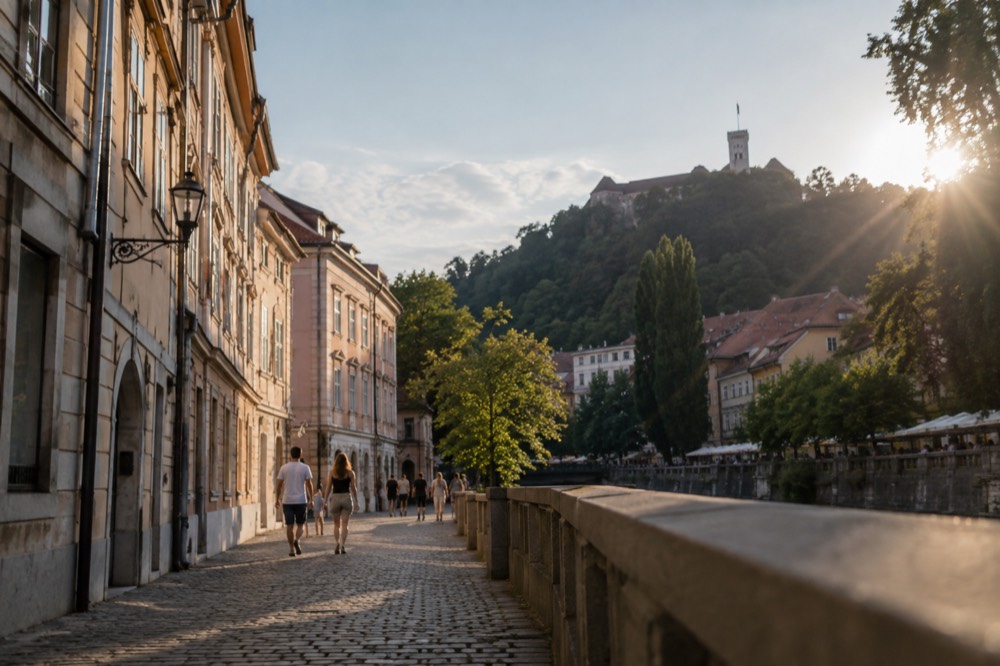
There is also a framing trap worth naming early. "Nicer" is often a proxy for "less crowded", and on that measure the two diverge sharply. Croatia's coastal towns fill in July and August in a way Slovenia's inland ones never do. Ljubljana's own numbers support the contrast: the municipality recorded 1,392,728 tourist arrivals and 2,844,129 overnight stays in 2025, which works out to an average stay of about 2.04 nights. This is a two-night city, not a resort base. Croatia's peak-season towns run on week-long stays, and the crowd pressure that comes with them.
The rest of this page works through the comparison the way an actual traveller has to: practical ease, what each country does better, and which suits a short trip versus a long one. The short version is that a trip built around Slovenia almost always fits in fewer days and involves less driving, while a trip built around Croatia rewards more time and a car or a ferry.
Which Country Is Easier to Travel In?
Both are about as easy as Europe gets, and the border between them has been routine-free since 1 January 2023, when Croatia joined the Schengen area and the euro. Slovenia adopted the euro on 1 January 2007 and abolished land and sea Schengen border checks on 21 December 2007, with air checks following on 30 March 2008. In practice: one currency, no border stops, and a visitor from the eurozone or Schengen changes no money and clears no passport line crossing from Italy, Austria, Hungary or Croatia.
The euro point matters more than it sounds. Before 2023 a Slovenia-and-Croatia trip meant managing two currencies with the kuna exchange rate as a running annoyance. Now the whole route, from Ljubljana to Zagreb to Istria to the Dalmatian coast, runs on the euro. That removes the last practical friction from combining the two countries in one trip, which is exactly what the 11-hour day tours out of Ljubljana that reach both the karst and the coast are built for.
Where the two genuinely differ is scale. Slovenia is small enough that nothing is far. The airport at Brnik is about 26 km from Ljubljana, the capital's centre is pedestrianised, and the biggest draw in the country, Lake Bled, is a morning-to-evening day trip rather than a relocation. Croatia is long: Zagreb, the capital, and Dubrovnik, the southernmost magnet, are separated by the better part of a full day's driving, and most Croatian itineraries are built around picking one coastal region and staying in it.
Language and everyday ease are close to identical. English is widely spoken in tourist settings in both countries, restaurant and café culture is central European in Slovenia and Mediterranean in Croatia, and both are safe by any European standard. If ease of travel alone decided it, the two would tie, with Slovenia's compactness tipping a short trip and Croatia's ferry network tipping a long one.
What Does Slovenia Do Better?
Slovenia wins on mountains, caves, and concentrated charm: Triglav National Park covers 840 km² around the country's highest peak at 2,864 m, Postojna Cave and the UNESCO-listed Škocjan Caves are two of Europe's most visited karst systems, and the whole country can be crossed end to end in roughly two hours of driving. Croatia has mountains and caves too, but they are not the product. In Slovenia they are.
Start with the karst, because it is the clearest single difference. Postojna Cave, at 34.90 EUR for an adult, is a 3.7 km underground route travelled partly by a cave train, about an hour and a half inside, and open every day of the year. Predjama Castle, built into a cliff mouth 9 km away, is 24.00 EUR and open year-round. Škocjan Caves, inscribed on the UNESCO World Heritage list on 28 November 1986, runs 16.00 to 24.00 EUR for an adult depending on season, and is a walk of roughly 400 stairs lasting two and a half to three hours rather than a train ride. That is the honest differentiator between the two big caves: Postojna is a ride, Škocjan is a walk. Croatia has nothing on this scale that a first-time visitor is likely to name. More of these guides are collected on Ljubljana Travel Guide.
| Sight, Slovenia side | Adult price | Notes |
|---|---|---|
| Postojna Cave | 34.90 EUR | Cave train, about 1h 30m route, 10 C year-round |
| Predjama Castle | 24.00 EUR | Cliff castle, open year-round |
| Škocjan Caves | 16.00–24.00 EUR by season | UNESCO, roughly 400 stairs, 2h 30m–3h |
| Lake Bled, Bled Castle | 19.00 EUR | View over the lake and island |
| Pletna boat to Bled Island | 20 EUR per person | Traditional flat-bottomed boat |
| Vintgar Gorge | 15.00 EUR | April to October only, timed entry |
Then the Alps. Triglav National Park, founded in 1981 with earlier protection from 1924, is free to enter and sits close enough to Ljubljana that full-day tours into the Soča Valley and around Kranjska Gora leave the capital in the morning and return by dinner. The Soča's turquoise water and the Vršič pass road are the images that sell the country, and Kranjska Gora and the Soča Valley pages cover them properly.
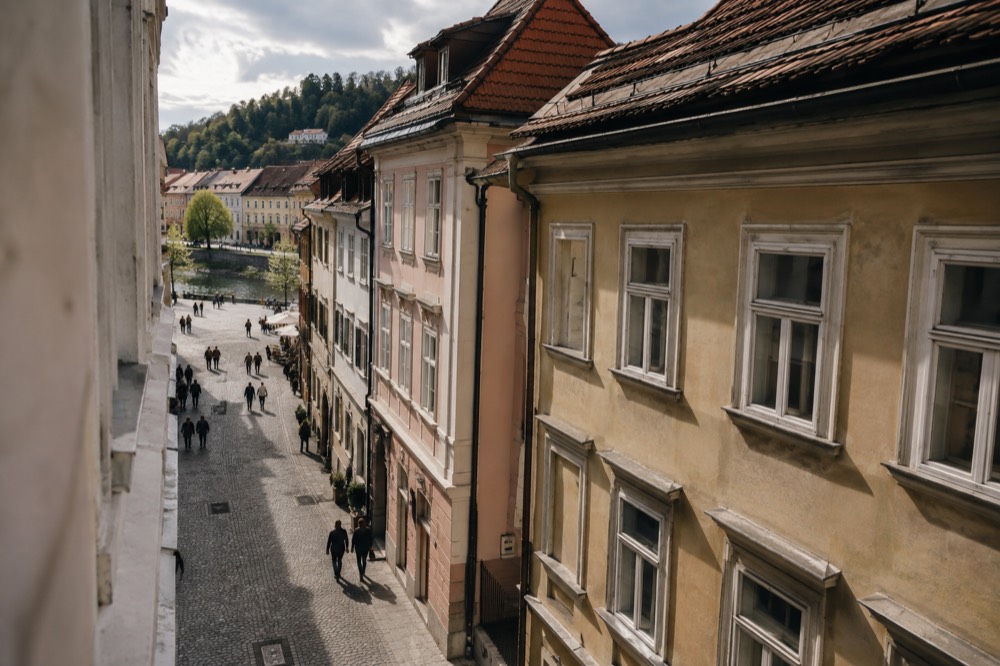
The capital is the third thing Slovenia does better. Ljubljana is small, pedestrianised in its historic core, and organised around one river, one castle hill and a food-and-market culture on Vodnikov and Pogačarjev trg that runs roughly 06:00 to 18:00 in summer. Croatia's Zagreb is a real capital with more weight, but on a two-night city break most visitors find Ljubljana easier to like. If you are deciding between the two capitals specifically, the Ljubljana or Zagreb comparison covers that on its own.
For a first visit that touches the best of this in one structure, the Postojna Cave and Predjama Castle day trip from Ljubljana is the classic opener, and the Old Town walk from Roman roots to the dragon bridge, a free pay-what-you-think-it-was-worth tour on GuruWalk, is the cheapest way to get oriented on day one.
What Does Croatia Do Better?
Croatia wins on the sea, without qualification: it has a long Adriatic coastline with hundreds of islands, walled Venetian towns like the ones at Piran's scale multiplied across the map, and a beach-and-swimming season that Slovenia, whose coastline is a few kilometres around Piran, simply cannot match. Croatia also wins on sheer variety of coastal scenery, and its summer flight and ferry links are built for exactly the kind of trip Slovenia does not offer.
Slovenia's coast is charming but small: Piran is a genuine miniature Venetian town on a peninsula, worth a half day or a sunset trip from Ljubljana, and that is roughly the whole of it. Croatia's coast is the country. Dubrovnik, Split, Hvar, Korčula and the national park islands are a coastline you can spend two weeks on and not finish. When people say "Croatia is nicer", they almost always mean this: swimming water, islands, and evenings in stone towns by the sea.
The beach question is the sharpest version of it. Croatia has hundreds of swimmable beaches; Slovenia has a short coast on a shallow northern Adriatic gulf. Even Lake Bled's swimming status is not officially published as a permitted, temperature-confirmed activity in the sources this site could verify, so Slovenia should not be sold as a swimming destination at all.
History and food tilt differently. Croatia's coastal towns carry layer upon layer of Venetian, Habsburg and Ottoman frontier history, and its food culture is Mediterranean: fish, olive oil, wine by the sea. Slovenia's food is central European with a Mediterranean corner, best experienced through a food tour of Ljubljana or the market halls, but it does not have Croatia's coastal seafood culture because it barely has the coast.
One honest caveat on Croatia: crowding. Dubrovnik in peak summer is a congestion problem the city has had to actively manage, and the same pressure spreads along the coast in July and August. Slovenia gets busy at Bled on a sunny Saturday, but its scale of crowding is a different order of magnitude. If you are travelling in high summer and dislike crowds, that alone can decide the question in Slovenia's favour, as the best month to visit question explores for the capital.
Which Is Better for a Short Trip?
Slovenia is decisively better for a short trip. In two or three days based in Ljubljana you can see the capital, do a cave day trip to Postojna or Škocjan, and still get one alpine day at Lake Bled or in Triglav National Park, all within two hours' radius of one hotel. Croatia needs a week to show its best side, because its sights are strung along a long coast and most of them are a half-day's travel apart.
The arithmetic is blunt. Ljubljana is a two-night city: 2,844,129 overnight stays across 1,392,728 arrivals in 2025 averages 2.04 nights, and the city's own itinerary rhythm, one castle morning, one market and riverside day, one day trip out, matches that. From that base the country's top sights are all in day-trip range. Postojna and Predjama together fill six hours. Bled fills six more. A weekend in Ljubljana honestly covers the capital, and two of the three big day trips fit around it.
Croatia rewards the opposite shape. Zagreb alone is a fine two-night city, and it is close enough to Ljubljana that a full-day Zagreb trip from Ljubljana exists as a bookable product, but Croatia's actual reason for visiting, the coast, starts several hours south of the capital. Splitting a short trip between Zagreb and one coastal town means more travel and less time standing in the places you came for.
The cheat's answer, and a good one, is to combine them. Because the border has been routine-free since Croatia joined Schengen on 1 January 2023 and both countries use the euro, a week split between Ljubljana and the northern Croatian coast, Istria, is one of the easiest multi-country trips in Europe. Base in Ljubljana for the caves and the Alps, then move to Piran or across to Istrian towns for the sea. That trip gets you the best of both without choosing.
Common Questions About Slovenia or Croatia
Which Is Nicer, Slovenia Or Croatia?
Neither is nicer overall. Slovenia is nicer for mountains, caves and a compact, walkable capital; Croatia is nicer for the coast, islands and swimming. The choice depends on whether your trip is about the Alps or the Adriatic.
Is Slovenia more expensive than Croatia?
Prices are broadly comparable, and since Croatia adopted the euro on 1 January 2023 both countries use the same currency, so there is no exchange-rate gap. Coastal Croatia in peak summer is the most expensive time and place on either side. This site's Ljubljana prices guide covers the Slovenian side in detail.
Can you combine Slovenia and Croatia in one trip?
Yes, and it is easy. Both are in the Schengen area and the eurozone, and there are no routine border checks crossing between them. A week split between Ljubljana and the Istrian coast is one of the simplest multi-country trips in Europe.
Is Slovenia or Croatia better for beaches?
Croatia, clearly. Croatia has a long Adriatic coastline and hundreds of islands with swimmable beaches; Slovenia's coast is a short stretch around Piran on a shallow gulf.
Is Slovenia or Croatia less crowded?
Slovenia, in high summer. Croatia's coastal towns carry heavy peak-season crowds in July and August, while Slovenia's pressure points, mainly Lake Bled on sunny weekends, are on a much smaller scale.
Which has better caves, Slovenia or Croatia?
Slovenia. Postojna Cave is a 3.7 km route with a cave train, and the UNESCO-listed Škocjan Caves are a walk of roughly 400 stairs through one of Europe's largest underground canyons. Slovenia's karst plateau is the product; Croatia has nothing comparable on the standard tourist route.
For a first taste of what Slovenia does best, booked from a base in the capital: caves, a cliff castle and the lake, with a free orientation walk on day one.