Ljubljana Versus Zagreb: Which City Deserves Your Days?
One is a two-night capital you can walk across in an afternoon, the other a Central European city of close to a million people with a proper metro-scale rhythm. Here is how Ljubljana and Zagreb actually differ, and which one fits your trip.
Short answer
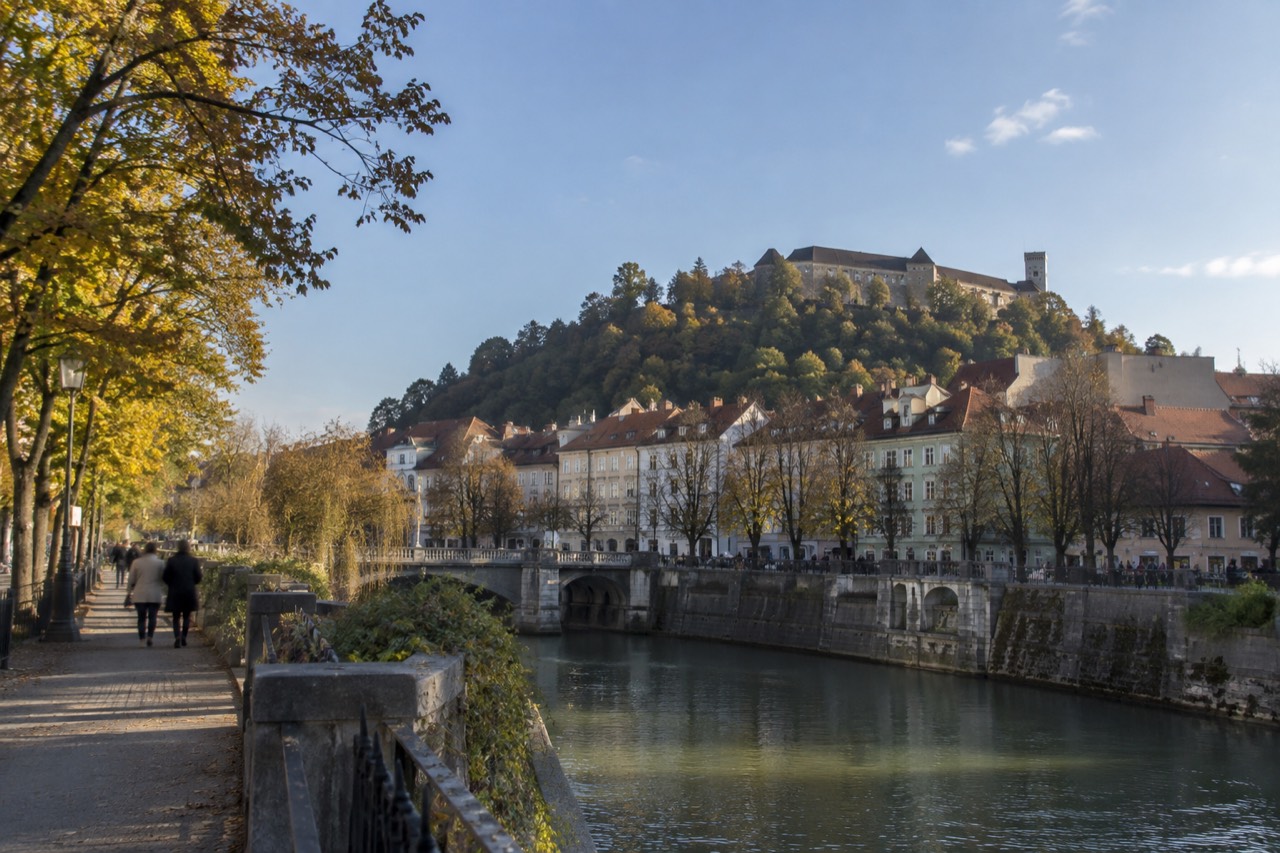
Ljubljana is compact, pedestrianised and built around a river and a castle hill, with 1,392,728 arrivals in 2025 and an average stay of about two nights. Zagreb is roughly three times the size, with bigger museums, grander squares and cheaper eating. Choose Ljubljana for a short, walkable break with Alpine day trips, Zagreb for a longer, lower-cost city stay.
Slovenia and Croatia sit side by side, share a border you will not notice crossing, and use the same currency. Croatia joined the Schengen area and the euro on 1 January 2023, so the run from Ljubljana to Zagreb is an internal journey with no routine border checks and no money to change. That makes the two capitals unusually easy to combine, and unusually easy to confuse in a planning spreadsheet, because both sell themselves on old towns, café terraces and day trips into the countryside.
They are not the same product. Ljubljana recorded 1,392,728 tourist arrivals and 2,844,129 overnight stays in 2025, which divides out to an average stay of about 2.04 nights: it is a short-break city, and its whole layout is built for that. Zagreb is a city of nearly a million people, the largest in the region between Vienna and Budapest's peers, with a scale of museum, a grid of streets and a café culture that rewards a slower, longer visit. This guide compares them honestly, section by section, so you can match the city to the trip rather than the other way round.
Ljubljana or Zagreb: Which City Should You Visit?
Ljubljana suits a two to three night break built around walking, a river, a castle hill and one big day trip, and it delivers that at a small-city pace where nothing on your list is more than twenty minutes apart on foot. Zagreb suits a longer stay of three nights or more, when you want major museums and lower prices. Neither is "better": they solve different itineraries, and the mistake is giving Zagreb's itinerary to Ljubljana or expecting Ljubljana's intimacy from Zagreb.
The honest starting point is scale. Ljubljana's population was reported at 293,244 by the Slovenian statistics office, and the historic core is a pedestrianised zone of roughly 20 hectares, closed to general motor traffic and progressively expanded since 2007. You can cross the whole centre in fifteen minutes. Zagreb's core, from Ban Jelačić Square up through Gradec and Kaptol and down to the main square, is itself walkable, but the city spreads far beyond it, and its tram network exists because the distances demand it.
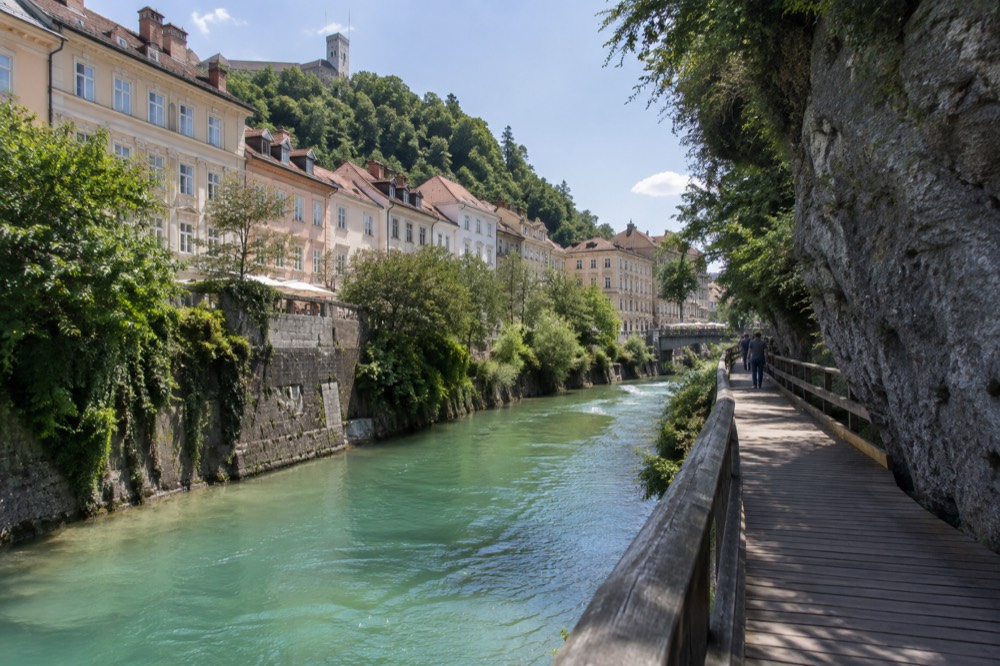
That difference runs through everything that follows. Ljubljana is a city you experience at street level on foot, with the Ljubljanica river as its spine and the castle on its hill as the one landmark you navigate by. Zagreb is a city you experience in districts: the upper town's tiled roofs and funicular, the lower town's Secession facades and museum row, the market at the point where they meet. If your trip is short and you want certainty that everything worth seeing is close together, that argues for Ljubljana. If your trip is longer and you want depth, that argues for Zagreb.
There is a third answer that is often the best one, and it is worth saying early: the two cities are roughly 140 km apart by road and linked by direct coaches and trains, so plenty of travellers do both. The Ljubljana to Zagreb route is an internal Schengen journey of a couple of hours, and the pairing works well as a week split, Ljubljana first for the compact arrival experience, Zagreb after for the bigger city finale. Our two-day Ljubljana itinerary covers the short side of that split if you go this way.
How Do the Two Cities Compare at a Glance?
Ljubljana is the smaller, denser, more expensive of the two, with a pedestrianised core, a river at its centre and the Julian Alps within day-trip range; Zagreb is larger, cheaper, livelier in the evenings and further from mountain scenery but richer in big museums. Ljubljana's centre is car-free, its average visitor stays about two nights, and its headline sights sit within a fifteen minute walk of each other, while Zagreb rewards a tram pass and at least three days.
The table below is the short version of this whole guide. Read it as a planning grid rather than a verdict, because several rows cut both ways: size is an advantage or a liability depending on how long you are staying, and "cheaper" only matters if the things you want to do exist in the cheaper city.
| Ljubljana | Zagreb | |
|---|---|---|
| Scale | Small capital, walkable core | Large capital, tram city |
| Centre | Pedestrianised, roughly 20 hectares | Big squares, upper and lower town |
| River | Ljubljanica, boat trips from the centre | Sava, outside the core |
| Headline sight | Castle hill above the old town | Cathedral, upper town, museums |
| Signature day trips | Lake Bled, Postojna Cave, Triglav park | Plitvice Lakes, northern Croatia |
| Typical stay | About 2 nights | 3 nights or more |
| Currency | Euro | Euro |
| Border between them | None, both in Schengen | None, both in Schengen |
Two rows deserve a sentence of explanation. The day-trip row is the one that most often decides the argument: Ljubljana's hinterland is Alpine and karst, so its trips go to lakes, gorges and caves, while Zagreb's hinterland leads to Plitvice Lakes and the rolling north, and both are exceptional. The border row matters because older guidebooks still imply a frontier crossing; since Croatia joined Schengen on 1 January 2023 there is none, and the Slovenian government's own page on its EU membership confirms Slovenia abolished internal land and sea border checks back on 21 December 2007, with air checks following on 30 March 2008.
If you are weighing the two as a base for tours rather than as cities in themselves, the practical split is simple. From Ljubljana, the three strongest organised days out are the caves-and-castle combination, Lake Bled, and a free tips-based orientation walk on day one. These are, in order of what they deliver:
The cave and castle trip is the deepest single-day excursion: six hours, rated 4.8 from 2,802 reviews, covering Postojna Cave's 3.7 km visitor route, part of it by the underground train, plus the cliff-perched Predjama Castle. The Bled trip is the scenic one, and the free GuruWalk walk, Ljubljana Unveiled, rated 4.91 from 1,496 reviews, is the two-hour tips-based introduction that makes the rest of a short stay make sense. Zagreb's equivalent flagship day out is Plitvice Lakes, which we cover in its own Plitvice Lakes guide, and it is a genuinely world-class outing, but it is the one big card Zagreb plays against Ljubljana's much deeper bench.
Is Ljubljana More Expensive Than Zagreb?
Yes, on the whole: Ljubljana's restaurants, hotels and bars run noticeably higher than Zagreb's, and the difference is big enough to shape a budget trip, though Ljubljana compensates with free castle grounds, free first-Sunday museum entry at the national institutions and a cheap, flat-fare bus system. Zagreb's eating and drinking prices are the strongest single argument for choosing it when money is the deciding factor, and the gap is widest at the mid-range restaurant table.
We do not publish hotel or car-hire rates on this site, because they are date-specific and sit behind booking walls, so the honest comparison is at the level of fixed, published prices. On Ljubljana's side, the anchor figures are solid: a castle ticket with the funicular is 19.00 EUR, the Ljubljana Card starts at 41.00 EUR for 24 hours, a single city bus ride with transfers within 90 minutes is 1.50 EUR, and tourist tax is 3.13 EUR per person per night, half rate for ages 7 to 18. A river cruise on the Ljubljanica runs about 15 EUR with the Barka operator. Zagreb's published equivalents, museum and tram tickets alike, sit below these levels, and the restaurant gap is wider still.
| Ljubljana cost anchor | Published figure |
|---|---|
| Castle ticket including funicular, adult | 19.00 EUR |
| Ljubljana Card, 24 hours, adult | 41.00 EUR |
| Single bus ride, 90 minutes with transfers | 1.50 EUR |
| Urbana card purchase | 2.00 EUR |
| Tourist tax per person per night | 3.13 EUR |
| Ljubljanica river cruise, adult | 15 EUR |
What Ljubljana gives back is a set of genuinely free layers. The castle grounds are free to enter, only the funicular and the tower are paid, and the national institutions, the National Museum of Slovenia, the National Gallery, MSUM and the Slovenian Ethnographic Museum, each publish free admission on the first Sunday of every month. The free things to do in Ljubljana run deeper than most capitals of its price level, from Metelkova's street art to the Tivoli park walks, and the Central Market costs nothing to wander.
The budget verdict depends on trip length. Over two nights, Ljubljana's higher prices are a bounded cost, maybe one good dinner more than Zagreb, and the walkability means you spend almost nothing on transport. Over five nights, the arithmetic turns: Zagreb's cheaper table and cheaper rooms compound, and the savings can fund the Plitvice day trip. If cost is the single deciding factor and your stay is long, Zagreb wins; for a short break, the difference is real but small enough that it should not override which city you actually want.
Which City Has the Better Old Town?
Ljubljana's core is smaller, more coherent and more romantic, a car-free stretch of bridges, riverside walks and Jože Plečnik's architecture concentrated around the Ljubljanica, and you can see all of it in a day. Zagreb's old core is bigger and more varied, split between the two hills of Gradec and Kaptol with its cathedral, tiled roofs and funicular, and it rewards two days rather than one. Ljubljana wins on atmosphere per square metre, Zagreb on sheer amount of historic city.
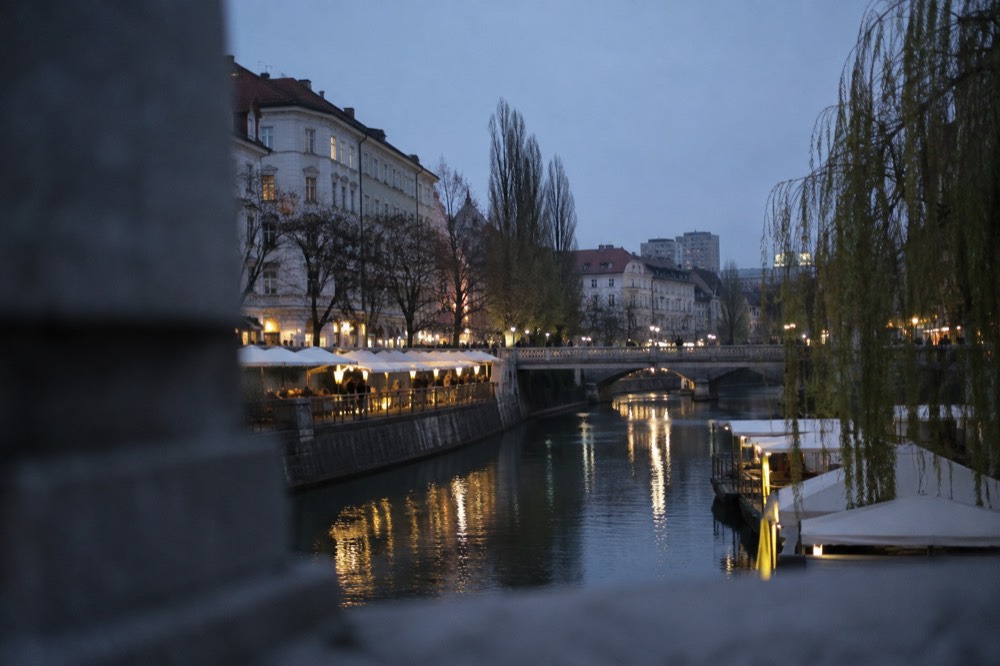
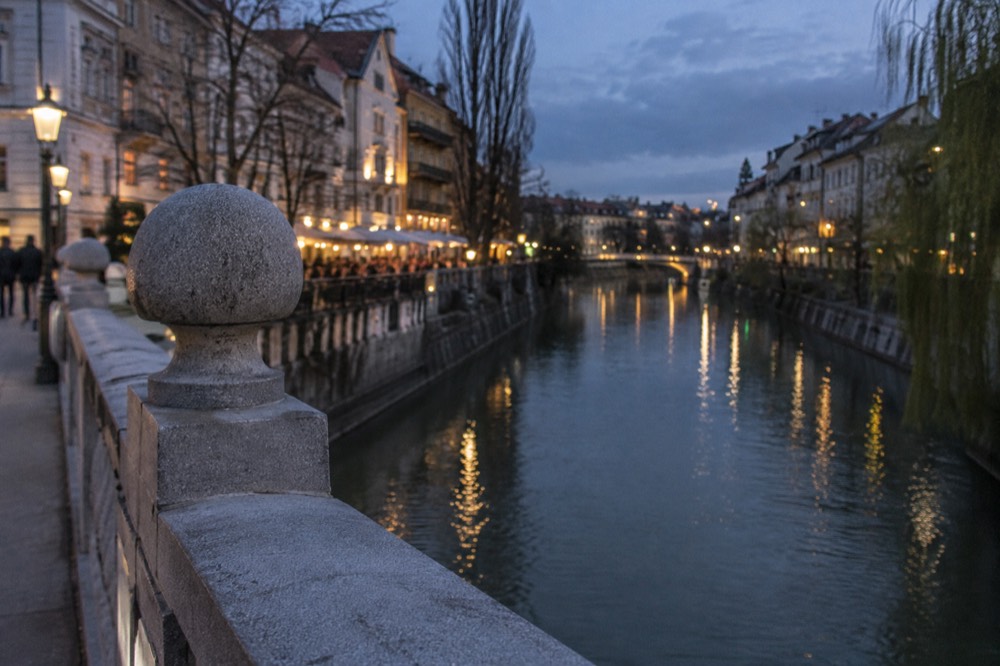
Ljubljana's centre is effectively one composition. The Triple Bridge, the Dragon Bridge, Prešeren Square and the river embankments read as a single walk, and much of that walk is Plečnik's work, which is why the city has a dedicated Plečnik trail and a Plečnik House museum, the latter guided-entry only, with tours on the hour. The scale is intimate: the whole thing is a pedestrian zone, so the experience is unbroken by traffic, and in the evening the riverside terraces take over completely. The Old Town guide covers the full route.
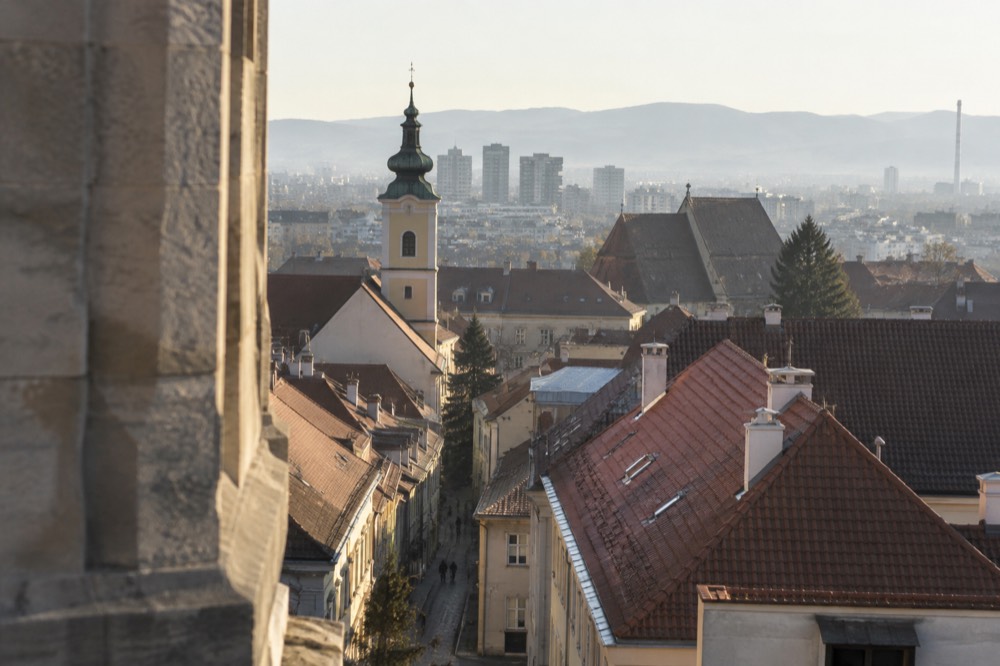
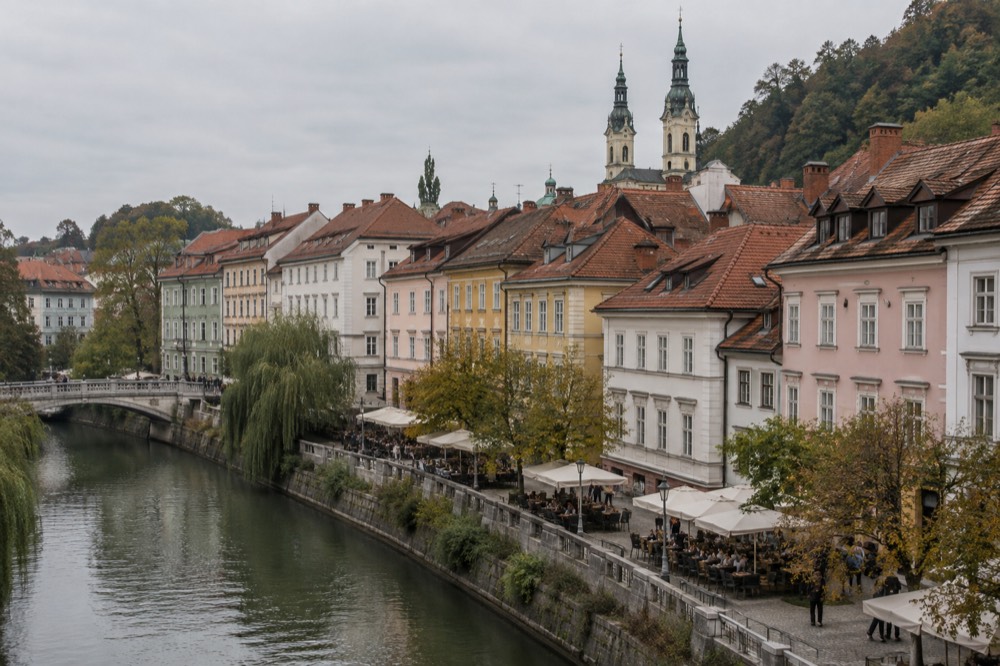
Zagreb's historic quarter is a different animal. The upper town, Gradec, and the cathedral district, Kaptol, were two separate medieval towns, and the seam between them still shows in the layout, with St Mark's Church and its patterned roof as the postcard view and the short funicular linking the hills to the lower town. It is grander and grittier at the same time, with more layers of history visible, and the Dolac market steps connecting it to the main square give it a working, everyday feel that Ljubljana's more polished core can lack. What Zagreb does not have is a river running through the middle of it; the Sava sits outside the core, so the waterfront promenade Ljubljana trades on simply has no Zagreb equivalent.
For a one-day visitor, Ljubljana's coherence is the practical advantage: you will not run out of old town, but you will not miss any of it either. For anyone with time, Zagreb's upper town at dusk, when the gas-style lamps come on in the old streets, is one of the better free experiences in either country. If old town quality alone is your criterion, call it a draw with the tie broken by how much walking you like doing.
Which Is the Better Base for Day Trips?
Ljubljana, decisively, if your day trips are mountains, lakes and caves: Lake Bled, the Postojna and Škocjan cave systems, Vintgar Gorge, the Soča Valley and Triglav National Park all sit within a two-hour radius, and the organised tour roster from the city is deep and highly rated. Zagreb's single trump card is Plitvice Lakes, which is genuinely one of Europe's great sights, but its bench behind that is thinner, so Ljubljana wins on variety and Zagreb must win on that one destination.
Start with the Ljubljana side, because it is the reason many people pick the city at all. Lake Bled, with its island church and clifftop castle, is the headline: Bled Castle's adult entry is 19.00 EUR, the pletna boat to the island is 20 EUR per person, and the electric boat line is 16 EUR. The Lake Bled guide covers the full picture, and the Ljubljana to Lake Bled route guide handles the transfer. Vintgar Gorge is the seasonal add-on, open to visitors between April and October with the exact closing date depending on conditions, adult entry 15.00 EUR, and the operator's own page states the busiest window is 10:00 to 13:00.
The cave systems are the other pillar. Postojna Cave holds 10 C year round, which is why it doubles as the reliable bad-weather answer, and its visitor route runs 3.7 km partly by underground train in about an hour and a half; adult entry is 34.90 EUR, Predjama Castle is 24.00 EUR, and we publish only those separate prices because the combined ticket figure is unresolved. Škocjan, the UNESCO-listed alternative, is a walking cave of roughly 400 stairs and two and a half to three hours, adult 16.00 to 24.00 EUR by season. The Postojna Cave guide and Škocjan Caves guide compare them properly.
| Day trip from Ljubljana | Published entry figure | Season note |
|---|---|---|
| Lake Bled: castle and island | Castle 19.00 EUR, pletna 20 EUR, boat line 16 EUR | Year round |
| Vintgar Gorge | Adult 15.00 EUR | April to October, closing date depends on conditions |
| Postojna Cave | Adult 34.90 EUR | Every day, cave holds 10 C year round |
| Predjama Castle | Adult 24.00 EUR | Open year round |
| Škocjan Caves | Adult 16.00 to 24.00 EUR by season | Tours about 2h30 to 3h, roughly 400 stairs |
| Triglav National Park | Entry free | Park area 840 km², Triglav 2864 m |
The flagship organised version of the cave day is the six-hour combined trip, rated 4.8 from 2,802 reviews and priced from $132, which handles both tickets and the transfer in one booking.
Behind that, the lake-and-castle day trip to Bled, from $86 and rated 4.7 from 1,641 reviews, is the scenic counterpart, and the two between them cover what most visitors want from a Ljubljana day out. There is also a cheaper, shorter Bled option at from $57 rated 4.8 from 888 reviews for travellers who want the lake without the castle commitment. More of these guides are collected on Ljubljana Travel Guide.
Zagreb's day-trip case rests almost entirely on Plitvice Lakes, the famous tiered lake system two hours south. It is magnificent, and it justifies the trip on its own, but it is one destination rather than a menu, and in high summer its boardwalks are at their most crowded. Ljubljana's list, by contrast, lets you swap by weather: caves when it rains, because they hold the same temperature year round, the gorge and the lake when it is clear, the Soča Valley when you want the long Alpine day. If day trips are half the reason for your trip, [base yourself](https://booking.tpk.ro/siijcqre) in Ljubljana and treat Zagreb, if you visit it, as a city stop on the way to or from Plitvice. Our day trips from Ljubljana guide ranks the full field.
How Does the Weather Compare?
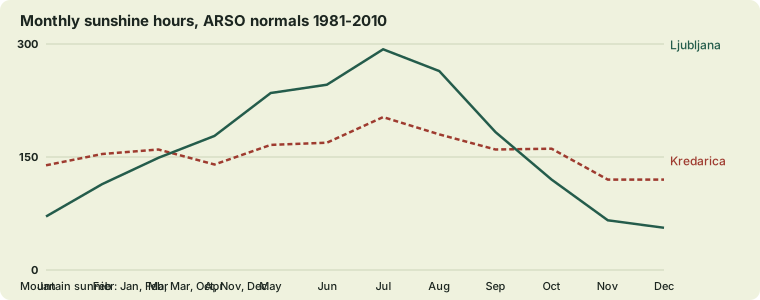
Both cities have a continental climate with warm summers and grey winters, but Ljubljana has a specific, measurable quirk: it sits in a basin that fogs in during the colder half of the year, averaging 91.2 fog days a year and just 37 clear days against 130 overcast, while the mountains above it are sunnier in winter. Zagreb's winters are grey too, but the basin-inversion effect is Ljubljana's own, and it is the one fact that should shape a winter visit: in the city, go up.
This is the part of the comparison almost every other guide gets wrong, so it is worth the detail. Ljubljana's weather station at Bežigrad, 299 m, records 56 hours of sunshine in the whole of December and 71 in January, against 120 and 139 hours at Kredarica, at 2,514 m on Triglav, in the same 1981 to 2010 ARSO normals. The city averages 37 clear days a year; October and November each average a single clear day. The mechanism is a temperature inversion: cold air is trapped in the basin under warmer air above, so the city sits under fog and low cloud while the hills a few hundred metres up are in sunshine.
The counterintuitive months are September and October, which is where Ljubljana surprises people. ARSO's 1971-2000 normals put September and October at 12.4 fog days each, level with December's 12.6 and above January's 11.3, and the same pair are the joint wettest months in the 1981-2010 precipitation series at 147 mm each, ahead of July's 115 mm. The early-autumn shoulder season that guidebooks sell as golden is, in Ljubljana specifically, the foggiest and wettest stretch of the year. The best time to visit Ljubljana guide works through the full twelve months.
| Winter weather measure | Ljubljana, 299 m | Kredarica, 2514 m |
|---|---|---|
| December sunshine hours | 56 | 120 |
| January sunshine hours | 71 | 139 |
| Clear days per year | 37 | 47 |
| Overcast days per year | 130 | 117 |
| Annual sunshine hours | 1974 | 1872 |
What does this mean for the comparison? In summer, the two cities are broadly comparable, warm and mostly sunny, with Ljubljana's July averaging 21.3 C and 293 sunshine hours. In winter, Ljubljana's basin greyness is a real cost, and it is the strongest seasonal argument for Zagreb, whose winter, while hardly bright, does not come with the basin's fog regime. The compensations are concrete: a winter visit to Ljubljana should be built around going up, the funicular to the castle, the Christmas market, or a day trip to altitude, and the caves at a constant 10 C to 12 C are the reliable wet-weather plan. If you are travelling November to February and want city-street weather, Zagreb has the edge; if you are travelling April to September, weather should not decide this at all.
Which City Is Better for Food and Drink?
Zagreb is the better eating city on range and price, with a bigger restaurant scene, cheaper tables and a stronger café tradition, while Ljubljana is the better tasting city, with an unusually dense concentration of food and wine tours, a riverside market at the centre of town and easy access to Slovenian wine regions. Choose Zagreb if you want to eat well cheaply and often; choose Ljubljana if you want the food explained, tasted and walked through.
Ljubljana's food strengths are structural. The Central Market runs across Vodnikov and Pogačarjev trg, outdoors roughly 06:00 to 18:00 in summer, and the covered halls open Monday to Saturday, and it sits at the exact centre of the pedestrian zone, so the market-to-table rhythm of the city is impossible to miss. The Odprta Kuhna open-kitchen event runs on Fridays on Pogačarjev trg roughly March to November, with the official wording "every sunny Friday" meaning exactly that: it is cancelled in bad weather. Slovenian food itself, štrukelj, potica, the Bled cream cake, is covered in our Slovenian food in Ljubljana guide.
The tasting infrastructure is where Ljubljana pulls ahead of most cities its size. The Slovenian cuisine walking tour with tastings runs four hours, rated 4.8 from 552 reviews, and the combined food and wine walk runs three hours, rated 4.9 from 282 reviews. The wine tasting experience with appetizers, rated 4.8 from 226 reviews, runs on a silent electric boat along the Ljubljanica, which is a genuinely distinctive format: two hours, from $64. For a first evening in the city, the small-group Snacking Love Walk on GuruWalk, free and tips-based, rated 4.93 from 1,324 reviews, pairs the sights with snack stops, though note its listing states the tastings carry a fixed extra cost, so it is free to join but not free in full.
| Ljubljana tasting experience | Duration | Rating |
|---|---|---|
| Slovenian cuisine walking tour with tastings | 4 hours | 4.8 from 552 reviews |
| Food and wine combined walk | 3 hours | 4.9 from 282 reviews |
| Wine tasting with appetizers, electric boat | 2 hours | 4.8 from 226 reviews |
| Štrukelj cooking class | 3 hours | 4.9 from 90 reviews |
| Snacking Love Walk on GuruWalk, tips-based | 1h 45m | 4.93 from 1,324 reviews |
Zagreb's argument is different in kind. It has more restaurants, cheaper restaurants, and a café culture on the squares and in the old streets that functions as the city's public living room, and the price gap at a mid-range dinner is obvious within a meal or two. Its market, Dolac, is a proper daily institution stepped into the hillside below the cathedral. What it has less of is the organised tasting layer: fewer food tours, fewer wine-boat evenings, less of the curated introduction. If you know what you want to eat, Zagreb serves it for less; if you want the city's food translated, Ljubljana has the better guides and the better formats. Beer drinkers are well served in both, and Ljubljana's craft scene is covered in the Ljubljana craft beer guide.
How Easy Is It to Get to Each City?
Both are simple Schengen arrivals with no border formalities between them and the same euro currency, but the access profiles differ: Ljubljana's airport at Brnik is about 26 km from the city and is a small, quick-to-transit hub, while Zagreb has the bigger airport, the wider flight network and the stronger international rail connections, including the more useful long-distance links. For most of Europe, either city is reachable in a day, and the pairing is a natural twin-centre trip.
On the Ljubljana side, the practical facts are in our Ljubljana airport to city centre guide: the airport is about 26 km out, an airport bus exists and its times should be checked before travelling, and we publish no fare or timetable detail because the airport's site blocks automated reads. The city's own transport is unusually forgiving for a capital: the centre is pedestrianised so you mostly do not use it, and when you do, a single bus ride is 1.50 EUR for 90 minutes including transfers, with no cash accepted on board but contactless bank cards now working at boarding. The Urbana card itself costs 2.00 EUR.
Zagreb's advantages are scale advantages. Its airport takes more routes, its position on the Central European corridor gives it better long-distance rail reach, and its tram network makes the city navigable without a car in a way that only big cities manage. Ljubljana's rail links, by contrast, are modest, and we cover exactly what they are in trains from Ljubljana. The honest summary: if you are flying in from outside Europe or from a hub without a Ljubljana connection, Zagreb is usually the easier arrival; if you are already within the region, both are trivial and the choice should be made on the cities, not the runways.
Between the two, the transfer is the easy part. Direct coaches and trains link the capitals in a couple of hours across an open internal border, and there is a full-day organised option as well: the Zagreb full-day trip from Ljubljana, from $293.19, a new listing without a rating yet, which handles the each-way logistics for a day visit. For most travellers, though, the public transfer is so straightforward that the tour only makes sense if you want the guiding.
Ljubljana or Zagreb: The Final Verdict
Choose Ljubljana for a two to three night break where you want everything walkable, a river-and-castle core, world-class cave and lake day trips, and you are travelling between April and September; choose Zagreb for a longer, cheaper stay built around big museums, evening café life and Plitvice Lakes, or for a winter city trip when Ljubljana's basin fog is a real cost. The strongest trip of all is both: Ljubljana first, Zagreb after, across an open border on the same currency.
Put the decision in four scenarios. A couple on a long weekend in June: Ljubljana, without hesitation, because the compact centre, the riverside evenings and the Bled day trip are exactly that trip. A traveller with five nights and a tight budget: Zagreb, because the money goes further and Plitvice is a worthy centrepiece. A winter city break in January: Zagreb edges it, because Ljubljana's 56 December sunshine hours and basin fog are a genuine drag on a short trip, unless you build the visit around going up and around the Christmas season. A first-time visitor to the region with a week: both, split roughly in half, Ljubljana for the intimacy and the day trips, Zagreb for the scale and the food prices.
One planning note that makes the twin-centre version work: Ljubljana is a two-night city by the numbers, 2,844,129 overnight stays across 1,392,728 arrivals in 2025, so resist the urge to give it five nights and day-trip from it every day. The better shape is two or three nights in Ljubljana with one or two big excursions, then the transfer to Zagreb, then Plitvice from there. That order also puts the Ljubljana City Card maths in your favour on the Ljubljana leg, where the 41 EUR 24-hour tier covers the funicular, the river cruise, buses, a guided walk and 30-plus museums.
If you have settled on Ljubljana, these are the three bookings that define the stay: the cave and castle excursion, the Bled lake and castle day, and the free GuruWalk introduction on day one.
And if the verdict has sent you to Zagreb instead, or to both, the planning pages that follow on from here are the Zagreb guide for the Croatian side and the Ljubljana or Zagreb comparison post, which takes the short-break version of this question in a lighter format. Whichever city you pick, you are choosing between two of Central Europe's more under-rated capitals, and the wrong answer is not visiting either.
Common Questions About Ljubljana Versus Zagreb
Ljubljana or Zagreb: which is better for a short break?
Ljubljana. Its centre is pedestrianised and compact, the average visitor stays about two nights, and the castle hill, the river and the main bridges all sit within a fifteen minute walk of each other. Zagreb rewards three nights or more because its sights spread across upper and lower town districts linked by trams.
Is Zagreb cheaper than Ljubljana?
Yes, noticeably, especially at mid-range restaurants and hotels. Ljubljana's published anchors include a 19.00 EUR castle ticket with funicular and a 41 EUR 24-hour city card, while Zagreb's museum and transport prices sit below those levels. Ljubljana offsets some of the gap with free castle grounds and free first-Sunday entry at the national museums.
Can you visit Ljubljana and Zagreb on the same trip?
Yes, easily. The cities are roughly 140 km apart, linked by direct coaches and trains, and since Croatia joined the Schengen area and the euro on 1 January 2023 there are no routine border checks and no currency to change. A week split, two or three nights in each, is a popular shape.
Which city has better day trips?
Ljubljana, on variety: Lake Bled, Vintgar Gorge, Postojna Cave, Škocjan Caves, the Soča Valley and Triglav National Park all sit within range, with a deep, highly rated tour roster. Zagreb's flagship is Plitvice Lakes, one of Europe's great sights, but its bench behind that single destination is thinner.
Is Ljubljana foggy in winter?
Yes, measurably. Ljubljana averages 91.2 fog days a year and just 37 clear days against 130 overcast in the ARSO normals, with only 56 hours of sunshine in December. The fix is to go up: the castle hill, Šmarna Gora, or a day trip, since the high ground above the basin is sunnier in winter.
Do I need a different currency in each city?
No. Both Slovenia and Croatia use the euro, Croatia since 1 January 2023, and both are in the Schengen area, so travelling between them involves no border formalities and no money changing. One card, one currency, two capitals.