What Is a Good Two Day Itinerary for Ljubljana?
A practical two day Ljubljana itinerary: day one for the Old Town, castle and river, day two for a cave or Lake Bled day trip, with real prices and planning facts.
What Is a Good Two Day Itinerary for Ljubljana?
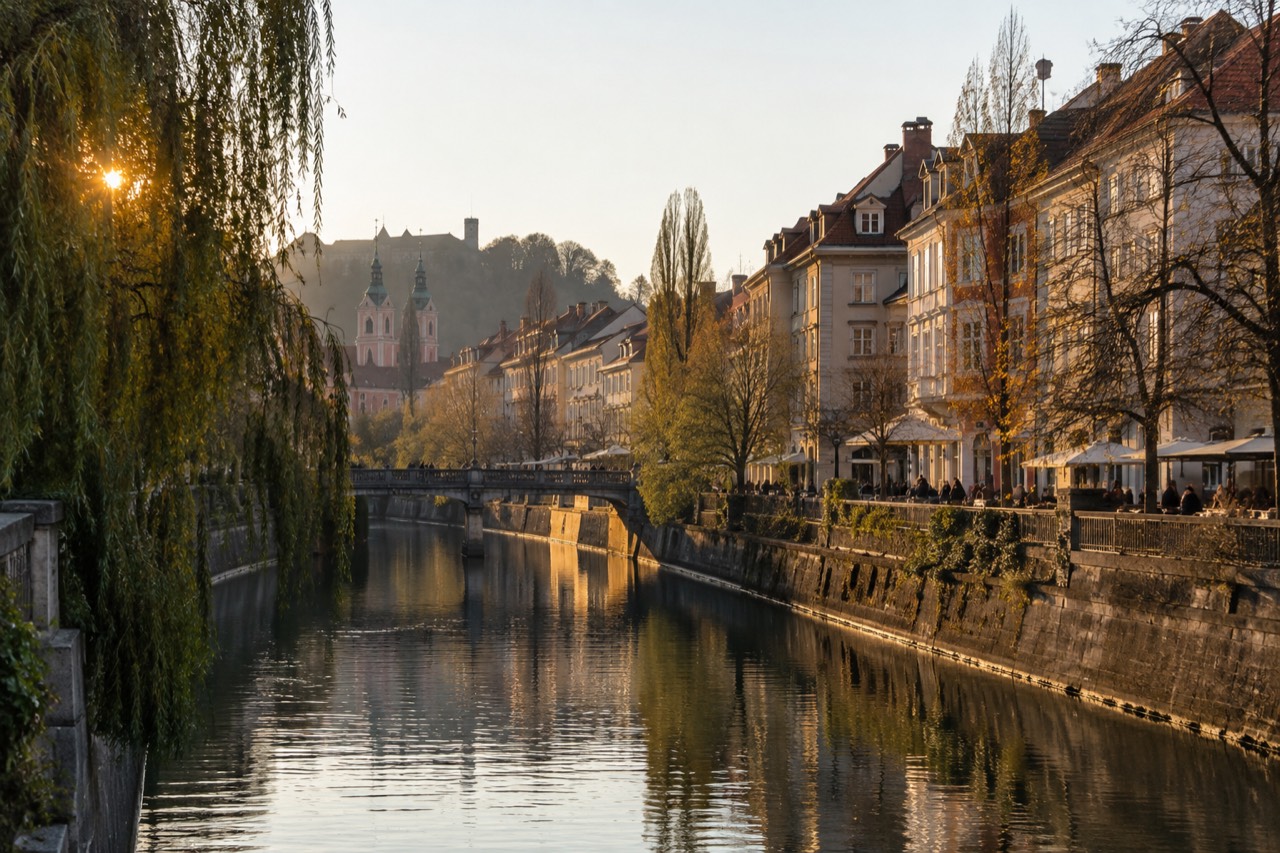
A good two day itinerary gives day one to the city itself, the Old Town, the castle, the Ljubljanica river and the Central Market, then gives day two to a day trip: Postojna Cave and Predjama Castle, or Lake Bled. Ljubljana's centre is pedestrianised and compact, so day one needs no transport beyond your own feet, and every major day trip departs from within walking distance of the centre.
The logic behind the split is simple. Ljubljana is a two-night city: the national statistics office recorded 2,844,129 overnight stays across 1,392,728 arrivals in 2025, an average stay of about 2.04 nights. Visitors consistently budget roughly two days, and the city's own sightseeing surface fills one of them comfortably. The second day belongs to the reason many people come to Slovenia at all, which is the karst caves and the lakes.
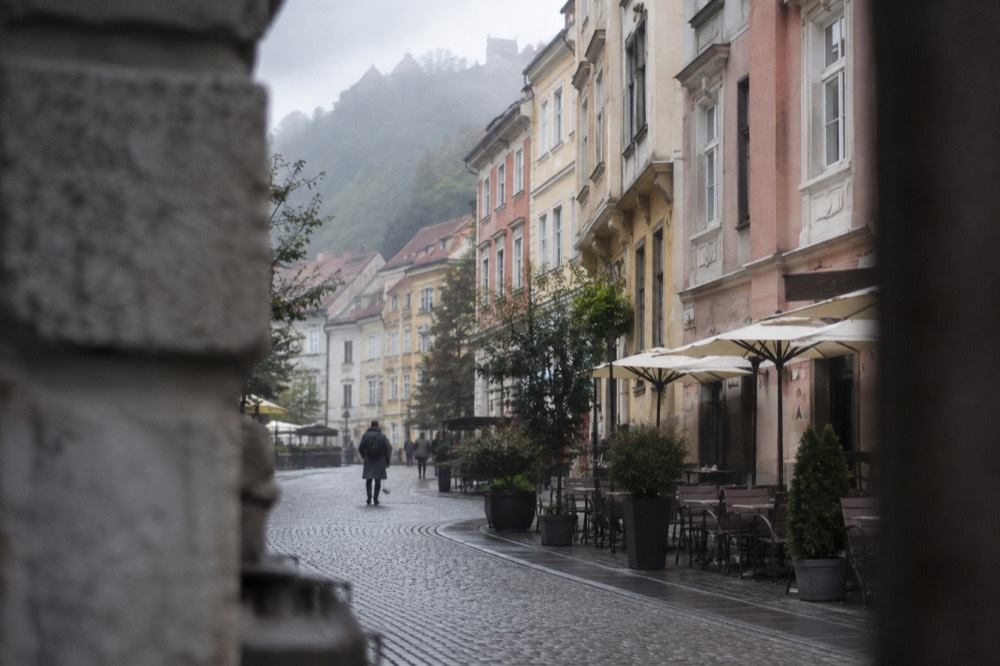
This itinerary assumes you arrive the evening before, or early on day one. It also assumes decent weather, with a fallback for the rain Ljubljana gets in quantity: the city averages 1362 mm of precipitation a year across 153 days with measurable rain, so a wet-weather plan is not pessimism, it is arithmetic.
| Time | Day one: the city | Day two: the country |
|---|---|---|
| Morning | Old Town loop: Prešeren Square, Tromostovje, the river banks | Coach or tour departure, around 08:00-09:00 |
| Midday | Central Market, then lunch off Vodnikov trg | Postojna Cave tour, about 1h 30m inside |
| Afternoon | Ljubljana Castle by funicular, tower and exhibitions | Predjama Castle, or Lake Bled and the gorge |
| Evening | Dinner in the Old Town or Metelkova | Return by early evening, riverside walk |
What Should You Do on Day One in Ljubljana?
Spend day one entirely on foot in the pedestrianised centre: Prešeren Square and the Franciscan Church, the Triple Bridge, the Ljubljanica banks, the Central Market, Dragon Bridge, then up to Ljubljana Castle by funicular in the afternoon. Everything on this list sits within a 15 minute walk of everything else, and the castle's official price list puts a combined castle ticket with funicular at 19.00 EUR for an adult.
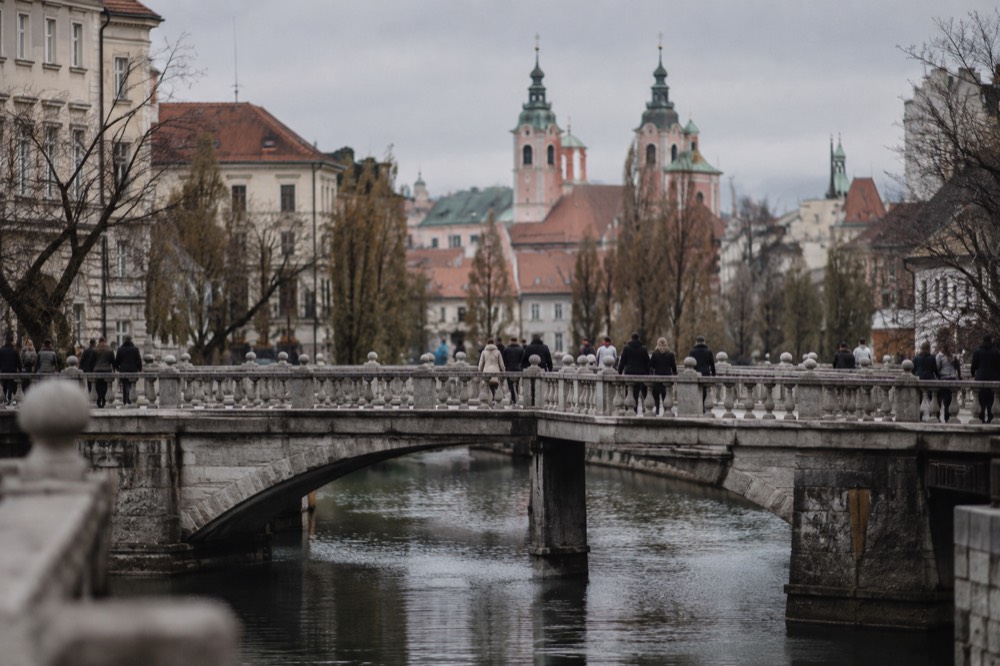
Start at Prešeren Square, the junction the whole city organises itself around. The Franciscan Church of the Annunciation faces the square, and Plečnik's Triple Bridge, Tromostovje, carries you across the Ljubljanica into the Old Town proper. From there the day writes itself: the river banks in both directions, Čevljarski most for the classic view back at the square, and the Central Market, which the operator JP LPT runs on Vodnikov and Pogačarjev trg roughly Monday to Saturday from 06:00, with covered halls open Monday to Friday 07:00-16:00 and Saturday 07:00-14:00.
If your day one is a Friday between March and November, plan lunch around Odprta Kuhna, the Open Kitchen street-food market on Pogačarjev trg. The tourist board's own wording is that it runs "every sunny Friday", which is literal: it is cancelled in bad weather, so check the forecast rather than assuming. Our page on Odprta Kuhna and Ljubljana's markets covers the details.
In the afternoon, ride the funicular up to Ljubljana Castle. The castle publishes its own hours and prices, and the 19.00 EUR combined ticket covers the Viewing Tower, the exhibitions and the funicular both ways. The funicular runs 09:00-22:00 from May to September and 09:00-19:00 the rest of the year. How long the castle itself deserves is a real question, and our guide to how long to spend at Ljubljana Castle breaks it down. For a first visit with the tower and one or two exhibitions, budget about two hours.
A late-afternoon option is the river itself: the electric boat tour on the Ljubljanica runs 50 minutes from around 17 EUR, and a cruise is also included in the Ljubljana Card, which the tourist board prices at 41.00 EUR for 24 hours. Whether the card pays off depends on how many museums you plan, and our Ljubljana Card guide does the maths against the separate prices.
For the evening, the Old Town's restaurant lanes around Stari trg will absorb any dinner budget, and Metelkova, the autonomous cultural centre in former army barracks, is the late-night option; entry to the area is free and individual clubs set their own covers, with Friday and Saturday the busiest nights.
What Should You Do on Day Two in Ljubljana?
Give day two to a day trip, and choose between the karst and the lakes: Postojna Cave with Predjama Castle to the south-west, or Lake Bled to the north-west. Both run as guided tours from the city of around six hours, both are rated 4.7 or better across large review counts, and both beat a second day of city sights for almost every visitor.
The cave option is the more weatherproof of the two, and that matters here. Caves hold roughly the same temperature year round, Postojna sits at 10 C whatever the month outside, which makes it the reliable answer to both rain and heatwaves. The official route is 3.7 km, travelled partly by the cave's own train, with about 1h 30m inside and adult entry at 34.90 EUR booked direct. Predjama Castle, the castle built into the mouth of a cave, is 24.00 EUR adult entry and open year-round. More of these guides are collected on Ljubljana Travel Guide.
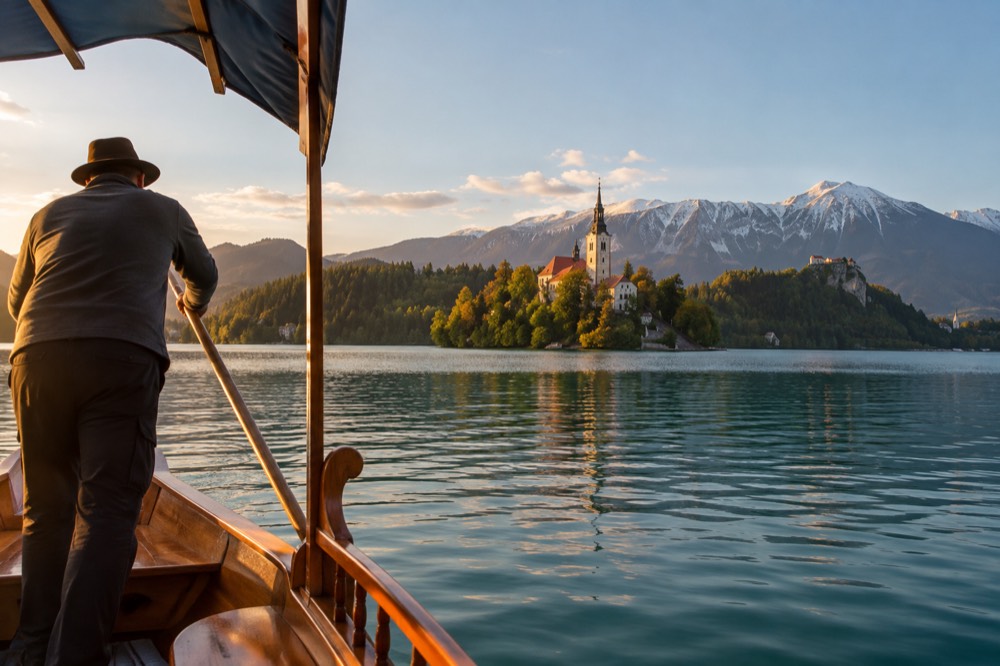
The lake option is Lake Bled, which carries more search demand than the entire city of Ljubljana, a fact worth respecting in your planning. Bled Castle entry is 19.00 EUR for an adult, the pletna boat to the island is 20 EUR per person, and the electric Bled Boat Line is 16 EUR. If you are leaning Bled, our Ljubljana to Lake Bled guide covers the transport, including the detail most rail advice gets wrong: Bled Jezero station is 1.5 km from the lake, while the better-known Lesce-Bled station is 4 km.
The simplest way to run the cave day is the combined tour: the Cave and Castle Tickets and Tour runs six hours from Ljubljana, is rated 4.8 across 2,802 reviews and covers both Postojna Cave and Predjama Castle with transport and entry arranged. It is the version of day two that removes every decision, and for a two-day trip where the hours are scarce, that is worth real money.
If you would rather build the day yourself, the trade-off is flexibility against friction. The cave's own timetable is a month-by-month grid with departures between 09:00 and 18:00, and the official guidance is to arrive 30 minutes before your tour. Škocjan Caves, the UNESCO-listed alternative, is a different product again: about 400 stairs and a 2h 30m walk rather than a train ride, which is the honest differentiator between the two caves, and our Škocjan Caves guide compares them properly.
Do You Need a Third Day, or Is Two Enough?
Two days is enough for the city and one big day trip, and a third day only earns its keep if you add a second day trip, most often Lake Bled or the Soča Valley. Ljubljana's own sights fit into one full day, so the decision is really about how many of Slovenia's headline sights you want, not about the city needing more time.
The pattern holds across the whole country's geography. Within a day's reach of the city you have the karst caves, Lake Bled, Triglav National Park, the Soča Valley, the coast at Piran, and even Zagreb across a border that no longer has routine checks, since Slovenia has been in the Schengen area since 21 December 2007 and Croatia joined it on 1 January 2023. There is no currency to change either: Slovenia adopted the euro on 1 January 2007.
If your two days fall in winter, weight them differently. December gives Ljubljana 56 hours of sunshine and just 2 clear days, while the high ground above the basin inversion sits in sun, so winter visitors should spend more of day two going up, whether that is the Bled trip, a Velika Planina hike or the Julian Alps. Our guide to Ljubljana in winter builds that version of the itinerary.
What Practical Facts Help You Plan Two Days in Ljubljana?
The facts that change decisions: the centre is pedestrianised so a car is a liability, city buses take no cash on board, a single 90-minute zone 1 ride is 1.50 EUR with contactless accepted, tourist tax is 3.13 EUR per person per night, and the castle funicular runs until 22:00 in summer. None of these are obvious from a first search, and each one saves a visitor a real mistake.
| Planning fact | Figure | Note |
|---|---|---|
| Single bus ride, zone 1 | 1.50 EUR | 90 minutes including transfers; cash not accepted on board |
| Tourist tax | 3.13 EUR per person per night | Half rate 1.57 EUR for ages 7-18; under 7s exempt |
| Castle ticket with funicular, adult | 19.00 EUR | Covers tower, exhibitions and funicular both ways |
| Postojna Cave, adult | 34.90 EUR | Cave temperature 10 C year round |
| Lake Bled day tour from the city | from $57 | Six hours, rated 4.8 from 888 reviews |
| Free GuruWalk Old Town walk | free, tips based | 2 hours, rated 4.91 from 1,496 reviews |
The no-cash bus rule is the one that catches people. LPP, the city operator, accepts contactless bank cards and phones on board, so the old trap of needing an Urbana card before boarding is gone, but coins and notes still do not work. The Urbana card itself costs 2.00 EUR and single rides are 1.50 EUR in zone 1. Our guide on paying for public transport in Ljubljana goes through the options.
One more budget lever: the national museums and galleries, including the National Gallery and the Slovenian Ethnographic Museum, admit visitors free on the first Sunday of every month, and almost all of them close on Mondays. If your day one lands on a Monday, swap the museum hour for the river and the castle, which is open 365 days a year.
For anyone weighing whether the city alone deserves both days, the honest answer is no: a single well-planned day covers the Old Town, the castle and the river, and our one day in Ljubljana itinerary proves it. Two days exists so that day two can leave the city.
Common Questions About a Two Day Itinerary for Ljubljana
What Is A Good Two Day Itinerary For Ljubljana?
Day one on foot in the pedestrianised centre: Prešeren Square, the Triple Bridge, the Central Market, the river banks and Ljubljana Castle by funicular. Day two on a day trip, with Postojna Cave and Predjama Castle or Lake Bled as the two strongest options, both reachable on six-hour tours from the city.
Is two days enough for Ljubljana?
Yes. The city's own sights fit one full day, and the average visitor stays about two nights. The second day is best spent on a day trip rather than stretching the city's sight list further.
Should the second day be Postojna Cave or Lake Bled?
Postojna is the weatherproof choice, holding 10 C year round, while Bled is the more photogenic one and carries more visitor demand than the city itself. Both run as roughly six-hour guided tours from Ljubljana.
Do you need a car for two days in Ljubljana?
No. The centre is pedestrianised, day one needs no transport at all, and every major day trip runs as a guided tour or a direct [coach](https://busbud.tpk.ro/4kLAIElq) from the city. A car is closer to a liability in the centre than a help.
What does a two day Ljubljana trip cost?
Count on 19.00 EUR for the castle with the funicular, 34.90 EUR for Postojna Cave entry booked direct, 1.50 EUR per bus ride, and 3.13 EUR per person per night in tourist tax. A guided day trip runs from around $57 to $132 per person depending on the destination.
What if it rains on both days?
Swap the day trip to the caves, which hold a constant temperature year round, and move day one's outdoor hours into the museums and the castle's indoor exhibitions. September and October average 12.4 fog days each and 147 mm of rain, so a wet plan is worth having in those months.