What Food Is Ljubljana Famous For?
The dishes, markets and food traditions Ljubljana is known for, from štrukelj and Carniolan sausage to the Friday Open Kitchen street food market.
What Food Is Ljubljana Famous For?
Ljubljana is famous for hearty Central European dishes with a Slovenian accent: Carniolan sausage (kranjska klobasa), štrukelj rolled pastry, buckwheat žganci, potica nut roll and bread dumplings, eaten around a pedestrianised old centre whose Friday Open Kitchen market turns the riverside into a street-food festival. The city's food identity is market-driven, seasonal and best sampled on foot.
That short list hides a longer story. Ljubljana sits where Alpine, Mediterranean, Pannonian and Balkan kitchens meet, and its plates show all four. A single menu in the old centre can carry an Alpine cheese structure, Adriatic olive oil and a Balkan grilled meat, without anyone considering it fusion. Slovenian cooking has always worked that way, because the country's regions border Italy, Austria, Hungary and Croatia and each neighbour left something on the table.
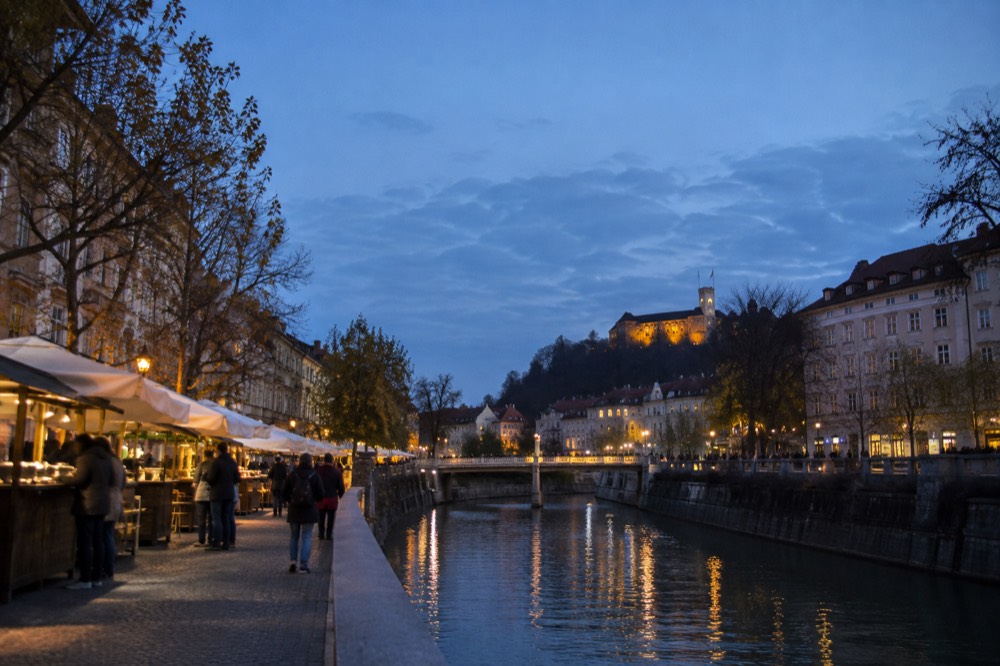
The city itself is small, roughly 293,000 people in the municipality, which is part of why the food scene stays walkable. The historic centre is closed to general traffic, so eating your way through Ljubljana is literally a pedestrian activity. You cross the Ljubljanica on Čevljarski most, the Shoemakers' Bridge, and the next tasting stop is two streets away.
There is also a modern layer. In the last two decades young Slovenian chefs have pushed local ingredients into contemporary kitchens, and Ljubljana now holds the country's densest concentration of them. The fame, though, still starts with the classics. If you arrive knowing only one Slovenian dish, make it the sausage, and if you arrive knowing none, read the next section before you order.
Which Slovenian Dishes Should You Try First?
Start with kranjska klobasa, the Carniolan sausage, then štrukelj, the rolled sweet or savoury pastry, then a bowl of žganci buckwheat groats, and finish with potica, the rolled nut or tarragon cake that appears at every celebration. Add a bowl of beef or mushroom soup and a slice of Prekmurje gibanica layered cake and you have the canon.
These are the dishes the city's kitchens agree on. The Carniolan sausage is protected by its own specification, garlic-and-pork, lightly smoked, and it arrives grilled with mustard, horseradish and bread. Štrukelj is the great chameleon: rolled dough filled with cottage cheese, tarragon, apple or walnut, baked or boiled, sweet or savoury in the same restaurant. There is even a hands-on class in the city devoted to making it, the Traditional Slovenian štrukelj Cooking Class, three hours of rolling, filling and eating.
| Dish | What it is | When Slovenians eat it |
|---|---|---|
| Kranjska klobasa | Garlic-and-pork smoked sausage, grilled | Any time, the default quick meal |
| Štrukelj | Rolled pastry with sweet or savoury filling | Sunday lunch, dessert or a starter |
| Žganci | Buckwheat or corn groats, often with crackling | Hearty winter comfort food |
| Potica | Yeast dough rolled around walnuts, tarragon or poppy seeds | Easter, Christmas, celebrations |
| Bograč | Slow-cooked meat and paprika stew | Cold-weather restaurant special |
| Gibanica | Layered pastry with poppy seeds, walnuts, apple and cottage cheese | Dessert, a Prekmurje speciality |
A few practical notes for ordering. Sunday lunch is the ceremonial meal of the week and many restaurants run a fixed menu for it, which is the cheapest way to eat the classics well. Soup is not optional in the local mind: a Slovenian lunch starts with one, and asking for the daily soup is usually the best-value order on the card. Portions run generous, Alpine-style, so three courses of the classics is a serious commitment.
Eating the whole canon in restaurant meals takes days, and this is where a guided tasting walk earns its place. The Slovenian Cuisine Walking Tour with Tastings compresses the list into four hours of stops around the centre, the Food and Wine Tour pairs the dishes with local pours in three hours, and the Wine Tasting with Appetizers runs the drinks half on a silent electric boat along the Ljubljanica. More detail on the tour options sits further down this page.
Where Do Locals Actually Eat in Ljubljana?
Locals eat at the Central Market on Vodnikov and Pogačarjev trg, at the Friday Open Kitchen street-food event on the same square from roughly March to November, and in the small restaurants of the old centre and the Trnovo and Krakovo neighbourhoods across the river. The market is the city's food heart.
The Central Market is the single most important food address in Ljubljana. The outdoor stalls on Vodnikov trg and Pogačarjev trg run roughly Monday to Saturday, around 06:00 to 18:00 in summer and 06:00 to 16:00 in winter, with limited Sunday and holiday opening between April and November. The covered halls, designed by Jože Plečnik, open Monday to Friday 07:00 to 16:00 and Saturday 07:00 to 14:00. Come in the morning: the produce is at its best and the halls thin out after noon.
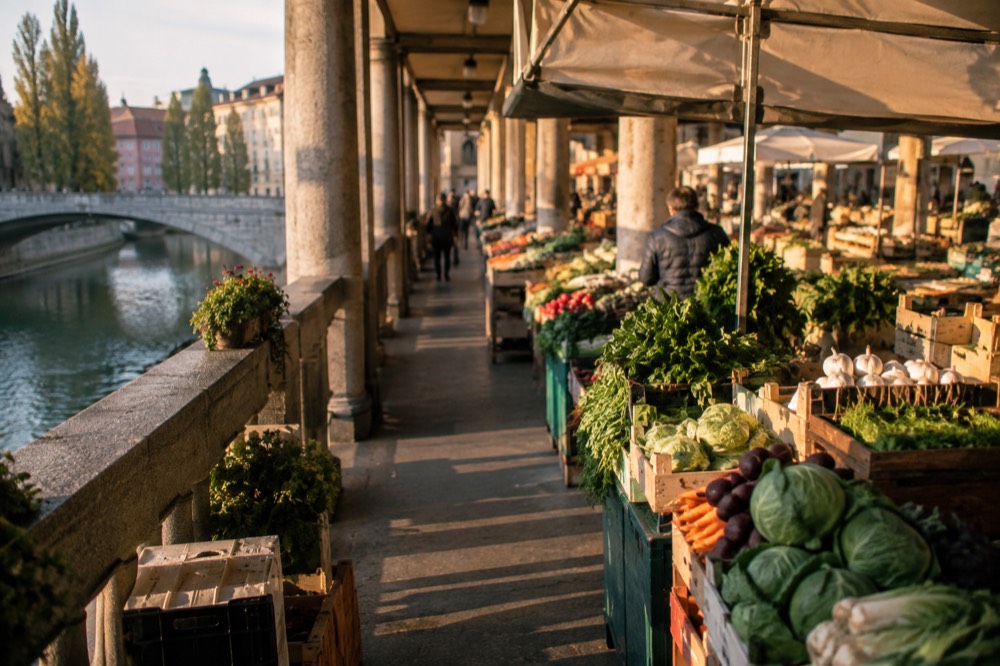
The Friday event is the one to plan a trip around. Open Kitchen, Odprta Kuhna in Slovenian, runs on Pogačarjev trg on Fridays from roughly March to November, about 10:00 to 21:00 and later on warm evenings. Restaurants from across the city set up stalls and cook their signature dishes at street prices. The official wording is "every sunny Friday", and that is literal: the event is cancelled in bad weather, so a rainy forecast means no Open Kitchen that week. Check the tourist board's Open Kitchen page before you build a Friday around it.
For a sit-down meal, the pattern is simple. The old centre holds the highest concentration of traditional kitchens, and the streets just across the river, Trnovo and Krakovo, hold the smaller ones locals actually book. Our where to eat in Ljubljana guide breaks the neighbourhoods down dish by dish, and the best restaurants in Ljubljana picks cover the modern end of the scene.
What About Wine, Beer and Other Drinks?
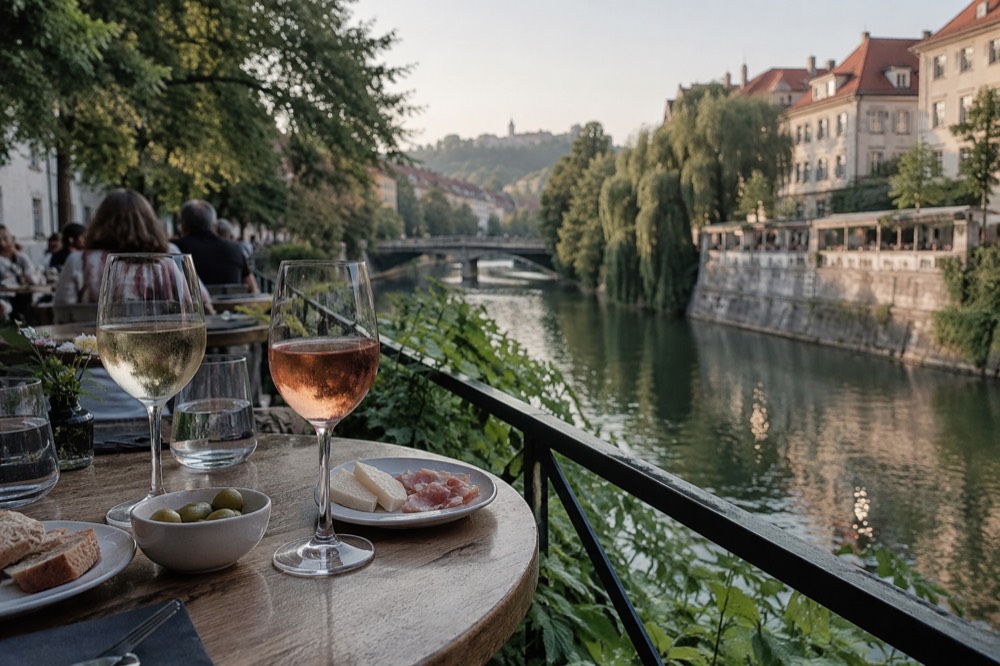
Slovenia is a wine country that most visitors have not heard of, and Ljubljana is the best place to discover that: white wines from the Vipava Valley and Štajerska, the orange-wine tradition of the borderlands, craft beer from small city breweries, and a strong coffee culture inherited from the Austro-Hungarian café.
Wine first, because it is the biggest surprise on the list. Slovenia has three wine regions and a per-capita production that quietly rivals its neighbours, and the Vipava Valley, half an hour from the city, specialises in fresh whites and skin-contact orange wines. Ljubljana's bars pour all of it. A guided tasting in the centre, or the Vipava Valley Wine Express day trip for those who want the vineyards themselves, covers more ground than months of casual ordering.
Beer matters too. The city's small breweries have multiplied, and the Ljubljana craft beer guide maps the best of them, including a Ljubljanica boat cruise that pairs the river with craft tastings. Coffee is the third pillar: the café culture under the arcades is old, and a slow morning coffee is as much a Ljubljana food ritual as the sausage.
One drink deserves a warning rather than a recommendation. Slovenian brandy, žganje, arrives at the end of long meals and is stronger than it tastes. Nod, sip, and pace yourself.
Is a Food Tour in Ljubljana Worth It?
Yes, for most visitors a food tour is worth it: Ljubljana's classic dishes are scattered across many small kitchens, the portions are heavy, and a guided tasting walk lets you try six or eight of them in one afternoon without committing to a full restaurant meal at each stop, with a guide explaining what you are eating.
The economics are straightforward. Ordering the canon à la carte means a sit-down meal per dish, and the classics are filling. A tasting walk buys small portions at each stop, plus the context, plus a route through the centre you would not find alone. The Slovenian Cuisine Walking Tour with Tastings is the strongest pick for first-time visitors: four hours, a 4.8 rating across 552 reviews, and a route built around the signature dishes.
The alternatives suit different appetites. The Food and Wine Tour Ljubljana adds Slovenian pours to the plates over three hours, and the Wine Tasting Experience with Appetizers moves the whole thing onto an electric boat on the Ljubljanica, two hours of river, glass in hand. For cooking rather than tasting, the štrukelj class turns the eating into doing, three hours of pastry work with a 4.9 rating from 90 reviews. If you want to browse the full range first, the Ljubljana food tour roundup compares them side by side.
What Food Should You Bring Home from Ljubljana?
Bring potica or gibanica from a bakery, a bottle of Vipava or Štajerska white wine, pumpkin seed oil, locally produced honey, and Carniolan sausage where customs rules allow it. The Central Market's covered halls and the delicatessen shops of the old centre are the places to buy all five in one stop.
Pumpkin seed oil is the sleeper item. Slovenians drizzle the dark green oil over salads, cottage cheese and even vanilla ice cream, and it is almost impossible to buy well outside the region. Honey is the other one: Slovenia is a beekeeping nation, the Carniolan honey bee is a national symbol, and market stalls sell varieties by flower source. Both travel well, unlike the sausage and cake, which are for the journey home or the last breakfast.
Wine is the decision to make early. Bottles from the Vipava Valley travel fine, but check your airline's luggage allowance before buying three. If you want to taste before committing, the Slovenian food in Ljubljana guide lists the shops and tasting rooms where that happens, and this Ljubljana Travel Guide site covers the day trips into wine country itself.
For a final meal before departure, the honest advice is to repeat rather than experiment. Ljubljana's classics are classics for a reason, and the second bowl of that Sunday soup is usually better than the first.
Common Questions About Food in Ljubljana
What Food Is Ljubljana Famous For?
Kranjska klobasa sausage, štrukelj rolled pastry, žganci buckwheat groats, potica nut roll and gibanica layered cake, eaten around a pedestrianised centre whose Central Market and Friday Open Kitchen event anchor the food culture.
What is the most famous Slovenian dish?
The Carniolan sausage, kranjska klobasa, a lightly smoked garlic-and-pork sausage with protected status. It is the default quick meal across the country and appears on nearly every traditional menu in Ljubljana.
Where should I eat in Ljubljana?
Start at the Central Market on Vodnikov and Pogačarjev trg in the morning, then eat in the old centre's traditional kitchens or the smaller restaurants of Trnovo and Krakovo across the river. On a Friday from roughly March to November, head to Open Kitchen on Pogačarjev trg, weather permitting.
Is Ljubljana good for vegetarians?
Yes, better than its sausage-first reputation suggests. Štrukelj comes in cheese and tarragon versions, žganci is meat-free by default, buckwheat and dairy dishes run deep in the tradition, and the modern kitchens in the centre all carry serious vegetarian plates.
What drink is Slovenia known for?
Wine, especially the whites of the Vipava Valley and the orange-wine tradition of the border regions, plus a fast-growing craft beer scene in Ljubljana and a strong Austro-Hungarian café culture.
What time is lunch in Ljubljana?
Midday, with Sunday lunch the ceremonial meal of the week. Many traditional restaurants run a fixed Sunday menu, which is usually the best-value way to eat the classics. Soup comes first, always.