Slovenian Food to Eat in Ljubljana: Dishes, Markets and Where to Order
Slovenian food is hearty, regionally split between Alpine, Mediterranean and Pannonian kitchens, and best eaten in Ljubljana at the Central Market, the old-town taverns and the Friday open-air kitchens. This guide covers exactly what to order, what it costs and where to find it.
Short answer
Order kranjska klobasa with žganci, a bowl of bograč, štrukelj or potica for dessert, and a glass of local wine. Eat at the Central Market for lunch, an old-town gostilna for dinner, and Odprta Kuhna on a Friday if your visit lands in the warmer half of the year. A guided food walk ties the whole cuisine together in one afternoon.
Slovenian food sits at a crossroads most visitors never expect. The country touches the Alps, the Adriatic and the Pannonian plain, and its kitchen carries all three: sausage and dumplings from the north, olive oil and fish from the coast, stew and paprika from the east. Ljubljana, as the capital, gathers the whole spread in one walkable centre. The historic core is pedestrianised, the Central Market sits at its edge, and the distance between a market stall, a 200-year-old gostilna and a modern wine bar is a few hundred metres at most.
This guide walks through the dishes that actually define the cuisine here, where to eat them, what breakfast and street food look like, and how a guided food tour compares with exploring on your own. Prices for individual restaurants are date-specific and are deliberately not quoted; the figures that are given, market hours, museum days, the cost of a castle ticket, come from the operators' own published pages.
What Food Is Ljubljana Famous For?
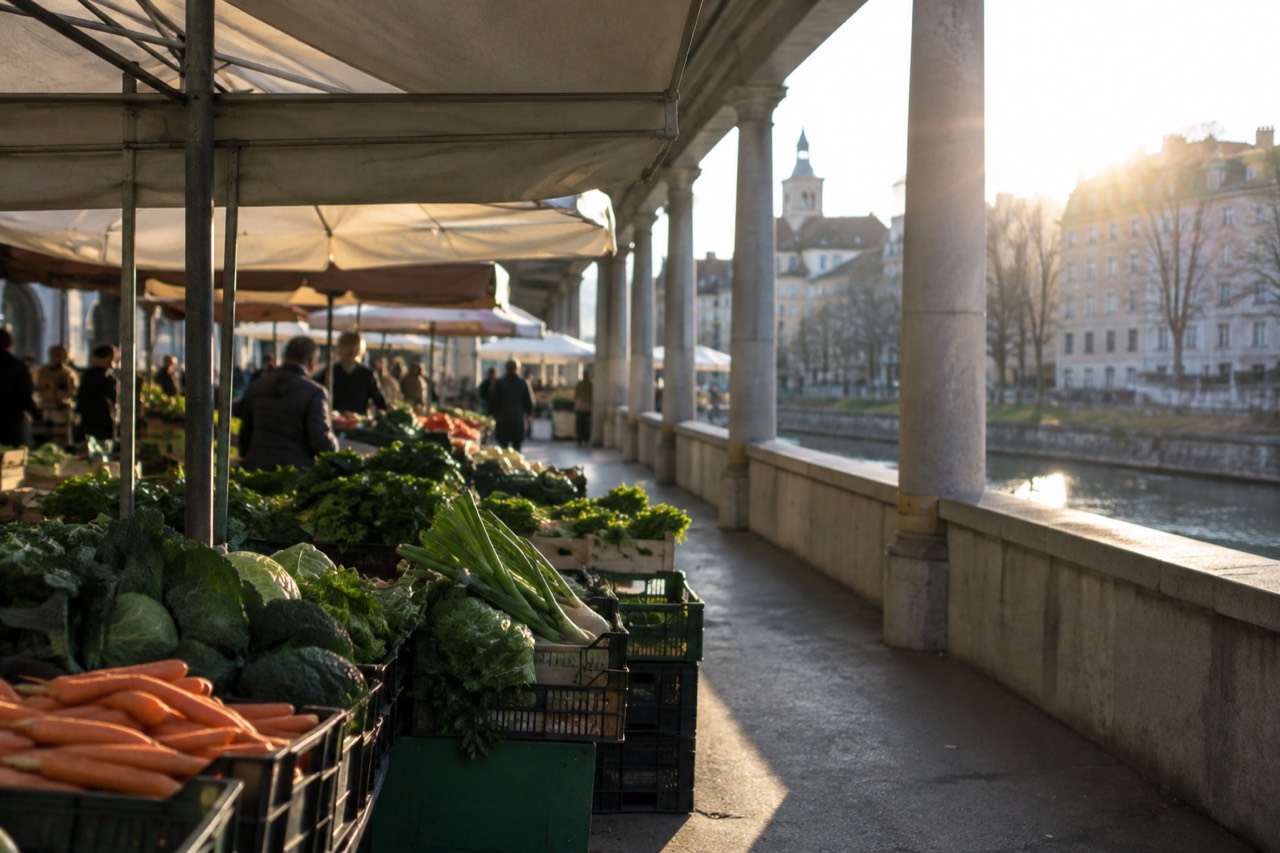
Ljubljana is famous as the place where all of Slovenia's regional kitchens meet: Alpine sausage and dumplings, coastal fish and olive oil, and eastern stews all sit on menus within the pedestrianised old town. The signature items are kranjska klobasa, žganci, bograč, štrukelj and potica, and the Central Market on Vodnikov and Pogačarjev trg is the single best place to see the raw ingredients behind all of them.
The honest answer starts with a correction. Ljubljana's own contribution is less a single dish than a gathering role. The city sits at the junction of Slovenia's regions, and its restaurants serve the whole country's cooking. What the city adds is the setting: a car-free centre, a riverside market and a dense cluster of taverns that have been feeding the same squares for generations.
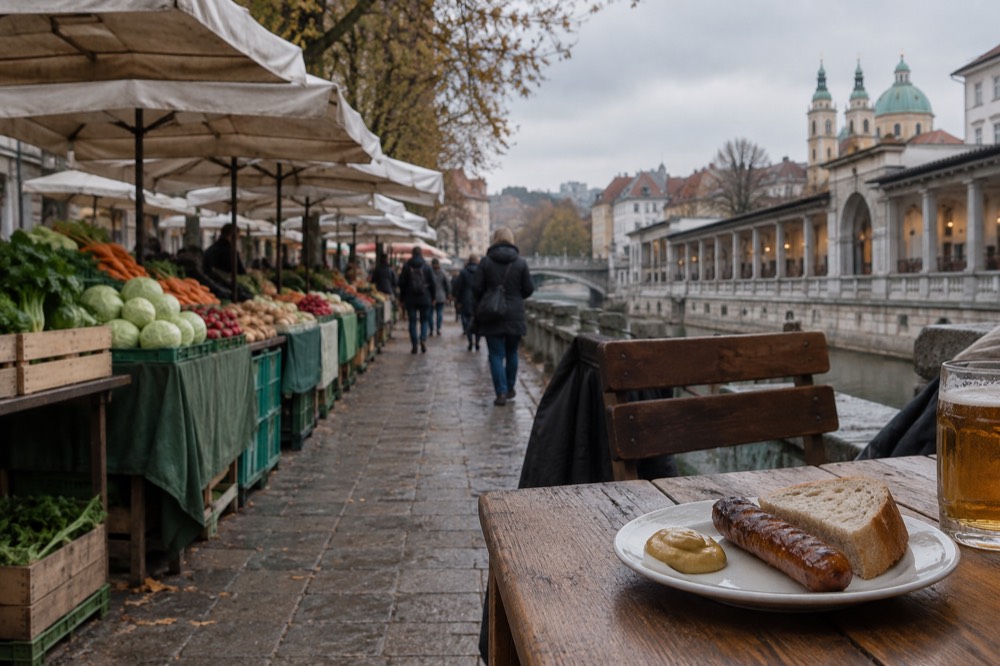
A few names to learn before you open a menu. Kranjska klobasa is the protected pork sausage, grilled and served with mustard and bread. Žganci are buckwheat or maize groats, the classic accompaniment, often with a spoon of crackling on top. Bograč is a meat stew from the Prekmurje region in the east, thick and paprika-heavy. Štrukelj is a rolled pastry, filled with cottage cheese or walnuts, served sweet or savoury. Potica is the celebration bread of the whole country, a yeast dough rolled around walnuts, tarragon or poppy seeds.
None of this is fussy. Slovenian home cooking is a peasant tradition scaled up, and the restaurants that do it best are the ones that never tried to modernise it. That is also why the cuisine translates so well to a walking tour: portions are small enough to taste, and the dishes cluster in a compact old town. If you want the full context on the restaurant scene beyond the traditional kitchens, the companion guide to where to eat in Ljubljana covers the neighbourhoods and the booking picture.
Which Slovenian Dishes Should You Actually Order?
Order kranjska klobasa with žganci as your main, a bowl of bograč if the day is cold, štrukelj as the savoury course or dessert, and potica with coffee at the end. Add a slice of kruh iz peči, the old-style baked bread, and finish with a glass of Slovenian wine, which most visitors underestimate.
Start with the sausage. Kranjska klobasa carries protected geographical status across the European Union, which means the name is legally tied to a recipe and a region, and the version you get in Ljubljana is the genuine article. It arrives grilled, snappy, mildly smoked, with mustard and a slice of bread. It is not a hot dog and no restaurant here would treat it as one.
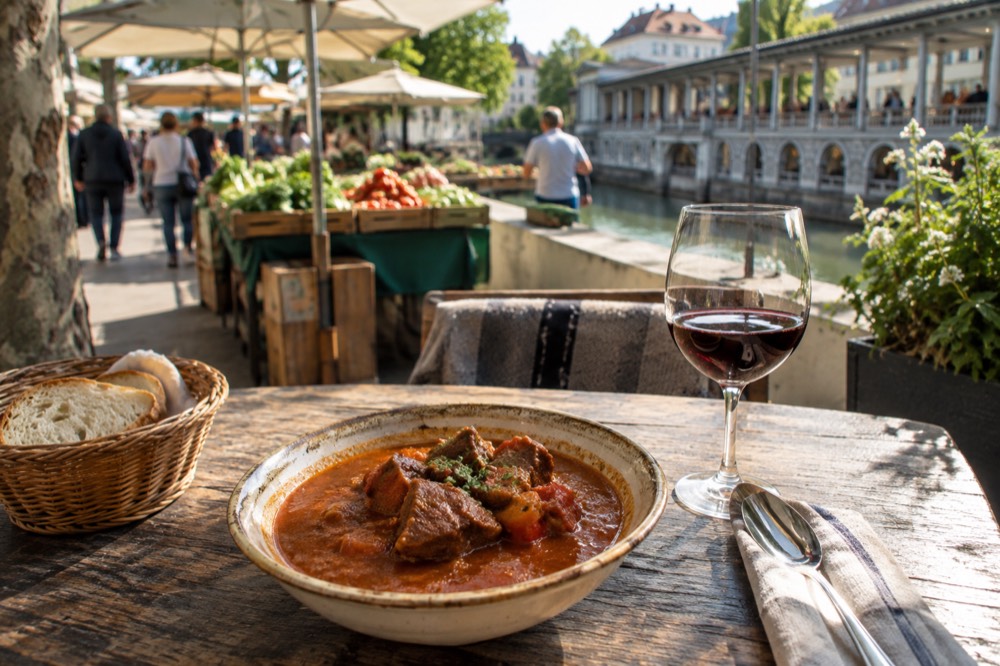
Then the stews. Bograč from Prekmurje is the heavyweight: three meats, potatoes and paprika, cooked down until the spoon stands up in it. Jota is its inland cousin, a sour soup of sauerkraut or turnip, beans and pork, and it is the definitive winter dish of the Ljubljana basin. If you arrive between November and February, order jota on the first cold evening and you will understand why the city's fog-and-inversion climate produced such dense cooking. The food and the weather are the same story.
The pastry course is where Slovenia surprises people. Štrukelj, the rolled dough parcel, is served savoury with cottage cheese or sweet with walnuts and raisins, and it appears on tavern menus in both roles. Potica is harder to find done well and worth hunting: the walnut version is the classic, but the tarragon version is the one that makes locals argue. A slice of either with a coffee is the correct afternoon stop.
Here is the short order, dish by dish:
| Dish | What it is | When to order it |
|---|---|---|
| Kranjska klobasa | Protected grilled pork sausage with mustard and bread | Any meal; the safe first order |
| Žganci | Buckwheat or maize groats, often with crackling | As a side with sausage or stews |
| Bograč | Prekmurje meat and potato stew with paprika | Cold days, long lunches |
| Jota | Sauerkraut or turnip soup with beans and pork | Winter, especially November to February |
| Štrukelj | Rolled pastry with cottage cheese or walnut filling | Savoury course or dessert |
| Potica | Rolled celebration bread with walnut, tarragon or poppy filling | With coffee, or to take home |
Tasting your way through that list takes either several days of restaurant visits or one organised afternoon. A guided walk with tastings is the efficient route, and the two most popular options in the city take different angles on the same cuisine.
The Slovenian cuisine walking tour with tastings runs four hours across the old town and pairs each stop with the story behind the dish, which matters here more than in most cities because the regional logic, Alpine, coastal, eastern, is invisible on the menu until someone explains it. The combined food and wine walk covers similar ground in three hours with more emphasis on the glass. The wine tasting with appetizers adds a silent electric boat on the Ljubljanica, which reframes the whole city from the water. Whichever angle appeals, check the dates against your trip early, because the small-group food walks fill first in the high season.
Where Do Locals Eat in Ljubljana?
Locals eat at the Central Market stalls at lunch, in the gostilne, the traditional taverns, of the old town and the Trnovo and Šiška neighbourhoods at dinner, and at the open-air Odprta Kuhna kitchen market on Pogačarjev trg on sunny Fridays from roughly March to November.
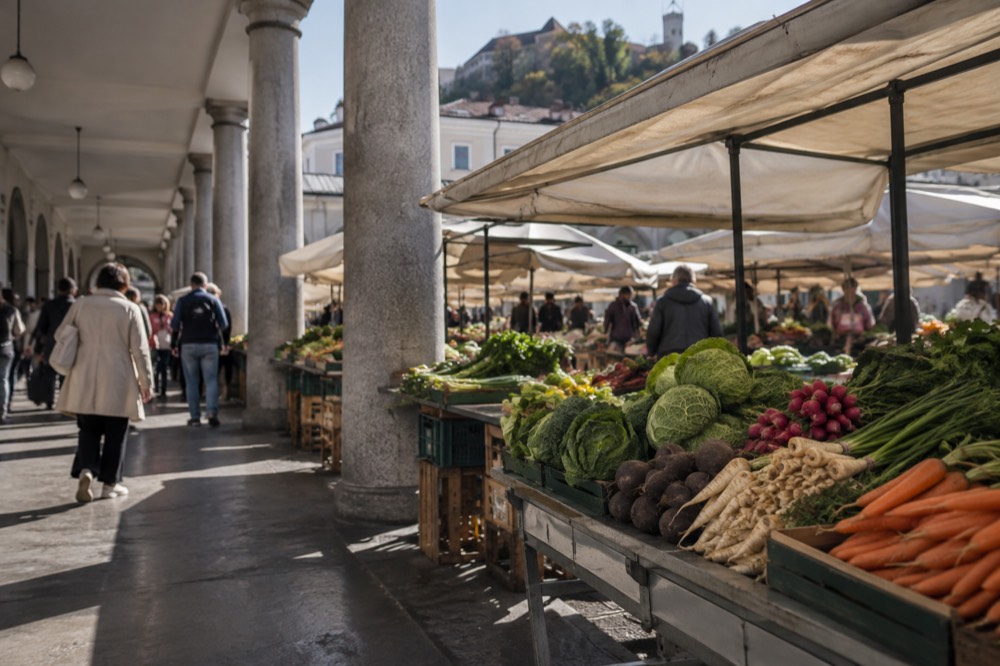
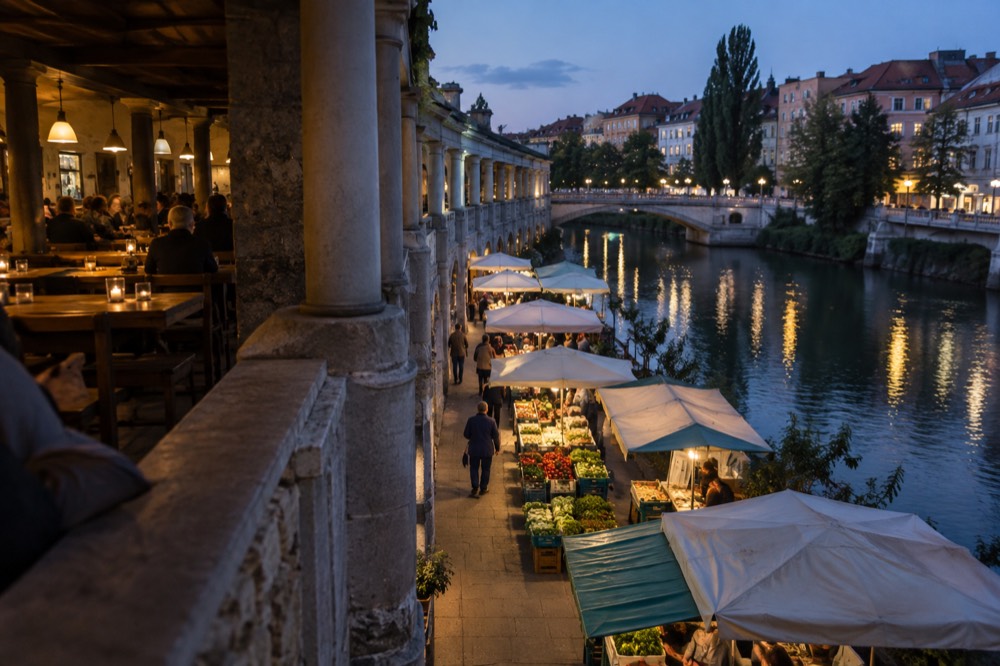
The market first. The outdoor stalls on Vodnikov and Pogačarjev trg run roughly Monday to Saturday, 06:00 to 18:00 in summer and 06:00 to 16:00 in winter, with limited Sunday and holiday opening from April to November, according to the operator's published hours. The covered halls keep shorter weekday hours. Come in the morning: the produce is at its best and the market is a working one, not a performance for tourists. The central market guide has the full breakdown of stalls and halls.
Then the gostilne. A gostilna is the Slovenian tavern, and the difference between one and a restaurant is that the tavern is expected to serve the traditional repertoire rather than reinterpret it. The old town has several within a five-minute walk of Prešernov trg, and the ones worth the walk sit a little further out, where the rents are lower and the cooking is plainer. The deeper neighbourhood picks, including the places locals actually queue for on a Friday, are listed in the where locals eat in Ljubljana guide.
The Friday institution is Odprta Kuhna, the Open Kitchen. It runs on Pogačarjev trg roughly from March to November, 10:00 to 21:00 and later on warm days, and the tourist board's own wording is "every sunny Friday", which is literal: the kitchens cancel in bad weather. Check the forecast, because the city's early-autumn weather is wetter than most guides admit, with September and October the joint wettest months of the year at 147 mm each. The Odprta Kuhna guide covers the stallholders and the timing.
If the plan for your trip is to eat the full traditional repertoire in one guided stretch, the cuisine walking tour is the one that covers the market and the tavern kitchens together.
The four-hour format matters. It is long enough to sit down at two or three stops rather than only grazing on street samples, and the guide's commentary fills in the regional map, which dish comes from the coast, which from the Alps, which from the eastern plain. For a first visit, that framing turns every later menu in Slovenia into something you can read.
What Is a Typical Slovenian Breakfast?
A typical Slovenian breakfast is bread with a choice of toppings, not a cooked plate: fresh or baked bread with butter, honey, cheese, cured meats and potica, plus coffee or tea. Hotel breakfasts add eggs and yoghurt, but the native tradition is the bread-and-toppings table, and the old-style baked bread, kruh iz peči, is the item worth seeking out.
Slovenia's breakfast is a northern European one, closer to what you would find in Austria an hour up the road than to anything Mediterranean. The core is bread, and the quality of the bread is the whole test of the table. Good bakeries in the centre sell out of the traditional loaves by mid-morning, which is one more argument for treating the market as a morning activity rather than an afternoon one.
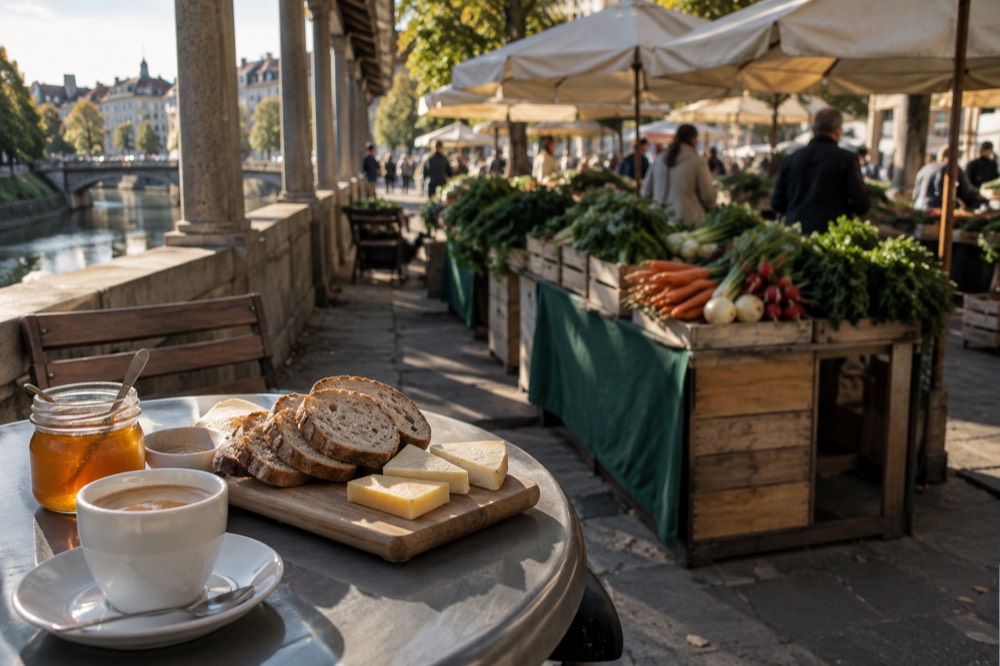
What you add to the bread is where Slovenia's regions show up again: honey, which the country takes seriously, sheep or cow cheese, salami and prosciutto-style cured meats, and a slice of potica on festive mornings. Cafés in the centre serve this as a set breakfast plate. The full picture, café by café, is in the breakfast in Ljubljana guide.
One practical note that belongs to breakfast and to every other meal: the tourist tax is 3.13 EUR per person per night, added to accommodation rather than to restaurant bills, and tipping in restaurants is modest, rounding up rather than a fixed percentage. Menu prices already include service.
What About Street Food and Quick Bites?
Street food in Ljubljana means the market stalls at lunch, burek from the bakeries, and the Friday open-air kitchens; there is no permanent street-food district, so the quick-bite options are the covered market halls, the old-town bakeries and the hot-dog and sausage stands near the river.
The burek deserves its own sentence. It is the flaky filled pastry that arrived with the Balkan kitchen, sold by the piece from bakery windows, and it is the default cheap hot lunch of the region, filled with cheese, meat or potato. It is not Slovenian in origin, but neither is it an import you should skip; a cheese burek eaten standing up is as much a part of eating in Ljubljana as the sausage is. The rest of the planning pages sit on Ljubljana Travel Guide.
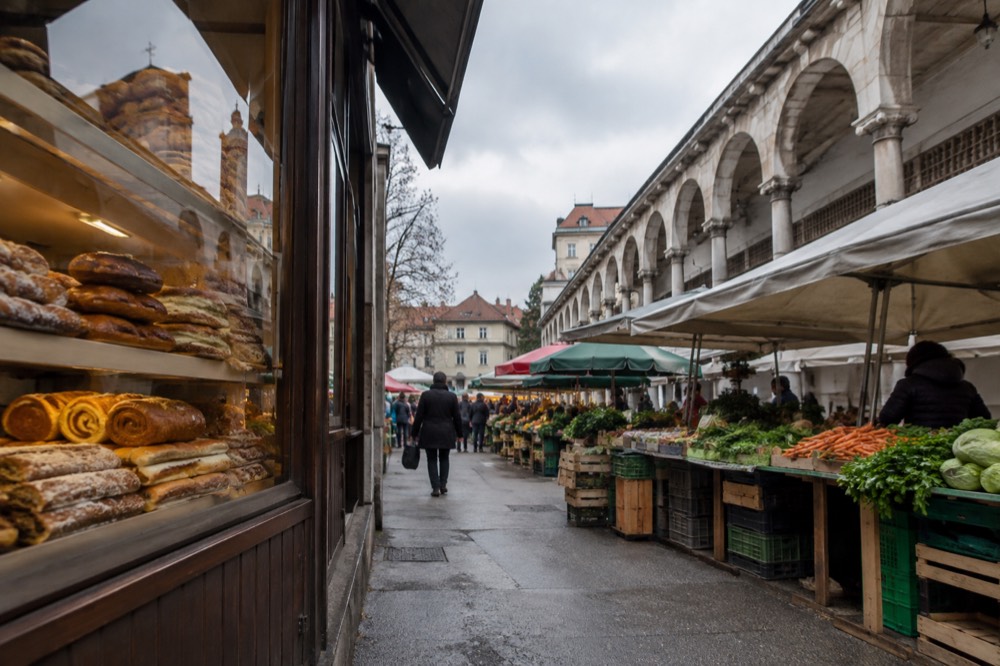
Beyond that, the quick-bite map is short and central. The market halls sell cheese, bread and cured meats that make a picnic on the Ljubljanica banks, which is a legitimate lunch plan in the warmer months. The sausage stands near the river and the market grill klobasa on the spot. And the craft beer scene, which has grown fast in the last decade, means the drinking-and-snacking option is better than the traditional kitchen alone suggests; the Ljubljana craft beer guide maps the breweries and bars.
For a quick comparison of the main ways to eat cheaply through a day:
| Quick option | What you get | Best time |
|---|---|---|
| Market hall picnic | Bread, cheese, cured meats, fruit | Lunch, April to October |
| Burek bakery | Filled flaky pastry by the piece | Any time, cheapest hot food |
| Market grill | Grilled klobasa with mustard | Lunch, market days |
| Odprta Kuhna | Restaurant-quality dishes from dozens of stalls | Sunny Fridays, March to November |
| Café breakfast plate | Bread, honey, cheese, coffee | Morning |
What Should You Drink with It: Slovenian Wine and Spirits?
Slovenian wine is the most underrated part of the meal: the country has three wine regions and a per-capita output most visitors never hear about, so order local whites like rebula and laški rizling, reds like refošk and modra frankinja, and finish with a shot of sadjevec or pelinkovac as the traditional digestif.
Slovenia's wine regions sit along the borders: Primorska in the west toward the Adriatic, Podravje in the north-east and Posavje in the south-east. The practical consequence in Ljubljana is that wine lists carry all three, and the local glass is usually better and cheaper than the imported one. The white tradition is the strongest; the coastal region's rebula and the north-east's laški rizling are the two names to recognise on a menu.
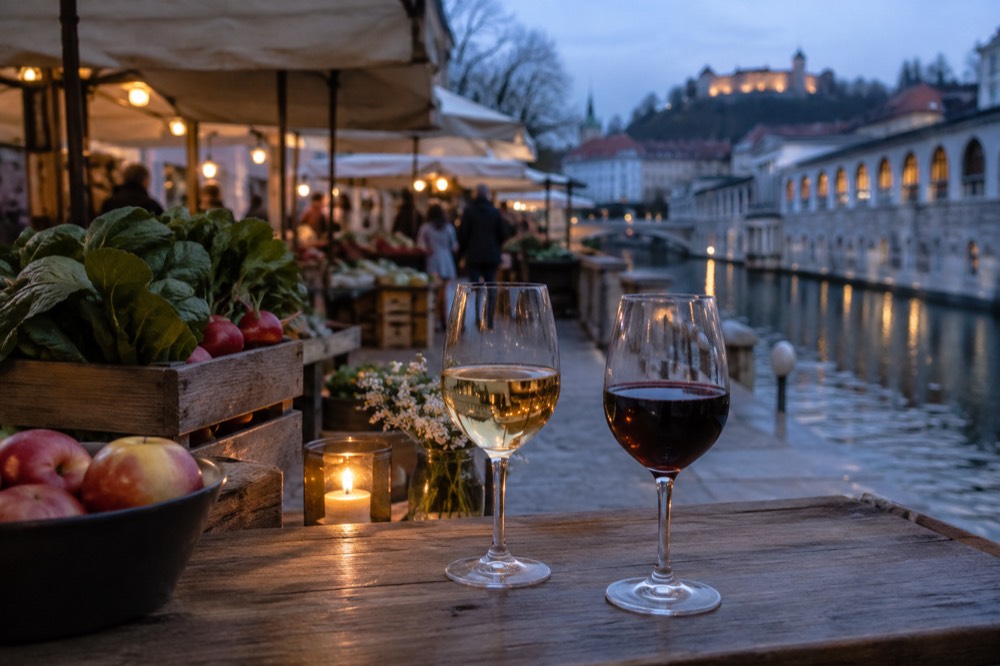
The drinking culture also has its own venues. Wine bars in the old town pour by the glass, and a tasting flight is a normal evening order. For a structured introduction, the wine tasting with appetizers runs on a silent electric boat along the Ljubljanica, which combines the two things the city does best in a single two-hour stretch.
If you would rather stay on dry land and eat more, the combined food and wine walk is the alternative: three hours, central Ljubljana, and a route that treats the wine as part of the meal rather than a separate event.
The spirits are a smaller chapter but a real one. Sadjevec is the fruit brandy family, made from pears, apples or plums depending on the region, and pelinkovac is the bitter herbal one. Both appear as post-dinner shots in the traditional gostilne, and both are stronger than they taste.
How Much Does Eating Out in Ljubljana Cost?
Eating out in Ljubljana costs less than in western Europe and more than in the Balkans: a market or bakery lunch is a single-digit-euro affair, a traditional tavern dinner with a main and a drink lands in the mid-teens to low-twenties per person, and the guided food tours start from around the price of a restaurant dinner for two.
The honest framing is that Ljubljana sits in the middle of the European price range, cheaper than Vienna or Venice, dearer than Zagreb. The Ljubljana prices guide carries the full cost picture for a whole trip, including accommodation categories and transport, and the Ljubljana on a budget guide covers the cheap end of the food scene in detail.
For the food-specific planning ranges, treat these as typical bands rather than promises; individual restaurants move with the season:
| Meal type | Typical planning range per person |
|---|---|
| Bakery burek or market snack | €3–€6 |
| Café breakfast plate | €5–€10 |
| Casual lunch, market or sausage stand | €6–€12 |
| Traditional gostilna dinner, main plus drink | €15–€25 |
| Upscale restaurant, several courses | €40 and up |
| Guided food or wine tour | From about the cost of a dinner for two |
Two structural costs sit outside the food budget and are worth knowing in advance. The castle ticket with the funicular is 19.00 EUR for an adult, which is the single biggest sightseeing outlay in the centre and pairs well with a market morning on the same side of the river. And the Ljubljana Card, from 41.00 EUR for 24 hours at the official price, includes the river cruise, the funicular, city buses and a guided walking tour, which changes the arithmetic for a food-and-sightseeing day even though it covers no meals.
One more way to spend a food afternoon: the štrukelj cooking class, three hours of hands-on pastry work, which suits travellers who would rather learn the dish than only taste it.
Food Tour or Explore on Your Own: Which Is Right for You?
Take a guided food tour if you have one or two days in the city, want the regional context explained, or are travelling without a car; explore on your own if you have three days or more, are happy reading menus, or want to control the pace and budget. The two approaches also combine well, a tour on day one and solo eating after.
The case for the tour is density. A four-hour guided walk compresses a week of menu-reading into an afternoon, and the guides explain the Alpine-coast-east logic that makes the cuisine legible. The case against is pace: a guided group moves on schedule, and the best market mornings are unhurried ones.
The case for going solo is control. The centre is compact and car-free, the market is self-explanatory once you are standing in it, and the taverns publish their menus in the window. The case against is the misses: without the framing, it is easy to eat three good meals and never understand what made them Slovenian rather than generically central European.
A reasonable split, if the visit allows, is one guided tasting walk early in the stay and self-directed eating after. The Ljubljana food tour guide compares every guided option in the city, including the free tips-based walks, in one table.
Before the closing questions, here again are the three tastings that best cover Slovenian food and wine in Ljubljana:
Common Questions About Slovenian Food in Ljubljana
What food is Ljubljana famous for?
Ljubljana is where Slovenia's regional kitchens meet: Alpine sausage and dumplings, coastal fish and olive oil, and eastern stews all appear on old-town menus. The signature items are kranjska klobasa, žganci, bograč, štrukelj and potica, and the Central Market shows the raw ingredients behind all of them.
Which Slovenian dishes should you actually order?
Order kranjska klobasa with žganci as a main, bograč or jota on a cold day, štrukelj as a savoury course or dessert, and potica with coffee. Add a glass of local wine, which most visitors underestimate.
Where do locals eat in Ljubljana?
Locals eat at the Central Market stalls at lunch, in the traditional gostilne of the old town and the outer neighbourhoods at dinner, and at the Odprta Kuhna open-air kitchen market on Pogačarjev trg on sunny Fridays, roughly March to November.
What is a typical Slovenian breakfast?
Bread with toppings: fresh or baked bread with butter, honey, cheese and cured meats, plus coffee. Hotel breakfasts add eggs and yoghurt, but the native tradition is the bread table, and the old-style baked bread is the item worth seeking out.
How much does eating out in Ljubljana cost?
Less than in western Europe and more than in the Balkans. A bakery or market lunch runs a few euros, a traditional tavern dinner with a drink lands around fifteen to twenty-five euros per person, and fine dining starts around forty.
Is a food tour in Ljubljana worth it?
For a short stay, yes: a guided tasting walk compresses a week of menu-reading into an afternoon and explains the regional logic behind the dishes. With three days or more, a tour on day one followed by self-directed eating is the strongest combination.