What Is Ljubljana Best Known For?
Ljubljana is best known for its dragon bridge, the car-free Old Town on the Ljubljanica, Jože Plečnik's architecture and its role as the base for Lake Bled and Postojna Cave.
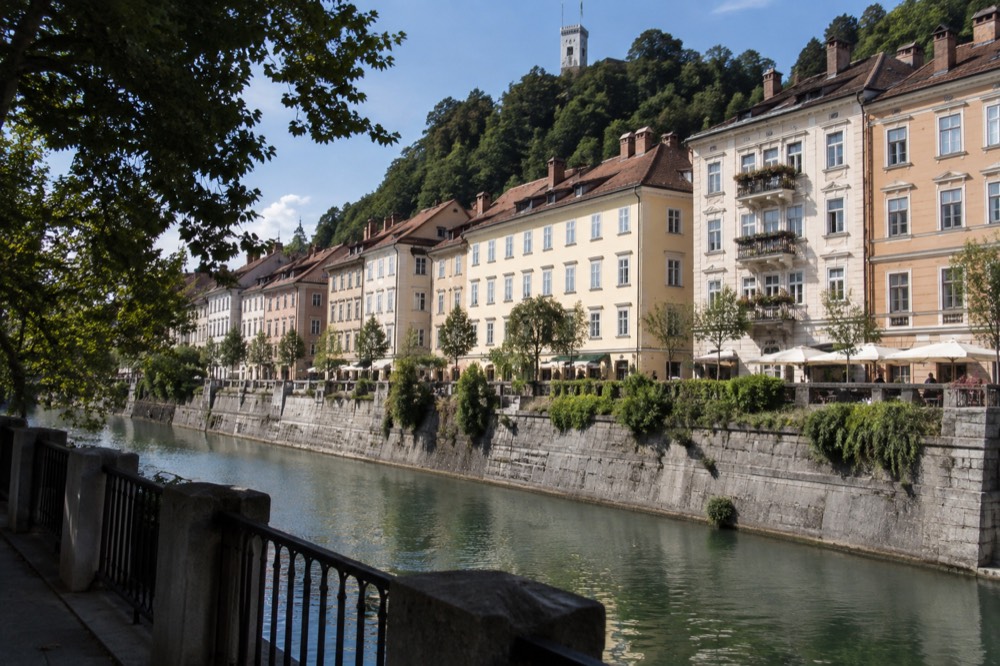
What Is Ljubljana Best Known For?
Ljubljana is best known for four things: the dragon statues on its Dragon Bridge, a car-free Old Town strung along the Ljubljanica river, the architecture of Jože Plečnik, and its position as the base for Lake Bled and Postojna Cave. The city itself is small, but its sights sit at the centre of the country's biggest attractions. Most visitors spend two nights here, the published figures average about 2.04 nights per arrival, and use the city as a launchpad.
That last sentence is the honest framing. People do not usually come to Slovenia for the capital alone. They come for the lake, the caves and the Alps, and Ljubljana is the natural place to sleep in between. The tourist board's own numbers back this up: 1,392,728 arrivals and 2,844,129 overnight stays in the municipality in 2025, a short-stay pattern that says day trips out and evenings in.
But the city repays the stopover. It is one of the smallest capitals in Europe with a genuinely walkable, traffic-free historic core, roughly 20 hectares closed to general motor traffic and progressively expanded since 2007. You can cross it on foot in twenty minutes and still miss half of it, which is the appeal.
Why Is the Dragon the Symbol of Ljubljana?
The dragon became Ljubljana's symbol through the legend of Jason and the Argonauts, who were said to have slain a dragon in the marshes here, and it now guards the city from four statues on the Dragon Bridge. Built in the early twentieth century, the bridge's dragons have moved from a warning to a mascot. Locals are fond of them, and folklore holds that the dragons wag their tails when a virgin crosses the bridge.
The dragon is everywhere once you notice it. It sits on the castle tower, on the city coat of arms, on manhole covers, and in the name of the local hockey supporters' culture. The Dragon Bridge itself, Čevljarski most in the neighbouring sense aside, sits at the north-east corner of the old core, and it is one of the most photographed spots in the country. If you are doing a first walk, the free walking tour of the Old Town routes past it, and the Ljubljana Old Town guide covers the bridge's history in detail.
The city's dragon identity is the shorthand answer to this whole question. Ask a Slovenian abroad what Ljubljana is and you will often get one word, and it will be dragon.
What Is the Old Town and Why Is It Car-free?
The Old Town is the medieval core on the right bank of the Ljubljanica, sitting under the castle hill, and it is best known for being closed to general traffic, a pedestrian zone of roughly 20 hectares that makes Ljubljana one of the most walkable capitals in Europe. The car-free centre is the single most useful practical fact for anyone arriving by car: you cannot drive into it, and you park at the edges instead.
Three bridges anchor it. Tromostovje, the Triple Bridge, is Plečnik's most famous intervention, three linked crossings at the top of the main square. The Dragon Bridge carries the dragons. Čevljarski most, the Shoemakers' Bridge, is the quieter crossing in the middle, where the evening promenade concentrates. Prešeren Square, Prešernov trg, is the open heart of it, facing the pink Franciscan Church of the Annunciation.
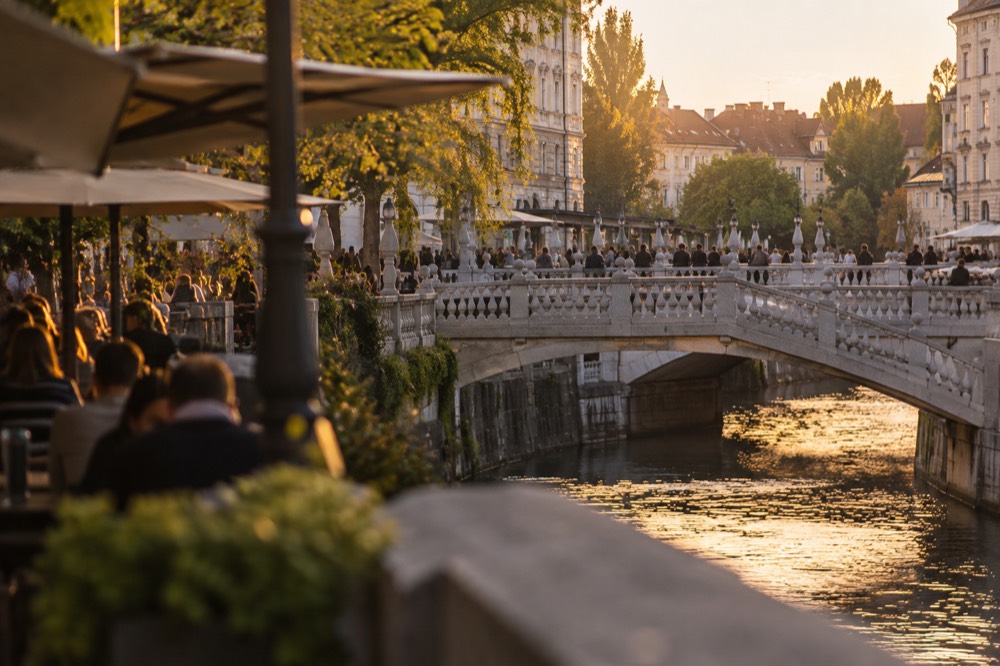
The embankments along the river are the city's living room. In good weather the tables spill out on both banks, and the river cruise, the Ljubljanica river cruise, runs a 50-minute loop from the Breg. The whole arrangement is small enough that you never need a plan, but a one day in Ljubljana itinerary will stop you doubling back on yourself.
Who Was Jože Plečnik and Why Does He Define the City?
Jože Plečnik was the architect who rebuilt much of central Ljubljana between the world wars, and his Triple Bridge, riverside market colonnade, National and University Library and church domes give the city a unified look no other European capital shares. A local who also worked in Vienna and Prague, he returned to a provincial town and treated it as one continuous project for three decades.
Plečnik's mark is the reason the centre photographs the way it does. The colonnaded Central Market running along the river, the truncated pyramid of the library facade, the layered Triple Bridge: these are the compositions people are pointing a camera at. His works in Ljubljana are now recognised by UNESCO as a World Heritage site, which is the formal stamp on what visitors sense anyway, that this is a one-architect city.
You can visit his home, the Plečnik House, in the Trnovo district, on guided tours that run on the hour, and the Plečnik's Ljubljana guide maps the full set. The house tour is the deep cut: his desk, his spectacles, the tiny rooms he worked in. For the overview, the Ljubljana Castle viewpoint from the hill shows how the library and the market sit on one axis.
Is Ljubljana Known as a Base for Lake Bled and the Caves?
Yes, and this is arguably its biggest role in real travel plans: Ljubljana is the standard base for Lake Bled to the north-west and Postojna Cave and Predjama Castle to the south-west, with dozens of daily tours running from the city to all of them. Lake Bled alone carries more search demand than the entire city, and the day-trip economy built around it is the second money surface of Slovenian tourism after Bled itself.
The pairing is not accidental. Postojna Cave is Slovenia's single most visited show cave, open every day of the year with a cave train and a 3.7 km visitor route, and it holds about 10 degrees Celsius year round, which makes it the reliable answer in every season, heatwave or rainstorm. Predjama Castle, built into the mouth of a cliff cave 9 km away, is the country's most dramatic castle photograph. Together they are the classic first day trip. The wider set of guides lives on Ljubljana Travel Guide.
The caves are why the karst country is on the map at all. Postojna's operator publishes the ticket prices and the month-by-month timetable on its own site. The related tour from this site pairs both in one six-hour day:
Lake Bled is the other half of the equation, and the contrast between the two trips is a genuine decision point. The Bled trip is about the view: a lake with an island church and a castle on a cliff. The cave trip is about the underground. Most first-time visitors do one of each, or combine both in a single very long day. The Ljubljana to Lake Bled guide covers the transport options, and the day trips from Ljubljana guide ranks the full menu, from Škocjan Caves to the Soča Valley to Zagreb.
What Food and Drink Is Ljubljana Known For?
Ljubljana is known as Slovenia's best eating city, for a compact restaurant scene built around riverbank tables, a Friday street-food market called Odprta Kuhna, and a craft beer culture out of proportion to the city's size. The national dishes all surface here, from štrukelj, the rolled pastry that can be sweet or savoury, to kranjska klobasa sausage and potica nut roll. The cream cake that Bled made famous appears on half the dessert menus here too.
Odprta Kuhna, the Open Kitchen, is the food event most worth timing a trip around. It runs on Fridays on Pogačarjev trg, roughly March to November, from around 10:00 into the evening, with chefs cooking outdoors. One detail matters and most guides miss it: the official wording is "every sunny Friday", literally, and the market is cancelled in bad weather. It shares its square with the Central Market, whose covered halls run Monday to Saturday and whose outdoor stalls fill Vodnikov and Pogačarjev trg most of the week.
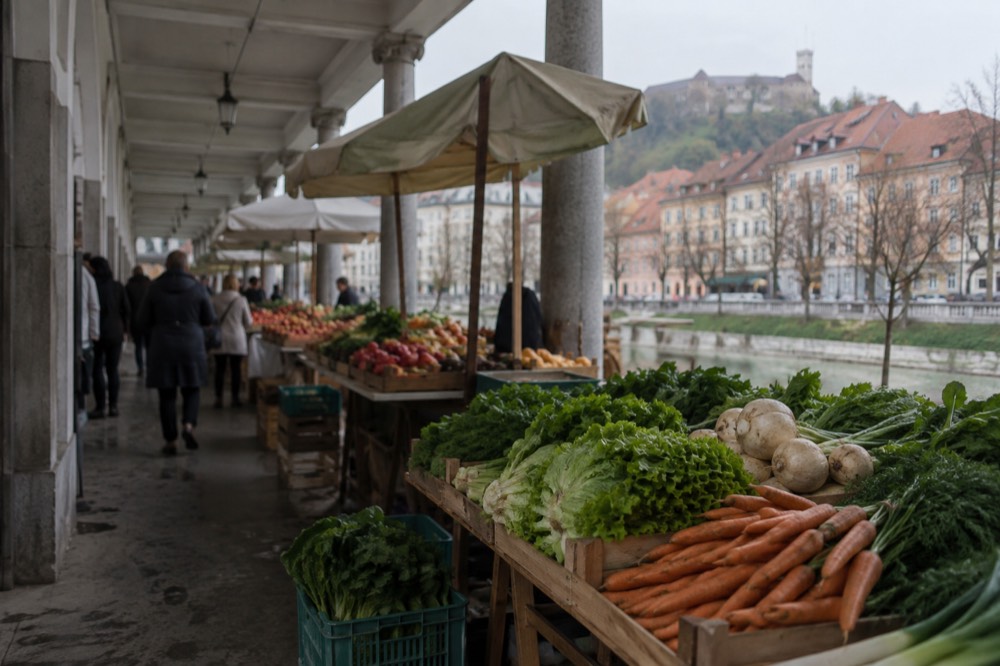
The wine side is less advertised and genuinely good. Slovenia has three wine regions and the Vipava Valley, an hour's drive west, sends its whites straight into the city's wine bars. A guided tasting on a boat on the Ljubljanica is one of the more distinctive ways to do it, or you can spend an evening in the where locals eat in Ljubljana territory of Šiška and Trnovo, where the beer gardens are.
| What Ljubljana is known for | Where to experience it | Time needed |
|---|---|---|
| Dragons and the Dragon Bridge | Old Town riverfront | 30 minutes |
| Plečnik's architecture | Triple Bridge, market, library, Plečnik House | Half a day |
| Car-free riverside Old Town | The whole centre on foot | 2-3 hours |
| Lake Bled day trip | Tours and buses from the city | 6-11 hours |
| Postojna Cave and karst | Guided tours from the city | 5-6 hours |
| Odprta Kuhna food Fridays | Pogačarjev trg, March-November | An evening |
Is Ljubljana Known for Fog and a Cloudy Climate?
Yes, and this is the fact competitors almost never print: Ljubljana sits in a basin and averages 91.2 days of fog a year, with 130 overcast days against only 37 clear ones, so in winter the city sits under grey while the hills above it are in sunshine. The foggiest months are not midwinter, either. ARSO's 1971-2000 normals put September and October at 12.4 fog days each, level with December's 12.6 and above January's 11.3.
The inversion is the real story. Cold air traps in the basin under warmer air above, so on individual winter days a hill at 660 m can be warmer than the city at 299 m. ARSO's 1981-2010 normals give Ljubljana 56 hours of sunshine in the whole of December against 120 hours at Kredarica, 2514 m up on Triglav. The practical lesson for a winter visitor is simple: when the city is grey, go up. The castle funicular, Šmarna gora, or any Julian Alps tour buys you the sun the basin lost.
| ARSO climate figure, Ljubljana (Bežigrad) | Value |
|---|---|
| Clear days per year (1981-2010) | 37 |
| Overcast days per year (1981-2010) | 130 |
| Sunshine, December (1981-2010) | 56 hours |
| Kredarica sunshine, December, for comparison | 120 hours |
| Fog days per year (1971-2000) | 91.2 |
| Wettest months, at 147 mm each (1981-2010) | September and October |
The upshot for planning is that the shoulder months everyone recommends are also the damp, foggy ones. July is sunnier and no wetter than September by these normals. If your priority is the city rather than the mountains, the deep-summer weeks are the underrated window, and the best time to visit Ljubljana guide breaks the year down month by month.
Is Ljubljana a Green and Easy Capital?
Ljubljana is known as one of Europe's greenest capitals: it holds the European Green Capital title, runs a large car-free core, has the Tivoli park on its doorstep, and sits closer than almost any capital to mountains, caves and forests. The city market itself, this site, exists because the distances work: the airport is about 26 km out, the lake under an hour, the caves under an hour, the coast ninety minutes.
Tivoli park is the biggest green space, a plane-tree lined avenue running up to the roofed museum quarter and the hill at Rožnik behind it. Beyond the ring, Šmarna gora is the city's standing weekend hike. The Tivoli Park guide covers the layout; the getting around Ljubljana guide covers the buses, the no-cash rule on board, and the contactless payments that have replaced the old Urbana-card trap.
For the practicalities, Slovenia is in the European Union, uses the euro adopted on 1 January 2007, and is inside the Schengen area, with land and sea checks lifted on 21 December 2007 and air checks on 30 March 2008, so there is no border stop coming from Italy, Austria or Croatia. A weekend here runs on the same money and no passport queue.
Common Questions About What Ljubljana Is Best Known For
What Is Ljubljana Best Known For?
Ljubljana is best known for its dragon bridge and dragon symbols, the car-free Old Town along the Ljubljanica, Jože Plečnik's architecture, and its role as the base for Lake Bled and Postojna Cave. It is a small capital that most visitors use as a two-night base for the surrounding lakes, caves and mountains.
Why are there dragons all over Ljubljana?
The dragon comes from the legend of Jason and the Argonauts, who were said to have fought a dragon in the Ljubljana marshes. The four dragon statues on the Dragon Bridge, built in the early twentieth century, turned the legend into the city's mascot, and the dragon now appears on the coat of arms, the castle tower and the manhole covers.
Is Ljubljana worth visiting on its own, or only as a base?
Both. The city needs no justification: a walkable pedestrian core, riverside eating, Plečnik's UNESCO-listed works and a strong food scene fill two days easily. But its biggest single draw in practice is proximity, with Lake Bled, Postojna Cave, Škocjan Caves and the Julian Alps all reachable on day trips of six hours or so.
Is Ljubljana expensive for tourists?
By western European standards, no. The city bus costs 1.50 EUR for a 90-minute zone 1 ride, a castle ticket with the funicular is 19.00 EUR, and the tourist tax is 3.13 EUR per person per night. The full breakdown is in the Ljubljana prices guide.
Is the centre of Ljubljana really car-free?
Yes. Roughly 20 hectares of the historic centre are closed to general motor traffic, a zone progressively expanded since 2007. You walk or cycle everywhere inside it, and anyone arriving by car parks at the edge, which is the single most useful practical fact for drivers.