One Day in Ljubljana: A Complete 24-Hour Itinerary
Ljubljana is small enough that one well-planned day covers the Old Town, the castle, the river and a proper Slovenian lunch, with room left for a museum or a boat. Here is the order that works.
Short answer
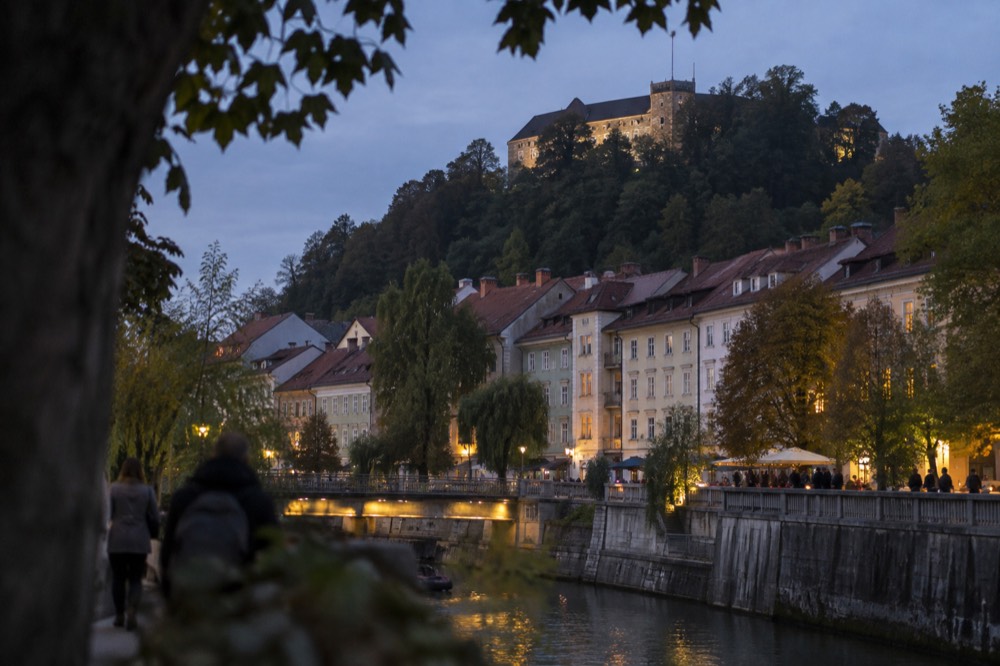
Start at Prešeren Square, cross the Triple Bridge into the Old Town, and be at the castle funicular by late morning. Eat at the Central Market, spend the afternoon on the Ljubljanica or in Tivoli Park, and finish with dinner in the pedestrianised centre. A castle ticket with the funicular is 19.00 EUR and a 90-minute river cruise is about 15 EUR.
Ljubljana records about 1,392,728 tourist arrivals a year against 2,844,129 overnight stays, which works out to an average visit of roughly two nights. Plenty of people give the city even less: a single day between a Lake Bled trip and the flight home. The good news is that the capital rewards a short visit better than almost any European city its size. The historic centre is pedestrianised, compact, and strung along one river, so the walking distances between the main sights are measured in minutes, not bus rides.
This itinerary is built for one full day on foot. It sequences the Old Town, the castle, the Central Market and the river in the order that minimises backtracking, and it flags the two or three decisions, the castle ticket type, the lunch window, the afternoon fork, where choosing wrong costs you an hour.
How Should You Spend One Day in Ljubljana?
Follow a west-to-east arc: Prešeren Square and the Triple Bridge first, the Old Town and the cathedral mid-morning, the castle funicular before the lunch queues, the Central Market at midday, and the river or Tivoli Park in the afternoon. The centre is pedestrianised, roughly 20 hectares of it, so none of these legs takes more than ten minutes on foot. That single fact is what makes a one-day plan workable: you never fight traffic, you never wait for a bus, and the only real scheduling pressure is the castle's late-morning crowd.
Here is the day in table form. Times are realistic walking pace with photo stops, not a forced march.
| Time | Where | What you are doing |
|---|---|---|
| 08:30–09:30 | Prešeren Square, Triple Bridge | Coffee with a view of the Franciscan Church and the Ljubljanica |
| 09:30–11:00 | Old Town, cathedral, riverbanks | Cross Tromostovje, wander Mestni trg and the Ljubljana Cathedral quarter |
| 11:00–12:30 | Ljubljana Castle | Funicular up, Viewing Tower, History exhibition |
| 12:30–14:00 | Central Market and Vodnikov trg | Lunch from the market stalls or the covered halls |
| 14:00–16:00 | Afternoon fork | River cruise, Metelkova, or Tivoli Park |
| 16:00–18:00 | Plečnik sights, Čevljarski most | The shoemakers' bridge and the river at golden hour |
| 18:00 onwards | Dinner in the centre | Slovenian classics in the pedestrian zone |
Two things shape the order. The castle funicular runs from 09:00, and the castle's own attractions fill fastest between 11:00 and 14:00, so going up early buys you a quiet tower. And the Central Market's covered halls close at 16:00 on weekdays and 14:00 on Saturdays, so lunch at the market is a midday commitment, not an afternoon option.
What Should You Do First: Morning in the Old Town?
Start at Prešeren Square, the open heart of the city where the Franciscan Church faces the poet Prešeren's statue, then cross the Triple Bridge into the Old Town and let the river decide your route. The square is the natural first stop because every walking route in the city crosses it, and the Tromostovje, Jože Plečnik's triple-bridged crossing of the Ljubljanica, is the single most photographed spot in Ljubljana. From there the Old Town spreads south in a web of short streets that all end at the water, so a first hour spent wandering between the cathedral quarter and the riverbank covers more of the city's character than any scheduled list of stops could.
Give the morning to aimlessness, within limits. The Ljubljana Cathedral with its green dome and bronze doors sits a few minutes' walk from the river, and the shoemakers' bridge, Čevljarski most, gives the best castle-and-river composition in the centre. If you want the background to all of it, our Old Town walking guide covers the street-by-street detail, and the Prešeren Square guide explains the square's architecture and the statue most visitors photograph without knowing whose poem it quotes.
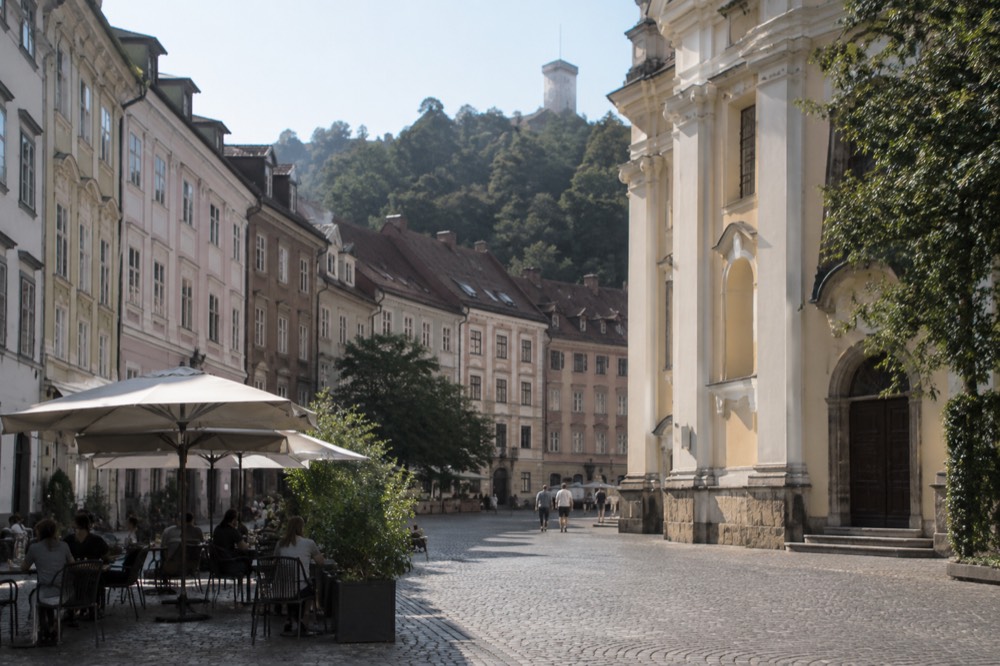
If you would rather have a local frame the first two hours, the free orientation walk on GuruWalk is built for exactly this moment: a two-hour, tips-based first tour that covers the main sights and gives you your bearings on day one. It is free to join, you pay what you think it was worth, and it finishes close to where the castle funicular starts. Booked tours and independent wandering are both legitimate strategies here; the walk simply front-loads the context so the rest of the day makes more sense.
When Should You Go Up to Ljubljana Castle?
Go up between 10:30 and 11:00, after the opening rush and before the midday tour groups, and take the funicular one way at least: the ride is 3.30 EUR single or 6.00 EUR return, while the full castle ticket including the funicular both ways is 19.00 EUR. The castle's attractions, the Viewing Tower, the Slovenian History exhibition, the Puppet Museum and the video mapping, open at 09:00 and close at 18:00 for most of the year, 20:00 from May to September. Last tickets sell an hour before closing, and the whole site is open 365 days a year.
Be precise about what costs money, because vague advice about "the castle" misleads people. The castle grounds themselves are free to enter; the funicular and the tower are not. The 19.00 EUR combined ticket covers the Viewing Tower, the exhibitions and the funicular both ways. Children aged 7 to 18 pay 13.50 EUR for the same combination. If you only want the view and the courtyard atmosphere, a walk up the hill through the woods and a wander costs nothing.
| Item | Price |
|---|---|
| Funicular, single, adult | 3.30 EUR |
| Funicular, return, adult | 6.00 EUR |
| Castle ticket including funicular, adult | 19.00 EUR |
| Castle ticket including funicular, child 7–18 | 13.50 EUR |
| Castle attractions opening hours, January-April and October-December | 09:00–18:00 |
| Castle attractions opening hours, May-September | 09:00–20:00 |
Budget 60 to 90 minutes on the hill. The Viewing Tower gives the single best orientation of the city you will get all day: you can trace the Ljubljanica's curve through the centre, pick out the cathedral's dome, and see exactly how close the Kamnik Alps sit on a clear day. Our full Ljubljana Castle guide has the exhibition-by-exhibition breakdown, and the castle funicular guide covers the practical mechanics if you are deciding whether to ride or walk.
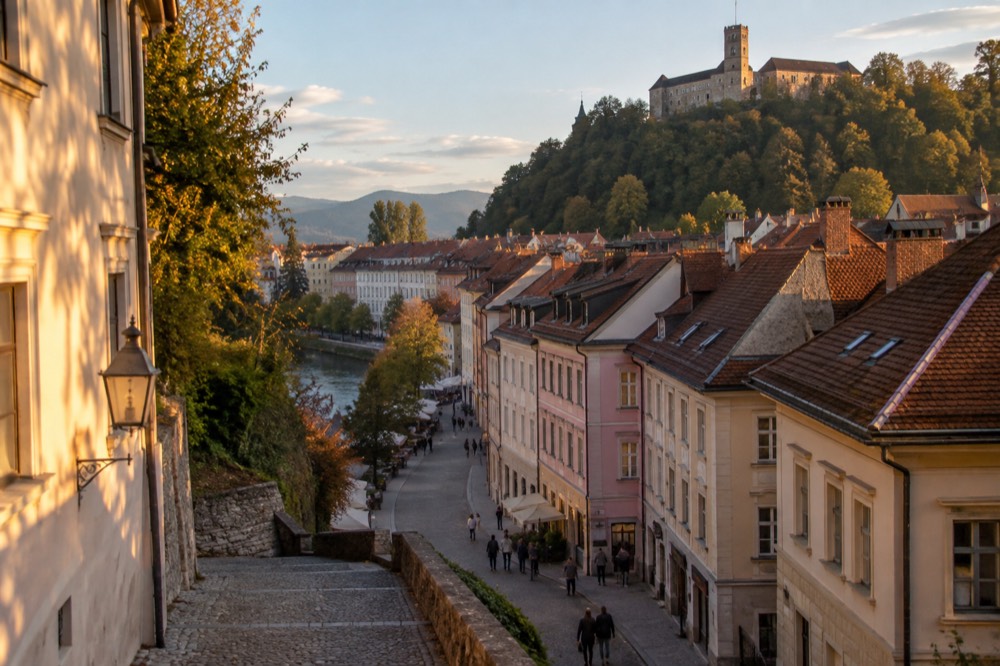
If you would rather not queue at the ticket office, skip-the-line castle entry with an optional funicular ride is sold as a bookable product, rated 4.3 across 993 reviews and starting from $17. It covers the same hill and the same tower with the ticket handled before you arrive.
Where Should You Have Lunch on a One-day Visit?
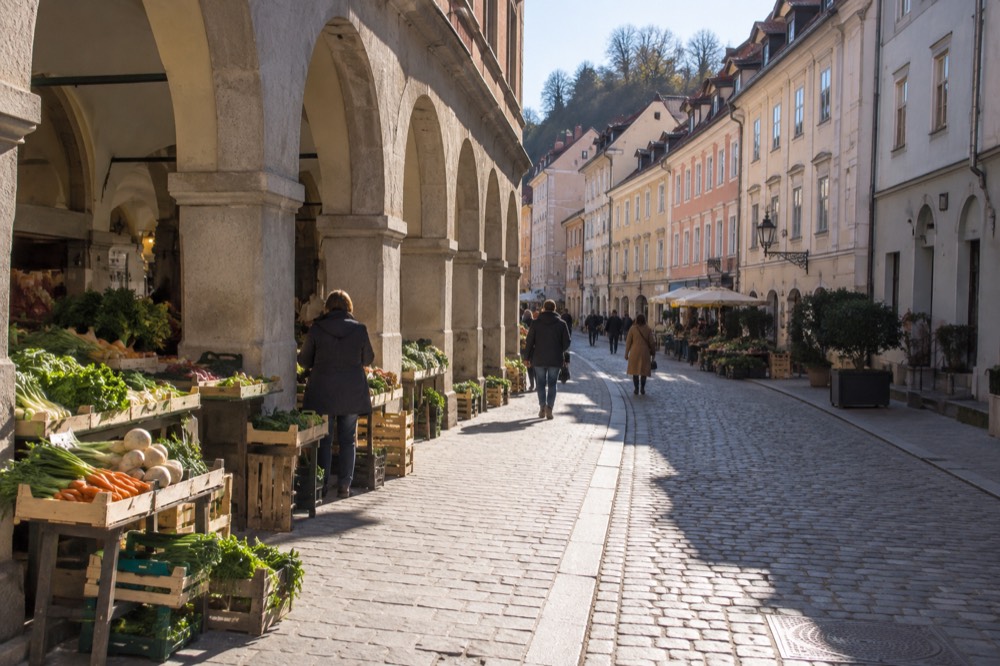
Eat at the Central Market on Vodnikov and Pogačarjev trg, where the outdoor stalls run roughly 06:00 to 18:00 in summer and 06:00 to 16:00 in winter, and the covered halls sell prepared food on weekdays until 16:00 and Saturdays until 14:00. The market is five minutes' walk down from the castle hill, which is why this itinerary puts the castle before lunch. It is also the cheapest good meal in the centre: market burek, cheese, prosciutto and fruit rather than a restaurant menu.
If your one day falls on a Friday between roughly March and November, you have a better option still. Odprta Kuhna, the Open Kitchen street-food market, runs on Pogačarjev trg on Fridays from about 10:00 to 21:00, with chefs from restaurants across the city cooking in the open. One honest caveat the official wording makes clear: it runs "every sunny Friday", literally. Bad weather cancels it, so check before you build a Friday lunch around it. Our Odprta Kuhna guide covers how it works.
For a sit-down Slovenian lunch instead, the where to eat in Ljubljana guide sorts the centre by dish and budget. Either way, be finished by 14:00: the afternoon fork is next, and the market halls will already be closing.
What Should You Do with the Afternoon?
Pick one of three afternoon forks, and pick it at lunch: a 50-minute river cruise from Breg pier, the street art and museums of the Metelkova quarter, or the paths and gallery of Tivoli Park. All three sit within a 20-minute walk of the market, and each one fits a two-hour window with time to spare. Trying to do two of them is the mistake, because each rewards the unhurried version of itself, and a one-day visit has no slack left for a second attempt at anything.
The river cruise is the most popular choice, and the numbers explain why. Barka Ljubljanica runs 50-minute trips from Breg 1 for 15 EUR, hourly from 11:00 between May and September with the last departure around 19:00, and reduced hours from October to December. The trip passes under the Triple Bridge and Čevljarski most and shows the centre from the angle Plečnik designed it to be seen from. Our Ljubljanica river cruise guide compares the operators and departure points.
| Afternoon option | Time needed | Cost | Best for |
|---|---|---|---|
| River cruise from Breg | 50 minutes | 15 EUR | Sitting down, photos, river architecture |
| Metelkova autonomous zone | 1–2 hours | Free entry, clubs set own covers | Street art, alternative culture, evening plans |
| Tivoli Park and the National Gallery | 2 hours | Park free, gallery 10 EUR | Green space, art, a slower tempo |
Metelkova deserves the evening rather than the afternoon, to be honest: the former army barracks turned autonomous cultural centre is free to enter and at its most alive after dark, busiest on Friday and Saturday. Tivoli Park is the pick if your legs are tiring, and if your one day is the first Sunday of the month, note that the national museums and galleries, including the National Gallery, admit visitors free that day. The gallery is otherwise 10 EUR for the permanent collection. Details are in our Tivoli Park guide and Metelkova guide.
Can You Fit a Day Trip Into a One-day Visit?
Not into the same day as the city itinerary, but if your "one day in Ljubljana" is really your only full day in Slovenia, the honest move is to choose: either the city at walking pace or one big day trip, not both. The two strongest single-day trips from Ljubljana are the karst and coast combination, the UNESCO-listed Škocjan Caves plus Piran, and the alpine combination of Lake Bled with Postojna Cave and Predjama Castle. Each is a 9-to-11-hour commitment that leaves the city with only an evening.
The Škocjan Caves and Piran trip runs 9h 30m from Ljubljana, is rated 4.7 from 382 reviews, and starts from $126. What you get is genuinely different from Postojna: Škocjan is a UNESCO World Heritage site, inscribed in 1986, where you walk a roughly 2 km route with about 400 stairs through an enormous canyon-like cavern, rather than riding a cave train. The cave holds about 12 C year round, so bring a layer even in August. Then the coach continues to Piran on the coast for the sunset end of the day. Our Škocjan Caves guide and Piran guide cover both stops in depth.
The other full-day option packs Bled, Postojna and Predjama into one 10-hour loop, rated 4.9 from 286 reviews and from $133. It is a lot of ground, but it is the only way to see Slovenia's two most famous sights in a single day if Ljubljana is your base and your time is nearly out. Postojna's cave holds 10 C year round and the tour lasts about 90 minutes over 3.7 km, partly by cave train. Everything else covered here is indexed on Ljubljana Travel Guide.
If you have a second half-day rather than a full one, Lake Bled alone is the classic add-on, about an hour from the city. Our Ljubljana to Lake Bled guide covers the journey, and note that Vintgar Gorge, the other Bled-area draw, is open only from April to October and closes for winter, with the exact closing date depending on conditions each year.
How Much Does One Day in Ljubljana Cost?
A comfortable one-day visit runs to roughly 45 to 70 EUR per person before dinner: 19.00 EUR for the castle with the funicular, 15 EUR for the river cruise, 10 to 20 EUR for market or casual lunch, and a few euros of coffee in between. Transport barely figures if you stay central, because the whole itinerary is walkable. If you do use a city bus, a single zone 1 ride is 1.50 EUR for 90 minutes including transfers, the Urbana card costs 2.00 EUR to buy, and buses do not accept cash, though contactless bank cards and phones now work on board.
The tourist board's Ljubljana Card is worth doing the arithmetic on for a one-day visit. The 24-hour card is 41.00 EUR and includes the castle funicular, the river cruise, city buses, a guided walking tour, four hours of BicikeLJ bike share and one entry each to more than 30 museums and galleries. A castle ticket with funicular at 19.00 EUR plus a 15 EUR cruise is already 34 EUR before a single museum, so the card pays for itself if you visit even two or three museums on top. Our Ljubljana Card guide runs the full comparison.
| Item | Cost | Notes |
|---|---|---|
| Castle ticket with funicular, adult | 19.00 EUR | Tower and all exhibitions included |
| River cruise, 50 minutes | 15 EUR | Barka Ljubljanica from Breg 1 |
| City bus, single, zone 1 | 1.50 EUR | 90 minutes with transfers, no cash on board |
| Central Market lunch | 10–20 EUR | Stalls and covered halls |
| National Gallery, permanent collection | 10 EUR | Free first Sunday of the month |
| Tourist tax | 3.13 EUR per night | Added to your accommodation bill |
One more figure belongs on any honest cost page: the tourist tax of 3.13 EUR per person per night, a 2.50 EUR tax plus a 0.63 EUR promotion surcharge, is added to accommodation bills, with a half rate of 1.57 EUR for ages 7 to 18 and children under 7 exempt. It is small, but it is per night, per person.
What Does the Weather Do to a One-day Plan?
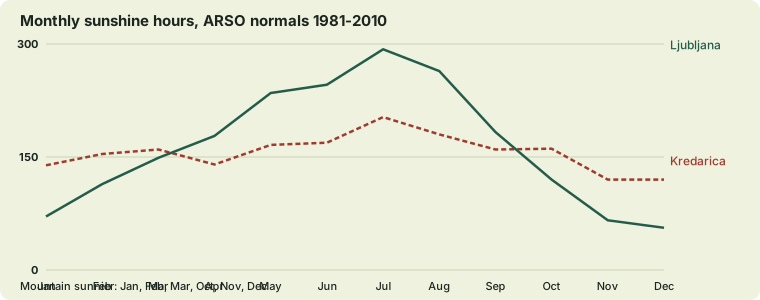
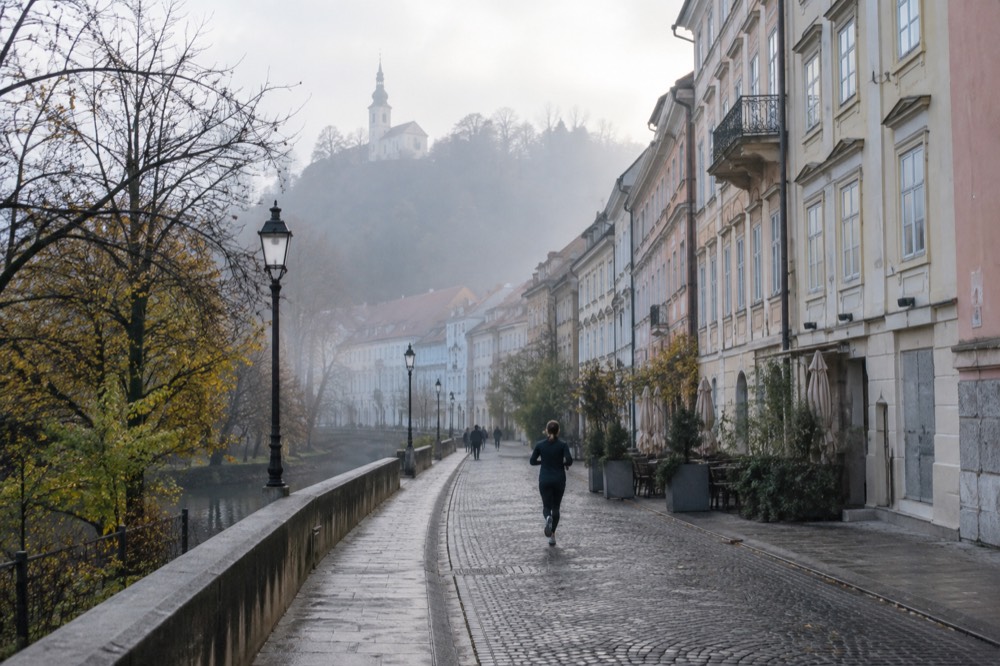
Ljubljana sits in a basin, and in the colder half of the year the city fogs in while the hills a few hundred metres above it sit in sunshine, so a grey morning does not mean a grey day trip, and the castle hill is often above the fog line. This is the single most misunderstood thing about the city's climate. ARSO's 1981–2010 normals give Ljubljana just 56 hours of sunshine in the whole of December and 37 clear days in an average year against 130 overcast ones. Over the same December, Kredarica, the station at 2514 m on Triglav, records 120 hours of sunshine. The mountain above the fog is sunnier than the capital under it.
The surprise most guides miss is that the foggiest months are not midwinter. ARSO's 1971–2000 series, the only period for which fog is published, gives September and October 12.4 fog days each, level with December's 12.6 and above January's 11.3, for an annual total of 91.2 days. The same 1981–2010 table makes September and October the joint wettest months at 147 mm each, above July's 115 mm. The autumn shoulder season in Ljubljana is wetter and foggier than people assume.
What does this mean for your one day? Three practical things. If the morning is foggy, go up: the castle tower, Šmarna gora, any height, is the move, because the inversion means the sun may be a hundred metres above you. If your day is wet, the caves are the reliable answer, since Postojna and Škocjan hold roughly the same temperature year round and run every day in all weather. And if you are choosing a month for a city break, the sunniest stretch is April to September, when the basin beats the mountains.
How Should You End the Day: Evening in the Centre?
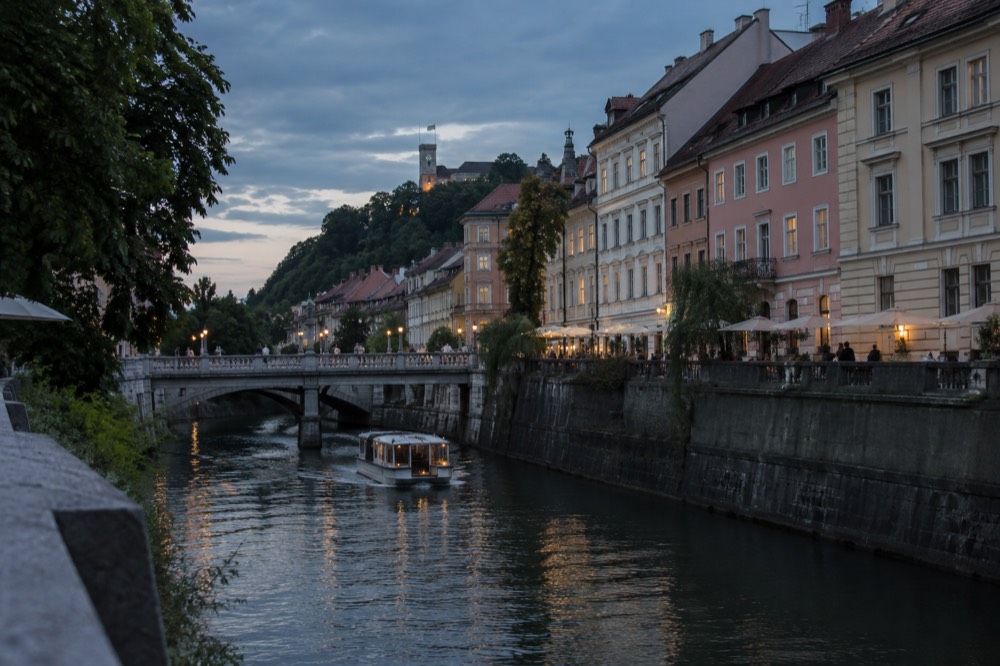
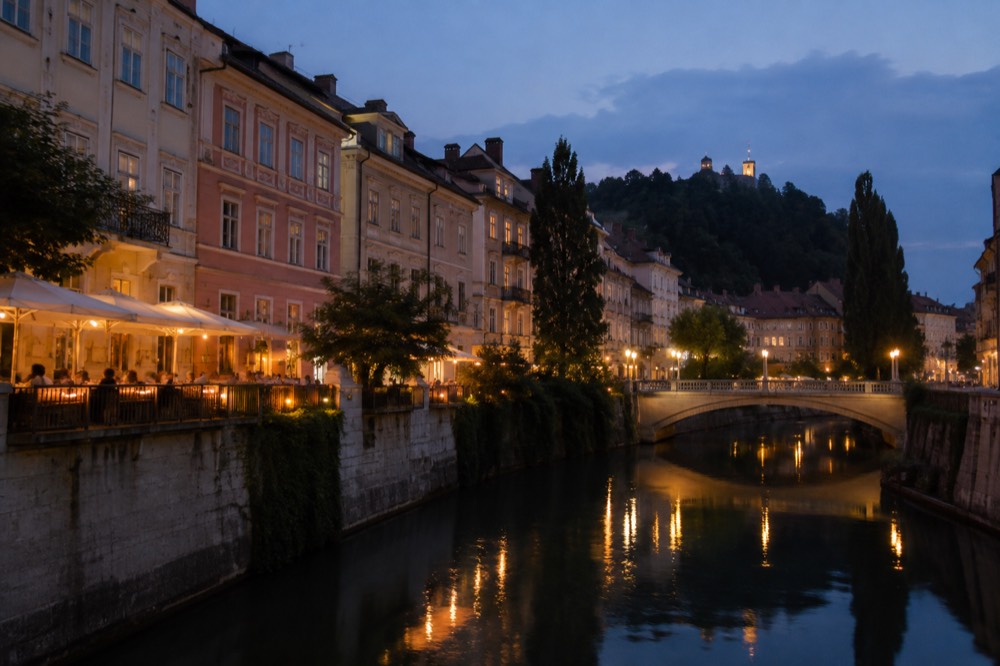
Finish where you started, on the river: the embankments between the Triple Bridge and Čevljarski most are where Ljubljana's evening happens, and because the centre is pedestrianised, everything stays walkable after dark. Dinner in the Old Town, a final loop past the illuminated bridges, and a drink on the Breg or Poljane embankment is the standard closing sequence, and it needs no planning beyond a reservation if it is a weekend. The city's evening scene is genuinely central, so you never need a taxi to end the night well.
For dinner, Slovenian classics are the point: štrukelj, the rolled pastry that has its own cooking class in this city, kraški pršut, štruklji dumplings, and river fish. The Slovenian food in Ljubljana guide maps the dishes to the restaurants that do them well, and the Ljubljana nightlife guide takes over if your evening runs long. Metelkova's clubs are the late option, and the free night walk on GuruWalk, an after-dark tips-based tour of the corners daytime tours skip, is a low-cost way to see a different city if you still have legs.
One evening note that saves money: museum late openings cluster on Thursdays, with the National Gallery, the National Museum and the Ethnographic Museum all open to 20:00 on Thursdays. If your one day is a Thursday, you can push a museum into the evening and give the afternoon entirely to the river.
Is One Day in Ljubljana Really Enough?
One day is enough to see the essential Ljubljana, the castle, the Old Town, the river and a good Slovenian meal, because the centre is compact and pedestrianised, but it is not enough for the country, and most visitors regret shortening the city to squeeze in a day trip. The average visitor stays about two nights, and the itineraries this site publishes for two days in Ljubljana and three days in Ljubljana exist because day two has real content: Tivoli at leisure, the Plečnik House, a museum morning, a proper day trip without rushing the city.
If one day is genuinely all you have, the plan above is the one to run. Do the city properly and come back for the caves, the coast and the Julian Alps, or spend your single day out of town and give Ljubljana only its evening. Both are defensible. Splitting one day between the two is the only version that fails.
Common Questions About One Day in Ljubljana
Is one day in Ljubljana enough?
One day covers the essential city: Prešeren Square, the Old Town, Ljubljana Castle, the Central Market and a river cruise, all within a compact pedestrianised centre. It is not enough for Slovenia's headline day trips, so either extend to two days or accept that the caves, Bled or the coast need a separate visit.
What is the best order for one day in Ljubljana?
Start at Prešeren Square and the Triple Bridge, wander the Old Town in the morning, take the funicular to the castle around 11:00, eat at the Central Market by 12:30, then choose one afternoon: a 50-minute river cruise, Metelkova, or Tivoli Park. Finish with dinner on the river embankments.
How much does one day in Ljubljana cost?
Roughly 45 to 70 EUR per person before dinner: 19.00 EUR for the castle ticket with the funicular, 15 EUR for the river cruise, 10 to 20 EUR for a market lunch, plus coffee. City buses are 1.50 EUR a ride, and the 24-hour Ljubljana Card at 41.00 EUR can beat paying separately if you plan several museums.
Can you visit Ljubljana Castle for free?
The castle grounds are free to enter, but the funicular, the Viewing Tower and the exhibitions are not. The combined ticket covering all attractions plus the funicular both ways is 19.00 EUR for adults, and the funicular alone is 3.30 EUR single or 6.00 EUR return.
Is Ljubljana walkable in one day?
Yes. The historic centre is a pedestrianised zone of roughly 20 hectares, and every stop in a one-day itinerary is within a ten to fifteen minute walk of the next. You only need a bus if you venture out to Bezigrad, Šiška or the zoo, and buses do not take cash, so use an Urbana card or tap a contactless bank card.
What if it rains on my one day in Ljubljana?
Shift indoors: the National Gallery, the City Museum and the Ethnographic Museum are all within or beside the centre, and admission at the national institutions is free on the first Sunday of the month. If the rain is heavy and persistent, the caves are the reliable alternative, since Postojna and Škocjan hold roughly the same temperature year round and run in all weather.