What Clothes Should I Pack for Ljubljana?
A season-by-season packing list for Ljubljana, built on real climate data: basin fog, cold caves, a pedestrianised centre and 147 mm of autumn rain.
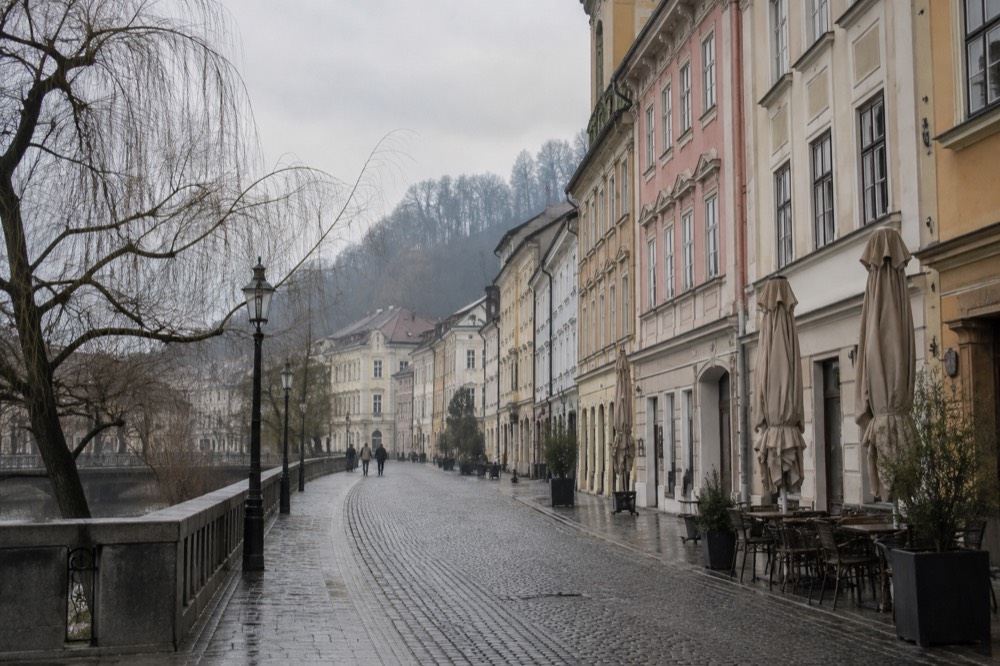
What Clothes Should I Pack for Ljubljana?
Pack a layering system rather than one thick coat: a base layer, a warm mid-layer and a genuinely waterproof outer shell, plus comfortable walking shoes you have already broken in. Ljubljana averages 0.3 °C in January and 21.3 °C in July, gets 147 mm of rain in both September and October, and sits in a fog-prone basin where the sun can disappear for days. The historic centre is fully pedestrianised, so you will walk everywhere you go.
That is the short version. The longer version is that Ljubljana defeats most packing lists because it is not one climate, it is three. The city itself sits at 299 m on the floor of a basin, which makes it one of the cloudiest and foggiest corners of Slovenia. The day trips everyone takes from here, Lake Bled, the Julian Alps, the karst caves, sit at altitudes and in weather systems that behave completely differently. A jacket that is right for a December morning on Prešernov trg can be wrong by lunchtime on Šmarna gora, a few hundred metres above the fog.
This guide works from the published climate record rather than folklore, so every figure here comes from ARSO, the Slovenian Environment Agency, or from the operators' own pages. Pack against the numbers and you will not be the visitor shivering in shorts on a 10 °C cave train.
What Is the Weather Actually Like in Ljubljana?
Ljubljana is a basin city with mild summers, cold and grey winters, and a fog problem that peaks in September, October and December rather than midwinter. ARSO's 1981–2010 normals give the city 56 hours of December sunshine, just 2 clear days that month, and 91.2 fog days a year. The wettest months are September and October at 147 mm each, wetter than July's 115 mm, which surprises almost everyone.
The single most useful thing to understand before packing is the inversion. Cold air drains into the basin and gets trapped under warmer air above, so the city can sit under grey fog while the hilltops a few hundred metres up are in full sunshine. ARSO's own station data shows Kredarica, at 2,514 m on Triglav, recording 120 hours of December sunshine against Ljubljana's 56. The mountains are not warmer on average, Kredarica's January mean is -7.1 °C against the city's +0.3 °C, but they are dramatically sunnier in winter.
What this means for your case is simple: the fog burns off, or it does not, and you cannot plan around it. You can, however, plan around the fact that the rain is spread evenly. Ljubljana records measurable rain on 153 days a year, so a packed rain layer earns its space in any month. The full monthly picture from the ARSO 1981–2010 normals, published by the agency at its Ljubljana Bežigrad station page, looks like this:
| Month | Mean temp | Daily max | Daily min | Rain (mm) |
|---|---|---|---|---|
| January | 0.3 °C | 3.4 °C | -2.5 °C | 69 |
| February | 1.9 °C | 6.4 °C | -2.0 °C | 70 |
| March | 6.5 °C | 11.4 °C | 1.7 °C | 88 |
| April | 10.8 °C | 16.1 °C | 5.8 °C | 99 |
| May | 15.8 °C | 21.4 °C | 10.3 °C | 109 |
| June | 19.1 °C | 24.6 °C | 13.7 °C | 144 |
| July | 21.3 °C | 27.3 °C | 15.5 °C | 115 |
| August | 20.6 °C | 26.7 °C | 15.2 °C | 137 |
| September | 16.0 °C | 21.6 °C | 11.5 °C | 147 |
| October | 11.2 °C | 15.9 °C | 7.7 °C | 129 |
| November | 5.6 °C | 8.8 °C | 2.8 °C | 107 |
| December | 1.2 °C | 3.8 °C | -1.1 °C | 107 |
Two extremes frame the range. The record high is 37.3 °C, set in August, and the record low is -20.3 °C, set in January. Neither is a packing target, but both tell you the city genuinely spans four seasons, and that a July wardrobe will fail in December and vice versa. If you are still choosing dates rather than clothes, the Ljubljana Travel Guide site's season breakdown is the place to start.
What Should You Pack for a Summer Trip?
Pack for heat with a rain backup: breathable shirts, a sun hat and sunglasses for July days that average 27.3 °C, plus a light rain jacket because July still averages 115 mm of rain and August 137 mm. Comfortable walking shoes matter more than anything else, since the pedestrianised centre means you are on your feet all day. Do not pack only for the forecast.
Summer days are long and warm, and the evenings are genuinely pleasant, with July minimums around 15.5 °C, so a light layer for late dinners along the Ljubljanica is worth having. What catches visitors out is the rain. Summer thunderstorms are a real feature of the basin, and August is the third wettest month of the year at 137 mm. A compact umbrella or a packable rain shell is not pessimism, it is arithmetic.
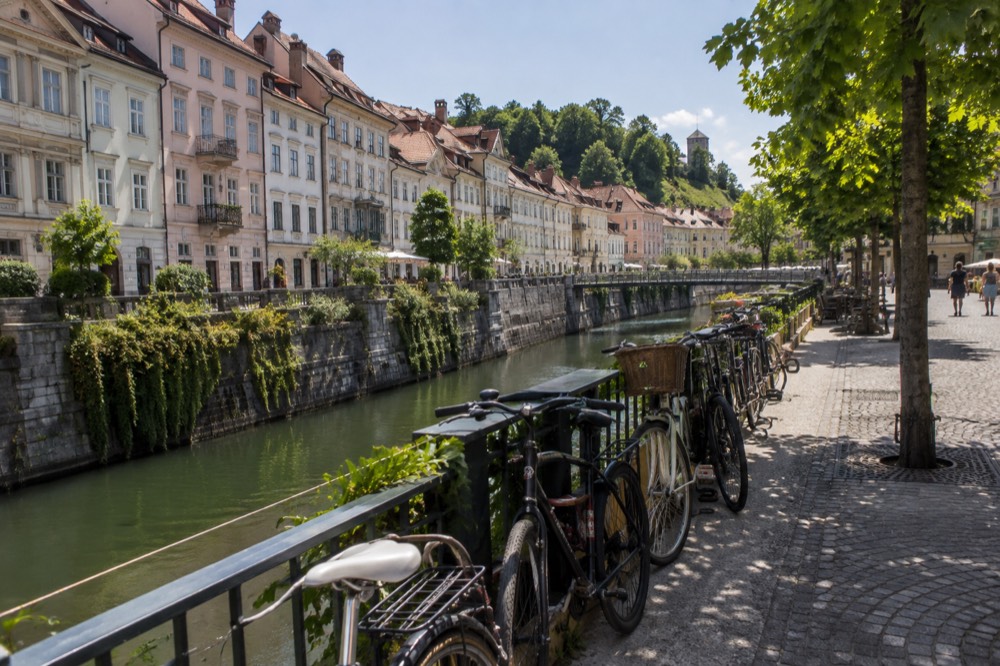
Footwear deserves a paragraph of its own. The centre is a roughly 20-hectare pedestrian zone, progressively closed to traffic since 2007, and the day trips out of the city involve cobbles, gravel paths and, at Lake Bled, a lakeside promenade. Sandles are fine for the city in July. They are not fine for Vintgar Gorge, which is open April to October and involves wooden walkways that are often damp. Bring shoes that can handle both.
What Should You Pack for Winter?
Pack real winter gear: a warm insulated coat, a hat, gloves and a scarf for January days that average 0.3 °C with nights at -2.5 °C, and boots with grip because snow lies on the ground an average of 15 mornings in January. Add a bright layer for mood as much as warmth, because December delivers only 56 hours of sunshine across the whole month.
Winter in Ljubljana is less about cold extremes and more about endurance cold, damp and grey. The city records snow cover at 07:00 on 50 mornings across an average year, with the deepest recorded cover at 89 cm in January. The mean figures are modest, but the damp makes -2 °C feel sharper than the number suggests, and the fog cuts visibility along the river to a soft grey wall.
The counter-move is to go up. On inversion days the viewpoints above the basin sit in sunshine while the streets below are grey, which is exactly why the funicular up to Ljubljana Castle and the walk up Šmarna gora are winter staples rather than fair-weather options. The castle grounds are free to wander, though the funicular and the tower are ticketed, and the funicular runs until 19:00 in the January to April window. If you are building a cold-season plan around this, the site's guide to Ljubljana in winter covers the detail.
One winter category most lists forget: the cave layer. Postojna Cave holds about 10 °C year round, and Škocjan about 12 °C, which makes caves the reliable answer to both heatwaves and downpours, and a cold problem if you arrive in July shorts. A foldable fleece or a light jacket that fits in a day bag is the single most reused item in a Ljubljana suitcase.
What Shoes Work Best for the City and the Day Trips?
Bring one pair of broken-in walking shoes with decent tread, and let them do everything: the centre is car-free, the buses drop you at the edge of the pedestrian zone, and every major day trip involves at least an hour on foot. Add a second, lighter pair for evenings only if you have the space. New shoes are the most common packing mistake here.
The terrain is not Alpine, but it is relentless. Cobbles in the Old Town, gravel in Tivoli Park, lakeside paths at Bled, and around 400 stairs on the standard Škocjan Caves route. Sandals with grip work in summer; smooth-soled dress shoes do not, wet cobbles after rain are genuinely slippery, and September and October deliver that rain on 12 and 13 days respectively.
For the karst caves, the surface matters too. The paths inside Postojna are partly covered by the cave train, but the walked sections are damp and sometimes polished. Škocjan is a proper walk, roughly 2 km of the standard route, and the operators' guidance treats it as light hiking. Trail shoes or sturdy trainers cover both caves and the city in one pair.
What Should Go in the Bag Besides Clothes?
Pack a contactless bank card or phone for the buses, because cash is not accepted on board, a refillable water bottle, a compact rain layer for any month, and a small day bag for the cave fleece. The currency is the euro, and the city's tourist tax of 3.13 EUR per person per night is usually collected by your accommodation at checkout.
The transport detail is the one that strands people. Ljubljana's city buses take no cash at all: you either pay contactless with a Visa, Mastercard or mobile wallet directly on board, or you use an Urbana card, which costs 2.00 EUR to buy and then 1.50 EUR per 90-minute ride with transfers in zone 1. The operator's payment page spells this out, and it is the single most out-of-date fact in older guidebooks.
A few smaller items earn their place. Sunglasses sound absurd for a city with 130 overcast days a year, but on the summer days when the basin clears, the light off the Ljubljanica is sharp. A power bank helps if you are finding your way on your phone all day. And if your trip falls on a first Sunday of the month, note that the national museums and galleries admit visitors free that day, which is worth knowing when you plan what to carry rather than what to wear. The official tourist tax page covers the exemptions, including the half rate for ages 7 to 18.
Does a Day Trip Change What You Need?
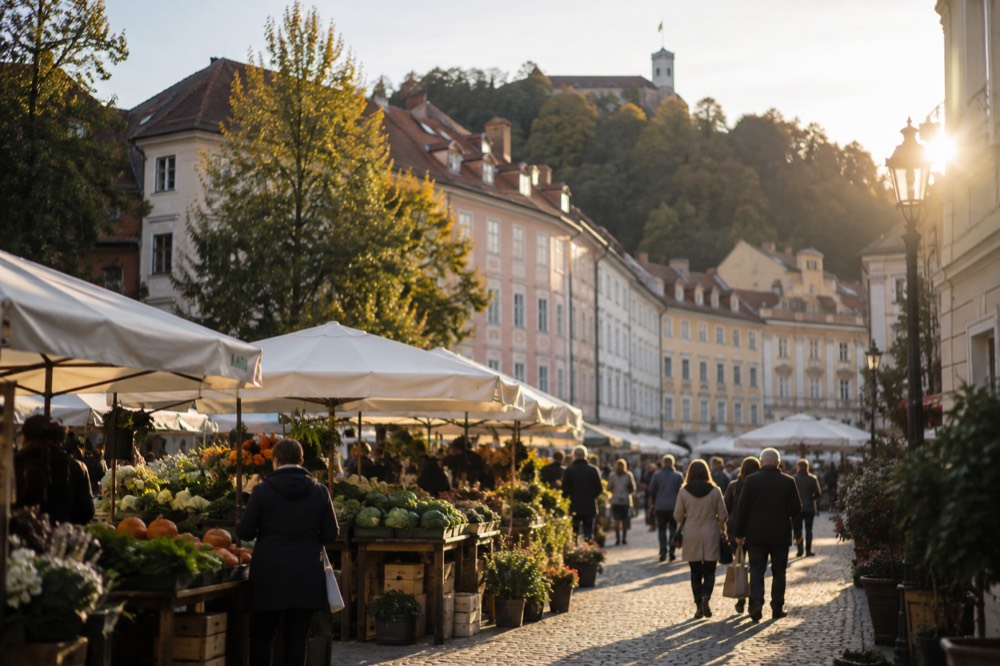
Yes, mainly through temperature and terrain: caves hold about 10 to 12 °C all year so you need a warm layer even in August, alpine day trips into Triglav National Park can be 10 degrees cooler than the basin, and lakeside walks at Bled call for the same walking shoes as the city. Pack one warm layer and one rain layer in your day bag on every trip out.
The Postojna Cave and Predjama Castle day trip is the clearest example. It runs about six hours from Ljubljana with entry tickets included, is rated 4.8 across 2,802 reviews, and starts from $132 per person. The cave section is roughly 90 minutes at 10 °C, and the visitors who suffer are the ones in shorts and a T-shirt. A fleece in the day bag solves it completely.
The same logic applies to the Lake Bled and Bled Castle trip, six hours from the city and rated 4.7 across 1,641 reviews, from $86. Bled sits at a higher elevation than Ljubljana and the lake breeze is real even in summer, so the light layer you packed for the caves does double duty on the lakeshore. In winter, both destinations can hold snow when the city streets are merely damp, so grip on your shoes matters more out there than in town. The site's Ljubljana to Lake Bled guide covers the journey options if you are weighing them.
If rain closes in, and between September's and October's 147 mm each it often does, the caves are the plan that survives the weather, and the site's piece on a rainy day in Ljubljana lists the city-side alternatives, museums and covered market halls among them.
Common Questions About Packing for Ljubljana
What Clothes Should I Pack For Ljubljana?
Layers: a base layer, a warm mid-layer and a waterproof shell, with broken-in walking shoes. January averages 0.3 °C and July 21.3 °C, September and October each deliver 147 mm of rain, and the caves on every standard day trip hold about 10 to 12 °C year round.
Do I need a heavy winter coat for Ljubljana?
A warm insulated coat is right for December to February, when nights average around -2 °C and the record low is -20.3 °C. But a layering system with a good shell often beats one enormous coat, because the damp basin cold varies between grey days and bright inversion days.
Is Ljubljana rainy enough to need waterproofs in summer?
Yes. July averages 115 mm of rain and August 137 mm, mostly as thunderstorms. A packable rain jacket or compact umbrella fits the summer bag easily and gets used.
What should I wear to Postojna Cave?
The cave holds about 10 °C all year, so wear or carry a warm layer even on the hottest August day. The route is about 3.7 km, partly by cave train, and the walked sections are damp, so closed shoes with grip are the right choice.
Can I wear sandals in Ljubljana?
In the pedestrianised centre, comfortably, from June to September. On cobbles after rain, at Vintgar Gorge or in either karst cave, sandals with grip work and smooth dress shoes do not. One pair of broken-in walking shoes covers everything the city and its day trips will ask of you.