Triple Bridge (Tromostovje): Ljubljana's Most Photographed Crossing
Tromostovje is the spot where Ljubljana's pedestrian heart begins: three bridges in one, a five-minute walk from everything, and the crossing most visitors photograph first and last.
Short answer
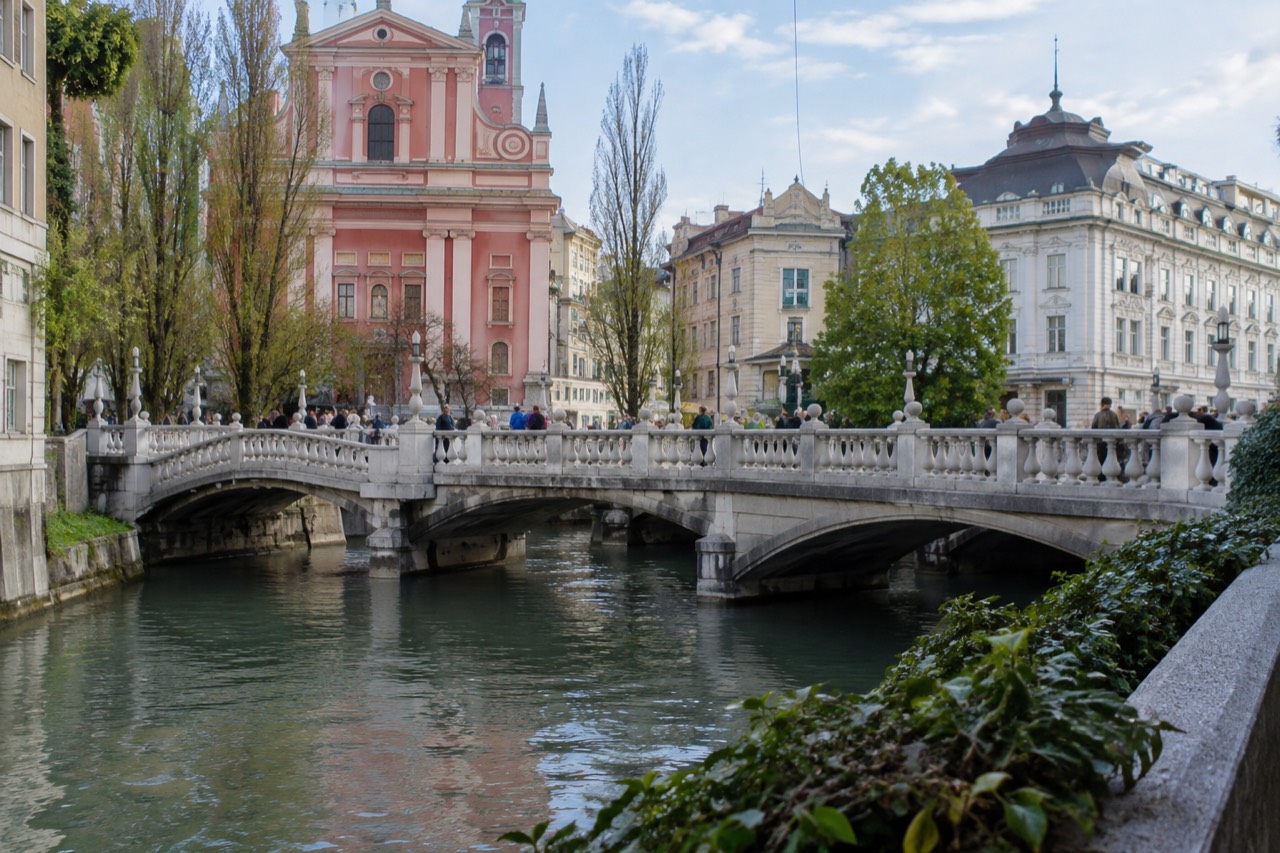
The Triple Bridge (Tromostovje) is a set of three linked pedestrian bridges across the Ljubljanica in central Ljubljana, a short walk from Prešeren Square. The crossing is free to visit at any hour, sits inside the car-free centre, and is the natural starting point for an Old Town walk, a river cruise or a walk up to Ljubljana Castle.
Ljubljana has exactly one crossing that most visitors can name before they arrive, and it is not really one bridge at all. Tromostovje, the Triple Bridge, is three parallel footbridges over the Ljubljanica, sitting where the pedestrianised city centre meets the Old Town. Walk across it once and you have crossed the line between the two halves of the city, passed the spot where most street musicians set up, and stood on the most photographed paving stones in Slovenia.
This guide covers what the Triple Bridge actually is, where it sits, what to do on and around it, when to visit, and how it connects to everything else within a five-minute walk, including the castle funicular, the river boats and the Central Market. Practical figures come from the castle's official price list, the city's transport operator and the national weather service, so you can plan the visit around real numbers rather than guesses.
What Is the Triple Bridge (Tromostovje)?
Tromostovje is a single river crossing made of three bridges: a wide central bridge flanked by two narrower pedestrian bridges added later, all stepping across the Ljubljanica within about thirty metres of each other, designed by the architect Jože Plečnik as one widened crossing rather than three separate structures. The crossing is pedestrianised, free to use at any hour, and functions less like a monument you visit than a piece of street furniture you cross a dozen times a day without noticing. That is the honest description, and it is also why it works: the Triple Bridge is a junction, a meeting point and a viewing platform rolled into one, and it carries foot traffic between Prešeren Square and the Old Town's restaurant and market streets.
The name is literal. "Tromostovje" means "three bridges" in Slovene, and the set is the work of Jože Plečnik, the architect whose fingerprints are all over central Ljubljana, from the riverside market colonnades to the church towers on the square. Plečnik's approach was to widen a crossing rather than replace it, keeping the older central bridge and adding the two side spans so pedestrians could fan out at the busiest point in the city. The result reads as one gesture rather than three separate structures, which is why so many visitors photograph it from the riverbank without quite realising they are looking at three bridges.
You do not need a ticket, a time slot or a guide to see it. You need ten minutes and the ability to find Prešeren Square, which every taxi driver, bus and free walking tour in the city can do blindfolded. The bridge sits directly on the axis between the square and the Old Town, so it is less a destination than a hinge: cross it heading south and you are in the medieval street grid within twenty steps.
| Fact | Detail |
|---|---|
| Name | Tromostovje (Triple Bridge) |
| What it is | Three linked pedestrian bridges over the Ljubljanica |
| Architect | Jože Plečnik |
| Cost to visit | Free, no ticket, open at all hours |
| Location | Between Prešeren Square and the Old Town |
| Nearest landmark | Prešeren Square, a minute's walk |
| Setting | Inside the pedestrianised centre |
The bridge is also the practical centre of the car-free zone. Ljubljana's historic core is closed to general motor traffic, a pedestrian area of roughly 20 hectares that the city has progressively expanded since 2007, according to the municipality's own mobility pages. If you arrive by car, you will park at the edge of that zone and walk in, and the Triple Bridge is one of the landmarks that will orient you within a minute of leaving the car park.
Where Is the Triple Bridge and How Do You Reach It?
The Triple Bridge sits immediately south of Prešeren Square, at the point where the main pedestrian axis crosses the Ljubljanica into the Old Town, a short walk from Ljubljana Castle's funicular base and from every city bus route that stops on the edge of the centre. Because the centre is pedestrianised, no bus or car delivers you to the bridge itself; you arrive on foot, by bike or by river, and the walking distances from every arrival point are short enough that the question is never "how do I get there" but "which direction am I approaching from".
From the main bus and train station on the northern edge of the centre, the walk to Tromostovje takes about fifteen minutes along Slovenska cesta and through the pedestrian streets, a flat, signposted and thoroughly pleasant route. From the airport, the distance is about 26 km, and the [airport transfer](https://tpk.ro/o5VLPVUy) drops you at the station edge of the centre, from which the same fifteen-minute walk applies. Once you are inside the pedestrian zone, the bridge announces itself: follow the crowds or follow the river, and both routes converge on it.
City buses are worth knowing about even though they cannot reach the bridge. LPP, the city operator, sells single rides at 1.50 EUR for ninety minutes including transfers in zone 1, on the Urbana card, which costs 2.00 EUR to buy. Cash is not accepted on board, though contactless bank cards and phone wallets are, which removes the old trap of needing a card before your first ride. Buses get you to the edge of the car-free zone; from there the bridge is a walk of a few minutes through streets that are themselves the attraction.
| Approach | How it works | Final leg to the bridge |
|---|---|---|
| On foot from the station | 15 minutes through the pedestrian centre | You arrive directly at the bridge |
| City bus (LPP) | 1.50 EUR single, 90 minutes, no cash on board | Walk in from the edge of the car-free zone |
| Bike share | Urbanomat and docking stations across the centre | Ride to the edge, walk the last stretch |
| River boat | Cruises depart from piers on the Ljubljanica | Alight at a city-centre pier, 2-5 minutes' walk |
| Car | Park at the edge of the pedestrian zone | Walk in, typically 5-10 minutes |
If you are staying anywhere in the centre, you will cross the Triple Bridge by accident within an hour of checking in. It is that central. The Old Town guide covers the streets on the far bank, and Prešeren Square sits so close that the two are usually seen in the same photograph.
The classic way to arrive, if you want the bridge explained rather than just crossed, is with a guide. The Classic Group Walking Tour, a group walk covering the Old Town's main sights, uses the Triple Bridge as one of its first stops, and it is the cheapest way to get the Plečnik story told properly.
For a first-day orientation without a fixed price, the free GuruWalk walks also cross Tromostovje: the Old Town Walk, Romans to Dragons runs two hours on a pay-what-you-think-it-was-worth basis and covers the bridge among its stops. Whichever way you arrive, arrive on foot at least once, because the approach along the riverbank is half the pleasure.
What Can You Do at the Triple Bridge?
The Triple Bridge is a do-it-on-the-way-through attraction: photograph it from the riverbank, cross it, watch the street performers who work the corner, and use it as the launch point for a river cruise, the Central Market or the walk up to Ljubljana Castle, all of which start within five minutes of it. Visitors who budget an hour for the bridge itself usually spend twenty minutes on it and forty minutes on the things it leads to, and that is the correct way to do it. The bridge is a junction, and the junction is surrounded by the densest cluster of things to do in the city.
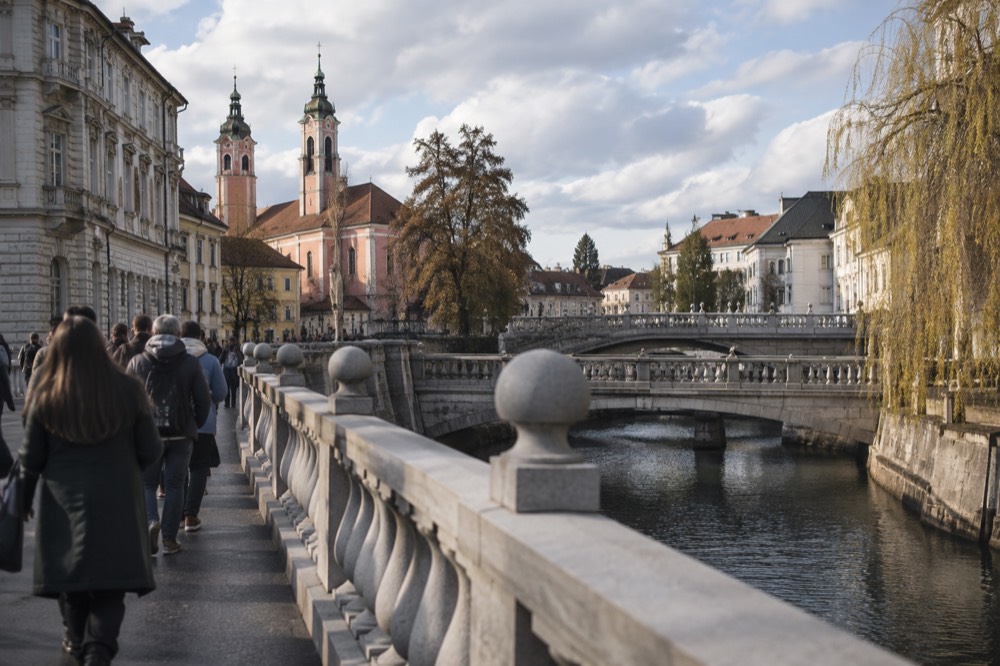
Photography is the first activity, and the best angles are not from the bridge itself. Stand on the riverbank twenty metres downstream, where all three spans line up in one frame with the Old Town's church towers behind them. Early morning gives you empty paving and flat light; late afternoon gives you the warm stone and the crowds that make the place feel alive. The photography spots guide covers the wider circuit, but this single bank position is the shot most visitors want.
From the bridge's southern end, the choices fork fast. West along the river takes you to the Central Market's colonnades, where the covered halls open Monday to Friday from 07:00 to 16:00 and Saturdays to 14:00, with the outdoor stalls running longer in summer. East takes you into the Old Town's restaurant lanes. South, the funicular to Ljubljana Castle waits at the river's edge: the castle's official price list puts a return funicular ride at 6.00 EUR for an adult, or 19.00 EUR for a castle ticket that includes the funicular both ways, the Viewing Tower and the exhibitions. The castle grounds themselves are free to enter; the funicular and the tower are not, and that distinction is worth getting right before you budget the day.
The river itself is the other half of the visit. Boat cruises on the Ljubljanica depart from piers a few minutes' walk away, and the tourist board's own cruise listing runs year-round, conditions permitting. A cruise is also included in the Ljubljana Card, which the official page prices at 41.00 EUR for 24 hours, 49.00 EUR for 48 and 54.00 EUR for 72, covering the funicular, the river cruise, city buses, a guided walking tour, bike share and more than thirty museums. Since a castle ticket with funicular is 19.00 EUR and a river cruise about 15 EUR, the card pays for itself quickly if the castle and the cruise are both on your list.
A boat-and-walk combination is the most efficient way to see the bridge from both sides in one outing: the Boat Cruise, Walk, Castle View tour runs two and a half hours from 34.29 EUR, pairing a river trip with an Old Town walk that crosses Tromostovje on foot. It is rated 4.7 across 366 reviews and suits visitors who want the riverbank angle without organising a cruise separately.
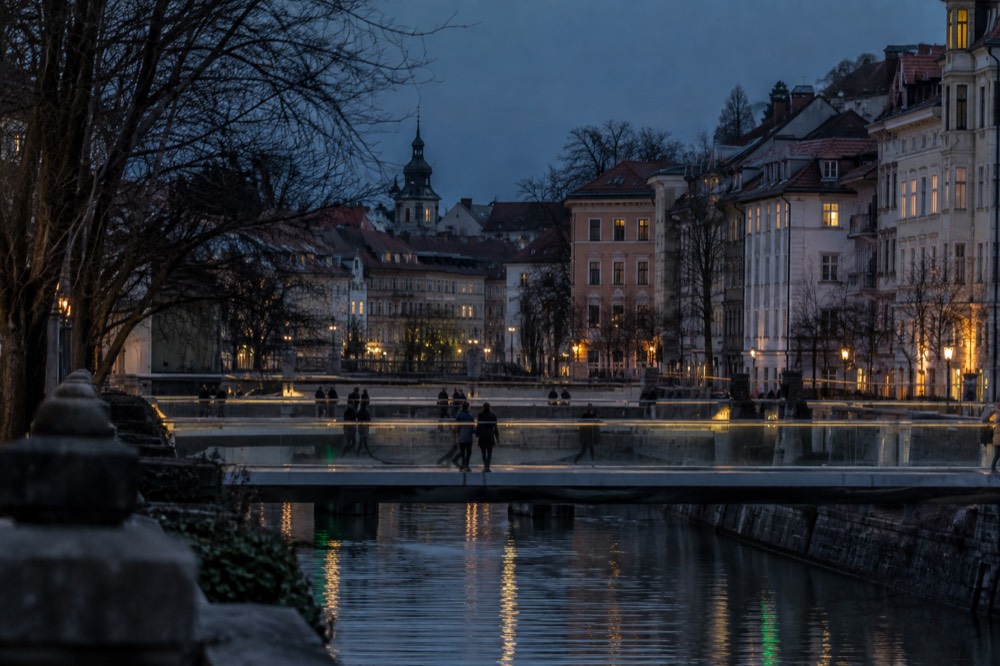
Evening changes the bridge rather than closing it. The lighting on all three spans comes on at dusk, the restaurants on both banks fill, and the crossing becomes the city's default meeting point. The nightlife guide picks up the story from there, but the short version is that Tromostovje after dark is when the photographs improve and the crowds become the point rather than the problem.
When Is the Best Time to Visit the Triple Bridge?
Early morning, before about 09:00, is the best time to photograph the Triple Bridge empty, midday is when street life peaks, and the bridge is open and free at every hour of the year, so the only real timing decisions are about light and crowds, not access. There is no ticket, no gate and no season: the crossing is public pavement, and the question of "when" is really a question of what kind of visit you want. Photographers want the first hour of daylight; first-time visitors want the middle of the day when the square, the market and the castle are all open together.
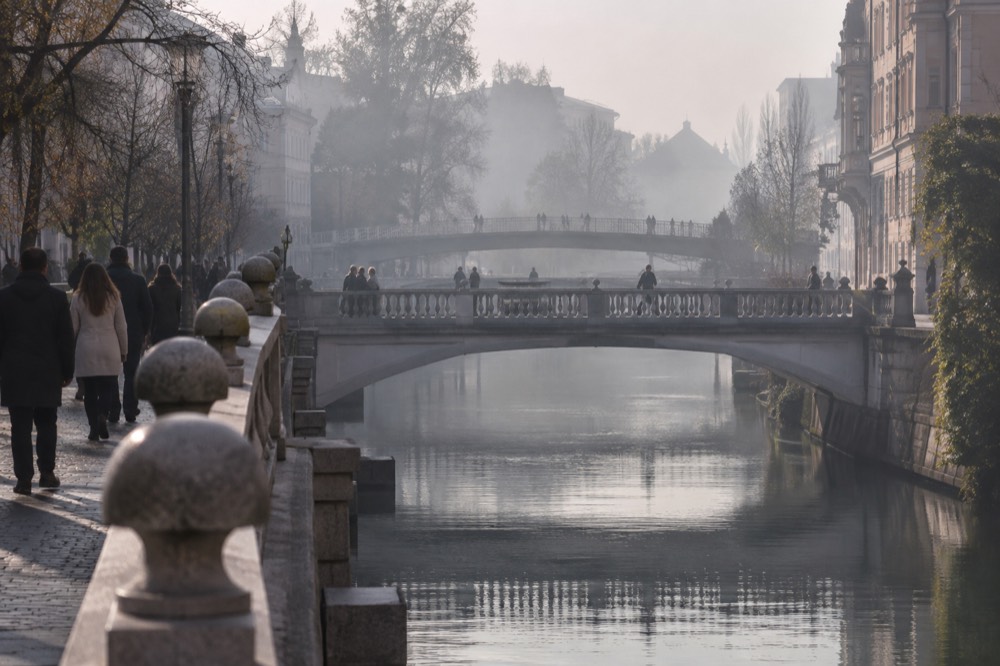
Weather matters more here than at most city sights, and Ljubljana's climate has a quirk that most guides miss. The city sits in a basin at 299 metres, and in the colder half of the year cold air gets trapped under warmer air above, so the city fogs in while the hills a few hundred metres up sit in sunshine. The national weather service's 1971-2000 normals record 91.2 days with fog a year in Ljubljana, and the foggiest months are not the depths of winter alone: September and October average 12.4 fog days each, level with December's 12.6 and above January's 11.3. Autumn mornings on the bridge are as likely to be foggy as January's, and a foggy Tromostovje photographs beautifully, but it will not look like the postcard.
| Time of day | What you get | Trade-off |
|---|---|---|
| Before 09:00 | Empty bridges, soft light, quiet riverbank | Market and castle not yet open |
| 10:00-13:00 | Full street life, performers, everything open | The busiest hours on the paving |
| Afternoon | Warm stone, café terraces filling | Harsh light for photography in summer |
| Dusk and evening | Bridge lighting, restaurant buzz | Dim light without a tripod |
| Foggy morning | Atmospheric, unusual photographs | Views of the castle hill reduced |
Season matters less than you would think, because the bridge is a year-round street. December adds the Christmas market stalls that run along the riverbank, covered in the Christmas market guide. Summer adds the river swimming spots and the terrace crowds. The one genuinely seasonal consideration is rain: September and October are the joint wettest months in the 1981-2010 normals at 147 mm each, above July's 115 mm, so an autumn visit carries the highest rain risk of the year. The bridge in rain is still crossable, still free and still photogenic, but the riverbank angles need a covered lens.
Why Is the Triple Bridge Tied to Jože Plečnik?
The Triple Bridge is the clearest single example of Jože Plečnik's approach to Ljubljana: instead of demolishing the existing crossing, he widened the city's traffic into three parallel spans, and the same architect's hand shaped the market colonnades, the riverside embankments and the square the bridge faces. Plečnik is the reason central Ljubljana looks like one designed object rather than an accretion of centuries, and Tromostovje is the piece visitors can stand on, cross and photograph without a ticket or a tour.
His influence runs in every direction from the bridge. Walk west along the river and you reach the market colonnades he designed; walk east into the Old Town and his church towers rise above the rooftops. The Plečnik's Ljubljana guide maps the full circuit, and the Plečnik House in Trnovo is the museum of his life and work, open Tuesday to Sunday with guided tours on the hour and admission at 12 EUR including the guide. That guided-entry-only rule is a genuine booking constraint: turn up on the half hour and you wait.
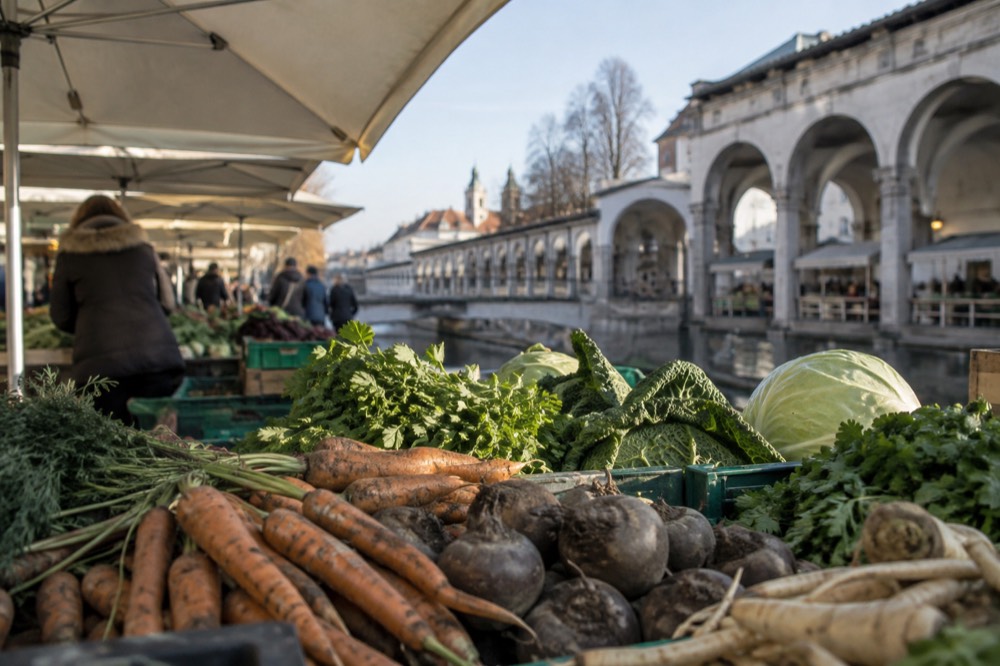
Understanding the bridge as a piece of urban design also explains why it feels different from a normal monument. It was never meant to be gazed at from behind a rope; it was meant to be crossed, and it still is, by thousands of people a day who mostly do not know the architect's name. The two side bridges exist so that the crossing could absorb the foot traffic of a pedestrianised city, and that is exactly the job they do every market morning and every Friday evening. The wider set of guides lives on Ljubljana Travel Guide.
What Is Within a Five-minute Walk of Tromostovje?
Within five minutes of the Triple Bridge you can reach Prešeren Square, the Dragon Bridge, the Central Market, the funicular to Ljubljana Castle, the Ljubljanica boat piers and the start of the Old Town's restaurant lanes, which makes the crossing the single best base point for a walking day in Ljubljana. Few city landmarks anywhere sit inside such a dense ring of sights, and the practical consequence is that you should plan your day outward from the bridge rather than treating each sight as a separate trip.
| Sight | Direction from the bridge | Walking time | Cost |
|---|---|---|---|
| Prešeren Square | North | 1 minute | Free |
| Central Market | West along the river | 3 minutes | Free to browse |
| Dragon Bridge | North-east | 5 minutes | Free |
| Ljubljana Castle funicular | South-east, river's edge | 4 minutes | 6.00 EUR return; grounds free |
| Ljubljanica boat piers | Along the riverbank | 2-4 minutes | From 15 EUR for a cruise |
| Old Town restaurant lanes | South | 1 minute | Prices vary by venue |
The Dragon Bridge is the other famous crossing, five minutes north-east, its four dragons the second-most photographed thing in the city. The castle guide and the castle funicular guide cover the hill to the south, where the funicular runs from 09:00, until 19:00 in the cooler months and until 22:00 from May to September, per the castle's official hours. And the Ljubljanica river cruise guide covers the water-level view of all three bridges at once, the angle no walker ever gets.
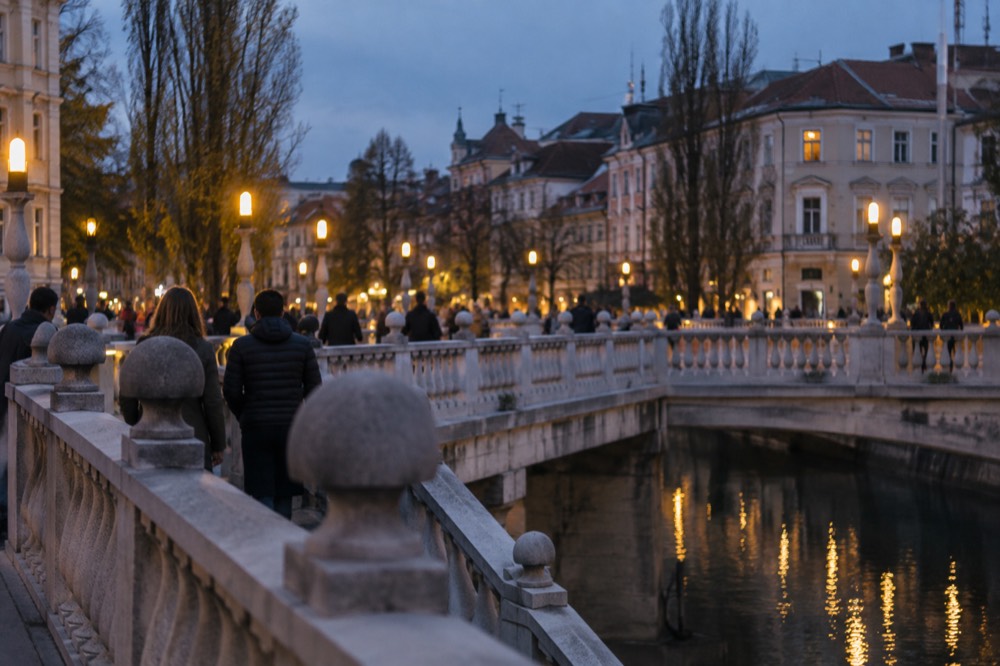
Plan the cluster as a loop rather than a list. Cross Tromostovje, walk the market colonnades, come back along the river to the boat pier, take a cruise, and finish at the funicular for the castle view over the whole layout you have just walked. That loop is the spine of the one day in Ljubljana itinerary, and the bridge sits at its centre for a reason.
Which Tours and Passes Include the Triple Bridge?
The Triple Bridge appears on nearly every city walking tour in Ljubljana, on the Ljubljana Card's included guided walk, and on several free GuruWalk routes, so the cheapest way to see it with commentary is either the pay-what-you-want walks or the card's bundled tour, while paid group walks add the Old Town and castle context in one outing. Because the bridge is free pavement, no tour sells you access to it; what a tour sells is the Plečnik story, the Old Town route and the efficiency of a guide who knows which bank to stand on.
| Option | Format | Duration | Rating | Price |
|---|---|---|---|---|
| Classic Group Walking Tour | Guided group walk, Old Town sights | About 2 hours | 4.8 from 406 reviews | See the live listing |
| Old Town Walk, Romans to Dragons (GuruWalk) | Free tips-based walk | 2 hours | 4.91 from 1496 reviews | Free, pay what you think it was worth |
| 90-Minute Small-Group Sights Walk (GuruWalk) | Free tips-based walk, small group | 1 hour 30m | 4.95 from 287 reviews | Free, pay what you think it was worth |
| Ljubljana City Card | Pass including a guided walking tour | 24, 48 or 72 hours | 4.7 from 123 reviews | From $50 |
| Boat Cruise, Walk, Castle View | Cruise plus walking tour | 2 hours 30m | 4.7 from 366 reviews | From $34.29 |
The free walks deserve their popularity. GuruWalk's Old Town Walk, Romans to Dragons carries a 4.91 rating across 1496 reviews, runs two hours and covers the bridge, the Roman roots and the dragon bridge in one loop; it is free with tips at the end. The 90-Minute Small-Group Sights Walk covers the top ten sights in a tighter loop at 4.95 from 287 reviews. Both cross Tromostovje early, which makes either a good first-morning activity that orients you for the rest of the day.
The Ljubljana Card changes the arithmetic if the castle and the cruise are both on your list. At 41.00 EUR for 24 hours it bundles the funicular, the river cruise, city buses, the guided walk, four hours of bike share and more than thirty museums; against a 19.00 EUR castle ticket with funicular and a roughly 15 EUR cruise, the card clears its cost with two headline items and a single museum. The full card breakdown runs the numbers in detail.
Is the Triple Bridge Worth Visiting with Kids or in Bad Weather?
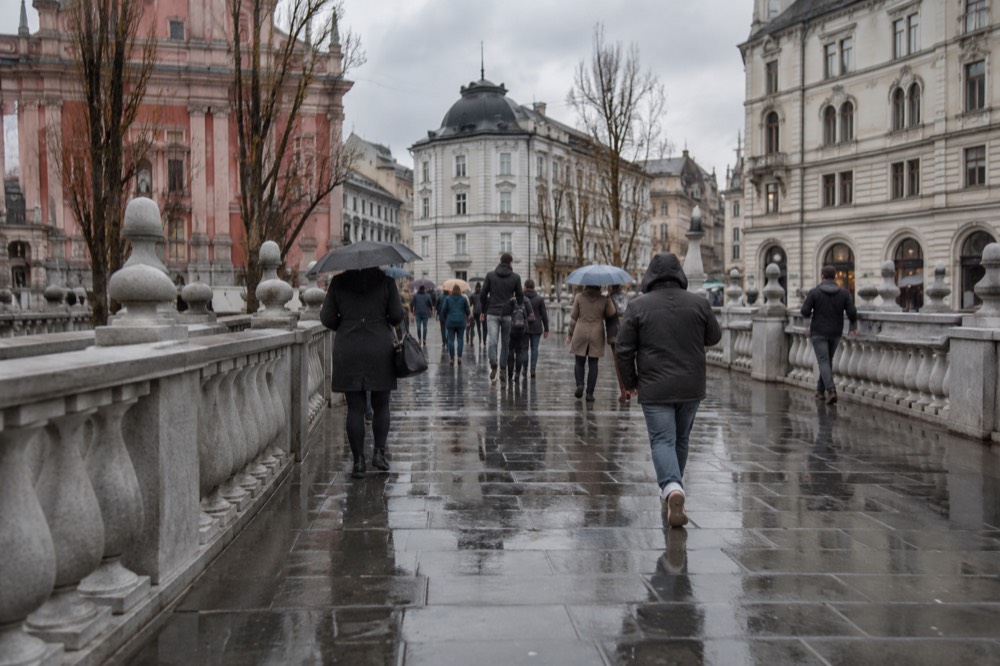
The Triple Bridge is one of the best bad-weather sights in Ljubljana precisely because it is not a sight at all: it is covered pavement-to-pavement in two minutes, the market halls and museums sit within three minutes of it, and the caves that hold a steady 10 C year-round are a coach ride away when the city is fogged in or raining. Families lose nothing by visiting, since the crossing is pushchair-friendly, step-light and surrounded by ice cream, and rain only changes the itinerary order rather than cancelling it.
For a wet morning, work inward from the bridge. The Central Market's covered halls are two minutes west, the National Gallery, closed Mondays, is a short walk north with admission at 10 EUR for the permanent collection, and the Museum of Illusions on the edge of the centre is open daily from 09:00 to 21:00 at 16 EUR for adults. The rainy day guide lists the full set. When the rain turns into a whole washed-out day, the cave day trips are the reliable answer: Postojna Cave runs tours every day including in bad weather, and holds about 10 C year-round, so the weather outside is irrelevant once you are underground.
The Postojna Cave and Predjama Castle Tour from Ljubljana runs five and a half hours from $80, rated 4.9 across 474 reviews, and pairs the cave with the cliff castle in one coach outing. The six-hour Cave and Castle Tickets and Tour version, from $132 at 4.8 from 2802 reviews, includes the entry tickets in the price. Either turns a foggy Ljubljana morning into a day where the weather does not matter.
With kids and good weather, the bridge is simply the start of a walk that works at any pace: across to the Old Town, down to the riverbank, onto a boat, or up the funicular to the castle, where the grounds cost nothing and the tower ticket is the only paid part. The Ljubljana with kids guide builds the full family day out from the same starting point.
How Does the Triple Bridge Fit Into a First Visit to Ljubljana?
Treat the Triple Bridge as the centre of the clock face: put it at noon, Prešeren Square at one o'clock, the market at nine, the Dragon Bridge at three, the funicular at five, and you have the whole walkable core of Ljubljana arranged around one free crossing you will pass a dozen times anyway. First-time visitors consistently overestimate how much of Ljubljana needs planning and underestimate how compact the pedestrian centre is; the bridge is the proof, because everything worth seeing in the core is within a few minutes of it.
A realistic first day: morning free walk or group tour across the bridge and the Old Town, midday at the market or the riverside terraces, afternoon river cruise and funicular, evening back across a lit-up Tromostovje to dinner. That is the shape of the two days in Ljubljana itinerary compressed into one, and the bridge appears at the start, middle and end of it without any special effort. The average visitor to the municipality stays about two nights, according to the national statistics office's arrivals and overnight figures, so the one-day loop is genuinely the typical visit.
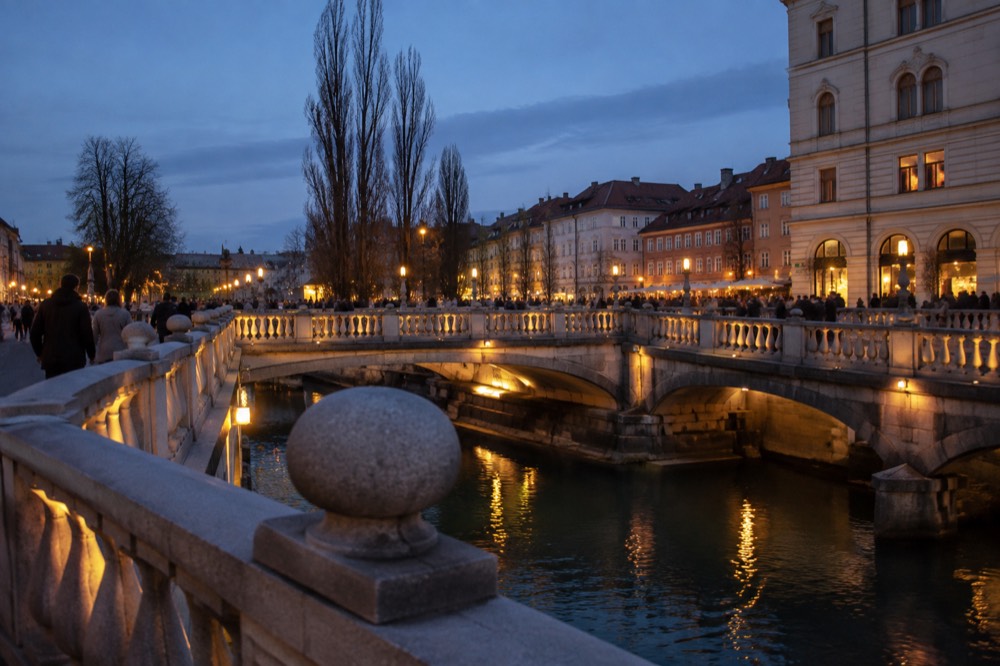
The bridge also anchors the city's free layer. The crossing itself, the square, the riverbanks, the castle grounds and the market browsing all cost nothing, which is why the Ljubljana for free guide can build a full day around this one corner. Add the free GuruWalk crossings and the first-Sunday free admission at the national museums, and a budget visitor can spend two full days around Tromostovje without buying a single sight.
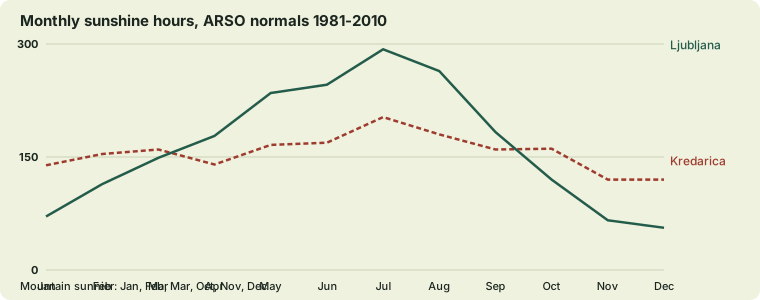
If your visit falls in the darker months, flip the plan: do the bridge and the Old Town in the middle of the day, and remember that the fog above the basin often sits below the castle hill, so the funicular ride can lift you out of a grey morning into sunshine. The Ljubljana in winter guide covers the whole cold-season strategy, and the best time to visit guide weighs the months against each other.
Whichever season you choose, the crossing itself asks nothing of you: no ticket, no time slot, no queue. It asks only that you cross it, and that you look downstream at least once, because the three bridges in one frame with the towers behind is the view that sums up the city.
Common Questions About the Triple Bridge
What is the Triple Bridge (Tromostovje)?
Three linked pedestrian bridges over the Ljubljanica in central Ljubljana, designed as a widened crossing by Jože Plečnik, connecting Prešeren Square with the Old Town. It is free, open at all hours and sits inside the car-free centre.
How much does it cost to visit the Triple Bridge?
Nothing. The bridge is public pavement with no ticket, gate or opening hours. The paid items nearby are the castle funicular at 6.00 EUR return, the castle ticket at 19.00 EUR including the funicular, and the river cruises from about 15 EUR.
When is the best time to photograph the Triple Bridge?
Early morning before 09:00 for empty paving and soft light, or dusk when the bridge lighting comes on. Shoot from the riverbank downstream, where all three spans line up in one frame with the Old Town towers behind them.
Is the Triple Bridge the same as the Dragon Bridge?
No. The Triple Bridge is the three-span crossing at Prešeren Square; the Dragon Bridge with its four dragon statues is a separate bridge about five minutes north-east. Most visitors photograph both on the same short walk.
Can you reach the Triple Bridge by car or bus?
Not directly. The historic centre is pedestrianised, so buses and cars stop at the edge of the car-free zone and the final leg is a walk of a few minutes. City buses cost 1.50 EUR per ride with an Urbana card, and cash is not accepted on board.
Which tours visit the Triple Bridge?
Nearly every city walking tour crosses it, including the Classic Group Walking Tour, the free tips-based GuruWalk walks such as the Old Town Walk, Romans to Dragons, and the guided walk included in the Ljubljana Card. River cruises pass under it, giving the only angle walkers never get.