What Are the Best Hotels in Ljubljana?
Where to book a hotel in Ljubljana: the best areas, what shapes hotel prices, and how to pair your stay with the city's top day trips.
What Are the Best Hotels in Ljubljana?
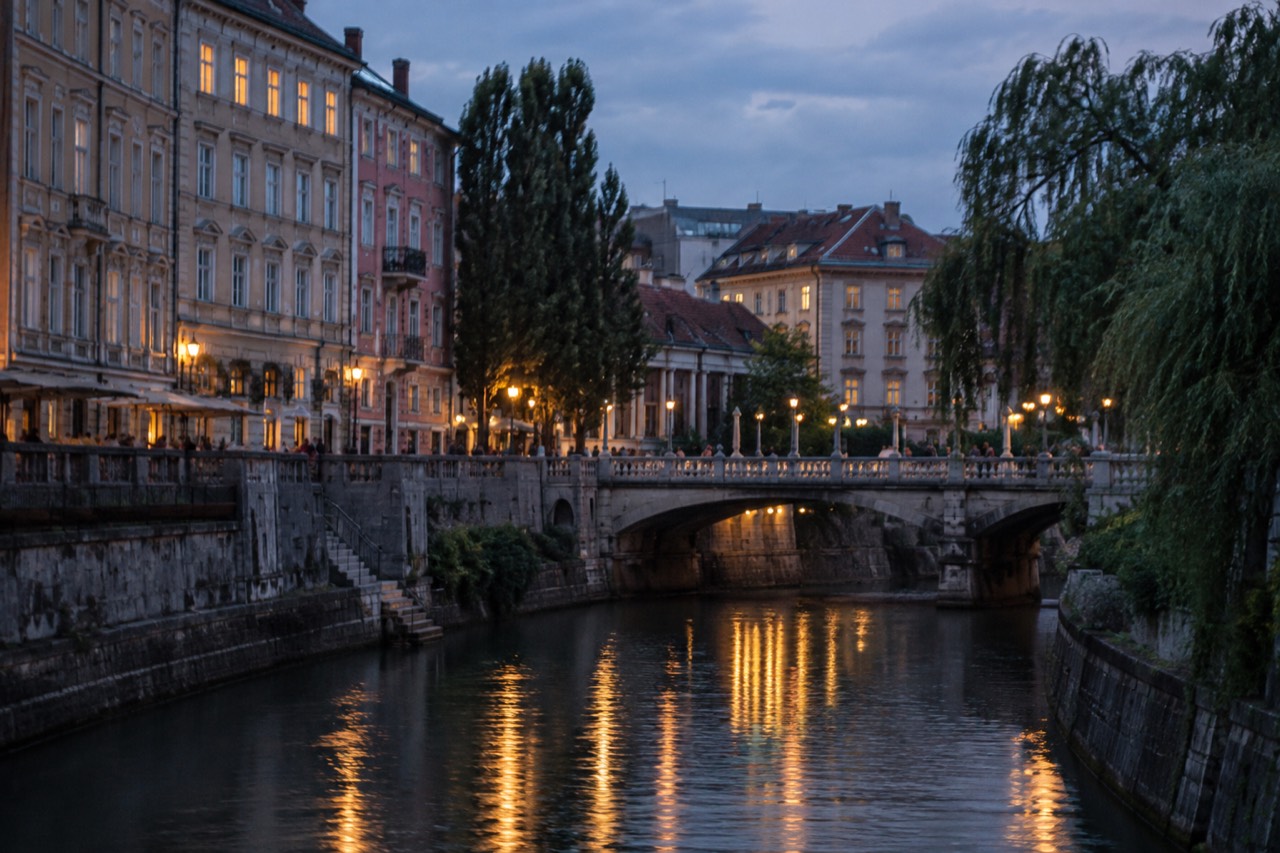
The best hotels in Ljubljana sit inside or on the edge of the pedestrianised historic centre, within about ten minutes' walk of Prešeren Square, because the city's sights, restaurants and river banks are all concentrated there. A four-star property in the centre will serve a two-night visitor better than a five-star beside the ring road. Choose the area first, the hotel second, and book a place that lets you walk everywhere.
That advice sounds blunt, but it is grounded in how the city is built. Ljubljana's historic core is a car-free zone of roughly 20 hectares, progressively closed to general motor traffic since 2007, and almost everything a visitor wants to see sits inside or beside it. The Ljubljana Travel Guide desk's position is simple: with 1,392,728 tourist arrivals and 2,844,129 overnight stays recorded in the municipality in 2025, the arithmetic works out to an average stay of about 2.04 nights. This is a two-night city. A hotel is a base, not a destination, and the best base is the one that puts the Old Town, the castle hill and the Ljubljanica river banks at your feet.
One practical note before anything else: the city centre is pedestrianised, so taxis and transfer cars drop you at the nearest edge of the zone rather than at the door. If you are arriving by car, a hotel with valet parking or an agreement with a nearby garage matters more than a balcony.
Which Area of Ljubljana Should You Book a Hotel In?
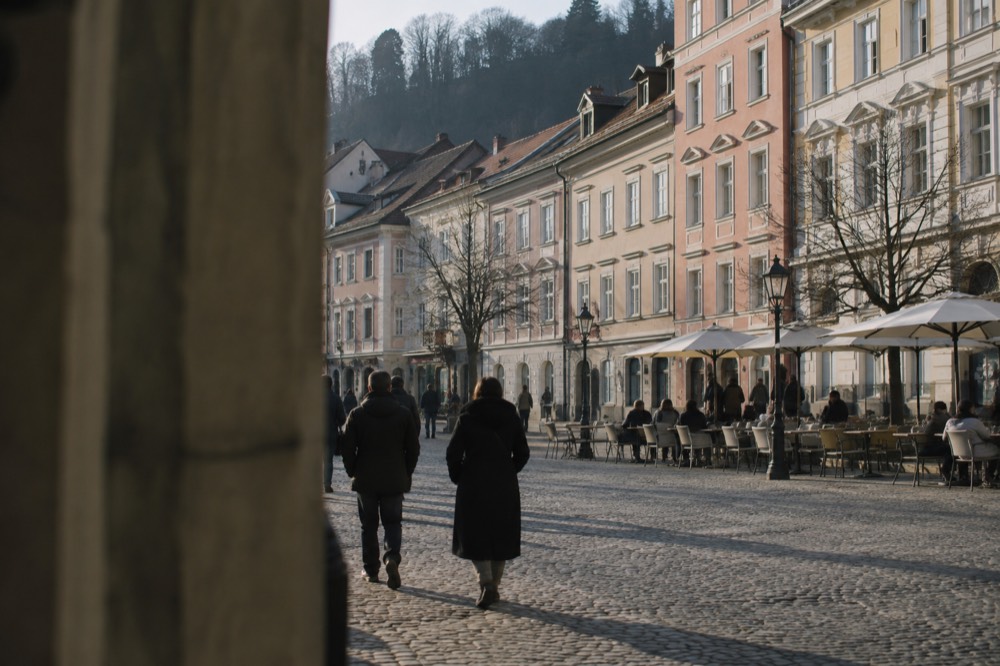
Book inside the pedestrianised centre if you want atmosphere and walkability, in the Poljane or Trnovo stretch just southwest of it if you want quieter river-side streets at lower cost, near the railway and bus station if you are using Ljubljana as a day-trip hub, or up towards Tivoli Park if you want green space and jogging routes. Each of these four zones suits a different kind of visitor, and none is more than a 25 minute walk from the others.
The centre itself, the streets between Prešeren Square, the Triple Bridge and Stari trg, holds the boutique properties in restored townhouses. You pay a premium for the address and you get the dragon bridge, the cathedral and the castle funicular within a short stroll. Noise is the trade-off: the riverside terraces run late into the evening in summer, so ask for a room facing away from the water.
Trnovo, just southwest across the Gradaščica, is the locals' neighbourhood, with the Prule bridge and the Trnovo church on the canalised river, and a cluster of smaller guesthouses and apartments. The best part of Ljubljana to stay in question gets a longer treatment elsewhere on this site, but the short version is that Trnovo trades ten minutes of walking for noticeably quieter nights.
Around the station, on the northern edge, you find the business hotels. This is the least romantic address in the city, but it is the most practical one if your stay is built around departures: coaches to Lake Bled and the caves leave from the adjacent bus station, and the railway lines fan out from here. For a visitor planning day trips, that beats a prettier postcode.
| Area | Best for | Trade-off | Walk to Prešeren Square |
|---|---|---|---|
| Historic centre | Atmosphere, first-timers, short stays | Highest prices, evening noise | 0-5 minutes |
| Trnovo / Prule | Quiet nights, river walks, longer stays | 15-20 minutes to the main sights | 15-20 minutes |
| Station district | Day-trip hubs, early departures | Plain, business feel | 10-15 minutes |
| Tivoli edge | Green space, families, runners | Fewer restaurants at the door | 20-25 minutes |
Whichever zone you pick, the same booking logic applies: the city is compact, the airport at Brnik is about 26 km out, and no hotel in Ljubljana is genuinely far from anything. Distance is measured in minutes here, not kilometres.
If your stay is short, it is worth deciding early whether the trip is a city break or a springboard. The strongest bookable experiences out of Ljubljana are the karst caves and Lake Bled, and the most convenient versions of both are guided tours that collect you in the centre.
What Do Hotel Prices in Ljubljana Depend On?
Hotel prices in Ljubljana swing on three things: the season, the day of the week, and how close the property sits to the pedestrianised core. Rates are date-specific, so no honest article can quote a nightly figure that will still be true when you book, but the pattern is stable. Summer and the December Christmas market period command the highest rates, weekends outprice midweek in the party months, and every step away from the river buys you a meaningfully cheaper room.
Season first. Ljubljana's tourist calendar peaks in summer and again around the December festive market, and hotel pricing follows. The shoulder months, roughly March to May and October to November, are when the same rooms cost less, with one caveat worth knowing: this is not the dry, reliable shoulder the brochures imply. ARSO's 1981-2010 normals put September and October as the joint wettest months of the year at 147 mm of precipitation each, ahead of July's 115 mm, so an autumn bargain comes with a real chance of rain.
Then there is the tax line that appears on your bill. Ljubljana charges a tourist tax of 3.13 EUR per person per night, made up of 2.50 EUR of tax plus a 0.63 EUR promotion surcharge, with a half rate of 1.57 EUR for ages 7 to 18 and children under 7 exempt, as published by the tourist board. It is small, but it is per person, per night, and it is added at checkout rather than folded into the quoted rate.
What you get for your money also depends on how you use the city. A hotel near the centre pairs naturally with a sightseeing pass: the official Ljubljana Card, at 41 EUR for 24 hours and 54 EUR for 72 hours, bundles the castle funicular, a river cruise, city buses, a guided walking tour and more than 30 museums, which changes the maths on a central hotel versus a cheaper outer one.
Should you book ahead, or wing it? Book ahead. The December market weeks and the summer weekends fill the central boutique properties first, and the properties that remain are the ones on the ring roads. The Ljubljana city break guide covers the timing in more depth.
Are There Good Hotels with a View of Ljubljana Castle?
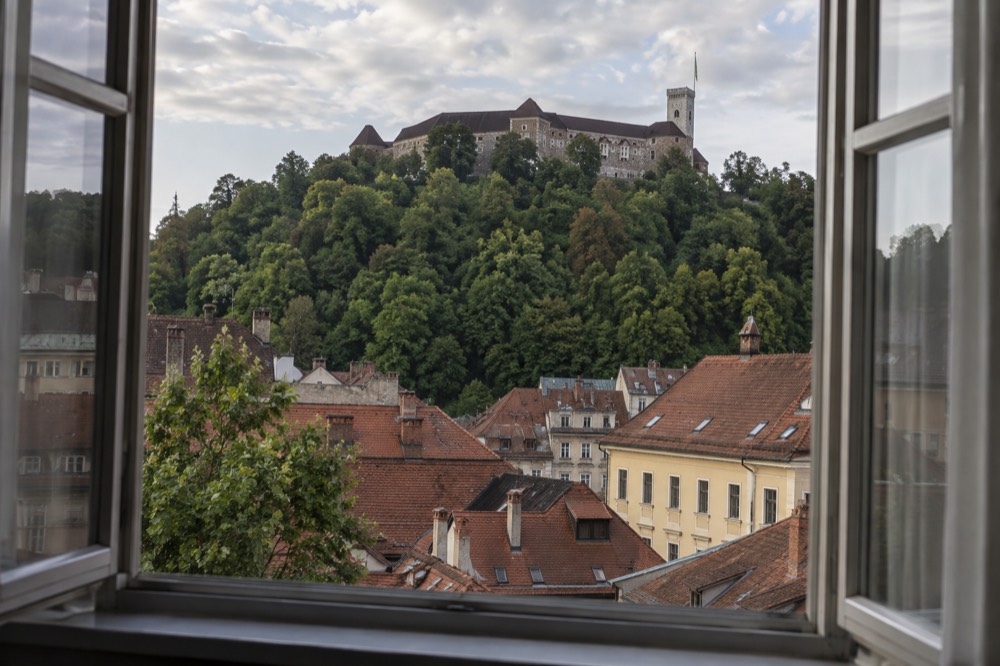
Yes, and the castle view is the one upgrade in Ljubljana that is genuinely worth paying for, because the hill with the castle sits above the whole city and a surprising number of rooms on the southern and eastern sides look straight at it. The catch is the weather: the castle is floodlit and photogenic on clear evenings, but Ljubljana averages only 37 clear days a year against 130 overcast ones, so a view room is a lottery in the colder half of the year.
That lottery deserves explaining, because it is the single most misunderstood thing about visiting this city. Ljubljana sits on the floor of a basin at 299 m, and in the colder months a temperature inversion caps that basin with fog and low cloud while the hills a few hundred metres above sit in sunshine. ARSO's 1981-2010 normals give the city just 56 hours of sunshine in the whole of December and 71 in January, while Kredarica, the station at 2514 m on Triglav, records 120 and 139 hours over the same months. The mountain is sunnier than the capital in winter.
The practical reading: a view room in July or August is close to a sure thing, with 293 and 264 sunshine hours in those months. From October to March it is a coin toss at best. If the view matters to you, ask the hotel which side of the building faces the hill, and treat the answer as worth more than a star rating.
For the castle itself, the grounds are free to enter and open 365 days a year, while the funicular, the viewing tower and the exhibitions are ticketed, so a hotel near the base of the hill lets you walk up through the free grounds whenever the fog lifts.
Should You Stay in Ljubljana or by Lake Bled?
Stay in Ljubljana if your trip is two nights or more and you want restaurants, nightlife and day-trip options in every direction. Stay by Lake Bled only if the lake is the whole point of your trip, because Bled is a small resort village and Ljubljana is a functioning capital with 293,244 people in the municipality. Most visitors get the best of both by sleeping in Ljubljana and taking a day trip to the lake.
The day-trip logic is strong. Lake Bled is about an hour's drive from the capital and carries more search demand than the entire city, which tells you the lake is not a footnote. A guided option such as the Lake Bled and Castle day trip, six hours from the capital and rated 4.7 from 1641 reviews, from $86, handles the transport and the timings in one booking, and the getting around Ljubljana guide covers the self-drive and coach alternatives for anyone who would rather go independently.
The same hub logic applies to the karst. Postojna Cave, holding a steady 10 C year round and reached in about 90 minutes, is the classic wet-weather or heatwave answer, and the Cave and Castle Tickets and Tour, six hours, rated 4.8 from 2802 reviews, from $132, pairs the cave with cliff-top Predjama Castle in a single departure. A hotel near the bus station makes an early meet-up painless; a hotel in the centre means a short walk to the pickup point instead.
There is a third pattern worth naming: split the stay. Book two nights in Ljubljana, then one or two by the lake. It costs you a hotel change but removes the daily 100 km of round-trip driving, and it puts you on the lake shore in the early morning and late evening, when the day-trippers are not there. The where to stay near Lake Bled guide maps the villages around the water.
Common Questions About Hotels in Ljubljana
What Are The Best Hotels In Ljubljana?
The best hotels are the ones inside or on the edge of the pedestrianised centre, within about ten minutes of Prešeren Square. Pick the area first: the core for atmosphere, Trnovo for quiet, the station district for day trips, the Tivoli edge for green space.
Which part of Ljubljana is best to stay in for a first visit?
The historic centre, between Prešeren Square and Stari trg. Everything a first-time visitor comes to see is walkable from there, and the pedestrianised streets mean no traffic noise, though riverside terraces can run late in summer.
How many nights should I [book a hotel](https://booking.tpk.ro/siijcqre) for?
Two to three. The published figures for 2025, 1,392,728 arrivals and 2,844,129 overnight stays, work out to an average stay of about 2.04 nights, and that is roughly right: two nights for the city, a third if you are adding day trips.
Is there a tourist tax on Ljubljana hotels?
Yes. The charge is 3.13 EUR per person per night, a 2.50 EUR tax plus a 0.63 EUR promotion surcharge. Ages 7 to 18 pay a half rate of 1.57 EUR and children under 7 are exempt. It is added to your bill at checkout.
Should I stay in Ljubljana or Lake Bled?
Stay in Ljubljana unless the lake is your entire trip. Bled is a small resort; Ljubljana is a capital with restaurants, nightlife and day trips in every direction. A day trip to Bled from the city, or a split stay, works better for most visitors.
When are Ljubljana hotels most expensive?
Summer and the December Christmas market period, and weekends within them. The shoulder months are cheaper, but note that ARSO's normals make September and October the joint wettest months at 147 mm each, so an autumn bargain comes with a real chance of rain.