What Is the Coolest Neighbourhood in Ljubljana?
Metelkova and its surrounding district hold the title of Ljubljana's coolest neighbourhood, with Trnovo and Krakovo close behind and Šiška rising fast. Here is how the areas compare.
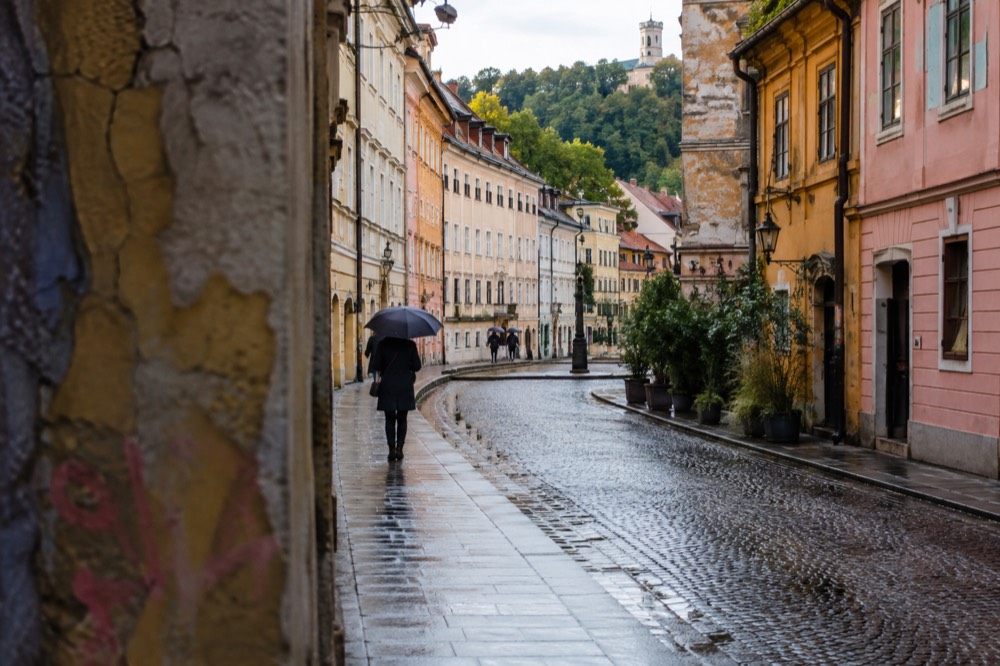
What Is the Coolest Neighbourhood in Ljubljana?
The coolest neighbourhood in Ljubljana is the Metelkova district, anchored by the Metelkova Mesto autonomous cultural centre, where street art, squat-era history and club venues sit inside former army barracks. Entry to the area is free and it is busiest on Friday and Saturday nights. Trnovo and Krakovo, along the Ljubljanica and Gradaščica rivers, are the quieter bohemian runner-up, and Šiška is the district with the most momentum right now.
Ljubljana is small enough that "neighbourhood" barely covers a dozen streets, so the question is really about character, not geography. The city centre is a pedestrianised zone of roughly 20 hectares, closed to general motor traffic and progressively expanded since 2007, and it is beautiful, but it is also where every visitor already is. Cool, in the sense this question asks about, lives a short walk outside it.
Three areas make a genuine case. Metelkova has the rawest story and the most visual energy. Trnovo and Krakovo have the lived-in, garden-and-river charm that locals actually mean when they say a neighbourhood feels right. Šiška, north of the station, has the galleries, the bars and the momentum. This guide walks through all three and then answers the practical question underneath the fun one: where should you actually sleep.
One framing note before the walk. The tourist board describes Metelkova Mesto as an autonomous cultural centre in former army barracks with street art, bars and club venues, and that is accurate, but the word "centre" undersells it. It is a place with a founding story, a political history and a look you cannot mistake for anywhere else in the city.
Why Metelkova Takes the Title
Metelkova wins because it is the one neighbourhood in Ljubljana that looks and feels like nothing else: an autonomous zone of painted barracks, sculptures and club spaces that grew out of a 1990s occupation of abandoned military buildings. Entry is free, the street art is permanent, and the clubs set their own covers. No other district in the city carries that much visual and historical charge in so few blocks.
The practicalities matter as much as the legend. The area is free to enter, individual clubs set their own covers, and it is most active in the evenings, busiest on Friday and Saturday, per the tourist board's own listing. Go during the day for the murals and the strange welded sculptures when you can see them; go at night for the music. The district also carries serious cultural weight next door: the Slovenian Ethnographic Museum and the Museum of Modern Art's MSUM site both sit on the same block, so a Metelkova afternoon can pair squat-era street art with two of the country's best museum collections, both closed Mondays. More of these guides are collected on Ljubljana Travel Guide.
There is a second Metelkova identity worth knowing about. The streets immediately around the barracks have filled up with bars and small venues, and the whole strip from the railway station eastward reads as the city's alternative spine. This is where the pub crawl crowd, the art students and the after-party crowd overlap. If your idea of cool is nightlife density within a ten minute walk of the station, this is your district.
For visitors who want a guided way into the city's alternative side, the free walks are the cheapest entry point. The Ljubljana Unveiled walk on GuruWalk, free and pay what you think it was worth, runs about two hours from Roman roots to the dragon bridge and is a good orientation before you strike out to Metelkova on your own. A night walk covers the corners daytime tours skip, though you will want to check the schedule.
If your days are for the city and your nights for the neighbourhood, there is a strong argument for booking one big day trip in the middle of your stay rather than scattering half days. The most popular single excursion from the city is the karst.
Trnovo and Krakovo: The Quiet Cool
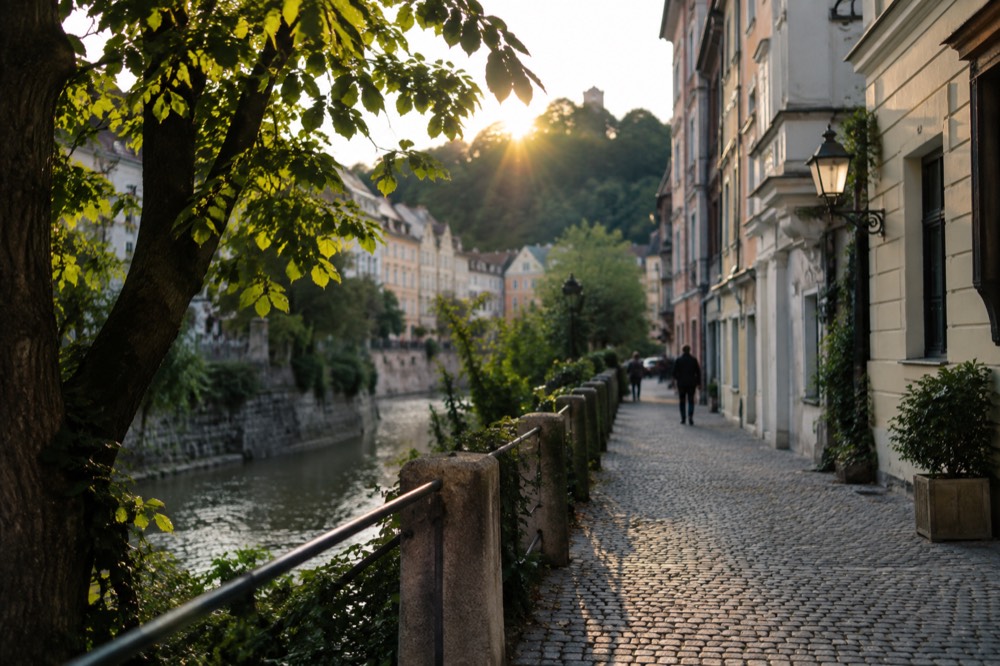
Trnovo and Krakovo, the garden streets south of the centre where the Gradaščica meets the Ljubljanica, are Ljubljana's cool-under-pressure neighbourhood: house gardens, small bars, swimming spots in the river and almost no tourists. This is the area locals mean when they say a neighbourhood feels right, and it is a fifteen minute walk from Prešeren Square.
Krakovo was historically the garden quarter, and the long narrow plots of those kitchen gardens still shape the streets. The houses sit tight to the pavement with the gardens running behind them, and the whole district has the slightly unkempt, well-loved look that no regeneration budget can fake. Trnovo, just west along the Gradaščica, adds the student population from the nearby university halls, the riverside bars and the tradition of swimming off the banks, which the Trnovo church and its riverside terrace watch over. Plečnik lived and worked here, and his house is now a museum, so the architecture crowd has a reason to come too; the Plečnik House guide covers the visiting rules, which include guided tours on the hour.
The bars are the social infrastructure. Along the Trnovo embankment and the Prule side of the river you get small terraces, cheap local beer and a crowd that is mostly students and people who live within walking distance. For the city's wider beer culture, including the craft breweries that cluster a few streets north, see the Ljubljana craft beer guide.
The honest comparison, then, looks something like this.
| Neighbourhood | The vibe in one line | Best for | Busiest | Tourist density |
|---|---|---|---|---|
| Metelkova district | Street art, squat history, clubs | Nightlife, photography, alternative culture | Friday and Saturday nights | Low, rising at night |
| Trnovo and Krakovo | Garden streets, river bars, locals | Evening drinks, slow mornings | Weekend afternoons | Very low |
| Šiška | Galleries, studios, momentum | Art, coffee, watching a district change | Weekends, gallery openings | Very low |
| Old Town / centre | Pedestrianised, postcard Ljubljana | First visit, sights, river cruise | All day, every day | High |
Is Šiška the Next Cool Neighbourhood?
Šiška, the district north and west of the railway station, is where Ljubljana's cool is moving: artist studios, small galleries, coffee roasters and bars in a low-rise grid that has not been polished for visitors. It lacks Metelkova's single landmark, so it reads as a place to live rather than a place to see, which is usually the stage right before a district becomes famous.
The case for Šiška is structural. It is walkable from the station, the rent is lower than the centre, and the building stock is the kind artists and small operators can actually afford: workshops, ground-floor units, courtyards. That is the same recipe that produced the scenes in other capitals, and the early signs, the studios and the coffee, are already there. The case against is simple: there is no there there yet for a visitor with two hours. Come for an afternoon, not an itinerary.
The Metelkova comparison is worth spelling out because the two get confused. Metelkova is a defined autonomous zone with a political origin story; Šiška is a working district with a scene diffused across it. If you want to photograph something unmistakable, Metelkova wins. If you want to sit in a room where the city's next decade is being sketched out, Šiška is the better bet.
A note on planning around all this: the neighbourhoods above are for evenings and slow mornings, and the strongest single day out of the city is the karst. The Postojna Cave and Predjama Castle tour from Ljubljana runs six hours, rates 4.8 across 2,802 reviews, and combines the cave train ride with the castle built into a cliff face; the cave holds about 10 C year round, so it doubles as the reliable answer on a hot or rainy afternoon. Check availability on the operator's live listing before committing a day.
Where Should You Actually Stay?
Stay in the centre or in Trnovo: the centre puts the pedestrianised old core and the river within a five minute walk, while Trnovo gives you the same walk in fifteen minutes with local bars and lower prices. Metelkova is better as a night out than a base, and Šiška's hotel stock is thin. Most visitors do best within a ten minute walk of the Ljubljanica.
The centre's pedestrianisation is the deciding factor. Because the historic core is closed to general motor traffic, staying in or beside it means you never fight a car for a street, and everything in this article is on foot or a short bus ride away. The trade-off is price and noise. Trnovo and the Prule side trade a little distance for a lot of quiet, and the riverside there is where the city drinks in the evening anyway. For the full area-by-area breakdown, including which streets to avoid, read where to stay in Ljubljana, and for the neighbourhood-level debate, the best part of Ljubljana to stay in makes the case street by street.
Budget travellers can stretch a stay further with the free layer of the city, which the Ljubljana for free guide maps out: the castle grounds, the riverside, the first-Sunday free admission at the national museums, which includes the Ethnographic Museum right beside Metelkova. Pair that with a pay-what-you-think-it-was-worth GuruWalk and two days in the city cost less than one dinner for two in the centre.
This is also where the honest answer to the original question lands. Cool is not a place you book, it is a place you spend an evening. Sleep central, drink in Trnovo, spend Friday night in Metelkova, and catch Šiška on a Saturday afternoon before everyone else does.
Common Questions About Cool Neighbourhoods in Ljubljana
What Is The Coolest Neighbourhood In Ljubljana?
The Metelkova district, anchored by the Metelkova Mesto autonomous cultural centre in former army barracks, is the coolest neighbourhood in Ljubljana: free to enter, covered in street art and busiest on Friday and Saturday nights. Trnovo and Krakovo are the quieter, leafier runner-up, and Šiška is the district gaining the most momentum.
Is Metelkova safe to visit?
Yes, for a visitor it is a normal evening destination: the area is free to enter, clubs set their own covers, and it is most active in the evenings and busiest Friday and Saturday. Standard city caution applies late at night, as anywhere with clubs.
How far is Metelkova from the city centre?
Metelkova sits just east of the railway station, roughly a ten minute walk from Prešeren Square through the pedestrianised centre. Trnovo is about fifteen minutes on foot, and Šiška starts immediately north of the station.
Which Ljubljana neighbourhood is best to stay in?
The centre, for the pedestrianised old core, or Trnovo for quieter streets, local bars and lower prices within a fifteen minute walk of everything. Metelkova works better as a night out than as a base, and Šiška has little hotel stock.
Is Ljubljana walkable between neighbourhoods?
Very. The historic centre is a pedestrianised zone of roughly 20 hectares, and every neighbourhood in this article is within a thirty minute walk of Prešeren Square. City buses cost 1.50 EUR for a 90 minute zone 1 ticket, but you will rarely need one.