Where to Stay in Ljubljana: The Best Areas for Every Budget and Trip Style
Ljubljana is a two-night city where almost every hotel sits within a twenty minute walk of the river, so the real question is not whether a location is central but which side of the Ljubljanica, and which mood, suits your trip.
Short answer
Stay inside the pedestrianised centre if you want everything on foot, Trnovo or Krakovo for a quieter riverside base, Bežigrad near the station for early trains, and Šiška or Trnovo for cheaper rooms. Ljubljana recorded 2,844,129 overnight stays across 1,392,728 arrivals in 2025, an average stay of about 2.04 nights, so most visitors only need one well-placed base.
Ljubljana is small in the way that matters for accommodation. The municipality recorded 1,392,728 tourist arrivals and 2,844,129 overnight stays in 2025, which averages out to roughly 2.04 nights per visitor, and nearly all of those visitors sleep within a couple of kilometres of Prešeren Square. The historic centre is a pedestrian zone of roughly 20 hectares, closed to general motor traffic and progressively expanded since 2007, so the whole calculus of "[where to stay](https://booking.tpk.ro/siijcqre)" is different from a big capital: you are choosing a mood and a walking radius, not a district you will commute from.
This guide walks through the neighbourhoods that actually matter to a visitor, the costs that pile up beyond the room rate, the transport facts that decide whether you need a car, and how the city's famously grey winters should shape when you book. Everything here comes from primary sources: the tourist board, the city, the transit operator and the national weather service.
Which Area of Ljubljana Should You Actually Stay In?
The centre inside the pedestrian zone is the best base for a first visit of one to three nights, because the castle, the river, the market and the main museums are all inside a fifteen minute walk. Trnovo and Krakovo suit travellers who want a local, quieter riverside feel within the same walking distance, while Bežigrad near the rail and bus stations is the practical pick for early departures and day trips by coach.
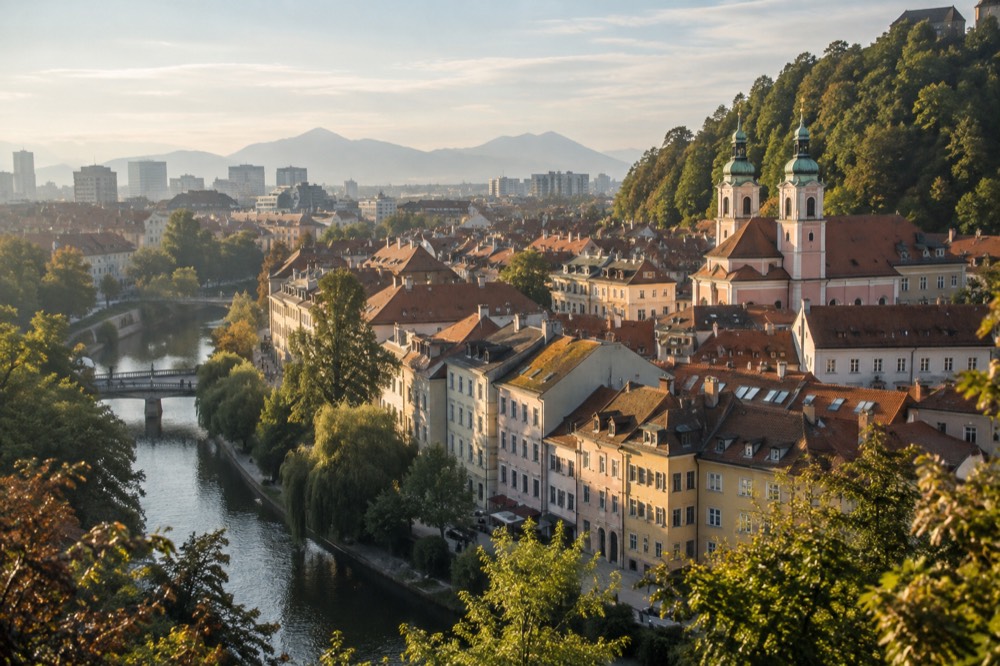
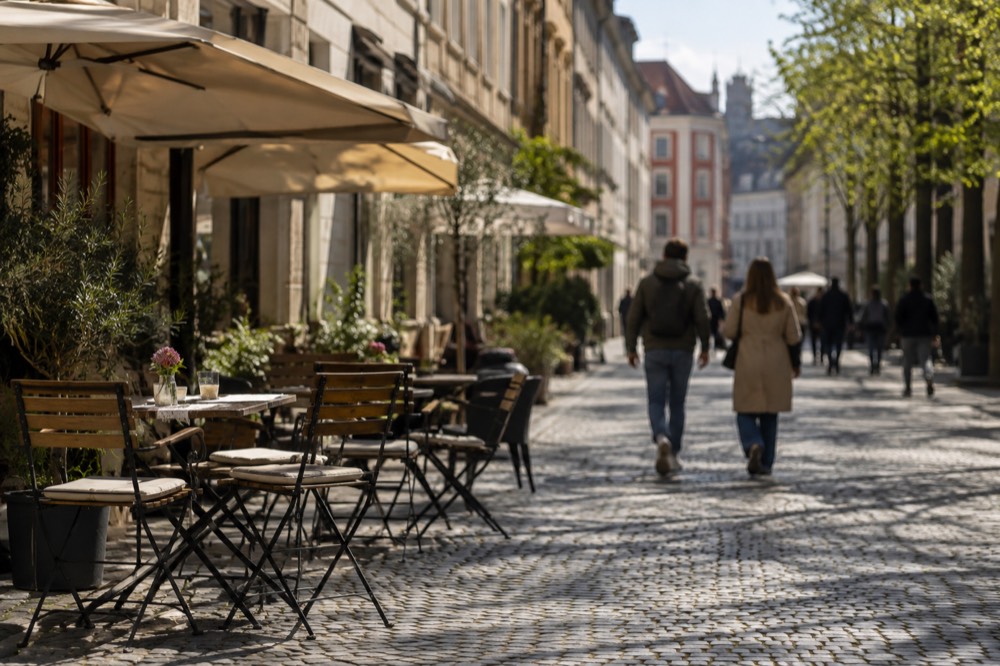
The centre is not one thing. The east bank around Prešeren Square and Čevljarski most, the shoemakers' bridge, is the postcard Ljubljana: pastel facades, café terraces, the Franciscan Church and the funicular to the castle visible at the end of the street. It is the most expensive patch of the city and the noisiest on weekends, but nothing you came for is more than a short stroll away. Staying here means you can drop back to the room between sights, which is worth real money on a two night stay.
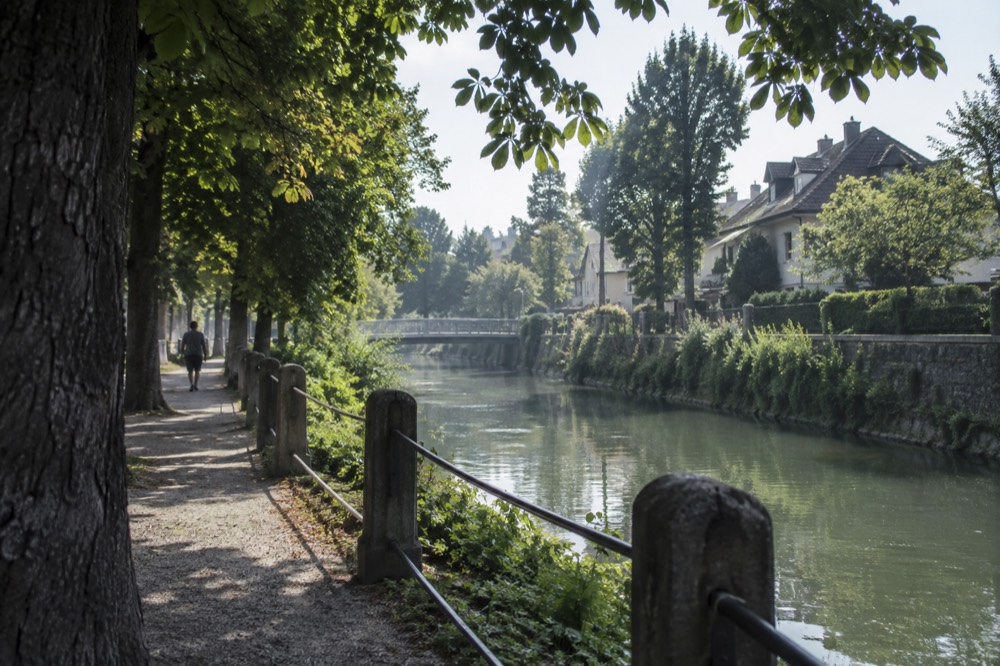
The west bank, Gornji trg and the streets climbing toward the castle, is quieter and slightly more residential, with wine bars and small restaurants rather than big terraces. South of the river, the Krakovo vegetable gardens, a protected historic area of allotment plots that runs down to the Gradaščica canal, give the Trnovo district a village character that the centre lost decades ago. Trnovo has its own church on the water, its own swimming area on the Ljubljanica in summer, and prices noticeably below the centre for the same ten minute walk into town.
Bežigrad, north of the centre around the railway and bus station, is where the practical Ljubljana lives. It is not picturesque, but if your plan is a 7am coach to Lake Bled or a train to Zagreb, being ten minutes on foot from the platform beats a picturesque address. The district also has the city's stadium, plenty of ordinary restaurants, and the National Museum complex on its southern edge. Our one day in Ljubljana itinerary assumes you can start from the centre by 9am; from Bežigrad, shift that fifteen minutes earlier.
Šiška, west of the station, and other outlying districts offer the cheapest beds and a genuinely local scene, Metelkova's street art and alternative venues sit on the Bežigrad edge, but you trade a 30 to 40 minute walk or a bus ride for the saving. On a two night stay that trade rarely pays. For a week, it does.
Which Neighbourhood Fits Which Kind of Traveller?
Families and short-break visitors should stay in the centre or on the west bank for walkability, culture-focused visitors near the museum quarter off Slovenska cesta, nightlife seekers around Metelkova and the east bank bars, and budget travellers in Šiška or Trnovo. The city is compact enough that no choice is wrong, but each one buys a different kind of stay.
The honest way to choose is by what you will do in the evenings, because the daytime sights cluster so tightly that any central base reaches them all. If your evenings are a riverbank beer and an early night, Trnovo or the west bank is made for you. If they are craft beer bars and clubs, the east bank and the area around Metelkova, an autonomous cultural centre in former army barracks where entry to the area is free and individual clubs set their own covers, put you in the right place at 1am.
| Neighbourhood | Best for | Walk to Prešeren Square | Character | Trade-off |
|---|---|---|---|---|
| Centre (east bank) | First visits, short breaks | 2-8 minutes | Postcard streets, terraces, street musicians | Priciest beds, weekend noise |
| Centre (west bank) | Couples, quieter central stay | 5-10 minutes | Castle-side lanes, wine bars, fewer crowds | Fewer restaurants late |
| Trnovo and Krakovo | Local feel, riverside, budgets | 10-15 minutes | Village atmosphere, gardens, canal swims | Fewer sights on the doorstep |
| Bežigrad | Early trains, coach day trips | 15-20 minutes | Practical, residential, stadium district | Least atmospheric |
| Šiška | Cheapest rooms, longer stays | 25-35 minutes | Student and local scene, Metelkova nearby | Bus or long walk home |
Families should note that the pedestrianised core is unusually child-friendly: no traffic to dodge on the main squares, and the castle funicular, at 3.30 EUR single or 6.00 EUR return for an adult, is itself an attraction. The Ljubljana with kids guide covers the playground and museum angle in detail. Visitors who care mainly about Plečnik's architecture should read our Plečnik Ljubljana guide before choosing, since his key buildings, the Triple Bridge, the market colonnades and the National and University Library, all sit in or beside the centre, though the Plečnik House itself is in Trnovo, guided tours on the hour, 12 EUR including the guide.
What Does a Stay in Ljubljana Cost Beyond the Room Rate?
Budget roughly 3.13 EUR per person per night in tourist tax, 1.50 EUR per city bus ride with free transfers for 90 minutes, around 15 EUR for a river cruise, 19.00 EUR for a castle ticket with funicular, and 41.00 EUR for a 24 hour Ljubljana Card that bundles most of those together. Room rates are date-specific and we do not quote them, but these fixed, published figures are what turn a cheap room into a cheap trip or an expensive one.
The tourist tax is the line item every accommodation adds at checkout: 3.13 EUR per person per night in the city, which is 2.50 EUR of tax plus a 0.63 EUR promotion surcharge, with a half rate of 1.57 EUR for ages 7 to 18 and youth hostels, and children under 7 exempt. On a two night stay for two adults that is 12.52 EUR, enough to notice.
The Ljubljana Card is the one decision worth doing arithmetic on. The official tourist board page prices it at 41.00 EUR for 24 hours, 49.00 EUR for 48 hours and 54.00 EUR for 72 hours for an adult, and it includes the castle funicular, the Ljubljanica river cruise, city buses, a guided walking tour, four hours of BicikeLJ bike share and one entry each to more than 30 museums and galleries. The arithmetic: a castle ticket with funicular is 19.00 EUR and a river cruise about 15 EUR, so those two alone are roughly 34 EUR before a single museum. Add the Moderna galerija at 7 EUR or the Ethnographic Museum at 8 EUR and the 24 hour card has paid for itself.
| Item | Price | Notes |
|---|---|---|
| Tourist tax | 3.13 EUR per person per night | Half rate 1.57 EUR ages 7-18 |
| City bus, single, zone 1 | 1.50 EUR | 90 minutes including transfers, Urbana or contactless |
| Urbana card purchase | 2.00 EUR | One-off, top up as you go |
| Castle ticket with funicular | 19.00 EUR | Viewing tower and exhibitions included |
| Funicular only, return | 6.00 EUR | Grounds and ramparts area separate from ticketed attractions |
| River cruise, Barka | 15 EUR | 50 minutes from Breg 1 |
| Ljubljana Card, 24 hours | 41.00 EUR | Funicular, cruise, buses, walking tour, 30+ museums |
| Ljubljana Card, 72 hours | 54.00 EUR | Same bundle over three days |
The card is sold as a product too, and the Ljubljana City Card guide works through the full value calculation, including what the card does and does not cover. One caution from the official page: it covers one entry per attraction, and it deactivates the moment the hours run out, so start it in the morning, not at dinner.
Do You Need a Car When Staying in Ljubljana?
No, and a car is usually a liability in the centre: the historic core is a pedestrian zone closed to general motor traffic, city buses do not accept cash, and nearly every hotel in the central districts is within walking distance of everything a two night visitor needs. Rent a car only if your base is deliberately outside the city or your itinerary is a loop around Slovenia.
The pedestrian zone is the single most useful practical fact for anyone booking a central hotel. Roughly 20 hectares of the historic centre are closed to general traffic, expanded progressively since 2007, which means taxis and hire cars drop you at the edge, not the door, and hotels inside the zone handle luggage transfers themselves. Ask your hotel where the drop-off point is before you arrive with suitcases; the answer is usually a two minute walk.
On the buses, the detail that catches visitors out is the no-cash rule. LPP city buses accept the Urbana card, which costs 2.00 EUR to buy and is topped up at kiosks, post offices, Urbanomat machines and the Passenger Centre on Slovenska 56, and they also accept contactless Visa, Mastercard and mobile wallets directly on board. What they do not accept, at all, is cash. A single zone 1 ride is 1.50 EUR and includes transfers for 90 minutes.
If you do drive in, park at the edge and use the buses or your feet. Our getting around Ljubljana guide covers the mechanics, and the car rental Ljubljana guide explains when hiring actually makes sense, which is almost always for a loop of the Julian Alps, the Soča Valley or the coast rather than for staying in the city. Slovenia is in the European Union, uses the euro and is inside the Schengen area, so there are no border formalities coming from Italy, Austria, Hungary or Croatia, and no currency to change anywhere in the country.
How Far Is Your Hotel from the Things You Came to See?
Every central neighbourhood puts you within a 15 minute walk of Ljubljana Castle, the Triple Bridge, the Central Market and the National Gallery, and the funicular from the old town runs to the castle every few minutes for 3.30 EUR single. The distances that matter are not inside the city at all, they are the day trip radii, and those all start from the bus and railway station in Bežigrad.
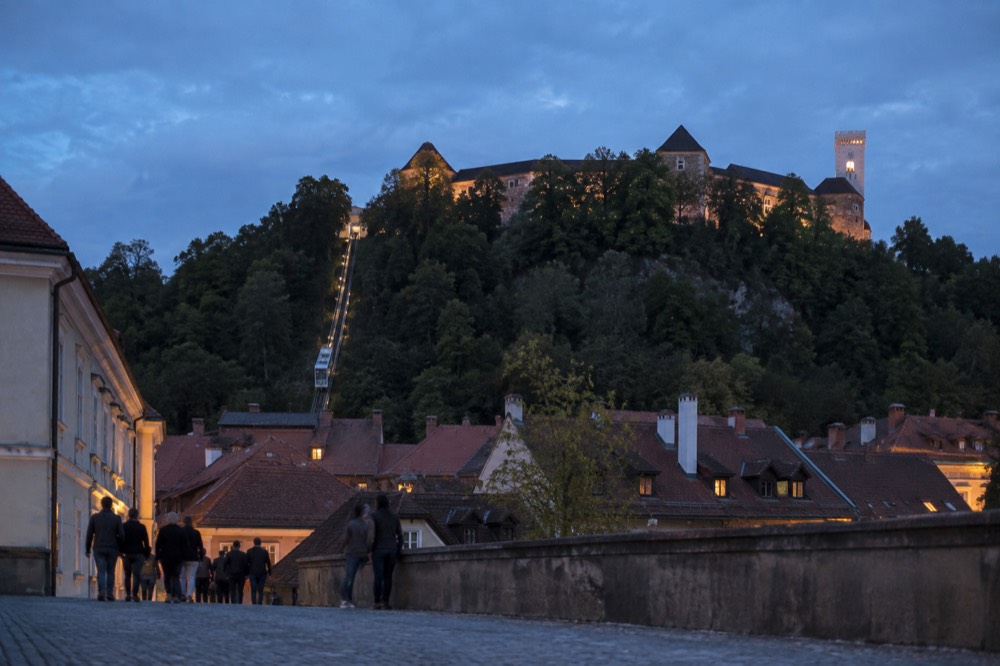
The castle is the anchor. It is open 365 days a year, with attractions running 09:00-18:00 from October to April and 09:00-20:00 from May to September, and the funicular extending an hour later in summer. From a centre hotel the base station is a five minute walk; from Trnovo, allow fifteen. A skip-the-line entry ticket with optional funicular ride is available from 17 dollars through the operator's listing, and it is one of the few city products worth booking ahead in July and August. Everything else covered here is indexed on Ljubljana Travel Guide.
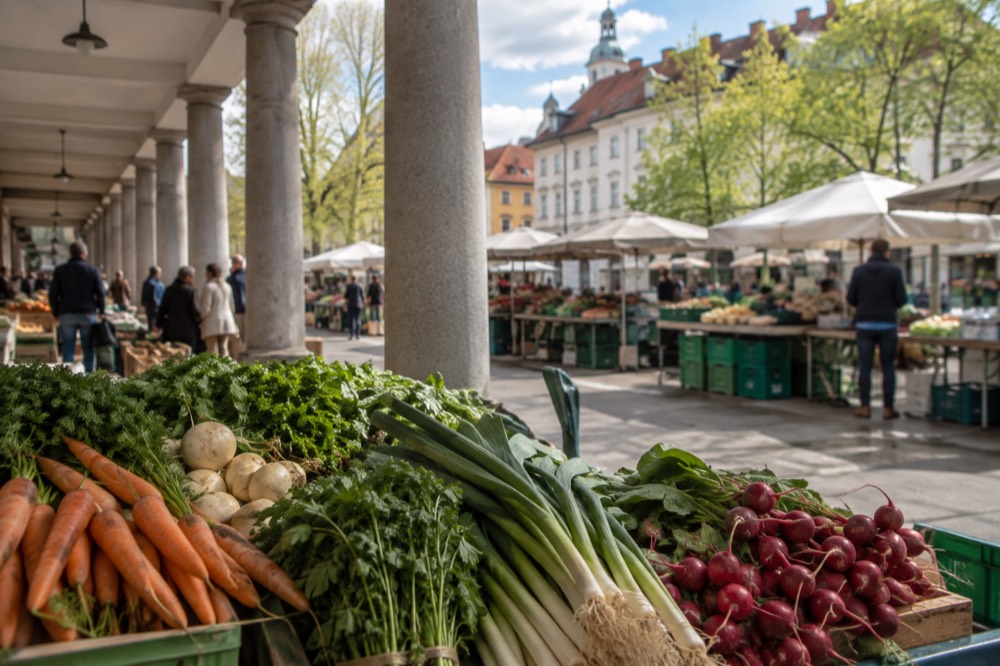
Beyond the castle, the practical geography is simple. The Central Market's outdoor stalls run roughly 06:00-18:00 Monday to Saturday in summer, 06:00-16:00 in winter, with covered halls on shorter hours, so a Trnovo or west bank base puts your breakfast fruit within a short walk. The National Gallery closes Mondays, as do most state museums, which is the planning fact that matters more than any distance: on a Monday your museum day collapses, and a central base lets you pivot to the river, the Tivoli Park paths or a café afternoon without losing an hour in transit.
| Sight or facility | Typical walk from centre | From Trnovo | From Bežigrad | Opening note |
|---|---|---|---|---|
| Ljubljana Castle funicular base | 5 minutes | 15 minutes | 20 minutes | 09:00-22:00 May-Sep, 09:00-19:00 Oct-Apr |
| Central Market, outdoor stalls | 5 minutes | 12 minutes | 18 minutes | Mon-Sat, 06:00-18:00 summer |
| Triple Bridge and Prešeren Square | 2 minutes | 12 minutes | 17 minutes | Always open |
| National Gallery | 10 minutes | 20 minutes | 12 minutes | Closed Mondays |
| River cruise pier, Breg 1 | 5 minutes | 10 minutes | 20 minutes | Hourly May-Sep from 11:00 |
| Bus and railway station | 15 minutes | 25 minutes | 5 minutes | Day trip departure hub |
Where Should You Stay If Day Trips Are the Point?
Stay in or near Bežigrad, close to the bus and railway station, if your itinerary is built around day trips to Lake Bled, Postojna Cave, the coast or the Julian Alps, because almost every coach and train departs from there and the popular cave tours leave in the morning. A central hotel still works, but add fifteen minutes each way to every departure.
Ljubljana functions as a base more than a destination for many visitors, and the tour roster reflects it. The most-booked day trip out of the city is the Postojna Cave and Predjama Castle combination, a six hour tour rated 4.8 from 2,802 reviews, from 132 dollars, which includes tickets and transport, and its departure point is a short walk from the station district. Lake Bled trips, from a six hour castle-and-lake tour rated 4.7 from 1,641 reviews at from 86 dollars down to a five hour small-group version at from 35 dollars, all use the same hub.
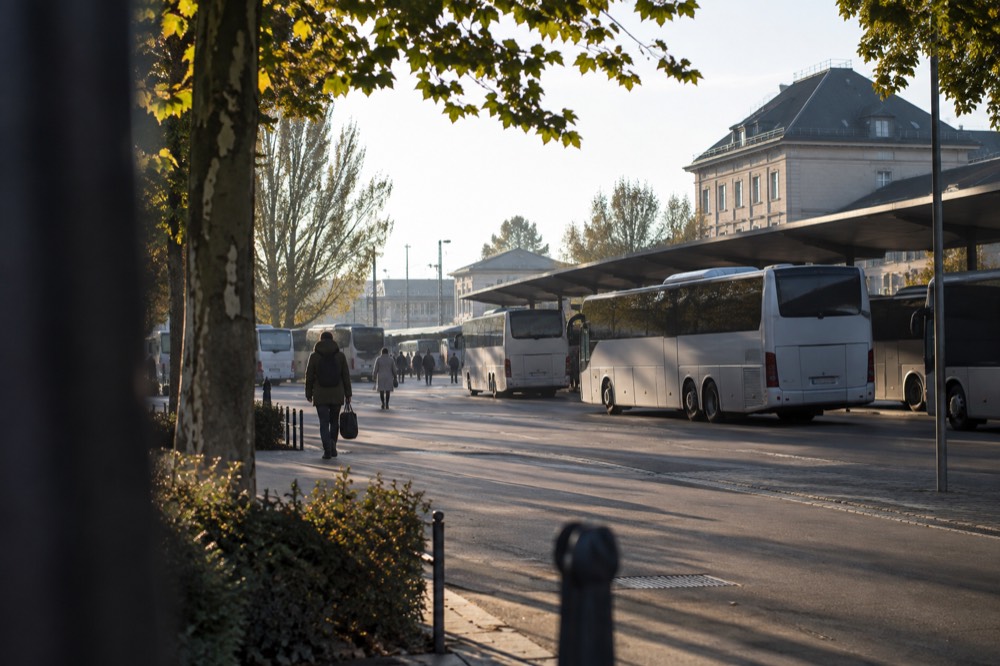
The station district has a genuine advantage beyond convenience. If your Bled coach leaves at 8am and your cave tour returns at 6pm, being ten minutes from your hotel means you can shower, eat and still make an evening river cruise, of which the 50 minute electric boat runs from 17 dollars and is rated 4.6 from 149 reviews. Our day trips from Ljubljana guide ranks the full set, and the Ljubljana to Lake Bled guide covers that single most popular route in detail.
One scheduling note that belongs to accommodation planning: the caves hold roughly the same temperature year round, about 10 C at Postojna, which makes them the reliable answer on a wet or sweltering day, and the tours run daily. Book your cave day for the forecast's worst morning, not the first morning, and keep a flexible Bled day for the clear one. That only works if your base lets you reshuffle without penalty, which is another quiet argument for a central or station-side hotel over a cheap edge-of-town bed.
When Should You Book, and Does the Season Change Where You Should Stay?
Book two to three months ahead for June to September and for the December Christmas period, and expect the shoulder seasons to be easier, with one correction to the guidebook cliché: Ljubljana's foggiest and wettest months are September and October, not midwinter, so an autumn base with quick access to the castle hill and the caves beats one chosen for summer river views.
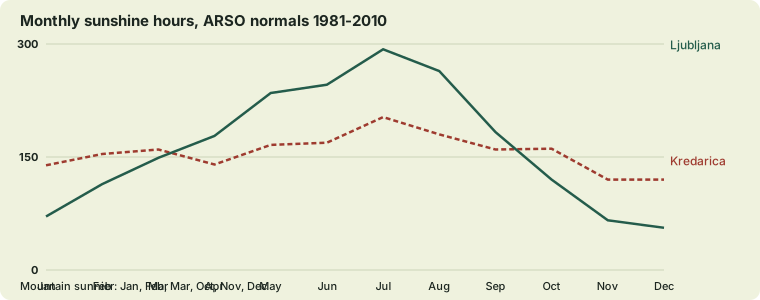
The climate record is the part of this decision nobody else tells you straight. Ljubljana sits on the floor of a basin at 299 m, and in the colder half of the year a temperature inversion caps the city under fog and low cloud while the hills a few hundred metres above sit in sunshine. ARSO's 1981-2010 normals give the city 56 hours of sunshine in the whole of December, under two hours a day, and just 2 clear days that month, against 120 hours and 6 clear days at Kredarica, at 2,514 m on Triglav. Annually the city averages 37 clear days against 130 overcast.
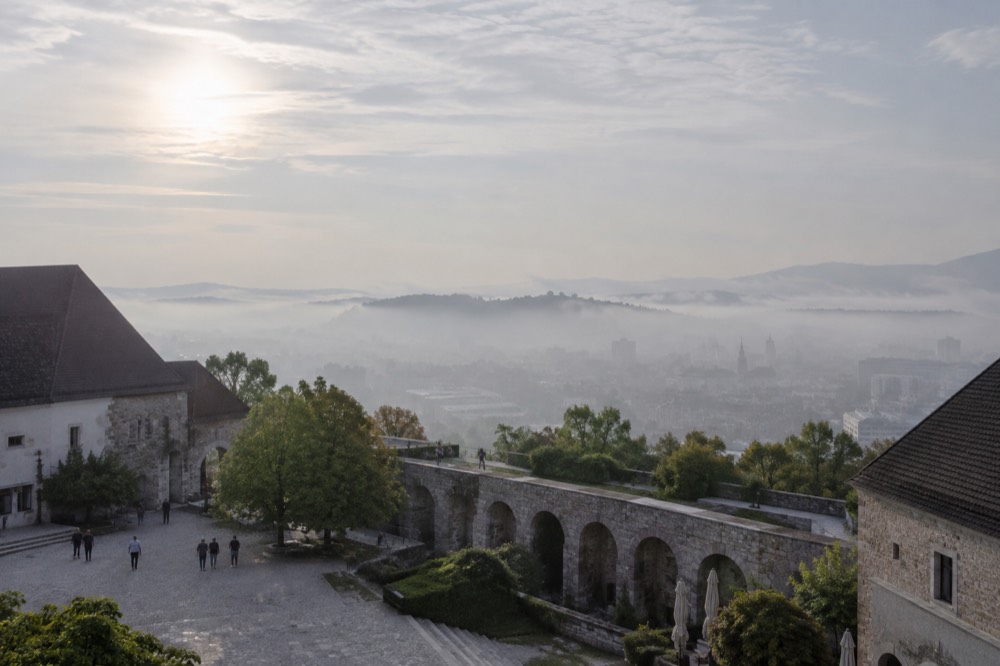
The counterintuitive part is autumn. ARSO's 1971-2000 series, the only period in which fog is published, gives September and October 12.4 fog days each, level with December's 12.6 and above January's 11.3, and the 1981-2010 table makes the same two months the joint wettest of the year at 147 mm each, above July's 115 mm. Everyone plans around wet winters here; the numbers say the early autumn shoulder is just as grey, and September's 07:00 relative humidity, at 94 percent, is the highest of the year.
What this means for accommodation is concrete. In winter, a hotel near the funicular base or with a short walk to the castle hill buys you the one reliable escape from the fog, because the viewing tower is often above it. In September and October, do not book a balcony-and-river-view room and expect to use it; book for walkability and plan around the caves, the museums and the rainy day in Ljubljana options. The best time to visit Ljubljana guide runs the full twelve-month comparison.
Short Break or Longer Stay: Does the Answer Change?
For the typical 2.04 night stay the centre or Trnovo is always the right answer, but for a week or more, a cheaper base in Šiška or Bežigrad combined with a Ljubljana Card and one or two booked day trips usually beats a central hotel, because the city's sights run out before its neighbourhoods do.
The overnight-stay arithmetic, 2,844,129 overnight stays across 1,392,728 arrivals in 2025, tells you what everyone else does: arrive, sleep twice, leave. On that pattern, pay for the centre. The premium is small in absolute terms and the walkability dividend is large, and the tourist board's own figures on the card and the castle suggest most visitors spend more on attractions and food than on the marginal difference between a central and a Bežigrad room.
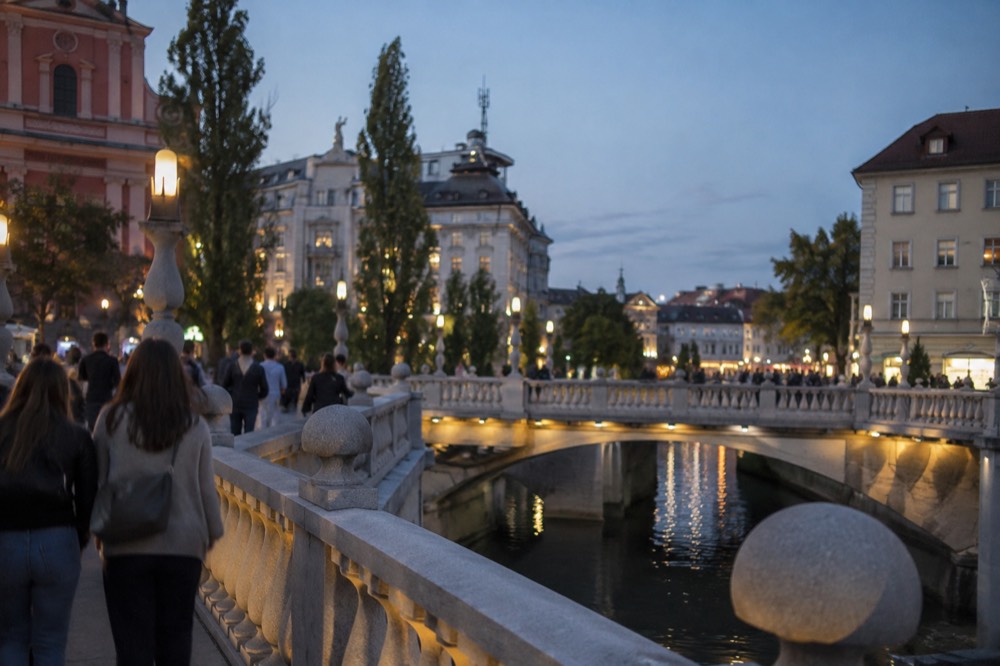
Longer stays flip the logic. A week in Ljubljana is really a week of day trips, Bled, Postojna, Škocjan, Piran, the Soča Valley, with city evenings, and the station-side districts handle that rhythm better than a boutique address on the river. The 3 days in Ljubljana itinerary shows how quickly the city itself is exhausted and the region takes over. Solo travellers and couples on a longer trip should also read the Ljubljana on a budget guide, where the cheap-district math is worked through against the real fixed costs listed above.
Whatever you choose, one evening in the centre is worth planning around regardless of where you sleep: Odprta Kuhna, the Open Kitchen street-food market, runs on Pogačarjev trg on Fridays roughly March to November, 10:00 to 21:00, with the official wording being "every sunny Friday", which is literal, because the market is cancelled in bad weather. A Friday base near the market, or at least a short walk from one, turns your cheapest dinner night into the best one.
Common Questions About Where to Stay in Ljubljana
Where To Stay In Ljubljana for a first visit?
Inside or just off the pedestrianised centre. Everything a first-time visitor comes for, the castle, the Triple Bridge, the Central Market, the riverbanks, sits within a fifteen minute walk of Prešeren Square, and the tourist board's figures show the average stay is about two nights, which is too short to spend any of it on buses.
Is it better to stay near the station or in the old town?
The old town for atmosphere and walkability, the station district of Bežigrad for practicality. Nearly every day trip coach and train departs from the Bežigrad hub, so if your itinerary is built around Bled, Postojna or the coast, the station side saves you fifteen minutes each way on every departure.
Which is the cheapest area to stay in?
Šiška and the outer residential districts carry the lowest room rates, with Trnovo and Krakovo close behind while staying within a fifteen minute walk of the centre. Balance any saving against the fixed costs: tourist tax of 3.13 EUR per person per night applies everywhere, and a bus ride is 1.50 EUR, contactless only, no cash on board.
Can I stay in Ljubljana without a car?
Yes, and it is the better choice. The historic centre is a roughly 20 hectare pedestrian zone closed to general traffic, city buses cover everything else, and the day trip network runs on coaches and trains from the station. A [hire car](https://discovercars.tpk.ro/laYIo9hK) only pays for itself on a loop itinerary around the Alps, the Soča Valley or the coast.
Does the season change where I should book?
It should. September and October average 12.4 fog days each, level with December, and both months are the joint wettest of the year at 147 mm, so book for walkability and cave access in autumn rather than river views. In winter, a base near the castle funicular puts you above the basin fog quickly, since the hills above the city are sunnier than the streets all winter.
How many nights do most people stay?
About two. The municipality recorded 1,392,728 arrivals and 2,844,129 overnight stays in 2025, an average of roughly 2.04 nights, which makes Ljubljana a weekend city with a day trip attached, and the reason a single well-placed base beats splitting your stay.