How Can I Get Around in Ljubljana?
Walking, buses, bikes, boats and taxis in Ljubljana, with real prices, the no-cash bus rule and how the pedestrian centre changes everything.
How Can I Get Around in Ljubljana?
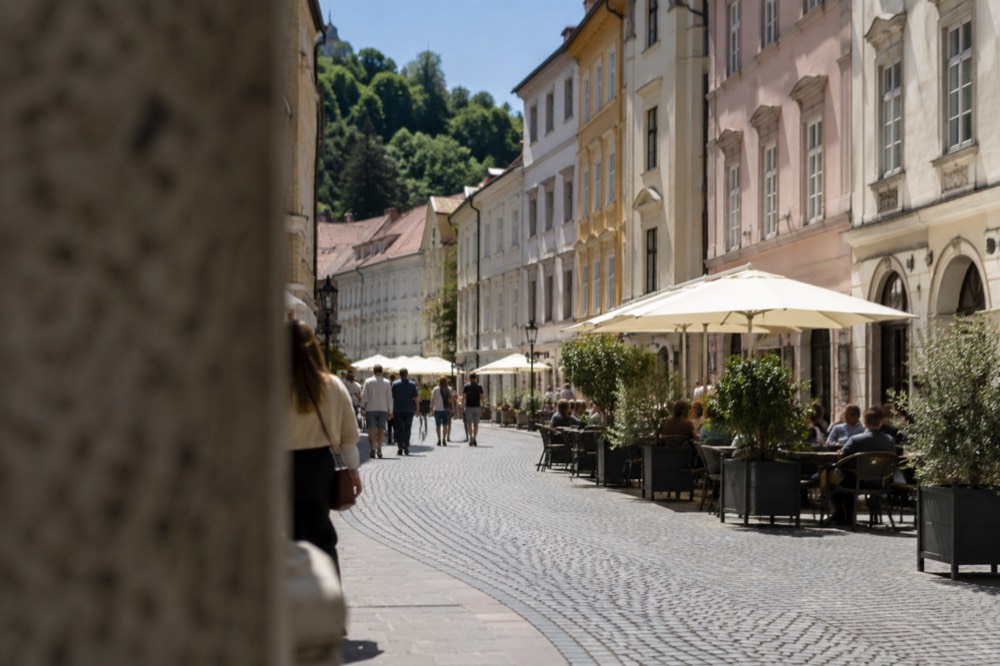
On foot, mostly. Ljubljana's historic centre is a pedestrianised zone of roughly 20 hectares, closed to general motor traffic, and nearly everything a first-time visitor wants sits inside a 15-minute walk of Prešeren Square. Beyond the centre, contactless buses cost 1.50 EUR a ride, cash is not accepted on board, and a funicular, river boats and bike-share cover the rest.
That is the short version, and it is genuinely good news for travellers. The city is compact, flat along the river, and designed, over the past two decades, around people rather than cars. The pedestrian zone has been progressively expanded since 2007, and the result is a capital where walking is not the budget option but the normal one. Locals do it too.
The complication is that Ljubljana sits in a basin, and the basin fogs in. ARSO's 1971-2000 normals record 91.2 days with fog a year, with September and October averaging 12.4 fog days each, level with December. If you are walking everywhere, you will sometimes be walking through fog. It is atmospheric rather than dangerous, but it changes what you see, and it is the reason the castle hill, a few dozen metres above the river, can be in sunshine while the streets below are grey.
Here is the full picture, mode by mode, with the prices that are published and the traps that catch visitors.
| Mode | Cost | Best for | Watch out for |
|---|---|---|---|
| Walking | Free | The entire historic centre | Fog in the colder half of the year |
| City bus (Urbana or contactless) | 1.50 EUR per 90-minute ride, zone 1 | Bežigrad, Šiška, Tivoli, the station | No cash on board, ever |
| Funicular to Ljubljana Castle | 3.30 EUR single, 6.00 EUR return, adult | The castle, when the hill feels long | Queues in peak season |
| Bike-share (BicikeLJ) | Included with the Ljubljana Card, 4 hours | Flat riverside lanes | Station spacing, check the app |
| River boat | 15 EUR for a 50-minute Barka cruise | Seeing the centre from the water | Seasonal hours, May to September peak |
| Taxi | Metered | Airport runs and late nights | Book through an operator, not a tout |
Is Ljubljana Really Walkable?
Yes, and more so than almost any European capital. The historic centre is a car-free pedestrian zone of roughly 20 hectares, expanded steadily since 2007, and the main sights, Prešeren Square, the Triple Bridge, the Cathedral, the Central Market and the Ljubljanica banks, all sit within a ten-minute walk of one another. A visitor without mobility constraints does not need any other transport inside the centre at all.
The geography helps. The Ljubljanica cuts through the middle, and the two banks hold most of what people come to see. Tromostovje, the Triple Bridge, connects the squares; Čevljarski most, the Cobbler's Bridge, carries you to the quieter Trnovo side. You can cross the river four times in a slow half hour and call it a full sightseeing day.
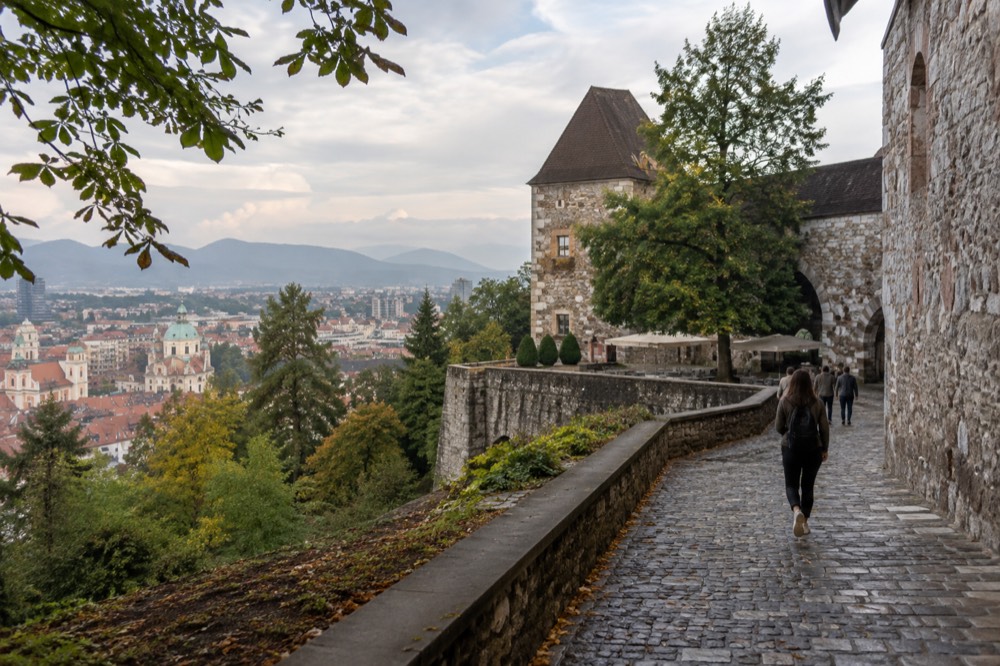
The one real walk is uphill. Ljubljana Castle sits on a wooded hill above the centre, and the path up takes about ten to fifteen minutes from near the funicular base. The castle grounds themselves are free to enter; the funicular, the Viewing Tower and the exhibitions are paid. If you are curious whether the hill is worth it at all, the is Ljubljana Castle worth it question gets a full answer elsewhere, including how long people typically spend there.
For orientation, the free GuruWalk options are hard to beat on a first day. The Old Town Walk, Romans to Dragons runs about two hours, is tips-based, and carries a 4.91 rating from 1,496 reviews on GuruWalk. It covers the ground from Roman remains to the Dragon Bridge, which is exactly the spine of the walkable centre.
Once you know the centre's shape, everything else in this article is about the edges: the parts of the city the pedestrian zone does not reach, and the day trips that start from it.
How Do the Buses Work?
Buy nothing in advance and bring no cash. Ljubljana's city buses take contactless bank cards and phones directly, or the reusable Urbana card, at 1.50 EUR for a single zone 1 ride valid 90 minutes including transfers. Cash is not accepted on board at all, and the Urbana card itself costs 2.00 EUR to buy if you want one.
The contactless change is relatively recent and it removes the old trap. For years, the advice was that you had to find an Urbanomat machine or a kiosk and buy an Urbana card before you could board anything, because drivers sold no tickets. Now a Visa, Mastercard or a phone wallet taps straight in. The Urbana card still makes sense if you are riding a lot, or if you want the top-up machines at kiosks, post offices, tourist information centres and the LPP Passenger Centre on Slovenska 56. More of these guides are collected on Ljubljana Travel Guide.
The 90-minute validity includes transfers, so a journey that changes buses once still costs 1.50 EUR as long as it fits inside the window. Zone 1 covers essentially everything a visitor will use, including the main railway and bus station area and Tivoli Park. Children under 7 travel free, and ages 7 to 18 pay a reduced rate.
Buses are the answer for the neighbourhoods the pedestrian zone does not cover: Bežigrad to the north, Šiška to the northwest, the museum district along Metelkova and Maistrova. If your hotel sits outside the ring road, the bus is your daily first move. For a fuller treatment of the network, the getting around Ljubljana guide goes deeper on routes and ticket mechanics.
One thing buses do not solve is the airport. Ljubljana Airport, LJU, sits about 26 km north of the city at Brnik, and a public bus connection exists, but the airport's own site blocks automated reading and no verified fare or timetable figure could be sourced, so check times before you fly rather than trusting a number copied from a forum. The Ljubljana airport to city centre guide lays out the transfer options honestly, including where the verified numbers run out.
What About Bikes and Boats?
Bikes are the fastest flat-city option and the river is a genuine transport route. BicikeLJ, the city's bike-share system, is included with the Ljubljana Card for four hours, and a 50-minute cruise on the Ljubljanica with Barka costs 15 EUR, running hourly from Breg 1 between May and September with reduced hours into December. Neither is a gimmick; both are how the city actually moves.
Ljubljana is pancake-flat along the river and heavily laned for cycling. The paths through Tivoli Park and along the Gruber Canal are commuter routes, not scenic afterthoughts, and the bike-share stations sit where people actually start and finish trips. The Ljubljana Card's four hours of BicikeLJ use is one of the quieter value lines in the card's 41 EUR, 24-hour price, alongside the funicular, the river cruise, city buses and more than thirty museums.
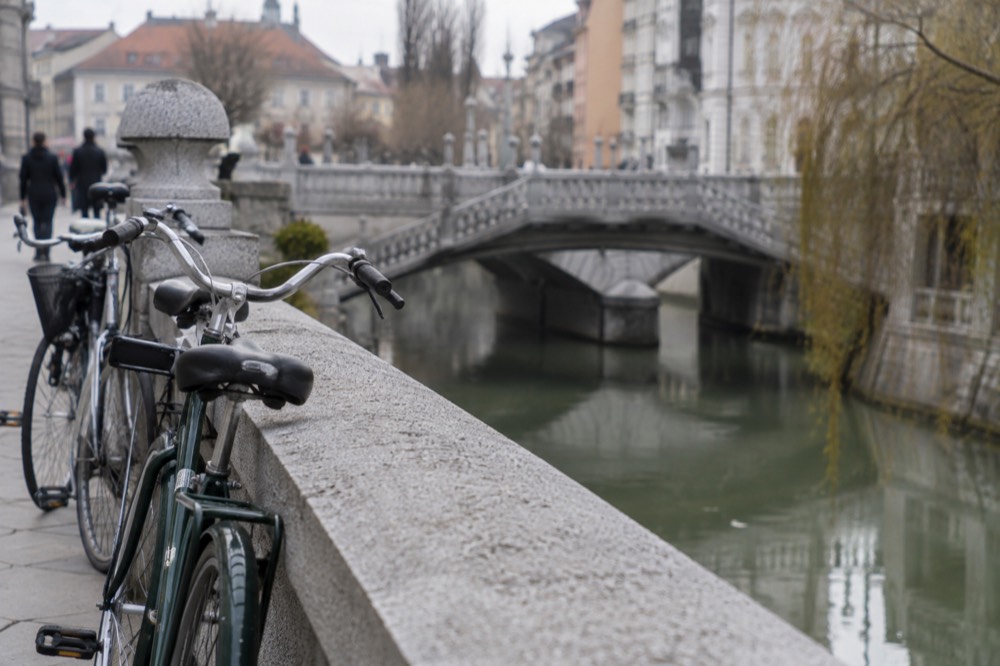
If you would rather have a guide than a share bike, the Street Art and Culture Bike Tour runs three hours from 39 USD and holds a 4.5 rating from 85 reviews, riding through the street art and cultural corners a walker misses. There is also a free option: the GuruWalk vintage Rog bike ride, the Ljubljana XXL Bike Tour, takes small groups out on classic Yugoslav-era Rog bikes for about two hours, tips-based, rated 4.95 from 22 reviews. The listing does not state whether bike hire is included, so ask before booking.
The boats deserve more credit than they get as transport. A river cruise is included in the Ljubljana Card, and the Ljubljanica cuts the whole length of the centre, so a cruise doubles as a sightseeing tour of everything you would otherwise walk past. The Ljubljanica river cruise guide compares the operators and departure piers.
Do You Need a Car or Taxi in Ljubljana?
Inside the city, almost never: the centre is closed to general traffic, parking is scarce and metered, and a taxi or ride-hailing operator covers late nights and airport runs better. A car earns its keep only for multi-stop day trips into the karst or the Alps, and even then, guided tours from Ljubljana often beat self-driving on both cost and ease.
The pedestrian zone is the reason. You cannot drive to your hotel if it is inside the ring of the old centre, and you likely cannot park near it either. Taxis work fine, and the Ljubljana taxi and transfers guide covers the operators and the airport transfer question, including the honest gaps in what can be verified about fares. No nightly car-hire rate can be published here, because those figures are date-specific and sit behind booking walls.
Where a car or a tour genuinely helps is the day-trip layer. Lake Bled carries more search demand than the entire city, and the caves hold roughly the same temperature year round, which makes them the reliable answer in any weather. A guided day trip removes both the driving and the parking question in one move.
The Postojna Cave and Predjama Castle day trip is the classic example. The Cave and Castle Tickets tour runs six hours from Ljubljana, is rated 4.8 across 2,802 reviews, and pairs the cave train ride with the cliff castle, from 132 USD. Postojna's cave holds at 10 C whatever the month, so it is as good an answer to a rainy October day as to an August heatwave.
If Bled is the day you want instead, the Lake Bled and Castle trip runs six hours, rated 4.7 from 1,641 reviews, from 86 USD. Both leave the transport to someone else, which is the entire point on a short stay: SURS figures put the average Ljubljana visit at about 2.04 nights, so every hour spent working out a bus connection is an hour of the trip.
The pattern holds across the year. The city wins on sunshine from April to September, which is exactly the window when walking and cycling feel effortless, and it loses every month from October to March, when the inversion caps the basin and the hills above sit in sun. A transport plan that is built purely around the flat centre works beautifully in summer and needs an escape valve in winter. The funicular, the castle hill paths and the day-trip coaches are that valve.
So the honest summary is this: walk the centre, tap a card for the buses, borrow a bike along the river, and when the fog settles in, book a seat on something that climbs. That is how you get around Ljubljana.
Common Questions About Getting Around Ljubljana
How Can I Get Around In Ljubljana?
Mostly on foot. The centre is a pedestrianised zone of roughly 20 hectares, and the main sights sit within a short walk of each other. For anything beyond the centre, buses cost 1.50 EUR with contactless payment, the funicular climbs to the castle, and bike-share and river boats cover the flat ground along the Ljubljanica.
Can you pay cash on Ljubljana buses?
No. Cash is not accepted on board at all. Pay with a contactless Visa, Mastercard or phone wallet, or with a reusable Urbana card, which costs 2.00 EUR to buy and can be topped up at kiosks, post offices, tourist information centres, Urbanomat machines and the LPP Passenger Centre.
How much is the funicular to Ljubljana Castle?
A single adult funicular ride is 3.30 EUR and a return is 6.00 EUR. A combined castle ticket including the funicular is 19.00 EUR for an adult. The funicular runs from 09:00 to 19:00 between October and April and to 22:00 from May to September. The castle grounds themselves are free to enter.
Is Ljubljana Castle free to visit?
The castle grounds are free to enter. The funicular, the Viewing Tower and the exhibitions are paid, and the combined ticket including the funicular is 19.00 EUR for an adult. You can also walk up the hill in about ten to fifteen minutes and pay nothing for the climb itself.
Do I need a car in Ljubljana?
No, not for the city. The historic centre is closed to general motor traffic, so a car cannot reach most central hotels anyway, and buses, bikes and taxis cover everything else. A car or a guided day trip only earns its keep for the karst caves, Lake Bled and the Alps, and guided tours from Ljubljana often do that job better.
How do I get from Ljubljana Airport to the city?
Ljubljana Airport, LJU, sits about 26 km north of the city. A public bus connection exists, but no verified fare or timetable figure is published in a form that can be checked, so confirm times before you travel. Taxis and pre-booked transfers cover the route, and the airport-to-city guide on this site sets out the options.