Ljubljana Airport to the City Centre: Every Way in, Compared
Ljubljana Airport is small, fast to clear and about 26 km from the city, but the last stretch into the centre catches out more visitors than the flight did. This guide compares every way in, with the real numbers and the gaps marked honestly.
Short answer
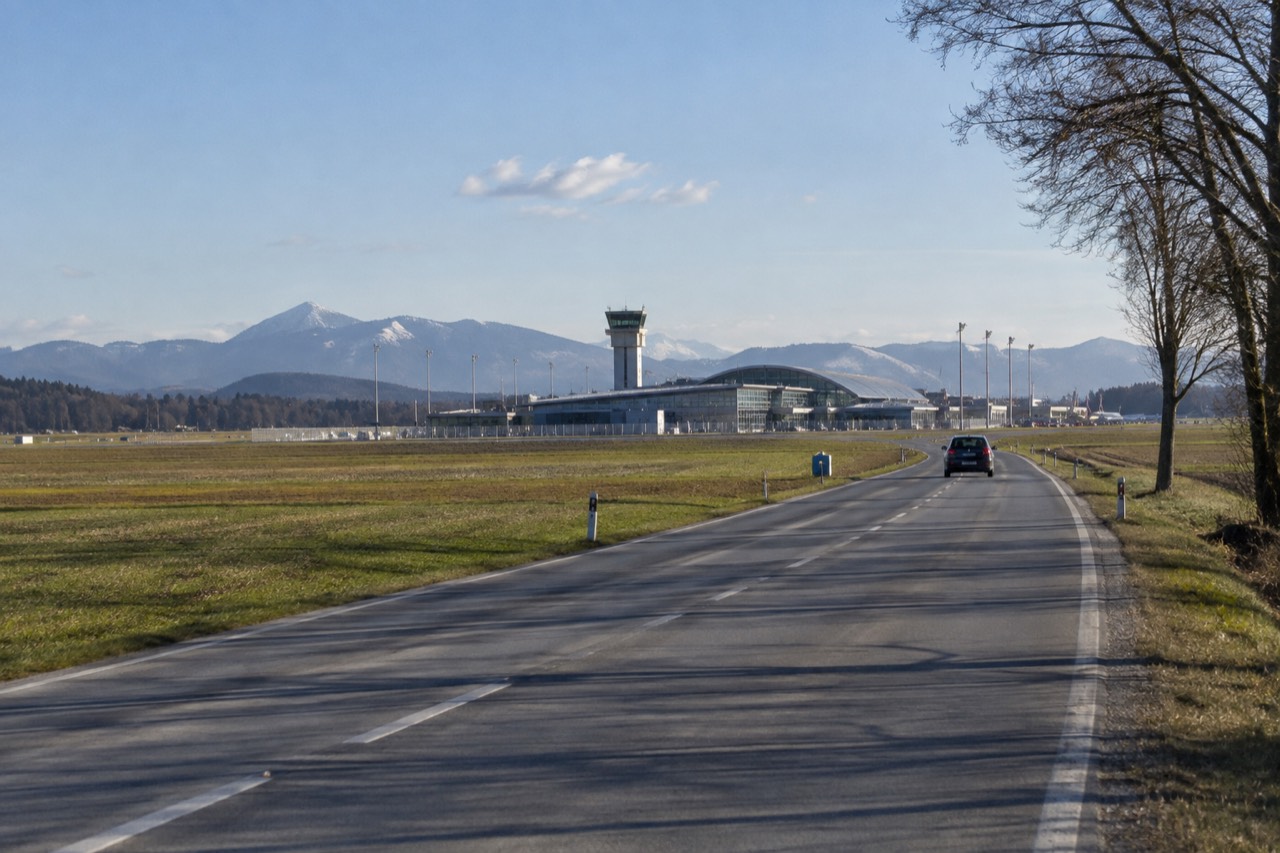
Ljubljana Airport (LJU) sits about 26 km north of the city centre. A shuttle bus runs between the airport and the main bus station, taking roughly 45 minutes to an hour depending on traffic, and taxis and pre-booked transfers take around half an hour. There is no rail link from the airport itself, so the choice is bus, taxi, transfer or hire car.
Ljubljana Airport, officially Jože Pučnik Airport and coded LJU, is one of the smaller capital-city airports in Europe, and that is its charm. You can be off the plane, through passport control if you need it, and at the kerb inside half an hour. The catch is the last 26 km. The airport sits at Brnik in the hills north of the city, and the run into the centre is where the planning actually starts.
This guide walks through every option: the shuttle bus, taxis and pre-booked transfers, hire cars, and the public transport you will use once you have arrived. It also covers the facts that trip people up, like the no-cash rule on city buses and the pedestrianised centre that catches out drivers. Where a figure could not be verified from a primary source, this guide says so rather than printing a guess.
How Far Is Ljubljana Airport from the City Centre?
The airport is about 26 km north of the city centre, a drive of roughly 30 minutes in normal traffic and up to an hour in the morning or evening peaks. The shuttle bus covers the same distance in roughly 45 minutes to an hour, because it makes limited stops and shares the motorway with everything else. There is no railway station at the airport, so the distance is always covered by road.
The 26 km figure is the one to hold onto, because it shapes every other decision. This is not an airport where you can walk to a terminal, and it is not one where a train rescues you from traffic. Everything is a vehicle on the E61 and then the A2 toward the city.
A few basics before the options. Slovenia is in the European Union, uses the euro, and is inside the Schengen area: land and sea internal border checks were abolished on 21 December 2007 and air checks on 30 March 2008, per the Slovenian government's own summary of its EU membership. If you are arriving from another Schengen country, you walk straight from gate to kerb. If you are arriving from outside, you queue once, briefly, because the airport handles modest passenger volumes.
The airport's own website is hostile to automated readers, which is why this guide will not quote you a bus fare or a departure grid. The bus exists, it runs a scheduled service into Ljubljana's main bus station, and the times should be checked on the airport's site or at the arrivals hall desk before you plan around it. Anything more precise than that would be invented.
What Are Your Transport Options from Ljubljana Airport?
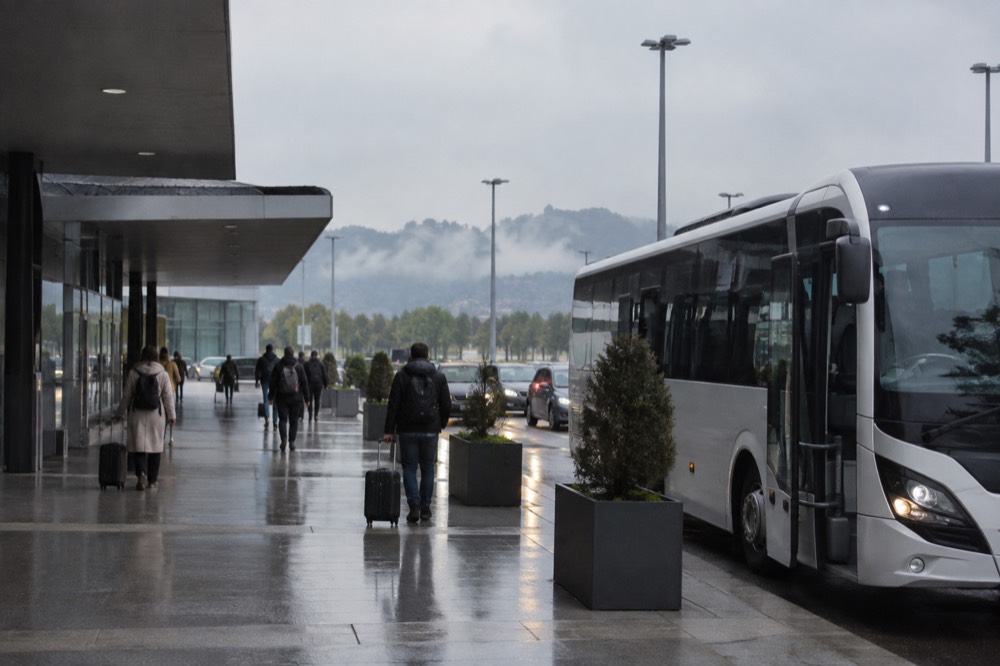
There are four realistic ways into the city: the scheduled shuttle bus to the main bus station, a taxi from the rank, a pre-booked private transfer, or a hire car collected at the terminal. All four end in the same place, but they differ sharply in cost, in luggage capacity and in where they can actually drop you, because Ljubljana's historic centre is a pedestrian zone of roughly 20 hectares with no general motor traffic.
Here is the honest comparison in one table. Where a figure cannot be verified from a primary source, the cell says so, because a confident-sounding number that is wrong is worse than a gap.
| Option | Rough time to centre | Cost | Best for | The catch |
|---|---|---|---|---|
| Shuttle bus | 45 min to 1 hr | Check the airport's site; no verified fare published | Solo travellers and couples on a budget | Fixed schedule; late flights can miss the last departure |
| Taxi from the rank | ~30 min | Metered; agree or confirm the estimate before setting off | Arriving late, heavy luggage | Priciest option, especially at night |
| Pre-booked transfer | ~30 min | Fixed quote at booking | Groups, families, awkward arrival times | Needs booking ahead |
| Hire car | ~30 min | No verifiable rate; car-hire pricing is date-specific | Continuing to Bled, the coast or the Alps the same day | The centre is pedestrianised; you cannot park at your hotel door |
The shuttle bus is the default for most visitors. It runs between the airport and Ljubljana's main bus station, which sits right next to the train station on the northern edge of the centre, a ten-minute walk from Prešeren Square. From there you are in the pedestrian zone and everything is on foot or by city bus.
Taxis wait at the rank outside arrivals. Ljubljana's taxis are metered, and the fare depends on traffic and time of day, so ask for an estimate before the door closes. A pre-booked transfer is the same product with the price fixed in advance, which matters if you land at midnight with a family and four suitcases.
Hire cars from the terminal suit one specific traveller: the person whose real destination is not the city. If Lake Bled, the Soča Valley or the coast are on the itinerary, collecting a car at the airport and skipping the city entirely can save a day of backtracking. Our Ljubljana to Lake Bled guide covers that route in detail, and the day trips from Ljubljana guide ranks the destinations by travel time.
Once you are in the city, the airport question is behind you and the real holiday starts. Three products cover the first 24 hours for most visitors: a cave-and-castle day trip if you want Slovenia's headline underground sight, a Bled trip if you want the postcard, and a free orientation walk if you want to learn the city on foot first.
Should You Take the Airport Bus or a Taxi?
Take the shuttle bus if you land in daylight and your flight arrives with a departure still ahead of it: it is the cheapest way in and drops you within walking distance of everything. Take a taxi or pre-booked transfer if you land late, travel with children or a lot of luggage, or simply want the door-to-door simplicity after a long travel day. The bus costs less; the taxi costs a known amount of time saved.
The decision usually comes down to your arrival time. The shuttle runs to a schedule, and schedules thin out in the late evening. If your flight lands at 23:00, the question answers itself: the rank is outside and the meter starts when you do.
There is a middle path worth knowing about. Pre-booked transfers quote a fixed price at booking, so there is no meter anxiety, and drivers meet you in arrivals with a name board. For a group of three or four splitting the fare, the gap between a transfer and four [bus tickets](https://busbud.tpk.ro/4kLAIElq) shrinks to the point where convenience wins.
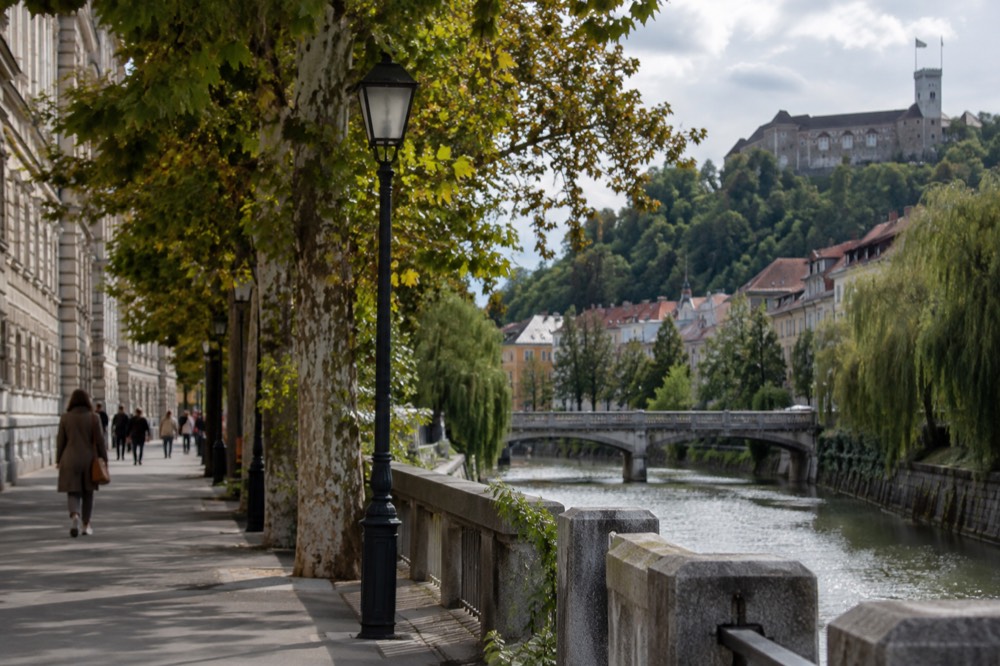
One thing the transfer and the taxi share: neither can deliver you to a hotel door inside the pedestrian zone. The centre has been closed to general motor traffic, a zone progressively expanded since 2007, so vehicles stop at the edge and you walk the last few hundred metres. Pack accordingly. The wheeled suitcase that seemed fine at the airport is less fun on cobblestones at one in the morning.
How Much Does a Transfer from the Airport Cost?
No verified fare for the airport shuttle bus or a standard taxi run can be published here, because the airport's own site blocks automated reading and no operator publishes a stable price table. Treat any specific figure you read online, including a widely quoted number near 4.10 EUR for the bus, as unverified. Get the bus fare from the airport's site or the arrivals desk, and get the taxi price from the driver before the journey starts.
That is an unsatisfying answer, and it is deliberately so. This site's research process searched for both figures repeatedly and could not source them from a primary source, so the honest move is to say what is known, mark what is not, and point you where the live answer is.
What can be said with confidence is the shape of the costs. The bus is the budget option and its fare is a modest single-digit euro amount. Taxis are metered and cost a multiple of the bus, with night rates and luggage surcharges possible. Transfers are quoted when booked, so the number you see is the number you pay.
Once you are inside the city, the cost picture becomes verifiable again, and it is friendlier than the airport leg. The tourist tax is 3.13 EUR per person per night, a 2.50 EUR tax plus a 0.63 EUR promotion surcharge, published by the tourist board. Children under 7 are exempt and ages 7 to 18 pay a half rate of 1.57 EUR. It is normally collected by your accommodation, not at the airport, but it belongs in any honest budget for the trip.
How Do You Pay for Public Transport Once You Are in the City?
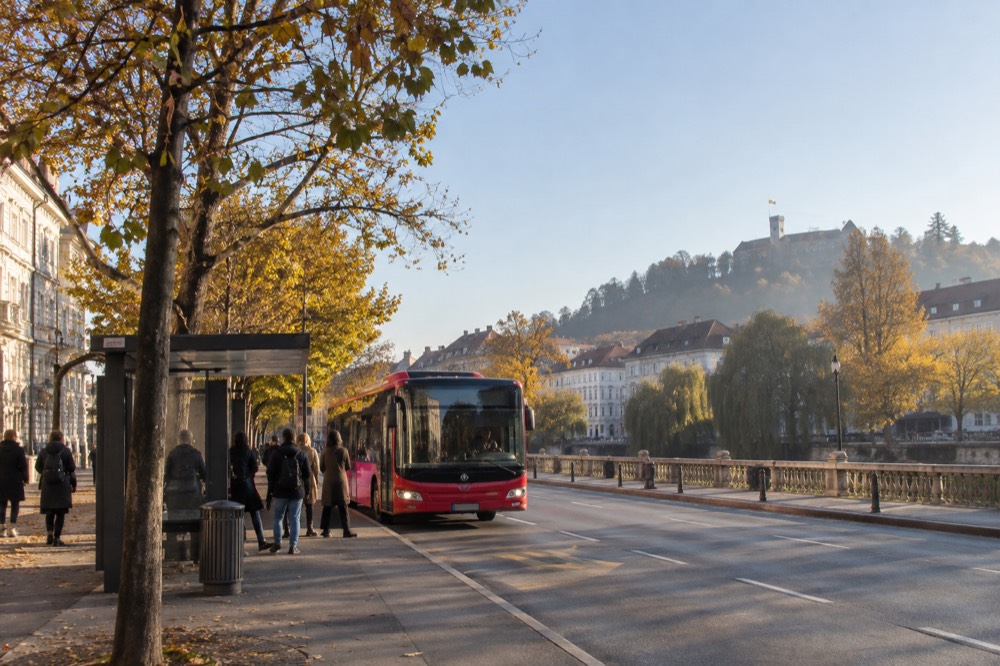
City buses in Ljubljana do not accept cash, full stop. A single ride in zone 1 costs 1.50 EUR and covers 90 minutes including transfers, paid by Urbana card, or by contactless bank card and mobile wallet directly on board. The Urbana card itself costs 2.00 EUR to buy and can be topped up at the LPP Passenger Centre on Slovenska 56, at Urbanomat machines, kiosks, post offices and tourist information centres.
The no-cash rule is the single most useful transport fact in Ljubljana, and guidebooks are routinely out of date on it. Visitors used to assume they needed an Urbana card before they could board at all; contactless payment has since removed that trap, so a Visa, Mastercard or phone wallet now works at the reader. Cash still does not.
| Item | Figure |
|---|---|
| Urbana card purchase | 2.00 EUR |
| Single ride, zone 1, 90 minutes with transfers | 1.50 EUR |
| Cash accepted on board | No |
| Contactless bank card or mobile wallet on board | Yes |
| Where to buy or top up an Urbana | LPP Passenger Centre (Slovenska 56), Urbanomat machines, kiosks, tourist information centres, post offices |
The bus network matters less to most visitors than you would expect, because the centre is compact and walkable. Buses earn their keep for the outer districts, the railway and bus station area, and the odd trip to Bežigrad or Šiška. If your base is central, plan on walking and treat the bus as a bonus.
The Ljubljana Card folds all of this together: it includes LPP city buses, the castle funicular, a Ljubljanica river cruise, a guided walking tour, four hours of BicikeLJ bike share and one entry each to more than 30 museums and galleries. The official prices are 41.00 EUR for 24 hours, 49.00 EUR for 48 hours and 54.00 EUR for 72 hours, with child tiers at 26.00, 31.00 and 35.00 EUR. Our Ljubljana Card guide runs the full value calculation, and our getting around Ljubljana guide covers the network in depth.
Should You Rent a Car at Ljubljana Airport?
Rent a car at the airport only if the city is a base and the mountains, the coast or the karst are the point of the trip. Ljubljana itself punishes a car: the centre is pedestrianised, parking sits outside the zone, and no nightly hotel rate or car-hire rate can honestly be quoted because both are date-specific. For a city-only break, the car is a cost and a nuisance. For a Slovenia-wide itinerary, it is close to essential.
The arithmetic is simple. If your plan is two nights in the city and a day trip or two, the shuttle bus in plus organised day trips out beats a rental on both cost and ease. Every major destination from Ljubljana, Postojna, Bled, Škocjan, Piran, is covered by a bookable tour that collects centrally, and the driver deals with the roads.
If your plan is Bled, the Vršič Pass, the Soča Valley and the coast across a week, a car changes the trip completely. The car rental in Ljubljana guide covers licences, borders and the practicalities, including the fact that Slovenia sits inside the Schengen area, so driving on to Italy, Austria or Hungary involves no routine border checks at all.
One planning note for drivers: Croatian routes are internal too. Croatia joined both Schengen and the euro on 1 January 2023, so the Ljubljana-to-Zagreb run and the Istria coast are border-check-free and euro-identical. Our Ljubljana to Zagreb guide covers that route.
What If You Arrive by Train Instead of Flying?
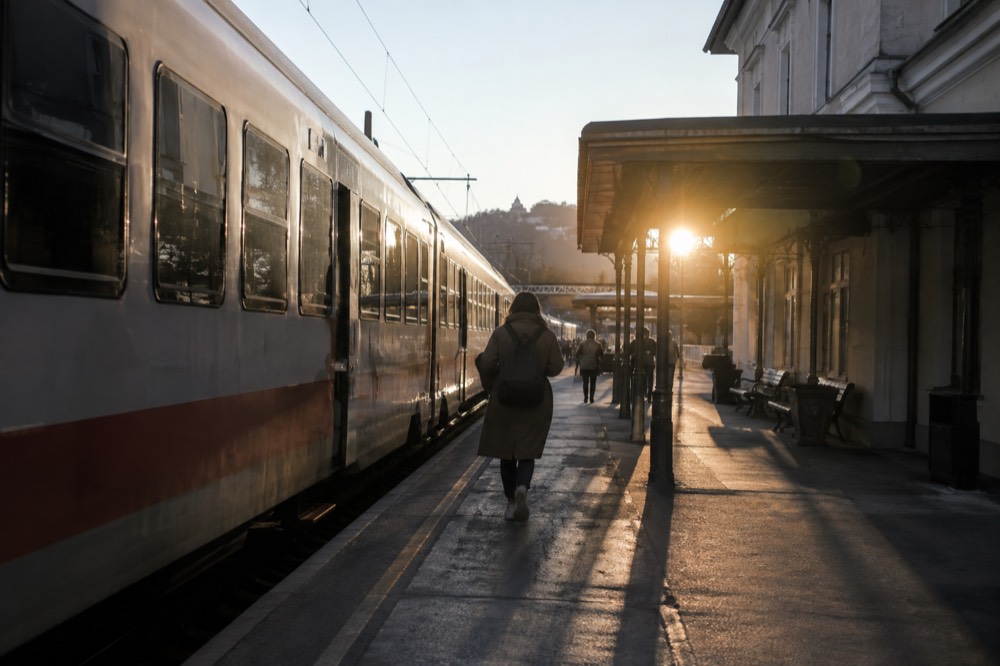
Ljubljana's main railway station sits on the northern edge of the centre, a ten-minute walk from Prešeren Square, which makes train arrivals the easiest of all: no shuttle, no transfer, you step off the platform and the city is already around you. Direct trains connect Ljubljana with Vienna, Zagreb, Trieste and a handful of other cities, and the station shares its square with the main bus station.
For anyone within train distance, this is the answer that beats the airport entirely. The station's location is genuinely central, unlike most European capitals where the rail terminus exiles you to the suburbs.
The Ljubljana train station guide covers facilities and connections, and the trains from Ljubljana guide lists where the network actually reaches. The Ljubljana bus station guide does the same for coaches, which is how most Bled and Bovec day trips leave if you are not on a tour.
A note on Lake Bled by rail, because it is the one everyone gets wrong. There are two stations serving Bled, and most rail advice sends people to Lesce-Bled, which is 4 km from the lake. Bled Jezero station, on a different line, is 1.5 km from the centre. The journey time and fare could not be verified from a primary source, so check the operator's booking page, but the station choice alone changes the arrival experience.
What Should You Do with Your First Hours in the City?
Drop your bags and walk. The historic centre is compact, car-free and takes about two hours to circle at a slow pace, and a free tips-based walking tour is the fastest way to learn its layout on day one. If your flight lands early and the hotel room is not ready, luggage storage near the station solves the gap, and the castle funicular, the riverside and the Central Market fill the rest.
The free walks deserve the explanation. They are booked through GuruWalk, they cost nothing up front, and you pay the guide what you think the walk was worth at the end. The Old Town walk, Romans to Dragons, runs two hours, is rated 4.91 from 1,496 reviews, and covers the city from its Roman roots to the Dragon Bridge. It is the single best first-morning activity for a new arrival, and it ends within walking distance of everywhere you will want to go next.
If you would rather eat your way in, the food scene answers that too. The Slovenian cuisine walking tour with tastings runs four hours, is rated 4.8 from 552 reviews and starts from around $104, and the Ljubljana food tour guide compares it against the free snack walk and the market options.
For the view, the castle is the obvious first summit. The grounds are free to enter; the funicular and the tower are not. A castle ticket including the funicular costs 19.00 EUR for an adult, the funicular alone is 3.30 EUR single or 6.00 EUR return, and the castle is open 365 days a year. Full details are in our Ljubljana Castle guide and the castle funicular guide.
| First-hours option | Duration | Cost | Where it starts |
|---|---|---|---|
| Free Old Town walk (GuruWalk, tips-based) | 2 hours | Pay what you think it was worth | Central Old Town |
| Castle funicular and tower | 1-2 hours | 19.00 EUR combined ticket, grounds free | Krek Square or the castle path |
| Ljubljanica river cruise | 50 minutes | 15 EUR with Barka Ljubljanica, included in the Ljubljana Card | Breg 1 pier |
| Central Market wander | 1-2 hours | Free to browse; outdoor stalls roughly 06:00-18:00 in summer | Vodnikov and Pogačarjev trg |
When Is the Transfer Likely to Be Affected by Weather?
The road from the airport is rarely the problem, but the city you arrive into can be grey: Ljubljana sits in a basin, averages just 37 clear days a year against 130 overcast, and records only 56 hours of sunshine in the whole of December, while Kredarica at 2,514 m on Triglav gets 120 hours over the same month. In the colder half of the year the city fogs in under a temperature inversion while the hills above it sit in sunshine.
This is the fact most guides miss entirely, and it changes what you should do with a winter arrival. The basin inversion means a grey, foggy city centre and bright sunshine a few hundred metres up, sometimes on the same morning.
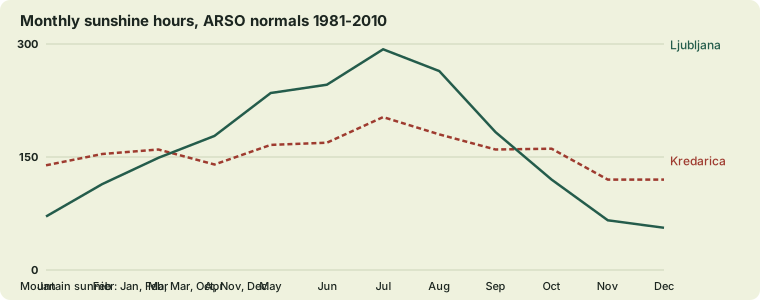
The practical consequence for an airport arrival is simple. A winter or late-autumn transfer can drop you into fog that will not burn off all day, while a bus trip up the hill or a day tour into the Alps is running in sunshine. Caves are the other reliable answer: Postojna holds 10 C year round and Škocjan 12 C, whatever the sky above is doing, which is why our rainy day in Ljubljana guide leans on them so heavily.
The Postojna Cave and Predjama Castle tickets-and-tour product is the strongest of those: six hours door to door, rated 4.8 from 2,802 reviews, from $132, and it includes the cave tickets that save you the separate queue. The separate prices at the gate are 34.90 EUR for Postojna and 24.00 EUR for Predjama, and the cave holds 10 C, so bring a layer even in August.
Which Day Trips Are Easiest from the City Centre?
Lake Bled is the headline day trip and the easiest to reach, with guided tours from 5 hours 30 minutes upward and a small-group option from $76. Postojna Cave runs second, the Soča Valley and Kranjska Gora fill a full 10 and a half hours for the mountains, and Piran covers the coast in about 6 hours. All of them collect from central Ljubljana, so the airport-to-city decision and the day-trip decision are separate.
That separation is the useful insight. You do not need a car to see Slovenia from Ljubljana; you need a city base and a seat on a tour. The 3 days in Ljubljana guide sequences the best of them, and the Ljubljana and Lake Bled guide handles the two-base version.
| Day trip | Tour duration | Rating | From |
|---|---|---|---|
| Lake Bled and Bled Castle | 6 hours | 4.7 from 1,641 reviews | $86 |
| Small-group Bled, castle and island | 5h 30m | 4.9 from 293 reviews | $76 |
| Postojna Cave and Predjama Castle | 6 hours | 4.8 from 2,802 reviews | $132 |
| Soča and Kranjska Gora | 10h 30m | 4.9 from 911 reviews | $132 |
| UNESCO Škocjan Caves and Piran | 9h 30m | 4.7 from 382 reviews | $126 |
The Lake Bled and Bled Castle trip is the one most first-time visitors book, and rightly so: six hours, the lake, the cliff castle and a rating of 4.7 from 1,641 reviews, from $86. It pairs naturally with an arrival day, because the tours leave from the centre and return you there with the evening free.
Where Should You Stay to Make the Transfer Easy?
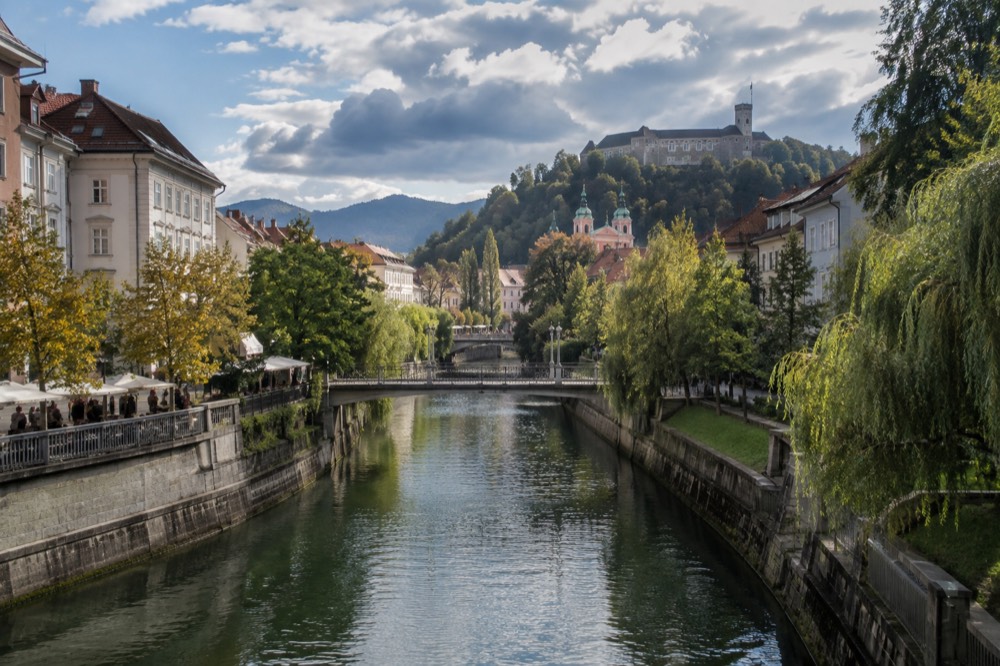
Stay central and the transfer stops mattering: the whole pedestrianised core is within a 15-minute walk of the bus and train station, so any hotel in the Old Town, the centre or Trnovo puts you a short walk from the shuttle's drop-off. The practical rule is to pick the neighbourhood first and let the airport leg look after itself, because every option from the airport ends at the same northern edge of the centre.
The [where to stay](https://booking.tpk.ro/siijcqre) in Ljubljana guide compares the neighbourhoods properly, and the best part of Ljubljana to stay in piece does it from the blog side. The short version: the Old Town wins atmosphere, the centre wins convenience to transport, Trnovo wins quiet and riverside walks.
One airport-specific note. If your departure flight leaves early, a hotel near the station area buys you a shorter pre-dawn transfer, and the shuttle's first departures align with the station rather than with individual hotels. Check the last outbound and first inbound times on the airport's site before booking a very early or very late flight.
Is Ljubljana Worth More Than a Stopover?
Yes, and the visitor numbers back it up: the Municipality of Ljubljana recorded 1,392,728 tourist arrivals and 2,844,129 overnight stays in 2025, an average stay of about two nights. Two nights is enough for the city plus one day trip, and three lets you add the mountains or the coast. Most visitors who plan only a stopover end up wishing they had added a night.
The two-night average is a real, arithmetic conclusion from the official statistics, and it is the right planning frame. Arrive from the airport, spend the arrival afternoon on a free walk, give day two to Bled or Postojna, and the city has justified itself.
If the trip is longer, the Ljubljana city break guide builds a full short break, the Ljubljana in winter guide handles the inversion season, and the best time to visit Ljubljana guide runs the twelve-month calendar against the climate data.
This site, Ljubljana Travel Guide, exists because the city rewards exactly this kind of slow planning: small enough to learn in a day, rich enough to fill a week, and wired into a country where the Alps, the karst and the coast are all a morning away.
Whichever way you come in, the airport leg is the least interesting 26 km in Slovenia. The three products below are the ones most visitors book for the days after it, and each collects from the centre the bus or taxi delivered you to.
Common Questions About Getting from Ljubljana Airport to the City Centre
How far is Ljubljana Airport from the city centre?
About 26 km, a drive of roughly 30 minutes in normal traffic and up to an hour at peak times. The shuttle bus covers it in roughly 45 minutes to an hour.
Is there a train from Ljubljana Airport to the city?
No. There is no railway station at the airport, so the transfer is by road: shuttle bus, taxi, pre-booked transfer or hire car. Trains arrive at the main city station, which is central, but only from other towns and cities.
How much does the airport bus cost?
The bus exists and runs between the airport and the main bus station, but no verified fare can be published here because the airport's site blocks automated reading. Check the fare on the airport's own site or at the arrivals desk.
Can I pay cash on Ljubljana city buses?
No. City buses accept no cash at all. Pay with an Urbana card, which costs 2.00 EUR to buy, or tap a contactless bank card or mobile wallet on board. A zone 1 single is 1.50 EUR and covers 90 minutes with transfers.
Can a taxi drop me at my hotel in the centre?
Only if the hotel is outside the pedestrian zone. The historic centre, roughly 20 hectares, is closed to general motor traffic, so taxis stop at the edge and you walk the final stretch. Pack with a short cobblestone walk in mind.
Do I need to change money in Slovenia?
No. Slovenia uses the euro and is inside the Schengen area, so there is no currency to change coming from the eurozone and no routine border check arriving from Italy, Austria, Hungary or Croatia.