Ljubljana Airport Transfers and Taxis: A Visitor's Practical Guide
Ljubljana is small, its centre is pedestrianised, and its airport is close. That combination makes taxis a smaller part of a visit here than in most capitals, but there are still moments, a late arrival, a Bled day trip, a foggy December morning, when a transfer is the right call.
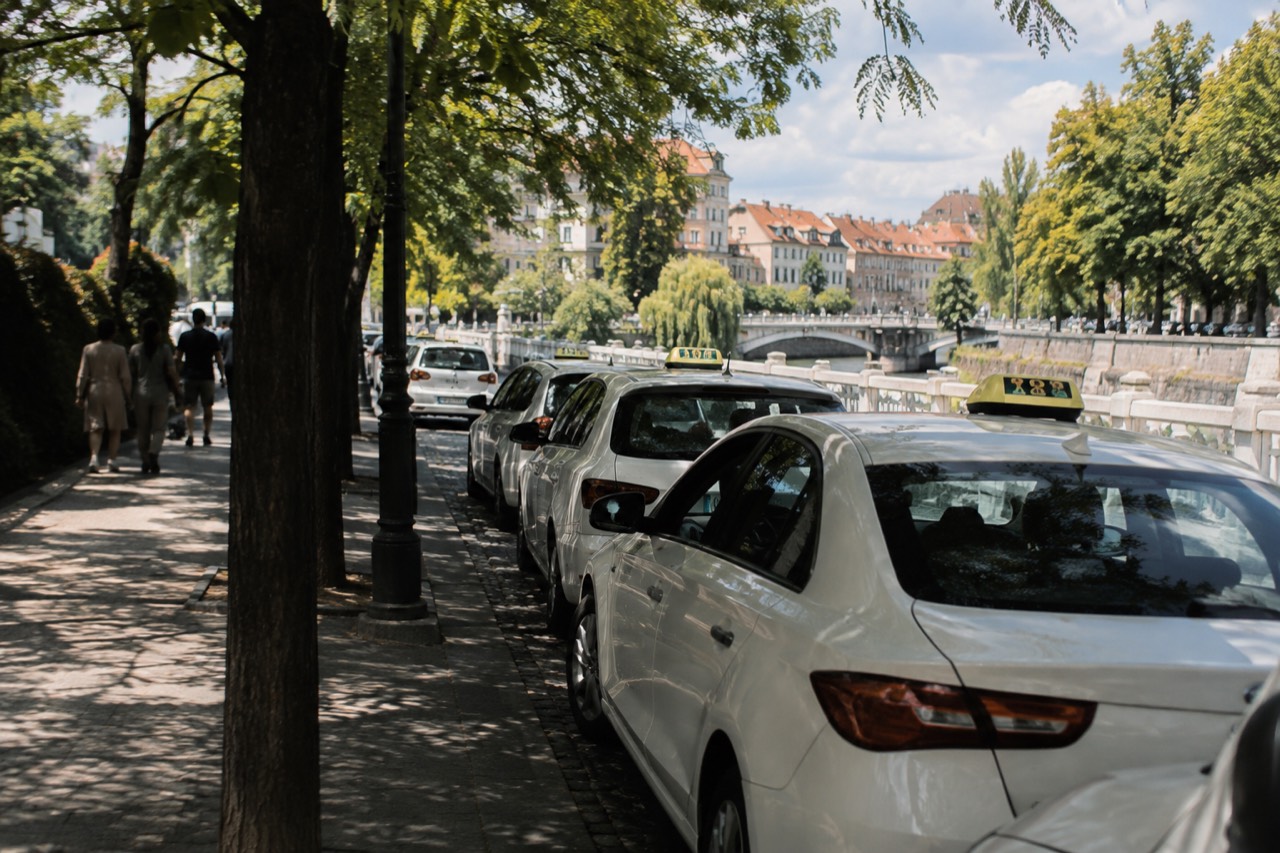
Short answer
Ljubljana Airport sits about 26 km from the city, taxis are metered and ranks are regulated, and city buses do not take cash, only the Urbana card or contactless payment. Most visitors find they need a taxi far less than expected, because the historic centre is pedestrianised and almost everything is within a 20 minute walk.
Ljubljana rewards arrivals who plan one transfer well and then forget about cars entirely. The airport is close, the centre is closed to traffic, and the distances inside the city are so short that a taxi ride across town often costs less than the coffee you are heading to. The mistakes visitors make are predictable: paying over the odds at the airport, assuming a card works on a city bus when cash is the one thing that does not, and hiring a car for a day trip that a guided tour or a [private driver](https://gettransfer.tpk.ro/Ab8maxge) would handle better.
This guide covers the airport run, how metered taxis and ranks work, the ride-hailing options, [private transfers](https://tpk.ro/o5VLPVUy) to Bled and beyond, and the honest question of whether you need any of it. Along the way it flags the figures that are published and verified, and the ones no official source will confirm, so you know where to check rather than where to guess.
How Do You Get from Ljubljana Airport to the City Centre?
Ljubljana Airport, Jože Pučnik at Brnik, sits about 26 km north of the city, and the run into town typically takes 25 to 35 minutes depending on traffic. Three options cover it: a metered taxi or pre-booked transfer from the rank outside the terminal, the airport shuttle bus between the airport and the main bus station, or a pre-arranged private driver waiting with your name on a card. Each suits a different arrival.
A solo traveller with light luggage saves on the shuttle. A family of four with ski bags usually finds one transfer vehicle cheaper than four shuttle seats, and far less hassle.
The airport's own website is the one source for current shuttle times and fares, and it is deliberately consulted rather than quoted here: the site blocks automated access, and no officially published fare or timetable figure could be verified for this guide. Treat any specific number you read on a third-party page, including the fare, the journey time and the frequency, as unconfirmed until you have checked the airport site or the operator directly. The shuttle exists, it connects to Ljubljana's main bus station on the edge of the centre, and that is the honest extent of what can be stated firmly.
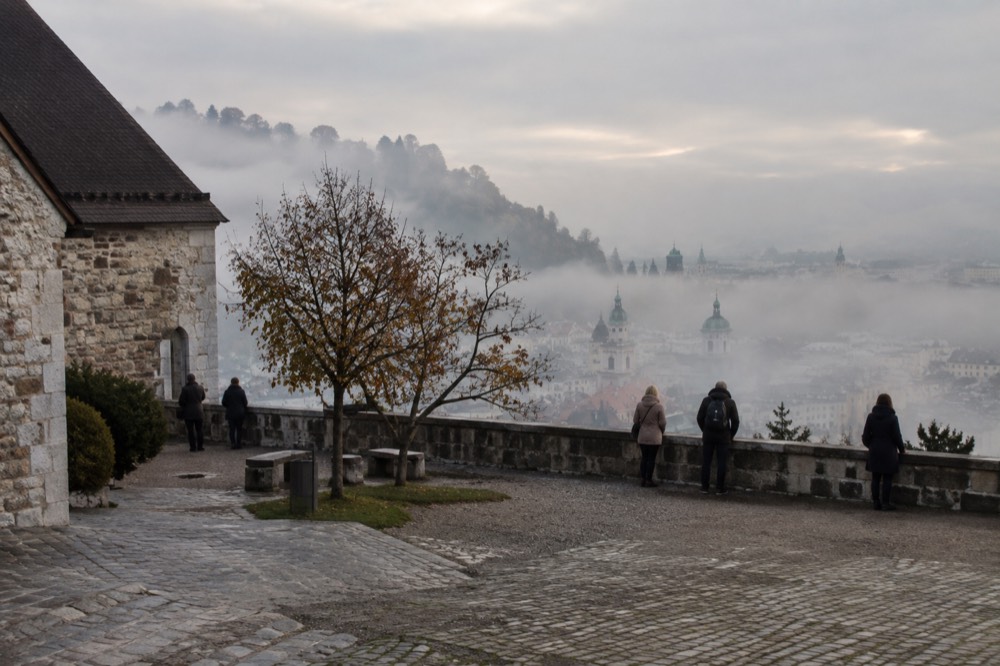
Taxis from the rank are metered, and the meter is the price. If a driver offers a fixed price for the airport run instead, agree it clearly before the doors close or insist on the meter. A pre-booked private transfer removes the negotiation entirely: you know the vehicle, the driver and the meeting point before you land, which matters most for late arrivals and early departures. Ljubljana sits in a basin that fogs in, and fog in the valley is a real thing at 6am in the colder half of the year, so a transfer booked with a local driver who knows the road is worth more than the small premium over the rank.
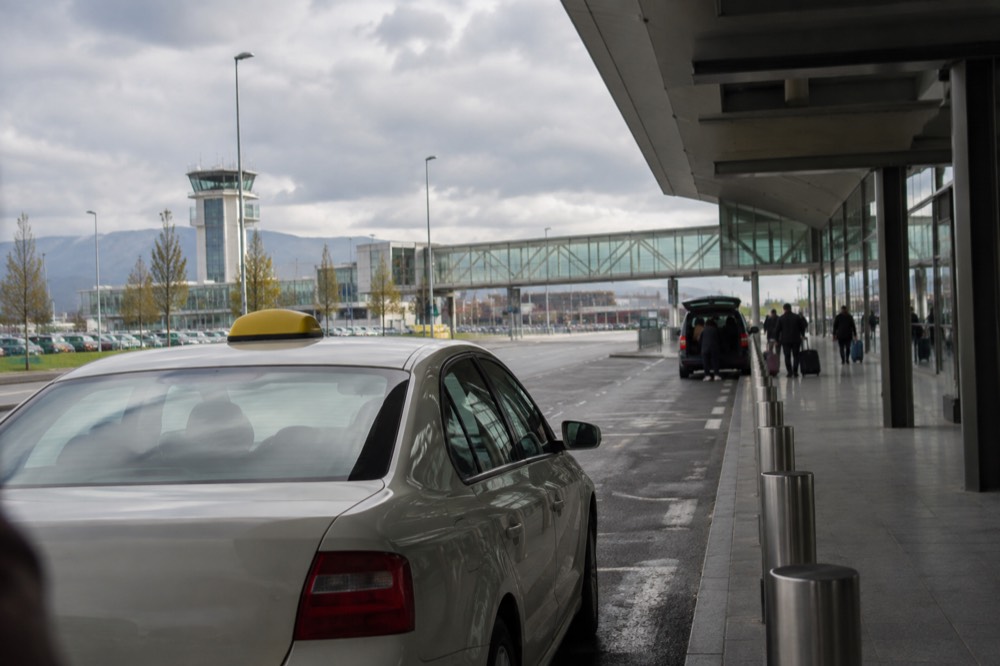
For the fuller picture of the airport run, including where the shuttle drops you and how to finish the journey on foot or by bus, see the dedicated Ljubljana Airport to city centre guide. If you are arriving by rail instead, the Ljubljana train station guide covers the station's position right on the edge of the pedestrian centre, which is why most train arrivals never need a taxi at all.
How Much Does a Taxi Cost in Ljubljana?
Taxis in Ljubljana are metered, and the regulated ranks in the centre are the reliable way to take one: the price you pay is the meter at the end, with no haggling culture and no expectation of a tip beyond rounding up. No officially verified tariff table could be sourced for this guide, so no specific per-kilometre or base fare figure is printed here. The meter, and the price shown on a booking app before you accept the ride, are your two real sources.
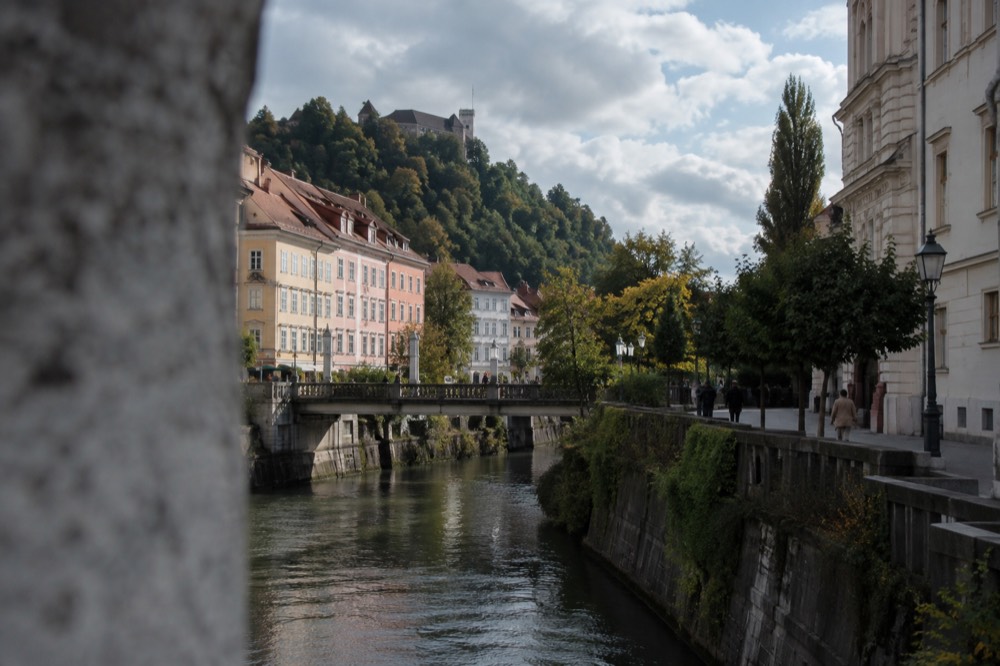
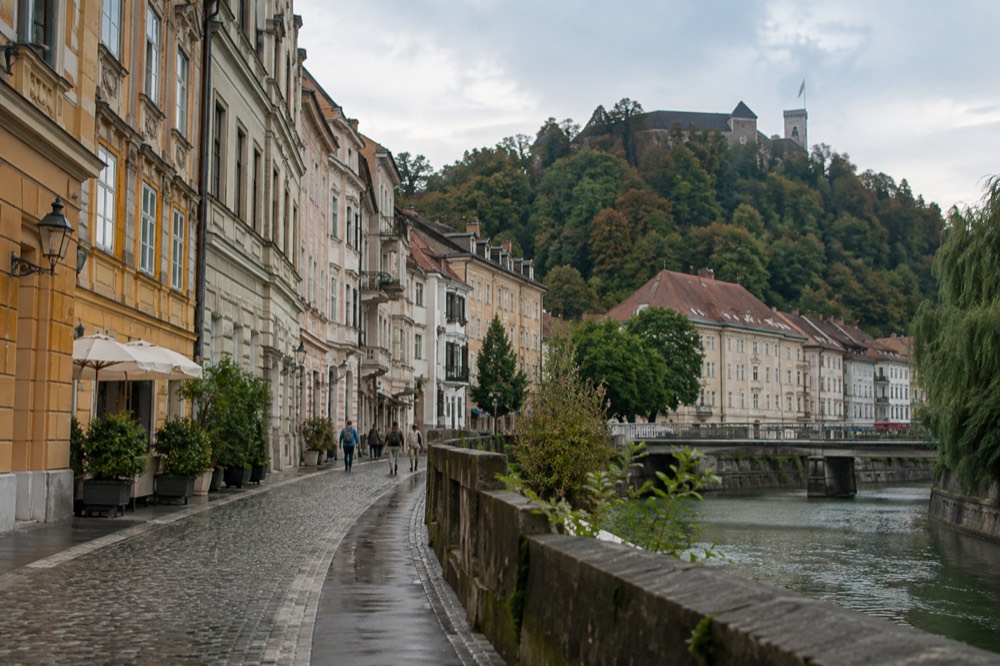
The centre being car-free changes the economics of a taxi. A driver cannot drop you at the door of a restaurant on the Ljubljanica, only at the edge of the zone, which is often a two minute walk from where you wanted to be. That is why the standard visitor pattern is a taxi or transfer from the airport, then nothing until departure. If you do take in-city rides, the ranks at the bus station, in front of the train station and near the main hotels are the safe ones, and hotel reception will call a reputable firm if you prefer.
Ride-hailing apps work in Ljubljana and are the easiest way to see a price before you commit. The app shows the fare and the route in advance, the driver's details and the car, and payment is handled in the app, which removes the cash-and-meter question entirely. For visitors, that predictability is the main argument for using an app rather than hailing from the kerb, particularly for the airport run where the price is fixed by distance and shown up front.
| Way of taking a taxi | Price certainty | Best for |
|---|---|---|
| Regulated rank, metered | Meter at journey's end | In-city rides, spontaneity |
| Ride-hailing app | Fare shown before you accept | Airport runs, late nights |
| Pre-booked private transfer | Fixed price agreed at booking | Groups, early departures, gear |
| Hotel-called reputable firm | Meter, firm accountable | Visitors who want a name behind the ride |
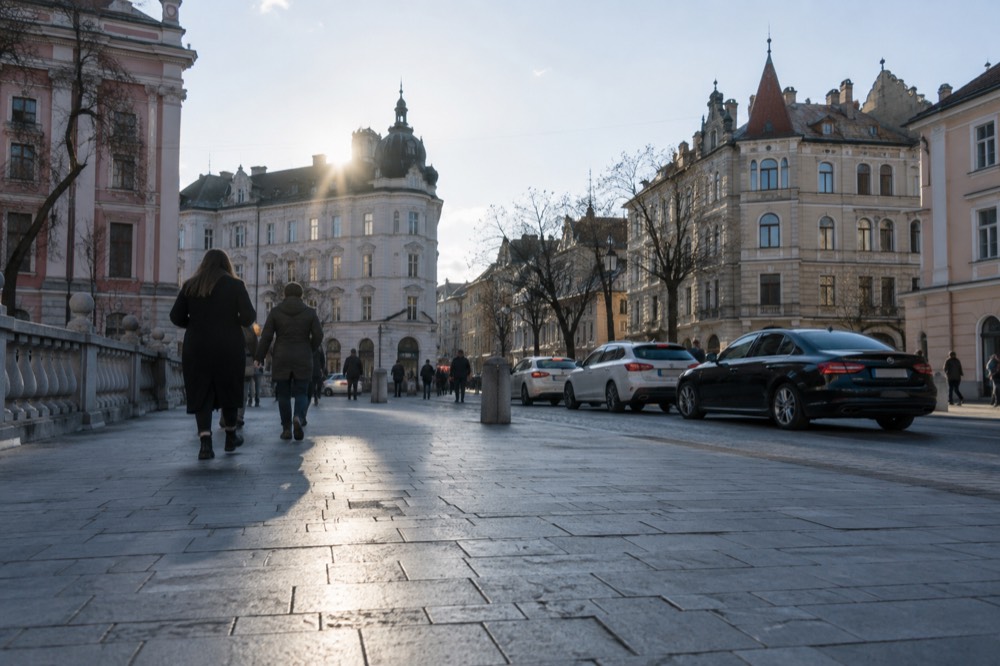
One warning worth its own paragraph: unmetered cars touting for business outside the airport or near the late-night bar streets are the one genuinely bad taxi experience available in Ljubljana. The regulated rank and the app are both fine. A stranger offering a "cheap ride" is neither.
Do You Even Need a Taxi Inside Ljubljana?
Most visitors do not, for a simple structural reason: the historic centre is pedestrianised, roughly 20 hectares of it, progressively closed to general traffic since 2007, so the parts of Ljubljana you came to see cannot be driven into anyway. The city is compact, flat along the river, and walkable end to end in under half an hour. The two moments a taxi earns its place are the airport run and a late-night return from Šiška or Bežigrad to a centre hotel.
Everything between those is better on foot, by bus, or on the BicikeLJ share bikes.
The bus system matters to that answer. City buses run by LPP cover the whole municipality, a single 90 minute ticket including transfers costs 1.50 EUR in zone 1, and the reusable Urbana card costs 2.00 EUR to buy before you load it. The critical detail, and the one guidebooks are most often out of date on, is that drivers do not take cash, a rule published on LPP's own payment methods page. You either carry an Urbana card, tap a contactless bank card or phone, or you do not board. The old trap of needing to find a kiosk before your first bus ride is gone, since contactless works on board, but coins still do not.
| Item | Figure | Where to get it |
|---|---|---|
| Urbana card purchase | 2.00 EUR | LPP Passenger Centre, Urbanomat machines, kiosks, post offices |
| Single ride, zone 1, 90 minutes with transfers | 1.50 EUR | Loaded on Urbana or tapped contactless |
| Cash accepted on board | No | Not at all, contactless card or Urbana only |
| Contactless bank card on board | Yes | Visa, Mastercard and mobile wallets |
| Tourist tax per person per night | 3.13 EUR | Added to your accommodation bill |
The tourist tax line in that table is worth noticing when you book, because it is charged per person per night on top of the room rate, at 3.13 EUR combining the 2.50 EUR tax and a 0.63 EUR promotion surcharge, with a half rate of 1.57 EUR for ages 7 to 18 and under-sevens free. It is not a taxi matter, but it appears on the same bill you will be settling the morning you leave, and it surprises people.
For everything else about moving around the city, buses, bikes, the pedestrian zone and the river crossings, the getting around Ljubljana guide goes deeper, and the [Ljubljana Card guide](/guides/ljubljana-card/) covers the sightseeing pass that bundles city buses, the river cruise, the funicular and more than 30 museums into one price.
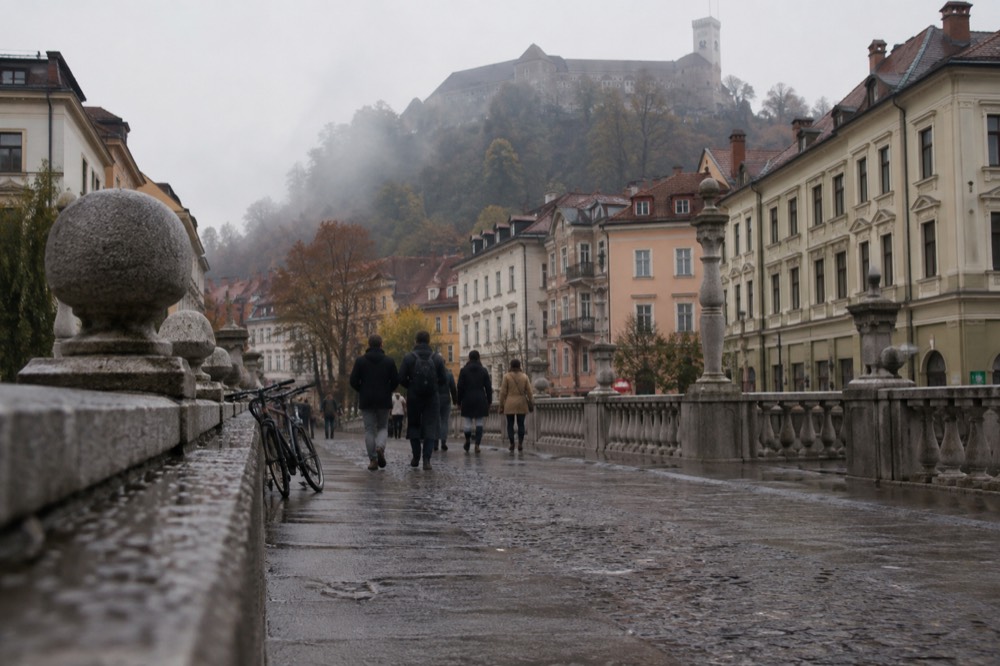
What About Taxis and Transfers to Lake Bled?
Lake Bled is about an hour's drive from Ljubljana, and the road is fast dual carriageway most of the way, which makes a private transfer or a guided day tour genuinely competitive with hiring a car for the day. A taxi or pre-booked private driver takes you door to lake with no parking question at the far end. The one thing no verified source can give you is the public transport fare: the Ljubljana to Bled coach and train fares were searched for and could not be sourced.
So this guide describes the journey, not its price, and you should check the operator's own site before assuming a number.
The public transport route is real and popular. Coaches run from Ljubljana's main bus station to Bled, and the train runs on a separate line with a detail most rail advice gets wrong: Lesce-Bled station is 4 km from the lake, but Bled Jezero station is only 1.5 km from the centre on a different branch. Getting off at the wrong one adds an unnecessary taxi ride at the far end of a train journey that was going perfectly well. The Ljubljana to Lake Bled guide covers the full comparison, and the Ljubljana bus station guide covers where you start from.
A private driver changes the shape of a Bled day. You leave when you want, stop where the coach does not, and set your own time at the lake, the castle and the island viewpoint. For a group of three or four, the arithmetic against four return coach seats and a day of local taxis often favours the driver, and the comfort case is stronger still in the shoulder season, when Bled's weather turns faster than the timetable. A private taxi day trip is a bookable product here, and the operator's listing states the price for the whole vehicle rather than per person, which is the number that matters for the comparison.
The alternative to any of it is a guided day tour, which takes the driving, the parking and the timing off your plate entirely. Several run from central Ljubljana, they include the lake and the castle in one loop, and they are the standard answer for solo travellers who do not want to pay a private driver's whole-vehicle price alone. The Lake Bled and Bled Castle day trip is the most booked of them, and there is a fuller comparison in the is Bled worth visiting post if you are still deciding whether the lake earns the day at all.
How Do Taxis and Transfers Work for Longer Day Trips?
For day trips beyond Bled, the calculus shifts decisively toward either a hire car or a guided tour, because the destinations that make Slovenia special, Postojna Cave, the Soča Valley, the Vršič Pass, Velika Planina, sit along mountain and karst roads where a local driver or a tour bus is worth paying for. A metered city taxi is the wrong tool for a 10 hour alpine loop: agree a full-day private hire price in advance or book a tour.
Never put a city taxi on the clock for a day trip. The two workable models are a private driver on a flat day rate, or a guided tour with everything included.
The caves are the easiest case. Postojna Cave and Predjama Castle are under an hour and a half from Ljubljana by road, and the combined cave-and-castle day trip from the city is one of the most booked products in the country, running six hours door to door with entry tickets handled. The reason it beats self-driving for most people is not the driving, which is easy, but the tickets: Postojna runs timed departures and asks visitors to arrive 30 minutes before the stated tour, with train boarding 15 minutes before that, and a tour operator absorbs that timing for you. The cave holds about 10 C year round, which is also why it is the reliable answer to a rainy or scorching day, whatever the season outside.
| Day trip | Distance feel from Ljubljana | Best without a car? |
|---|---|---|
| Postojna Cave and Predjama Castle | Under 90 minutes by road | Yes, tour or private driver |
| Lake Bled | About an hour by road | Yes, coach, tour or driver |
| Škocjan Caves and Piran | A long half-day each way | Yes, combined tour |
| Soča Valley and Kranjska Gora | A full day of mountain roads | Tour strongly preferred |
| Velika Planina | Around an hour, then a cable car | Tour or hire car |
The Soča Valley line in that table deserves its emphasis. The road east into the Julian Alps crosses the Vršič Pass, 50 numbered hairpins, and the reward is the turquoise Soča below. It is a spectacular drive and a demanding one, and a ten-hour guided tour from Ljubljana exists precisely because most visitors would rather look at the pass than steer it. If you do want the wheel yourself, the car rental in Ljubljana guide covers the practicalities, and the Vršič Pass guide covers the road itself.
Is the Ljubljana Card a Better Deal Than Paying for Transfers?
Sometimes, yes, and the arithmetic is checkable. The 24 hour Ljubljana Card costs 41.00 EUR for an adult and includes the castle funicular, the Ljubljanica river cruise, city buses, a guided walking tour and one entry each to more than 30 museums and galleries. A castle ticket with funicular is 19.00 EUR and the Barka river cruise is 15.00 EUR, so those two alone come to roughly 34 EUR before a single museum. If you will use the cruise and the castle, the card wins.
If your stay is taxis and day trips, it does not, and you should spend the money on the transfer or the tour instead.
The card is a transport-and-attractions product, not a taxi product, but it belongs in this guide because it answers the question visitors arrive with: how do I move around and see things without paying separately every time. City buses are included, which covers the journeys to Bežigrad, Šiška or Tivoli Park that a taxi would otherwise handle, and the BicikeLJ share bikes are included for four hours, which covers the rest. The full coverage list is published on the official Ljubljana Card page, including the 48 hour tier at 49.00 EUR and the 72 hour tier at 54.00 EUR.
What the card does not cover is anything outside the city: no airport transfer, no Bled coach, no day trips. So the honest split is this. If your Ljubljana days are spent inside the city, walking, cruising and museum-hopping, buy the card and skip the taxis. If your days are spent radiating out to Bled, the caves or the coast, spend the money on the transfer or the tour instead, and walk the centre for free, which is what it is designed for anyway. The Ljubljana Card guide runs the full comparison against every covered attraction.
What Should You Be Careful of with Taxis in Ljubljana?
Three things, and none of them is dramatic: unmetered touts near the airport and the late-night bar areas, the cash rule on city buses that catches visitors who assumed coins would work, and the wrong Bled rail station, Lesce-Bled at 4 km from the lake instead of Bled Jezero at 1.5 km. Ljubljana is a safe, low-scam city by any European standard, and the taxi pitfalls are about paying slightly too much or being slightly stuck.
The first fix is to use the metered rank or an app, every time, and to agree any fixed price before the car moves. The second is to carry a contactless card for the buses, which the operator confirms works on board, or buy an Urbana at the Passenger Centre on Slovenska 56, at an Urbanomat machine, a kiosk or a post office before you need it. The third is to check your Bled rail station against your destination before you board, because the two lines do different things and only one of them ends near the lake.
The seasonal picture is the quiet trap, and it is the one most guides miss entirely.
An early-morning airport transfer in autumn is more likely than you think to be driven through fog, so allow a little more time and prefer a driver who knows the road over the cheapest option on a comparison site.
Beyond that, the standard European advice holds. Confirm the driver starts the meter, keep your booking app's receipt, and if a fare ever feels wrong, the firm's name and the car's number are on the receipt. Slovenia is inside the European Union, the eurozone and the Schengen area, so there is no currency to change and no border formality arriving from Italy, Austria or Hungary, which also means a cross-border transfer, to Zagreb say, is a plain domestic-feeling drive; the Ljubljana to Zagreb guide covers that route and its tour options. For the wider picture of the city once you have arrived, start with Ljubljana Travel Guide and work outward.
Common Questions About Ljubljana Taxis and Transfers
How far is Ljubljana Airport from the city centre?
About 26 km, typically 25 to 35 minutes by road depending on traffic. The airport shuttle bus connects the terminal with the main bus station, and metered taxis and pre-booked transfers operate from the rank outside. Check the airport's own site for current shuttle times and fares, as no verified timetable or fare figure is published in accessible form.
Do Ljubljana buses take cash?
No. City buses accept the Urbana card, which costs 2.00 EUR to buy, or contactless bank cards and mobile wallets on board, but not coins or notes. A single zone 1 ride costs 1.50 EUR and includes transfers for 90 minutes.
Are taxis in Ljubljana expensive?
For a capital city, no, and most in-city rides are short because the centre is pedestrianised and walkable. Taxis are metered, so the price is the meter, and ride-hailing apps show the fare before you accept the ride. No verified tariff table is published, so treat any specific per-kilometre figure you see on a third-party page as unconfirmed.
Should I book an airport transfer in advance?
It is worth it for late arrivals, early departures, groups and anyone with bulky luggage, because a pre-booked driver waits with your details and the price is known before you land. A solo traveller with light luggage will usually do fine with the airport shuttle or the taxi rank, and can decide on the day.
Can I take a taxi to Lake Bled?
Yes, and a private taxi day trip is a bookable product with the whole vehicle priced rather than per person. The drive is about an hour on fast roads. Coaches and trains also run, but no verified public transport fare could be sourced, so check the operator's own site before budgeting a figure.
Do I need a car in Ljubljana at all?
Not inside the city. The historic centre is a pedestrianised zone of roughly 20 hectares, the river crossings and main sights are all walkable, and buses and share bikes cover the rest. A car earns its keep only for multi-stop day trips into the Alps or the karst, and even then a guided tour is often the easier call.