Is Ljubljana Expensive for Tourists?
A cost breakdown of Ljubljana for tourists: transport, sights, food and day trips, with real prices and where the money goes furthest.
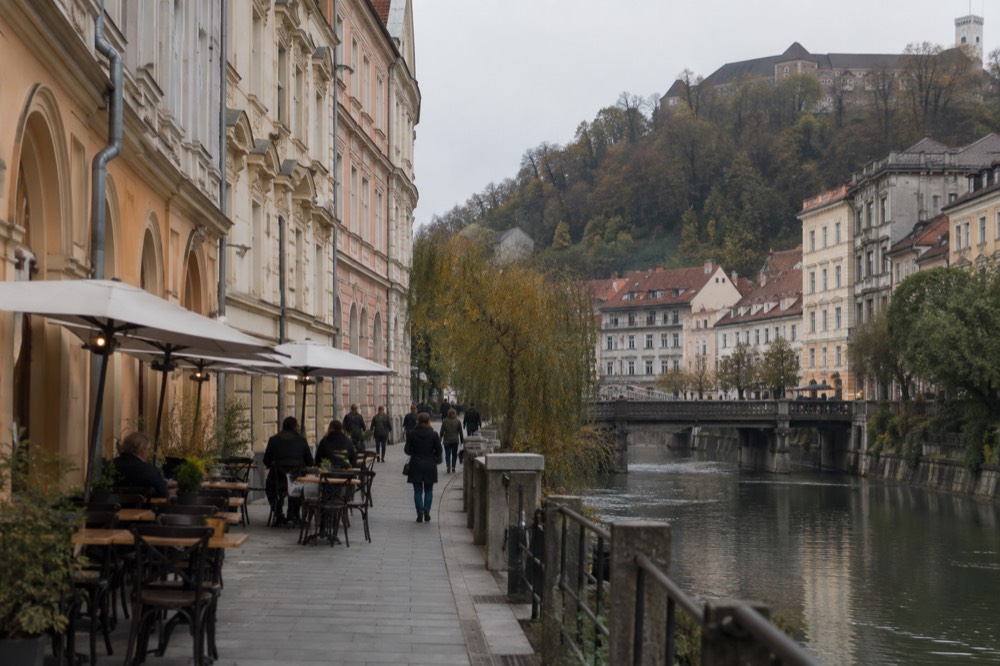
Is Ljubljana Expensive for Tourists?
No, Ljubljana is not expensive for tourists by the standards of Western Europe. It costs noticeably less than Vienna, Munich or Venice, sits well below Paris or Amsterdam, and runs somewhat above Zagreb and Belgrade. The centre is pedestrianised and walkable, the biggest single daily costs are the castle ticket at 19.00 EUR with the funicular and a river cruise at about 15 EUR, and a visitor who walks, eats at market stalls and uses the first-Sunday museum rule can get by on very little.
Slovenia uses the euro, adopted on 1 January 2007, so anyone arriving from the eurozone has no currency to change and no exchange fees to absorb. The country is also inside the Schengen area, with internal land and sea border checks abolished on 21 December 2007 and air checks following on 30 March 2008, so a visitor driving in from Italy, Austria or Hungary crosses without stopping. Those two facts quietly remove costs that inflate trips to non-euro cities: no conversion spread, no border time, no [roaming](https://airalo.tpk.ro/YlHC3OOn) surprises within the EU.
What makes Ljubljana feel cheap is its shape. The historic centre is a car-free pedestrian zone of roughly 20 hectares, expanded progressively since 2007, and almost everything a first-time visitor wants to see sits inside a fifteen-minute walk of anything else. Prešeren Square, the Triple Bridge, the Ljubljanica embankments and the Central Market are all free public space. A tourist can spend a full day in the most attractive parts of the city without paying for a single ride, which is not true of capitals where the sights are scattered across districts.
The honest answer also has a ceiling. Ljubljana is not the bargain it was a decade ago, and tourist tax, hotel rates in the old core and sit-down restaurants on the river all charge capital-city prices. The Ljubljana Travel Guide desk's summary for most visitors: plan for Western European prices on accommodation and eating out, and Central European prices on transport and attractions.
How Do Ljubljana's Prices Compare with the Rest of Europe?
Ljubljana sits in the middle band of European capital costs, cheaper than Vienna, Munich, Amsterdam and Venice, broadly level with Prague once tourist-area prices are compared, and clearly more expensive than Zagreb, which is under two hours away by road. Transport and attractions are the cheap end; hotels and riverside restaurants are the expensive end. A rough daily budget for a mid-range visitor is 70 to 120 EUR a day excluding accommodation.
The comparison that surprises people is Zagreb. Croatia joined Schengen and the euro on 1 January 2023, so the run down to Croatia's capital is now an internal trip with no border and no currency change, and the Zagreb full-day tour from Ljubljana runs eight to nine hours. But Zagreb's prices remain lower across the board, so a visitor combining both cities will feel the step up when the coach arrives back in Slovenia.
The table below pulls the real numbers a tourist actually pays in Ljubljana, from official operator and city sources rather than estimates.
| Item | Price | Notes |
|---|---|---|
| City bus single, zone 1, 90 minutes | 1.50 EUR | Urbana card, transfers included; cash not accepted on board |
| Urbana card itself | 2.00 EUR | One-off purchase, top-up as needed |
| Castle ticket including funicular | 19.00 EUR | Covers Viewing Tower, exhibitions, funicular both ways |
| Castle funicular, return only | 6.00 EUR | Grounds themselves are free to wander |
| Ljubljanica river cruise | 15.00 EUR | 50 minutes with Barka, hourly May to September |
| Tourist tax | 3.13 EUR per person per night | 2.50 EUR tax plus 0.63 EUR promotion surcharge |
| National Gallery, permanent collection | 10 EUR | Free first Sunday of every month |
| Museum of Modern Art | 7 EUR | Closed Mondays |
| Slovenian Ethnographic Museum | 8 EUR | Free first Sunday |
Two of those rows deserve emphasis. The first is the bus: Ljubljana's LPP buses take no cash at all, only the Urbana card or a contactless bank card and phone, so the old trap of standing at a stop with coins is gone but the no-cash rule still catches visitors. The official payment methods page states it plainly. The second is the castle. The castle grounds are free to enter; it is the funicular and the tower that are not. Calling "the castle" free or paid without saying which part is the most common price error written about Ljubljana.
For anyone weighing the sightseeing pass, the arithmetic is on the official Ljubljana Card page: the 24-hour card costs 41.00 EUR and bundles the castle funicular, the river cruise, city buses, a guided walking tour, four hours of BicikeLJ bike share and one entry to more than thirty museums. A castle ticket with funicular at 19.00 EUR plus a river cruise at about 15 EUR already reaches 34 EUR before a single museum, so the card pays for itself for a packed first day and not for a slow one. The Ljubljana Card guide works through the sums in detail.
The band above reflects how most visitors actually spend: one big day trip, one lake trip, and a free orientation walk. The free walk is genuinely free in the tips-based sense, run through GuruWalk, and at two hours it is the cheapest way to get the city explained by a local. The paid day trips are where the real money goes, and they are worth pricing early because the popular ones fill up.
What Does a Day in Ljubljana Actually Cost?
A bare-bones day costs almost nothing: the centre is free to walk, the castle grounds are free, the riverside is free, and a market lunch runs a few euros. A comfortable mid-range day, with the castle ticket, a river cruise, a museum and proper restaurant meals, lands around 70 to 100 EUR per person. A budget day and a mid-range day see the same city; the difference is almost entirely the castle, the boat and where you sit down to eat.
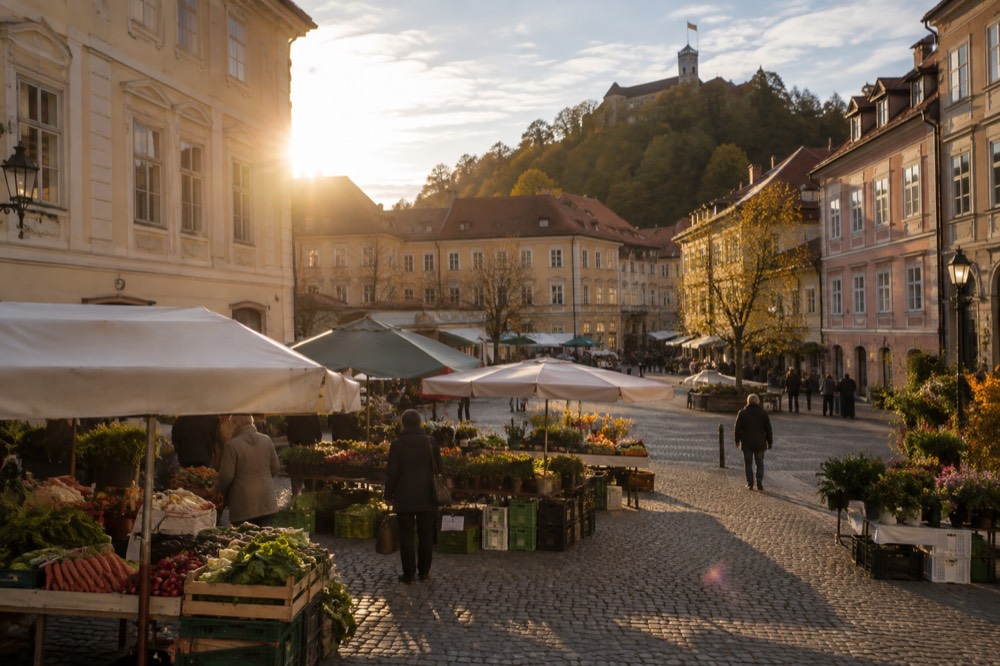
The budget floor is real. The Central Market on Vodnikov and Pogačarjev trg runs roughly Monday to Saturday from 06:00, summer to 18:00 and winter to 16:00, and it is both a sight and a cheap meal. On Fridays from roughly March to November, the Odprta Kuhna open-air food market takes over Pogačarjev trg from 10:00 to 21:00, with kitchens from city restaurants at street-food prices. One caveat from the official wording: it runs "every sunny Friday", literally, and is cancelled in bad weather, so check the sky before building a Friday around it. The Open Kitchen guide covers the practicalities.
The single best money fact in the city is the museum rule: admission is free on the first Sunday of every month at the national institutions, confirmed on the National Museum of Slovenia, the National Gallery, MSUM and the Slovenian Ethnographic Museum sites in their own words. Nearly all of them close on Mondays, so the week's shape matters: Sunday for free museums, Monday for the castle and the outdoors. The free things to do guide builds a full day around the no-cost side of the city.
Accommodation is the line item no guide can quote honestly, because nightly hotel rates are date-specific and sit behind booking walls. What can be said is structural: tourist tax adds 3.13 EUR per person per night, half rate for ages 7 to 18, free under 7, and it is collected by the accommodation. Location matters more than in most capitals because the pedestrianised centre means a hotel inside the ring saves every bus fare and most taxi fares. The where to stay guide maps the neighbourhood trade-offs.
Which Tourist Costs Are Worth Paying For?
The three spends most visitors say were worth it: the castle ticket with the funicular at 19.00 EUR, one Ljubljanica river cruise at about 15 EUR, and one big organised day trip. The castle and the cruise are cheap per hour; the day trip is the expensive line but the one that reaches what the city cannot, because Postojna Cave, Lake Bled and the Soča Valley are all 60 to 120 minutes away and awkward without a car.
The day-trip economics deserve their own arithmetic. Postojna Cave's official adult ticket is 34.90 EUR and Predjama Castle is 24.00 EUR, bought separately at 58.90 EUR in total, and reaching Postojna by public transport from Ljubljana involves a coach connection each way with no published through fare. A guided tour that bundles transport, tickets and timing removes a half-day of logistics for a price close to the sum of the parts. The Cave and Castle Tickets, 6 Hours tour does exactly that, rated 4.8 across 2802 reviews, and Check availability if the date matters, because cave departures are timed and summer slots go first.
One cost warning that belongs in every budget: the cave holds about 10 C year round, and Škocjan about 12 C, which is why caves are the reliable answer on wet days and in heatwaves. Visitors in August shorts are cold for ninety minutes, and the rental of a warm layer is a real, avoidable expense. Pack a layer and that line item disappears.
Lake Bled is the other big spend, and it carries more search demand than the entire city. Bled Castle's adult entry is 19.00 EUR, the pletna boat to the island is 20 EUR per person and the electric Boat Line is 16 EUR, so a full Bled day adds up quickly. The Lake Bled and Castle tour bundles the transport and the headline sights into six hours, which is the format most visitors prefer over self-driving, and the Ljubljana to Lake Bled guide compares the options with and without a car.
How to Spend Less Without Missing Anything
The savings that cost nothing in experience: walk instead of riding, eat at the market instead of the river, time museums to the first Sunday, use the free GuruWalk walks for orientation, and put the saved money into one good day trip. Ljubljana rewards visitors who spend selectively rather than evenly, because its best assets, the centre, the riverbank and the castle hill, are free to occupy.
The free walks deserve a proper mention because they invert the usual price logic. There are eight free, tips-based GuruWalk walks on this city, and the flagship Old Town walk, from Roman roots to the dragon bridge, runs two hours with a 4.91 rating across 1496 reviews. You pay what you think it was worth at the end. For a first-day orientation that would otherwise cost a guided fee, it is the single highest-value line in any Ljubljana budget, and the free walking tour guide lists the full set with what each one covers.
That last point is a genuinely local saving. On a grey morning, the funicular ride up to the castle, 6.00 EUR return, is not just a sightseeing spend, it is a weather upgrade, because the basin inversion means the hill a couple of hundred metres above the city can be in sunshine while the streets are in fog. The best time to visit guide works through the whole seasonal picture, including why the autumn shoulder is wetter than most guides admit.
Food is the other lever. A sit-down dinner on the Ljubljanica embankment prices like any Western capital; a bowl at a market stall or a traditional joint in Trnovo or Šiška does not. The where locals eat guide and the Slovenian food in Ljubljana guide point at the second category, and the Ljubljana on a budget guide assembles the full cheap itinerary.
Common Questions About Ljubljana Prices
Is Ljubljana Expensive For Tourists?
By Western European capital standards, no. Transport, attractions and market food are cheap, the centre is free to walk, and a mid-range day runs about 70 to 120 EUR per person before accommodation. Hotels and riverside restaurants charge capital prices, so the total trip cost depends mostly on where you sleep and eat.
How much is tourist tax in Ljubljana?
Tourist tax is 3.13 EUR per person per night, made up of a 2.50 EUR city tax plus a 0.63 EUR promotion surcharge. Ages 7 to 18 pay a half rate of 1.57 EUR, and children under 7 are exempt. It is collected by your accommodation, not at the border or the airport.
Is the Ljubljana Castle free?
The castle grounds are free to enter and wander. The funicular, the Viewing Tower and the indoor exhibitions are not: a castle ticket including the funicular costs 19.00 EUR for an adult, or 6.00 EUR for a funicular return on its own.
Can you pay cash on Ljubljana buses?
No. LPP city buses accept the Urbana card and contactless bank cards and phones only, never cash. A single zone 1 ride is 1.50 EUR and covers 90 minutes with transfers; the Urbana card itself costs 2.00 EUR to buy.
Are museums in Ljubljana ever free?
Yes. The national institutions, including the National Gallery, the National Museum of Slovenia, MSUM and the Slovenian Ethnographic Museum, admit visitors free on the first Sunday of every month. Most of them close on Mondays, so plan the free Sunday deliberately.
What is the cheapest day trip from Ljubljana?
The free GuruWalk walks aside, the cheapest paid headline trip is a Lake Bled day tour, which reaches Slovenia's most searched attraction in about six hours. Postojna Cave and Predjama Castle cost more but bundle two of the country's biggest sights into one day, and the official separate tickets alone total 58.90 EUR before any transport.