Is It Better to Stay in Ljubljana or Bled?
A plain comparison of staying in Ljubljana or Bled: atmosphere, prices, transport, day trips and which base suits a first visit, a weekend or a winter break.
Is It Better to Stay in Ljubljana or Bled?
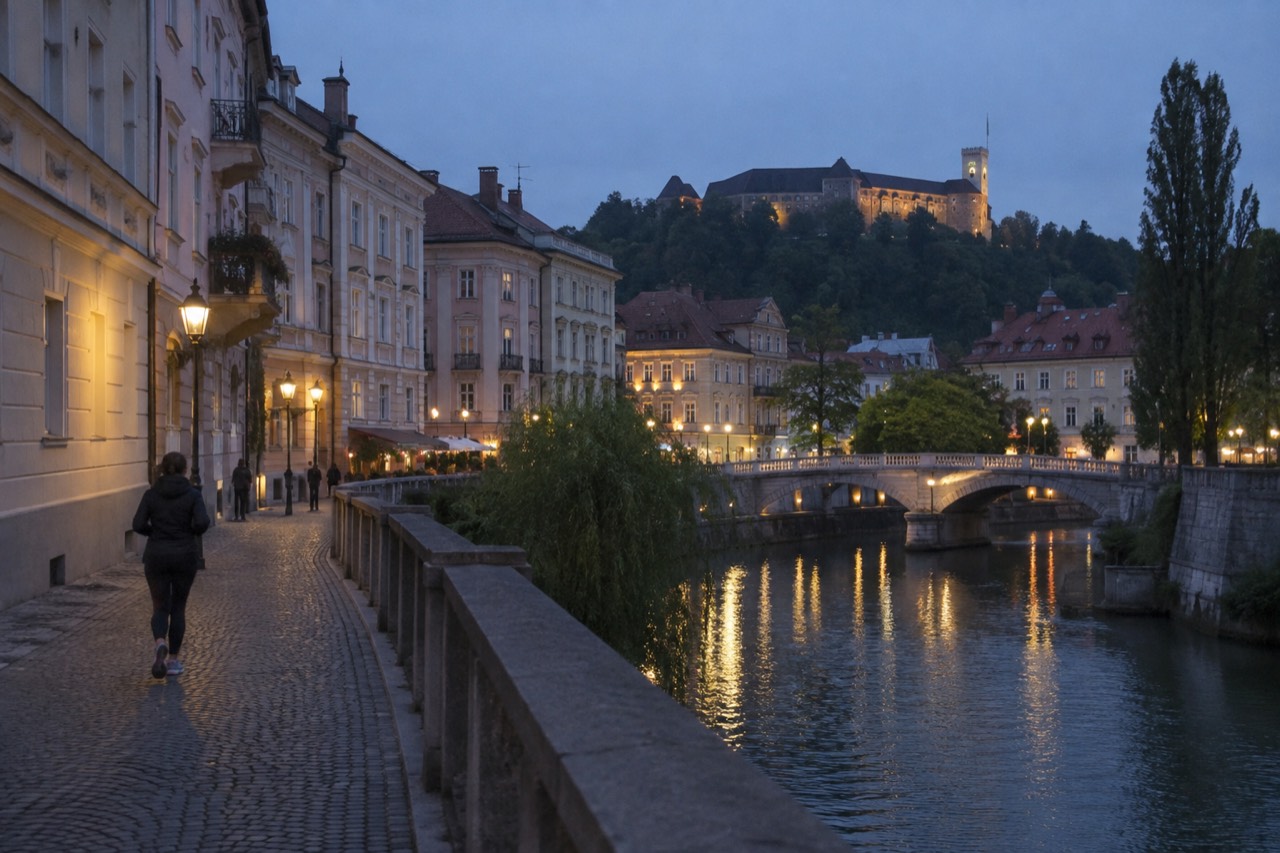
Most visitors should sleep in Ljubljana and see Bled as a day trip. The capital holds the restaurants, the museums, the riverside evenings and the transport links, and the published arrival figures show it is a two-night city, with an average stay of about 2.04 nights. Bled is quieter after the day crowds leave, wonderful if you want lake mornings and alpine air, but thin on evening life and harder to base yourself in without a car.
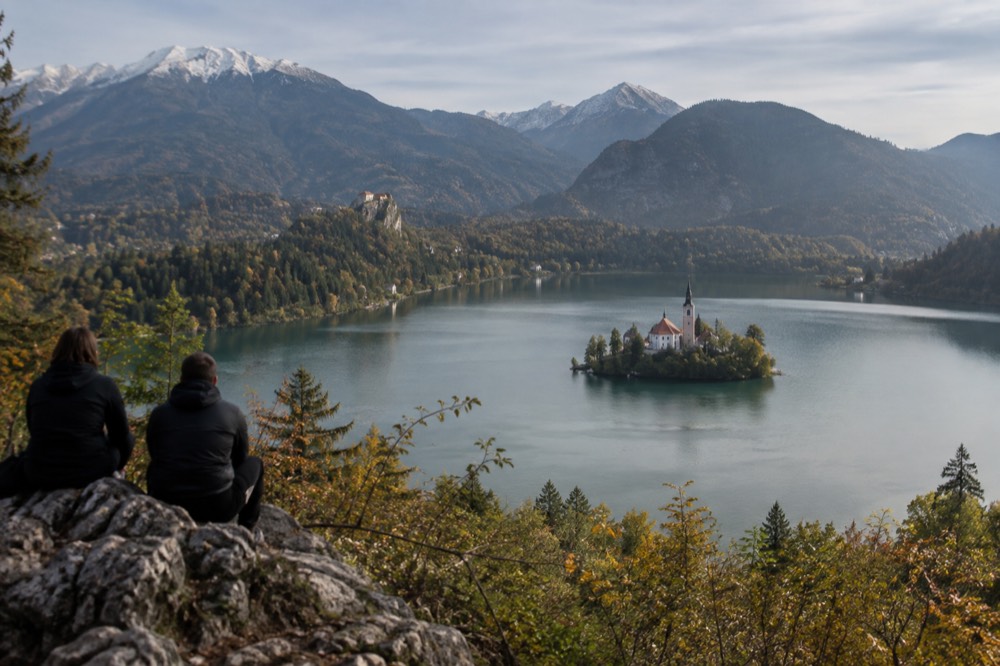
The honest answer is that the two places are not really competitors. Bled is a small lakeside resort of a few thousand residents wrapped around a photogenic lake, with a castle on a cliff and an island church in the middle of the water. Ljubljana is a capital of roughly 293,000 people, pedestrianised at its centre, with a castle of its own on the hill and a river, the Ljubljanica, running through the middle of everything. One is a destination you tour; the other is a place you live in for a few days.
The question matters because most first-time visitors to Slovenia have time for only one hotel base. The country is small, and the two are close enough that a day trip between them is easy, but they reward very different kinds of traveller. This site, Ljubljana Travel Guide, exists because the capital is the natural hub, but a fair comparison has to say plainly where Bled wins.
Which Is Better for a First-time Visitor to Slovenia?
For a first visit, Ljubljana is the better base for most people, because everything else in the country is easier to reach from it. Bled is superb but it is a single sight with a lake around it, and two full days there is more than most itineraries need. A first-timer sleeping in Ljubljana can see the Old Town, take a river cruise, walk up to the castle and still reach Bled, Postojna Cave or the coast on organised day trips.
The practical case for the capital starts with transport. Long-distance coaches and trains arrive in Ljubljana, the airport at Brnik sits about 26 km away, and the day-tour departures for Bled, the caves, the Soča Valley and the coast all leave from the city centre. Bled has its own station, Bled Jezero, just 1.5 km from the lake on the line that runs toward Bohinj, but the range of direct connections is far smaller. If your holiday is a hub-and-spoke, the hub is Ljubljana.
The case for Bled as a first base is simpler and still real: the lake is the single most famous image of Slovenia, and waking up to it, before the day-trippers arrive and after they leave, is an experience the capital cannot offer. Lake Bled actually carries more search demand than the entire city, which tells you where most imaginations already are. A visitor who cares mainly about mountains, water and quiet evenings will not regret booking Bled first.
For most people, though, the pattern that works is nights in the city plus one big lake day. The guided options make that painless, and the three below cover the main ways to do it.
| Factor | Stay in Ljubljana | Stay in Bled |
|---|---|---|
| Evening atmosphere | Riverside bars, restaurants, events | Quiet resort, limited late options |
| Day-trip range | Bled, caves, coast, Alps, Zagreb | Bohinj, Vintgar, Triglav Park, Radovljica |
| Public transport hub | Trains and coaches nationwide | One rural rail line, fewer coaches |
| Sights at the doorstep | Castle, Old Town, museums, river | Lake, island, castle, gorges |
| Best for | City breaks, food, first visits | Nature trips, photographers, slow mornings |
If you are leaning toward the lake, read the fuller where to stay near Lake Bled guide before booking, because the different shores and villages suit different trips. And if you are still deciding between the two lakes of the region, the Lake Bled or Lake Bohinj comparison is the natural next read.
What Does Staying in Ljubljana Actually Give You?
Staying in Ljubljana gives you a car-free historic centre, a castle you can reach by funicular, a river you can cruise, more than thirty museums and galleries, and the densest concentration of restaurants in the country. The Ljubljana Card, at 41.00 EUR for 24 hours, bundles the funicular, a river cruise, city buses, a guided walk and museum entries, which already edges past the cost of buying the castle and cruise separately.
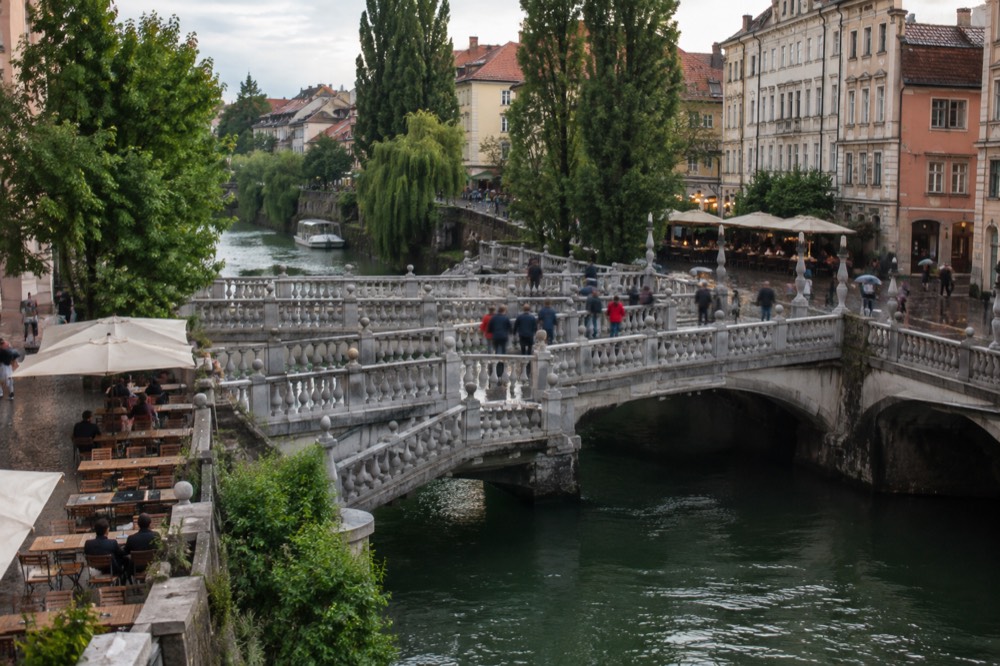
The centre is pedestrianised, roughly 20 hectares of it, which changes the entire feel of an evening. You walk everywhere. Prešeren Square, the Triple Bridge, the Dragon Bridge and the Central Market form a compact loop that takes an hour at strolling pace, and the whole thing is backed by the castle hill. The castle grounds are free to enter; the funicular and the tower are not, and a combined castle ticket with the funicular costs 19.00 EUR for an adult, per the castle's own price list.
Food is the capital's quiet advantage over the lake. The city's dining scene runs from traditional Slovenian rooms to modern kitchens, and the where to eat in Ljubljana guide covers it in depth. On Fridays from roughly March to November, the Odprta Kuhna open-air food market takes over Pogačarjev trg, though the official wording is "every sunny Friday", and it is literally cancelled in bad weather, so check before building an evening around it.
Museums are the other thing Bled simply does not have. The National Gallery, the City Museum, the Plečnik House and the rest are all here, and the national institutions open their doors free on the first Sunday of every month, a detail worth planning around. Most close on Mondays, so a Sunday-to-Wednesday city stay catches them open.
None of this means the capital is loud or rushed. Ljubljana is small for a capital, and visitors consistently describe it as walkable and calm. What it gives you is density: more things within a fifteen-minute walk than anywhere else in Slovenia.
What Does Staying in Bled Actually Give You?
Staying in Bled gives you the lake at the hours that matter: early morning mist, empty shore paths and the evening after the coaches leave. It puts Vintgar Gorge, Lake Bohinj, Triglav National Park and a string of alpine viewpoints at your doorstep, and it suits travellers who want nature over city life. What it does not give you is evening atmosphere, museum depth or a wide choice of restaurants.
The lake itself is the product. A pletna boat out to the island church costs 20 EUR per person, the electric Bled Boat Line is 16 EUR, and Bled Castle above the water charges 19 EUR for an adult entry. Add a slice of the famous cream cake at a lakeside café and you have the full Bled circuit, doable in a day but far nicer spread across two slow mornings.
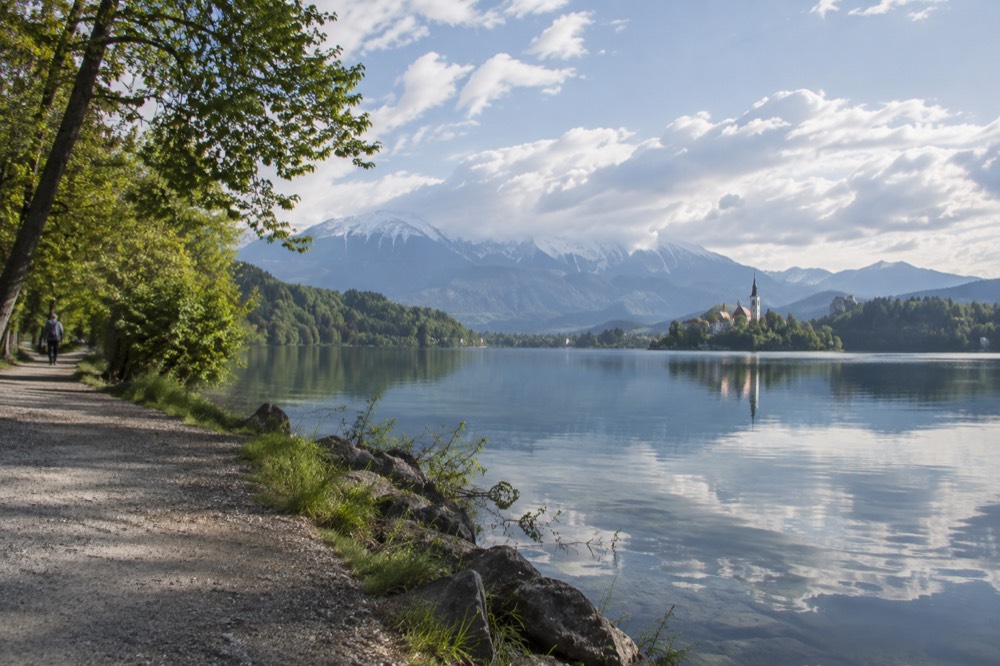
The surroundings are the real argument for sleeping there. Vintgar Gorge, open to visitors between April and October with the exact closing date depending on conditions, is a wooden walkway through a carved river canyon that is genuinely at its best before 10:00, when the day crowds build. Triglav National Park covers 840 square kilometres around the lake, entry is free, and the park's own pages record Mount Triglav at 2,864 m. From Bled you can be on a trail in ten minutes; from Ljubljana you cannot.
The honest downside is the evening. Bled's restaurant and bar scene is small and skews hotel-heavy, and once the day visitors are gone the town goes quiet early. That is exactly what some travellers are buying. If your ideal night is a lake-view terrace and an early start, Bled is not a compromise, it is the point.
| Item at Bled | Figure |
|---|---|
| Pletna boat to the island, per person | 20 EUR |
| Bled Boat Line electric boat, per person | 16 EUR |
| Bled Castle, adult | 19.00 EUR |
| Bled Jezero station to the lake | 1.5 km |
| Vintgar Gorge season | April to October |
| Triglav National Park entry | free |
Can You Stay in Ljubljana and Still See Bled Properly?
Yes, comfortably. Bled is close enough to the capital that a day trip gives you six to eight hours at the lake, and the guided tours from Ljubljana run from $57 to $86 with ratings between 4.7 and 4.9. You give up the empty early-morning lake, but you keep the island, the castle viewpoint, the gorge in season and a full evening back in the capital's restaurants, which is a trade most two-night visitors should take.
The standard pattern is a morning departure, a drive of under an hour each way, and a loop that includes the lake shore, the castle and, on the longer versions, the island by boat. The Ljubljana to Lake Bled transport guide covers the independent options by coach and train, and the Lake Bled guide covers what to do once you are there.
The most complete version pairs the lake with Bled Castle itself. The Lake Bled and Castle trip runs six hours, is rated 4.7 across 1,641 reviews and starts from $86, and it puts you on the water and up at the castle viewpoint with the logistics handled.
If you would rather move at your own pace, the same route can be done independently [by coach](https://busbud.tpk.ro/4kLAIElq), and in summer the train to Bled Jezero drops you a 1.5 km walk from the shore. The trade-off with independence is tickets: pletna boats, castle entry and gorge admission are all bought on the day, and Vintgar uses timed-entry slots in high season, so a guided tour buys you certainty as much as transport.
How Do the Costs of Each Base Compare?
Accommodation aside, which is date-specific and not published here, the day-to-day costs favour neither side decisively: Ljubljana's castle ticket with funicular is 19.00 EUR, Bled Castle is also 19.00 EUR, and a river cruise in the capital costs 15 EUR against Bled's 16 EUR electric boat. The real difference is that Ljubljana's costs are bundleable through the Ljubljana Card, from 41.00 EUR for 24 hours, while Bled's are mostly pay-as-you-go at the water.
The card is worth a short calculation. The official Ljubljana Card page lists the funicular, the river cruise, city buses, a guided walking tour, four hours of BicikeLJ bike share and more than thirty museums and galleries as included. The castle ticket with funicular alone is 19.00 EUR and a cruise is about 15 EUR, so those two items nearly cover the 24-hour card before a single museum is visited. A dense first day in the capital is exactly what the card is built for.
At Bled there is no equivalent pass, but the spend is predictable. Budget for the boat, the castle and the cream cake, and everything else, the shore walk, the viewpoints, the park, is free. Eating out is the wildcard in both places, and the is Ljubljana expensive for tourists breakdown covers typical meal and drink prices in the capital.
Which Base Is Better in Winter?
In winter, Ljubljana is the stronger base for atmosphere and Bled is the stronger base for light. The capital has the Christmas market, the museums and the indoor life, but it sits in a fog-prone basin; the lake sits higher, closer to the alpine sun, and Bled's lake circuit in frost or snow is one of the best winter walks in the country. A winter visitor who wants both should sleep in Ljubljana and book a Bled day for the clearer day of the stay.
The climate record is the reason this is not a coin toss. ARSO's normals show the city recording 56 hours of December sunshine and just 2 clear days that month, while the high stations above it record far more, because cold air traps in the basin under warmer air and the city fogs in while the hills stay in sun. The mountains are not warmer on average, Kredarica's January mean is well below freezing, but they are sunnier in winter, and that is what a short-break visitor actually feels.
Bled in winter also has a practical edge that the summer guides miss: Vintgar Gorge is closed from the end of the season until April, so a winter lake stay is about the shore, the castle and the views, not the canyon. The caves, which hold roughly 10 C year round, are the reliable wet-weather and cold-weather excursion from either base, and the Postojna and Škocjan pages on this site cover both.
Common Questions About Staying in Ljubljana or Bled
Is It Better To Stay In Ljubljana Or Bled?
For most visitors, Ljubljana: it has the restaurants, museums, transport links and evening life, and Bled works perfectly as a day trip. Choose Bled as your base if your priority is lake mornings, alpine trails and quiet nights rather than city atmosphere.
How many days should I spend in Ljubljana?
The published figures work out to an average stay of about 2.04 nights, and that fits most itineraries: two or three nights covers the Old Town, the castle, a river cruise and one big day trip.
Can I visit Lake Bled as a day trip from Ljubljana?
Yes. Guided tours run from $57 to $86 and take about six hours, and independent travel by coach or train is also possible, with Bled Jezero station just 1.5 km from the lake.
Is Bled worth staying in overnight?
Yes, if you want the lake before and after the day crowds, easy access to Vintgar Gorge in season, Bohinj and Triglav National Park. It is quieter in the evenings, which is either the appeal or the drawback, depending on your trip.
Which is cheaper, Ljubljana or Bled?
Day-to-day sightseeing costs are similar: the castle ticket with funicular in Ljubljana and Bled Castle entry are both 19.00 EUR, and boat rides are 15 EUR in the capital against 16 EUR on the lake. The Ljubljana Card, from 41.00 EUR for 24 hours, can bundle the capital's costs down.
Is Bled better than Ljubljana in winter?
For light and scenery, often yes: Ljubljana sits in a fog-prone basin with just 56 hours of December sunshine, while the higher ground toward Bled is frequently in sun. For atmosphere, the capital's Christmas market and museum life win.