What Is the Most Scenic Train Ride in Slovenia?
The Bohinj railway is Slovenia's most scenic train ride, a mountain line that threads the Julian Alps between Jesenice and Nova Gorica. Here is how to plan it and what to combine it with.
What Is the Most Scenic Train Ride in Slovenia?
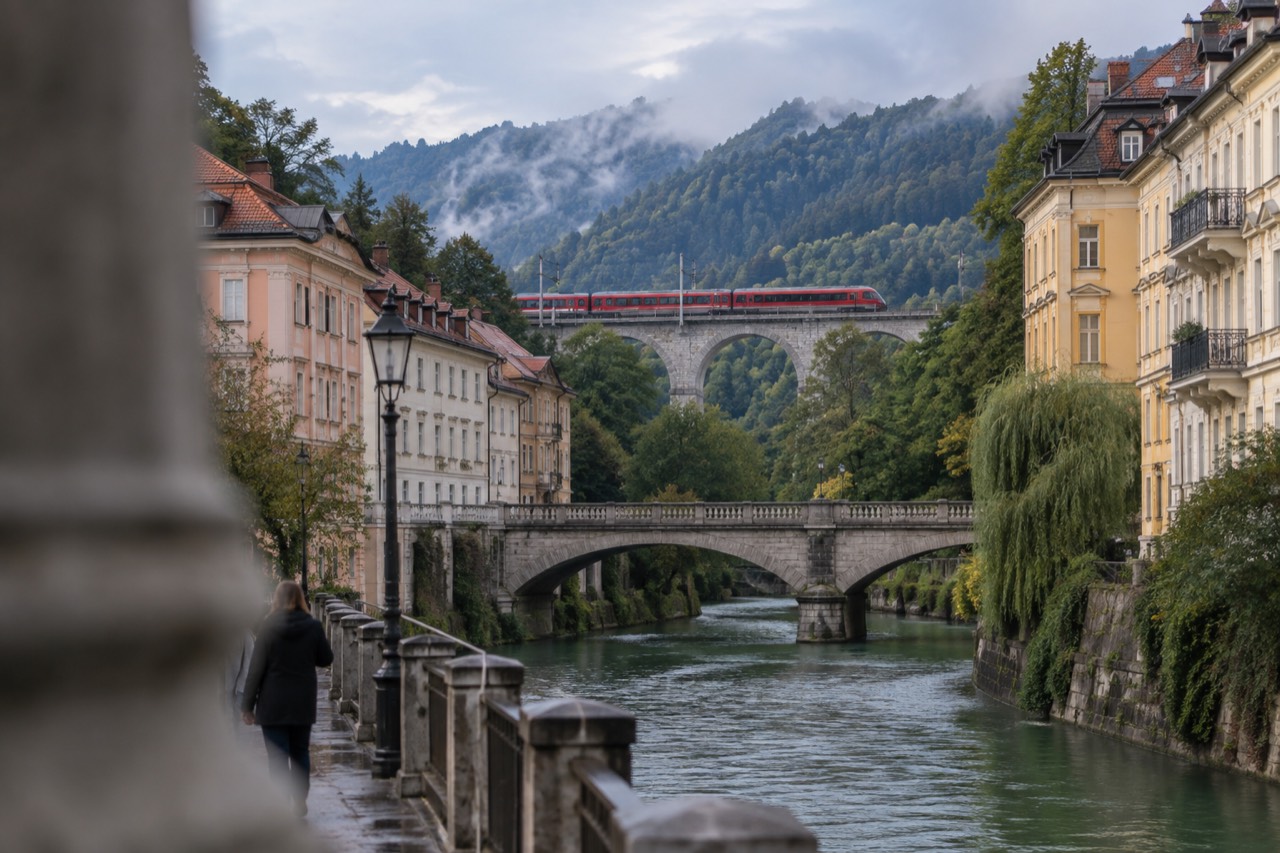
The most scenic train ride in Slovenia is the Bohinj railway, the mountain line that runs from Jesenice through the Bohinj basin and the long Bohinj tunnel down towards Nova Gorica on the western edge of the country. It threads the Julian Alps, crosses high viaducts and passes within reach of Lake Bohinj and the Soča Valley in a single arc. For a shorter ride straight out of the capital, the Ljubljana to Bled stretch is the popular runner-up.
The Bohinj railway is the line that gets written up in European rail guides, and for good reason. It was engineered as a single audacious crossing of the Alps, punching a tunnel of more than six kilometres under the mountains so that trains could reach the Soča basin without going around it. The western portal drops you into a different Slovenia: the karst country of the Bača valley, then the wine hills and plain that run down to Nova Gorica on the Italian border. You sit in an ordinary local train, often a two-car unit, and watch some of the most dramatic scenery in the country roll past the window.
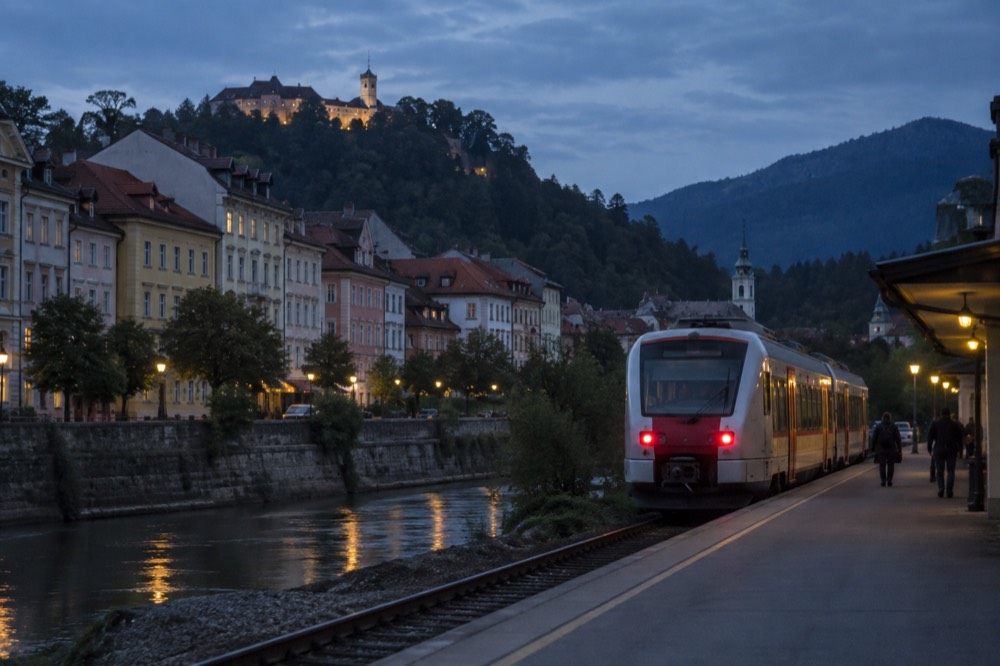
The catch, and it is a small one, is that the Bohinj railway does not start in Ljubljana. Its northern terminus is Jesenice, which means a scenic ride on the full line usually begins with a connecting train north from the capital through the Sava Dolinka valley, past the turn-offs for Bled and the approaches to Triglav National Park. Many travellers treat that first leg as part of the experience rather than a chore, because the Ljubljana to Jesenice stretch is itself one of the prettier rides in the country, climbing out of the Ljubljana basin with the Karavanke range ahead of you.
If your base is Ljubljana and you have one free day, the practical question is whether to ride the Bled line or commit to the full Bohinj route. Both work. The Bled option is covered in detail on our Lake Bled day trip planning guide, while the longer alpine crossing sits alongside the routes described in our Soča Valley overview.
How Does the Bohinj Railway Compare with the Ljubljana to Bled Line?
The Bohinj railway is the more spectacular ride but the harder logistics: it needs a connection at Jesenice and a full day, and its best scenery is in the western half of the line. The Ljubljana to Bled line is shorter and delivers a lake-and-castle payoff at the end, which is why it is the scenic ride most people actually take. Choose the Bohinj line if the Alps are the point of your trip; choose Bled for a relaxed half-day loop.
Both lines share the first stretch out of Ljubljana, following the Sava river north. The divergence in character comes after the Bled area. The Bled branch is a gentle valley run that ends at a station a short walk or transfer from the lake, and the reward is one of the most photographed settings in Europe: an island church, a cliff castle and the Julian Alps stacked behind the water. Bled Castle sits 139 metres above the lake on a sheer cliff, and the castle viewpoint is the classic place to take it all in.
The Bohinj line, by contrast, keeps going. It climbs to the Bohinj basin, serves the village of Bohinjska Bistrica a few kilometres from the quieter, wilder Lake Bohinj, and then disappears into the Bohinj tunnel to emerge on the western side of the watershed. From there the train descends the Bača valley, a narrow karst gorge country, before easing out towards the lowlands around Nova Gorica. It is the closest thing Slovenia has to a genuine mountain railway, and the viaducts on the western descent are the reason rail photographers come here.
A useful way to split the difference: ride to Bled or Bohinj in the morning, spend the middle of the day at the lake, and return in the late afternoon. The Bohinj basin is covered in our Lake Bohinj guide, which explains how it differs from Bled and why many locals prefer it.
One point of honesty about fares and timetables: this site does not publish train fares for Slovenian routes, because the rail operator's ticketing pages cannot be reliably read and quoted. Journey times and prices change with the season and with rail works, so treat the operator's own site as the source of truth and buy at the station or online there. What can be said firmly is that domestic Slovenian rail travel is inexpensive by western European standards and that the Ljubljana to Bled ride is short enough to be a genuine half-day trip.
Which Station Should You Use for Lake Bled?
Use Bled Jezero station, not Lesce-Bled, if your destination is the lake itself: Bled Jezero sits about 1.5 km from the centre, while Lesce-Bled is about 4 km away on a different line. Most generic advice sends visitors to Lesce-Bled because it is on the main line, which adds a bus or taxi leg that Bled Jezero does not need. Check which line your train runs on before you travel, because the two stations are not interchangeable.
This is the single most useful rail fact for a Bled day trip, and it is widely got wrong. The two stations serve different routes, so the choice is made for you the moment you pick your train, but pick with your eyes open.
| Station | Distance to Bled centre | Which line | Best for |
|---|---|---|---|
| Bled Jezero | about 1.5 km | The line that serves the Bled lake area directly | Walking to the lake in under half an hour |
| Lesce-Bled | about 4 km | The main Ljubljana to Jesenice line | Connections towards Jesenice and the Bohinj railway |
The 1.5 km from Bled Jezero to the lake is a flat, pleasant walk through the western end of town. From Lesce-Bled you will want the local bus or a taxi for the 4 km, which is manageable but eats into a short day. If you are continuing north to Jesenice to pick up the Bohinj railway, Lesce-Bled is where you change or stay aboard, so the "wrong" station is sometimes the right one for a bigger itinerary.
Once you are at the lake, the classic extras are the castle above the cliff and a pletna, the traditional flat-bottomed boat, out to the island. A pletna crossing runs 20 EUR per person, and Bled Castle entry is 19.00 EUR for an adult. Vintgar Gorge, the wooden-walkway gorge on the Radovna river, is open to visitors between April and October and closes for winter, with the exact closing date depending on conditions, so check before counting on it as part of a rail-and-hike day. Our Vintgar Gorge guide covers the seasonal detail.
Can You Reach the Soča Valley or the Coast by Train?
The Soča Valley has no direct train from Ljubljana: you reach it either by riding the Bohinj railway to its western side and connecting by bus, or by taking a guided road tour, which is what most visitors do. The coast is reachable by rail to Koper via the line through Nova Gorica or the direct route, though buses are often faster. For the karst region, Postojna has a station on the main line south, but the famous caves sit outside town and most people arrive by tour coach.
This is where rail romanticism meets Slovenian geography. The Soča Valley, the emerald river valley around Bovec and Kobarid, is one of the country's great sights, and the Bohinj railway was built precisely to reach its watershed. But the line stops on the far side, and the valley floor is served by road. A determined rail traveller can combine the train with a bus connection and make a full day of it; most people book a day tour instead, which handles the mountain roads and the parking in one stroke. Other pages covering the same trip are gathered on Ljubljana Travel Guide.
The Soča and Kranjska Gora guided day tour runs 10h 30m from Ljubljana and is rated 4.9 from 911 reviews, a strong signal that the road itinerary works for visitors who want the valley without the logistics. A full-day Triglav National Park tour, 12 hours and rated 4.9 from 205 reviews, covers even more of the alpine country the Bohinj railway only brushes.
For the karst region the situation is simpler. Postojna is on the main southern rail line, and the cave is the country's single most visited underground attraction, holding a steady 10 degrees Celsius all year, which makes it as reliable in a July heatwave as in an October downpour. The cave tour covers 3.7 km of passage, partly by the underground train, and lasts about an hour and a half. Predjama Castle, the castle built into the mouth of a cave, is a short drive away and open year-round, adult entry 24.00 EUR. The combined cave and castle day tour from Ljubljana runs 6 hours and is rated 4.8 from 2,802 reviews.
When Is the Best Time of Year for a Scenic Train Ride in Slovenia?
The best months for a scenic train ride in Slovenia are May, June and September: the mountains are green or snow-dusted, the light is strong, and you avoid both the peak July and August crowds and the grey basin fog that settles over Ljubljana from late autumn. Winter rides are atmospheric but the city end of the line is often under low cloud, while the high country above the inversion can be in sunshine.
October and November each average a single clear day in the capital, so plan a winter ride with that in mind.
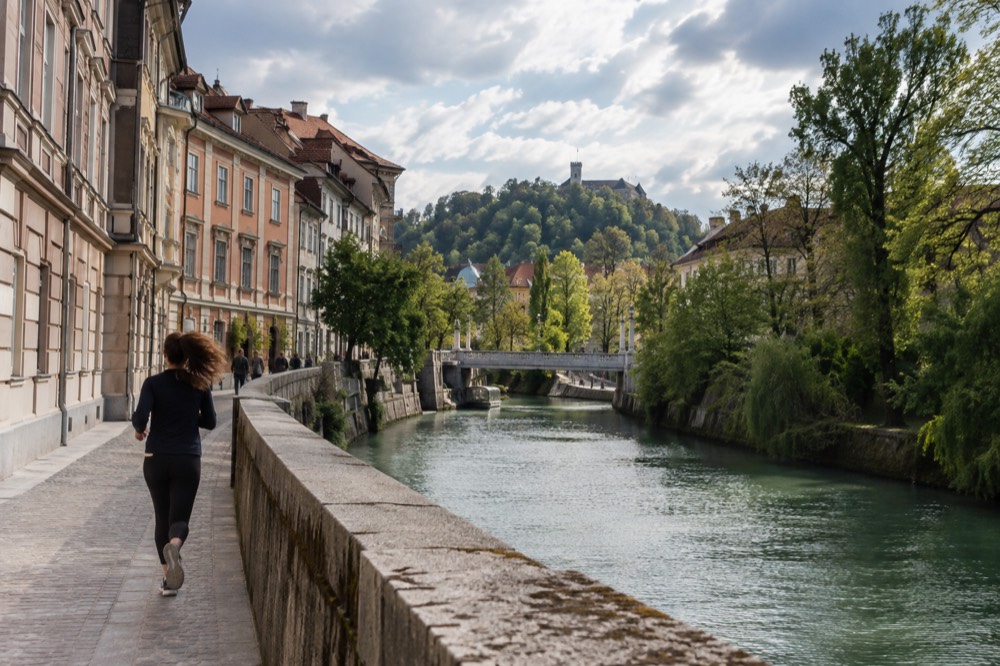
This is where Ljubljana's geography does something unexpected, and it is the detail most scenic-ride guides miss entirely. The city sits on the floor of a basin at 299 metres, and in the colder half of the year cold air gets trapped under warmer air above it. The result is fog and low cloud in the city while the hills a few hundred metres up are in sun.
For a train rider this matters in a very practical way. A winter departure from Ljubljana can spend its first half hour under grey murk, then break out into brilliant sunshine as the line climbs above the inversion. The reverse is true on the return: you descend back into the cloud. If you are riding in winter purely for the views, sit on the northern side of the train going up, expect the best light in the high stretch, and do not judge the day by the platform at Ljubljana station.
Autumn has the same trap in a different costume. The September and October fog peak, 12.4 days a month, means a morning departure can be delayed or simply grey over the basin while the Bohinj stretch is clear. Spring and early summer flip the problem: April through September is when Ljubljana out-suns the mountains, with the city recording 293 sunshine hours in July against Kredarica's 203, so a summer ride starts bright and stays bright. For the full picture month by month, see our best time to visit Ljubljana guide.
What Should You Know Before Booking a Scenic Train Day?
Book nothing in advance except your seat on a busy summer service, and plan the non-rail legs before you travel, because the scenic lines connect to buses and boats rather than to each other. Slovenia's trains do not need reservations on most domestic routes, but summer weekends on the Bled and Bohinj services fill up. Build one buffer connection into any itinerary that ends at a boat or a cave tour with fixed entry times.
A few planning realities that save real disappointment:
| Scenario | The practical answer |
|---|---|
| Full Bohinj railway in one day | Connect at Jesenice, ride west, and plan a bus or return rail loop; it is a full day, not a half |
| Lake Bled as a rail day trip | Use Bled Jezero station, 1.5 km from the lake, and check the return timetable the night before |
| Soča Valley by rail | Not directly served; pair the Bohinj line with a bus, or take a guided road tour |
| Postojna Cave by rail | Postojna has a station, but the cave sits outside town; tours from Ljubljana handle the transfer |
| Winter or autumn rides | Expect basin fog at the Ljubljana end; the high country is often above it and in sun |
Two comfort notes worth their weight. Caves hold roughly the same temperature year round, so if your scenic-ride day doubles as a Postojna or Škocjan visit, pack a layer even in August; Postojna sits at 10 degrees and Škocjan at 12, and ninety minutes underground in shorts is a long time. And the city centre of Ljubljana is pedestrianised, so if your train day starts with a walk from the old town to the station, allow twenty unhurried minutes along the river rather than a hurried ten.
For orientation on a first visit, the free GuruWalk walk "Ljubljana Unveiled: A Journey Through Time and Tales" runs two hours, is rated 4.91 from 1,496 reviews, and is pay what you think it was worth at the end. It is a good morning-one pairing with an afternoon train north, and it leaves you knowing exactly which end of the centre the station sits at. Our Ljubljana walking tour guide compares the paid and free options in detail, and our Ljubljana train station guide covers the station itself, from left luggage to platform layout.
The honest summary is this: Slovenia rewards train travellers, but it rewards them most when they treat the train as one leg of a day rather than the whole plan. The Bohinj railway is the headline ride, the Bled line is the dependable everyday classic, and the valleys the rails cannot reach, the Soča, the Vršič pass country, the coast at Piran, are where a guided tour earns its keep. Mix the two and you get the country at its best.
Common Questions About Scenic Train Rides in Slovenia
What Is The Most Scenic Train Ride In Slovenia?
The Bohinj railway, the mountain line between Jesenice and Nova Gorica that tunnels under the Julian Alps and descends the karst valleys to the west. For a shorter ride from the capital, the Ljubljana to Bled line is the popular alternative.
Does the Bohinj railway start in Ljubljana?
No. Its northern terminus is Jesenice, so the full ride means connecting there from a Ljubljana service. The Ljubljana to Jesenice stretch is itself scenic, so the connection is not a hardship.
Which Bled station is closest to the lake?
Bled Jezero, about 1.5 km from the centre. Lesce-Bled is about 4 km away on the main line and needs a bus or taxi for the last leg.
Can you get to the Soča Valley [by train](https://omio.tpk.ro/exV6rGgH)?
Not directly. The Bohinj railway reaches the western side of the watershed, and the valley floor is served by road. Most visitors take a guided day tour from Ljubljana instead.
Do Slovenian trains need reservations?
Most domestic routes do not, but summer weekend services towards Bled and Bohinj can fill up. Arrive early or travel off-peak on the busiest days.
Is a winter train ride in Slovenia worth it?
Yes, with one caveat: Ljubljana sits in a fog-prone basin, so the city end of the line can be grey while the high country is in sunshine. December gives the city just 56 hours of sun, so plan for the clouds and enjoy the breakout above the inversion.