What Is a Typical Slovenian Breakfast?
What a typical Slovenian breakfast actually looks like: bread, dairy, potica, štrukelj and strong coffee, plus where to eat it in Ljubljana and which food walks build a morning around it.
What Is a Typical Slovenian Breakfast?
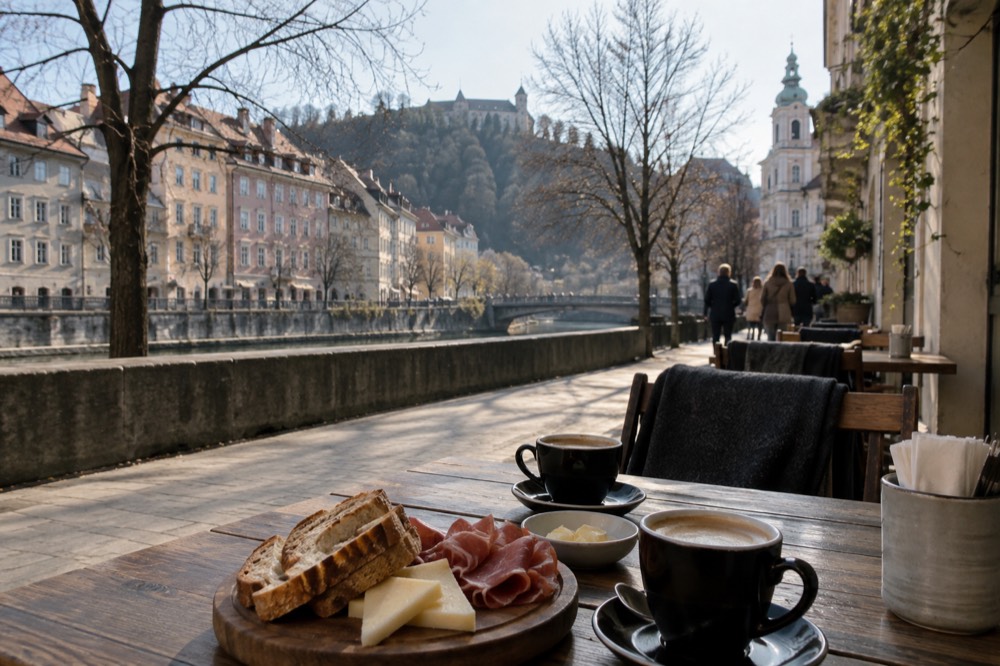
A typical Slovenian breakfast is bread-based and farmhouse-simple: sliced bread or rolls with butter, local cheese, cured ham or salami, a boiled or fried egg, and something sweet on the side, most often potica, Slovenia's rolled nut, walnut or honey bread, or štrukelj, its filled pastry cousin. Coffee with milk, or in older households tea, goes with it. It is a table assembled from good ingredients rather than a cooked-to-order plate.
That is the honest answer, and it surprises people who expect a defined national dish in the way France has the croissant or Britain has the fry-up. Slovenia's breakfast is a spread. You slice, you assemble, you eat. The sweet element is what marks it out as distinctly Slovenian: potica appears at breakfast, at holidays and at every family occasion in between, and visitors tend to meet it first on a morning table.
The other thing worth knowing straight away is that breakfast is the quietest meal in Slovenia. Lunch has historically been the main cooked meal of the day, and many Slovenians take breakfast lightly: bread and coffee, sometimes yoghurt or milk with cereal, especially on working days. The full spread described above is a weekend, holiday and farmhouse version, and that is exactly the version visitors encounter in the countryside and in the better Ljubljana cafés and market halls.
What Foods Are on a Typical Slovenian Breakfast Table?
The core items are bread or fresh rolls, butter, a soft or semi-hard local cheese, a cured meat such as kraški pršut or salami, eggs cooked simply, and a sweet slice of potica or štrukelj. Seasonal fruit, honey and yoghurt or kislo mleko, a cultured milk drink, appear when available. Coffee with a good splash of milk is close to universal. None of this is restaurant food. It is a larder turned into a table, which is why the quality of the ingredients does all the work.
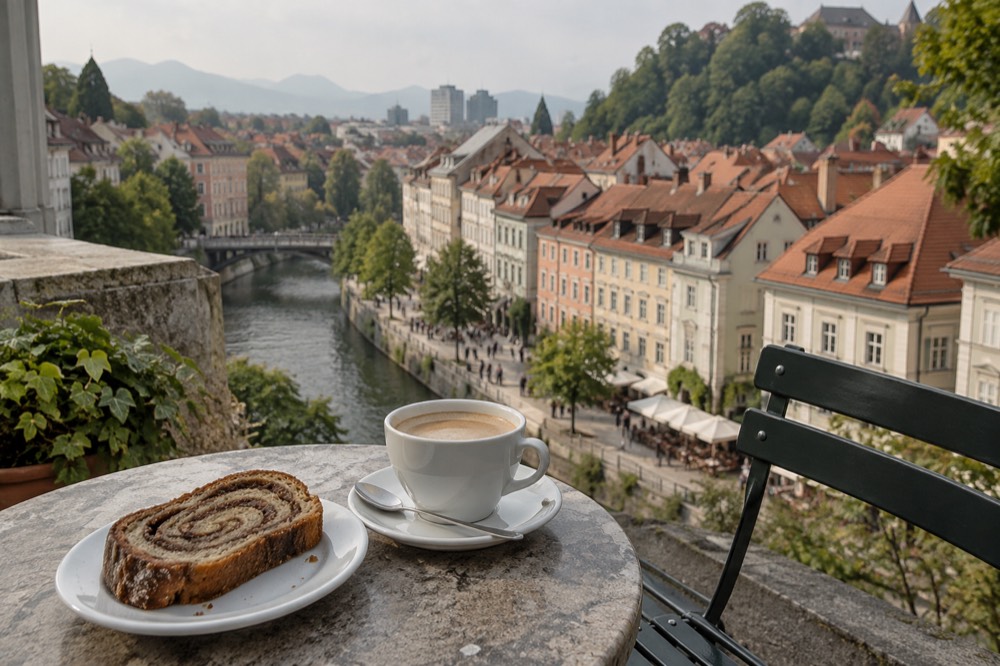
The sweet corner of the table deserves the explanation, because it is the part visitors remember. Potica is a yeasted rolled dough wrapped around a filling, classically walnut, but also tarragon, poppy seed, honey or crackling in regional versions. Štrukelj is the same family of rolled pastry, served savoury or sweet, and it turns up warm at breakfast in the more tourist-facing cafés. If you have only ever met potica as a festival cake, meeting it toasted with butter at nine in the morning is a small revelation.
The savoury corner leans on pig and dairy, which tells you where Slovenian cooking comes from: small farms, mixed land, everything preserved. Kraški pršut, the Karst air-dried ham, is the prized item; tunka, preserved pork fat in a crock, is the old-fashioned one you will mostly read about rather than be served. Cheese is usually a fresh or semi-soft local style rather than a branded one, and bread is white, rye or a dense mixed loaf from a bakery opened early that morning.
| Item | What it is | Role at breakfast |
|---|---|---|
| Bread and rolls | Fresh white, rye or mixed loaves from a bakery | The base of the whole table |
| Potica | Rolled yeasted dough with walnut, tarragon or poppy filling | The sweet slice, served plain or buttered |
| Štrukelj | Rolled filled pastry, savoury or sweet, often served warm | Sweet or savoury centrepiece in cafés |
| Local cheese | Fresh or semi-soft cow or sheep cheese | Eaten with bread and cured meat |
| Cured ham and salami | Air-dried kraški pršut and dry sausages | The savoury protein |
| Eggs | Boiled, fried or scrambled, simply cooked | Weekend and farmhouse addition |
| Honey | Slovenian honey, often from small apiaries | With bread or in warm drinks |
| Coffee with milk | The standard morning drink | What the whole table is built around |
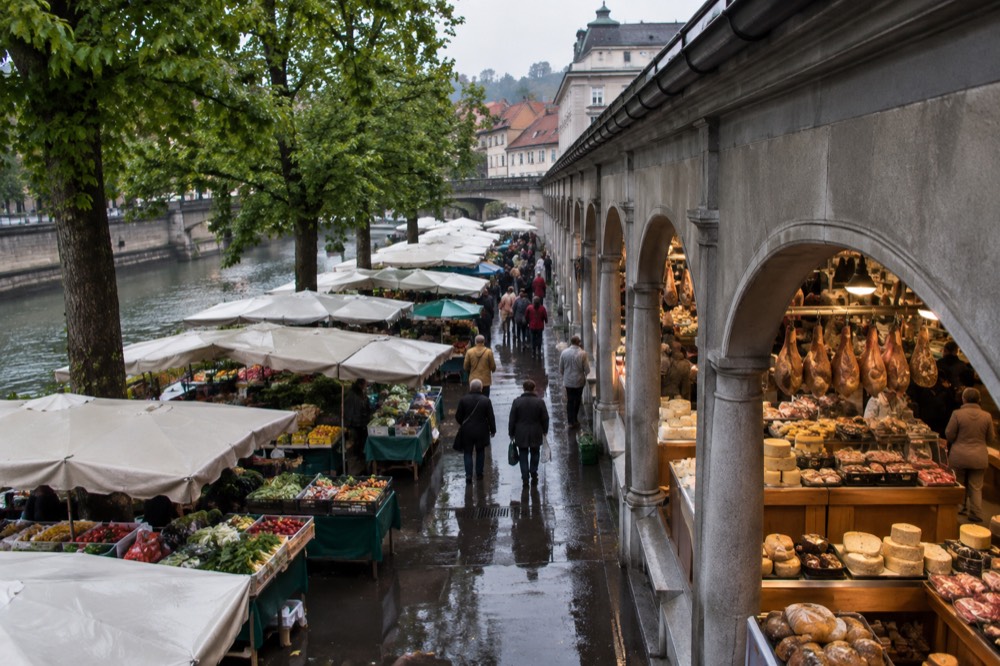
If you want to taste your way through this properly in the capital, the Central Market is the single best place to start assembling a breakfast table yourself: the covered halls and the outdoor stalls carry exactly the bread, cheese, ham and honey that a Slovenian household puts out. The outdoor market on Vodnikov and Pogačarjev trg runs roughly Monday to Saturday from 06:00 to 18:00 in summer and 06:00 to 16:00 in winter, so an early breakfast shop is completely practical, and the open-air food scene on Fridays that takes over the same square later in the week is the grown-up, evening version of the same instinct.
Where Should You Eat Breakfast in Ljubljana?
Eat breakfast in three places, depending on the morning you want: a classic café around the Old Town for coffee and potica or štrukelj, the Central Market for an assemble-it-yourself spread of bread, cheese and ham, and a modern brunch-style café for eggs, which Ljubljana does increasingly well. The historic centre is pedestrianised, so everything worth eating is a short walk apart and you can compare two or three venues in one morning.
The café breakfast is the traditional one. Ljubljana's café culture runs deep, and the standard order, coffee with milk and something sweet, is genuinely Slovenian rather than an import. What marks a good version is the pastry: a slice of potica or a warm štrukelj rather than a generic croissant, and bread from a local bakery rather than an industrial roll. Around Prešeren Square and the river you are never more than a few minutes from somewhere doing exactly this, and the walk between cafés along the Ljubljanica is the best part of the morning.
The market breakfast is the participatory one. Buy bread, cheese, ham and fruit from the stalls, take it to a bench on the river or back to your room, and you have built the table described above with your own hands. The covered halls open Monday to Friday from 07:00 to 16:00 and Saturday from 07:00 to 14:00, so Saturday morning is the natural slot. The market's own operator publishes the full hours for each market, and the halls are the weatherproof option on the many mornings that matter: the city averages 91.2 days with fog a year, and September and October tie at 12.4 fog days each, so plan for the covered hall more often than a southern guidebook would suggest.
One practical note belongs here because it decides the shape of many breakfasts: if you are heading out on a long day trip, eat first, and eat properly. The Postojna Cave and Predjama Castle day trip from Ljubljana runs about six hours door to door, the cave route covers 3.7 kilometres partly by cave train, and the cave holds roughly 10 degrees Celsius year round regardless of what the weather is doing outside. A market breakfast at 07:00 covers that comfortably.
Can a Food Tour Replace Breakfast in Ljubljana?
Yes, and for many visitors it is the best breakfast in the city: the guided food walks of the Old Town taste their way through bread, cheese, cured meat, potica and other Slovenian staples across several stops, so the morning becomes both the meal and the explanation of it. The classic walks last roughly ninety minutes to a few hours. One caveat: the free walks that include tastings are not free in the tasting, some carry a fixed extra cost for the food itself.
The paid options are straightforward. A Slovenian cuisine walking tour with tastings is a moving breakfast and lunch rolled into one, and a three-hour traditional flavours walk does the same thing through the old food traditions. There is also a hands-on option that is almost a breakfast in reverse: a štrukelj cooking class, where you make the pastry yourself and then eat it, which is the only way most visitors will ever learn what goes into the rolled dough they have been slicing all week. The full food and wine walk scene is covered in depth elsewhere on this site.
The free-walk route deserves one honest paragraph because it is popular and slightly misrepresented online. The free GuruWalk tours of the city, including the flagship Ljubljana Unveiled walk from Roman roots to the Dragon Bridge, are genuinely pay-what-you-think-it-was-worth at the core: no fixed fee, no ticket. But the Snacking Love Walk variant, the one that pairs the sights with Slovenian snack stops, states plainly on its listing that the tastings carry a fixed extra cost, and any honest write-up needs to say so. The walk itself is still tips-based; the food is an add-on. Check the listing before you assume the snacks are included. The full index of guides sits on Ljubljana Travel Guide.
How Does a Slovenian Breakfast Compare with Its Neighbours'?
It sits almost exactly between the Italian and the Austrian table, which is what you would expect from a country bordered by both: the coffee culture and the cured-ham-and-bread simplicity read as Italian, while the potica, štrukelj, egg-and-dairy heartiness read as central European. The distinctively Slovenian part is the sweet rolled pastry at breakfast and the sheer ordinariness of assembling a table from market ingredients rather than ordering a plate.
In practice that means a visitor from Vienna will find the table familiar in shape: bread, spreads, ham, eggs, something sweet. A visitor from Italy will recognise the restraint, the good coffee and the conviction that two excellent ingredients on good bread beats a cooked plate. What neither will have at home as a routine morning item is potica, or kislo mleko as a breakfast drink, or a market culture this central to the meal. Ljubljana's Central Market sits in the middle of the city between the cathedral and the river, and the whole food traditions of the country, cheese, ham, honey, bread, effectively walk in from the countryside each morning to the same square.
If you are planning a wider eating trip through the country, the same breakfast logic applies everywhere: the food you should seek out in Ljubljana extends naturally into the regional tables, and breakfast is the cheapest, easiest meal to eat like a local, because the local version is bread, butter and a potica slice rather than anything requiring a restaurant.
| Neighbouring table | What it shares with Slovenia | What Slovenia adds |
|---|---|---|
| Austrian | Bread, butter, eggs, dairy, sweet yeasted pastry, cooked weekend breakfasts | Potica and štrukelj as everyday items; market-driven assembly |
| Italian | Coffee with milk, cured ham, simple bread, restraint | Potica, kislo mleko, the Central Market culture |
| Hungarian | Cured meats, dairy, hearty bread-based eating | A lighter hand and the sweet rolled pastry |
Is Breakfast a Big Deal in Slovenia at All?
Honestly, no, and knowing that improves your trip. Slovenians take breakfast lightly on working days, bread and coffee, often at home, with lunch carrying the day's main cooked meal. The full spread is a weekend, farmhouse and holiday affair, which is precisely why it is worth seeking out as a visitor: you are being shown the table Slovenians set when they have time, and that table, bread, cheese, ham, honey, potica, is the one worth travelling for.
That also tells you when and where to aim. Saturday morning at the Central Market, or a slow café morning in the Old Town, or a farmhouse table in the countryside, or the first meal of a long day-trip day before an early coach or a guided tour: those are the four moments the full breakfast actually happens. On a rushed Tuesday it shrinks to a roll and a coffee, and no Ljubljančan will judge you for doing the same.
For most visitors the practical sequence works out to this: a market or café breakfast on your city mornings, and a food walk or cooking class if you want the guided version with explanations attached. If your breakfast is fuelling a big day out, the Lake Bled day trips are the classic pairing, with the pastry shops of Bled adding their own famous cream cake as the mid-morning sequel. Slovenia is in the European Union, the eurozone and the Schengen area, so wherever you have breakfasted your way from, there is no border formality and no currency to change before the next stop.
Common Questions About Breakfast in Slovenia
What Is A Typical Slovenian Breakfast?
Bread or rolls with butter, local cheese and cured ham, a simple egg, and a sweet slice of potica or štrukelj, with coffee with milk. It is an assembled table of good ingredients rather than a cooked plate, and the full version is a weekend and farmhouse affair.
Is potica a breakfast food?
Yes. Potica, the rolled filled pastry with walnut, tarragon or poppy seed fillings, appears at breakfast alongside its holiday role, and cafés in Ljubljana serve it plain or buttered with morning coffee.
Do Slovenians eat a cooked breakfast?
Rarely on working days. Eggs appear on weekend and farmhouse tables, but the everyday breakfast is bread and coffee, and lunch remains the main cooked meal of the day.
Where is the best place in Ljubljana to assemble a Slovenian breakfast?
The Central Market. The covered halls open at 07:00 on weekdays and Saturdays, the outdoor stalls open earlier, and the bread, cheese, ham and honey sold there are exactly what a Slovenian household puts on the table.
Are the free food walks in Ljubljana really free?
The walks themselves are tips-based on GuruWalk, but the Snacking Love Walk listing states that the snack tastings carry a fixed extra cost. The walk is pay-what-you-think-it-was-worth; the food is not.