Lipica Stud Farm from Ljubljana: The Complete Day Trip Guide
Lipica sits on the Karst plateau just across the Slovenian border zone with Italy, and the stud farm that gave the Lipizzaner breed its name is one of the most distinctive day trips you can take from the capital.
Short answer
Lipica is about a half-day trip from Ljubljana, best done on a guided tour. The Lipica Stud Farm and Piran Full-Day Tour runs 9h 30m, is rated 4.6 from 89 reviews and costs from $126, covering the Lipizzaner horses in the morning and the Piran coast in the afternoon.
Lipica is the village that gave the Lipizzaner horse its name. The breed's founding stud farm sits on the Karst plateau in the far south-west of Slovenia, close enough to the Italian border that Trieste is the nearer big city, and it pairs naturally with the Adriatic coast at Piran in a single day out of Ljubljana. This guide lays out what the trip involves, how the bookable tours compare, what the Karst weather does across the year, and what the day costs once you are there.
Most visitors reach Lipica on a guided day tour, because public transport to a working stud farm in rural Karst is thin and the farm's own programme runs to fixed times. The flagship option is the Lipica Stud Farm and Piran full-day tour, which collects the horses in the morning and the coast in the afternoon. Independent travel is possible with a hire car, and the drive from Ljubljana crosses no border checks anywhere on the route, as Ljubljana Travel Guide explains in its practical pages, since Slovenia is in the Schengen area and has been since 21 December 2007.
What Is Lipica and Why Is It Worth the Trip?
Lipica is the original home of the Lipizzaner breed, a working stud farm set in Karst woodland and pasture about an hour and a half's drive south-west of Ljubljana, and it is the only place in Slovenia where you can see the white stallions that carry the village's name in the landscape that produced them. The farm visit itself is a half-day experience, which is why nearly every itinerary pairs it with Piran or the Karst caves rather than treating it as a destination on its own.
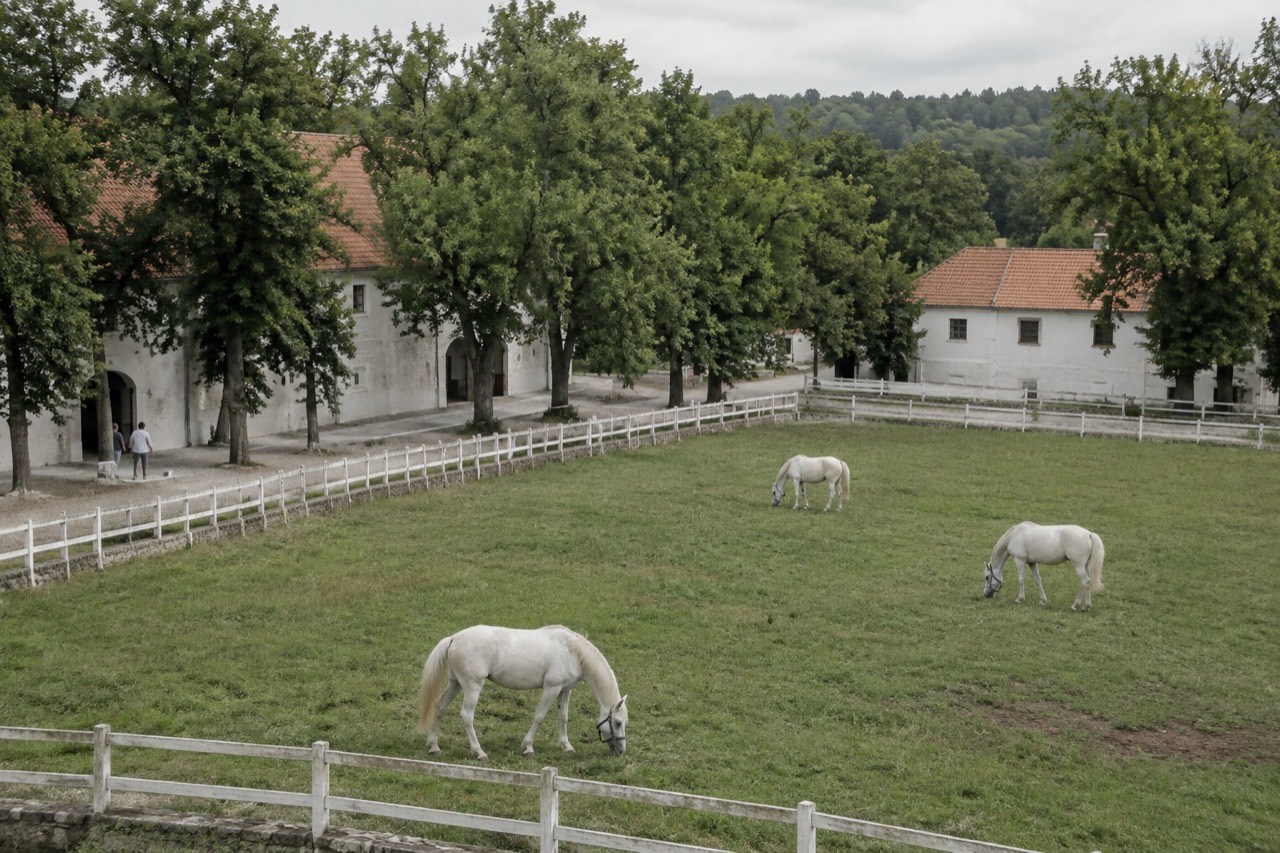
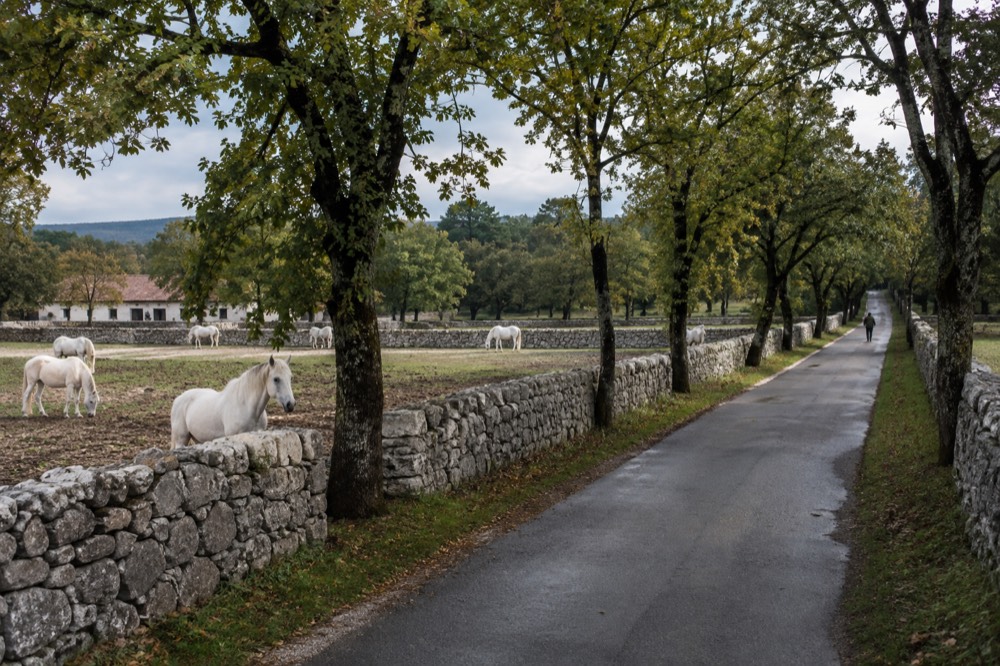
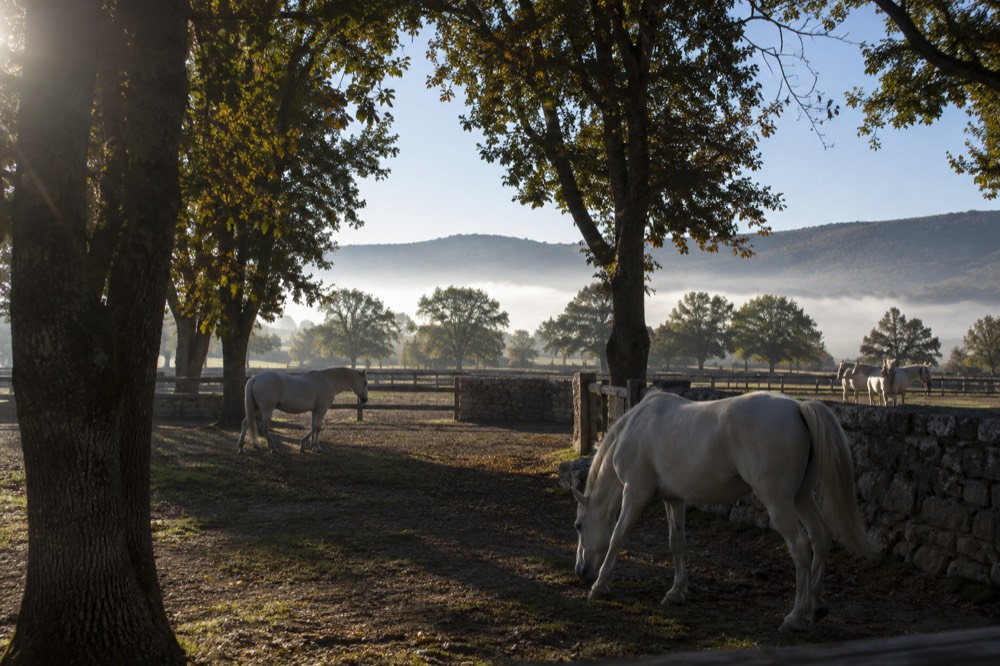
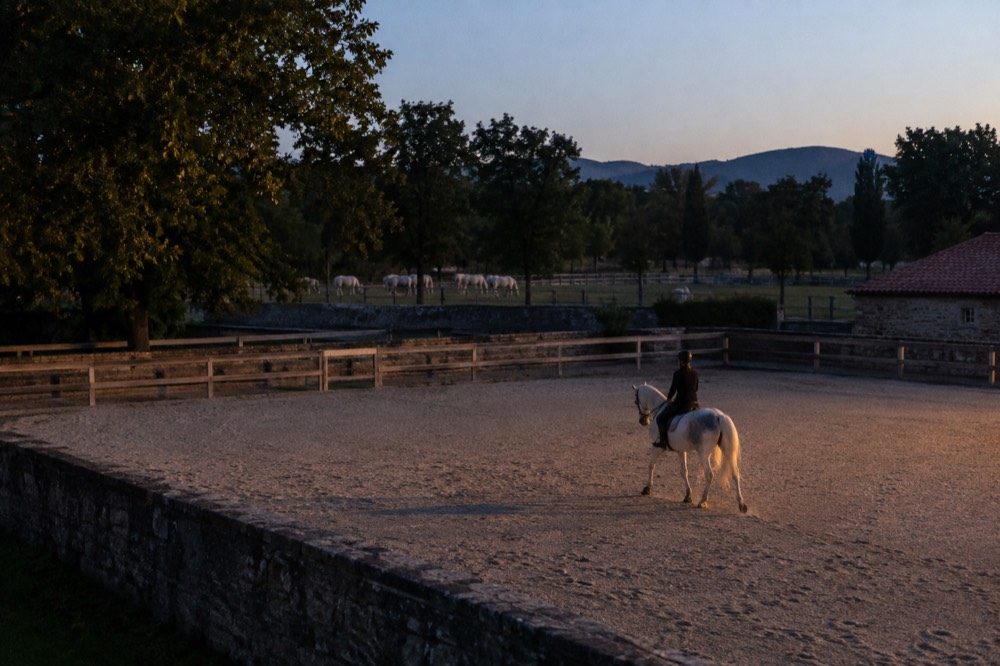
The Lipizzaner is one of the oldest horse breeds in Europe, and the stud farm at Lipica is where it began. The horses are grey to white in colour, compact and strong, bred for classical riding, and the farm remains a working breeding operation rather than a theme park. Visitors watch the horses in the paddocks and stables, and the setting is as much a part of the appeal as the animals: the Karst plateau is a landscape of dry stone, pine woods and wind-scattered meadows that looks nothing like the Ljubljana basin.
What surprises many first-time visitors is how quiet it is. Lipica is not on the main tourist conveyor between Ljubljana and Bled. The coaches that fill Lake Bled's car parks in July do not come here in anything like those numbers, so even in high summer the farm feels spacious. The trade-off is access: this is the kind of place where a booked tour genuinely saves hassle, because the farm's visiting programme, the driving and the onward leg to the coast are all handled in one move.
The other reason to come is the Karst itself. The plateau between Lipica and the coast is the landscape that gave the world the word karst, the technical term for this kind of limestone terrain, and it is dotted with caves, sinkholes and vineyards. If you are planning wider exploration of the region, our Postojna Cave guide and the Škocjan Caves guide cover the two great underground systems, both reachable from Ljubljana.
How Do You Get from Ljubljana to Lipica?
The realistic options are a guided day tour, a hire car, or a hire car combined with the coastal leg. There is no simple direct public transport link from Ljubljana to the stud farm, and the tour operators run the route in about an hour and a half each way. For most visitors the tour is the practical answer, because it bundles the farm visit, the drive and the Piran afternoon into one booked day.
The full-day tour from Ljubljana runs 9 hours 30 minutes in total, is rated 4.6 from 89 reviews, and costs from $126 per person. That price covers the transport and the guiding; the listing on the operator's page sets out exactly what is and is not included, and it is worth reading before you book. The day splits roughly into a morning at the stud farm and an afternoon in Piran, which is the natural shape for this route: the farm is inland on the plateau, the coast is a short drive further south, and doing both independently means two sets of parking and two sets of timing decisions.
Driving yourself is the alternative. The route from Ljubljana heads south-west on the motorway towards the coast and turns off towards the Karst, and the whole journey is inside Slovenia the entire way. Two practical notes apply. First, Slovenia is in the eurozone, having adopted the euro on 1 January 2007, so there is no currency to change and no border formalities on any road route from Italy, Austria, Hungary or Croatia. Second, if you are picking up a car in the capital, remember that the historic centre of Ljubljana is pedestrianised, so plan your pickup point and parking before you drive in; our car rental in Ljubljana guide covers the details.
A comparison of the three realistic ways to run the day:
| Option | Time from Ljubljana | Best for | Main trade-off |
|---|---|---|---|
| Guided full-day tour (Lipica + Piran) | 9h 30m door to door | Anyone without a car, or who wants the coast too | Fixed schedule, less time at the farm |
| Hire car, Lipica only | About 1h 30m each way | Horse enthusiasts who want a full day at the farm | You miss the coast unless you drive on |
| Hire car, Lipica + coast | Full day, self-planned | Independent travellers who like driving | Parking in Piran in summer is scarce |
The tour option also solves the biggest problem with the self-drive version: Piran's old town is compact and its parking is limited, and in July and August the coastal lots fill early. A tour bus drops you at the edge and picks you up at a known time.
What Does the Lipica and Piran Full-day Tour Actually Include?
The tour pairs a morning with the Lipizzaner horses at the stud farm with an afternoon in Piran, the walled Venetian town on Slovenia's short Adriatic coast, in a single 9h 30m day from Ljubljana. It is rated 4.6 from 89 reviews and priced from $126. The farm leg is about the horses and the Karst landscape; the Piran leg is about narrow streets, sea views and Tartini Square.
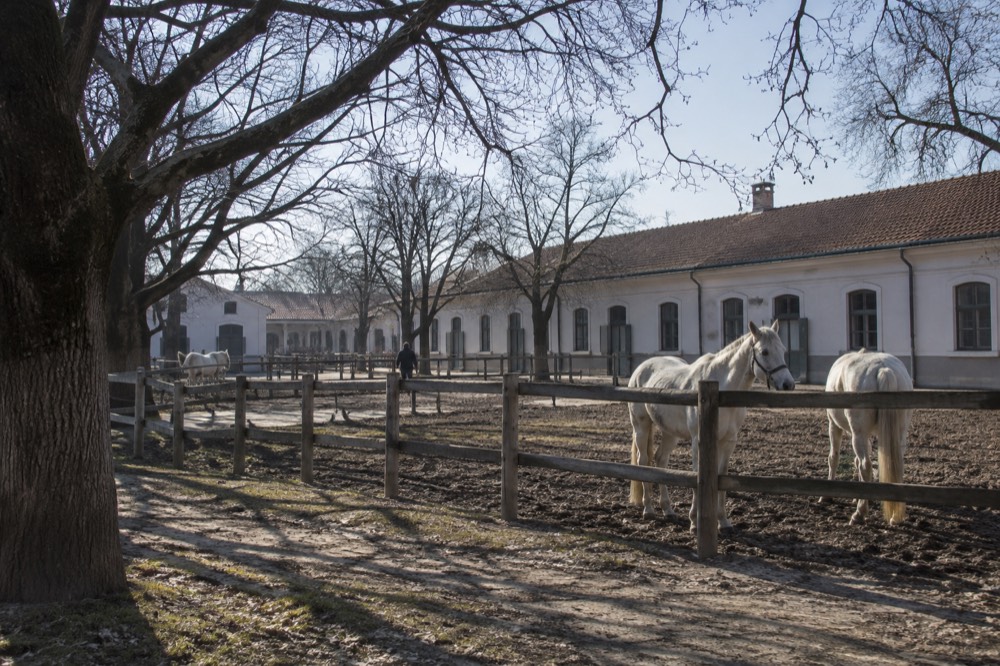
The morning at Lipica is the reason the tour exists. You walk the stable complex, see the paddocks where the young horses graze, and get the story of the breed from a guide. The farm's setting is deliberately rural: white stable buildings set back from the road, riding grounds, and the long grass paddocks the Karst is known for. Photography is easy here, and the light on the plateau in the morning is usually good.
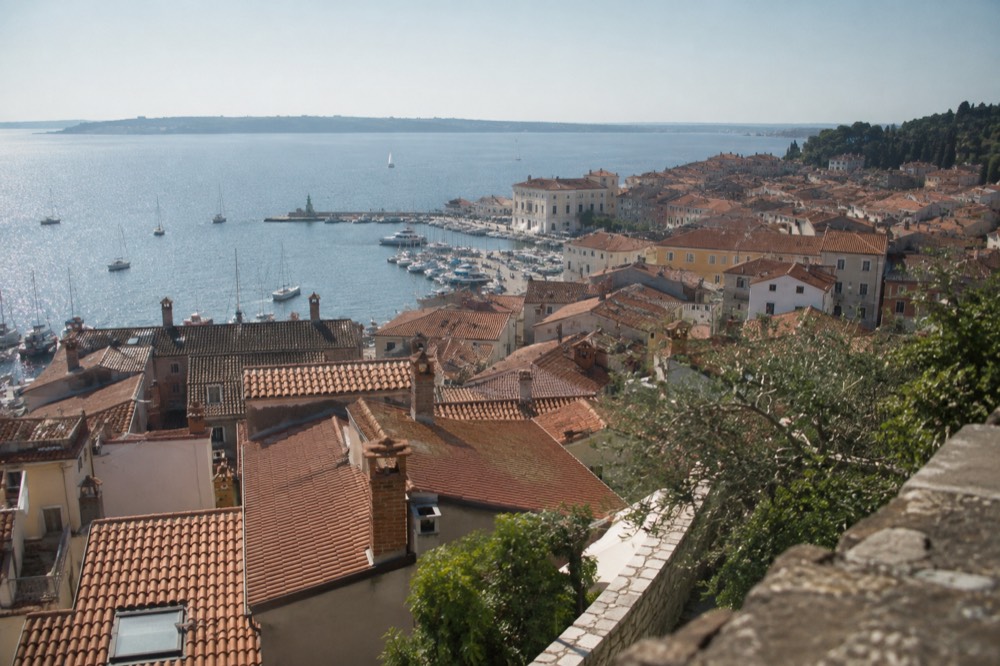
The afternoon in Piran is a complete change of scene. Piran is the best-preserved coastal town on the Slovenian Adriatic, a peninsula of terracotta roofs wrapped around Tartini Square, with the sea on three sides. Our full Piran guide covers the town in depth; for the purposes of this day trip, the tour gives you a guided orientation and then free time, and the walk from the drop-off point to the seafront is a few minutes. Sunset from the town walls is the classic closing image of the day, which is one reason the return timing on these tours tends towards late evening in summer.
What the day looks like at a glance:
| Leg | Setting | What you do | Character |
|---|---|---|---|
| Morning | Lipica stud farm, Karst plateau | Stables, paddocks, Lipizzaner horses, breed history | Rural, quiet, spacious |
| Midday | Drive south to the coast | Rest stop, Karst scenery from the road | Transitional |
| Afternoon | Piran old town | Guided orientation, free time, Tartini Square, seafront | Compact, busy, photogenic |
One honest note on pacing: 9h 30m is a long day, and the two halves are physically different. Wear shoes that work on stable yard gravel in the morning and cobbles in the afternoon. If a full day feels like too much, the alternative is a Piran-focused trip without the horses, and there is a good one: the Piran at sunset historic walk runs 6 hours, is rated 4.6 from 169 reviews and costs from $86.
Can You Combine Lipica with the Karst Caves?
Yes, and the pairing works better than most people expect, because Postojna Cave and Predjama Castle sit on the same Karst corridor between Ljubljana and the coast. The Postojna Cave and Predjama Castle tour runs 6 hours, is rated 4.8 from 2802 reviews and costs from $132, and it is the strongest single alternative if your priority is underground rather than equestrian. Doing caves and Lipica in one self-drive day is possible but tight.
The Karst plateau is what geologists call the type locality for karst terrain: limestone dissolved into caves, sinkholes and underground rivers over millions of years. Postojna Cave is the region's flagship, a 3.7 km visitor route travelled partly by an underground train, with a year-round cave temperature of 10 degrees Celsius and a tour duration of about 1 hour 30 minutes. Predjama Castle is built into the mouth of a cave shaft a short drive away. The separate admissions are 34.90 EUR for the adult Postojna ticket and 24.00 EUR for Predjama, and the operator's own ticket page is the place to check any combined offer, because this guide does not publish a combined figure.
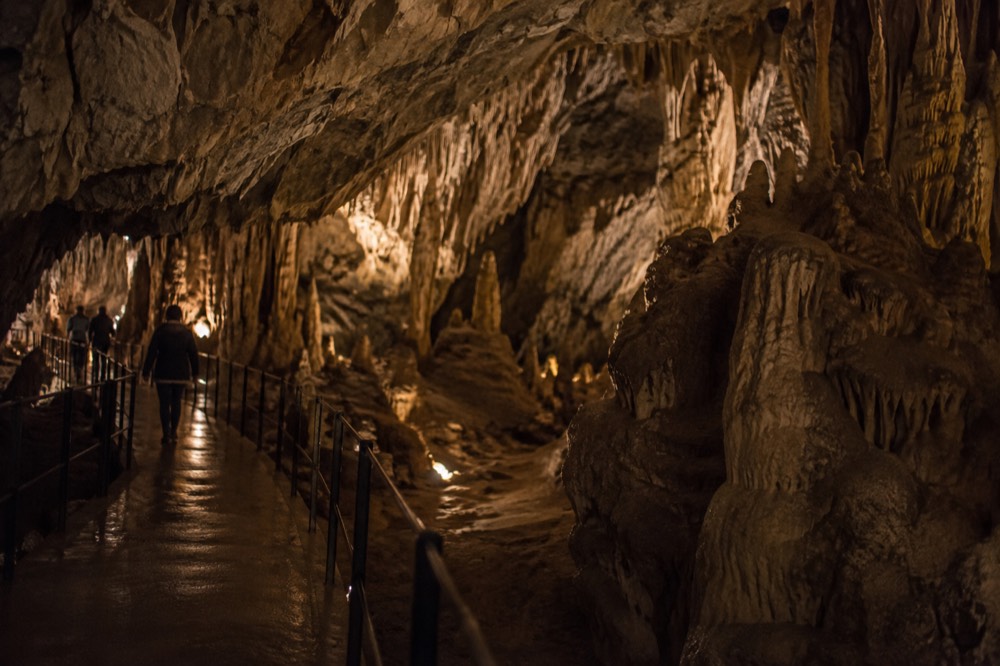
The 10 degrees Celsius point matters more than it sounds. Caves hold roughly the same temperature year round, which makes them the reliable answer to both a rainy day and a heatwave; visitors arrive in August in shorts and are cold for ninety minutes, so bring a layer. If you are weighing a cave day against a Lipica day, the cave tour is the higher-rated and much more reviewed product, but the two are not really competing: one is geology, the other is living animals and open air.
If you want the coast and a cave in one booked day, the UNESCO Škocjan Caves and Piran day trip runs 9h 30m, is rated 4.7 from 382 reviews and costs from $126. Škocjan is the quieter, wilder cave system, a UNESCO World Heritage site inscribed on 28 November 1986, with a tour of about 2h 30m to 3h and roughly 400 stairs, where Postojna is a train ride. That tour is the closest structural cousin to the Lipica and Piran day: one inland Karst highlight, one coastal afternoon.
A quick comparison of the three main Karst-and-coast day shapes:
| Day shape | Tour length | Rating | From | Best for |
|---|---|---|---|---|
| Lipica + Piran | 9h 30m | 4.6, 89 reviews | $126 | Horses and the coast |
| Postojna + Predjama | 6 hours | 4.8, 2802 reviews | $132 | The classic cave day |
| Škocjan Caves + Piran | 9h 30m | 4.7, 382 reviews | $126 | UNESCO caves and the coast |
For a full rundown of every option from the capital, the day trips from Ljubljana guide ranks the whole set, and the Predjama Castle guide covers the cliff castle in detail.
What Is the Weather Like on the Karst and the Coast?
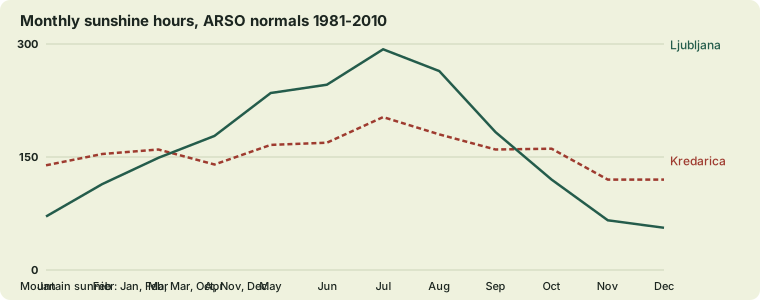
The Karst plateau and the coast run noticeably sunnier and drier than Ljubljana in the colder half of the year, because the capital sits in a basin where winter fog and low cloud get trapped. ARSO's normals put Ljubljana at just 56 hours of sunshine in December against 120 hours at Kredarica in the Julian Alps, and September and October are the city's foggiest and wettest months at 147 mm of rain each. A Lipica day is a genuine escape from that.
This is the planning insight most guides miss. Ljubljana averages 37 clear days a year against 130 overcast, per ARSO's 1981 to 2010 normals, and the fog statistics are worse than most people assume: ARSO's 1971 to 2000 series, the only period for which fog is published, gives the city 91.2 days with fog per year, with September and October at 12.4 fog days each, level with December and above January. The basin inversion that causes it means the city can sit under grey while the hills a few hundred metres up are in sunshine.
The Karst and the coast sit outside that basin. A day that starts grey in Ljubljana can be bright and dry by the time the tour bus climbs out of the basin, and Piran in particular benefits from the Adriatic's milder winter regime. The practical consequence for this trip: do not cancel a Lipica day because the capital looks grim in the morning. The ARSO normals behind these figures are published in the Ljubljana 1981-2010 climate table and the 1971-2000 series.
Summer brings the opposite problem. July and August are the busiest months on the coast, Piran's parking fills early, and midday on the Karst plateau is hot and exposed. The tours handle this by scheduling, but if you are self-driving, start early, do the farm in the morning and the town in the late afternoon.
How Much Does a Lipica Day Trip Cost?
The booked tour costs from $126 per person for the full Lipica and Piran day, and the main add-ons are food in Piran and anything you buy at the farm. Independent travellers pay for fuel, motorway tolls or a vignette, and parking, plus any farm programme they book on arrival. Admission prices for the farm's own tours are set by the stud farm and should be checked on its official channels, because this guide does not publish figures it has not verified.
What can be stated with confidence is the cost of everything around the trip. Slovenia uses the euro, adopted on 1 January 2007, so there is no exchange rate to think about. Tourist tax in Ljubljana is 3.13 EUR per person per night, which applies to your accommodation in the capital, not to the day trip itself. If you are building a wider Karst itinerary, the verified entry figures for the region's big sights are set out below.
| Item | Figure | Notes |
|---|---|---|
| Lipica and Piran full-day tour | from $126 | 9h 30m, rated 4.6 from 89 reviews |
| Piran sunset historic walk tour | from $86 | 6 hours, rated 4.6 from 169 reviews |
| Postojna Cave, adult | 34.90 EUR | Year-round cave temperature 10 C |
| Predjama Castle, adult | 24.00 EUR | Open year-round |
| Škocjan Caves, adult | 16.00-24.00 EUR by season | Peak July-August price shown at top of range |
| Ljubljana tourist tax | 3.13 EUR per night | 2.50 EUR tax plus 0.63 EUR promotion surcharge |
Food is the variable most people underestimate. Piran is a tourist town and prices on the seafront reflect that; the back streets a few minutes inland are cheaper and better. If you want a full budget framework for the capital end of the trip, our Ljubljana prices and Ljubljana on a budget guides break down meal, transport and sightseeing costs in detail.
When Is the Best Time of Year to Visit Lipica?
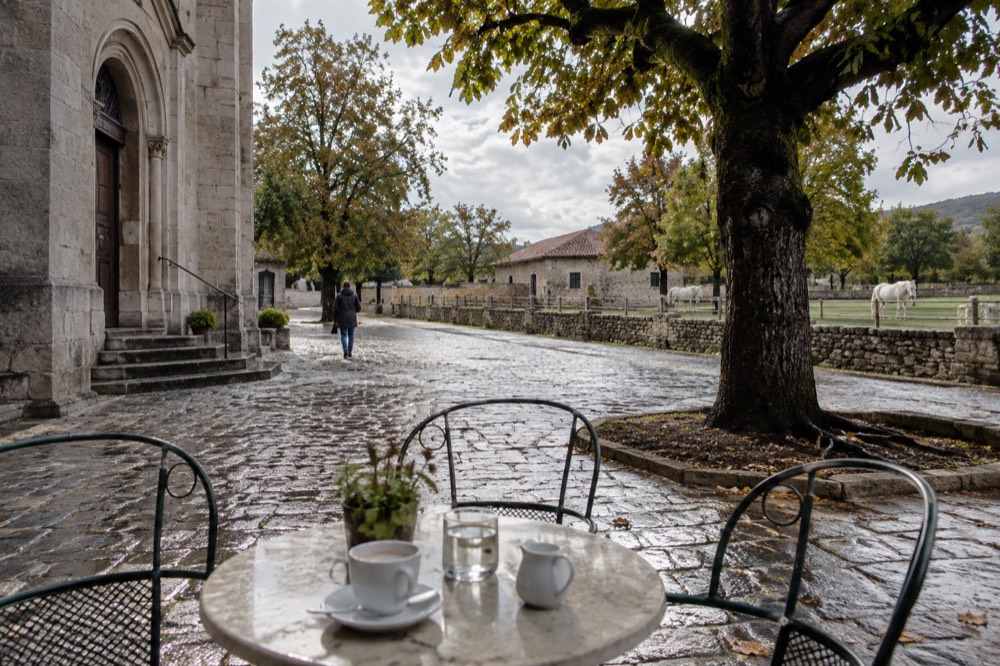
Late spring and early autumn are the sweet spots: May, June and September combine workable weather on the Karst with thinner crowds in Piran than July and August deliver. Winter is quieter at the farm and the coastal towns are near-empty, but the days are short and the seafront loses its summer life. The horses are there year-round, which is the one constant in the calendar.
The stud farm does not close for a season in the way a beach resort does; the Lipizzaners are resident animals, and the farm operates as a breeding and training centre through the year. What changes is the surrounding experience. In summer, Piran is at full tilt, the sea is warm, and every tour date sells; in the shoulder months the same day feels slower and the photography is better in the lower light. Our best time to visit Ljubljana guide covers the capital's seasons in depth, and the same logic extends down to the coast with one addition: the Adriatic season at Piran runs longer than most visitors expect, and the seafront stays pleasant into October.
If your dates are fixed to the December holidays, a Lipica day is still viable, but read the weather section above first. The capital sits under its winter inversion, and part of the appeal of this trip in December is precisely that it climbs out of the grey. Pair it with the Ljubljana Christmas market for the evening back in the city, and the day closes well.
What Should You Know Before You Go?
Bring euro cash or a contactless card, wear shoes for gravel and cobbles, carry a layer for caves if you add one, and plan the day around the tour's fixed timings rather than improvising. Slovenia is in the EU, the eurozone and the Schengen area, so there are no border checks or currency steps on any route from neighbouring countries, and the practical friction on this trip is almost entirely about timing and parking.
A few specifics worth knowing. City buses in Ljubljana do not accept cash on board, though contactless bank cards and mobile wallets do work, so if you are using public transport to reach your tour's departure point, tap in with a card or top up an Urbana card first; the getting around Ljubljana guide has the full mechanics. The tourist board's own travel information pages set out the tourist tax rules if you need the detail.
For the day itself, the packing list is short and practical. Sun protection matters more on the Karst than people expect, because the plateau is exposed and the summer light is strong. Water is drinkable everywhere in Slovenia straight from the tap, so a refillable bottle saves money and weight. And if you are combining the farm with any cave visit, the 10 to 12 degrees Celsius underground is the one number to remember when dressing in August.
Finally, if this trip has convinced you that the Slovenian coast deserves more than an afternoon, the honest answer is that it does. Koper, Izola and Piran each reward a full day, and our Koper cruise day guide covers the biggest of the three for anyone arriving or lingering on the coast.
Common Questions About Lipica
How far is Lipica from Ljubljana?
The stud farm is about an hour and a half's drive south-west of the capital, on the Karst plateau close to the Italian border. The full-day tour that includes Piran runs 9h 30m door to door, of which roughly three hours is driving.
Can you visit Lipica without a tour?
Yes, with a [hire car](https://discovercars.tpk.ro/laYIo9hK). There is no simple direct public transport link from Ljubljana to the village, so independent visitors drive. The trade-off is that you handle the farm's visiting programme and any onward leg to the coast yourself, and Piran's parking is scarce in summer.
Is Lipica worth it compared with Postojna Cave?
They are different experiences rather than rivals. Postojna Cave, rated 4.8 from 2802 reviews, is the region's flagship underground visit with a 3.7 km route partly [by train](https://omio.tpk.ro/exV6rGgH); Lipica is open air, animals and landscape. If you only have one Karst day and no strong preference for horses, the cave tour is the more reviewed product.
What should you wear for a Lipica and Piran day?
Shoes that work on stable yard gravel in the morning and coastal cobbles in the afternoon, sun protection for the exposed plateau, and a light layer if you are adding a cave, which holds about 10 to 12 degrees Celsius year-round. In summer, dress for heat; in winter, for wind on the plateau.
Do you need a passport to travel from Ljubljana to Lipica?
Slovenia is in the Schengen area, having abolished internal land and sea border checks on 21 December 2007 and air checks on 30 March 2008, so there are no routine border checks anywhere on the route. Carry ID as normal, but the whole trip stays inside Slovenia.
How long do you need at the stud farm itself?
Half a day is the standard allowance, which is exactly how the tours schedule it. That covers the stables, the paddocks and the breed story with time to walk the grounds. Visitors who want to see a specific training session or programme should check the farm's own schedule before travelling.