Car Rental and Parking in Ljubljana: The Practical Guide
Ljubljana's historic centre is closed to traffic, so the real question is not whether to hire a car but where to leave it. This guide covers rental desks at the airport and in the city, parking tariffs, the park-and-ride system, and the day trips that justify having wheels at all.
Short answer
Hire a car in Ljubljana only for the day trips: the centre is a pedestrian zone of roughly 20 hectares, so a rental car is useless inside it. Airport desks sit about 26 km from the city. City parking runs on a zonal tariff system, and the cheapest honest answer for most visitors is a park-and-ride edge car park paired with buses at 1.50 EUR a ride.
Ljubljana is one of the few European capitals where hiring a car can genuinely be the wrong decision for half your trip and the best decision you make all week for the other half. The historic centre is a pedestrian zone of roughly 20 hectares, progressively closed to general motor traffic since 2007, so no [rental car](https://discovercars.tpk.ro/laYIo9hK) will carry you to Prešeren Square or the Triple Bridge. What a car does do, superbly, is unlock Postojna, Škocjan, the Soča Valley, the Karst villages and the coast, all of which sit within a two-hour drive and several of which are awkward by public transport.
This guide walks through the whole decision: where rental desks are, what the parking situation in the city actually looks like, what the tariffs and rules are, how the park-and-ride system works, and which day trips justify the expense. It also says plainly where a bus or a guided tour beats driving, because in a compact basin city the wrong choice is usually the expensive one, not the slow one.
One thing this guide will never do is quote a rental rate. Car-hire prices change daily and sit behind booking engines, so any figure printed here would be fiction by the time you read it. The mechanics, the rules and the geography below are stable. The price is whatever the desk or the booking site says on the day.
Do You Actually Need a Car in Ljubljana?
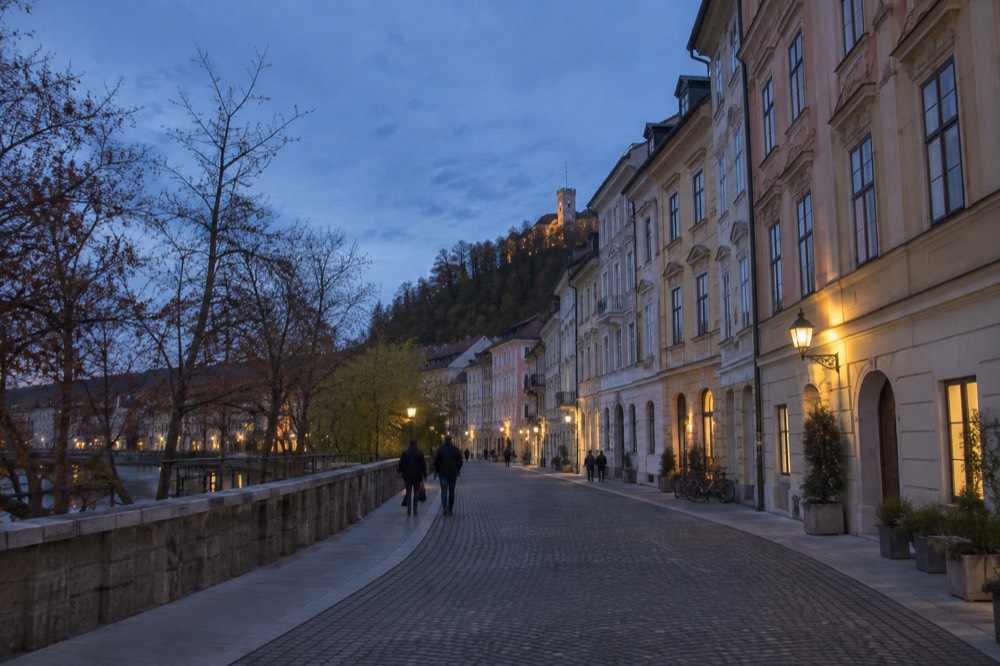
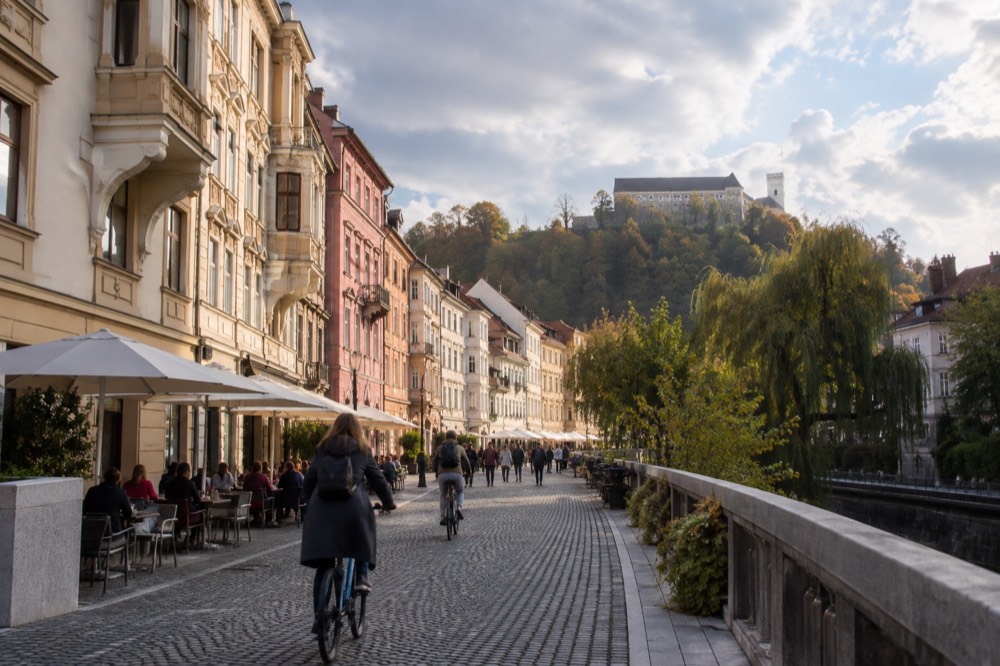
For the city itself, no, and the reason is structural: the historic centre has been closed to general traffic under a pedestrian-zone policy expanded since 2007, covering roughly 20 hectares. A car inside the centre is not an option, and the rest of the city is served by buses that cost 1.50 EUR a ride with 90 minutes of transfers included. A rental car earns its keep only on the day trips.
The city's own mobility page documents the pedestrian zone, and it is the single most useful practical fact for anyone arriving by car: the centre's walking-and-cycling rules as published by the city. What that means on the ground is that your hotel may well be inside a zone you cannot drive into, or reachable only by a short permitted access stretch with a delivery window. Ask your hotel directly which entrance to use and when, before you set off.
Inside the centre you walk. The distance from one end of the Old Town to the other is under two kilometres, and the bridges, the riverbank and the market squares are all flat. Most visitors staying central never touch a vehicle between arrival and departure except the funicular up to the castle, which is a 6.00 EUR return ticket for an adult.
Where the calculation changes is the moment you look at a map of Slovenia. The country is small and the sights are scattered: Postojna Cave is under an hour's drive southwest, Lake Bled about 50 minutes northwest, the Soča Valley under two hours, and the coast around 90 minutes. If your itinerary is three days in the city plus four days of caves, gorges, mountains and Piran, a car is the efficient answer. If it is five days in Ljubljana with two organised day trips, it is dead weight costing you a parking fee every night.
The honest summary, which most rental-aggregator pages will not give you: hire for the loop, not for the base. Pick the car up on the morning you leave the city and drop it when you return, and you pay for neither a city parking spot nor the days the car sat unused.
Where Do You Pick Up a Rental Car in Ljubljana?
The two practical pickup points are Ljubljana Airport, about 26 km north of the city, and the cluster of city-centre desks around the bus and railway station, which sits on the northern edge of the pedestrian zone. The airport suits arrival-day pickups; the station cluster suits mid-trip pickups for day-trip loops, because you can walk there from most central hotels in fifteen minutes.
The airport option is straightforward in geography and awkward in everything else. The airport's own site blocks automated reading, so specific desk hours, transfer times and bus fares are not published in a form that can be verified here: the bus between the airport and the city exists, and times should be checked on the airport's own pages before you travel. The 26 km distance is the reliable figure. If your flight lands late, an airport desk may have closed while a city desk is still open, and a taxi or transfer into town followed by a morning pickup is often the calmer sequence.
The station cluster is the underrated choice. Slovenska cesta runs north from the centre toward the station, and several international rental brands keep desks in or near the station complex and along the main road. From there you are two minutes from the ring road in one direction and two minutes from a parking garage in the other. For a day-trip loop, pickup at 08:30 and return by 20:00 is a normal single-day rental, and a single day of hire plus fuel is frequently cheaper than two seats on a [long-distance coach](https://busbud.tpk.ro/4kLAIElq) tour.
A third option, worth naming because it trips people up: many hotels arrange or host rental desks, and some guesthouses in the Trnovo and Krakovo districts have free street parking where a car can legally sit overnight. If your accommodation has a spot, the economics of a multi-day rental improve sharply. If it does not, the nightly parking tariff in the centre becomes part of your holiday budget, and it is not a small part.
There is also the one-way question. Renting in Ljubljana and dropping the car in Zagreb, Trieste or Venice is possible with the international brands and costs a one-way fee, but the borders are not the friction people expect: Slovenia is in the Schengen area, with internal land and sea border checks abolished since 21 December 2007 and air checks since 30 March 2008, so driving to Croatia or Italy involves no routine border stop at all. Croatia joined Schengen and the euro on 1 January 2023, so the Ljubljana-to-Istria and Ljubljana-to-Zagreb routes are internal journeys with no currency change either.
How Does Parking in Ljubljana Actually Work?
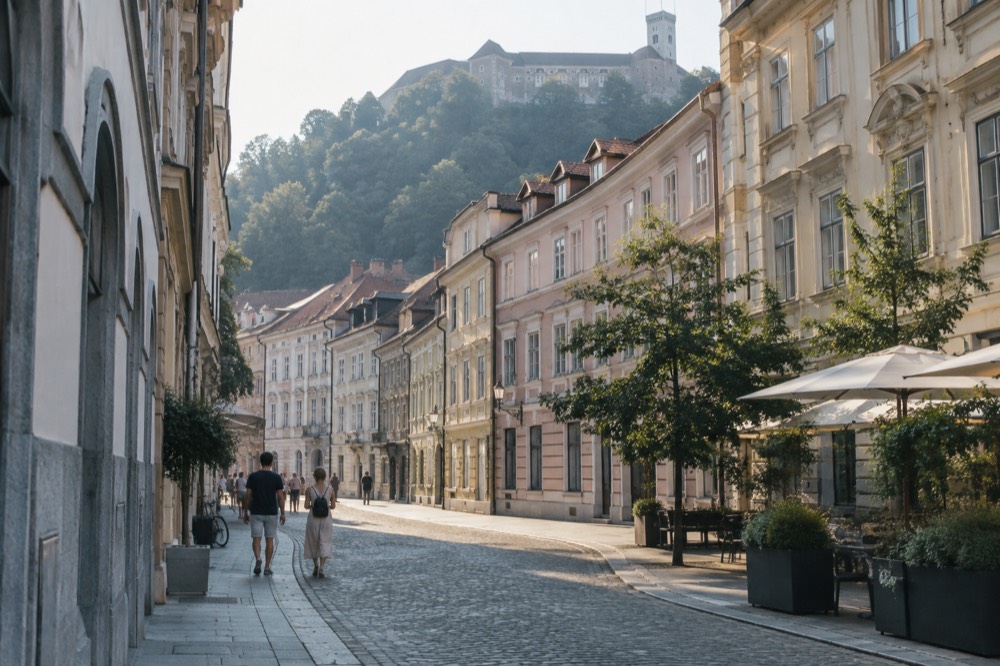
Ljubljana parking is zoned and metered, with the price rising the closer you get to the centre: the red zone is the most expensive and shortest-stay, and the green zone at the edge is cheaper with longer permitted hours. Underground garages sit under the centre's edge, and the cheapest legal option of all is a park-and-ride car park on the city's rim, paired with a bus in. Cash is not accepted on the buses, so plan on a contactless card or an Urbana card.
The zone system is the thing to internalise. The city centre is ringed by tariff zones colour-coded on street signage, and the rule of thumb is that the closer to the Ljubljanica you are, the more you pay per hour and the shorter the maximum stay. The outer green zones permit all-day parking at a fraction of the central rate. Payment is by meter or phone app, and enforcement is real: the wardens are active, and an expired ticket is a fine, not a souvenir.
The underground garages are the middle option. Several sit just outside the pedestrian zone, under Kongresni trg and near the market, and they trade a higher hourly rate for shelter, security and a short walk to everything. For a single day in the city, a garage is often the least stressful choice, because you park once and stop thinking about meters.
The bus detail matters more than visitors expect. City buses run on the Urbana system: a card costs 2.00 EUR to buy, a single ride in zone 1 is 1.50 EUR and includes 90 minutes of transfers, and, the detail guidebooks are years behind on, cash is not accepted on board at all. Contactless bank cards and mobile wallets are, per the operator's own payment-methods page. So a park-and-ride arrival needs either a contactless card or a stop at a Passenger Centre, Urbanomat machine, kiosk or tourist information centre first.
| Parking option | Where it sits | Best for | The catch |
|---|---|---|---|
| Red zone, on-street | Inner ring, closest to the river | Short stays of an hour or two | Highest hourly rate, short maximum stay, active enforcement |
| Yellow zone, on-street | One ring out | Half-day visits | Still metered, still time-limited |
| Green zone, on-street | Edge of the wider centre | All-day parking on a day trip out | A walk or bus ride back to the centre |
| Underground garages | Under and beside the centre's edge | A full day in the city, rain, security | Priciest hourly option, spaces tighten in peak season |
| Park-and-ride | City rim, by ring-road junctions | Multi-day stays, budget arrivals | Needs a bus ticket, and buses take no cash on board |
If you are staying several nights and driving a loop in the middle, the cleanest pattern is: park the car in a green-zone or edge garage for the hotel nights, leave it there, walk and bus inside the city, and drive only on the loop days. The car sits cheap; you stay sane.
What Are the Driving Rules You Should Know Before You Set Off?
Slovenia drives on the right, uses the euro, enforces headlights-on at all times, and requires a vignette for motorways, which must be bought before you enter a tolled section. The blood-alcohol limit is low and strictly enforced. Winter equipment rules apply seasonally on regional roads. None of this is exotic, but the vignette is the one that catches visitors, because the fine for driving a tolled motorway without one is many times its price.
The vignette is a sticker or electronic registration tied to your number plate, sold at fuel stations, post offices and border crossings in durations from a week upward. The motorways radiating from Ljubljana, the A1 toward the coast, the A2 toward the Karawanks tunnel and Austria, and the A4 toward Hungary, are all vignette roads. If your day trip runs to Postojna, Bled or the Soča Valley, you will be on one, and the purchase takes two minutes at any large petrol station. Other pages covering the same trip are gathered on Ljubljana Travel Guide.
Headlights on at all times, including midsummer daylight, is a legal requirement and one that foreign drivers are stopped for. The alcohol limit is 0.05 percent, below many neighbouring countries' enforcement tolerance, and the police run checkpoints regularly, especially on summer weekend routes to the coast. The practical advice is not to have any drink with lunch if you are driving after it.
Winter matters if you are visiting between November and March. Regional and mountain roads require winter tyres or carried chains in the winter window, and rental fleets in Slovenia are typically swapped over seasonally, so a local rental will usually be correctly shod, but it is worth confirming at the desk. And a Ljubljana-specific note: the city sits in a basin at 299 m and fogs in heavily, with ARSO's 1971-2000 normals recording 91.2 fog days a year, peaking at 12.4 days in each of September and October, level with December. An early-morning drive out of the city in autumn can start in thick fog and climb into bright sunshine within a few hundred metres of altitude, which is disorienting if you do not expect it.
| Rule | What it means for you |
|---|---|
| Vignette for motorways | Buy before entering any tolled section; fine is several times the price |
| Headlights on always | Required day and night, all year |
| Alcohol limit 0.05 percent | Effectively zero; checkpoints are common on summer routes |
| Winter equipment | Seasonal requirement on regional roads; local rental fleets are usually already compliant |
| Right-hand traffic | Roundabouts and priority follow the standard continental pattern |
| Pedestrian zone | The centre is closed to general traffic; do not follow a navigation app into it |
Which Day Trips Justify the Car, and Which Do Not?
The trips that justify a car are the multi-stop loops: the Karst with its caves and Lipica, the Soča Valley, the Vršič Pass, the coast beyond Piran, and combinations like Postojna plus Predjama plus Škocjan in one day. Lake Bled and Postojna Cave individually do not justify one, because both are easy organised tours from the city, and the Bled run is a simple drive you can also do by train or coach.
Start with the strongest car case: the Karst loop. Postojna Cave, Predjama Castle and the Škocjan Caves are within a short drive of each other, but their tour departure times interlock awkwardly by public transport, and a car lets you sequence them around your own pace. The caves themselves hold roughly the same temperature year round, 10 C at Postojna and 12 C at Škocjan, which is why they are the reliable answer in any weather. Postojna's adult ticket is 34.90 EUR and Predjama's is 24.00 EUR; the combined ticket price is not published clearly enough to quote, so buy the two separately or check the operator's own ticket page. Our full Postojna Cave guide and Škocjan Caves guide cover the routes in detail.
The mountain trips are the other strong case. The Soča Valley, the Vršič Pass and the Logar Valley involve regional roads, high passes and stops at viewpoints that no bus route strings together. Driving them yourself, in autumn fog-free windows or in summer, is the difference between seeing the Julian Alps and being driven past them. The Soča Valley and Vršič Pass pages map the routes.
The weak cases are the single-destination runs. Lake Bled is 50 minutes up the motorway, and a guided tour such as the Lake Bled day tour from the city removes the parking question at the lake entirely, which is a real question in summer when the lakeside car parks fill by mid-morning. Postojna alone is likewise a clean coach run. If your trip is one cave day and one lake day, two tours beat a week of rental.
And the cases where a car is actively worse: Piran on a summer weekend, when the old town's parking is scarce and the walk in from the edge car parks is long; Zagreb and Trieste, both reachable by direct coach or train with no parking at the far end; and Venice, where the car is pure liability. The Ljubljana to Zagreb and Ljubljana to Trieste guides cover those routes.
| Day trip | Drive time, one way | Car or tour? | Why |
|---|---|---|---|
| Postojna Cave and Predjama | Under 1 hour | Either | Simple run; a guided tour bundles tickets and timing |
| Škocjan Caves plus the Karst | 1 to 1.5 hours | Car | Multi-stop loop, thin public transport links |
| Lake Bled | About 50 minutes | Either | Easy drive, but summer lakeside parking fills early |
| Soča Valley and Vršič Pass | Under 2 hours | Car | Regional roads and viewpoints no bus strings together |
| Piran and the coast | About 90 minutes | Car off-peak | Weekend parking in Piran is the bottleneck |
| Zagreb, Trieste, Venice | 1.5 to 3 hours | Coach or train | No border checks, no parking at the far end |
What Does It Cost to Keep a Car in the City for Several Days?
Count three costs, not one: the rental itself, which this guide will not quote because hire rates change daily; the vignette for any motorway use; and the nightly parking, which in the central zones adds up over a week to a sum comparable to a full day-trip tour for two. Fuel is cheap to predict, because the whole country fits in a two-hour radius.
The parking line is the one that surprises people. A central garage at a typical urban rate, multiplied by five nights, is real money, and it buys you nothing inside a centre you cannot drive into. The alternatives, an edge garage, a green-zone street spot or a hotel with its own parking, change the arithmetic completely, and choosing accommodation with a parking spot is the single biggest saving available to a driving visitor.
The tourist tax is small and unavoidable wherever you sleep: 3.13 EUR per person per night in the city, comprising 2.50 EUR of tax plus a 0.63 EUR promotion surcharge, with a half rate of 1.57 EUR for ages 7 to 18 and children under 7 exempt, per the tourist board's own page. It is charged per person, not per room, so a family of four counts four times.
Fuel and vignette costs are predictable because the country is small. A full loop of the classic sights, Bled, the Vršič Pass, the Soča and back, is a long day's driving but not a long distance by continental standards, and fuel prices at Slovenian stations are regulated and posted. The vignette is a fixed, published cost at the point of sale.
The comparison worth doing before you book anything: price a five-day rental with vignette, fuel and five nights of central parking against two or three guided day trips plus a 72-hour Ljubljana Card at 54.00 EUR, which covers the castle funicular, the river cruise, city buses, a guided walk and more than thirty museums. For a city-plus-loop itinerary, the card-plus-tours combination frequently wins, and it never once asks you to find a parking space.
What Should You Know About Arriving by Car from Abroad?
Driving into Slovenia from Italy, Austria, Hungary or Croatia involves no routine border checks at all, because Slovenia has been in the Schengen area since 21 December 2007 for land and sea borders and 30 March 2008 for air, and no currency exchange, because it has used the euro since 1 January 2007. The practical friction is not the border; it is the vignette and the pedestrian zone at the far end.
The Schengen detail is worth stating plainly because it is so often got wrong: there is no border stop, no passport show and no money changing on the drive from Trieste, Villach, Graz or Zagreb. Croatia's accession to both Schengen and the euro on 1 January 2023 closed the last gap on the southern routes. What you will meet instead is the first motorway toll point, so buy the vignette at the fuel station nearest the border, not after you have passed the toll section.
Navigation apps are the second trap. Set your destination to your hotel's car park or garage, not to the hotel's street address, because the app will otherwise route you toward the centre and into streets that are legally closed to you. The pedestrian zone is signposted, but the signage is in Slovene traffic-code form, and the fines for driving into the zone are not a tourist anecdote. Call the hotel, ask which garage they work with, and put that in the app.
Winter arrivals from Austria over the Karawanks tunnel or from Italy over the Vršič-side routes should check conditions the same day: the Vršič Pass is seasonal and closes in winter, and mountain weather changes faster than any forecast for the basin. Ljubljana itself at 299 m averages just 0.3 C in January with record lows far below that, so snowfall in the city is normal, and the city clears its streets efficiently, but your rental's winter equipment is the thing to confirm at the desk.
For the airport arrival specifically, the same rule as the borders applies: the 26 km from Ljubljana Airport to the city is a plain motorway run, and the airport bus exists with times that should be checked on the airport's own site, since its pages block automated reading and no verified fare or timetable can be quoted here. A taxi or pre-booked transfer is the fallback, and the airport-to-centre guide covers the options in full.
When Is a Guided Tour Simply Better Than Driving?
A guided tour is better whenever the drive is long, the parking is scarce or the timing is tight: the 10 to 11-hour triple-combination days, the cave tours whose departure slots interlock, and any trip where you would rather read the landscape than watch the road. It is also better value than it looks, because the ticket prices at Postojna and Predjama are the same whether you drive there yourself or arrive with a group.
The economics deserve a closer look than the rental-desk framing suggests. Take the strongest example: the six-hour Postojna Cave and Predjama Castle tour from Ljubljana, which carries a 4.8 rating from 2,802 reviews and bundles transport, both entries and the guide into one price from $132. Driving it yourself means a vignette, fuel, two separate admission tickets at 34.90 and 24.00 EUR, and parking at both sites, and you arrive to find the cave's departure grid is a month-by-month timetable you have not read. The tour has already read it.
The same logic applies to the long combination days. Trips that stack Lake Bled, Postojna and Predjama into a single 10 or 11-hour run exist precisely because doing all three alone in one day is a logistics exercise, not a holiday. If you want the Karst and the lake and you have one free day, the combination tour is the product that matches your constraint, and no amount of confident driving makes the timings comfortable.
The counter-case, to be fair to the car: freedom on the mountain routes. No tour stops where you want to stop on the Vršič hairpins, waits while you walk an extra viewpoint above the Soča, or detours to a village church you spotted from the road. If your day trip is a landscape you want to inhabit rather than a list you want to complete, the car wins, and the parking question on those routes is trivial compared with the city.
A middle path many visitors land on: two or three nights in Ljubljana with no car, walking the Old Town with the free GuruWalk tours and a museum day, then a rental pickup for a two or three-night loop through the Karst, the coast and the Julian Alps, ending with a drop-off at the airport. The car is only ever where the car is useful, and it never pays a central parking tariff once.
What About Alternatives: Buses, Trains, Bikes and the City Card?
For getting around inside Ljubljana, the alternatives beat the car outright: buses at 1.50 EUR a ride with 90 minutes of transfers, an Urbana card at 2.00 EUR, contactless bank cards accepted on board, and a bike-share system included in the Ljubljana Card. For day trips, direct coaches and trains cover Bled, Postojna and Zagreb, and the gaps in the rail network are exactly where the car and the guided tour divide the work.
The bus system's headline fact is the no-cash rule. Board with an Urbana card, topped up at a Passenger Centre, an Urbanomat machine, a kiosk or a tourist information centre, or simply tap a contactless Visa or Mastercard or a phone wallet. A single zone 1 ride is 1.50 EUR and includes transfers for 90 minutes, which in practice means one tap covers a cross-city journey with a change.
The Ljubljana Card wraps the whole city offer together: 41.00 EUR for 24 hours, 49.00 EUR for 48 and 54.00 EUR for 72, covering the castle funicular, the river cruise, city buses, a guided walking tour, four hours of bike-share and more than thirty museums and galleries. The arithmetic is on the Ljubljana Card guide, and the short version is that a castle-with-funicular ticket at 19.00 EUR plus a river cruise at about 15 EUR already gets you within reach of the 24-hour card before a single museum.
For day trips, the train network reaches Bled, though with the two-station trap worth knowing: Lesce-Bled station is 4 km from the lake, while Bled Jezero station is 1.5 km away on a different line, and most rail advice sends people to the wrong one. Coaches run the Bled route frequently, and both the fare and journey time for that route are unpublished in any verifiable static source, so check the operator's booking pages rather than trusting a number quoted in a forum. The trains from Ljubljana and getting around guides carry the detail.
The bike is the genuinely local answer. The centre's flatness and the pedestrian zone make cycling the fastest way across it, bike-share stations are dense, and the Ljubljana bike tour page covers both the share system and the guided options. On a car-free day in the city you can go from the castle to Tivoli Park to the Trnovo embankments without once thinking about a parking tariff, which is, in the end, the argument this whole guide has been building toward.
| Way to move | Cost | Where it wins | Where it loses |
|---|---|---|---|
| Walking | Free | The entire pedestrian centre, end to end | Hills beyond the centre, wet days |
| City bus, Urbana or contactless | 1.50 EUR per ride, 90 min transfers | Cross-city journeys, park-and-ride links | Takes no cash on board |
| Ljubljana Card | From 41.00 EUR for 24 h | Dense sightseeing days, bundled entries | Poor value on quiet days |
| Bike share | Included in the City Card | Flat, fast centre crossings | Winter weather, fog mornings |
| Rental car | Daily rate plus vignette plus parking | Karst, mountain and coastal loops | Anywhere inside the centre |
| Guided day tour | Fixed tour price | Timed attractions, long combinations, no parking | Spontaneous stops and detours |
Common Questions About Car Rental and Parking in Ljubljana
Do I need a car in Ljubljana itself?
No. The historic centre is a pedestrian zone of roughly 20 hectares, closed to general traffic, and the rest of the city is covered by buses at 1.50 EUR a ride. A car is useful only for day trips out.
Can I drive into the historic centre?
Not in general. Access is restricted to permitted vehicles, and navigation apps will happily route you into streets that are legally closed. Set your destination to a garage or car park outside the zone and walk in.
Where is the cheapest place to park in Ljubljana?
The park-and-ride car parks on the city's rim are the cheapest legal option, paired with a bus ride in. On-street green zones at the edge of the wider centre are next, and central garages are the most expensive.
Do I need a vignette for Slovenian motorways?
Yes, if you use any tolled motorway section, including the routes to Bled, Postojna and the coast. Buy it at a fuel station or post office before entering the motorway; the fine for driving without one is several times its price.
Can I pay cash on Ljubljana buses?
No. Buses take an Urbana card, which costs 2.00 EUR to buy and 1.50 EUR per zone 1 ride with 90 minutes of transfers, or a contactless bank card or mobile wallet. Cash is not accepted on board.
Is it easy to drive from Ljubljana to Croatia or Italy?
Yes. Slovenia has been in the Schengen area since 21 December 2007 for land and sea borders, and Croatia joined Schengen and the euro on 1 January 2023, so there are no routine border checks and no currency change on these routes.