Logar Valley from Ljubljana: A Complete Day Trip Guide
The Logar Valley is the Slovenian Alps at their most gentle: a glacial valley of meadows, wooden farm buildings and waterfall trails, close enough to Ljubljana to be the best full-day escape the city has when the coast is too far and the caves feel done.
Short answer
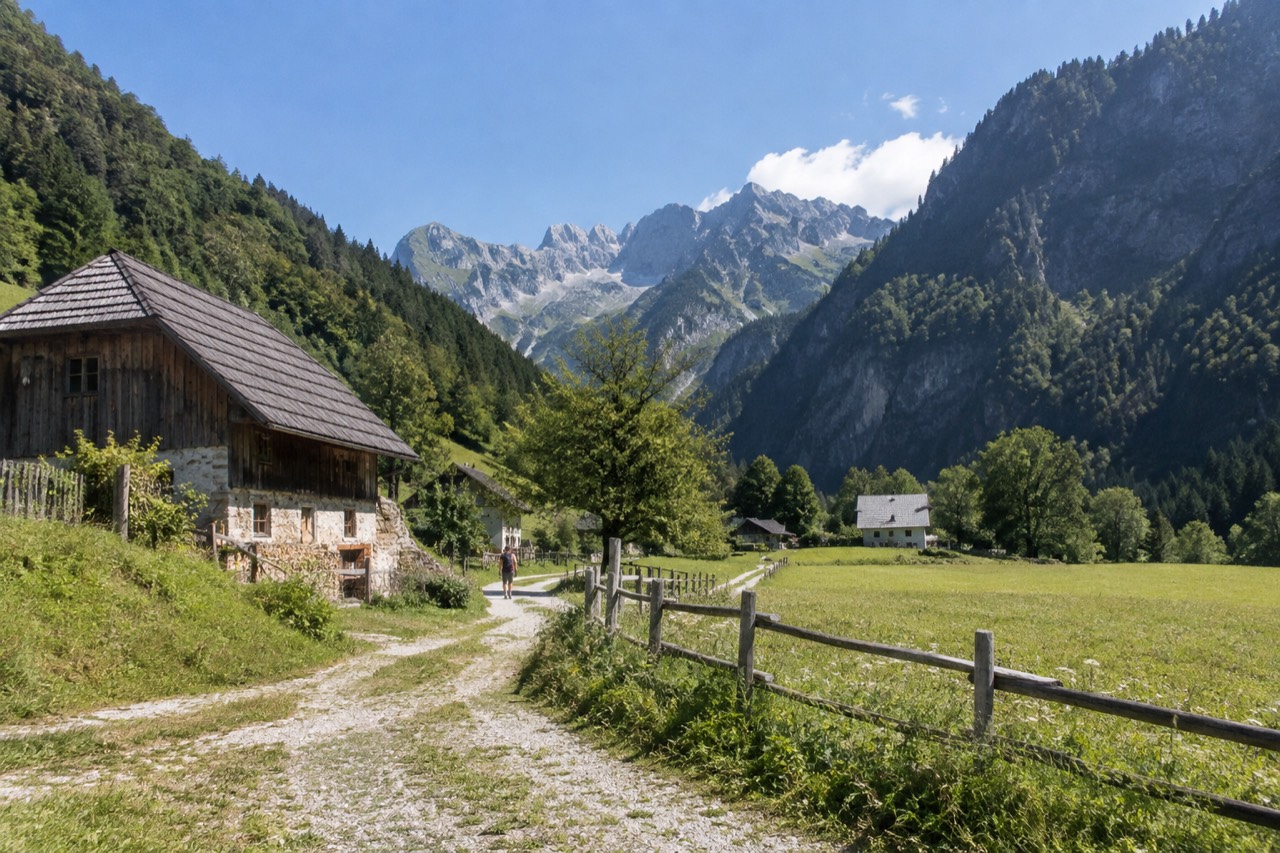
The Logar Valley is a glacial alpine valley in the Kamnik-Savinja Alps, reached from Ljubljana by hire car or an organised alpine day trip. Allow a full day. The valley floor is a landscape park with walking trails, a tall waterfall at its head and farmhouse food, and it is at its best from late spring to early autumn.
Is the Logar Valley Worth a Day Trip from Ljubljana?
Yes, and for a specific reason: it is the most complete alpine day you can have without committing to a long mountain drive or a serious hike. The Logar Valley packs a flat, walkable valley floor, a dramatic rock amphitheatre at its head, waterfall trails and farmhouse food into one compact landscape park, which makes it the easiest introduction to the Slovenian Alps from the capital.
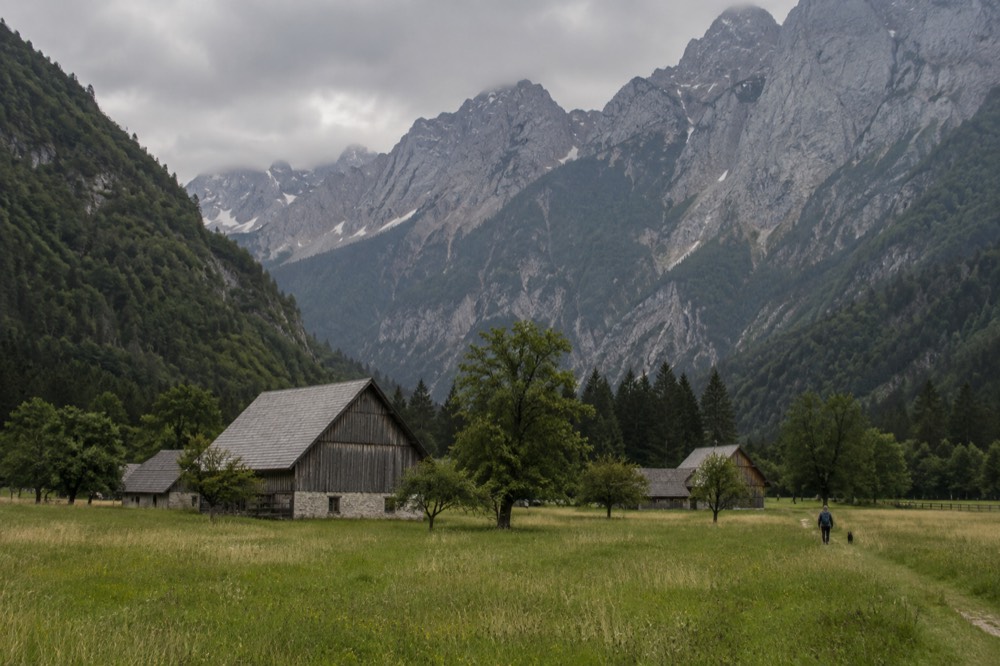
The valley sits in the Kamnik-Savinja Alps, north of Ljubljana towards the Austrian border, and it behaves like a summary of the whole mountain region. You get the meadows and the wooden hayracks of the low valleys, the steep forested walls of the middle slopes, and the bare limestone faces of the high Alps, all inside one walkable glacial corridor. For a visitor based in the city who wants mountains without a mountaineering day, that compression is the whole appeal.
What distinguishes it from other alpine spots is that it is a living working landscape rather than a resort. The farmhouses along the valley floor are not props; they are working farms, several of which serve food to visitors, and the walking routes thread between them on old farm tracks. The contrast with Ljubljana's pedestrianised centre is sharp: the same car-free ease of wandering, but with peaks at the end of every view.
This is also the trip to pick when the weather in the mountains is uncertain but not hopeless. The valley floor walk is sheltered enough to be pleasant in conditions that would kill a ridge walk, and the taller objectives, such as the trail towards the Rinka waterfall at the valley's head, can be added or dropped on the day. Flexibility, more than any single sight, is what makes the valley worth the journey, and this Ljubljana Travel Guide treats it as one of the headline day trips from the capital.
How Do You Get from Ljubljana to the Logar Valley?
The realistic options are a hire car or an organised alpine day trip from the city; there is no useful rail link, and public transport connections to the valley are thin enough that most visitors do not attempt them. Whichever way you go, treat it as a full day: the drive alone takes a good chunk of the morning each way, and the valley rewards arriving before the middle of the day.
Driving yourself is the flexible choice. You leave the city northwards, and the route climbs through the same alpine foothills that serve the Velika Planina and Kamnik area before turning up the valley road to the landscape park. Two Ljubljana facts matter before you set off. The historic centre is pedestrianised, a car-free zone of roughly 20 hectares, so if your hotel sits inside it you will be walking your bags out to a car anyway. And if you have not yet arranged a vehicle, the practicalities are covered in the car rental guide.
An organised tour removes every one of those decisions. The alpine day trips from Ljubljana that head into this region handle the driving, the parking and the timing, and several build in a guide who can explain the valley's farming history on the way. For a one-off mountain day, that is often the better trade, especially in the colder months when mountain roads demand local judgement.
| Option | What it involves | Best for |
|---|---|---|
| Hire car | Drive north from Ljubljana through the alpine foothills, park at the valley and walk from there | Visitors who want to set their own pace and add stops en route |
| Organised alpine day trip | Guided transport from Ljubljana into the Kamnik-Savinja Alps with the day planned for you | Anyone who prefers not to drive mountain roads, or travelling without a car |
| Public transport | Thin connections towards the upper valley; possible but slow and awkward | Only for travellers with time to spare and patience for connections |
One honest note on timing: because the valley is a landscape park rather than a town, the day is shaped around daylight. In midwinter the low sun disappears behind the valley walls early, and in midsummer you can stretch the day generously. Plan the season before you plan the route.
While you are mapping the day-trip roster, these are the three most-booked departures from the capital overall, and they are a useful benchmark for what a guided alpine or headline day out costs and looks like.
What Are the Best Things to Do in the Logar Valley?
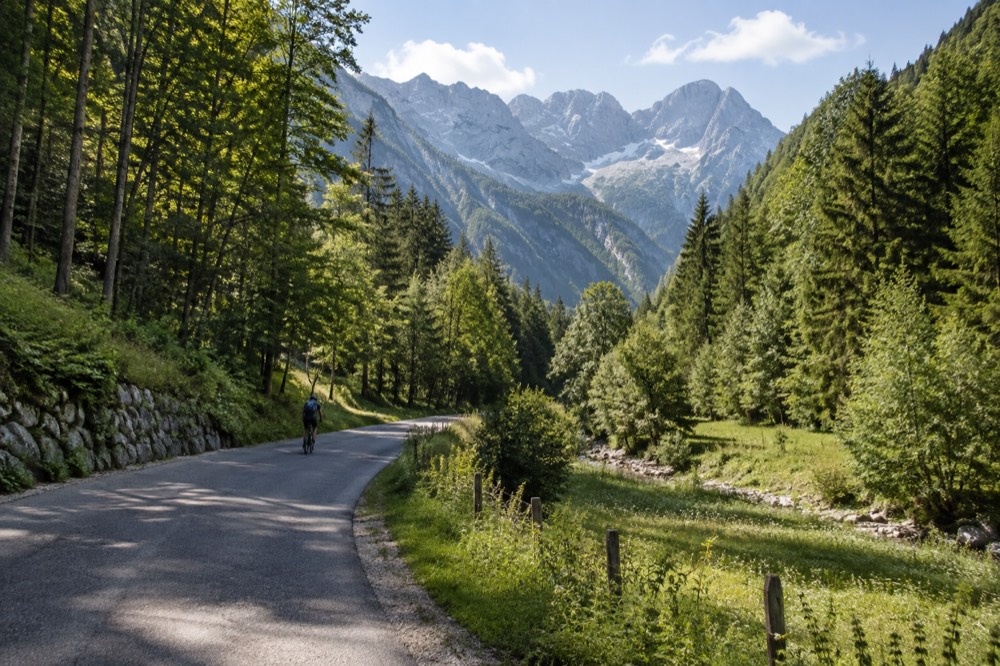
Walk the valley floor from end to end, climb the trail to the Rinka waterfall at the valley's head, eat at one of the working farms, and take in the panoramic viewpoint road if you have a car. Those four activities are the valley's core, and the first two alone justify the trip: the floor walk is flat and easy, while the waterfall trail adds the vertical drama the valley is famous for.
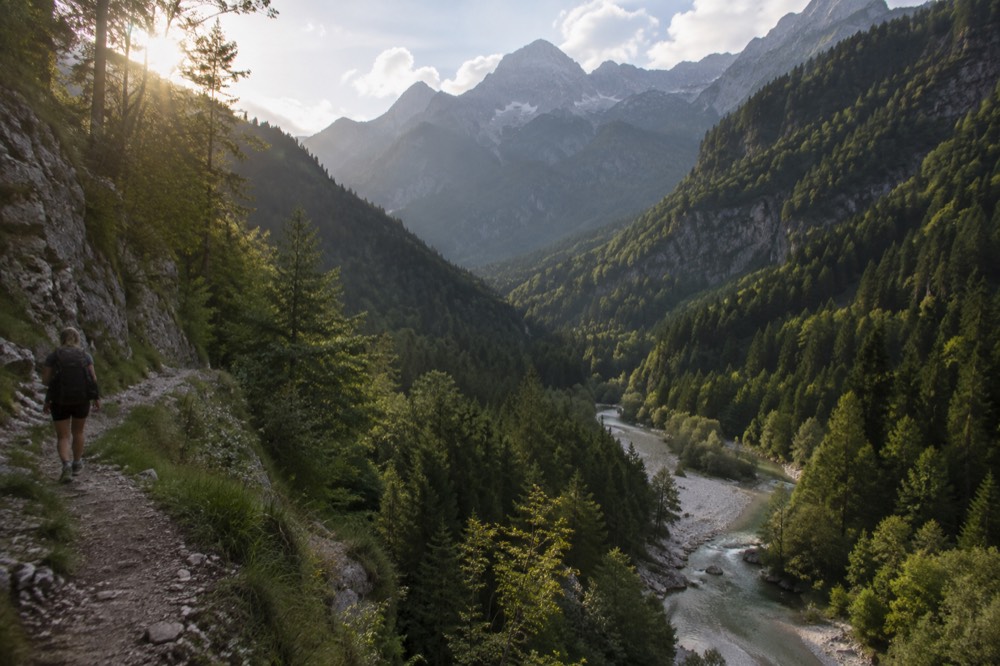
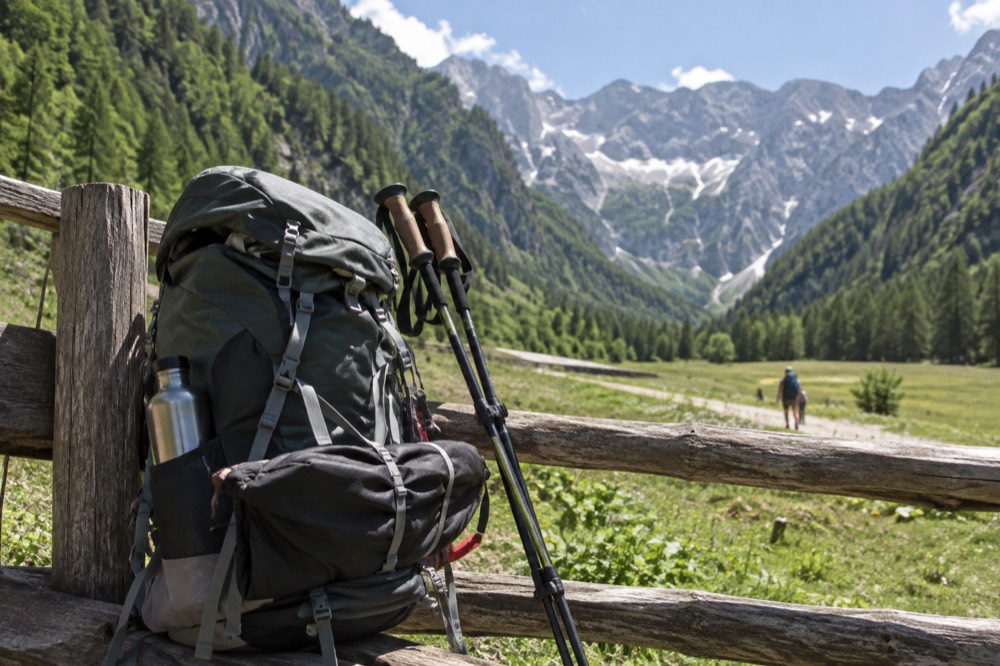
The valley floor walk is the anchor. It runs between the farmhouses and meadows on a gentle track that almost anyone can manage, and it delivers the classic Logar view repeatedly: open green ground, dark forest walls, and the pale limestone head of the valley closing the scene. Because the walking is easy, the valley suits mixed groups, families with children and anyone whose mountain fitness is more aspiration than reality. It is the alpine day that does not require an alpine body.
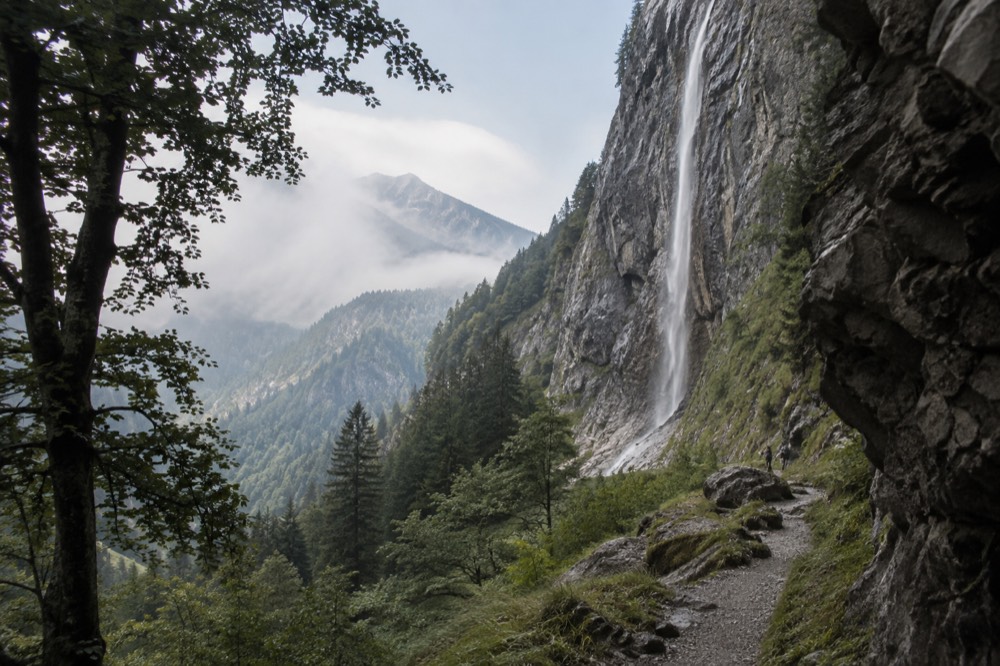
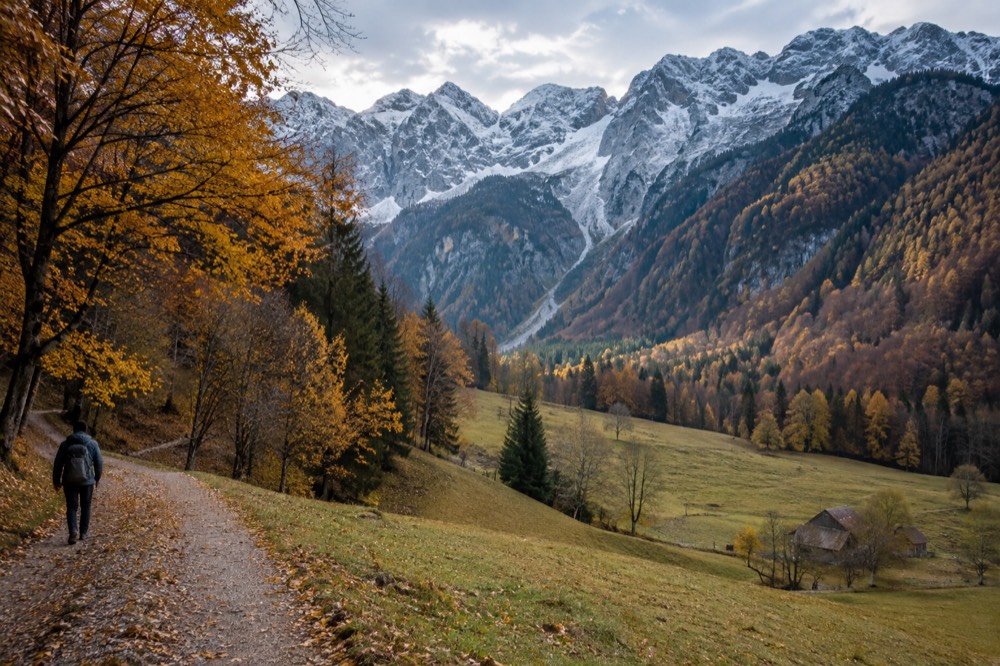
The waterfall trail is the step up. The Rinka waterfall drops from the high walls near the valley's head, and the trail to it is the most popular objective in the park, a genuine mountain walk that still finishes within a half-day. Go in late spring or early summer and the flow is at its fullest; go in autumn and you get the colour of the beech forest along the way. Either way, waterproof layers belong in the bag, because spray and mountain showers are both part of the experience.
Food is the third reason people come. The valley's farms serve the hearty alpine end of Slovenian cooking: dairy, cured meats, buckwheat and potato dishes, and the rolled pastry the country calls štrukelj. Eating at a farm in the valley is the closest thing the region has to a destination restaurant, and it turns a walking day into a full day out.
If the Logar Valley leaves you wanting more of the Kamnik-Savinja region, the natural sequel is Velika Planina, the alpine herdsmen's village a valley system to the west, with its seasonal cottages and high pasture. There is a guided hike from Ljubljana that covers it in a day.
Back in the capital that evening, the same farmhouse traditions are easier to taste than you might expect. Several food walks in the city centre build their route around exactly the dishes the valley farms serve, and the combined food and wine walk is the best of them, a three-hour route through central Ljubljana with a 4.9 rating across 282 reviews.
When Is the Best Time of Year to Visit the Logar Valley?
Late spring to early autumn is the window, with June to September the safest stretch for the waterfall trail and the valley floor at their best. Winter is possible and atmospheric, but the high trail gains snow and the day shortens sharply, so it becomes a low-level visit. The counterintuitive fact is that the mountains above Ljubljana are sunnier than the city itself all winter, which makes alpine day trips the correct fog-day move.
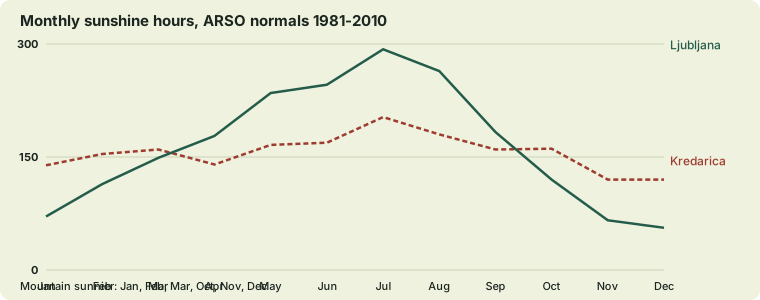
That last point deserves explaining, because it is the single most useful piece of trip-planning knowledge in the region. Ljubljana sits on the floor of a basin, and in the colder half of the year cold air is trapped under warmer air above, so the city sits under fog and low cloud while the high ground a few hundred metres up is in sunshine. ARSO's climate normals for 1981 to 2010 put numbers on it: Ljubljana, at 299 m, gets 56 hours of sunshine in the whole of December, while Kredarica, at 2514 m on Triglav, gets 120 hours over the same month (city normals, mountain normals). In January the mountain gets 139 hours against the city's 71. The city wins April to September and loses every month from October to March: the lines cross.
| Month | Ljubljana, 299 m (sunshine hours) | Kredarica, 2514 m (sunshine hours) |
|---|---|---|
| January | 71 | 139 |
| April | 178 | 140 |
| July | 293 | 203 |
| October | 120 | 161 |
| December | 56 | 120 |
The practical reading for a Logar Valley plan: a grey, foggy morning in Ljubljana is not a reason to cancel the mountains, it is a reason to go up. What should change your plan is rain falling through the whole vertical column, and for those days the region has one reliable answer that no weather can touch. The karst caves hold roughly the same temperature year round, around 10 C at Postojna, which is why they are the standard wet-weather and heatwave option for anyone based in the capital. The most-booked way to do it is the combined cave and castle tour, six hours with tickets included, rated 4.8 across 2802 reviews.
If the forecast has already committed to a washout before you leave the hotel, that cave day is the swap to make.
Where Can You Eat in the Logar Valley?
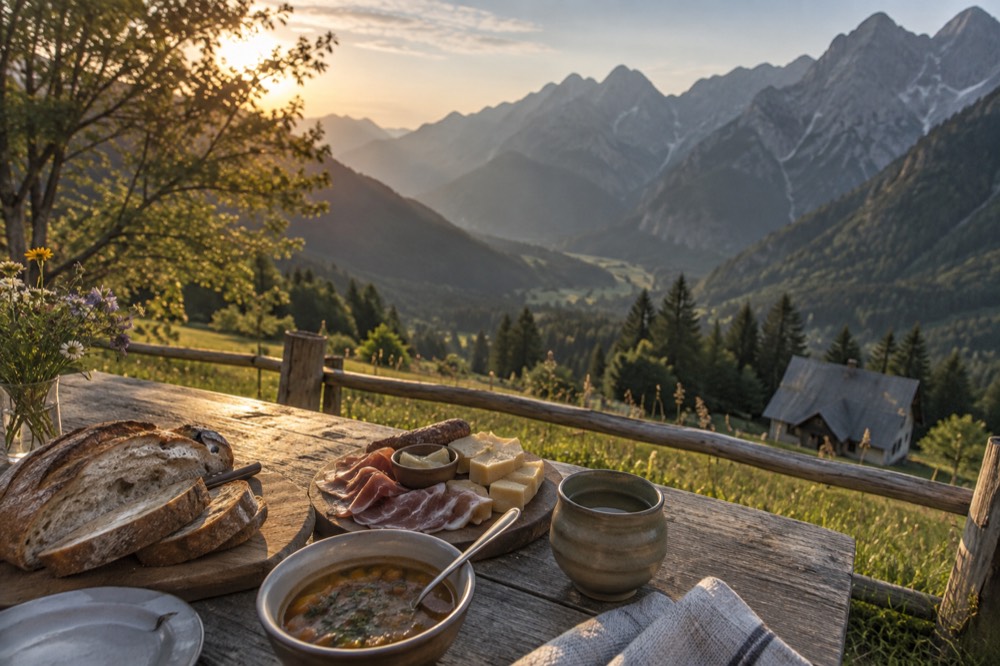
At the valley's working farms, which serve the alpine end of Slovenian cooking to walkers, and that is genuinely the main food experience here; the valley is not a restaurant destination in the town sense. Expect dairy, cured pork, buckwheat and potato dishes, soups, and štrukelj, the rolled pastry that appears on every farmhouse table in the region. Book ahead in peak season, because the farm kitchens have limited capacity.
The farm-to-table idea is not a marketing layer in the Logar Valley, it is simply how the place functions. Several of the farms along the valley floor feed visitors as an extension of what they already produce, and the menu that results is the honest mountain cooking of the Kamnik-Savinja region rather than anything designed for a visitor palate. For a food-motivated traveller this is the point: the same dishes you can taste on a food tour in Ljubljana in polished form arrive here in their farmhouse original.
Timing matters around food more than most visitors expect. The valley's kitchens are busiest in the middle of the day in July and August, when the walking crowds converge, and a late lunch after the waterfall trail is often the calmer and better seat. In the shoulder months some farm kitchens run reduced hours or close on a weekday, so a flexible plan with a backup, a packed lunch eaten at a viewpoint, is not a compromise, it is simply good mountain practice.
If the valley's food culture is what draws you, it is worth planning the whole trip around the table. Slovenian food culture rewards the detour more than most, and the wider Slovenian food scene is the natural reading for the evenings you spend back in the capital.
How Does the Logar Valley Compare with Other Alpine Day Trips from Ljubljana?
It is the gentlest and most family-friendly of the alpine options: less driving than the Soča Valley, less commitment than a full Triglav National Park loop, and more of a complete contained landscape than Velika Planina alone. Choose Logar for an easy full mountain day, the Soča Valley for drama and distance, and Triglav for the biggest scenery at the longest day.
The honest comparison is about what each trip costs you in effort. The Soča Valley is the spectacular one, the emerald river and the high passes around Kranjska Gora and the Vršič road, but it is a long day and a lot of it is spent in the vehicle. The Logar Valley gives you a shorter, softer version of the same alpine hit with far more of the day spent on your feet rather than in a seat. That trade is exactly what many first-time visitors want and do not know they want.
| Alpine day trip from Ljubljana | Character | Best for |
|---|---|---|
| Logar Valley | Compact glacial valley, easy floor walk, waterfall trail, farm food | Families, mixed-ability groups, a first alpine day |
| Velika Planina | High herdsmen's pasture with seasonal wooden cottages | A shorter mountain day with a cultural angle |
| Soča Valley and Kranjska Gora | The emerald river, high passes and long distances | Photographers and visitors who want maximum drama |
| Triglav National Park | The biggest scenery, lakes and the high Julian Alps | A full-day loop for a second or third mountain day |
For the drama end of that table, the guided Soča and Kranjska Gora day tour is the most direct way to see the emerald river country without planning the drive yourself, ten and a half hours rated 4.9 across 911 reviews.
Season also separates these options more than geography does. In deep winter the high passes close or demand equipment, and the valley floor walk becomes the realistic alpine day; in high summer the Soča's swimming spots come into their own and the balance flips. If you are choosing a mountain day for a winter city break, read the Ljubljana in winter planning notes first, and if the whole timing of your trip is still open, the best time to visit Ljubljana guide puts the alpine options in their monthly context.
What Should You Pack and Plan for a Logar Valley Day?
Layers, waterproofs and proper walking shoes, whatever the forecast says in the city, because the valley's weather is a mountain forecast and Ljubljana's is a basin one. Add water, a sun hat for the open meadows, cash as a backup for farm kitchens, and a plan that puts you at the valley early enough to walk before the midday crowds arrive. That is the whole kit list.
The layering advice is not boilerplate here, it follows directly from the basin inversion described above. You can leave Ljubljana in grey, still, cool air and walk into bright sun and a stiff mountain breeze two hours later, and the reverse happens on the way home. A light pack with a warm layer and a shell covers every version of that day. Footwear matters on the waterfall trail, which is a genuine mountain path with rock and root underfoot, wet near the falls themselves.
| Season | Valley conditions | What to bring |
|---|---|---|
| Late spring | Waterfalls at fullest, fresh meadows, possible mud on trails | Waterproof jacket, sturdy shoes, layers |
| Summer | Full trail access, busiest meadows, strongest sun | Sun hat, water, early start to beat crowds |
| Autumn | Beech colour, thinning crowds, shorter days | Warm layers, headtorch in the bag, earlier turnaround |
| Winter | Low-level walking only, snow on high trails, early dusk | Warm boots, spikes if snow lies, generous time margin |
The last planning item is the one people forget: the day ends in a city that is easier to arrive in than to drive through. The centre is pedestrianised, so if you are returning a hire car or meeting an evening walking tour, plan the drop-off and the walk in from the edge of the zone rather than trying to reach a central address by road. Finish the evening gently; a valley day is a long day, and the Ljubljana nightlife can wait for a shorter tomorrow.
Planning the Whole Day: The Short Version
Drive or book a guided alpine day trip, arrive before midday, walk the valley floor first, decide on the waterfall trail based on legs and weather, eat at a farm, and keep the cave-and-castle tour in reserve as the wet-day swap. Do that between June and September and the valley will deliver the best easy alpine day within reach of the capital.
The one-sentence version of this whole guide: the Logar Valley is the low-effort, high-reward mountain day, and its main weakness, dependence on mountain weather, is fully covered by the karst caves that hold the same temperature in every season. Between those two options, almost any forecast resolves into a good day out.
If you are building a wider Slovenia itinerary, these are the three departures from Ljubljana that pair best with an alpine valley day: the cave and castle trip for the wet-day swap, the Lake Bled and castle trip for the classic lake day, and the free GuruWalk old town walk for the arrival evening before you pick up the car.
Common Questions About the Logar Valley
Is the Logar Valley worth a day trip from Ljubljana?
Yes. It is the easiest full alpine day within reach of the capital: a flat, walkable valley floor, a waterfall trail at its head and farmhouse food, all inside one compact landscape park in the Kamnik-Savinja Alps.
How do you get to the Logar Valley from Ljubljana without a car?
An organised alpine day trip from the city is the practical answer. Public transport connections towards the upper valley exist but are thin and slow, and there is no useful rail link, so most visitors without a car book a guided day tour.
What is the best time of year to visit the Logar Valley?
June to September is the safest window, with the waterfall trail open and the valley floor at its best. Winter visits are possible but become low-level walks, and remember that the mountains above Ljubljana are sunnier than the city itself from October to March.
Can you walk to the Rinka waterfall?
Yes, the trail to the Rinka waterfall near the valley's head is the most popular walk in the park, a genuine mountain path that fits comfortably into a half-day. Wear proper shoes and expect spray near the falls.
Where can you eat in the Logar Valley?
At the working farms along the valley floor, which serve alpine Slovenian cooking: dairy, cured meats, buckwheat and potato dishes, and štrukelj. Book ahead in peak season, as the farm kitchens have limited capacity.
What if the weather turns bad on a Logar Valley day?
Swap in the karst caves. Postojna Cave holds roughly the same temperature year round, around 10 C, which makes it the region's reliable wet-weather answer, and the combined cave and castle tour runs from Ljubljana with tickets included.