Ljubljana Bus Station: Routes and Tickets
Ljubljana splits its bus travel between two systems: city buses on the Urbana card, and long-distance coaches leaving from the main station beside the railway. Knowing which is which, and how each is paid for, saves most visitors an hour of confusion on day one.
Short answer
The main bus station sits next to the railway station, a 15-minute walk from the pedestrianised centre. City buses run on the Urbana card at 1.50 EUR a ride, with no cash on board but contactless bank cards accepted. Long-distance coaches to Bled, Postojna, the coast and Zagreb leave from the station's own bays, and the Ljubljana Card covers city buses plus the castle funicular, river cruise and museums.
Ljubljana is a city where the bus question matters more than most. The historic centre is closed to general motor traffic, a pedestrian zone of roughly 20 hectares expanded progressively since 2007, so nobody drives to the sights anyway, and the city's two transport systems, local buses and long-distance coaches, sit within a few hundred metres of each other beside the railway station. Get the split right and the whole region opens up: Bled, Postojna, the Soča Valley, the coast at Piran, even Zagreb.
This guide covers the station itself, the difference between city buses and coaches, every payment method that actually works, and where the coach network can take you. It also flags where the honest answer is "check before travelling", because a few fares and timetables are simply not published in a verifiable form, and this site does not guess.
Where Is the Ljubljana Bus Station and What Is It?
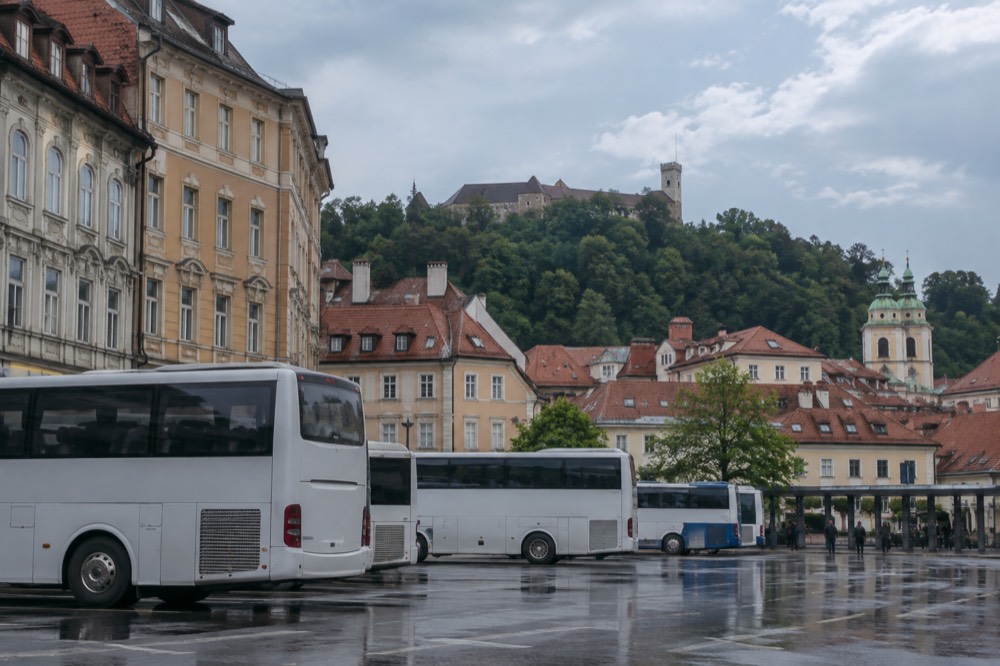
The main bus and coach station sits at Trg Osvobodilne fronte 6, directly beside Ljubljana's railway station on the northern edge of the centre, roughly a 15-minute walk from Prešeren Square and the Triple Bridge, and it is the single busiest transport interchange in the country. Long-distance coaches leave from its numbered bays, while the city's own LPP buses stop on the surrounding streets rather than using the terminal's departure bays. The station building itself holds ticket counters for the coach operators, a waiting area and kiosks where the Urbana card can be bought and topped up. Because the historic centre is pedestrianised, anyone arriving here on foot continues into the old core without crossing a single lane of moving traffic.
The location is the station's best feature. Step out of the terminal and the station square opens toward the city, with the Ljubljana skyline, castle tower and all, visible up the slope. Walk south along Slovenska cesta and you reach the edge of the car-free zone within minutes. For anyone combining a train arrival with a coach departure, the two stations share a square, which makes this the easiest interchange in the country. Visitors doing the reverse, arriving by coach and leaving by rail, can read the full rundown on the Ljubljana train station guide.
A note on names. Locals call it the bus station, avtobusna postaja, and the coach terminal and city bus stops function as one complex in daily speech. But operationally they are separate: the coach terminal inside the building serves private regional operators, and LPP, the city company, runs the urban network with its own stops and its own payment system. That distinction is the single most common source of confusion for visitors, and it determines what ticket you need to buy, so it is worth keeping the two apart mentally before you buy anything at all.
City Buses or Long-distance Coaches: Which One Leaves from Where?
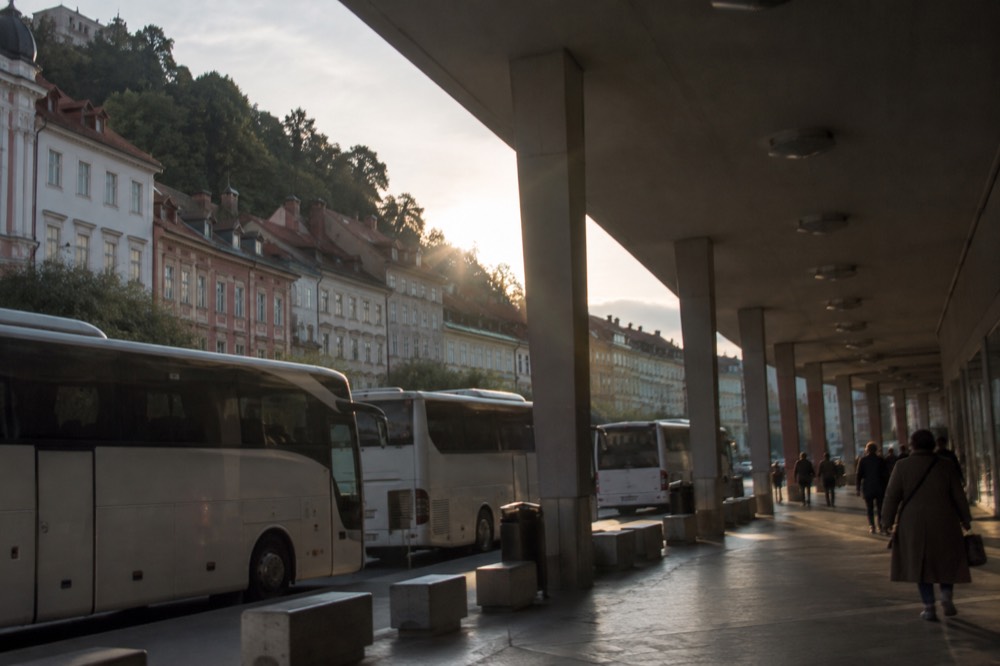
City buses, run by LPP, circulate through stops on the streets around the station and across the city on the Urbana payment system, while long-distance coaches to Bled, Postojna, the coast and Croatia depart from the numbered bays inside the terminal itself, with tickets bought at the operator counters or online. If your destination is inside the Ljubljana urban area, you want a city bus. If it is anywhere beyond the city, you want the coach terminal. The two never share a ticket, and the two never share a bay, so the decision is made for you the moment you know where you are going.
The coach network is the one that matters for day trips. From the terminal's bays you can reach most of the destinations this site covers, including Lake Bled, though the operators do not publish a static fare table that could be verified here, so this guide describes the routes rather than quoting prices. The same caution applies to the Ljubljana-to-Bled coach journey time: it was searched for repeatedly and no primary source publishes it in a readable form. For the full picture on that specific route, including the train alternative and the two-station trap at Bled, read the Ljubljana to Lake Bled guide.
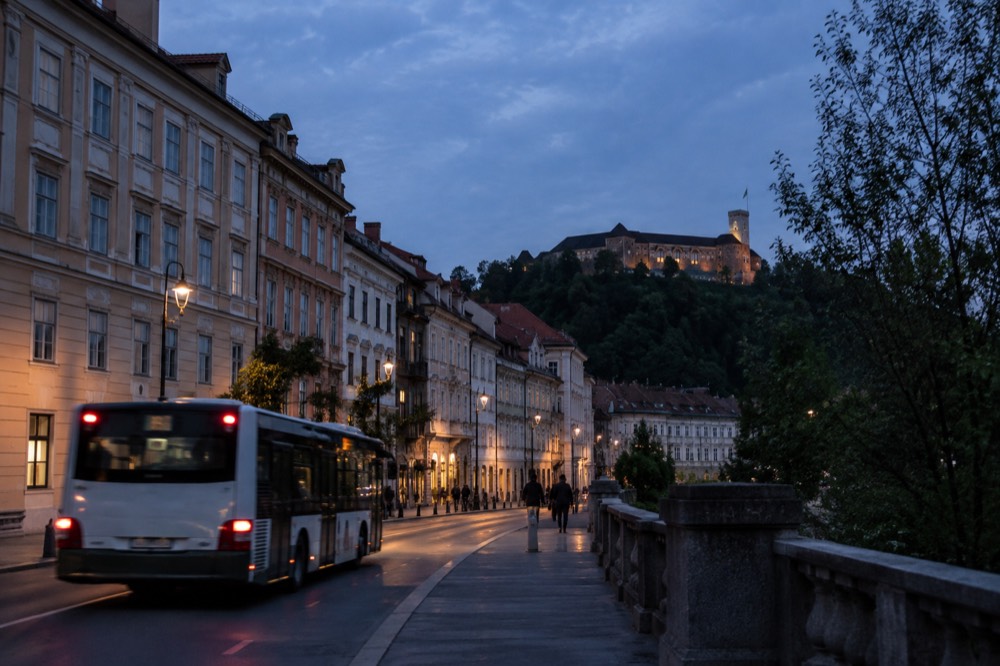
City buses, by contrast, are simple once you have paid. The network covers the whole municipality, including the areas a visitor actually uses: the central zone, Tivoli Park, Šiška, Bežigrad, Trnovo and the zoo. Frequency on the central corridors is high through the day. The one rule that catches visitors out is boarding payment: cash is not accepted on board at all, while contactless bank cards and mobile wallets, Visa and Mastercard, are. LPP's own payment page sets out the full list of accepted methods and where to buy the Urbana card, including the Passenger Centre on Slovenska 56, Urbanomat machines, kiosks, post offices and the tourist information centres: LPP payment methods.
A useful way to picture the geography is a simple table. This is what leaves from where:
| What you are doing | Where it leaves from | Ticket you need |
|---|---|---|
| Going somewhere inside Ljubljana | LPP city bus stops on surrounding streets | Urbana card or contactless bank card |
| Day trip to Lake Bled, Postojna, Piran | Numbered bays inside the coach terminal | Coach operator ticket, counter or online |
| Going to Zagreb, Trieste or Vienna | Long-distance coach bays or the railway station next door | Operator ticket or rail ticket |
| Getting to the airport | Airport bus, times and fare not published in a verifiable form | Check the operator before travelling |
The alternative to all of this is not to use the coach terminal at all. A guided day trip collects you in the city, drives you to the destination and brings you back, with no timetable to read and no bay to find. For the two headline routes, the Postojna Cave and Predjama Castle day trip and the Lake Bled and Bled Castle excursion, that removes almost every decision this page describes, which is why so many visitors book one for their single big day out and use city buses for everything else. The day trips overview guide compares the whole set.
How Do You Pay for Buses in Ljubljana?
A single city bus ride in zone 1 costs 1.50 EUR and is valid for 90 minutes including transfers, loaded onto a 2.00 EUR Urbana card, or paid directly with a contactless bank card or phone on board; cash is not accepted on any city bus. That 1.50 EUR figure comes straight from LPP's published price list. The Urbana card itself is a one-off purchase, it stays with you, and it can be topped up at the Passenger Centre, at Urbanomat machines, in kiosks, at post offices and at the tourist information centres. The card also exists in a form integrated into the Ljubljana Card, which is covered further down this page.
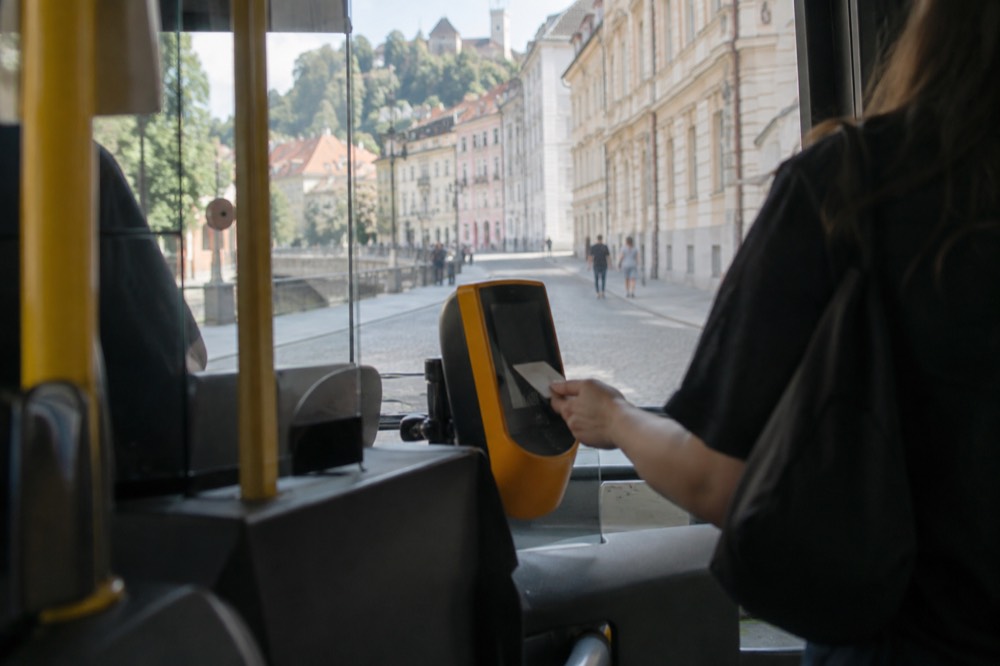
The no-cash rule is the fact most guidebooks are out of date on. For years the trap was that you could not board at all without an Urbana card, because drivers took nothing and the validators took nothing else. Contactless payment has removed that trap: a Visa or Mastercard, or the same card in a phone wallet, now taps on the validator and pays for the ride. But a fistful of euro coins still gets you nowhere on an LPP bus, and the driver cannot and will not make change, so anyone travelling with children or in a group should either load the Urbana or tap a card each.
Coaches are a different matter. Long-distance operators sell tickets at their counters in the terminal and online, and those tickets are separate from anything LPP does. Prices for the intercity network are not published in a static, verifiable table anywhere this site could read, which is why this guide never quotes a coach fare for Bled or the coast. The tourist board's own pages cover the city's transport in summary form and are a reasonable cross-check: Ljubljana visitor travel information.
Here is the full price picture for what can be verified:
| Item | Price | Notes |
|---|---|---|
| Urbana card, purchase | 2.00 EUR | One-off, then topped up |
| Single ride, zone 1 | 1.50 EUR | 90 minutes including transfers |
| Contactless on board | Accepted | Visa, Mastercard, mobile wallets |
| Cash on board | Not accepted | No exceptions |
| Child fares on city buses | Reduced | Check at the Passenger Centre for current tiers |
One more payment exists and visitors rarely hear about it in advance. The tourist tax, 3.13 EUR per person per night in the city, is added to your accommodation bill rather than paid on any bus, but it is a transport-adjacent cost worth knowing about when budgeting a stay. Children under 7 are exempt and ages 7-18 pay a half rate of 1.57 EUR. It is collected by your hotel, so it never touches your Urbana balance.
Is the Ljubljana Card Worth It for Bus Travel?
The Ljubljana Card, at 41.00 EUR for 24 hours, 49.00 EUR for 48 hours and 54.00 EUR for 72 hours for adults, includes unlimited LPP city bus travel plus the castle funicular, a Ljubljanica river cruise, a guided walking tour, four hours of BicikeLJ bike share and single entry to more than 30 museums and galleries. Against that, a castle ticket with the funicular is 19.00 EUR and a river cruise runs about 15 EUR, so the castle and the boat alone are roughly 34 EUR before a single museum or a single bus ride. The card pays for itself in a busy first 24 hours, and the bus inclusion is effectively free once it has.
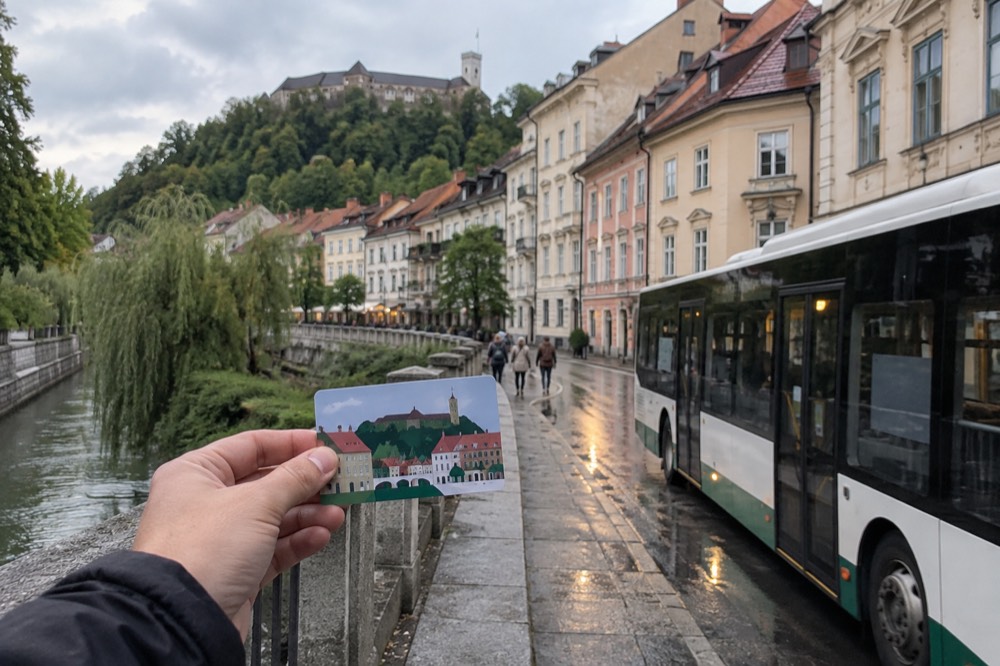
The official card page lists every inclusion and the current tier prices, and it is the page to check before buying, because the card auto-deactivates the moment its hours expire and each attraction allows one entry only: official Ljubljana Card page. One gap in the published information: whether the tourist train is included could not be verified, so treat the train as not covered until you see it in writing on the card page.
The honest calculation for a bus-focused visitor looks like this. If your plan is museums, castle and a cruise, the card wins easily. If your plan is a day trip out of the city by coach, the card does almost nothing for you that day, because it covers city buses, not intercity coaches, and the day-trip operators are separate companies entirely. A common pattern that works: card for the first one or two days in the city, then pay-per-ride or a guided tour for the big excursion. The full maths is laid out in the Ljubljana Card guide.
| Card tier | Adult | Child 6-14 |
|---|---|---|
| 24 hours | 41.00 EUR | 26.00 EUR |
| 48 hours | 49.00 EUR | 31.00 EUR |
| 72 hours | 54.00 EUR | 35.00 EUR |
For getting around on the days the card does not cover, the getting around Ljubljana guide walks through buses, bikes, taxis and walking distances, and is worth a read before deciding how many transport hours you actually need.
Where Can You Go by Coach from the Bus Station?
The coach network from Ljubljana reaches Lake Bled and the Julian Alps, Postojna Cave and the karst region, the Slovenian coast at Piran and Koper, and international destinations including Zagreb, Trieste and Vienna, with departures from the terminal's numbered bays throughout the day. The network is genuinely regional. What it is not, in every case, is transparently priced: the fare and journey time for specific routes such as the Bled coach are not published in a form this site could verify, so the advice throughout is to buy at the counter or online and confirm the details there.
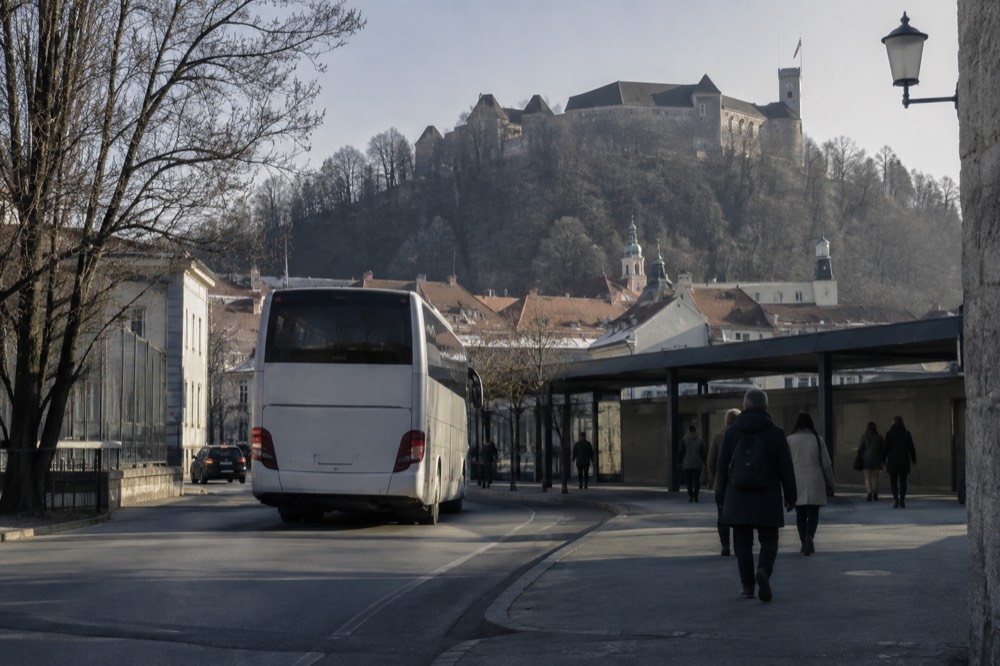
The destinations themselves are the point, and most of them have their own pages here. For the karst, the Postojna Cave guide covers the cave's 10 C year-round temperature, its 3.7 km visitor route and the train that carries you part of the way, plus Predjama Castle, the cliff fortress above it. The Piran guide covers the Venetian old town on the coast. Koper, the cruise port around the bay, has its own planning page for port days. Zagreb, Trieste and Venice all sit within coach or coach-plus-train range, and each has a route guide: Ljubljana to Zagreb, Ljubljana to Trieste and Ljubljana to Venice.
A word on borders, because this is where coach travel gets easy in a way visitors do not expect. Slovenia is in the European Union, uses the euro, and is inside the Schengen area: land and sea internal border checks were abolished on 21 December 2007, air checks on 30 March 2008. Croatia joined both Schengen and the euro on 1 January 2023, so the coach ride to Zagreb is an internal trip with no routine border control and no money to change. The government's own summary is the source for those dates: Slovenia as an EU member state. Coming from Italy, Austria or Hungary, the same applies in every direction.
| Destination | What it is | Covered here |
|---|---|---|
| Lake Bled | Island church, cliff castle, gorge nearby | Lake Bled guide |
| Postojna and Predjama | Cave system and cliff castle | Postojna guide |
| Piran and Koper | Coastal towns on a Venetian bay | Piran guide |
| Zagreb | Croatia's capital, no border check | Zagreb guide |
| Trieste | Italian port city, 19th-century core | Trieste guide |
| Škocjan Caves | UNESCO gorge cave, a walking tour | Škocjan guide |
Coach or Guided Tour: Which Is Better for a Day Trip?
A coach is the cheapest and most flexible way to reach Bled, Postojna or the coast, but it drops you at the destination and leaves the rest to you, while a guided tour from Ljubljana includes transport, a guide and often pre-arranged entry, which matters most at Postojna Cave, where the cave train tours run on a timed grid and the busiest slots sell out in peak season. The trade is time against certainty. A coach plus self-organised tickets is a full day of your own logistics; a tour hands you the day in one booking.
For Postojna specifically, the timing argument is strong. The cave is open every day, including holidays and in bad weather, tours last about an hour and a half, and boarding is 15 minutes before the stated time with arrival recommended 30 minutes ahead. The official timetable is a month-by-month grid rather than a fixed daily list, and the slots run from 09:00 through to 18:00 at the busiest times of year, rising through summer and falling to a handful in midwinter. The operator publishes that grid directly: Postojna Cave tour timetables. A tour that has already reserved your place removes the gamble.
The Postojna Cave and Predjama Castle day trip is the one most visitors book for exactly this reason, and it pairs the cave with the cliff castle in a single six-hour day from the city. You can check the Postojna and Predjama day tour on its own page, or Check availability directly if you already know your dates.
For Bled, the calculus is different. The lake is a single, walkable destination where a coach delivers you to the shore and you organise your own pace, and the cheapest small-group tours run at a price point that competes with the total cost of coach fare plus separate castle and boat tickets. The Lake Bled day tour from the city is the middle option: guided, but lighter than the full castle-and-island excursions. Whichever way you lean, the trains from Ljubljana guide shows the rail alternative to the same region, including the two-station detail at Bled that catches people out.
Back in the city, a completely different use of a spare afternoon is the free GuruWalk model. These are tips-based walks run by independent guides on the GuruWalk platform, and on this site's roster there are eight of them in Ljubljana, covering everything from a two-hour Romans-to-dragons old town walk to a communist-era walk with a local guide. They cost nothing up front, you pay what you think the walk was worth at the end, and they leave from central meeting points rather than the bus station. One carries a tasting add-on at a fixed extra cost, so read the listing before assuming everything on it is free.
| Free GuruWalk | Duration | What it covers |
|---|---|---|
| Ljubljana Unveiled | 2 hours | Roman roots to the Dragon Bridge, a full old town sweep |
| Ljubljana by Night | 1 hour 30 | After-dark corners the daytime tours skip |
| Ljubljana, the first tour | 2 hours | Day-one orientation for new arrivals |
| Communist-era Ljubljana | 2 hours | Socialist-era sites with a local guide |
| 90-minute small-group walk | 1 hour 30 | Top ten sights with a licensed local guide |
The flagship of that set, the free Ljubljana Unveiled walk on GuruWalk, is a good fit for the day you arrive: it ends near the centre, it costs nothing to join, and it lands you oriented for every bus and coach decision that follows.
How Do You Get from the Bus Station to the Airport?
Ljubljana Airport, LJU, is about 26 km from the city, and an airport bus connects it with the station area, but the fare, the timetable and the frequency are not published in any form this site could verify, because the airport's own website blocks automated access entirely. The bus exists. The honest advice is to check the current times before travelling, either at the terminal counter or through the airport's own channels, and to treat any fare figure you see quoted in a guidebook or forum as unverified until you see it at the point of sale.
This is one of those gaps this site refuses to paper over. The distance figure of roughly 26 km comes from the destination facts, and it is the only airport number that can be stated. Everything else, journey time, operator, fare, frequency, sits behind a wall. The Ljubljana airport to city centre guide collects what is verifiable about the route and the alternatives, including transfers and taxis, without inventing the missing figures.
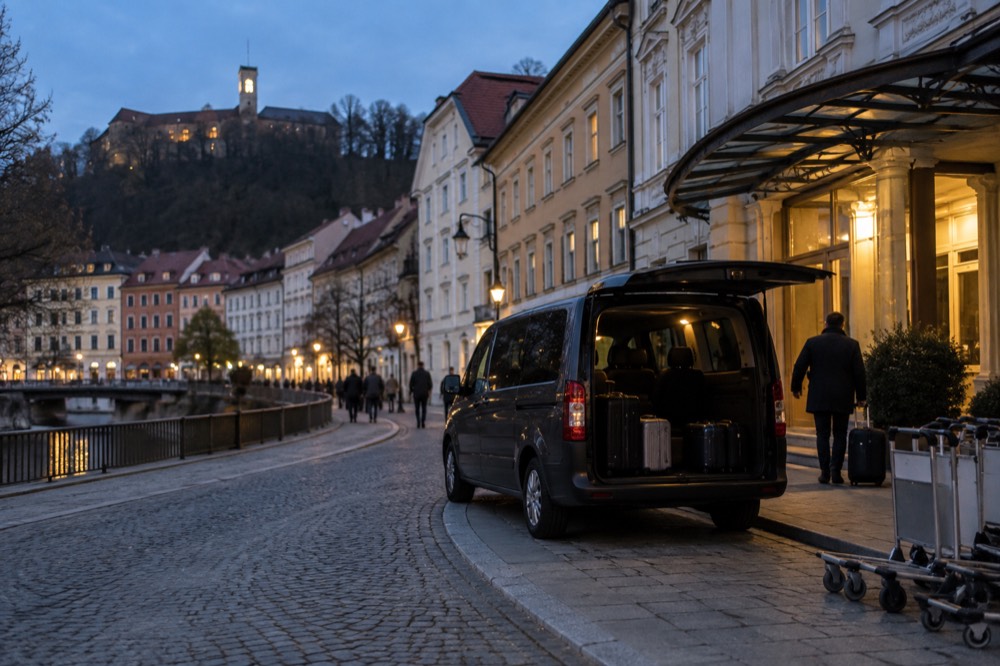
For anyone flying in and heading straight onward, the practical sequence is straightforward: land, clear arrivals, and choose between the airport bus into the station area, a pre-booked transfer, or a taxi. Once at the bus and railway station complex, the coach terminal, the city buses and the pedestrian centre are all within a short walk, which is why this interchange, not the airport, is where most Ljubljana journeys actually begin and end.
What Should You Know Before Using the Station?
Arrive with the right ticket for the right system: contactless or Urbana for city buses, an operator ticket for coaches, and no cash expectation anywhere on the urban network, while remembering that the coach terminal's counters and the LPP system are separate purchases that never interchange. The station is safe, busy and walkable, the centre beyond it is car-free, and the single biggest practical trap is assuming one ticket covers both networks. It does not, and no counter will sell you a ticket that does.
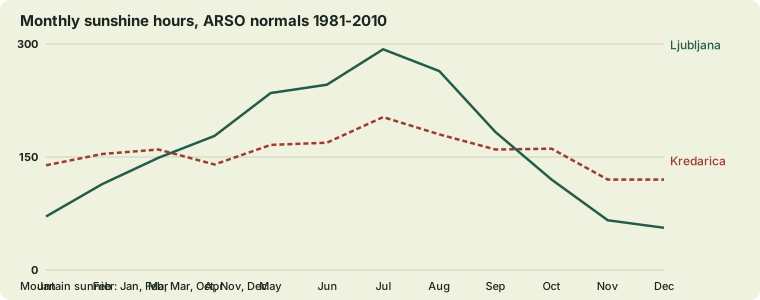
Weather deserves a mention, because this is the information most guides miss entirely. Ljubljana sits in a basin, and in the colder half of the year cold air is trapped under warmer air above, so the city fogs in while the hills a few hundred metres up sit in sunshine. ARSO's climate normals put numbers on it: the city averages 37 clear days a year against 130 overcast, and December brings just 56 hours of sunshine, under two hours a day, against 120 hours over the same month at Kredarica on Triglav at 2514 m. The fog figures are published only for the 1971-2000 period, in which September and October average 12.4 fog days each, level with December and above January's 11.3. What that means for a coach traveller is simple: on a grey morning in the basin, the mountain you are driving toward is likely in sun.
Practicalities around the terminal are the usual ones. There is [left luggage](https://radicalstorage.tpk.ro/3nyf4NSa) storage at the interchange for travellers between coach and rail, and the surrounding blocks hold the kiosks and post offices where the Urbana card is topped up. If you are planning a fuller stopover, the where to stay in Ljubljana guide covers the neighbourhoods within reach of the station, and the weekend in Ljubljana itinerary shows how to spend two days without needing a coach at all.
For rain days, which the basin provides plenty of, September and October are the joint wettest months at 147 mm each under the 1981-2010 normals, above July's 115 mm, and the caves hold roughly the same temperature year round, 10 C at Postojna and 12 C at Škocjan, which is exactly why they are the reliable wet-weather answer. A [coach](https://busbud.tpk.ro/4kLAIElq) to Postojna on a grey October morning is one of the best bad-weather moves in the country. The rainy day in Ljubljana guide builds the full list around that logic.
Common Questions About the Ljubljana Bus Station
Can you pay with cash on Ljubljana city buses?
No. Cash is not accepted on board any LPP city bus. Pay by tapping a contactless Visa or Mastercard, or a mobile wallet, on the validator at the front of the bus, or by loading credit onto an Urbana card bought for 2.00 EUR and topped up at the Passenger Centre on Slovenska 56, at Urbanomat machines, in kiosks, at post offices or at tourist information centres.
How much is a bus ride in Ljubljana?
A single ride in zone 1 costs 1.50 EUR and is valid for 90 minutes including transfers. The Urbana card itself costs 2.00 EUR to buy and is then topped up. The Ljubljana Card, from 41.00 EUR for 24 hours, includes unlimited city bus travel alongside the castle funicular, a river cruise, a guided walk and more than 30 museum entries.
Where do coaches to Lake Bled and Postojna leave from?
Long-distance coaches to Bled, Postojna, the coast and Croatia leave from the numbered bays inside the main bus terminal at Trg Osvobodilne fronte, beside the railway station. City buses, a separate LPP system with its own payment, stop on the surrounding streets. Tickets for coaches are bought at the operator counters or online, and the two systems do not share tickets.
Is there a bus from Ljubljana Airport to the bus station?
Yes, an airport bus connects Ljubljana Airport, about 26 km from the city, with the station area. However, the fare, timetable and frequency are not published in any verifiable form, because the airport's own site blocks automated access. Confirm the current times at the terminal counter or through the airport's channels before travelling, and treat any quoted fare as unconfirmed.
Do you need to book Postojna Cave tours in advance?
In peak season, yes. Cave tours run on a timed grid, boarding is 15 minutes before the stated time, and arrival is recommended 30 minutes ahead. The number of daily departures rises through summer, but the busiest slots sell out. A guided day tour from Ljubljana, such as the combined Postojna and Predjama trip, pre-arranges the entry and the transport in one booking.
Does the Ljubljana Card cover intercity coaches?
No. The card covers LPP city buses, the castle funicular, a Ljubljanica river cruise, a guided walking tour, four hours of BicikeLJ bike share and single entry to more than 30 museums and galleries. Intercity coaches to Bled, Postojna, the coast and Croatia are run by separate operators with their own tickets, bought at the terminal counters or online.
One closing thought on how this all fits together. The station complex is the hinge of a Ljubljana trip: coaches out to the karst, the lakes and the coast, city buses everywhere within the municipality, and a car-free centre beyond it that needs no vehicle at all. The traveller who arrives knowing which system does what, and who books the one timed attraction, the cave, ahead of the day, has removed nearly every source of friction the terminal can produce. The rest of the planning, from the best time to visit Ljubljana to the Ljubljana prices guide, is covered across this site, and Ljubljana Travel Guide keeps every figure here checked against the operators' own published pages rather than repeated from guidebooks.