Lake Bled Weather Month by Month: What to Expect and When to Go
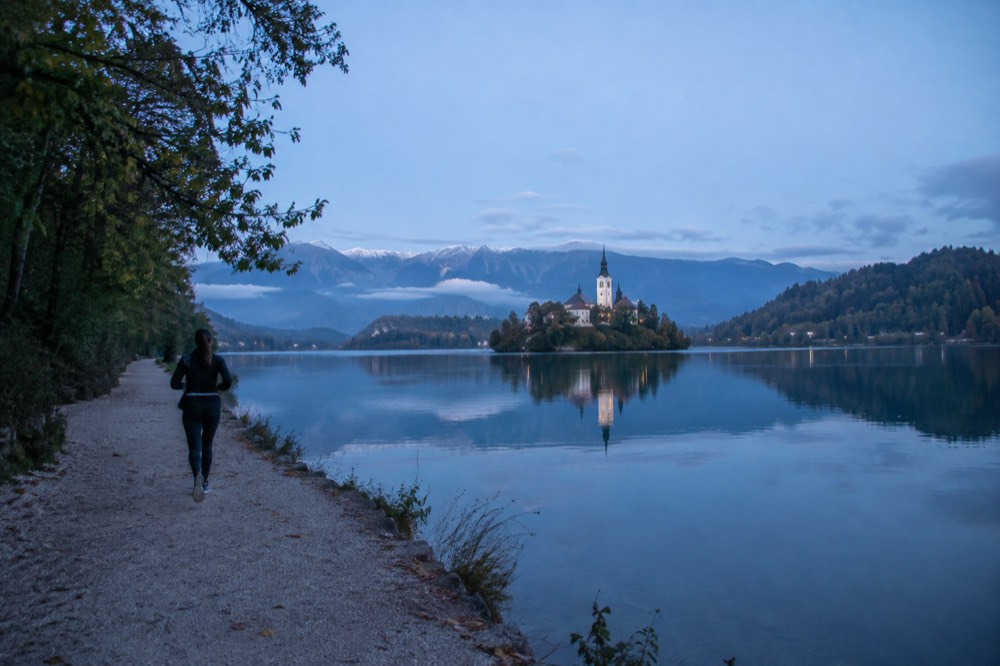
Lake Bled sits at the edge of the Julian Alps, and its weather follows the pattern of the Ljubljana basin more closely than most visitors expect: warm, changeable summers, a wet early autumn, and grey, fog-prone winters with the sunshine up on the peaks rather than down at the water.
Short answer
The Lake Bled area runs from a January mean of 0.3 C to a July mean of 21.3 C, with September and October the joint wettest months at 147 mm each. June and July are the sunniest and warmest months, while winter is foggy at lake level and often sunny on the mountains above. Plan around rain, not cold, from September onwards.
Lake Bled carries more search demand than the entire city of Ljubljana, and a large share of that demand is a single anxious question: what will the weather be doing on the day I am there. The honest answer starts with geography. Bled sits at the foot of the Julian Alps on the northwestern edge of the Ljubljana basin, close enough to the capital that the climate record for the basin describes Bled's year with only small local differences. The lake is a few degrees cooler on summer afternoons than the city centre, and the mountains behind it hold cloud that the basin floor misses, but the monthly rhythm, the wet autumn, the fog, the summer sunshine peak, is the same rhythm.
This guide walks through that rhythm month by month, using the published climate normals for the Ljubljana basin station at Bežigrad, 299 m, the nearest long-term record with verified figures, and translates each month into what it actually means for a visitor: swimming, walking, the Vintgar Gorge, the castle viewpoint and the photographs. Where a Bled-specific figure does not exist in a verified source, it says so rather than guessing.
What Is the Weather Like at Lake Bled Month by Month?
Month by month, the Lake Bled area moves from a January mean of 0.3 C to a July mean of 21.3 C, with the wettest months being September and October at 147 mm each and the sunniest being July at 293 hours of measured sunshine. Winter is the grey, foggy season at lake level, while summer is warm, bright and busy.
The table below is built from the published 1981-2010 climate normals for the Ljubljana basin, the closest verified long-term record to Bled. Mean temperature is the average of day and night across the whole month, so a July mean of 21.3 C means afternoons regularly in the high twenties, while a January mean of 0.3 C means frosty nights and afternoons hovering near freezing.
| Month | Mean temp | Daily max | Daily min | Rainfall | Sunshine hours | Rain days |
|---|---|---|---|---|---|---|
| January | 0.3 C | 3.4 C | -2.5 C | 69 mm | 71 h | 11 |
| February | 1.9 C | 6.4 C | -2.0 C | 70 mm | 114 h | 9 |
| March | 6.5 C | 11.4 C | 1.7 C | 88 mm | 149 h | 11 |
| April | 10.8 C | 16.1 C | 5.8 C | 99 mm | 178 h | 14 |
| May | 15.8 C | 21.4 C | 10.3 C | 109 mm | 235 h | 14 |
| June | 19.1 C | 24.6 C | 13.7 C | 144 mm | 246 h | 15 |
| July | 21.3 C | 27.3 C | 15.5 C | 115 mm | 293 h | 12 |
| August | 20.6 C | 26.7 C | 15.2 C | 137 mm | 264 h | 12 |
| September | 16.0 C | 21.6 C | 11.5 C | 147 mm | 183 h | 12 |
| October | 11.2 C | 15.9 C | 7.7 C | 147 mm | 120 h | 13 |
| November | 5.6 C | 8.8 C | 2.8 C | 129 mm | 66 h | 14 |
| December | 1.2 C | 3.8 C | -1.1 C | 107 mm | 56 h | 14 |
Read the table as a basin record rather than a lake-side promise. Bled's afternoons in high summer tend to run a touch cooler than the basin floor because of the lake and the alpine air, and its winter mornings catch the same fog the capital does. What the table gives you is the shape of the year, and the shape is consistent across the region: a steep warm-up from March to June, a bright peak in July, and a wet, dim slide from September to December.
Two figures in that table surprise people. The first is that September and October, at 147 mm each, are wetter than July. The second is December's 56 hours of sunshine, under two hours a day, which is the single most useful winter planning number in this whole guide. Both come from the same normals series, and both are covered in detail further down.
When Is the Best Month to Visit Lake Bled?
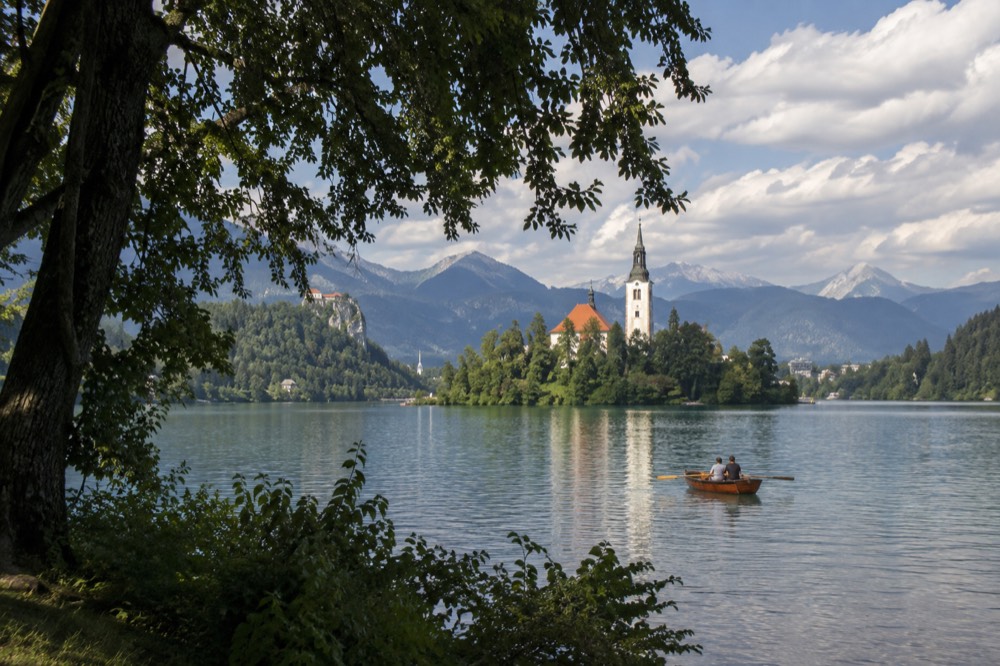
The best months for Lake Bled are June and September: June averages 24.6 C afternoons with 246 sunshine hours, and September still reaches 21.6 C afternoons while the crowds thin. For swimming and the full summer experience, July is the sunniest month at 293 hours. For photographs without crowds, late September and early October.
June is the sweet spot for most visitors. Afternoons average 24.6 C, the lake has had two months of spring sun to warm up, the Vintgar Gorge is open with full summer hours, and the daylight runs long. The trade-off is that June is also a wet month in absolute terms, 144 mm, but that rain tends to come in afternoon thunderstorms rather than all-day drizzle, and it is the month's 15 rain days that matter, not the total.
July and August are the high season proper. July is the sunniest month of the entire year at 293 hours, with afternoons at 27.3 C, and it is the month the lake is warmest for swimming. August is nearly as warm and slightly less sunny, at 26.7 C and 264 hours, and both months carry the full weight of the tourist season: the lake path, the castle and the gorge are all busy, and the gorge's own operator warns that its most crowded window is between 10:00 and 13:00. If you are coming in peak summer, do the marquee sights early or late in the day.
September is the connoisseur's month, with one large caveat. The first half of September often feels like an extension of August, warm and settled, and the crowds drop sharply once the school holidays end. The caveat is the second half: the month averages 147 mm of rain, tied for the wettest of the year, and 12.4 fog days, tied with October for the foggiest shoulder month. A September visit is a bet on the early part of the month, and it is a bet that usually pays.
May deserves a paragraph of its own because it is the month people underrate. Afternoons average 21.4 C, the hills around the lake are at their greenest, and the month's 235 sunshine hours beat every month except June and July. The lake itself is still cold for swimming, but for walking, the gorge and the viewpoint, May is close to ideal. Prices and crowds sit well below the July peak, and the one risk is a wet spell, with 109 mm across 14 rain days.
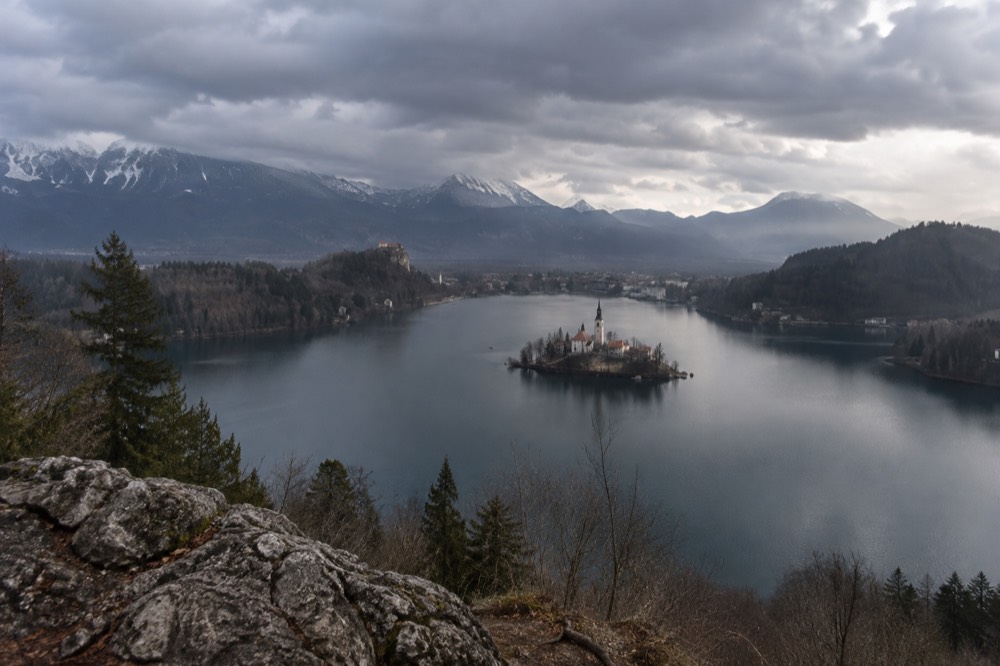
Winter, from late November through February, is the season to choose only deliberately. The lake in snow is genuinely beautiful, and the castle viewpoint above a frozen-looking lake is one of Slovenia's best photographs. But December delivers 56 hours of sunshine across the whole month, roughly two clear days, and the basin fog that shrouds Ljubljana reaches up the basin toward Bled too. A winter visit needs a flexible schedule and a willingness to go up-slope for the sun, which is exactly the move the climate data recommends.
Does It Rain More at Lake Bled in Autumn Than in Summer?
Yes. The verified basin record puts September and October as the joint wettest months of the year at 147 mm each, well above July's 115 mm. Autumn in the Lake Bled area is not the dry, golden shoulder season that central European travel writing implies, and rain planning matters more in September than in July.
This is the fact that most seasonal guides get wrong, so it is worth being precise about. The 1981-2010 normals for the basin give September 147 mm and October 147 mm, against July's 115 mm and June's 144 mm. The 1971-2000 record tells a different story, with June as the wettest month, which is exactly why the two reference periods must never be mixed in one sentence. The more recent 1981-2010 series is the one used throughout this guide.
| Season | Months | Rainfall pattern | What it means for a visit |
|---|---|---|---|
| Spring | March to May | Rising from 88 mm to 109 mm, sunshine climbing fast | Wet but brightening, good for walking |
| Early summer | June | 144 mm, often as afternoon storms | Warm, green, swim season begins |
| High summer | July to August | 115 mm and 137 mm, the sunniest months | Hot afternoons, busy trails |
| Autumn | September to October | 147 mm each, the wettest months | Pack rain gear, book flexible plans |
| Early winter | November to December | 129 mm and 107 mm, sunshine collapsing | Grey, foggy, quiet |
The rain itself is only half the autumn story. The same record shows September and October averaging 12.4 fog days each, level with each other and above January's 11.3, and September's 07:00 relative humidity, at 94 percent, is the highest morning humidity of the entire year. In practice this means an autumn morning at the lake can start grey and dripping and still clear into a fine afternoon, or it can stay under low cloud until midday. The practical response is to schedule the viewpoint and the boat for the afternoon and keep the morning for the covered and indoor options.
The one reliable all-weather answer in the region is underground. The caves around Postojna and Škocjan hold roughly the same temperature year round, around 10 C at Postojna and 12 C at Škocjan, which makes them the standard wet-day and heatwave substitute for anything on the surface. A rain plan that pairs a Bled morning with a cave afternoon is the most dependable bad-weather itinerary in the country.
How Cold Does Lake Bled Get in Winter?
Winter at Lake Bled means a January mean of 0.3 C, afternoons around 3.4 C and nights at -2.5 C, with the record low for the basin at -20.3 C. Snow cover is common, averaging 15 days with snow lying in January, and the deepest recorded snow cover is 89 cm.
The numbers say a classic continental lowland winter, not an alpine one. Bled sits low enough in the basin that the deep cold of the high Alps mostly passes over it, and the lake itself freezes only in the coldest spells, not as a routine event. The basin record shows 50 days a year with snow on the ground at 07:00, concentrated in January, 15 days, February, 14 days, and December, 11 days, with the deepest ever recorded snow cover at 89 cm in January.
What winter actually feels like is dominated less by temperature than by light. December averages 56 hours of sunshine, January 71, and November 66, against July's 293. On a sunny winter weekend the lake shore and the castle viewpoint are busy and beautiful. On the far more common overcast days, when the basin is capped by low cloud, the lake is grey and flat and the photographs do not work, and the right move is the one the next section explains: go up.
That is the genuinely useful winter insight for Bled, and it is the same one that applies to Ljubljana itself. The basin inversion that traps cold air and fog at lake level leaves the ridges a few hundred metres above in sunshine, so a winter morning that starts grey at the shore can be bright at the castle or on any of the viewpoints on the southern and western hills. The Ljubljana in winter guide covers the same pattern from the city side, and the best time to visit Ljubljana guide ranks the months for the whole region.
Winter is also the season with the fewest visitors, which has its own value. The lake path is quiet, the castle is calm, and the whole scene takes on the character of a local landscape rather than an international attraction. Bring layers, bring waterproof shoes for the shore path, and do not plan a day that depends on a clear view.
When Can You Swim in Lake Bled?
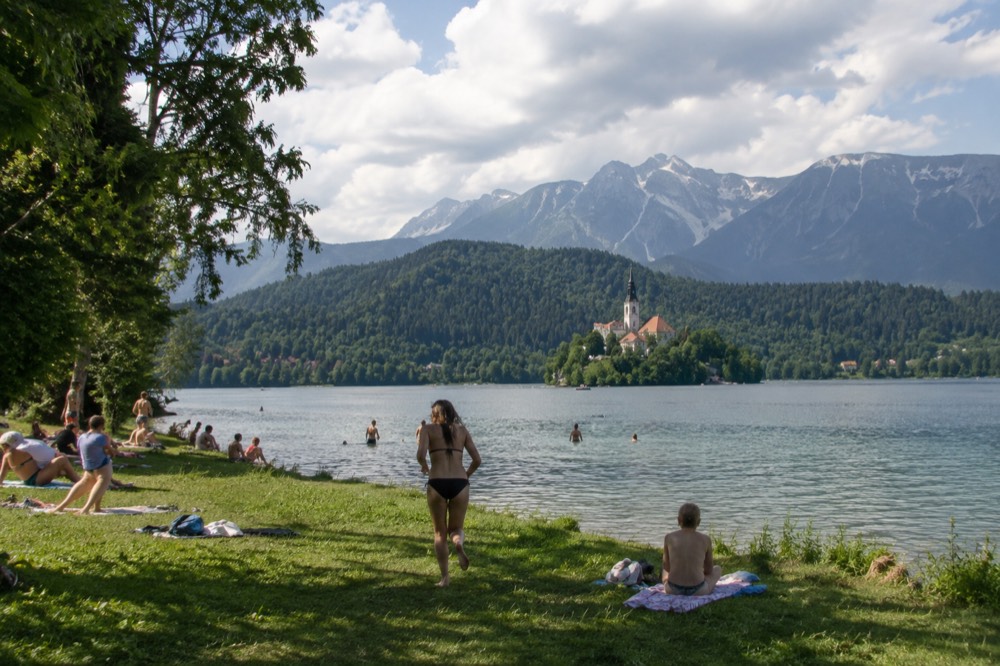
Swimming at Lake Bled is a July and August activity, when afternoon air temperatures average 27.3 C and 26.7 C. No verified official figure exists for the lake's summer water temperature, and no official source confirms whether swimming is formally permitted, so treat it as an informal summer activity and check locally.
The honest position on swimming is that the verified record contains no official water temperature and no official permission statement, and this site does not invent figures. What can be said from the air-temperature record is that the swimming window is real but short. June's afternoons at 24.6 C warm the shallows enough for the brave, July and August are the reliable months, and by mid-September, with afternoons still at 21.6 C but nights falling to 11.5 C, the season is effectively over. The wider set of guides lives on Ljubljana Travel Guide.
The lake is glacial in origin and fed by springs, so even in August it is cooler than the Adriatic an hour to the south. Locals swim from the designated spots on the western and northern shore rather than from the island or the cliff below the castle, and the can you swim in Lake Bled post covers the practical side in detail. If swimming is the main purpose of the trip, the month-by-month answer is simple: aim for mid-July to mid-August.
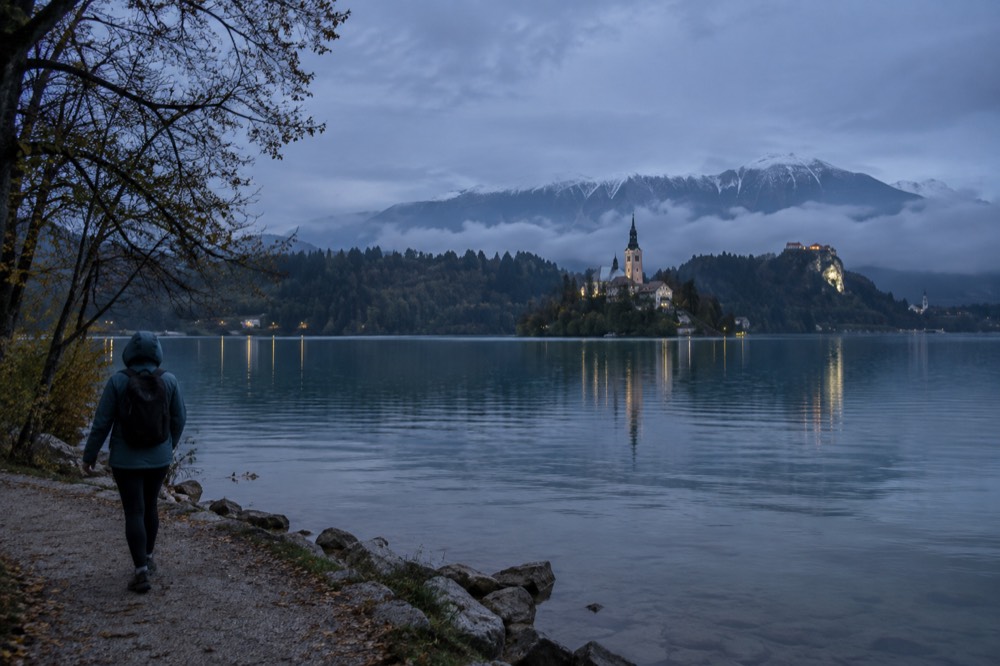
For everyone else, the water is for looking at and boating on. The pletna boats to the island run through the warmer half of the year, and the electric Bled Boat Line runs on the lake as a scheduled service. A lake morning is the one activity that works in every month and nearly every weather, because the island church and the castle cliff read as well in soft grey light as in full sun, and better in autumn mist than almost anywhere else in Slovenia.
Why Is Winter Foggy at the Lake but Sunny on the Mountains?
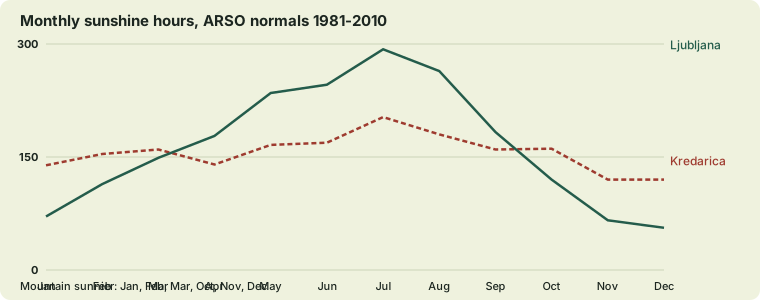
Because Lake Bled sits in the Ljubljana basin, where winter temperature inversions trap cold, foggy air at low level while the mountains above sit in sunshine. The verified record shows the basin getting 56 hours of December sunshine against 120 hours at Kredarica, at 2514 m, over the same month.
This is the information-gain axis of the whole site, and it matters more at Bled than anywhere, because Bled is the place people go for a view. Ljubljana sits on the floor of a basin at 299 m. In the colder half of the year, cold air sinks into the basin and is trapped under a lid of warmer air above it, so the low ground sits in fog and low cloud while the high ground a few hundred metres up is in full sun. Bled sits at the northwestern edge of the same basin system, and the same inversion caps it.
| Station | Altitude | December sunshine | January sunshine | Clear days per year |
|---|---|---|---|---|
| Ljubljana basin (Bežigrad) | 299 m | 56 h | 71 h | 37 |
| Rateče, alpine valley | 864 m | 88 h | 111 h | 71 |
| Kredarica, on Triglav | 2514 m | 120 h | 139 h | 47 |
The lines cross. The basin wins on sunshine from April to September and loses every month from October to March, and in December the mountain at 2514 m receives more than double the sunshine of the valley floor, 120 hours against 56. Kredarica's January mean is -7.1 C against the basin's +0.3 C, so the mountains are colder, but they are sunnier, and on individual inversion days the temperature a few hundred metres up can exceed the temperature at the bottom, which is the day-scale effect the live weather stations in the region show regularly.
For a Bled visitor in winter, the practical translation is this: if the morning at the lake is grey, do not assume the day is lost. The castle viewpoint, at 130 m above the lake, sometimes sits above the fog line. The ridges on the south side of the lake more often do. And the bigger alpine options, Vogel, Krvavec, the Triglav National Park high country, are the statistically correct escape, because the winter sunshine is up there. The Triglav National Park guide and the Šmarna gora guide both describe the up-and-out move from different starting points.
What Should You Pack for Lake Bled Weather?
Pack for the month, not the average. Summer needs sun protection, a rain layer for afternoon storms and something warm for evenings that drop to 13-15 C. Spring and autumn need proper waterproofs and layers, and winter needs insulated footwear, gloves and a flexible attitude toward views.
The daily minimum row in the month table is the one people ignore and then regret. Even in July, the average night is 15.5 C, and the lake shore after sunset feels colder than the number suggests. In May, an afternoon at 21.4 C can follow a morning at 10.3 C, so the layering advice is not a cliché here, it is arithmetic.
| Month | Daytime feel | Evening feel | The one thing to pack |
|---|---|---|---|
| January | Near freezing, often grey | Hard frost | Insulated, waterproof shoes |
| March | Cool, brightening | Cold | Windproof layer for the lake path |
| May | Mild and pleasant | Cool | Light rain jacket |
| July | Hot, strong sun | Warm | Sun hat and high-factor sunscreen |
| September | Warm, changeable | Cool | Compact umbrella or rain shell |
| December | Cold, dim, fog-prone | Frost | Small torch for early evenings |
One specific warning belongs to the region's biggest summer day trip. The caves at Postojna hold 10 C year round, and visitors arrive in August in shorts and spend 90 minutes cold. If your Bled itinerary includes a cave, and in summer heat or autumn rain it should, a warm layer for the cave is the single most useful thing in the bag. The Postojna Cave guide covers the practicalities of the cave visit itself.
How Does the Weather Affect the Vintgar Gorge and Other Day Trips?
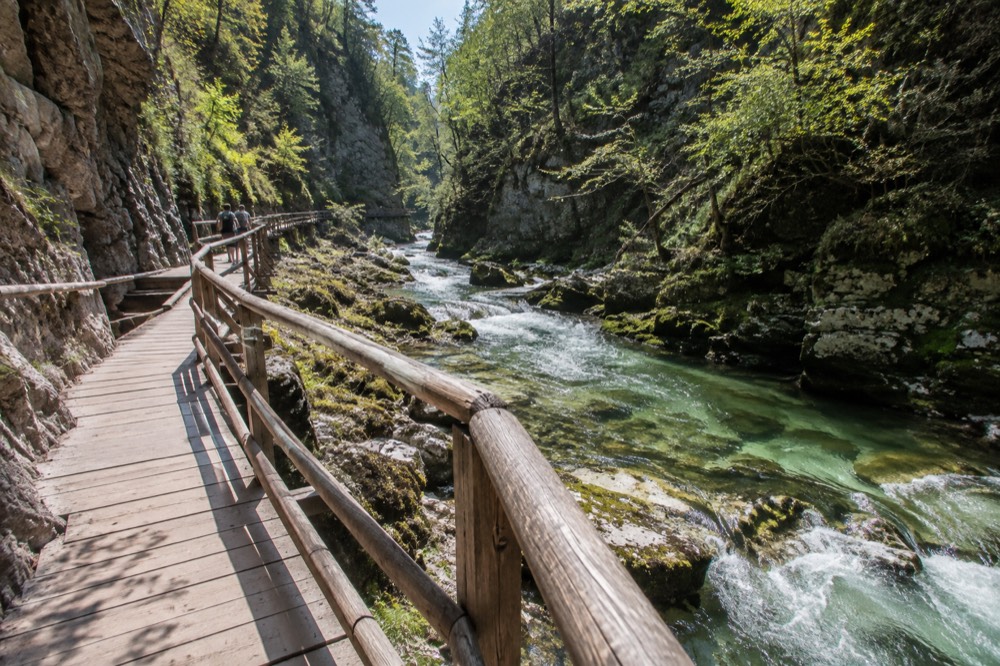
The Vintgar Gorge is open only from April to October, with the exact closing date depending on conditions each year, and its operator states the busiest window is 10:00 to 13:00. The gorge closes for winter, so any cold-season Bled itinerary must plan around it.
The gorge is the clearest case of weather shaping a Bled plan. The official season runs from April to October, with hours that shift through the year: 09:00 to 16:00 in early spring, 08:00 to 18:00 at the height of summer, and 09:00 to 15:00 by late September. Timed-entry slots apply, and the operator publishes no fixed closing date because it depends on conditions, so the rule is April to October and check before travelling. The full practical detail, including the ticket, is in the Vintgar Gorge guide.
Rain changes the gorge rather than closing it. In wet weather the water runs higher and the walkways stay open, but the experience is different, and in the heaviest autumn rain the operator's own conditions-based closure logic applies. In summer the opposite problem, crowds, is weather-linked too, because everyone converges on the gorge in the hottest hours of the hottest days. Going before 10:00 solves both problems at once.
The wider day-trip picture around Bled is weather-flexible in a way few destinations manage. The Lake Bled guide covers the lake circuit itself, which works in every month. The Lake Bohinj guide covers the wilder alpine lake half an hour further into the mountains, which is the better choice on a clear winter day precisely because of the inversion logic above. And the rainy day in Ljubljana guide collects the indoor options for the days when even the flexible plans fail.
Which Bled Tours Work Best in Which Weather?
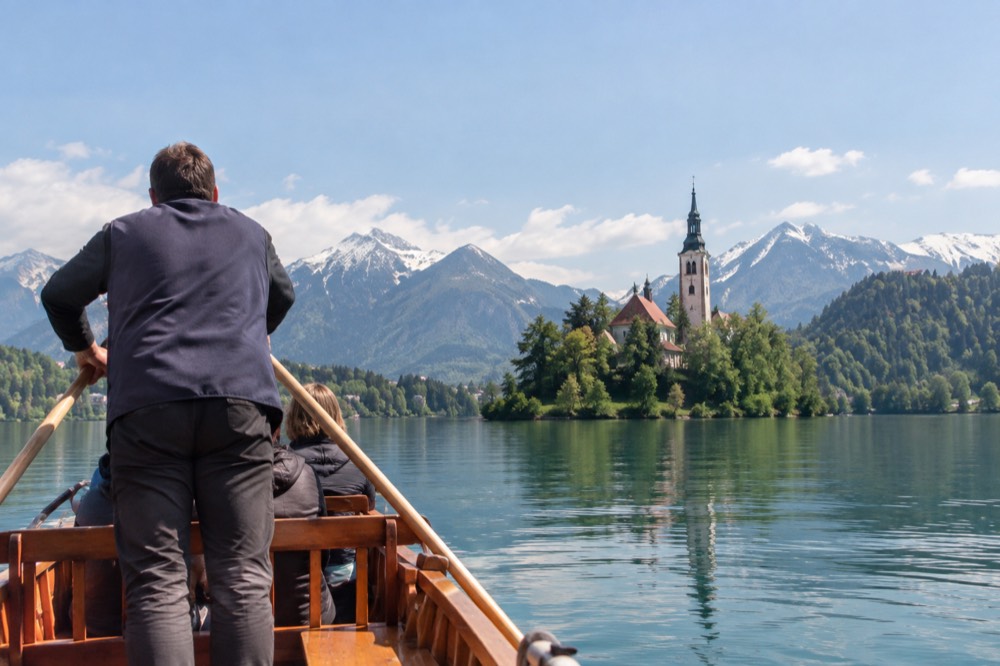
In settled summer weather the lake-and-castle day trip and the small-group island tours are the natural picks. In changeable shoulder-season weather, a combined Bled and Postojna Cave tour is the weather-proof option, and on a wet city day the cave-and-castle trip out of Ljubljana is the most reliable plan in the roster.
The reasoning is straightforward once the month table is internalised. The pure Bled day trips, the Lake Bled and Castle tour, the Lake Bled Day Tour and the small-group castle and island options, all depend on the lake looking like itself, so they are at their best in the June-to-September window and on clear winter days. They still run year round, and a grey day at Bled is a quieter, softer version of the same scenery.
The combo tours hedge the weather deliberately. A ten or eleven-hour Bled plus Postojna day puts the outdoor half in whatever light the morning offers and guarantees a spectacular indoor half at a constant 10 C. In September and October, the wettest months, that structure is worth paying for, and the same logic applies in reverse in a July heatwave, when the cave is the only genuinely cool place in the region.
For visitors basing themselves in Ljubljana rather than Bled, the free walking tours are the weather-flexible city option. The Old Town walk from Roman roots to the dragon bridge, a tips-based GuruWalk free tour rated 4.91 across 1,496 reviews, runs in almost any conditions and covers two hours of the city's core. The full comparison of paid and free options is in the Ljubljana free walking tour guide.
A Final Word on Reading Bled's Forecast
The month-by-month table is the planning layer, but on the day you are standing at the lake, the live forecast matters more than any normal, and the basin rewards two habits: check the forecast for altitude, not just for the shore, and treat morning fog in the wet months as a delay rather than a cancellation, because it usually lifts and often leaves the clearest afternoon of the week behind it.
Two habits serve visitors well here. The first is to check the live forecast for altitude, not just for Bled itself, because the inversion means the stations at 660 m and 1535 m, Katarina nad Ljubljano and Vogel, can be in a different weather world from the shore, and Kredarica at 2514 m reports its own conditions entirely. The second is to treat morning fog in September, October and December as a delay rather than a cancellation, since it usually lifts by late morning and often leaves the clearest afternoon of the week behind it.
The basin's climate record is the reason this site exists in this form: it is a destination where the weather is not a footnote to the itinerary but the main input to it. Choose the month with the rain table in front of you, book the flexible things, keep the cave as the fallback, and Lake Bled delivers in every season, grey ones included.
Common Questions About Lake Bled Weather
What is the weather like at Lake Bled month by month?
Monthly means run from 0.3 C in January to 21.3 C in July, with July the sunniest month at 293 hours and September and October the wettest at 147 mm each.
When is the best month to visit Lake Bled?
June for warm, bright, green conditions with 246 sunshine hours, or September for 21.6 C afternoons with far fewer crowds, accepting the higher rain risk. July and August are the sunniest and best for swimming but the busiest.
Does it rain more at Lake Bled in autumn than in summer?
Yes. September and October each average 147 mm against July's 115 mm in the 1981-2010 normals, and both autumn months average 12.4 fog days. Autumn is the wet, not the dry, shoulder season.
When can you swim in Lake Bled?
Mid-July to mid-August is the reliable window, when afternoons average 27.3 C and 26.7 C. No verified official water-temperature figure exists, so treat swimming as an informal summer activity and check conditions locally.
Is Lake Bled foggy in winter?
Yes, the whole basin is. December averages 12.6 fog days and only 56 hours of sunshine, and the mountains above sit in sun while the lake sits under cloud. On grey winter mornings, head up-slope for the light.
Is the Vintgar Gorge open all year?
No. The gorge is open from April to October, with the exact closing date depending on conditions each year, and it closes completely for winter. Hours shift through the season, from 09:00-16:00 in spring to 08:00-18:00 at the summer peak.