Where Locals Eat in Ljubljana: The Neighbourhoods, Markets and Dishes Locals Actually Order
Ljubljana's restaurant scene splits in two: a thin tourist strip along the river, and a much wider city of neighbourhood gostilnas, market stalls and Friday food trucks where residents actually spend their evenings.
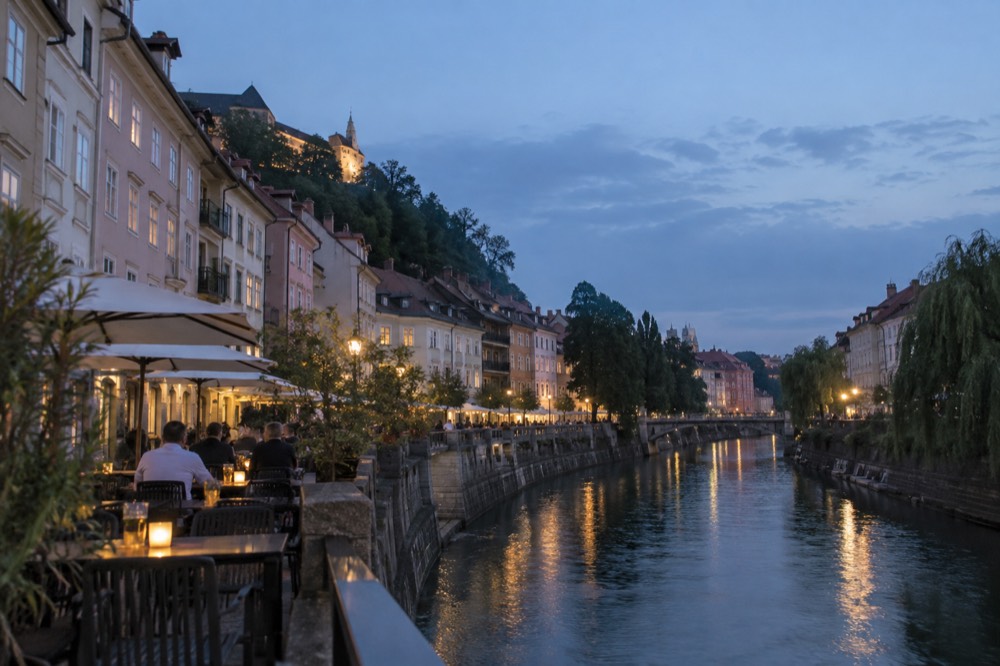
Short answer
Locals eat away from the riverfront: in the market halls and surrounding streets of the Old Town, in the student-priced cafés of Metelkova's surroundings, in Trnovo and along the Tabor and Šiška side streets. Friday's Open Kitchen on Pogačarjev trg is the one food event the whole city turns out for, roughly March to November.
Ljubljana absorbed 1,392,728 tourist arrivals in 2025 on top of its resident population of 293,244. The arithmetic matters at dinner time. The restaurants with the best river views fill with visitors, the prices climb to match, and the locals quietly walk ten minutes further out, to the streets where the menus are shorter and the tables turn on regulars.
This guide is about that second city. It covers the neighbourhoods where residents actually eat, the Central Market that anchors their shopping, the Friday street-food event that pulls the whole town onto one square, and the dishes that appear on local tables far more often than on Instagram. It also flags the food tours that walk you through the same landscape, which is the fastest way in if you only have a day or two.
Where Do the Locals Eat in Ljubljana?
Locals eat in the side streets and residential quarters rather than on the riverfront strip: the market and café streets around Vodnikov trg and Pogačarjev trg, the gostilnas of Trnovo and Tabor east of the centre, the student-priced spots near Metelkova, and the neighbourhood tables of Šiška and Bežigrad. On Fridays from roughly March to November, much of the city simply eats at Open Kitchen on Pogačarjev trg instead.
The pattern is consistent in almost every mid-sized European capital: the most photographed street is the least eaten-on. In Ljubljana the historic centre is pedestrianised, a car-free zone of roughly 20 hectares, so the riverside terraces are pleasant, obvious and easy. Residents use them for a coffee or a glass of wine, but for a meal they tend to migrate.
Three quarters of the city's eating life happens within a fifteen minute walk of the centre anyway, because Ljubljana is compact and the centre is pedestrianised, so walking out to dinner is normal. Trnovo, the leafy quarter along the Ljubljanica's southern loop, has long been the classic answer to "where do locals eat", with canal-side tables and a village feel. Tabor and the area around Metelkova run younger and cheaper. Šiška and Bežigrad are where you eat when you are visiting friends, not when you are being a tourist.
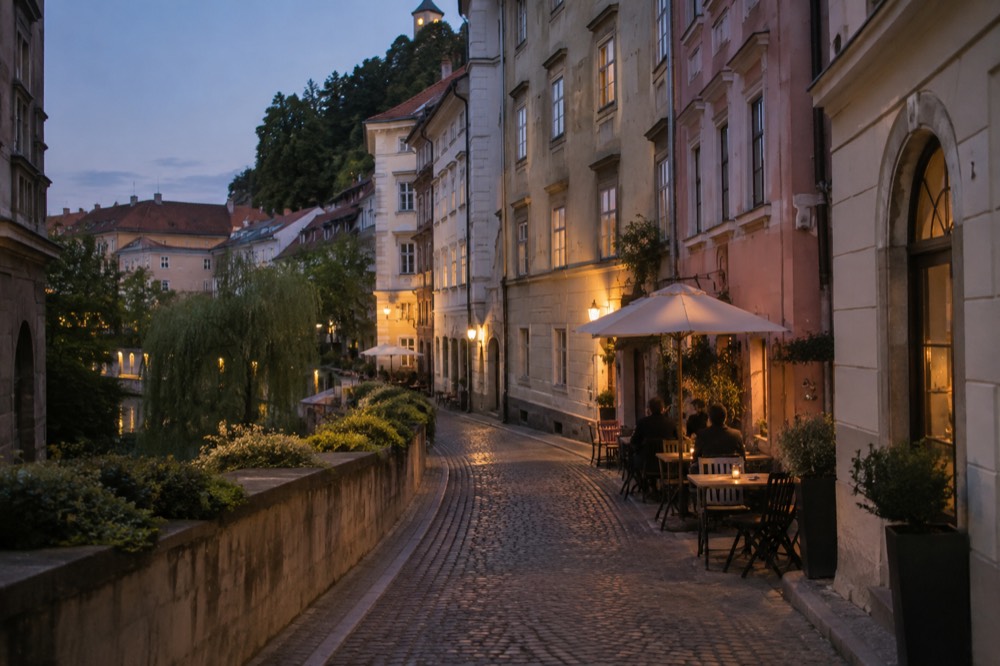
If you want one rule of thumb: walk one bridge too far. Cross Čevljarski most or the Triple Bridge, keep going past the last menu board with photographs on it, and start looking at where the tables are full of people speaking Slovenian. The city rewards the extra two hundred metres more than almost any other in the region, because its tourist footprint is concentrated on a very short stretch of river.
For a fuller map of the eating streets, our where to eat in Ljubljana guide covers the restaurant side street by street, and the Slovenian food in Ljubljana guide explains the dishes themselves.
Which Neighbourhoods and Food Streets Do Residents Actually Eat Around?
Trnovo is the classic local-eating quarter, with canal-side tables and long-standing gostilnas; the streets around the Central Market feed the Old Town's daily lunch crowd; Tabor and the Metelkova end run younger, cheaper and later; and Šiška and Bežigrad hold the neighbourhood places you only find by being invited. Each has a different price level and a different hour of the evening.
Here is the honest comparison, quarter by quarter:
| Quarter | What the eating scene is like | When locals go | Typical spot |
|---|---|---|---|
| Old Town edges | Terrace-heavy, mixed tourist and local, best for coffee and wine | Morning coffee, afternoon | Riverside streets off Prešernov trg |
| Central Market area | Market halls, bakeries, lunch counters, cheapest good bread and cheese in the centre | Weekday mornings and lunch | Vodnikov trg and Pogačarjev trg |
| Trnovo | Villagey, leafy, canal-side, traditional gostilna cooking | Weekend lunches, long dinners | Along the Gruber canal |
| Tabor / Metelkova end | Young, student-priced, craft beer and late plates | Thursday to Saturday evenings | North-east of the centre |
| Šiška and Bežigrad | Neighbourhood restaurants with local regulars, few menus in English | Family occasions, weekdays | Off the main drags |
Trnovo deserves its reputation. It sits on the loop of the Ljubljanica south of the centre, around the church where the poet Prešeren once attended services, and its canal-side tables feel closer to a village square than a capital city. The Trnovo guide walks the quarter in detail. Tabor, east of the Old Town, has a younger energy, and the area around Metelkova, the autonomous cultural centre in former army barracks, is surrounded by some of the cheapest and most interesting eating in the city; the Metelkova guide covers the quarter, though the venue itself is more about bars and clubs than dinner.
Šiška and Bežigrad are the honest answer when someone asks where Ljubljana families eat on a Tuesday. You will not stumble into these places from Prešeren Square. They are a short bus ride out, the buses take the Urbana card or a contactless bank card and never cash, and they reward the trip with portions and prices the centre cannot match.
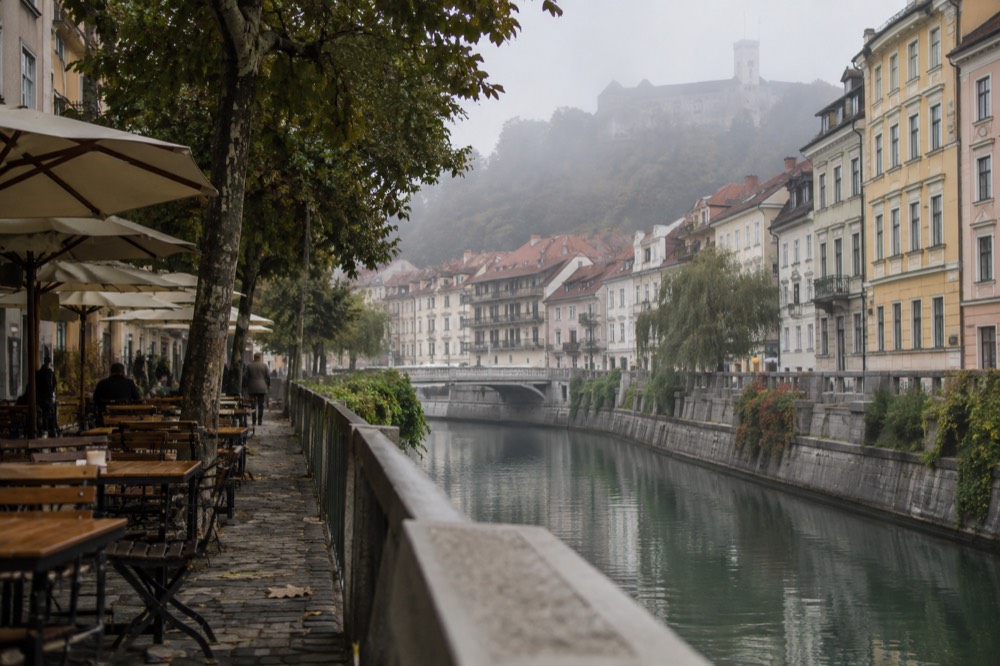
The fastest way to short-circuit all of this is a guided walk with tastings, because a local guide takes you directly to the counters and back-room tables that took residents years to find. The Slovenian cuisine walking tour runs four hours of exactly that, Check availability if a food-first visit appeals.
What Role Does the Central Market Play in Local Eating?
The Central Market is the centre of the city's food culture: an outdoor market on Vodnikov and Pogačarjev trg plus Plečnik's covered halls, running Monday to Saturday, where residents buy their cheese, bread, herbs and vegetables and where many grab lunch from the stalls around the edges. It is also the single best place for a visitor to see what Slovenia actually eats.
The market's own operator publishes the hours, and they are worth knowing precisely because the market is a morning institution. The outdoor stalls on Vodnikov and Pogačarjev trg run roughly 06:00 to 18:00 in summer and 06:00 to 16:00 in winter, Monday to Saturday, with limited Sunday and holiday opening April to November. The covered halls, the beautiful Plečnik-designed colonnade along the river, run Monday to Friday 07:00 to 16:00 and Saturday 07:00 to 14:00.
| Market area | Days | Hours |
|---|---|---|
| Outdoor stalls, Vodnikov and Pogačarjev trg | Mon to Sat | Roughly 06:00-18:00 summer, 06:00-16:00 winter |
| Covered halls (Plečnik colonnade) | Mon to Fri | 07:00-16:00 |
| Covered halls (Plečnik colonnade) | Saturday | 07:00-14:00 |
| Limited Sunday and holiday opening | April to November only | Check stalls on the day |
The full detail, including how the market fits a day's walking route, is in our Central Market guide. What matters here is the eating rather than the shopping. Locals do both at once: a round of štrukelj or a burek from a bakery nearby, cheese and prosciutto from a stall for a picnic by the Ljubljanica, fruit by the kilo, and a coffee standing at the edge of the square. A market breakfast here costs less than any hotel version, and the produce is the same produce the restaurants on the expensive streets are cooking that evening.
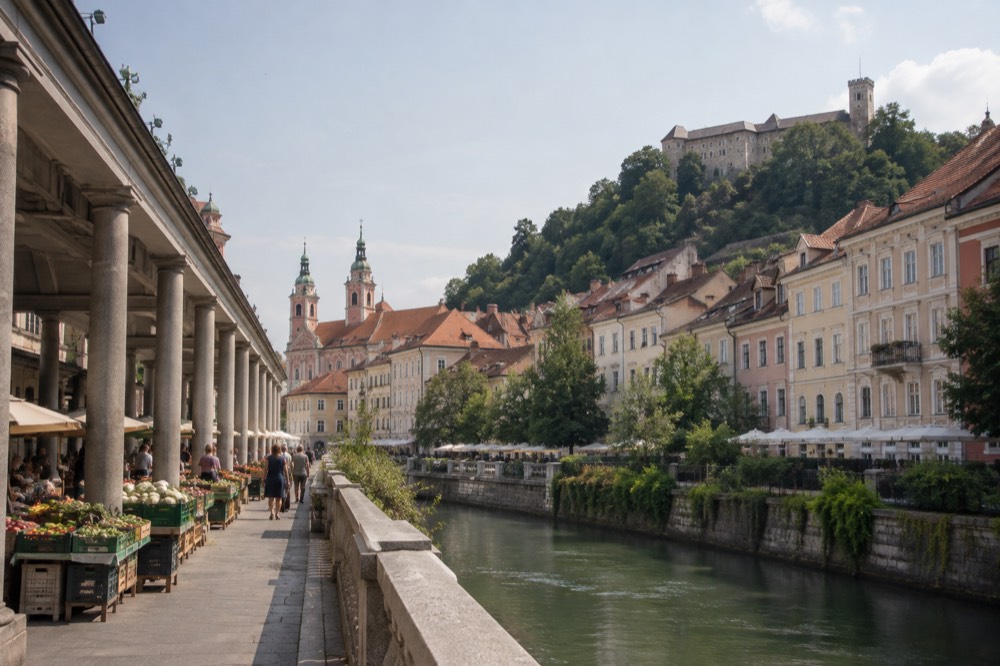
The market is also the honest answer to "what do Slovenians actually cook", because you can read the cuisine straight off the stalls: buckwheat, potatoes, cabbage, pork, river fish, herbs, cottage cheese, walnuts. If you only do one local thing in Ljubljana, do this, and go before ten.
Where Does the Whole City Eat on a Friday: Open Kitchen?
On Fridays, roughly March to November, the answer to where locals eat becomes one square: Open Kitchen, Odprta Kuhna, on Pogačarjev trg beside the market, where dozens of kitchens, chefs and small producers cook from about 10:00 to 21:00, later on warm evenings. It is the city's biggest weekly food event and the one eating experience residents and visitors genuinely share.
The tourist board's own wording is that it runs "every sunny Friday", and that is literal: the market is cancelled in bad weather, there is no indoor fallback. That single detail is worth more than any list of stallholders, because Ljubljana's weather has a shape most visitors do not expect. September and October, deep in the Open Kitchen season, are the city's joint wettest months at 147 mm each, wetter than July's 115 mm, and the foggiest months on record too: ARSO's 1971-2000 normals count 12.4 fog days in each of September and October, level with December and above January. A Friday in late September can be glorious or it can be a washout, so check the forecast rather than assuming. Other pages covering the same trip are gathered on Ljubljana Travel Guide.
The format is simple and very good. Chefs from around the country set up from mid-morning, the square fills with office workers at lunch, and by evening it is the closest thing Ljubljana has to a shared dining room. You eat standing, at long tables, trying five kitchens in one night. Prices are set by each stall, so treat anything you read as a planning range and check the boards on the day.
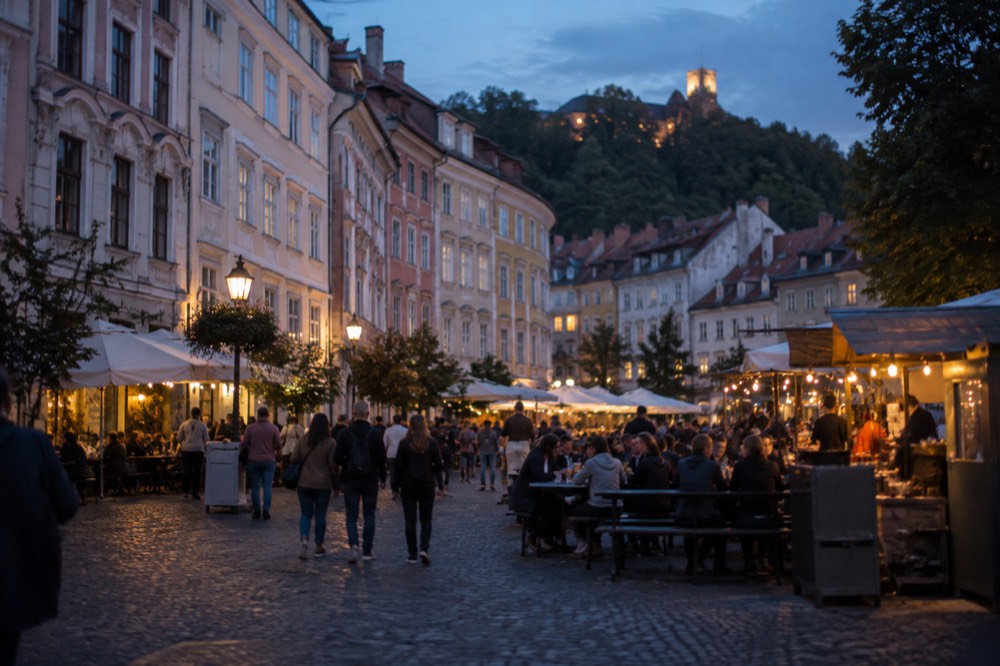
The Open Kitchen guide covers the event in full, including what to do on a rainy Friday. The Ljubljana events guide tracks the rest of the calendar, because the food year here does not stop at the weekly market.
The three-hour food and wine walk is a good companion piece to a Friday like this: it runs through central Ljubljana's food traditions and tasting counters, and pairs well with an evening at the stalls afterwards.
What Should You Order If You Want to Eat Like a Local?
Order the dishes that never make the Instagram reels: buckwheat žganci with pork cracklings, jota (sour soup with beans and sauerkraut), štrukelj rolled pastry, kranjska klobasa with mustard and horseradish, idrijski žlikrofi dumplings, and potica or gibanica for dessert. These are the plates residents grew up on, and the neighbourhood gostilnas cook them better and cheaper than the riverside terraces do.
Slovenian home cooking is hearty, regional and pork-forward, with a strong buckwheat and cabbage backbone. The typical Slovenian breakfast and the famous Slovenian foods pieces cover the national table in depth; here is the short version of what to point at on a local menu:
| Dish | What it is | When locals eat it |
|---|---|---|
| Žganci | Buckwheat or barley spoonbread, served with cracklings | Everyday comfort food |
| Jota | Sour bean and sauerkraut soup, often with smoked pork | Winter, Sunday lunches |
| Kranjska klobasa | The protected Carniolan sausage, with mustard and horseradish | Grills, quick lunches |
| Idrijski žlikrofi | Potato-dough dumplings from Idrija, often in bakalca sauce | Restaurant speciality |
| Štrukelj | Rolled pastry, sweet or savoury, a true national dish | Dessert or a meal itself |
| Potica and gibanica | Rolled and layered walnut and cottage cheese cakes | Celebrations, holidays |
Two of those deserve the trip on their own. Idrijski žlikrofi come from Idrija, a mercury-mining town west of Ljubljana whose dumplings carry protected status; the Idrija guide explains the town, and the dumplings appear on good Ljubljana menus. Štrukelj is close to a national symbol, and there is a hands-on štrukelj cooking class in the city if eating it makes you want to learn the rolling technique.
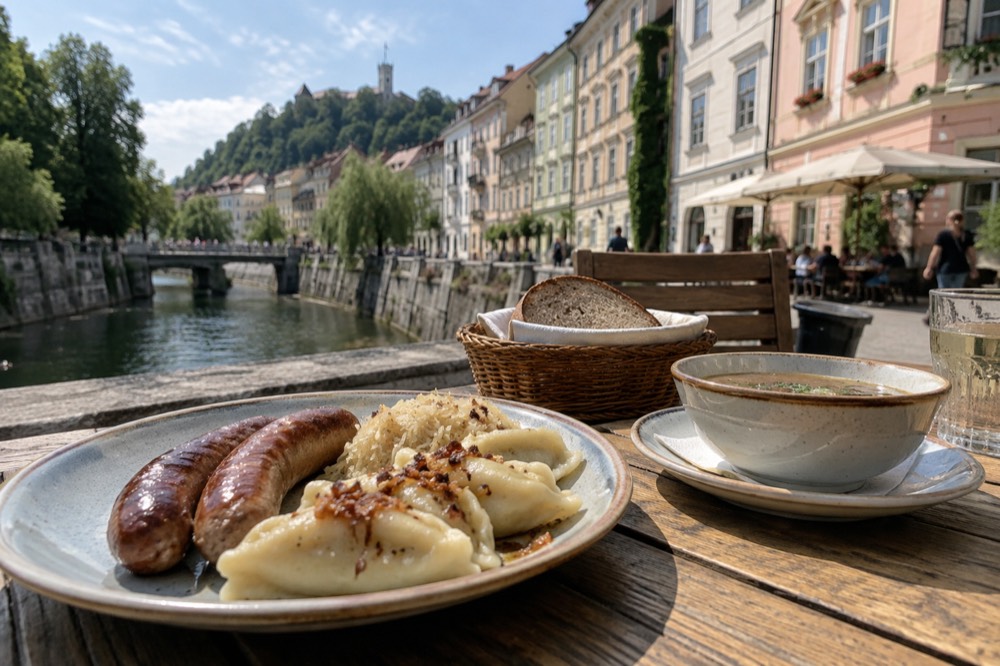
Wine belongs with all of this, and locals drink local: Slovenia has centuries-old wine regions, and a glass of a Slovenian white is the default pour, not an exotic choice. The Vipava Valley wine tour runs out to one of those regions for anyone who wants to see where the glass comes from.
How Much Does Eating Out in Ljubljana Actually Cost?
Eating in Ljubljana is cheaper than most western European capitals but not the bargain it was a decade ago: a market or bakery lunch runs a few euros, a sit-down neighbourhood dinner with a glass of wine typically lands in the mid-teens to high twenties per person, and the tourist strip along the river sits noticeably above the side-street prices. The reliable saving is behavioural, eat where the locals eat, not structural.
Honest figures first. The city's own tourist tax is published and modest, 3.13 EUR per person per night, so accommodation pricing is not being inflated by hidden municipal charges. Getting to dinner costs 1.50 EUR per single bus ride in zone 1, ninety minutes including transfers, on the Urbana card or a contactless bank card, and never cash on board. Those are hard numbers. Restaurant prices move with the season and the street, so the table below is a planning frame rather than a promise:
| Eating situation | What to expect | How to keep it local |
|---|---|---|
| Market or bakery lunch | The cheapest good meal in the centre | Buy at the stalls before 14:00 |
| Neighbourhood gostilna dinner | Mid-range, portions generous | Order the daily specials, they rotate |
| Riverside terrace dinner | The premium strip, priced for the view | Fine for a drink, less so for a meal |
| Friday Open Kitchen | Set by each stall, pay as you graze | Go with small portions, try more kitchens |
| Food or wine tasting tour | Priced per listing, check the live listing | Book ahead on weekends |
The structural comparison worth knowing is the [Ljubljana Card](/guides/ljubljana-card/): at 41 EUR for 24 hours it bundles the castle funicular, the river cruise, city buses and over thirty museums, and it makes sense for a heavy sightseeing day, but it does not cover restaurant meals, so it is a sightseeing decision rather than a food one. The Ljubljana prices guide and the budget guide do the full arithmetic.
One cost note that surprises visitors: the covered market halls close at 14:00 on Saturday and do not open Sunday at all, so the "cheap local lunch at the market" plan has a hard weekly deadline. Plan the market for a weekday morning and you will never be caught out.
Do Locals Take Food Tours, and Is One Worth Your Time?
Locals do not need food tours, but visitors with limited days should seriously consider one: a four-hour guided tasting walk such as the Slovenian cuisine tour, rated 4.8 across 552 reviews from about $104, reaches the market, the neighbourhood counters and the dishes above far faster than self-guiding, and the good ones are led by people who eat at these places anyway.
The value case is time. If you have a weekend, you could spend half of it finding the right street in Trnovo and the other half decoding menus. A guided walk compresses that into one afternoon with a local making the choices. The Slovenian cuisine walking tour with tastings is the strongest fit for this article's question precisely because it is built around what residents eat rather than around photo stops.
If your interest runs more to the glass than the plate, the wine tasting with appetizers runs two hours on a silent electric boat along the Ljubljanica, rated 4.8 across 226 reviews from about $64, and pairs Slovenian wines with snacks as the river slides past. It is the most Ljubljana-specific tasting format in the city: the river, the wine and the old town in one sitting.
For after dark, the local answer to a big night out is the pub crawl, five hours across the city's bars, or a quieter craft beer stop; the Ljubljana craft beer guide maps the breweries and taprooms that have multiplied across the city in the last few years, including the beer-and-boat tasting format that floats down the Ljubljanica.
Common Questions About Where Locals Eat in Ljubljana
Where Do The Locals Eat In Ljubljana?
Locals eat in the neighbourhoods around the centre rather than on the riverfront strip: the market and café streets around Vodnikov and Pogačarjev trg, the canal-side gostilnas of Trnovo, the younger and cheaper Tabor and Metelkova end, and the family-run places of Šiška and Bežigrad. On Fridays, roughly March to November, much of the city eats at Open Kitchen on Pogačarjev trg.
Is it expensive to eat out in Ljubljana?
It is cheaper than most western European capitals but not a bargain. A market or bakery lunch costs a few euros, a neighbourhood dinner with wine typically runs mid-teens to high twenties per person, and the riverside tourist terraces sit above the side-street prices. The is it expensive to eat out in Ljubljana piece does the full breakdown.
What is Open Kitchen and when does it run?
Open Kitchen, Odprta Kuhna, is Ljubljana's weekly street-food market on Pogačarjev trg, running Fridays roughly March to November from about 10:00 to 21:00 and later on warm evenings. The official wording is "every sunny Friday": it is cancelled in bad weather, so check the forecast before planning your week around it.
What should I order to eat like a local?
Order the traditional plates: žganci with cracklings, jota sour soup, kranjska klobasa, idrijski žlikrofi dumplings, štrukelj, and potica or gibanica for dessert. The neighbourhood gostilnas cook these better and cheaper than the riverside restaurants.
When is the Central Market open?
The outdoor stalls on Vodnikov and Pogačarjev trg run Monday to Saturday, roughly 06:00 to 18:00 in summer and 06:00 to 16:00 in winter, with limited Sunday and holiday opening April to November. The covered halls run Monday to Friday 07:00 to 16:00 and Saturday 07:00 to 14:00, and do not open on Sunday.
Are food tours in Ljubljana worth it?
If you have only a couple of days, yes. A guided tasting walk such as the Slovenian cuisine tour, four hours and rated 4.8 across 552 reviews, takes you straight to the market, the neighbourhood counters and the traditional dishes that take visitors days to find alone. Check availability before you arrive, as the popular food tours fill on weekends.