3 Days in Ljubljana: A Complete First-Visit Itinerary
Three days is the comfortable answer for Ljubljana: two days for the city itself, and a third for the one big excursion every visitor wants.
Short answer
Three days is the right length for Ljubljana. Day 1 covers the pedestrianised Old Town and the riverside; day 2 takes the castle, the museums and the food scene; day 3 is a day trip, usually Postojna Cave or Lake Bled. The city centre is walkable, so no day needs a car.
3 Days in Ljubljana: A Complete First-Visit Itinerary
Ljubljana recorded 2,844,129 overnight stays across 1,392,728 arrivals in 2025, which works out to an average stay of about two nights. The arithmetic says something the guidebooks rarely spell out: most people treat this as a short city, then leave. Three days is the version that actually fits the city, because it adds the thing almost everyone under-plans, the day trip. Slovenia packs Postojna Cave, Lake Bled, the Julian Alps and the Adriatic coast within a couple of hours of the capital, and the biggest regret reported by short-stay visitors is not the city itself but the excursion they skipped.
This itinerary assumes no car. The historic centre is pedestrianised, a car-free zone of roughly 20 hectares, so a vehicle is actively unhelpful for days 1 and 2. Day 3 uses a guided excursion or public transport, both of which are covered below.
What Does a Good 3-Day Plan for Ljubljana Look Like?
The shape that works is one day for the riverside Old Town, one day for the castle hill and the museums, and one full day outside the city. Ljubljana's core is compact enough that two days cover it without rushing, but tight enough that three days in a row of castle-and-cathedral sightseeing would start repeating streets. The third day breaks the pattern, and it is where Slovenia genuinely outperforms a city of 293,244 people. This plan also assumes no car, because the centre is pedestrianised and a vehicle only gets in the way.
Here is the skeleton, before the detail:
| Day | Theme | Anchor sight | Evening |
|---|---|---|---|
| 1 | Old Town and the river | Prešernov trg and Tromostovje | Riverside dinner on the Ljubljanica |
| 2 | Castle hill, museums, food | Ljubljana Castle and the funicular | Open Kitchen, if it is a Friday |
| 3 | Day trip | Postojna Cave or Lake Bled | Early return, drinks in the old quarter |
Two structural facts shape every day of this plan. First, the centre is pedestrianised, so walking is not just possible but the default. Second, nearly every major museum closes on Monday, a planning detail that decides which day should be the museum day. If your trip includes a Monday, put the day trip there.
If you want the shortest possible version of the city first, our one day in Ljubljana guide compresses the essentials; this plan assumes you have the luxury of doing them properly.
How Should You Spend Day 1 in the Old Town?
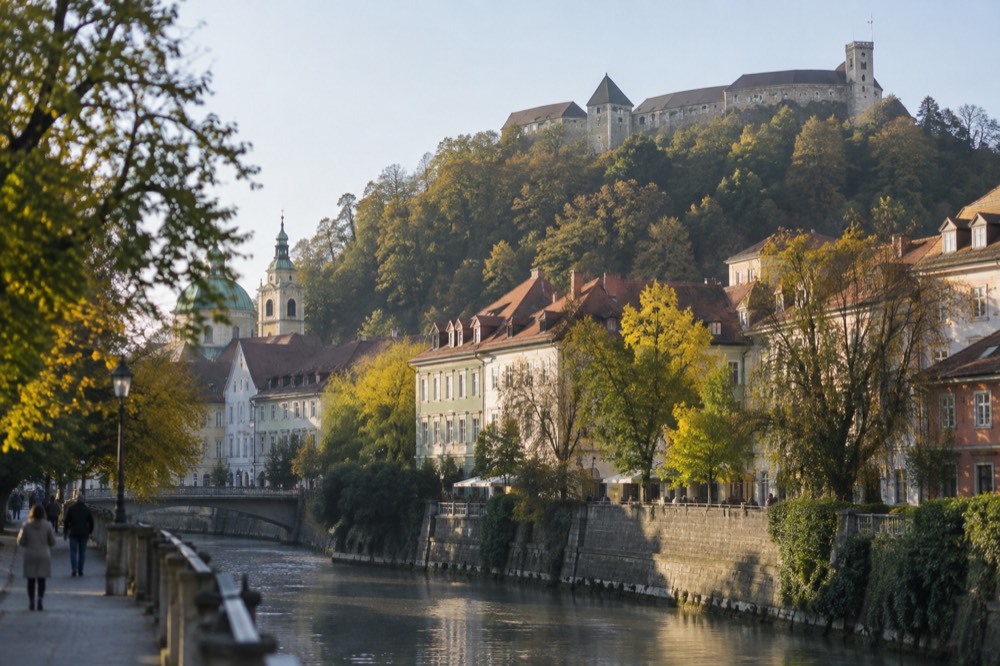
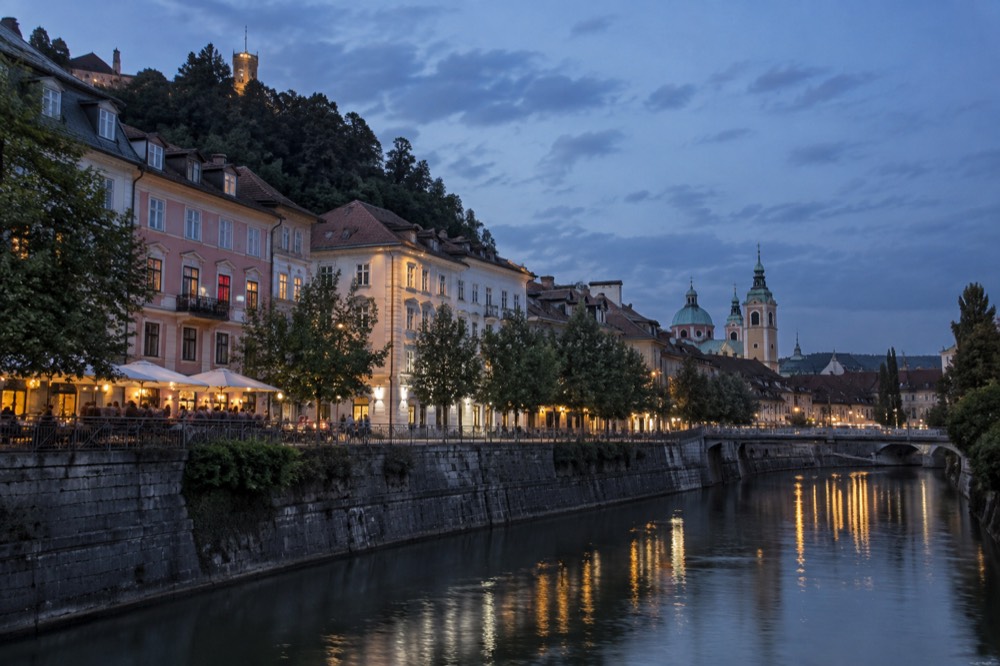
Start at Prešernov trg, cross Tromostovje, and let the day run south through the Old Town to the Central Market, finishing on the river at dusk. That single line covers the pedestrian core most visitors see, and it works because everything on it sits within a fifteen-minute walk of everything else. Day 1 deliberately avoids the castle hill, which is its own half-day and belongs to day 2. By evening you should be on the Ljubljanica embankment, because the riverside terraces are what the first day is remembered for.
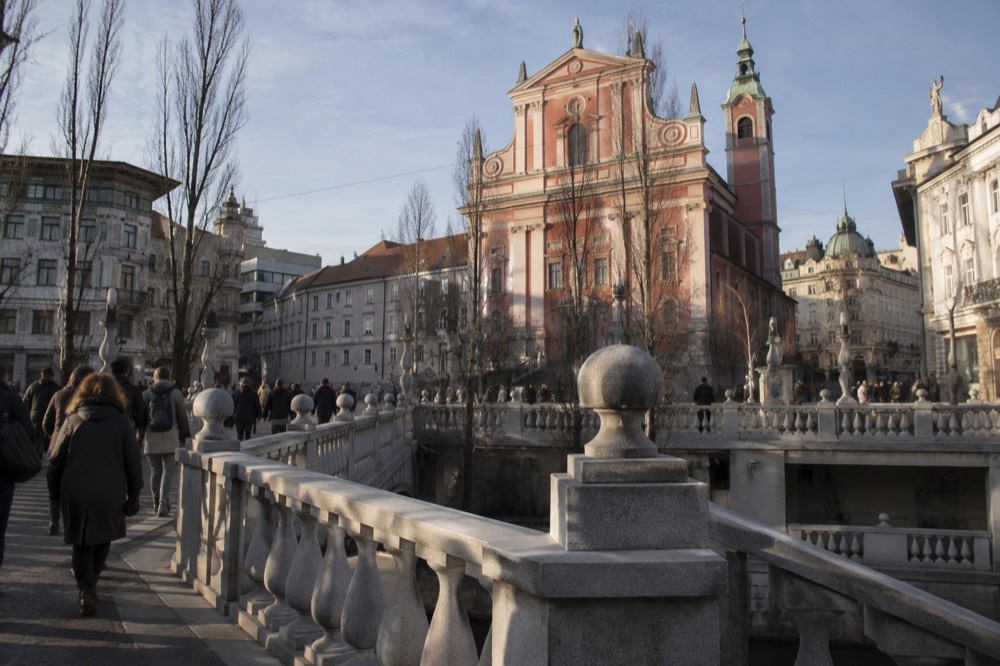
Prešernov trg is the city's main square, dominated by the Franciscan Church and the poet statue it is named for. From there, Tromostovje, the Triple Bridge, carries you across the Ljubljanica; it is a single 19th-century bridge that architect Jože Plečnik flanked with two pedestrian side spans, and it is the reason the square and the Old Town read as one space. South of the bridge you are in the medieval street grid, where the Ljubljana Cathedral and the Dragon Bridge, Čevljarski most, are the two landmarks most people photograph.
By late morning you will reach the Central Market complex, Plečnik's colonnaded halls on Vodnikov and Pogačarjev trg. The outdoor stalls run roughly 06:00 to 18:00 in summer, and the covered halls are quieter on weekday mornings. If your day 1 is a Friday between March and November, check whether Open Kitchen is running on Pogačarjev trg: the official wording is "every sunny Friday", which is literal, and the street-food market is cancelled in bad weather. Our Open Kitchen guide covers the practicalities.
The afternoon is for the river itself. A 50-minute electric boat trip on the Ljubljanica from the Breg departures costs about 15 EUR with the Barka operator, or you can take a Ljubljanica river cruise as part of a combined boat-and-walking tour. The river is the one vantage point from which the Old Town's facades, stair alleys and church towers compose properly, and it costs less than most museum tickets.
A free introduction to the same streets is available too. The free walking tour roster on this site includes several GuruWalk walks, and one of the strongest, Ljubljana Unveiled, is a two-hour tips-based walk from the Roman roots to the Dragon Bridge, rated 4.91 across 1,496 reviews. GuruWalk runs it, and the model is pay what you think it was worth at the end.
How Should You Spend Day 2 at the Castle and the Museums?
Take the funicular up to Ljubljana Castle in the morning, spend the afternoon in the museum quarter, and give the evening to food and drink, which is what Ljubljana does best after dark. The castle deserves the fresh legs of a morning, the museums deserve a Monday-free day, and the food scene deserves an unhurried evening rather than a rushed slot before a reservation. This is also the day to be honest about what the castle ticket actually buys, because the grounds and the funicular are priced separately and the distinction confuses people.
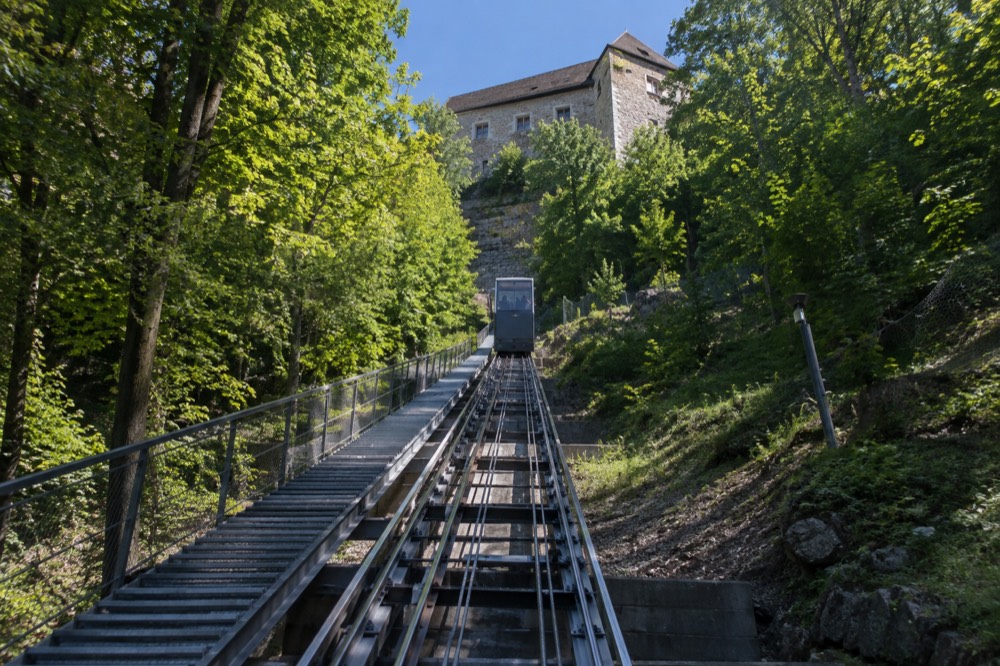
The funicular runs 09:00 to 19:00 in the colder half of the year and 09:00 to 22:00 from May to September. A return adult funicular ticket is 6.00 EUR, while a castle ticket including the funicular is 19.00 EUR for an adult and covers the Viewing Tower, the Slovenian History exhibition, the Puppet Museum, the video mapping and the temporary shows. The distinction matters because the castle grounds and the funicular are priced separately: never call "the castle" free or paid without saying which part you mean. Full detail, including the official price list, is in our Ljubljana Castle guide.
From the castle hill, the afternoon belongs to the museums, and the closure pattern is the planning fact. Nearly every major institution closes on Monday, with the National Gallery open 10:00 to 18:00 Tuesday to Sunday at 10 EUR for the permanent collection, the Museum of Modern Art at 7 EUR, and the Slovenian Ethnographic Museum at 8 EUR. The genuinely useful money fact: admission is free on the first Sunday of every month at the national institutions, which the National Museum, the National Gallery, MSUM and the Ethnographic Museum each publish on their own sites. If your day 2 happens to be a first Sunday, this becomes a free afternoon.
| Institution | Closed | Hours | Adult |
|---|---|---|---|
| National Gallery | Monday | 10:00-18:00, Thu to 20:00 | 10 EUR |
| Museum of Modern Art | Monday | 10:00-18:00 | 7 EUR |
| Slovenian Ethnographic Museum | Monday | 10:00-18:00, Thu to 20:00 | 8 EUR |
| City Museum of Ljubljana | Monday | 10:00-18:00 | 10 EUR |
| Museum of Illusions | none | 09:00-21:00 | 16 EUR |
Plečnik fans should note that the Plečnik House is guided-entry only, with tours on the hour, at 12 EUR including the guide. That is a booking constraint, not a detail.
The evening is where Ljubljana quietly excels. The Ljubljana food tour options run from a 4-hour Slovenian cuisine walk with tastings, rated 4.8 across 552 reviews and priced from $104, to a shorter street-food equivalent. For a deeper cut, a three-hour traditional flavours journey through the city's old food traditions holds a 5.0 rating across 54 reviews. And if the evening is more about the bars than the food, the city's craft beer scene is documented in our Ljubljana craft beer guide, including a one-hour Ljubljanica boat cruise with craft beer tastings from $56.
What Should Day 3 Be: The Caves or Lake Bled?
Day 3 should be one big excursion, and the honest default is Postojna Cave with Predjama Castle if you want spectacle underground, or Lake Bled with its castle if you want the postcard. Both are manageable as guided day trips from Ljubljana, both cost roughly half a day's budget, and trying to combine them into one frantic day is the single most common planning mistake visitors make with exactly three days in hand. Pick one, do it properly, and keep the evening free for a last unhurried night in the old quarter.
Postojna Cave is 3.7 km of underground route travelled partly by the cave train, with the tour running about an hour and a half. The cave holds 10 C year round, which is the single most useful fact on the excursion: visitors arrive in August in shorts and are cold for ninety minutes. Predjama Castle, built into a cliff mouth 9 km away, is open year round. Entry as a standalone adult ticket is 34.90 EUR for the cave and 24.00 EUR for the castle if you buy direct; a combined excursion from Ljubljana, which includes transport and tickets, runs from $132 as a 6-hour tour rated 4.8 across 2,802 reviews.
Lake Bled is the other candidate, and it carries more search demand than the city itself, which tells you something about what people come to Slovenia for. A 6-hour Bled and Bled Castle trip from Ljubljana runs from $86 and carries a 4.7 rating across 1,641 reviews; a plainer guided day tour to the lake starts from $57. The trade-off against the caves is simple: Bled is a landscape you walk around and look at, the caves are a spectacle you descend into. Our Lake Bled guide covers the castle, the island and the pletna boats in full, and our Ljubljana to Lake Bled transport guide covers the journey options. If it is winter, note that Vintgar Gorge closes for the season: it is open to visitors between April and October, with the exact closing date depending on conditions.
There is a third answer worth naming. Ljubljana sits in a basin under cloud from October to March, and the hills a few hundred metres above it are often in sun while the city fogs in. A winter day 3 that heads upward, whether a guided hike to Velika Planina's herdsmen village from $86 or a Soča Valley and Kranjska Gora day tour from $132, buys sunshine the city cannot offer in December.
How Much Do 3 Days in Ljubljana Cost?
Budget roughly 41 to 54 EUR a day per person on the ground before accommodation and long transfers, with the biggest variables being the castle ticket, the day trip and the evening meals. That figure is built from real prices rather than estimates: a single city bus ride at 1.50 EUR for 90 minutes including transfers, a river cruise at about 15 EUR, the castle with funicular at 19.00 EUR, and food-market lunches that undercut any restaurant in the centre. Museum-heavy days can run free on a first Sunday, and the day trip is the one line that swings the total widely.
| Item | Cost | Notes |
|---|---|---|
| City bus, zone 1 | 1.50 EUR | 90 minutes, transfers included; no cash on board |
| River cruise, 50 min | 15 EUR | Barka departures from Breg |
| Castle ticket with funicular | 19.00 EUR | Adult, includes Viewing Tower |
| National Gallery, permanent | 10 EUR | Free first Sunday monthly |
| Postojna day trip from Ljubljana | from $132 | 6 hours, transport and tickets |
| Bled day trip from Ljubljana | from $57 | 6 hours, guided |
| Tourist tax | 3.13 EUR per night | Added to accommodation bills |
Two transport traps are worth knowing before you build a budget. City buses do not accept cash at all, though contactless Visa and Mastercard payments, including phone wallets, now work on board. And if you are weighing a sightseeing pass, the Ljubljana Card at 41 EUR for 24 hours has to beat paying separately: a castle ticket with funicular at 19.00 EUR plus a river cruise at about 15 EUR is already roughly 34 EUR before a single museum, so the card pays off exactly when you add the museums. The full arithmetic is in our Ljubljana Card guide.
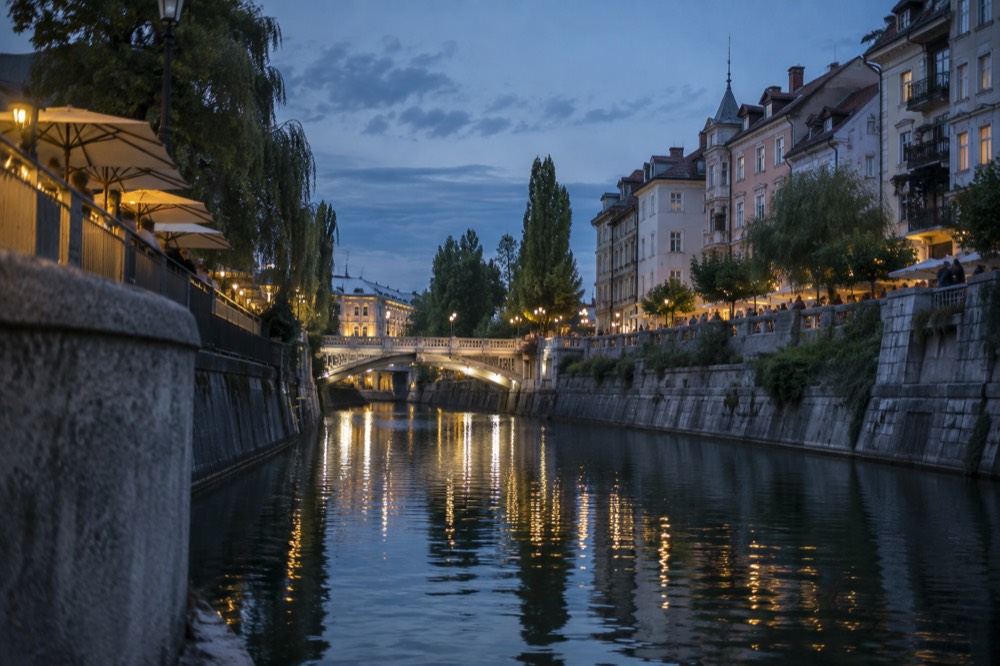
Accommodation pricing is deliberately not estimated here; nightly rates are date-specific and sit behind booking walls. What can be said structurally is that the pedestrianised centre rewards staying inside it, and our where to stay in Ljubljana guide maps the neighbourhoods honestly.
When Is the Best Time of Year for 3 Days Here?
June to September is the comfortable window, but the real planning fact is that September and October are Ljubljana's joint-wettest months, at 147 mm each, above July's 115 mm, and also its foggiest alongside December. That surprises people, because the early-autumn shoulder is marketed as a dry season and ARSO's own normals, 1981 to 2010, say otherwise. Fog is published only for the 1971 to 2000 period, so that figure must carry its period with it, and in that series September and October average 12.4 fog days each, above January's 11.3. Plan a flexible indoor day in any season.
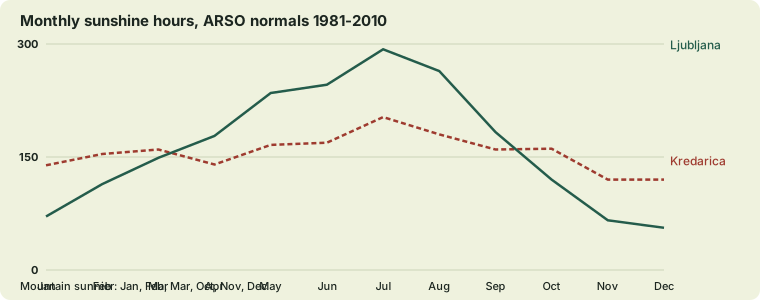
The deeper reason is the basin. Ljubljana sits at 299 m on the basin floor, and in the colder half of the year cold air is trapped under warmer air above, so the city fogs in while the hills a few hundred metres up sit in sunshine. ARSO's 1981-2010 normals put the city at 56 hours of sunshine in the whole of December, under two hours a day, and just 2 clear days that month, while Kredarica at 2,514 m on Triglav gets 120 hours and 6 clear days over the same December. The lines cross: the city wins April to September and loses October to March.
For a three-day visit the practical translation is this. In summer, any three days work, and the long funicular hours to 22:00 give you castle evenings. In the October to March window, plan for at least one grey or foggy day, and make that the museum day or the cave day, because caves hold roughly the same temperature year round and are the reliable wet-weather answer. Our rainy day in Ljubljana guide and Ljubljana in winter guide build those days out in full.
What Practical Things Should You Know Before the Trip?
Slovenia is in the European Union, in the eurozone, and in the Schengen area, so there is no currency to change arriving from the eurozone and no routine border check coming from Italy, Austria, Hungary or Croatia. Slovenia abolished internal land and sea border checks on 21 December 2007, with air checks following on 30 March 2008. Those single sentences remove most of the pre-trip admin a first-time visitor worries about, from currency exchange to passport queues at land crossings. The euro is the currency everywhere, including the markets and the funicular kiosk.
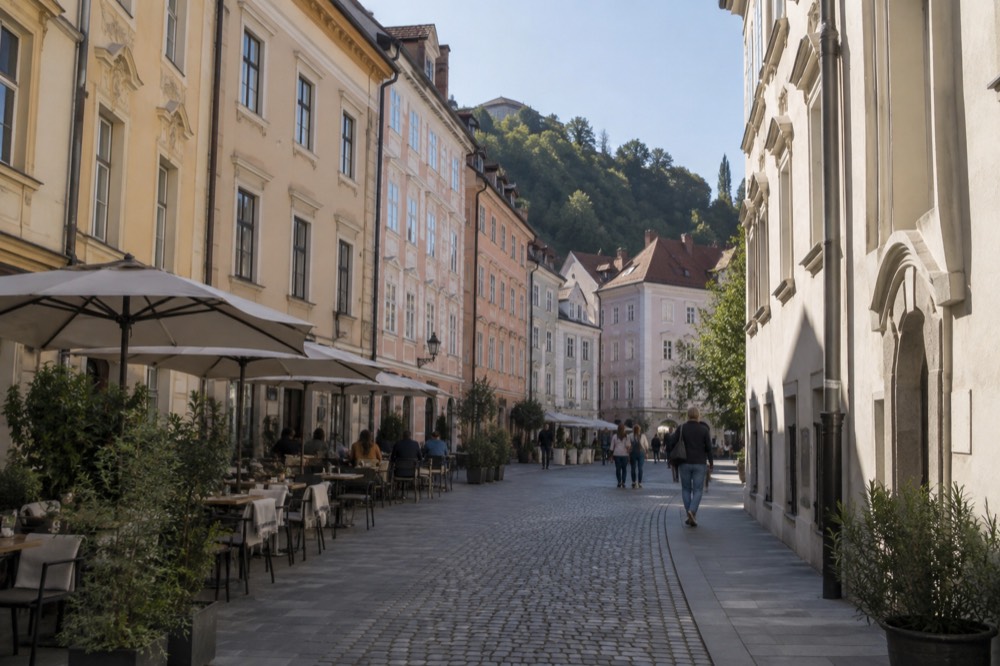
The arrival fact that matters most is the pedestrianised centre. If you are driving, you park at the edge and walk in; the car-free zone covers roughly 20 hectares and has been progressively expanded since 2007. If you are flying in, Ljubljana Airport (LJU) is about 26 km from the city, and an airport bus exists, but its timetable should be checked directly rather than relied on from a guide. Our airport to city centre guide covers the transfer options.
The remaining details are small but genuinely improve three days. The Ljubljanica's boat season runs hourly from 11:00 between May and September with reduced hours into winter. Metelkova, the autonomous cultural centre in former army barracks, is free to enter, with individual clubs setting their own covers and the area busiest Friday and Saturday nights. And the tourist tax of 3.13 EUR per person per night appears on your accommodation bill, not in advertised room rates, so it is worth expecting rather than disputing.
For anyone still weighing the length of stay, our how many days in Ljubljana analysis makes the two-day versus three-day case in detail, and the is 3 days in Ljubljana enough post answers the question directly. The short version, which this whole itinerary is built on: two days is enough for the city, three is the number that includes Slovenia.
If this plan has been useful, Ljubljana Travel Guide has matching guides for every day trip, sight and practical question mentioned here.
Common Questions About 3 Days in Ljubljana
Is 3 days in Ljubljana enough?
Three days is the comfortable fit. Two days cover the pedestrian Old Town, the castle and the main museums, and the third day takes one of the major excursions, usually Postojna Cave or Lake Bled. Visitors who stay only two nights consistently report regretting the missed day trip more than anything about the city itself.
What should I do with 3 days in Ljubljana?
Spend day 1 on the Old Town, Tromostovje and the river, day 2 on the castle funicular, the museums and the evening food scene, and day 3 on one big excursion outside the city. The centre is pedestrianised and walkable, so no day needs a car.
Can you visit Lake Bled as a day trip from Ljubljana?
Yes. Guided day trips to Lake Bled from Ljubljana run about 6 hours, with options from $57 for a plain guided tour up to $86 for a trip including Bled Castle. Bled Jezero station is 1.5 km from the lake on the rail line, closer than the Lesce-Bled station most advice sends people to.
Which is better for a day trip, Postojna Cave or Lake Bled?
Postojna Cave is the spectacle choice: 3.7 km of route partly by cave train, a constant 10 C, and Predjama Castle built into a cliff mouth nearby. Lake Bled is the landscape choice: a walkable lake, an island church and a castle viewpoint. With only three days total, pick one rather than forcing both into a single day.
Is Ljubljana walkable in 3 days?
Yes, and that is the point of the itinerary shape. The historic centre is a pedestrianised zone of roughly 20 hectares, so days 1 and 2 need no transport at all beyond the funicular. City buses, at 1.50 EUR a ride, handle anything further out, and they take no cash, only contactless cards or the Urbana card.
When is the best month for 3 days in Ljubljana?
June to September is the comfortable window. Be aware that September and October are Ljubljana's joint-wettest months at 147 mm each, above July's 115 mm, and also its foggiest alongside December. In the colder half of the year, plan one indoor or cave day, because the basin fogs in while the hills above sit in sunshine.