Trnovo, Ljubljana: A Guide to the Leafy Quarter Across the River
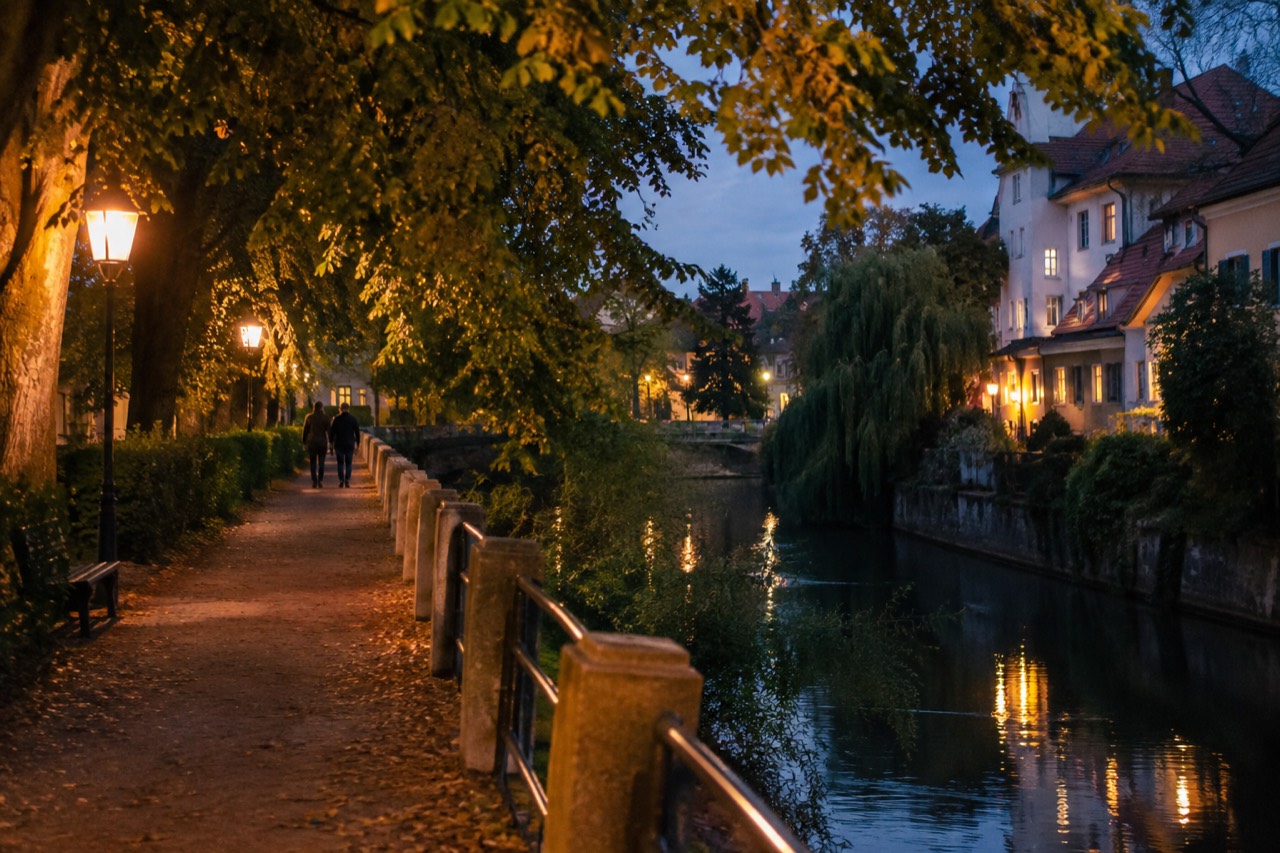
Trnovo is the green, residential quarter just south of the Ljubljanica, the part of Ljubljana where the Plečnik House sits on a quiet street and the riverbank feels lived-in rather than staged for visitors.
Short answer
Trnovo is Ljubljana's leafiest riverside quarter, a short walk or one bus ride south of the pedestrianised centre. Its headline sight is the Plečnik House, a guided-entry museum at 12 EUR including the guide, closed Mondays. Most visitors spend half a day here, pairing the riverbank, the church and the Plečnik House with café stops along the Gradaščica.
Cross the Ljubljanica at any of the southern bridges and the city changes character within a few hundred metres. The crowds thin, the streets widen into leafy residential avenues, and the river, which is boxed into postcard views through the centre, runs past garden allotments and low brick walls. This is Trnovo, the quarter that Ljubljana's own architectural hero called home, and the part of the city where a slow morning feels more natural than a checklist.
Trnovo does not advertise itself. There is no funicular, no dragon bridge, no queue. What there is instead is a genuinely pleasant neighbourhood built around two waterways, a church that anchors the community, and one of the most personal museums in Slovenia. For travellers who like their cities with a bit of ordinary life mixed in, it is the best single area to [base yourself](https://booking.tpk.ro/siijcqre) in, and for everyone else it earns at least a half-day detour.
What Is Trnovo and Where Does It Sit?
Trnovo is a residential quarter on the south bank of the Ljubljanica, immediately south of Ljubljana's pedestrianised old centre, roughly a fifteen-minute walk from Prešeren Square. It is bounded by the Ljubljanica to the north and threaded by its smaller tributary, the Gradaščica, which gives the area its green, waterside character. It is the part of the city where the tourist trail ends and ordinary Ljubljana begins, which is precisely why it rewards the walk.
The geography is simple once you see it on a map. The Ljubljanica curls around the southern edge of the centre, and Trnovo sits just beyond that curve. The Gradaščica, a smaller stream that drains the hills to the south, cuts through the quarter on its way to join the river. That meeting of two waterways shaped how Trnovo grew: gardens, small orchard plots and low houses clustered around the banks, with the parish church holding the highest ground near the water.
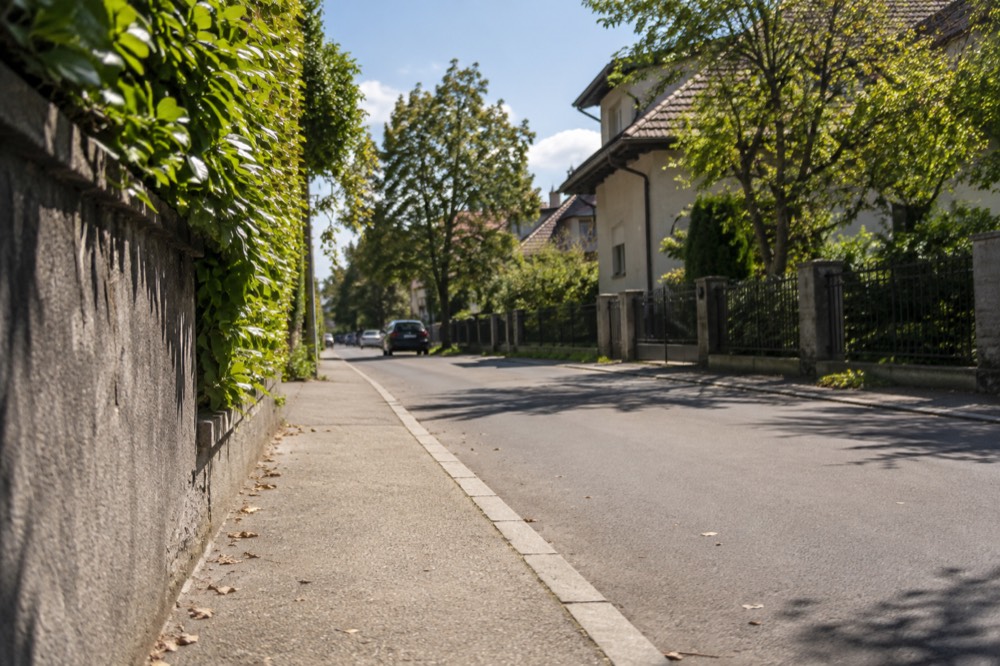
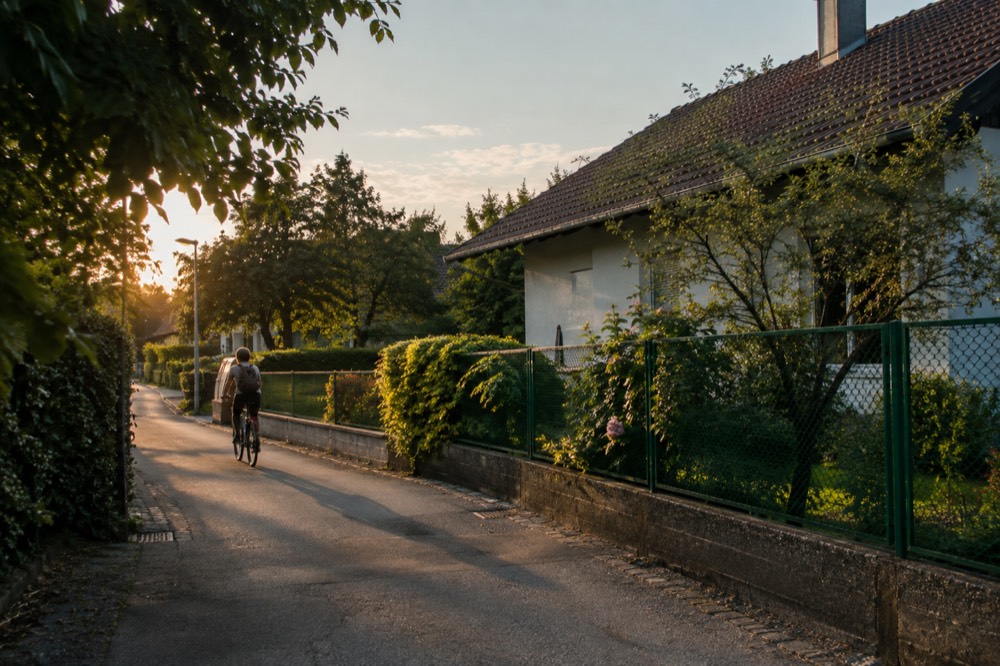
The quarter has always been a bit apart. Historically it was a village outside the city walls, and even after it was absorbed into Ljubljana it kept a village scale, with narrow lanes, front gardens and a slower rhythm than the commercial streets across the water. That is visible today in Krakovo, the strip of land along the Gradaščica where residents have tended allotment gardens for generations. It is one of the few places in any European capital where you can stand in the middle of working vegetable plots five minutes from the main square.
For trip planning, treat Trnovo as the quiet half of the city. Everything in this guide, the Ljubljana Travel Guide covers the centre in depth elsewhere, but the short version is that the old town, the castle and the main museums all sit north of the river, while Trnovo gives you the evening: riverside cafés, garden lanes and the walk home under plane trees.
| What | The detail |
|---|---|
| Location | South bank of the Ljubljanica, directly south of the centre |
| Distance from Prešeren Square | Roughly a 15-minute walk |
| Waterways | The Ljubljanica and its tributary, the Gradaščica |
| Signature sight | The Plečnik House museum |
| Character | Residential, leafy, low-rise, village-scale lanes |
| Best suited to | Slow mornings, architecture fans, travellers wanting a local base |
What Should You Actually See in Trnovo?
The four things worth crossing the river for are the Trnovo parish church on the riverbank, the Trnovo bridge with its stone balustrade, the Krakovo garden lanes along the Gradaščica, and the Plečnik House museum. Of these, the Plečnik House is the only ticketed sight and the only one needing a booking, since entry is by guided tour only. Everything else is free to wander and needs no more than a couple of unhurried hours.
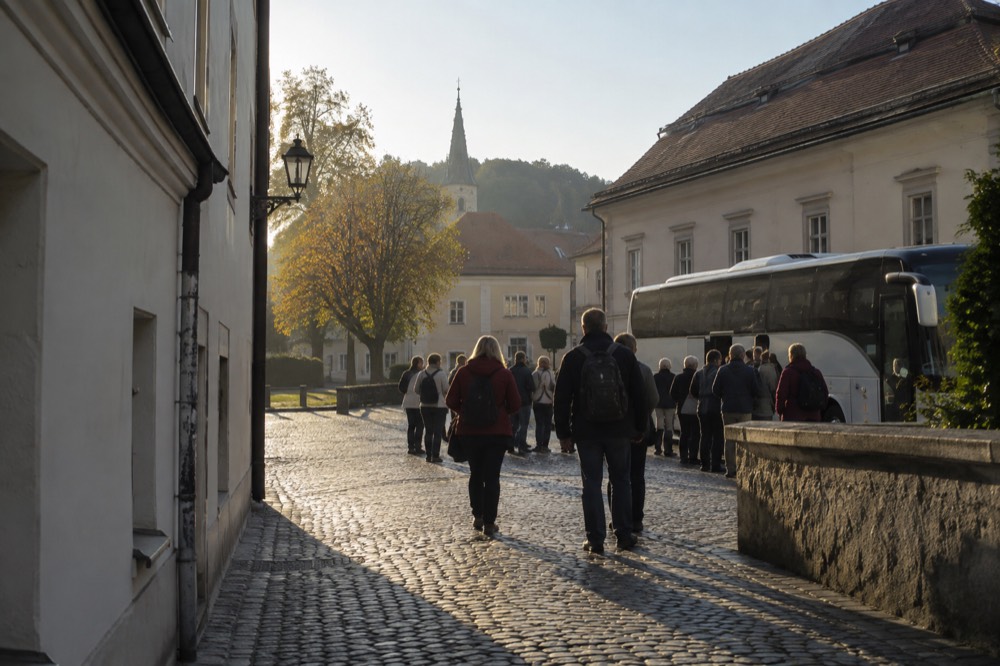
Start at the church. Trnovo's parish church sits right at the point where the quarter meets the water, and its position is the whole point: steps run down to the riverbank, and the building closes the view along the bank in the way a village church closes a village square. It is one of the city's most photographed churches precisely because of that setting rather than its interior, and on a summer evening the bank in front of it fills with people, drinks in hand, watching the light move across the water.
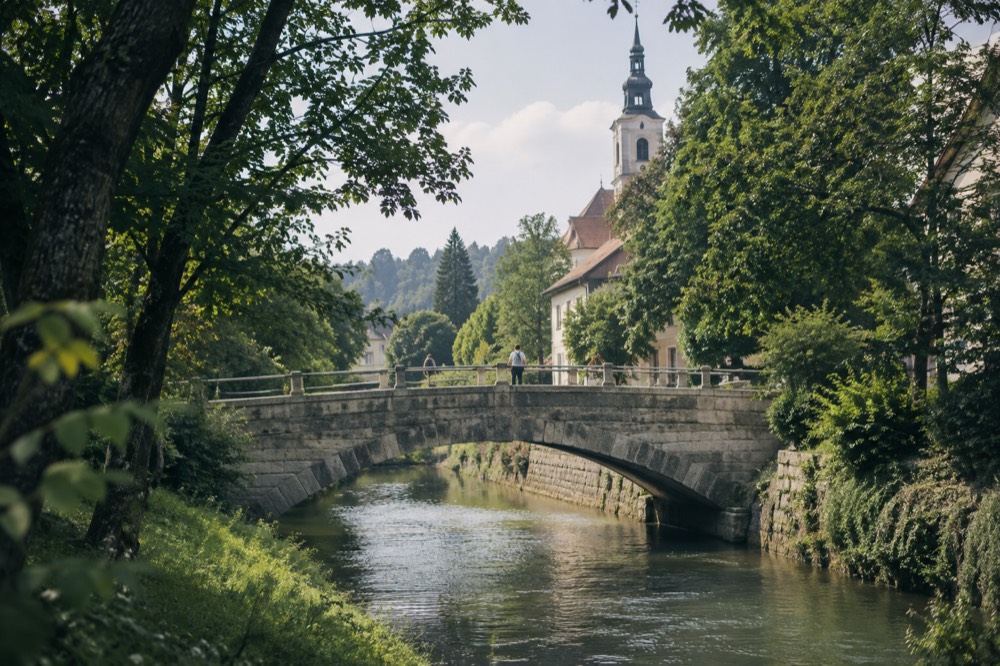
The Trnovo bridge alongside carries the road across the Gradaščica, and its stone balustrade and rows of trees make it one of the more elegant small bridges in a city that is famous for its bridges. It is a two-minute stop, but it is on every photographer's route through the quarter, and the views up and down the stream from the middle of the span are the best in the neighbourhood.
From the bridge, walk south into the Krakovo lanes. The allotment gardens here are working plots, not a heritage display, so go gently and stick to the lanes between them. In late summer the plots are heavy with tomatoes, beans and sunflowers, and the whole strip smells of cut grass. It is a five-minute wander that most visitors to Ljubljana never take, which is a good enough reason to take it.
The riverbank itself is the fourth sight, and it is the one you will use most. The path along the Ljubljanica from Trnovo eastward connects into the central embankment, so the walk into town becomes part of the day rather than a commute. One of the pleasantest ways to see that stretch of water is from on it: the electric boat tour on the Ljubljanica runs a 50-minute loop, rated 4.6 from 149 reviews and from $17, gliding under the centre's bridges in a near-silent electric craft. Our Ljubljanica river cruise guide covers the operators and prices in detail.
Back on dry land, the quarter pairs naturally with a first-day orientation walk in the centre. The free Old Town walk on GuruWalk, Romans to Dragons, covers the centre's main sights in about two hours, rated 4.91 from 1,496 reviews, and it is pay-what-you-think-it-was-worth at the end. Doing that on day one and Trnovo on day two is a sensible split.
Trnovo also works as a base for people who would rather book one or two structured days than plan everything themselves. The most popular guided days out of the city are the cave and castle trips to the karst, the lake trips north into the Alps, and the small-group walks through the centre itself, and the three below are the ones that consistently earn the strongest reviews.
| Sight | What it is | Time needed | Cost |
|---|---|---|---|
| Trnovo parish church | Riverbank church closing the view along the bank | 10-15 minutes | Free to view from outside |
| Trnovo bridge | Stone bridge over the Gradaščica with tree-lined span | 5 minutes | Free |
| Krakovo garden lanes | Historic allotment gardens between the streams | 30-45 minutes | Free |
| Plečnik House | Guided-entry museum in the architect's former home | About 1 hour | 12 EUR including guide |
| Ljubljanica riverbank path | Waterside walk connecting Trnovo to the centre | As long as you like | Free |
Is the Plečnik House Worth the Visit?
Yes, the Plečnik House is worth visiting for anyone with even a passing interest in why Ljubljana looks the way it does. It is the former home and studio of Jože Plečnik, the architect who reshaped the city in the first half of the twentieth century, and it displays his personal rooms and working studio. Entry is by guided tour only, at 12 EUR including the guide, and tours run on the hour, so you need to plan your arrival around a fixed slot.
The house sits on Karunova ulica, a quiet residential street in the heart of Trnovo, and it is exactly the kind of museum that only works because it stayed small. You see the architect's own desk, his drawing room, the small darkened studio he built for himself in the garden, and the household objects he designed down to the smallest detail. The guided format is not a formality here; the house is compact enough that a guide is the difference between seeing a set of rooms and understanding a mind.
The practical facts matter more here than at most museums. The Plečnik House is closed on Mondays and open Tuesday to Sunday from 10:00 to 18:00, with guided tours departing on the hour, and the 12 EUR ticket includes the guide. Turning up at 10:40 means waiting until 11:00. Build the visit around a slot rather than dropping in, and check the official Plečnik House visit page before you go, since tour times are the one thing a small museum occasionally reshuffles.
For context, the house is the intimate counterpart to the city-wide story. Plečnik's public work is everywhere: the Triple Bridge, the riverside markets, the colonnade of the Ljubljana cathedral quarter, the stadium, the cemetery's monumental gateway. Our Plečnik House guide covers the building itself in depth, and our Plečnik's Ljubljana itinerary walks the public works. But the house in Trnovo is where you meet the man, and most visitors come out surprised by how personal and how strange the interior is.
| Visit fact | Detail |
|---|---|
| Address | Karunova ulica, Trnovo |
| Admission | 12 EUR, including the guided tour |
| Tours | Guided entry only, departing on the hour |
| Opening hours | Tuesday to Sunday, 10:00-18:00 |
| Closed | Monday |
| Typical visit length | About one hour |
One honest note on timing: the Plečnik House is a morning or afternoon slot, not a full day, and Trnovo itself is a half-day area. That leaves room in any Trnovo-based itinerary for one big excursion, and the most booked one from Ljubljana is the karst: Postojna Cave and cliff-perched Predjama Castle in a single six-hour day trip, from $132 and rated 4.8 across 2,802 reviews.
Where Do Locals Eat and Drink Around Trnovo?
Trnovo's food scene is low-key and riverside rather than restaurant-dense: café terraces along the Ljubljanica bank, neighbourhood pizzerias and small wine bars in the side streets, and the Central Market a short walk north across the river. There is no famous dining street here, and that is the appeal: the tables are where the neighbourhood actually eats, at prices closer to local levels than the old town's. For a full restaurant-by-restaurant rundown, our where locals eat in Ljubljana guide is the deep dive.
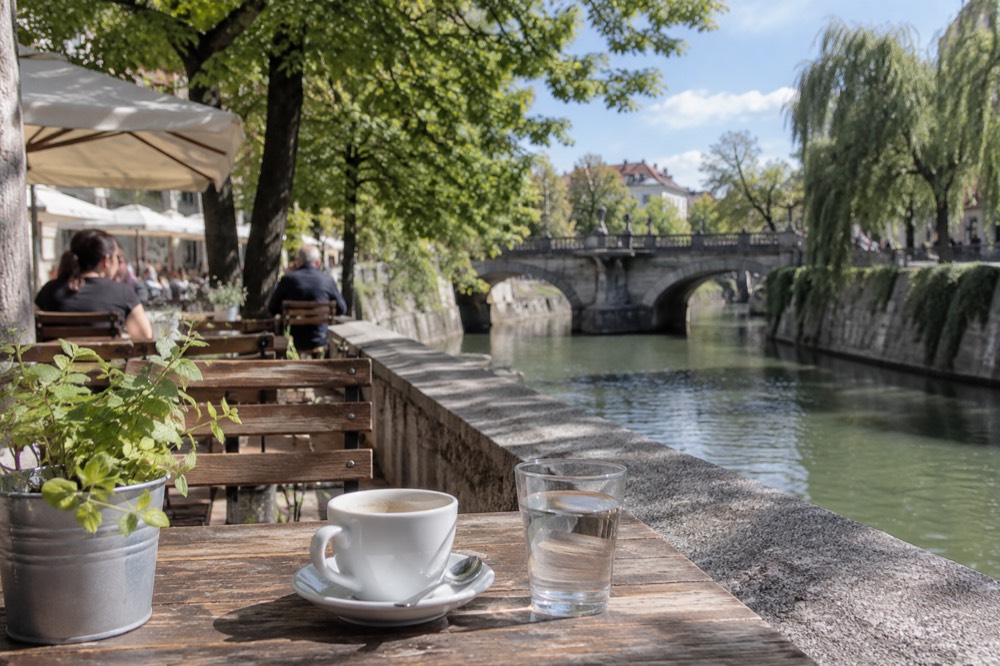
The riverbank is the social centre. On warm evenings the embankment in front of the church fills with people and the cafés along the water stay busy well past sunset, because the southern bank catches the evening sun. The scene is closer to a neighbourhood hangout than a nightlife strip, and the walk between venues is part of the evening. Our Slovenian food in Ljubljana guide explains what to order once you have a table.
Two food experiences sit within easy reach. The Central Market, on Vodnikov and Pogačarjev trg just across the river, runs its outdoor stalls roughly Monday to Saturday, and the covered halls open on weekday mornings, so a Trnovo base puts a proper market breakfast within a ten-minute walk. On Fridays from roughly March to November the market square hosts Odprta Kuhna, the Open Kitchen street-food event, from 10:00 to 21:00 and later on warm days. The official wording is "every sunny Friday", which is literal: it is cancelled in bad weather, so check the forecast rather than assuming. Our Open Kitchen guide covers it fully.
For tasting your way through the city rather than one neighbourhood, the small-group Snacking Love Walk on GuruWalk pairs the centre's sights with Slovenian snack stops in a 1h 45m walk, rated 4.93 from 1,324 reviews. The walk itself is free and pay-what-you-think-it-was-worth, but note that the tasting stops carry a fixed extra cost set by the stops themselves, so it is not a zero-cost tour.
If you would rather sit down for it, the Slovenian cuisine walking tour with tastings, four hours and from $104, rated 4.8 from 552 reviews, is the bookable equivalent, and our Ljubljana food tour compares all the options.
How Do You Get to Trnovo?
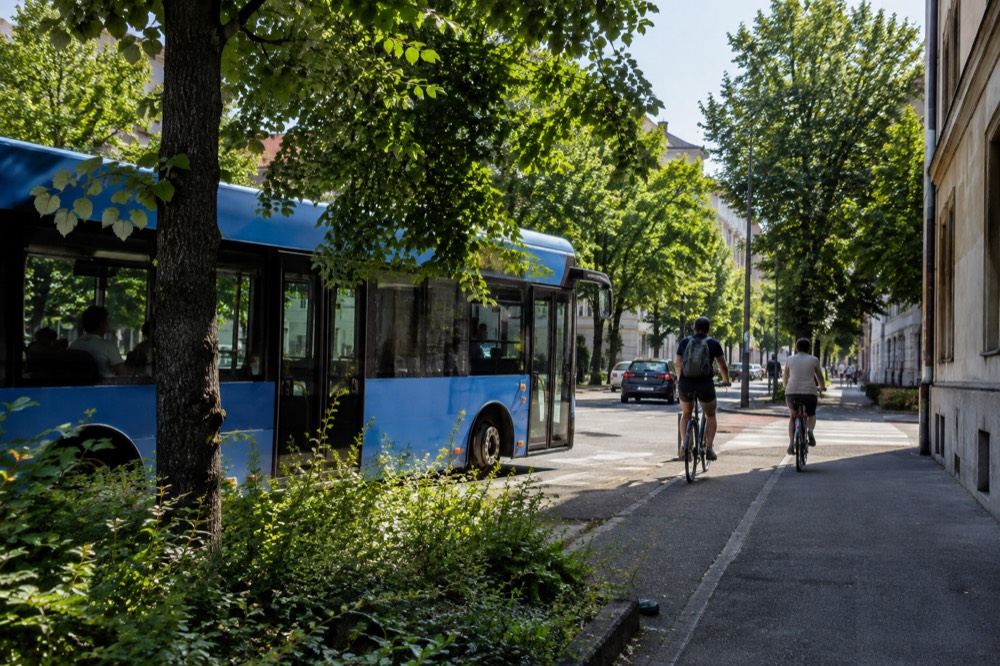
Trnovo is a 15-minute walk from Prešeren Square, or a short bus ride on Ljubljana's city network, with a single zone 1 fare at 1.50 EUR covering 90 minutes including transfers. The one thing to know before boarding any Ljubljana bus is that cash is not accepted on board, so you need an Urbana card, bought for 2.00 EUR, or a contactless bank card or phone.
The walk is the better option in daylight. From the centre you cross the Ljubljanica at the Triple Bridge or any of the central crossings, follow the embankment west along the water, and the Trnovo church tower appears ahead of you within ten minutes. The route is flat, traffic-light and, in summer, shaded by the plane trees along the bank. Coming back after dark, the same path is lit and busy, though the riverside stretch is quieter than the centre, so some visitors prefer the bus late at night.
The bus network covers the quarter well, and the mechanics are simple once explained. The Urbana card costs 2.00 EUR to buy and a single zone 1 ride is 1.50 EUR, valid for 90 minutes including transfers, which is generous for a city this size. The genuinely useful detail is that Ljubljana's buses take no cash at all, but they do now accept contactless Visa, Mastercard and mobile wallets, which removes the old trap of standing at a stop with coins and no card. Urbana cards are sold and topped up at the LPP Passenger Centre on Slovenska cesta, at Urbanomat machines, in kiosks and at tourist information centres, and the official LPP payment page lists the current detail.
| Option | Cost | Time | Notes |
|---|---|---|---|
| On foot from Prešeren Square | Free | About 15 minutes | Flat, riverside, the best option in daylight |
| City bus, zone 1 | 1.50 EUR | About 5-10 minutes | 90 minutes validity including transfers |
| Urbana card purchase | 2.00 EUR one-off | - | Sold at the Passenger Centre, Urbanomats, kiosks |
| Contactless bank card on board | Standard fare | - | Cash is not accepted on any bus |
| Bike share | Included with the Ljubljana Card | - | The card covers four hours of BicikeLJ use |
One planning note that affects every arrival: Ljubljana's historic centre is pedestrianised, so if you are driving to a Trnovo guesthouse, expect to park outside the car-free core and walk the last stretch. Our getting around Ljubljana guide covers parking, bikes and the car-free zone in full, and the city centre guide explains exactly where the pedestrian area ends.
When Is the Best Time to Visit Trnovo?
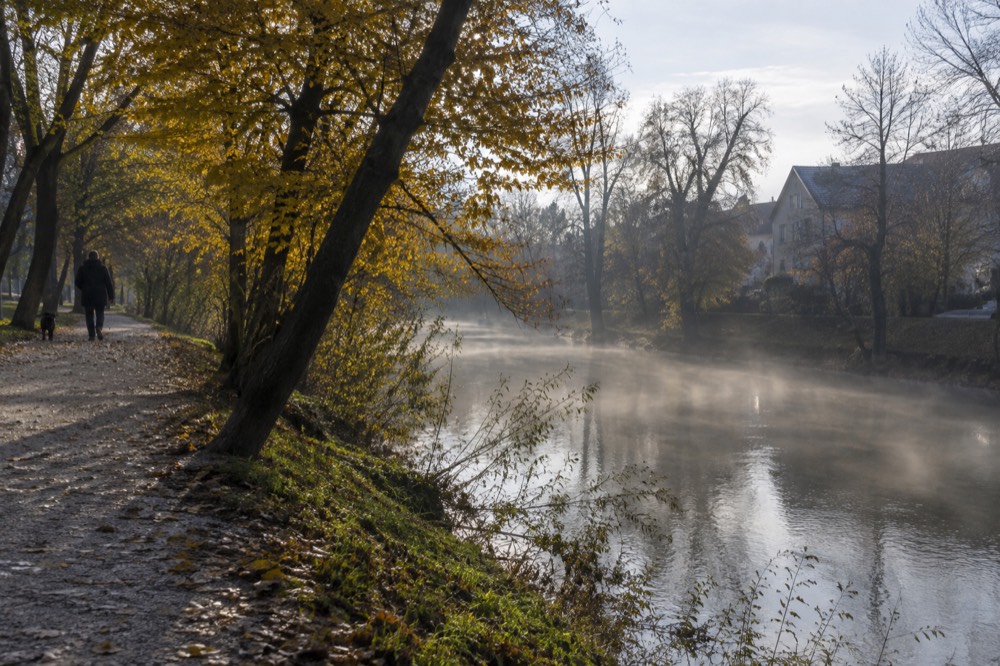
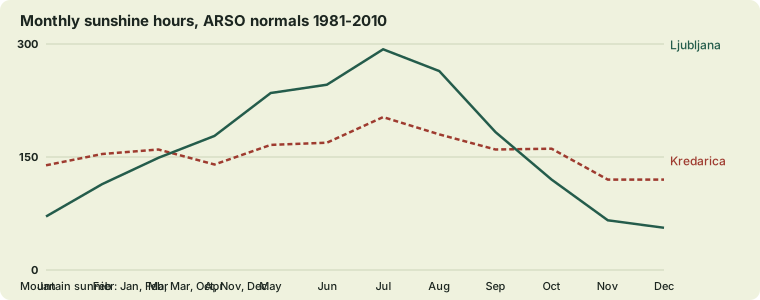
The best time to walk Trnovo is April to June, when the gardens are green, the riverbank cafés open early and the city's sunshine is climbing toward its summer peak of 293 hours in July. The one period to plan around carefully is September and October, which are Ljubljana's joint wettest months at 147 mm of rain each and, at 12.4 fog days per month, as foggy as midwinter. Winter visits are quiet and atmospheric, but the city sees just 56 hours of sunshine in December.
That last set of numbers deserves a moment, because it is the least obvious fact about this city and it changes how you plan a Trnovo day. Ljubljana sits on the floor of a basin, and in the colder half of the year cold air is trapped under warmer air above, so the city sits under fog and low cloud while the hills a few hundred metres up sit in sunshine. ARSO's climate normals for 1981 to 2010 put the city at 299 m altitude with 56 hours of December sunshine and 71 in January, while Kredarica, at 2,514 m up on Triglav, records 120 and 139 hours over the same months. The mountain gets roughly double the capital's winter sun.
The practical translation for a Trnovo visit: in summer the quarter is at its best, with the bank full of life from late afternoon onward and the long July and August evenings giving you daylight past nine. In late autumn and winter the riverbank walk is still worth doing, but pair it with an indoor anchor, the Plečnik House, a museum, a long lunch, because the grey can settle in for days at a time. Our best time to visit Ljubljana guide works through the full twelve months, and the rainy day in Ljubljana guide lists the indoor options, including the caves, which hold roughly the same temperature year round and are the reliable answer to any wet forecast.
| Month | Sunshine hours, Ljubljana | Sunshine hours, Kredarica | Rainfall, mm | What it means for Trnovo |
|---|---|---|---|---|
| January | 71 | 139 | 69 | Grey and quiet; plan indoor anchors |
| April | 178 | 140 | 99 | Green gardens, pleasant walking |
| July | 293 | 203 | 115 | Peak season, full riverbank life |
| September | 183 | 160 | 147 | Warm but the wettest, foggiest shoulder |
| October | 120 | 161 | 147 | Fog-prone; the hills beat the basin |
| December | 56 | 120 | 107 | Atmospheric, short days, quiet streets |
The pattern in the table is the single most useful thing a weather-conscious visitor to this city can know: the city wins April to September and the mountains win October to March, and the lines cross. A winter day that starts grey in Trnovo can be sunny by the time a day trip has climbed into the hills, which is one reason the Alpine excursions stay busy through the cold half of the year. The figures come from ARSO's published 1981-2010 climate normals for Ljubljana.
Which Day Trips Work Well from Trnovo?
The best day trips from a Trnovo base are Postojna Cave with Predjama Castle to the southwest, about six hours door to door on the standard guided tour, and Lake Bled to the northwest, also about six hours. Both depart from the city centre, which is a 15-minute walk from Trnovo, so the quarter works as well as anywhere in Ljubljana as a launch point. The cave trip suits weather-proof planning; the lake trip suits a clear day.
Postojna Cave is Slovenia's most visited underground sight, and the numbers explain why: the visitor route covers 3.7 km, partly on a cave train, over about an hour and a half, and the cave holds 10 C year round, which makes it the reliable answer to both rain and heatwaves. Adult admission is 34.90 EUR and Predjama Castle, the castle built into the cliff face a short drive away, is 24.00 EUR, open year round. The six-hour guided day trip from Ljubljana bundles both with transport, from $132 and rated 4.8 across 2,802 reviews, and it is the single most booked excursion from the city. Our Postojna Cave guide and Predjama Castle guide cover both sights in depth, and you can also read more on the cave and castle day trip page. Check availability
Lake Bled is the other headline. Bled carries more search demand than the entire city of Ljubljana, which tells you how strong the pull is: a glacial lake, a castle on a cliff and an island church reached by traditional pletna boat, at 20 EUR per person for the crossing. The standard six-hour trip from Ljubljana, from $86 and rated 4.7 across 1,641 reviews, includes Bled Castle, whose adult entry is 19.00 EUR. Our Lake Bled guide covers the lake, and our Ljubljana to Lake Bled guide compares every way of getting there. The Lake Bled and Bled Castle trip page has the tour detail.
| Day trip | Duration | Rating | From | Best for |
|---|---|---|---|---|
| Postojna Cave and Predjama Castle | 6 hours | 4.8, 2,802 reviews | $132 | Any weather; the cave holds 10 C year round |
| Lake Bled and Bled Castle | 6 hours | 4.7, 1,641 reviews | $86 | A clear day; lake, castle and island views |
| Old Town free walk on GuruWalk | 2 hours | 4.91, 1,496 reviews | Free, tips-based | Day one orientation before exploring Trnovo |
If you have more than one excursion day, the Soča Valley and Kranjska Gora tour, 10h 30m and rated 4.9 from 911 reviews, is the Alpine option, and the Škocjan Caves, a UNESCO sight with a very different, walk-based cave experience, pair well with the coast at Piran. Our day trips from Ljubljana guide ranks the full list.
Is Trnovo a Good Place to Stay?
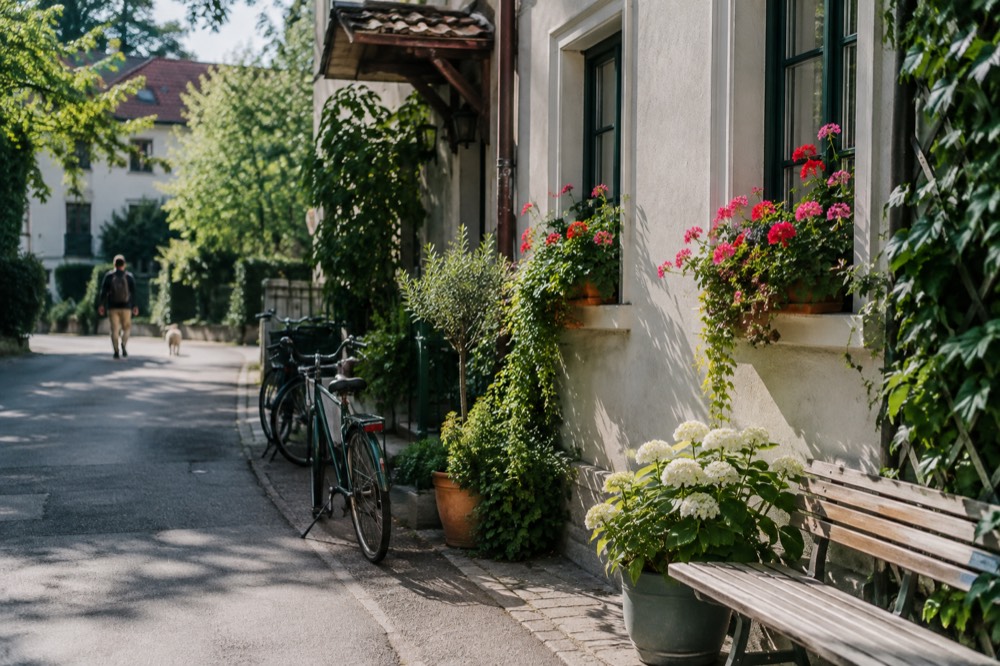
Trnovo is one of the best places to stay in Ljubljana for travellers who want quiet, green surroundings within walking distance of everything, roughly 15 minutes on foot from the main square. Guesthouses and small apartments dominate rather than big hotels, the riverbank gives the quarter its evening life, and the trade-off is simple: you give up the old town's doorstep location and gain space, calm and a more local rhythm.
The comparison with the centre is straightforward. Staying in the old town puts every major sight within five minutes but puts you in the busiest, priciest, noisiest part of the city, especially in July and August. Staying in Trnovo means a pleasant walk to everything, an evening scene that belongs to residents rather than visitors, and accommodation that is often better value per square metre. For a two-night city break, which is the average stay in Ljubljana at about 2.04 nights according to the national statistics office's arrivals and overnight figures, either works; for a week that includes day trips, the quieter base pays for itself.
Practicalities favour Trnovo more than first-time visitors expect. The walk into the centre is flat and along the water, the bus network is there if you want it, and the Central Market is close enough that self-catering apartments get a real breakfast option. The Plečnik House around the corner is a bonus most visitors never know they have. The full neighbourhood-by-neighbourhood breakdown, including the trade-offs against the centre, is in our best part of Ljubljana to stay in article and our where to stay in Ljubljana guide.
Whichever base you choose, the same three bookable days tend to anchor a Ljubljana trip: the karst caves and castle, the lake and castle at Bled, and a first-day walk through the centre. The selection below is the shortlist.
Common Questions About Trnovo
What is Trnovo in Ljubljana?
Trnovo is a leafy residential quarter on the south bank of the Ljubljanica, immediately south of the pedestrianised centre and threaded by the Gradaščica stream. It is known for its riverbank church, its historic garden lanes in Krakovo, and the Plečnik House, the guided-entry museum in the architect's former home.
How far is Trnovo from Ljubljana city centre?
Trnovo is roughly a 15-minute walk from Prešeren Square, along a flat riverside path. By city bus it is a few minutes, with a zone 1 fare of 1.50 EUR covering 90 minutes including transfers.
Is the Plečnik House worth visiting?
Yes, for anyone interested in architecture or in why Ljubljana looks the way it does. Entry is by guided tour only, at 12 EUR including the guide, with tours departing on the hour. The house is open Tuesday to Sunday from 10:00 to 18:00 and closed on Mondays.
Can you walk along the river from Trnovo to the centre?
Yes, the Ljubljanica embankment runs continuously from Trnovo into the central stretch of the river, past the bridges and the riverside market. The walk is flat, traffic-free and takes about 15 minutes to the main square.
When is the best time of year to visit Trnovo?
April to June is the sweet spot, with green gardens and long evenings. September and October are Ljubljana's joint wettest months at 147 mm of rain each and average 12.4 fog days per month, so plan indoor anchors in autumn. Winter is quiet but grey, with just 56 hours of sunshine in December.
What day trips can you take from Trnovo?
The two most popular are Postojna Cave with Predjama Castle, a six-hour guided trip from $132, and Lake Bled with Bled Castle, six hours from $86. Both depart from the city centre, a short walk from Trnovo, so the quarter works as well as anywhere in the city as a base.