Ljubljana City Centre (Center): What to See, Do and Know
Ljubljana's city centre is small, car-free and walkable end to end in under an hour. This guide covers what sits inside the pedestrian zone, what it costs, how to move around it and when the basin fog changes the picture.
Short answer
Ljubljana city centre (Center) is a pedestrianised zone of roughly 20 hectares around Prešeren Square, the Triple Bridge and the Ljubljanica. Most visitors cover the core sights in one full day, pay in euros, and walk everywhere. A castle ticket with funicular is 19.00 EUR and a single bus ride is 1.50 EUR.
Ljubljana's centre is one of the few European capitals where the entire old core is closed to cars. The pedestrian zone covers roughly 20 hectares, expanded progressively since 2007, and you can cross it on foot in about twenty minutes. Everything a first-time visitor comes to see, Prešeren Square, the Triple Bridge, the cathedral, the castle hill and the river banks, sits inside it or on its edge. This page from Ljubljana Travel Guide covers what is actually in the centre, what it costs, how to move through it and what sits close enough to reach on a day trip.
What Counts as the City Centre in Ljubljana?
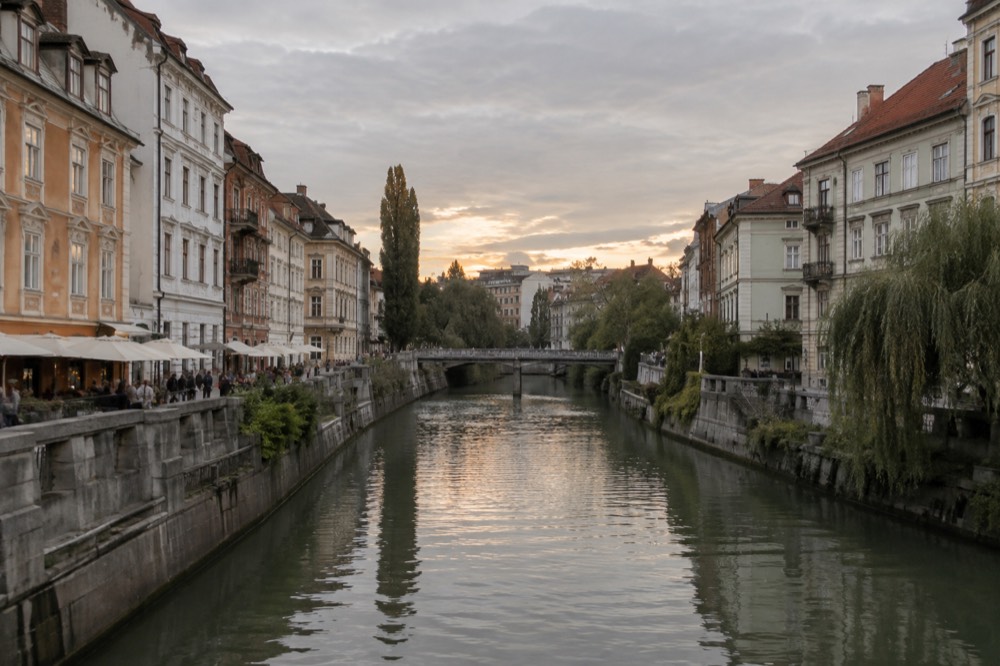
The centre of Ljubljana is the pedestrianised historic core on both banks of the Ljubljanica, bounded roughly by the castle hill to the east, Tivoli park to the west, the main railway and bus station to the north and the Trnovo district to the south. It is small enough that the far corners are twenty-five minutes apart on foot, and the whole zone is closed to general motor traffic, a fact the city itself publishes on its mobility pages. Locals call it simply Center, and the district name appears on addresses and bus stops alike.
The river splits the zone in two. On the east bank sits the Old Town proper, with Gornji trg, the cathedral and the funicular base station. On the west bank sit Prešeren Square, the main shopping streets of Čopova and Slovenska, and the bulk of the restaurants. The bridges stitch it together, and the Triple Bridge is the crossing point most people use a dozen times a day without noticing.
Two practical consequences follow from the pedestrianisation. First, no hotel in the core is a drive-up hotel: taxis and transfer cars stop at the edge of the zone, and the last few hundred metres are always on foot. Second, the centre is quiet at night in a way few capitals are, because there is no through traffic at all. The trade-off is that the streets fill quickly in summer, and the main squares can feel crowded by mid-morning.
The wider Center district also includes Tivoli park to the west, which is worth the fifteen-minute walk from Prešeren Square, and the museum quarter around Metelkova and MSUM to the east of the station. Both sit just outside the old core but inside the district, and both are covered by the same bus network. For a deeper look at the east bank, our Old Town walking guide breaks that side down street by street.
What Are the Must-see Sights in the Centre?
The five anchor sights are Prešeren Square with the Franciscan Church, the Triple Bridge and the Dragon Bridge, Ljubljana Castle on its hill, the Central Market arcades and the Ljubljanica riverbanks themselves, and all five sit within a ten-minute walk of each other. The castle is the only one that charges for its attractions, and the funicular is the only part of the hill that is never free. Everything else on this list costs nothing to stand in front of and photograph.
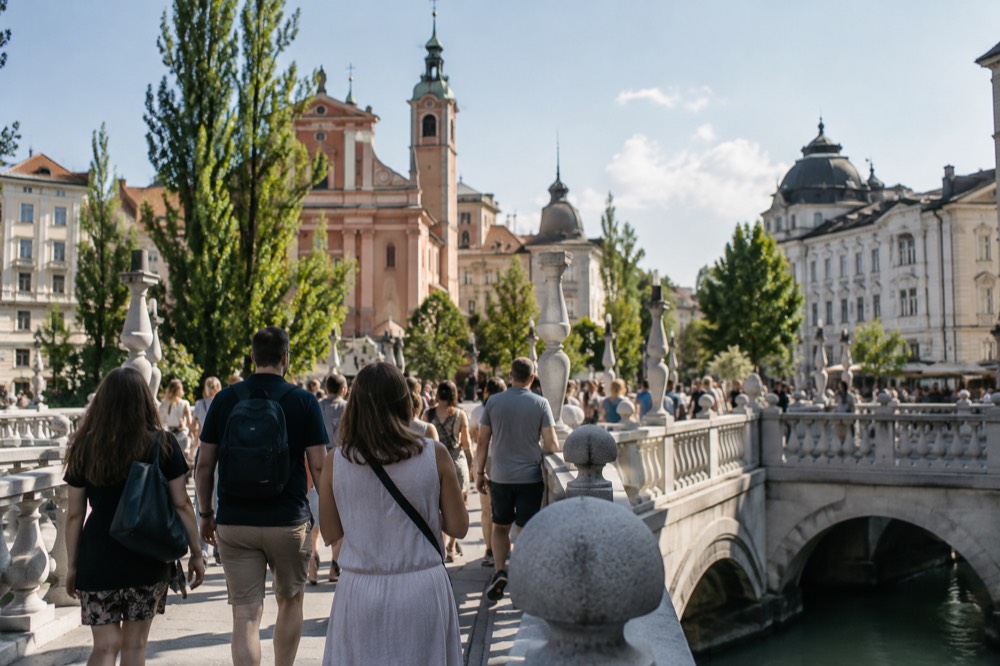
The square and the bridges are the natural starting point. Prešeren Square is the centre's centre, with the pink Franciscan Church facing the statue of France Prešeren, and the Tromostovje triple crossing fanning out toward the Old Town. A few hundred metres downstream, the Dragon Bridge delivers the city's symbol on four corners. Both are lit at night, and both are at their quietest before nine in the morning. Our pages on Prešeren Square, the Triple Bridge and the Dragon Bridge go deeper on each.
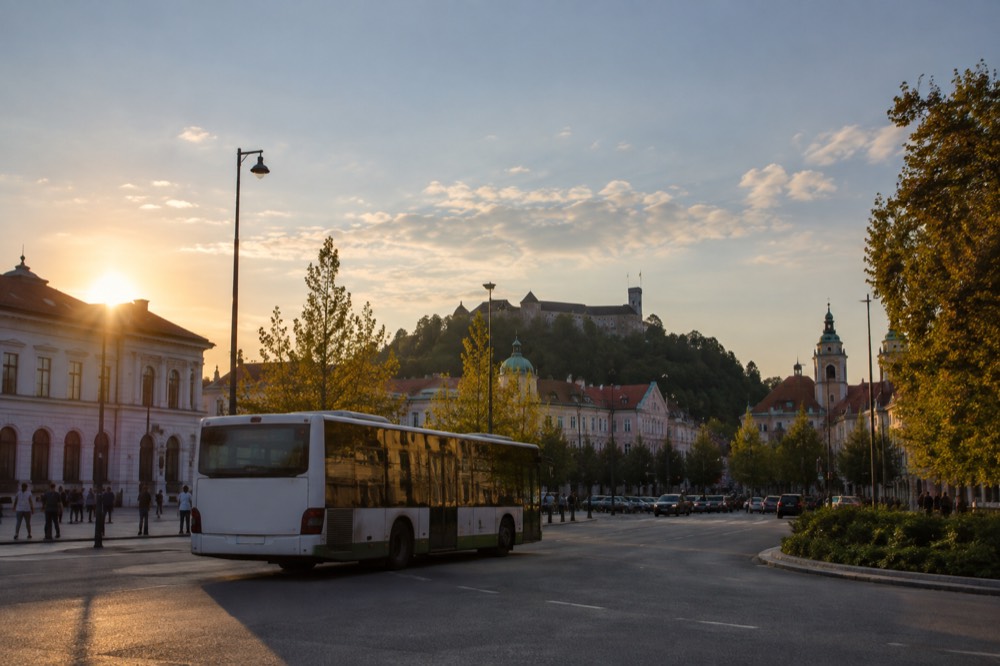
The castle hill dominates the eastern skyline. The funicular climbs from just above the Old Town, a single costs 3.30 EUR and a return 6.00 EUR, while a castle ticket including the funicular is 19.00 EUR for an adult and covers the Viewing Tower, the exhibitions and the video mapping. The official castle price list publishes every tier. If you would rather not queue at the window, skip-the-line entry can be booked in advance.
The Central Market runs along the river between the Triple Bridge and the Dragon Bridge, with Plečnik's covered colonnade on one side and the open stalls of Vodnikov and Pogačarjev trg on the other. The outdoor stalls run roughly Monday to Saturday, 06:00 to 18:00 in summer and 06:00 to 16:00 in winter, and the covered halls keep shorter hours. Come in the morning: by early afternoon the outdoor rows are winding down. Our Central Market guide lists the stalls worth seeking out.
The river itself is a sight, and the best way to see it is from the water. The Barka boats run 50-minute loops from the Breg for 15 EUR in the May to September season, and a shorter tourist boat runs year round when conditions allow. A cruise is also bundled into the Ljubljana Card, which matters if you are doing the arithmetic on the pass. The Ljubljanica river cruise guide compares every operator.
For a first orientation, a free GuruWalk tour called Ljubljana Unveiled runs two hours from Roman ruins to the Dragon Bridge, rated 4.91 across 1,496 reviews, pay what you think it was worth at the end. It is the cheapest possible way to get the layout of the centre into your head on day one, and it ends within a short walk of everything above.
Can You See the Centre on Foot, or Do You Need Transport?
You can see the entire historic centre on foot, and you should: the core is pedestrianised, flat except for the castle hill, and no two anchor sights are more than fifteen minutes apart on foot. Transport inside the zone barely exists, because buses and cars are pushed to its edges, so walking is not just the pleasant option but the only one for the streets themselves. What you actually need transport for is reaching the centre from the station, the airport or your hotel, and for leaving it on day trips.
For the edges, the city buses take an Urbana card, which costs 2.00 EUR to buy, with each single ride at 1.50 EUR for ninety minutes of travel including transfers within zone 1. The detail that catches visitors out is that drivers do not take cash, though contactless bank cards and phone wallets now work on board. The LPP payment page sets out every option. Cards can be bought and topped up at the Passenger Centre on Slovenska, at Urbanomat machines and in kiosks.
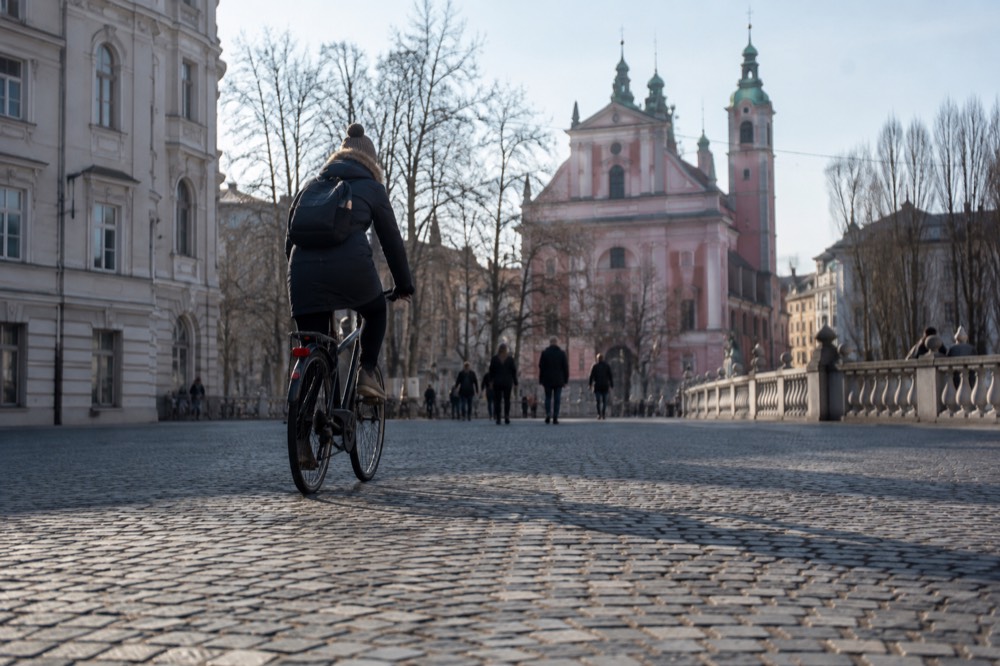
Cycling is the other centre-native mode. The BicikeLJ share scheme has stations across the zone, and the first hour of each borrow is free under the Ljubljana Card's four-hour allowance. Because the streets are car-free, cycling through the core is calm enough to do with children. Taxis, by contrast, only work from the perimeter: hail one from the station or from Slovenska, not from inside the pedestrian streets.
The airport question comes up constantly. Ljubljana Jože Pučnik Airport is about 26 km from the city, and the airport's own site blocks automated reads, so check current bus times and fares directly rather than trusting a static number. Our airport to city centre guide covers the transfer options in full, and the wider getting around Ljubljana page handles the rest.
| Way to move | Cost | Notes |
|---|---|---|
| On foot | Free | The only way to move inside the core itself |
| City bus, single | 1.50 EUR | 90 minutes with transfers, zone 1, no cash on board |
| Urbana card | 2.00 EUR | One-off purchase, top up as you go |
| BicikeLJ bike share | Included in Ljubljana Card | Four hours of borrowing per activation |
| Taxi | Metered | Picks up at the zone edge, not inside it |
| Funicular to castle | 6.00 EUR return | Adults, single 3.30 EUR |
Is the Centre a Good Base for Day Trips?
The centre is an excellent base for day trips, because Ljubljana's bus and train stations sit on its northern edge and every major destination in the country is reachable in under two hours, with Lake Bled, Postojna Cave and the coast all on direct routes. The average visitor stay in Ljubljana works out to about two nights, which is enough for one full day in the centre and one day trip if you plan it that way.
Postojna Cave is the classic first excursion. The cave holds about 10 C year round, which makes it the reliable answer to both a rainy day and a heatwave, and the visitor route runs 3.7 km partly by cave train in about ninety minutes. Predjama Castle, built into a cliff face 9 km away, is usually paired with it. The combined tickets-and-tour option from Ljubljana runs 6 hours, is rated 4.8 from 2,802 reviews and starts from $132, and it removes the faff of matching the cave's departure grid to a bus timetable.
The same logic applies to every long excursion from the centre: the stations are close, but the timetables are the friction, and a guided option buys you the timetable back. If the caves are on your list, the pairing below is the one most visitors end up taking.
Lake Bled is the other big draw, and it carries more search demand than the city itself. A guided day tour runs 6 hours and starts from $57, while the castle-and-island version from $86 adds Bled Castle, where entry is 19.00 EUR. If you would rather go independently, the coach and rail options are covered in our Ljubljana to Lake Bled guide, including the detail that Bled Jezero station is 1.5 km from the lake while most advice sends people to Lesce-Bled, 4 km out.
| Day trip | Travel each way | Best for |
|---|---|---|
| Lake Bled | About 1 hour by road | The postcard lake, castle and island |
| Postojna Cave and Predjama | Under 90 minutes by road | Caves at a steady 10 C, a cliff castle |
| Škocjan Caves | About 90 minutes | UNESCO gorge cave, fewer crowds |
| Piran | About 1h 30 by road | The Venetian coast at sunset |
| Zagreb | Under 2 hours by road or rail | Croatia's capital, no border stop |
One border fact worth stating plainly, because it shapes every route here: Slovenia is in the European Union, the eurozone and the Schengen area. Land and sea border checks were abolished on 21 December 2007 and air checks on 30 March 2008, and Croatia joined Schengen and the euro on 1 January 2023. There is no currency to change and no routine border stop on any trip listed above.
How Many Days Do You Need in the Centre?
One full day covers the core sights at a comfortable pace, two days let you add the castle interior and the museums, and three days give you the centre plus one or two day trips without rushing anything. The statistics back the short stay: Ljubljana recorded 2,844,129 overnight stays across 1,392,728 arrivals in 2025, an average of about 2.04 nights, so the two-night city is the norm rather than the exception, and the itineraries below are built around that reality.
A single day should run Prešeren Square and the bridges in the morning, the market and the east bank before lunch, the castle hill in the afternoon and the river at dusk. That is a full but achievable day because nothing in that list is more than a few hundred metres from anything else. The mistake to avoid is trying to add a museum on the same day: the galleries close on Mondays almost universally, and the ones that do not need more than a rushed hour.
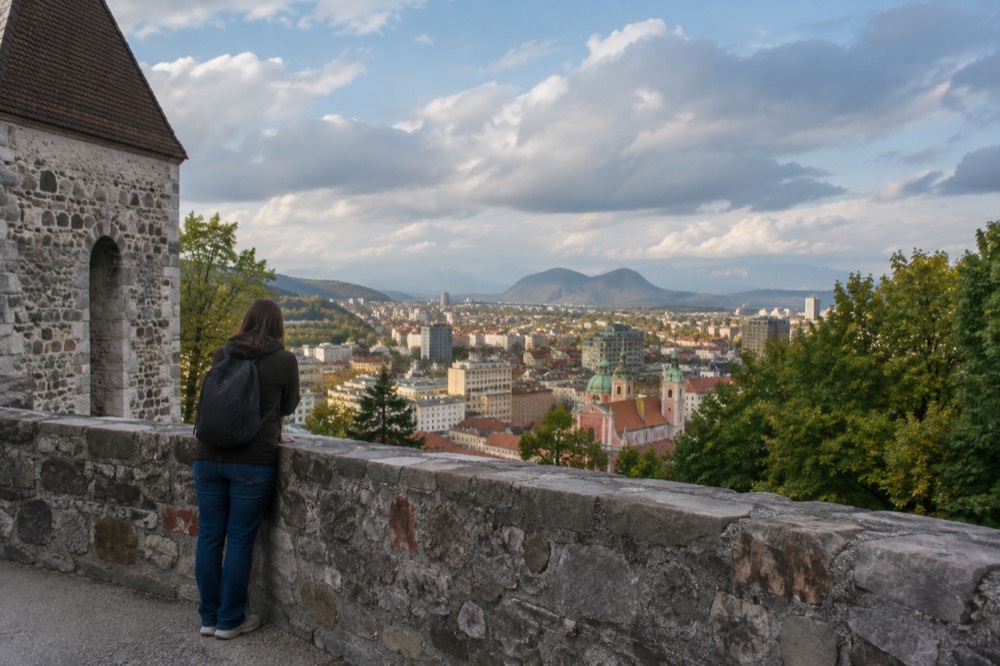
The second day is where the city rewards slowing down. The National Gallery, the City Museum and the Plečnik House are all inside or on the edge of the district, and the Plečnik House in particular is guided-entry only, with tours on the hour, so it needs to be planned rather than wandered into. The single best money-saving fact in this paragraph: the national museums and galleries are free on the first Sunday of every month.
If you are stretching to three days or more, use the spare day for Bled or the caves and keep your evenings in the centre, when the pedestrian streets change character completely. Our one day in Ljubljana and weekend in Ljubljana itineraries break both versions down hour by hour.
Where Do You Eat and Drink in the Centre?
The centre's eating runs from market stalls and bakery windows in the morning to riverside terraces at lunch and the Open Kitchen street-food market on Friday evenings, with the densest concentration of restaurants on the banks between the Triple Bridge and the Dragon Bridge. The riverside strip is tourist-priced by local standards, and the streets one block back, Gornji trg on the east bank and Trdinova on the west, hold the better value.
Open Kitchen, Odprta Kuhna, runs on Pogačarjev trg on Fridays roughly March to November, from 10:00 into the evening. The official wording is "every sunny Friday", and that is literal: the market is cancelled in bad weather, so check the forecast rather than assuming. It is the single best eating event in the city, with chefs from across Slovenia cooking in the open air.
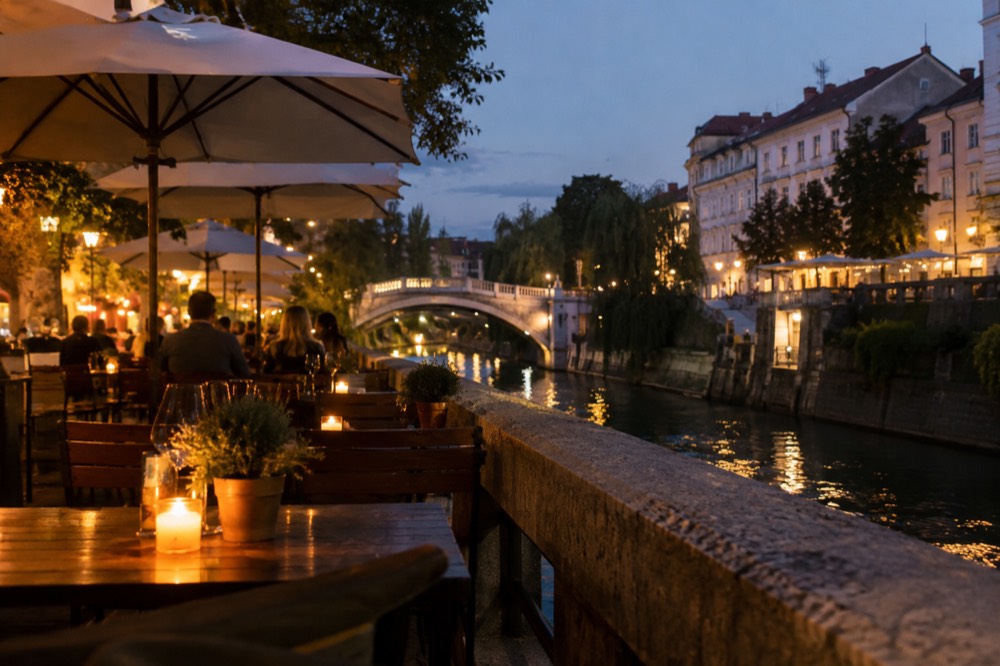
For the rest of the week, the Central Market is the morning answer, and the covered halls sell cheese, prosciutto and bread that make a legitimate picnic lunch on the riverbank. Slovenian wine bars cluster in the Old Town lanes, and the craft beer scene has its own following, with the pub crawl option running five hours from $29 for anyone who wants the nightlife mapped by a guide. Our where to eat in Ljubljana and Ljubljana nightlife pages carry the detail.
| Eating option | Where | When |
|---|---|---|
| Central Market stalls | Vodnikov and Pogačarjev trg | Mon-Sat mornings, from 06:00 |
| Covered market halls | Plečnik colonnade | Mon-Fri to 16:00, Sat to 14:00 |
| Open Kitchen street food | Pogačarjev trg | Fridays, March to November, weather permitting |
| Riverside terraces | Both banks, Triple Bridge to Dragon Bridge | Daily, most of the day |
| Wine bars | Gornji trg and Old Town lanes | Evenings |
What Does a Day in the Centre Cost?
A budget day in the centre costs about 30 EUR per person excluding accommodation, a mid-range day with a castle ticket and a river cruise runs closer to 60 EUR, and the Ljubljana Card at 41 EUR for 24 hours pays for itself only if you stack the castle, the cruise and at least one museum. The card covers the funicular, the river cruise, city buses, a guided walk, four hours of bike share and one entry each to more than thirty museums and galleries, per the official card page.
The arithmetic matters. A castle ticket with funicular is 19.00 EUR and a Barka river loop is 15 EUR, so those two alone are 34 EUR before a single museum. Add one gallery at 10 EUR and the 24-hour card has already saved money. If you only want to wander the pedestrian streets and the free squares, the card is pointless: the centre's best parts, the bridges, the riverbank, the market atmosphere, cost nothing.
| Item | Price |
|---|---|
| Castle ticket with funicular, adult | 19.00 EUR |
| Funicular return only | 6.00 EUR |
| River boat loop, 50 minutes | 15 EUR |
| City bus single | 1.50 EUR |
| National Gallery adult | 10 EUR |
| Free museum day | First Sunday of the month |
| Tourist tax per night | 3.13 EUR, usually in the room rate |
Accommodation and car hire rates are deliberately not quoted here: both are date-specific and sit behind booking walls that change daily. What is stable is the tourist tax, 3.13 EUR per person per night, half rate for ages 7 to 18, which is normally folded into your room price. Our Ljubljana prices and Ljubljana on a budget pages extend this table.
When Is the Centre at Its Best?
The centre is at its best from late April to September for long, warm evenings on the riverbank, but the honest local fact is that September and October are as foggy as midwinter, with 12.4 fog days each, so the shoulder season picture is greyer than most guides admit. Ljubljana sits in a basin, and in the colder half of the year cold air is trapped under warmer air above, so the city fogs in while the hills a few hundred metres up sit in sunshine.
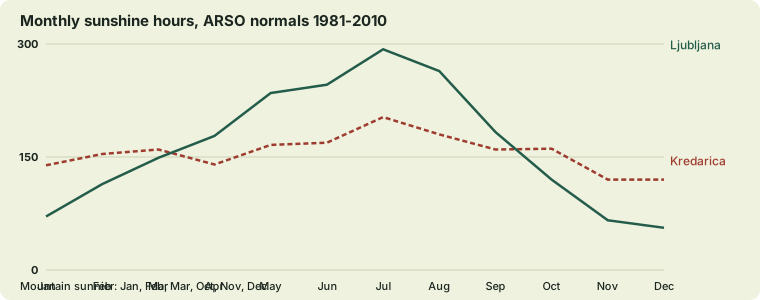
The numbers come from ARSO's 1981-2010 climate normals. The city gets 56 hours of December sunshine, under two hours a day, and just 2 clear days that month, against 120 hours and 6 clear days at Kredarica on Triglav at 2,514 m. Annually the city averages 37 clear days against 130 overcast, and October and November each average a single clear day. The practical reading: on a grey December weekend, the right move is to go up, to the castle hill, to Šmarna Gora, or out to Bled or the Alps, rather than waiting for the fog to lift.
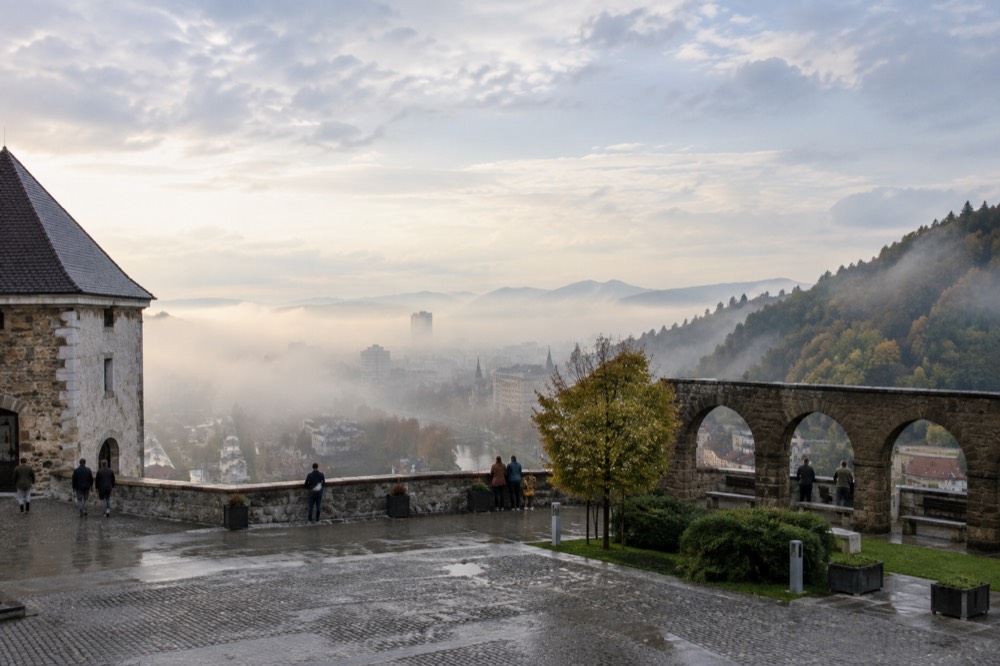
The fog series itself is older, ARSO's 1971-2000 normals, because fog is published only for that period: September and October tie at 12.4 fog days, level with December's 12.6 peak and above January's 11.3. The same 1981-2010 table makes September and October the joint wettest months at 147 mm each, above July's 115 mm. Autumn here is not the dry shoulder season people assume, and the rainiest-months detail matters for anyone planning around it.
Winter has its own counterweight: the Christmas market season lights the riverbank and the squares, and snow sits on the ground an average of 50 mornings a year. The December page covers the market in detail. Whatever the month, the centre's car-free streets mean a wet day is at least a walkable wet day, and the rainy day in Ljubljana guide lists the indoor options, including the caves at their steady 10 C.
Common Questions About the Ljubljana City Centre
Is Ljubljana city centre walkable?
Yes, completely. The historic core is a pedestrianised zone of roughly 20 hectares, and no two anchor sights are more than fifteen minutes apart on foot. Buses and taxis only serve the edges of the zone.
Is Ljubljana city centre expensive?
A budget day costs about 30 EUR per person excluding accommodation, and a mid-range day with a castle ticket and a river cruise runs closer to 60 EUR. The Ljubljana Card at 41 EUR for 24 hours pays off if you stack the castle, the cruise and a museum.
Can you drive into Ljubljana city centre?
No. The core is closed to general motor traffic, expanded progressively since 2007. Cars and taxis stop at the edge of the zone and the last stretch is on foot.
How many days do you need in Ljubljana city centre?
One full day covers the core sights, two days add the castle interior and museums, and three days allow a day trip. The average visitor stay is about two nights.
What is free in Ljubljana city centre?
The squares, the bridges, the riverbanks and the market atmosphere cost nothing, and the national museums and galleries are free on the first Sunday of every month. The castle's paid attractions and the funicular are the exceptions.
Do you need cash in the centre?
Cards work almost everywhere, but city buses take no cash at all: use an Urbana card or a contactless bank card or phone wallet on board.