Venice Day Trip from Ljubljana: Can You Really Do It in a Day?
Venice is close enough to Ljubljana that travellers ask about it every week, and far enough that the answer deserves honesty about the clock, the crowds and the alternatives.
Short answer
Yes, a Venice day trip from Ljubljana works, but it is a long day: expect to leave early and return late. Slovenia and Italy are both in the Schengen area, so there are no routine border checks on the way. Most people go by direct coach or with a change by train, and the trip is best from spring to autumn.
The question sounds almost absurd on a map of Europe: can you really have breakfast in Ljubljana and lunch beside a Venetian canal? You can, and people do it every week in high season. The honest version of the answer involves a very early start, a long ride each way, and a clear-eyed decision about what you are willing to trade for a day in one of the most visited cities on earth. This guide lays out the journey, the border, the costs to think about, and the closer alternatives that sometimes serve the same itch better.
Is a Venice Day Trip from Ljubljana Actually Realistic?
Yes, a Venice day trip from Ljubljana is realistic and people do it year round, but it is a genuinely long day: you will leave before most cafés open and get back after dark. There are no routine border checks on the way, because Slovenia and Italy are both inside the Schengen area, so the crossing costs you minutes rather than an hour. The trip works best when you accept it is a sprint, not a stroll, and plan your hours in Venice before you leave.
The border point matters more than most first-time visitors expect, and it is the part that older guidebooks get wrong. Slovenia joined the Schengen area on 21 December 2007, abolishing checks at its internal land and sea borders that day, with air borders following on 30 March 2008. Italy was already a member. That means the coach or car simply rolls past the old crossing points on the motorway near Šempeter, and nobody shows a passport unless there is a spot check. Croatia joined Schengen and the euro on 1 January 2023 as well, which is worth knowing if your Italian itinerary continues down the Adriatic coast.
What the border does not remove is distance. Venice sits on the far side of the Friuli plain, past Gorizia and Trieste's hinterland, and the route is motorway almost the whole way once you leave Slovenia. The practical consequence is simple: the day is dominated by the round trip, and your usable time in Venice is whatever the schedule leaves between arrival and departure. Anyone who tells you this is a relaxed excursion is selling something.
It is also worth being honest about what you get. Venice on a summer Saturday is one of the densest crowds of tourists in Europe, packed into lanes built for people on foot. The city rewards early mornings, the areas away from the Rialto and St Mark's, and travellers who arrive with a plan. If your instinct is to wander and see what happens, the crowd will decide your day for you.
What Are the Ways to Get from Ljubljana to Venice?
The main options are a direct coach, a rail journey that usually involves at least one change, a self-drive run across the border, or an organised day excursion that handles the transport for you. The coach is the most common choice for day trippers because it runs point to point and drops you within walking distance of the Venetian transport hub. Driving gives you freedom on timing but adds the cost of Italian parking and the Venice access rules to your day.
| Option | Best for | Watch out for |
|---|---|---|
| Direct coach | Single-book simplicity, fixed times | Long seat time; schedules tighten in winter |
| Train with a change | Rail fans, comfort | Connections matter; a missed change ruins the day |
| Self-drive | Flexibility, small groups | Parking at Venice is on the mainland, then a boat or bus across the lagoon |
| Organised day excursion | Zero planning, guided commentary | Least schedule freedom in Venice itself |
The coach is the workhorse of this route. Several operators run direct services between Ljubljana bus station and Venice, with journey times that make a day trip feasible if you take the earliest departure. Fares and exact timetables shift by season and operator, so check current schedules when you book rather than relying on a figure quoted months ago. Our Ljubljana bus station guide covers the terminal itself, which is compact and easy to navigate even at 5am.
Rail is the romantic option and the less reliable one for a day trip. The route generally involves a change, and the connection quality varies; a train that works beautifully one month can leave you standing on a platform in Italy the next. If you love trains, read our piece on where Ljubljana's trains go and check live schedules before committing a whole day to a connection. The most scenic train ride in Slovenia is a different route entirely, but it shows what Slovenian rail does well.
Driving is straightforward in one sense and awkward in another. The motorway run from Ljubljana to the Italian border is fast and well signed, and beyond it the A4 carries you toward Venice. The catch is that Venice itself is car-free: you park on the mainland at one of the large garages, then cross the lagoon by vaporetto or people mover. That crossing is part of the adventure the first time and part of the schedule pressure every time after.
Before you commit a full day to Italy, it is worth remembering what sits inside Slovenia's own borders. The Postojna Cave and Predjama Castle tour runs six hours from Ljubljana and delivers an underground train ride and a cliff castle in a single afternoon, and the Postojna Cave guide explains why the cave holds a steady 10 C all year, which makes it the reliable answer on any weather. Lake Bled is the other headline: a six-hour trip that reaches the lake and the castle above it, covered in detail in our Lake Bled guide. And if you only have your first day in the city, the free Ljubljana Unveiled walk on GuruWalk, rated 4.91 from 1,496 reviews, is a tips-based two-hour orientation from Roman roots to the Dragon Bridge that costs nothing up front.
How Much Does a Venice Day Trip Cost?
Budget for three layers: the transport there and back, the Venice access arrangements once you arrive, and food and drink at Italian prices. The transport is usually the largest single item, and Venice also charges an access fee for day visitors on many peak dates, an amount that varies by date and booking, so check the official scheme before you go. Food in Venice runs noticeably above Slovenian prices, which surprises people who have just eaten their way through Ljubljana.
| Cost layer | What drives it | Planning note |
|---|---|---|
| Transport | Operator, season, how early you book | Book ahead in July and August |
| Venice access fee | Day and whether you pre-register | Applies to day trippers on many dates; check before travelling |
| Parking and lagoon crossing | Mainland garage plus vaporetto | Only if self-driving |
| Food and drink | Location within Venice | Away from St Mark's costs less |
The Venice access fee is the line item most day trippers miss. The city introduced a charge for day visitors on high-demand dates, with the amount and the calendar set by the municipality and revised between seasons. Rather than quoting a number that may not match your travel date, the honest advice is to check the official Venice access scheme when you know your date, and pre-register if your day falls inside the scheme. Overnight visitors are handled differently, which is one reason some travellers convert this trip into a single night in Mestre or the city itself.
Set the Italian prices against the Ljubljana baseline you already know. Our Ljubljana prices guide and the piece on eating out costs in Ljubljana give the Slovenian side, and the general finding is that a sit-down meal near the Rialto will sting compared with the same meal on a Ljubljanica-side terrace. A coffee at a canal-side table is one of the great small luxuries in Europe, priced accordingly.
One way to blunt the cost is to treat the day as a food day. A cicchetti crawl through the bacari, Venice's standing wine bars, is cheaper than any restaurant and closer to how locals eat. It also fits a day trip's rhythm better than a long seated lunch, which eats an hour you will want for walking.
If the cost or the clock for Venice gives you pause, the arithmetic on closer trips is friendlier. The Cave and Castle tickets and tour, from $132 and rated 4.8 across 2,802 reviews, includes the cave entry and the Predjama Castle stop, both of which would otherwise be separate tickets, and it still has you back in Ljubljana for dinner. It is the sort of day where the money buys more hours in the destination and fewer hours in transit.
What Should You Actually See in Venice in One Day?
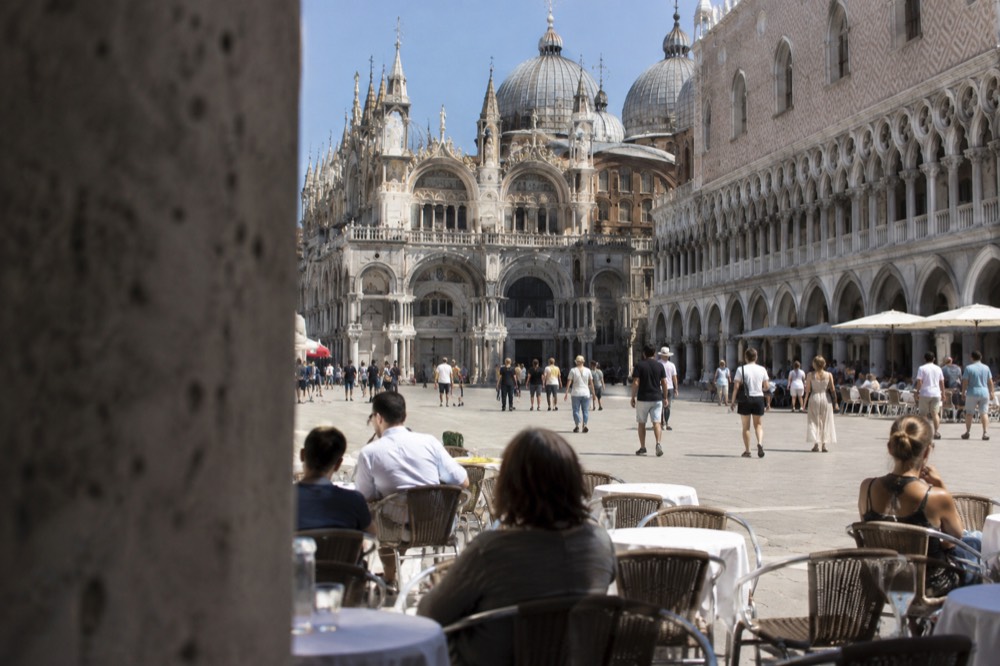
Pick one anchor sight, one walking thread, and one water crossing, and refuse everything else. St Mark's Basilica and its square are the standard anchor; a walk through the Rialto market area and across the Rialto bridge is the thread; and a vaporetto ride down the Grand Canal gives you the city from the water without renting a gondola. A day trip cannot absorb museum queues, so treat the galleries as a reason to come back for a longer stay.
| Slot | Where | Why it works in a day |
|---|---|---|
| Morning | St Mark's Square and Basilica | Arrive before the queue builds; the square is best before 10:00 |
| Midday | Rialto bridge and market lanes | Cicchetti lunch in the bacari nearby |
| Afternoon | Dorsoduro or Cannaregio walk | Quieter, local, and flat enough for tired legs |
| Late afternoon | Grand Canal vaporetto back to the terminal | The city from the water, for the price of a transit ticket |
The mistake is trying to see Venice the way you see Ljubljana. Ljubljana's Old Town is compact, walkable in an afternoon, and forgiving of improvisation; our is Ljubljana a walkable city piece makes exactly that case. Venice is walkable too, but it is a maze with a crowd flowing through it, and distances between sights are longer than the map suggests because every canal forces a detour to the next bridge. Decide your two or three anchors, then let the walking between them be the sightseeing.
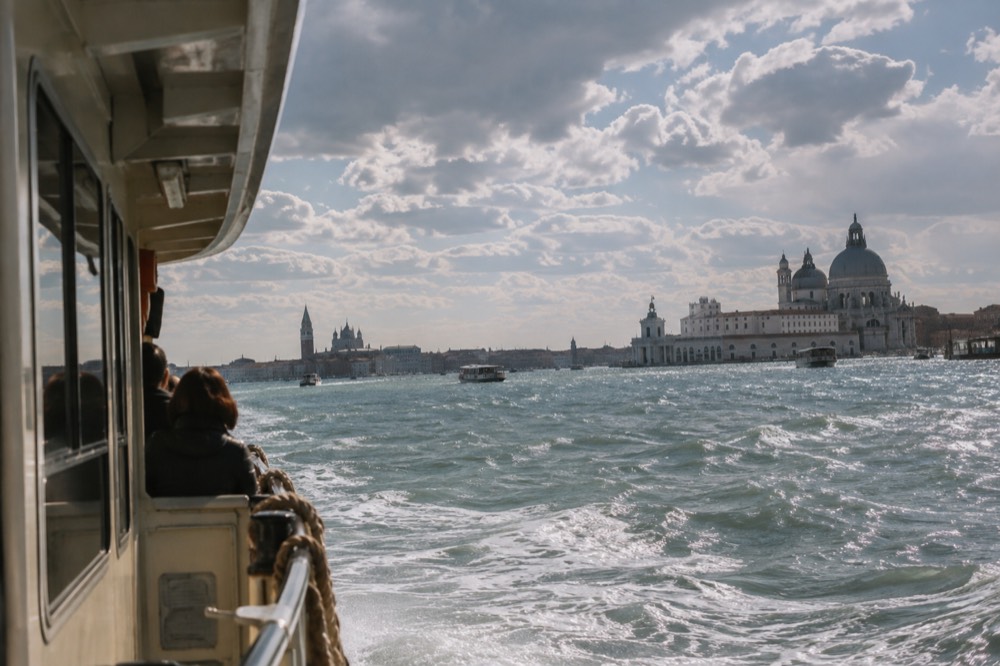
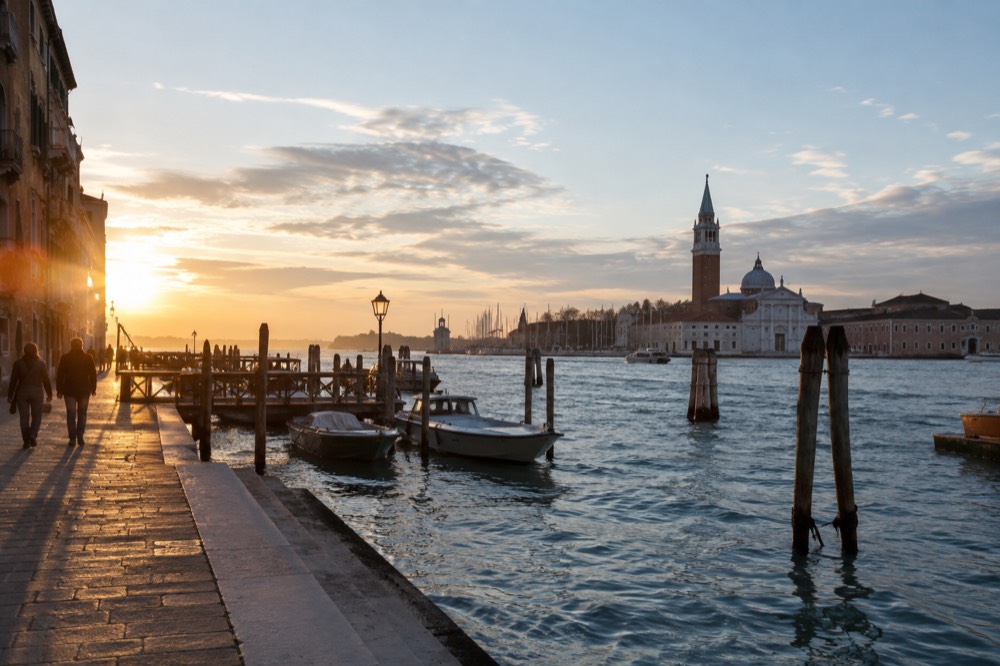
The water is the other half of the city. Even if a gondola is outside the budget, the vaporetto network is a genuine public transport system that happens to run on a lagoon, and a ride down the Grand Canal at golden hour is the single best free-with-a-ticket experience in the city. Sit or stand at the open back of the boat, not inside.
One more planning note: Venice floods. Acqua alta, the periodic high water that floods St Mark's Square, is most likely from late autumn through winter, and the city raises raised walkways when it comes. It rarely stops a determined visitor, but it changes footwear plans, and it is worth a forecast check the night before any winter day trip.
When Is the Best Time of Year for This Trip?
Late spring and early autumn are the sweet spot: long daylight, warm but not punishing, and thinner crowds than July and August. Winter trips work and are atmospheric, but daylight is short, the lagoon can be raw, and Ljubljana's own fog season peaks in September, October and December, which matters for the drive to the border. Midsummer is the worst trade: maximum crowds, maximum heat, and the highest access-fee likelihood.
The Ljubljana side of that answer is better documented than most people expect. ARSO's climate normals for 1971-2000 record 91.2 days with fog a year in the city, and the foggiest stretch is not midwinter as folklore has it: September and October average 12.4 fog days each, level with December's 12.6 and above January's 11.3. The same city, over the 1981-2010 period, sees September and October as the joint wettest months at 147 mm each, ahead of July's 115 mm. An early-morning departure from a fogged-in basin in October is a real thing, and it is worth building slack into any shoulder-season start. The full index of guides sits on Ljubljana Travel Guide.
| Period | Ljubljana conditions | Venice day trip verdict |
|---|---|---|
| April to June | Sunshine climbing to 235-246 hours a month | Best overall window |
| July and August | Peak heat, peak crowds everywhere | Workable, but book early and expect density |
| September and October | 12.4 fog days each, 147 mm rain each | Fine, but allow for slow morning starts |
| November to February | 56-71 hours of sunshine a month, short days | Atmospheric, cold, plan around acqua alta |
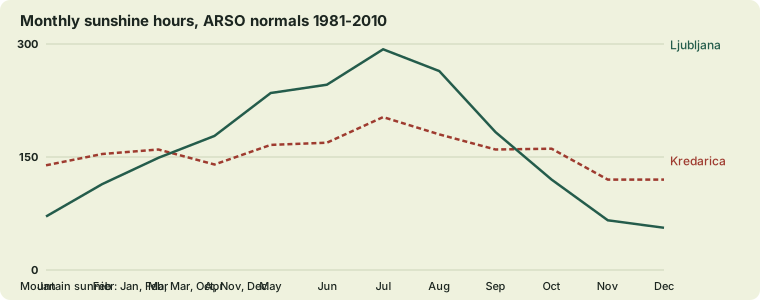
There is a twist in that weather data that most guides never mention. Ljubljana sits in a basin at 299 m, and in the colder half of the year a temperature inversion caps the city under fog and low cloud while the hills a few hundred metres above sit in sunshine. ARSO's 1981-2010 normals put the city at 56 hours of sunshine for the whole of December, against 120 hours at Kredarica, at 2,514 m on Triglav, over the same month. The city averages 37 clear days a year against 130 overcast. The lesson for a winter day tripper is that a gray start in Ljubljana does not mean a gray day in Italy, and equally that a bright morning in Venice can end in fog on the road home.
Venice or the Closer Day Trips: Which Should You Pick?
Pick Venice if a canal city is the specific thing you want and you accept a long day; pick Piran if you want Venetian architecture, the sea, and a swim, in a fraction of the travel time; pick Trieste if you want Habsburg grandeur and coffee culture; and pick Lake Bled or Postojna if you would rather spend the day in Slovenia's own headline sights. The Slovenian coast was literally part of the Venetian Republic, so Piran delivers a genuine slice of the same heritage without the border run.
| Day trip | Travel effort | What you get | Best for |
|---|---|---|---|
| Venice | Long day, cross-border | The canal city itself, at full intensity | The once-in-the-trip big day out |
| Piran | Short hop within Slovenia | Venetian old town on a peninsula, Adriatic swimming | Sea and heritage without the hours |
| Trieste | Short cross-border run | Habsburg squares, literary cafés, the sea | Coffee, culture, an easier rhythm |
| Lake Bled | Half-day to full day | Lake, island, castle, alpine backdrop | The classic Slovenian sight |
| Postojna and Predjama | Half day | Cave train ride and cliff castle | Weather-proof, kid-friendly |
Piran deserves the emphasis. It is a Venetian town in everything but country: the republic controlled the Slovenian coast for centuries, and Piran's tight streets, campanile and seafood restaurants carry that history visibly. Our Piran guide and the piece on whether Piran is worth visiting cover it in full, and the short version is that a Piran afternoon delivers much of what people imagine they need Venice for, with time left to swim. The Koper cruise ship day article shows how the same coastline reads when you arrive by sea.
Trieste is the thinking traveller's alternative, close enough to Ljubljana for a genuinely relaxed day. Our Trieste guide walks the squares and the castle, and the Ljubljana to Trieste route piece covers the practical side. It is a city for sitting down in, which is the opposite of a Venice day trip's tempo.
And if the real goal was simply "a memorable day outside the capital," Slovenia's own roster answers it. The day trips from Ljubljana overview ranks the options, and the best time to visit Ljubljana guide slots every one of them into the calendar.
What Are the Best Organised Alternatives If You Skip Venice?
If you would rather not self-manage a long cross-border day, the strongest organised options from Ljubljana are the Postojna Cave and Predjama Castle tour at six hours, the Lake Bled and Bled Castle trip at six hours, and the free GuruWalk city walks if the day never leaves town at all. Each is rated above 4.7 from hundreds of reviews, each returns you to the city for an evening, and none of them asks you to wake before dawn.
The cave and castle tour is the closest thing to a guaranteed good day on the roster. Postojna Cave is open every day of the year, including holidays and in bad weather, and holds about 10 C inside regardless of the season outside, which makes this the default answer whenever the forecast turns. Predjama Castle, built into the mouth of a cliff, is the pairing that makes the six hours feel full. From $132, rated 4.8 from 2,802 reviews, with entry tickets in the package.
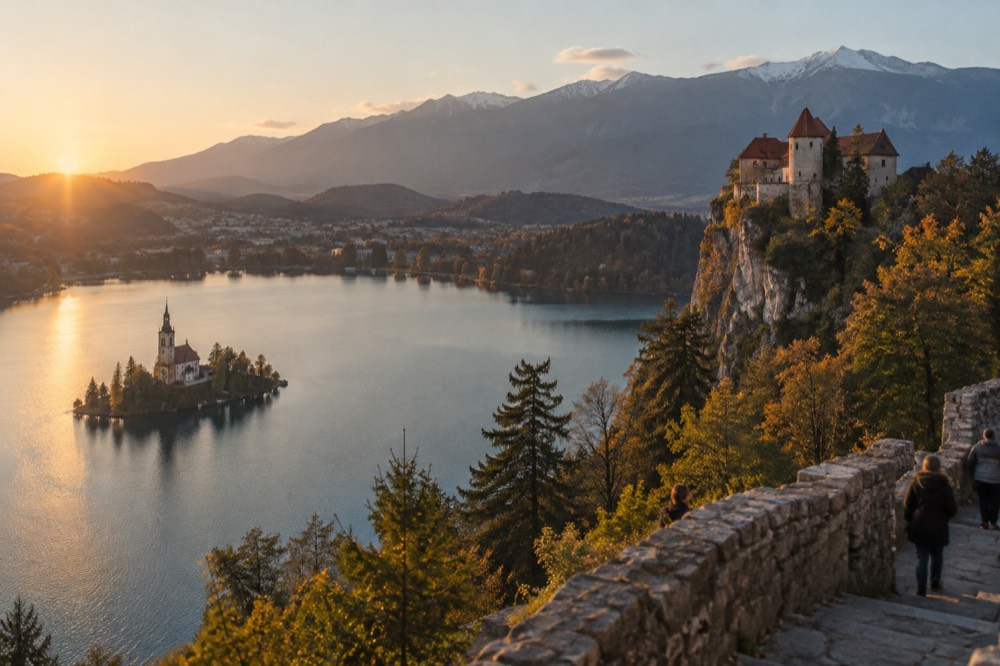
Lake Bled is the other pillar. The six-hour Bled and Castle trip, from $86 and rated 4.7 across 1,641 reviews, covers the lake and the castle with the logistics handled, and the Lake Bled day tour variant runs the same idea at from $57. Our Ljubljana to Lake Bled route guide is the companion read if you would rather do it independently, and the is Bled worth visiting piece settles the sceptic's question.
For a day that never leaves the city at all, the free walks are the quiet bargain of the roster. Ljubljana Unveiled on GuruWalk, two hours, rated 4.91 from 1,496 reviews, runs on a pay-what-you-think-it-was-worth basis and covers the city from its Roman roots to the Dragon Bridge. The free walking tour guide compares all eight of the GuruWalk options, including the night walk and the communist-era walk, so you can match the theme to your mood.
What Should You Know Before You Go?
Sort four things the night before: your transport tickets, the Venice access-fee status of your date, a two-anchor sightseeing plan, and your footwear. Confirm whether your passport or ID card is in your bag even though there are no routine checks, because spot checks inside Schengen are legal and happen. Check the weather on both ends of the route, because Ljubljana's basin fog and Venice's acqua alta are different problems that both eat time.
Documents first, briefly. Slovenia is in the European Union, adopted the euro on 1 January 2007, and abolished internal land and sea border checks on 21 December 2007, with air checks following on 30 March 2008; the Slovenian government's own EU membership page sets out the dates. Croatia's accession to Schengen and the euro on 1 January 2023 completed the picture along this whole corner of Europe. Carry your ID card or passport regardless: within Schengen the checks are exceptional rather than routine, but they exist, and a coach full of tourists is not exempt.
Money is simpler than it used to be. Slovenia uses the euro and so does Italy, so there is no currency change on this route at all. Cards are accepted almost everywhere in both cities, though a small cash float is still useful for Venice's bacari and for market stalls, and for Ljubljana's Central Market if you are provisioning the journey, whose hours are covered in our Ljubljana markets guide.
Timing is the last piece. Book the earliest departure available, because every hour of Venice daylight you buy on the front end is worth more than the same hour at midnight on the return. Eat before the Italians eat, walk before the day-trippers from the cruise ships walk, and treat the vaporetto timetable as a real schedule to be caught, not a suggestion. The travellers who love this trip are the ones who planned it like a raid; the ones who regret it treated it like a Sunday drive.
Common Questions About a Venice Day Trip from Ljubljana
Is a Venice day trip from Ljubljana realistic?
Yes, with an early start and an acceptance that the round trip dominates the day. There are no routine border checks, since both countries are in the Schengen area, and direct coaches plus organised excursions make the logistics simple. It is a long day, best done from spring to autumn.
How do you get from Ljubljana to Venice?
Direct coaches run the route and are the most common choice, trains usually involve at least one change, and self-driving is easy until you reach the mainland car parks and have to cross the lagoon by boat. Organised excursions handle the whole transfer for you.
Is there a border between Slovenia and Italy?
There is a border but no routine checks. Both countries are in the Schengen area; Slovenia abolished internal land and sea border checks on 21 December 2007 and air checks on 30 March 2008. Carry your ID card or passport anyway, as spot checks are legal.
Do you need to pay to enter Venice as a day visitor?
Venice charges an access fee for day visitors on many peak dates, with the amount and calendar set by the municipality and revised between seasons. Check the official scheme for your travel date before you go, and pre-register if your day is covered.
What is the best time of year for the trip?
April to June is the sweet spot, with long daylight and thinner crowds than midsummer. September and October work but Ljubljana averages 12.4 fog days in each, per ARSO's 1971-2000 normals, so allow slack in the morning. Winter trips are atmospheric but short on daylight.
What are good alternatives to Venice from Ljubljana?
Piran gives you a genuine Venetian old town on Slovenia's own coast in a fraction of the travel time, Trieste offers Habsburg squares and coffee culture, and Postojna Cave and Lake Bled are the classic Slovenian day trips, all covered in our day trips overview.