Trieste Day Trip from Ljubljana: The Complete Guide
Trieste is the closest big Italian city to Ljubljana, close enough that a day trip is not just possible but genuinely relaxed. This guide covers the border crossing, the sights worth the ferry ride across the piazza, and the seasonality most guides miss.
Short answer
Trieste sits just over the Slovenian border in north-east Italy, within easy reach of Ljubljana by road, and both countries are in the Schengen area so there are no routine border checks. One long day is enough for the seafront, Piazza Unità d'Italia, the castle and a proper coffee stop, with time for the Roman theatre if you move briskly.
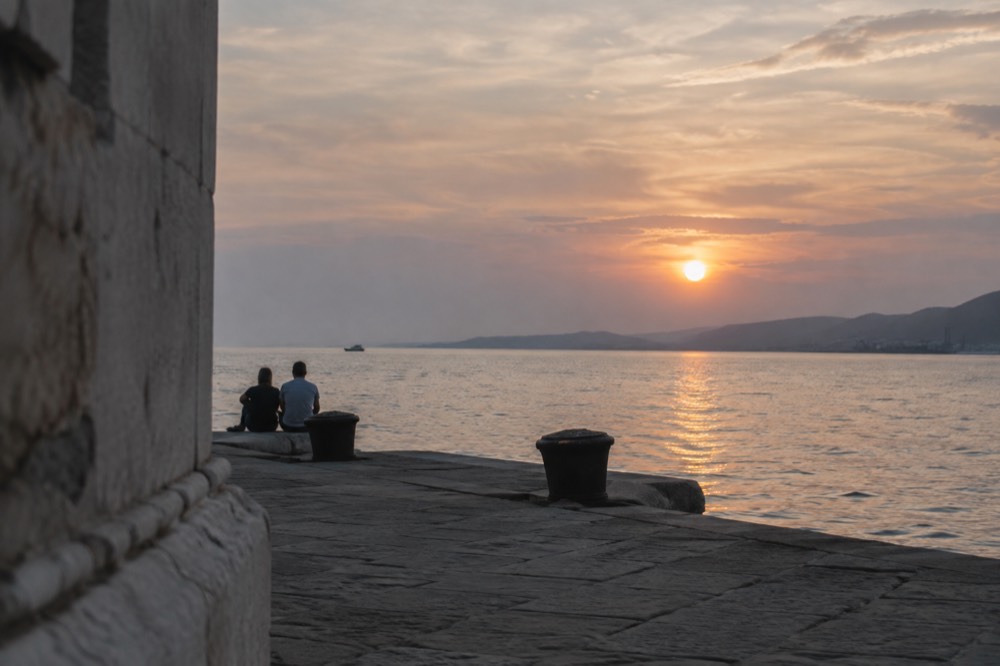
Trieste does something few day trips manage: it feels like a proper change of country without eating your whole day in transit. You leave a pedestrianised, fog-prone basin of a city and, a short drive later, you are standing on the largest seafront square in Italy, drinking espresso under Habsburg facades. The city was the Adriatic port of the Austro-Hungarian Empire, and it still reads that way, Vienna with palm trees and a sea breeze.
The practical side is unusually kind. Slovenia and Italy are both in the Schengen area, so the border is something you cross without stopping rather than something you plan around. Both use the euro, so there is no money to change. And because Ljubljana is a two-night city, with visitors averaging about 2.04 nights across 1,392,728 arrivals, a Trieste day slots neatly into a short stay without demanding an extra hotel night.
This guide, from the Ljubljana Travel Guide desk, covers how to get there, what is actually worth your limited hours, the food and coffee the city is known for, and the one seasonal trap that catches most visitors: the fog.
Why Does Trieste Work So Well as a Day Trip from Ljubljana?
Trieste works because it is close, borderless and compact. The city centre is a short drive from Ljubljana, both countries are inside Schengen so there are no routine checks, and the main sights line up along a walkable seafront strip that can be covered on foot in a single afternoon.
The distance is the headline. Very few capital cities have a different country's historic port within an easy day's reach, and Ljubljana's position in Slovenia's north-west corner puts the Italian border closer than the Croatian one for much of the city. The route runs out through the Slovenian karst region, the same limestone landscape that holds Postojna Cave and the Škocjan Caves, before dropping to the coast near Koper and crossing at one of several quiet border posts.
The border itself is administrative rather than dramatic. Slovenia abolished border controls at its internal land borders on 21 December 2007, per the Slovenian government's own EU membership page, and Italy has been in Schengen far longer. In practice you may slow for a speed limit change and nothing else. Both countries are also in the eurozone, Slovenia having adopted the euro on 1 January 2007, so your coins work on both sides.
Culturally the trip is a genuine switch. Ljubljana is a Central European city with a Mediterranean fringe; Trieste is the reverse, an Italian city with a Central European skeleton. The architecture is Habsburg, the coffee culture is famously Viennese-Italian, and the Slovenian language appears on street signs and menus because the city is officially bilingual. For a day out of Ljubljana it delivers more contrast per kilometre than almost any alternative.
If you are weighing Trieste against other options, our day trips from Ljubljana overview ranks the full set, and the Ljubljana to Trieste transport guide goes deeper on routes and tickets than this page does.
How Do You Get from Ljubljana to Trieste?
The realistic options are a direct intercity bus, a drive of roughly an hour and a half each way, or a train routed via either Villa Opicina or the Slovenian coastal line. The bus is the usual winner for a day trip because it runs city centre to city centre without a change, while the train generally requires at least one connection and eats more of your day.
The drive is the simplest to describe. The route heads south-west out of Ljubljana towards Postojna, then continues through the karst to the coast near Koper before turning south-east along the Italian shore to Trieste. It is a good road the whole way, and hiring a car for the day pairs well with a stop in the karst or in Piran on the way back. If you are considering driving generally, read car rental in Ljubljana first, and remember the practical fact that Ljubljana's historic centre is pedestrianised, so you will collect and return the car outside the old core regardless.
The bus is the choice most visitors land on. Coaches from the Ljubljana bus station run direct to Trieste's centre, and the journey is short enough to leave a full day on the other side. Buy at the station or check times before travelling; this site does not publish a fare or timetable for the route because neither could be verified from a primary source. The Ljubljana bus station guide covers the terminal itself, which is adjacent to the train station just north of the centre.
The train is the romantic option and the slower one. Trieste's main station sits at the end of a line, and connections from Ljubljana generally route through the border at Villa Opicina or around via the Slovenian coast, with at least one change. It works, and the final descent from the karst plateau down to the sea is genuinely scenic, but it costs you time you will want in the city. If rail is your thing, our trains from Ljubljana page maps where the network can actually take you.
| Option | Rough journey | Changes | Best for |
|---|---|---|---|
| Direct coach | About 1.5 hours | None | Most day-trippers, city centre to centre |
| Self-drive | About 1.5 hours each way | None | Flexibility, karst or coast stops en route |
| Train via Villa Opicina | Half a day door to door | Usually one | Rail fans, scenic descent to the sea |
| Private transfer | About 1.5 hours | None | Groups, fixed schedules, door-to-door timing |
One planning note that matters more than it sounds: whatever your mode, aim to be in Trieste by mid-morning. The city's sights are clustered, but its pleasure is slow, and a day trip that arrives at 13:00 becomes a lunch trip.
What Should You Actually See in Trieste in One Day?
Spend your day on the seafront spine: Piazza Unità d'Italia first, then the canal-side Borgo Teresiano, then the Roman theatre, with a castle viewpoint if the weather holds. Everything listed is within about 20 minutes' walk of everything else, so the plan bends easily if a coffee stop runs long.
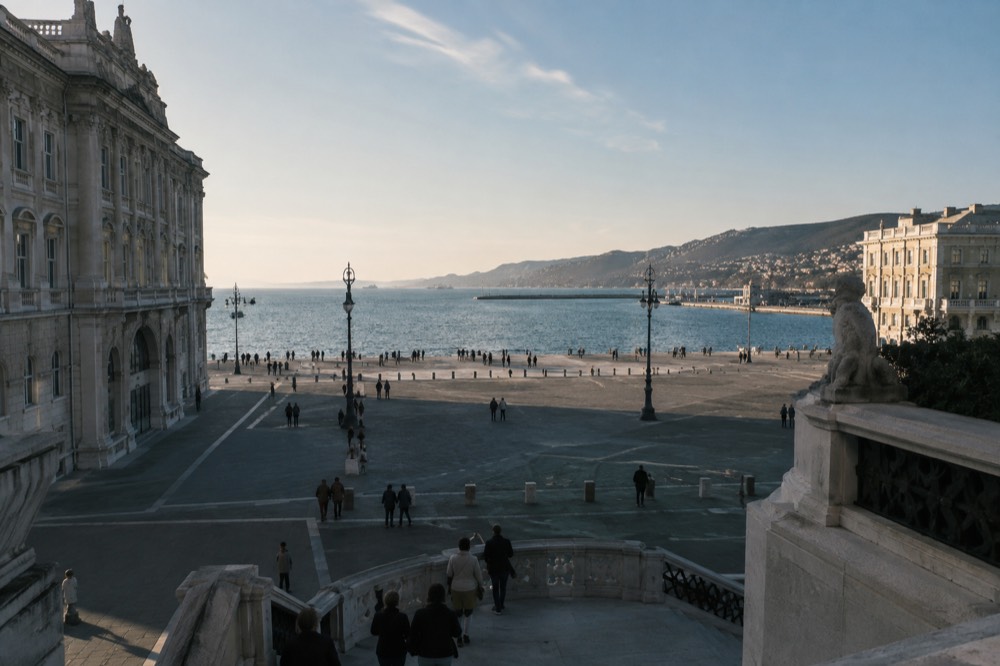
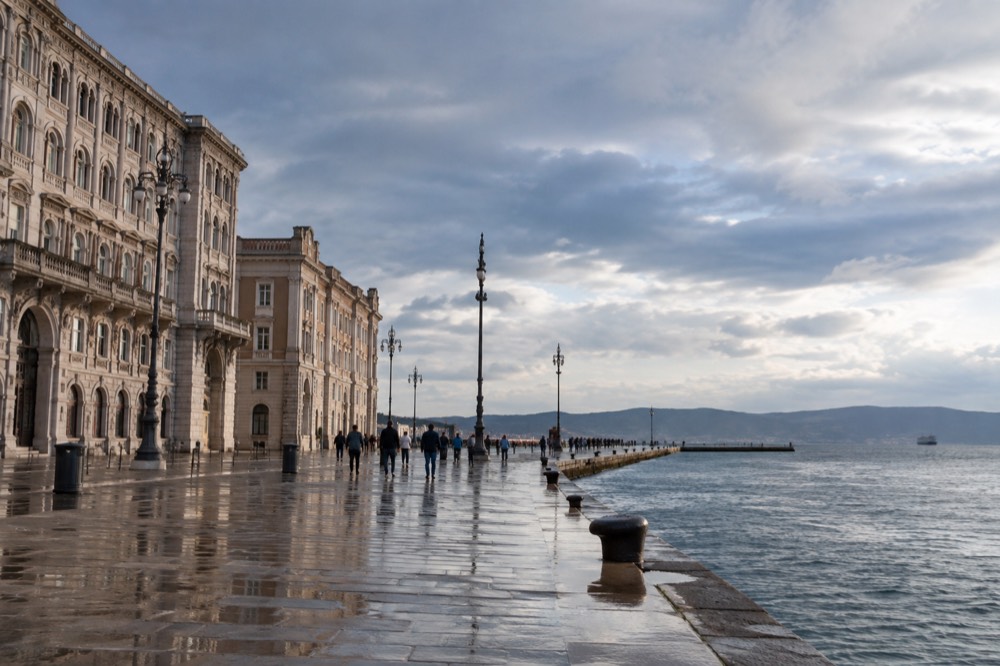
Piazza Unità d'Italia is the reason to come, and it deserves the first hour. It is the largest seafront square in Italy, opening directly onto the water with the town hall closing the landward side, and at mid-morning the light comes straight up the Adriatic into it. Walk to the water's edge and look back: the Habsburg facades tell you instantly why people describe Trieste as Vienna-on-sea. There is no fee, no ticket and no queue, which after a Ljubljana morning of paid castle attractions is its own small pleasure.
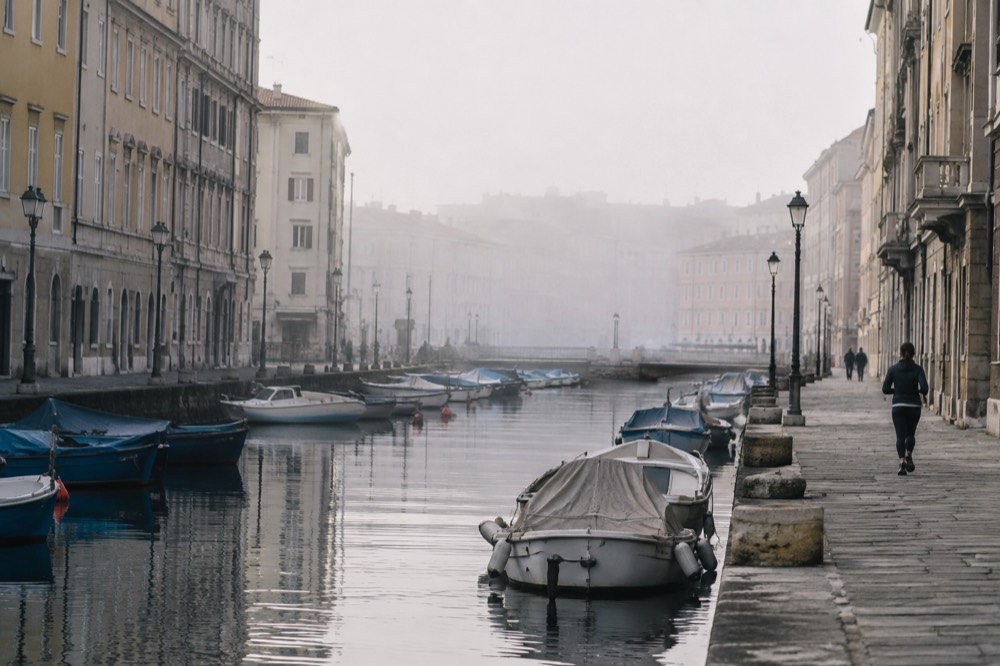
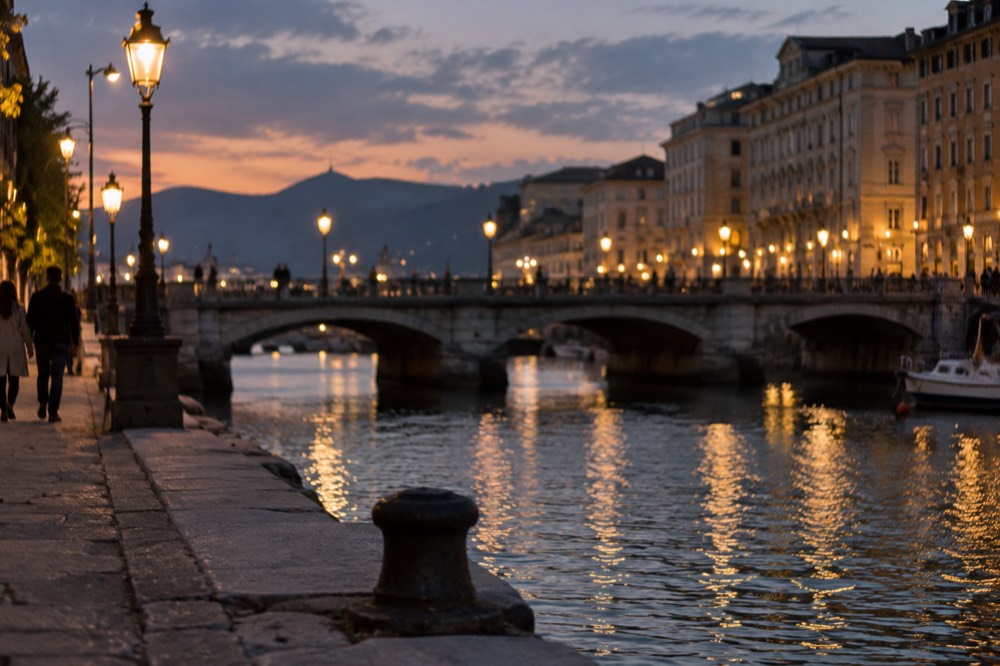
From the piazza, walk ten minutes north to the Borgo Teresiano, the old canal district built when the city was the empire's port. The Canal Grande is a narrow arm of water lined with churches and cafes, and the surrounding grid of streets is where the city's coffee identity lives. This is the neighbourhood to get lost in for an hour, and it is also where you should have your second coffee, because Trieste takes coffee more seriously than almost any Italian city, a legacy of the historic roasters and the Viennese trade routes.
The Roman theatre is the third stop, a first-century ruin tucked against the hill of San Giusto a short walk from the centre. It is free to view from the street and needs fifteen minutes, not two hours. Above it, the cathedral and the castle on the hill give the best view over the city and the gulf; the climb is modest, and on a clear day you can see the Slovenian coast curving away to the south-east.
If you have energy left, the Miramare Castle, a short bus or drive north of the centre along the coast, is the classic half-day add-on. It is a white Habsburg residence on a promontory with its own park, and it is the single most photographed thing in the region. Be honest with the clock before committing: it is better saved for a second visit than rushed at 17:00.
How Much Time Do You Need in Trieste?
A focused day trip gives you roughly six to seven hours in the city, which is enough for the seafront square, the canal district, the Roman theatre and the castle hill with a long lunch. Miramare Castle only fits if you cut the hill, and anything less than five hours on the ground turns the trip into a transport exercise.
The arithmetic is simple. Two journeys of about an hour and a half each, plus station and boarding time, costs around four hours of your day before you have seen anything. Leave Ljubljana at 08:00 and you can plausibly be standing in Piazza Unità d'Italia before 10:30, with the whole afternoon ahead of you and a return after dinner entirely realistic in summer.
That is the shape of a good day: morning piazza, midday canal district and lunch, afternoon hill and castle, evening aperitivo on the seafront, then home. It is also why the bus beats the train for most people. A connection that adds ninety minutes each way does not shorten the day evenly, it deletes the evening, and the evening is when Trieste is at its most Italian.
If your instinct is that six hours is thin, consider the alternative: treat Trieste as one half of a two-day foreign-city combo and sleep there, which converts it from a day trip into a short break. Our Ljubljana city break planning page can help you decide which days to give away.
| Time on the ground | What fits | What does not |
|---|---|---|
| 4 hours | Piazza Unità, coffee, canal district walk | Roman theatre, castle hill, lunch anywhere good |
| 6 hours | All the above plus theatre, hill and a proper lunch | Miramare Castle |
| 8 hours | Everything including Miramare if you drive | Nothing on the standard list |
| Overnight | Everything, slowly, with an evening and a slow morning | Not a day trip any more |
What and Where Should You Eat in Trieste?
Eat the city's two signature dishes early and often: jota, a sour barley-and-bean soup that is pure Central European winter food, and some form of Adriatic fish, plus at least two coffees taken standing at a bar the way locals do. The historic cafes around Piazza Unità and the canal district are the places to do it.
Trieste's food is not really Italian, and that is the point. The city's kitchen is a port kitchen with a Habsburg hinterland: pork and sauerkraut, gnocchi in ways Naples would not recognise, and jota, the fermented barley soup that tastes like Ljubljana's own winter cooking with an Italian accent. If you want one dish that captures why this day trip feels different from a day in Venice, jota is it.
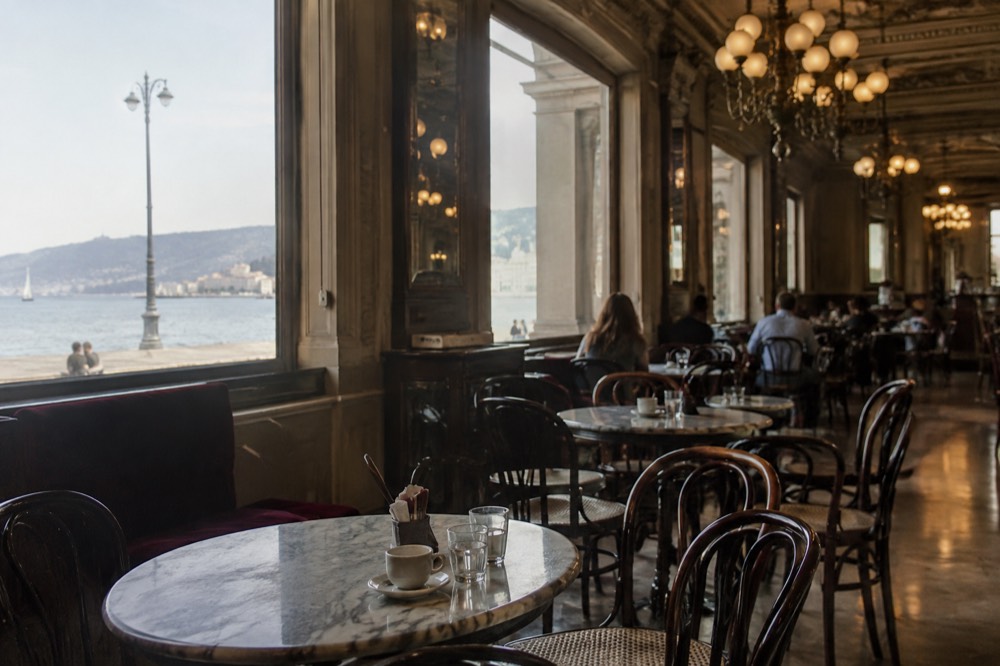
Coffee is the other institution. Trieste's port made it a coffee-trading city, one of the historic roasting centres of Europe, and the result is a cafe culture with its own vocabulary: locals order by local names rather than the national menu, and no one will think it odd if you take three coffees in a day. The grand cafes around the piazza are beautiful and priced accordingly; the bar-standing espresso a street back is the local habit and costs less.
For lunch, the canal district and the streets immediately behind the piazza hold most of the good options, and the fish is the safe bet: the gulf is right there. For something sweet, the city's Austrian pastry heritage shows up in the windows of almost every slastičarna, and a slice with an afternoon coffee is the correct way to bridge the gap until an evening aperitivo on the seafront.
If you want the Slovenian side of the same food story back in Ljubljana, our Slovenian food in Ljubljana guide covers the dishes the two cities share, and the where to eat in Ljubljana page does the restaurant legwork for the days you are not crossing the border.
When Is the Best Time of Year for a Trieste Day Trip?
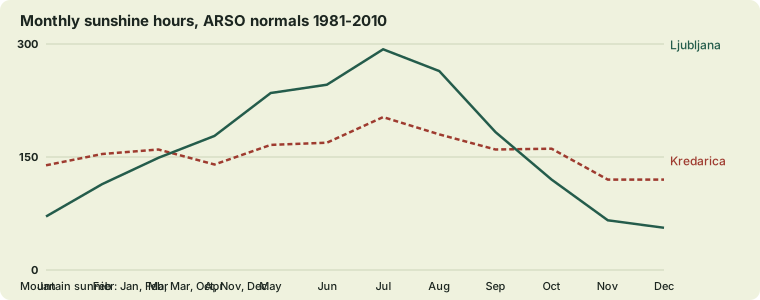
The best window is April to June and September to October, when the seafront is warm and the Adriatic light is strong, but the single most useful planning fact is this: Ljubljana averages 12.4 fog days in September and 12.4 in October, so the coast is often sunny on exactly the mornings the city you depart from is not.
That fog figure comes from ARSO's 1971-2000 climate normals for Ljubljana, the only period for which the agency publishes the fog series, and it is the quiet reason a Trieste day trip is such a good autumn call. Ljubljana sits in a basin; in the colder half of the year cold air is trapped under warmer air above and the city fogs in while higher ground stays in sun. The coast, outside the basin, behaves differently. A grey 07:00 in Ljubljana is very often a bright 09:30 on the Adriatic, and the drive out of the fog is one of the most satisfying feelings a day trip can give you.
The same logic makes winter trips better than visitors expect. Trieste's seafront is at its most atmospheric out of season, and the city is a year-round place rather than a summer-only one. What you trade is daylight: December gives Ljubljana just 56 hours of sunshine across the whole month, under two hours a day, so plan a later start and an evening return rather than a dawn one.
Summer is the popular answer and a reasonable one, but two cautions. First, the coast gets genuinely hot, and the climb to the castle hill is less charming at 30 degrees. Second, the bora, the cold north-easterly wind the gulf is famous for, can close seafront cafes and make the piazza feel like a wind tunnel on certain days; it is a feature of the climate, not a rarity. Check the forecast for wind as well as rain before you commit.
Is Trieste a Good Day Trip with Kids?
Yes, and in some ways better than the headline cities: the seafront square is an open, traffic-free playground, the canal district is flat and stroller-friendly, and the castle hill is a short climb rather than a hike. The main compromise is that the coffee-and-architecture pleasure of the city is largely wasted on anyone under twelve.
Children respond to Trieste's edges rather than its centre: the water, the boats in the harbour, the fish market activity, and the gelato. The piazza works because it is enormous and closed to through traffic, so a child can run the width of it while the adults take in the facades. The Roman theatre is a hit with kids who like climbing on old things, within the limits the site allows.
The castle on San Giusto hill is the one structured stop that earns its keep for families, combining a short climb, a wall walk and a view. Miramare Castle, if you have the time, is the best child-facing sight in the region, with a park to run in and a rocky shore to explore below it.
If you are building a wider family itinerary, our Ljubljana with kids guide covers the city days, and the weekend in Ljubljana plan shows where a Trieste day fits in a short family stay.
Trieste or the Slovenian Alternatives: Which Day Trip Should You Take?
Take Trieste if you want a different country, a sea and a coffee culture in one compact day; take the Slovenian coast, Piran, if you want the same sea with smaller crowds and less travel; take the karst, Postojna or Škocjan, if the weather is bad, because caves hold roughly the same temperature year round and the coast does not.
That last point is the practical hinge. A Trieste day trip is a weather bet: it is at its best in sun and its worst in the rain, when the piazza empties and the hill view vanishes. The caves are the opposite, a guaranteed-conditions product, which is why this site's karst tours convert so well in exactly the months the coast disappoints.
The most popular guided version is the Cave and Castle day trip from Ljubljana, which pairs Postojna Cave with Predjama Castle in six hours, rated 4.8 across 2,802 reviews and from $132. It runs on the same road you would drive towards Trieste, so the two trips genuinely compete for the same day of your itinerary. Check availability if the forecast turns wet.
If the weather is fine and you have already seen Trieste, or you simply prefer your coastline Slovenian, Piran is the local answer, a walled Venetian town on a peninsula that delivers salt-of-the-Adriatic charm without a border. And if the choice is between Trieste and a mountain day, the Soča Valley and Kranjska Gora pages cover the alpine alternative, which is the better call in the July-to-September window when the basin's summer sunshine is at its best.
What Does a Trieste Day Trip Cost?
The honest answer is that transport is the only fixed cost you can plan from Ljubljana, and this site does not publish a bus or train fare for the route because no primary source could be verified for one; budget instead for the Italian side, where a standing coffee and a modest lunch are the main spends, plus any castle or Miramare entry on the day.
What we can say with figures is what the day does not need to cost. The seafront square, the canal district, the Roman theatre viewed from the street and the climb to the cathedral are all free. A day built on walking, one proper lunch, a couple of coffees and a gelato is a modest day by any European standard, and Trieste's bar-standing coffee habit keeps the caffeine budget small.
What we will not do is print a transport fare. The Ljubljana to Trieste coach fare and timetable could not be sourced from a primary, readable source, and this site's rule is that a figure without a source is not published. Check with the bus station when you buy, or the operator's own site, and treat any number you see in a forum as unverified.
For context on the Slovenian side of your budget, the Ljubljana prices guide breaks down what things cost in the city itself, and Ljubljana on a budget shows how to keep the whole stay cheap, Trieste day included.
What Should You Not Miss Back in Ljubljana?
Do not let the day trip eat your only castle-and-river evening: Ljubljana's own Old Town walk, the funicular up to the castle and a Ljubljanica boat trip are the core experiences a first visit should protect, and a Trieste day is an addition to them, not a substitute.
The pattern that works for most visitors is a simple one. Give the city its first full day, the Old Town, the Triple Bridge, Prešeren Square and the castle, and slot Trieste or another day trip into day two or three. The statistics back this up: with overnight stays averaging about 2.04 nights per arrival, most visitors have exactly one full day to give away, so the choice of which day trip matters more than people expect.
If you want the city covered cheaply and well on day one, the free GuruWalk walk, Ljubljana Unveiled, is the strongest orientation option: a tips-based two-hour walk from Roman roots to the Dragon Bridge, rated 4.91 across 1,496 reviews. It is free to join, you pay what you think it was worth, and it is run on the GuruWalk platform, which we name because it is not this site's own product. See this free tour on GuruWalk.
For the castle half of the day, the guided walk with funicular ride covers the Old Town and then rides you up the hill, rated 4.6 across 650 reviews and from $24, while the skip-the-line castle entry with optional funicular starts from $17. The castle grounds themselves are free to enter; the funicular and the tower are not, a distinction this site is strict about because so many guides blur it.
And if your day-trip appetite is bigger than one trip, the Lake Bled day tour remains the single most booked excursion from the city, rated 4.8 across 888 reviews and from $57 for the guided version. Bled carries more search demand than the entire city of Ljubljana, which tells you how most visitors rank their priorities.
Planning Checklist for the Trip
A day trip lives or dies on the small decisions made the night before, and the checklist below covers the six that matter most: transport times, the two-sided weather picture, the day of the week, how you will pay, what is on your feet, and a backup plan if the forecast turns. Run it before bed and the morning takes care of itself.
This is the checklist this desk would run before any Trieste departure.
| Decision | What to do | Why it matters |
|---|---|---|
| Transport | Book or check the direct coach times the day before | The return timetable sets your evening, not the morning |
| Weather | Check the Ljubljana fog and the Trieste wind, not just rain | The bora can close the seafront; fog usually burns off at the coast |
| Day of week | Avoid Monday for museums, Sunday for some shops | Trieste keeps Italian opening rhythms |
| Cash and cards | Cards work everywhere; carry a little cash for bars | Standing coffee is faster with coins |
| Footwear | Flat shoes for the hill climb | The castle path is cobbled and steep in short stretches |
| Backup plan | If the forecast is bad, switch to a cave day | Caves hold roughly the same temperature year round, about 10 C at Postojna |
The backup row is the one people skip and later regret. The karst and the coast sit on the same road out of Ljubljana, so the switch from Trieste to Postojna is a decision you can make at breakfast, and the guided cave and castle trip departs from the city either way.
Common Questions About a Trieste Day Trip from Ljubljana
Is Trieste worth a day trip from Ljubljana?
Yes, if you want a change of country and culture without a long journey. Trieste is within easy reach of Ljubljana, there are no routine border checks because both countries are in the Schengen area, and the seafront square, canal district and castle hill fill a day well. It is less worth it in heavy rain, when the coast loses most of its appeal.
How long does it take to get from Ljubljana to Trieste?
Roughly an hour and a half by direct coach or by car. The train generally requires a connection and takes longer. This site does not publish a fare or timetable for the route because neither could be verified from a primary source, so check with the bus station or operator before travelling.
Do you need a passport to cross from Slovenia to Italy?
Slovenia abolished border controls at its internal land borders on 21 December 2007 and air checks followed on 30 March 2008, so there are no routine checks crossing to Italy. You should still carry ID, as Schengen rules allow occasional checks, but the border is not a planning obstacle.
Can you do Trieste and back in one day without a car?
Yes. The direct coach is the standard way to do it, running city centre to city centre. Aim for a morning departure that puts you in Trieste by mid-morning, and check the last return time before you commit to an evening aperitivo.
What is the best month for a Trieste day trip?
April to June and September to October give the best balance of warmth and light. September and October are also the months when Ljubljana itself averages 12.4 fog days each, per ARSO's 1971-2000 normals, so the coast is often the sunniest option exactly when the city is at its greyest.
Is Trieste cheaper than Ljubljana?
Costs are broadly comparable, and both use the euro. Trieste's standing-bar coffee habit keeps day-to-day spending low, while the grand cafes around the main square are priced for the setting. This site does not publish Italian price levels, so treat any comparison as approximate.